Author

Avatar for Jordan Kahn

Jordan Kahn

jordankahn

Dir. Partnerships

9to5Mac / 9to5Google / 9to5Toys / Electrek.co / DroneDJ / SpaceExplored

Jordan manages the internal Partner Program for sponsorships and partnerships across the 9to5 network’s media brands including 9to5Mac, 9to5Google, 9to5Toys, Electrek.co, SpaceExplored and DroneDJ.com.

Jordan also writes about all things Apple as a Senior Editor of 9to5Mac. He covers Google for 9to5Google.com, the best gadgets and deals on 9to5Toys.com, and EV and solar news on Electrek.co. He also co-authors 9to5Mac’s Logic Pros series and makes music sometimes.

Contact Jordan with partnership inquiries and long-winded complaints:  

Connect with Jordan Kahn

Apple says it’s set to lose $2.7 billion if judge sides with Motorola in patent case

Site default logo image

Following Motorola winning a possible injunction against Apple mobile products in Germany, Apple has told a German court it is set to lose $2.7 billion if it rules in favor of Motorola regarding a patent case related to an “emailing syncing patent”, according to a report from Bloomberg (via BusinessInsider). Apple has reportedly requested the court to demand Motorola provide $2.7 billion in collateral in the event the judge sides with Motorola. Bloomberg reports:

German courts often require the winning side in a case to post collateral if it wants to enforce a ruling while the other side is appealing. The amount reflects the losses the party is facing when forced to comply with the ruling. If it wins the appeals, it can seek damages and can make use of the collateral held for that.

While we have no information about how exactly Apple has come to that figure, the judge hearing the case apparently doesn’t agree with Apple’s valuation:

Expand
Expanding
Close

You’ll find the top 3 Popular Science “Best of What’s New” award winners in Apple’s Macs

Site default logo image

Popular Science Magazine is once again declaring their Best of What’s New Awards for 2011, and not so surprisingly this year’s top three spots in the computing category are all technologies that you will find in Apple’s latest lineup of Macs.

At number one we have OS X Lion which earned a spot for its ability to close the gap between desktop and mobile operating systems with the publication calling it “the first step toward a computing landscape in which one interface can serve all purposes”.

The number two spot goes to Intel Sandy Bridge chips and their ability to reduce “data’s travel time from component to component by replacing lengths of wire with nearly a billion close-knit microscopic transistors”. We know Apple just recently refreshed their MacBook Air and Mac Mini lineup with new Sandy Bridge processors, and future Macs will likely get the same treatment. The new Thunderbolt I/O has also been an emerging technology Apple has adopted for future Macs, and that brings us to number three…

Last but not least, we have Intel Thunderbolt at the number three spot, which we all know Apple teamed up with Intel to help develop and is now being implemented on future iterations of iMacs and MacBooks. Minor limitations aside, its contribution to the tech industry is pretty obvious, as Popular Science puts it, “Thunderbolt’s wires are the first to combine the languages that handle data and display in one channel, making it faster and more versatile than any other connection”.


Expand
Expanding
Close

Updated: Does Apple support the Stop Online Piracy Act? By proxy, at least

Site default logo image

Update: The Business Software Alliance has officially withdrawn their support for SOPA on the BSA blog. Important bits after the break.

So where does Apple stand on the Stop Online Piracy Act (SOPA)? A report from TNW gives the impression Apple is in support of the bill via their association with the Business Software Alliance, who made their stance clear by commending the introduction of the bill in a recent bulletin. However, while Apple’s stance isn’t official, they do support SOPA by proxy, and haven’t made an effort to distance themselves from it with an official statement. The BSA is also associated with Microsoft, Adobe, Dell, and 20+ other large tech companies.

According to Apple’s website, “Apple works closely with the Business Software Alliance (BSA) and the Software Information Industry Association (SIIA) to combat software piracy worldwide.” They also provide links to report piracy through the BSA and provide the following statement on copyright law and piracy on their Piracy Prevention page:

Expand
Expanding
Close

Apple updates Apple TV to version 4.4.3 (9A4051)

Site default logo image

Apple has just released an update for the 2nd-gen AppleTV bringing it up to version 4.4.3 (9A4051). This follows Apple’s last minor update, version 4.4.2 (9A336a) in October. The update includes “support for Netflix in Mexico” and also “addresses an issue in which audio may not play through the optical port when the TV is turned off”, but we’ll let you know if we find anything else interesting. You can do the same in the comments. 
Expand
Expanding
Close

Apple experimenting with inflatable shock mounts to drop-proof cover glass

Site default logo image

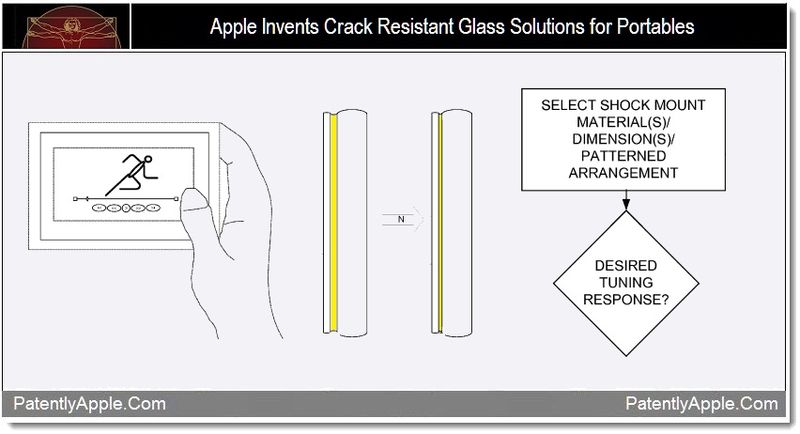
In January we told you about a class action lawsuit filed by a Los Angeles man who describes the iPhone 4’s glass back panel as a “design flaw” and claims Apple “refuses to warn consumers” about its susceptibility to cracked glass under normal usage . We already know the iPhone 4S hasn’t made many improvements in terms of the durability of its glass casing, but a new patent application shows exactly what Apple has been working on to better implement a drop-resistant all glass design.

Our friends over at PatentlyApple detail the patent which describes different embodiments of including a shock mount made of polymer, foam, gel, or similar material in a future iPhone or iPad’s cover glass (as usual Apple also mentions the majority of their other products including iMacs, MacBooks, iPods, displays, and televisions). In one solution, Apple describes a “mechanically actuated retractable”, which would essnetially allow the cover glass to withdraw “at least partially into the housing in response to sensing the drop event, thereby protecting for the cover glass.”  The report explains:

Expand
Expanding
Close

Apple addresses environmental concerns with audits of 15 suppliers, could impact future components and contracts

Site default logo image

Apple has been no stranger to environmental concerns regarding their manufacturing and supply chain abroad, most recently a report from five independent environmental organizations in China in August accused the company of taking “advantage of the loopholes in developing countries environmental management systems” and awarding contracts to known polluters. Yesterday Apple responded to the accusations in a three-hour meeting with five Chinese environmental NGOs, admitting fifteen of their current manufacturing partners are contributing to pollution in surrounding areas by agreeing to perform audits of the companies. This followed several meetings with Apple following the group’s report in August, including one with Apple execs in Cupertino.

According to a report from WSJ, Ma Jun, of the Institute of Public & Environmental Affairs in Beijing, had this to say following the meeting:

“This is a major step forward… They asked these companies to take corrective plans and give a timeline, and Apple will verify whether all these issues have been resolved.”

As a result of the meeting, Apple is apparently vowing to improve its environmental standards within its supply chain, a move that could not only alter the manufacturing process of components, but also impact contracts awarded to manufacturers and suppliers in the future. According to the report, to avoid issues like massive amounts of waste water, Apple will encourage alternative manufacturing processes for components such as printed circuit boards. Apple also confirmed that this and other environmental concerns will play a role when awarding future contracts to suppliers.

Expand
Expanding
Close

Qualcomm’s 4G LTE Gobi 4000 chips shipping to OEMs, likely to land in next-gen iPad

Site default logo image

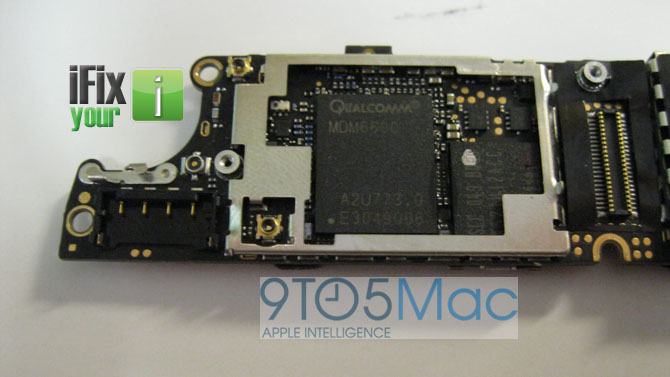
Qualcomm has just issued a press release announcing the commercial availability of their Gobi 4000 chips for 4G LTE and HSPA+ capable devices, a variant of which could very well ship in a next-generation LTE-capable iPad. In August we discovered Apple had possibly begun field testing a next-gen LTE iPads with LTE code floating around the iOS builds, and it’s likely Apple would go with Qualcomm’s chip, as almost every 3G iOS device since the Verizon iPhone has used their Gobi platform, the exception being the the AT&T iPad which uses an older Infineon chip.

“The Gobi 4000 platform allows customers to offer both LTE/HSPA+ and LTE/EV-DO designs to meet the growing demand for embedded 3G/4G connectivity in mobile devices worldwide… System designers now have the flexibility to choose an embedded Gobi 4000 platform for high-speed 4G LTE support, or an embedded Gobi 3000 platform for worldwide 3G connectivity.”

The new chips, now shipping to OEMs with modules available through Novatel Wireless and Sierra Wireless, are based on Qualcomm’s MDM9600 and MDM 9200 3G/4G wireless modems, and as the company notes, have been specially designed for deployment in devices utilizing Snapdragon dual-core and quad-core processors. In addition to HSPA+, dual-carrier HSPA+, and LTE support, the Gobi 4000 platform is also backwards compatible with HSPA and EV-DO. On top of a possible variant of the chip coming to a future 4G LTE iPad, the Gobi 4000 platform will also be included in Lenovo’s ThinkPad laptops, and Dell’s Latitude E6420 laptops, in addition to other Windows and Android powered mobile devices.

Qualcomm’s senior vice president of produdct management for CDMA Technologies, Cristiano Amon, had this to say about the announcement:

Expand
Expanding
Close

What do these new items in iTunes mean about your Match Library?

Site default logo image

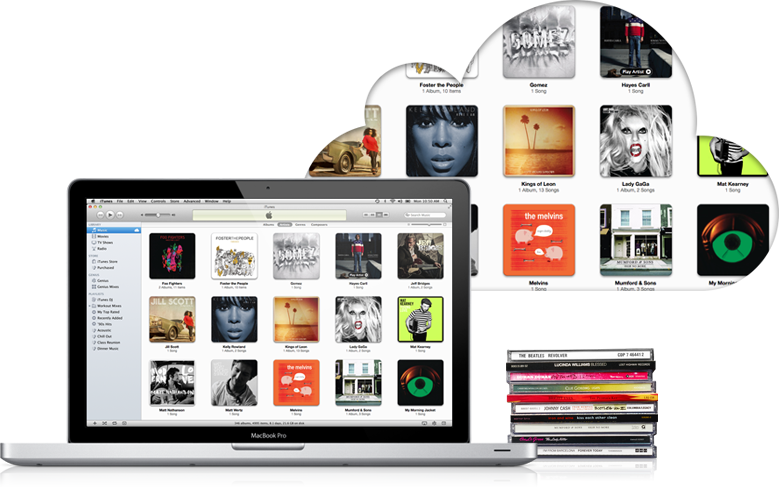
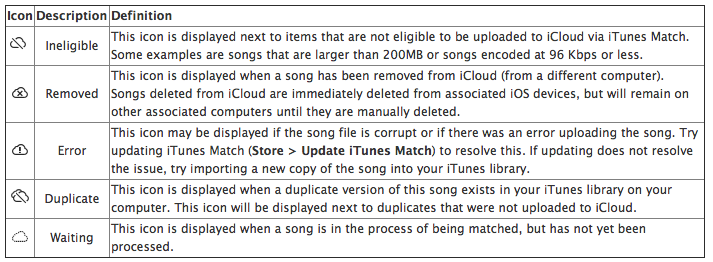
If you don’t know by now, Apple has officially opened up their iTunes Match service to the public, bringing with it 256-kbps AAC DRM-free copies of your non-iTunes purchased music for $25 a year. To help familiarize users with the service, Apple has posted the following chart walking us through some new iTunes Match related iCloud icons you’ll start to notice in iTunes.

In addition, they also dropped some helpful guides explaining the ins and outs of the service including Troubleshooting iTunes Match, How to subscribe to iTunes Match, How to add a computer or iOS device to iTunes Match, and How to delete songs from iCloud.

In the troubleshooting guide, we learn you can enable a column within iTunes to display the iTunes Match/iCloud status of any given song in your library. For example, whether it’s a “Matched” song or just “Uploaded”. To do this, click “View > View Options” or press “Command-J“, and click the “iCloud Status” checkbox (same place you also enable “iCloud download”).

A MacRumors forum poster also offers a few helpful hints, while noting iTunes Match keeps your meta-data (a nice touch if you tend to edit data associated with your songs), the post clears up some concerns regarding the intricacies of what happens with your local copies: 
Expand
Expanding
Close

Mind-controlled Siri hack uses brain activity to initiate calls using only your thoughts (Updated)

Site default logo image

Update: Some are calling this a fake, which technically wouldn’t be hard to do.

[youtube=http://www.youtube.com/watch?feature=player_embedded&v=xFIRmnRHNUM]

Apart from a press of the home button to initiate Siri, this prototype Siri hack first spotted by IntoMobile is completely thought-controlled. The guys behind Project Black Mirror have recorded brain wave activity with ECG pads, matched the incoming patterns to pre-saved digital patterns saved on a MacBook, then fed the matched commands to a speech synthesizer chip that translates the command to Siri. The video above shows the developers initiating a call, but they say they’ve linked approximately twenty-five brain wave patterns to various Siri-controlled functions, and hope to bypass having to physically press the home button with a fully automated solution in the future. IntoMobile breaks down the intricacies:

Expand
Expanding
Close

Condition One: first-person immersive video iPad app lands on App Store

Site default logo image

[youtube=http://www.youtube.com/watch?v=k7YOSDLOW2k]

We told you about Condition One before, a first-person immersive video app that combines “the power of the still image, the narrative of films and the emotional engagement of tactile experiences”. In recognition of Veterans Day, developer Danfung Dennis has finally brought the unique, interactive video experience, which as of yet features mostly video shot in war-torn regions, to the App Store with a free app for iPad…
Expand
Expanding
Close

Apple patent roundup: Dual OLED backlit iPad 3, speakers for iPod nano, and swipe and hold iOS gestures

Site default logo image

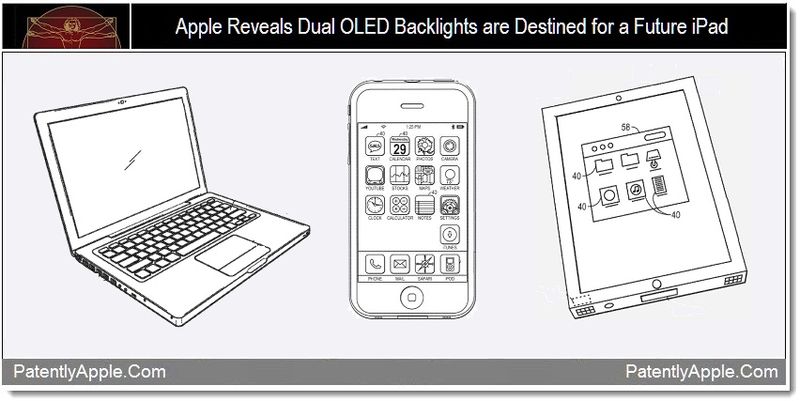
There has been no shortage of Apple patent applications published by the US Patent & Trademark Office today (via PatentlyApple). Three of the most interesting with potential to be implemented in upcoming products include a dual OLED backlighting system for future iPads, integrated speaker clip for iPod nano, and new hold and swipe gestures for iOS devices.

First up we have a patent application that backs up a report from DigiTimes claiming Apple is considering alternative backlighting systems with a dual-LED light bar design for iPad 3. PatentlyApple outlines the application which details use of multiple OLED backlights not only in a future iPad, but also potentially in a next-gen iPhone, Cinema Display, MacBook, and iMac.

The report also claims Apple mentions “television in passing” within the application, while quoting an announcement from DuPont regarding new AMOLED processing technology, PatentlyApple says that tech is already being supplied to Asian AMOLED manufacturers. Apple’s alternative backlight solutions could also lead to an overall thinner design:

“The bonding of the OLED backlight in the LCD may also increase the mechanical rigidity of the LCD, which may enable the use of thinner glass substrates and possibly reduce the thickness of the overall device. Further, an OLED backlight may generally be thinner than a typical LED backlight, and may also provide improved light uniformity without the use of light guides or additional brightness enhancing films.”

Details on iPod nano speaker patent and swipe and hold iOS gestures below the fold.


Expand
Expanding
Close

Nuance speech recognition comes to Mac App Store with Dragon Express

Site default logo image

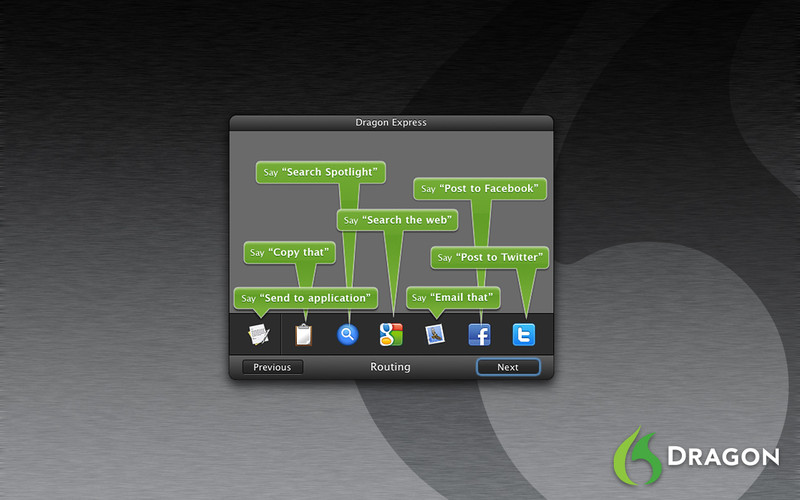
Nuance just dropped a new Dragon dictation product in the Mac App Store called Dragon Express ($49 introductory price), a scaled-back, less expensive version of their Dragon Dictate software. This new version will reside in Lion’s menubar, allowing you to activate the dictate window with a keyboard shortcut or mouse click, and begin converting your speech to text immediately. From there you’ll be able to quickly email it, run a web search with the text, copy it, or share to the usual social networking suspects.

“Dragon Express is a great app for those who are new to speech recognition or who are looking for an easy-to-use dictation tool that allows them to use their voice instead of typing,” said Peter Mahoney, senior vice president and general manager, Dragon, Nuance. “For those looking for a more full-featured speech recognition program, we recommend Dragon Dictate, which provides the full capabilities of advanced speech recognition technology.”

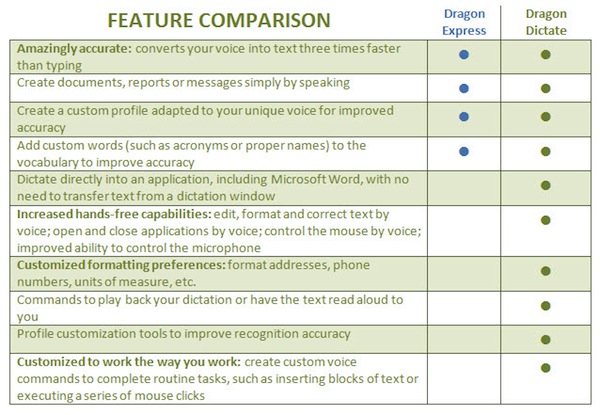
Nuance speech recognition technology is currently baked into Apple’s Siri voice-controlled assistant, although Siri co-founder Norman Winarsky told 9to5Mac in a recent interview it could likely be replaced if “better speech recognition comes along”. If you’re wondering how Dragon Express stacks up against their full-fledged dictate software, Nuance posted the chart below comparing the feature sets of the two apps:

 (via MacStories) comparing features of Express and Dictate

Full press release after the break (via MarketWatch).

Expand
Expanding
Close

Flurry: iOS + Android destroy Nintendo + Sony in U.S. portable gaming revenues

Site default logo image

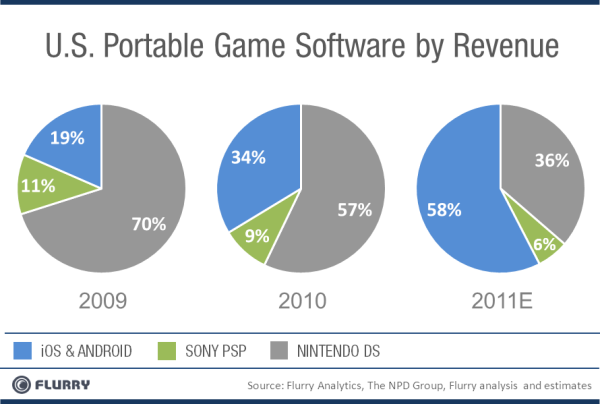
Nintendo president Satoru Iwata declared Apple and iOS as the “enemy of the future” back in 2010. Not only was he right, according to new estimates for the U.S. portable game software by revenue from Flurry Analytics, 2011 seen Nintendo’s grip on the market slide even further as iOS and Android games triple their marketshare from 20% in 2009 to 60% during 2011.

The graphic above shows U.S. revenue for Flurry’s portable gaming category- a category that now includes Nintendo DS, Sony PSP, iOS, and Android. As you can see, iOS and Android have together taken the lead from Nintendo with 58% of revenues in comparison to last year’s 34%. In comparison, Nintendo DS held 57% during 2010, while dropping to just 36% in 2011. Total US revenue jumped from $2.7 billion in 2009 to $3.3 billion in 2011.

When comparing combined game revenues of the two veterans– Sony and Nintendo– with the combined revenues of the two new guys– Apple and Google– 2011 will be the first year where the emerging platforms dominate with iOS and Android estimated to take in $1.9 billion in comparison to the DS and PSP’s $1.4 billion. That accounts for a $200 million drop for Sony and Nintendo and $1.1 billion increase for iOS and Android from 2010. Perhaps investors were right to urge Nintendo to begin developing iOS titles.

As for Nintendo, the company who captured approximately two-thirds of the market in 2009 has seen their “enemy of the future” demote them to just a third of the market. Sony clearly has some catching up to do, but is hard at work on highly anticipated new handheld devices for 2012.

Expand
Expanding
Close

Former Apple UI designer thinks touchscreens are a “hokey visual facade”, calls for innovation in “tactile richness”

Site default logo image

Former Human-Interface Inventor at Apple Bret Victor doesn’t think Microsoft’s recent vision of the future depicts a visionary or innovative approach to interaction, calling it a “timid increment from the status quo”. Victor, who worked on UI concepts for iPad, iPod nano, and “half a dozen experimental hardware platforms” at Apple, thinks envisioning future products with the standard, stiff touchscreen is limiting, calling it a “pictures under glass sacrifice” that amounts to a “hokey visual facade”. He explained on his blog:

“Pictures Under Glass is an interaction paradigm of permanent numbness. It’s a Novocaine drip to the wrist. It denies our hands what they do best. And yet, it’s the star player in every Vision Of The Future. To me, claiming that Pictures Under Glass is the future of interaction is like claiming that black-and-white is the future of photography. It’s obviously a transitional technology. And the sooner we transition, the better.”

Victor’s thinking is when using touchscreens we are sacrificing what he calls the “tactile richness” of how we manipulate everyday, real-world items. As an example, Victor describes the main functionality of a touch screen being the ability to slide a finger along the surface to manipulate elements, a motion we almost never use to manipulate real-world items. He then provides the following examples:

Expand
Expanding
Close

Apple releases iAd Producer version 2.0 to developers

Site default logo image

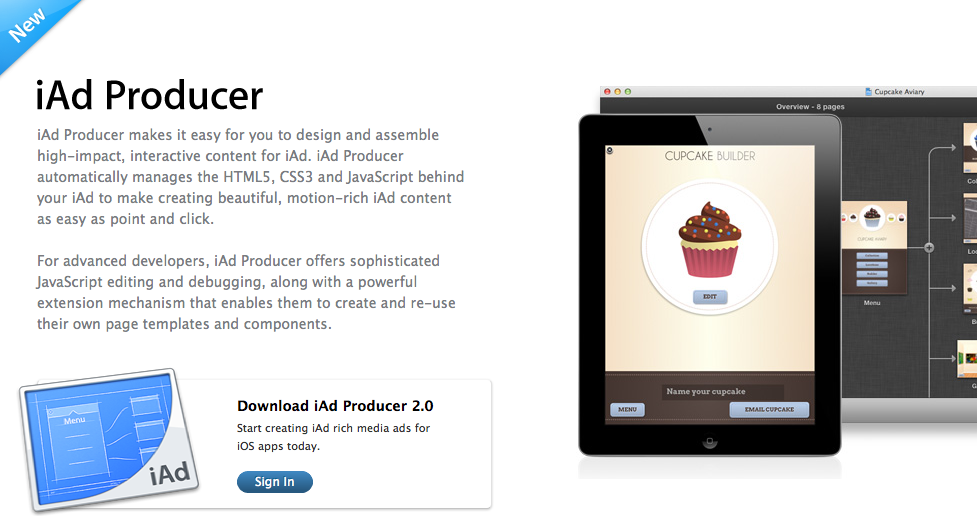
Apple just released an update to their iAd Producer developer tool that assists in the creation of HTML5, CSS3, and JavaScript-powered content for the company’s interactive, motion-rich iAd platform.

Version 2.0 brings a number of enhancements to animations and effects, overall improvements to the “visual designer” editor,  and enhanced Project Validation features that “automatically checks the size and type of image assets, and that pages and components are configured correctly”. There is also a new “Object List” providing one-click access to any element, improvements to JavaScript editing and debugging, and the usual fixes and performance improvements.

Apple developers can swing by the iAd Producer page on Apple’s dev site to learn more.

Expand
Expanding
Close

Eric Schmidt: “Android efforts started before the iPhone efforts. And that’s all I have to say”

Site default logo image

According to the Associated Press (via Winnipeg Free Press), Google’s Eric Schmidt attended a press conference during his first visit to South Korea since 2007 on Tuesday where, among other things, he was asked his opinion on Steve Jobs’ claims that Android is a “stolen product”. While calling Jobs a “fantastic human being” and saying he is still “very sad and recovering from the sense of loss”, he had this to say regarding claims that Google ripped off key features of the iPhone for Android:

“I decided not to comment on comments that are written in the book after his death. I don’t think it’s right…Most people would agree that Google is a great innovator, and I would also point out that the Android efforts started before the iPhone efforts. And that’s all I have to say.” 

Google purchased Andy Rubin’s Android in 2005 but it is likely that development of the iPhone began looong before the 2007 unveiling.  Also, Android did seem to change significantly from a Blackberry-ish type of device to a more touch centric device (coincidentally?) right about the time that iPhone was released.

It was revealed prior to the release of the authorized Steve Jobs bio penned by author Walter Isaacson that Jobs shared with Isaacson his opinions on Android’s blatant copying of innovations Apple first debuted in the iPhone. Here’s the full quote from the book:

Expand
Expanding
Close

Australian retailer moves operations outside court’s jurisdiction, won’t bow down to Apple

Site default logo image

Following a temporary injunction on the Samsung Galaxy Tab 10.1 in Australia, retailers say they aren’t prepared to back down despite legal threats from Apple and will continue selling the device by setting up new entities outside the “jurisdiction of Australian courts”, according to a report from The Sydney Morning Herald.

One retailer, dMavo, is even reorganizing their online operations and setting up an entirely new entity elsewhere in Europe to push the tablets, saying they’re ready for a “cat and mouse game” with Apple:

“We have a new entity established and a separate server – just to deal with the tablet orders – that is undergoing testing as of last Saturday…Was Apple just bluffing or do they really want to play the cat and mouse game?- dMavo managing director Wojtek Czarnocki.

It appears the move is paying off for the retailer on the short term with Czarnocki noting their  servers were “almost collapsing on a number of occasions” as demand for the tablet and press from the retailer’s stance against Apple starts to receive attention.

Mark Summerfield, senior associate and patent specialist at a Melbourne law firm, told SMH he is unsure if the move to restructure the online sales of the device will protect the retailer from any wrongdoing related to patent infringement and the pending litigation between Apple and Samsung in Australia:

Expand
Expanding
Close

Apple patent details virtual SIM Card with NFC router, could lead to thinner next-gen iPhone

Site default logo image

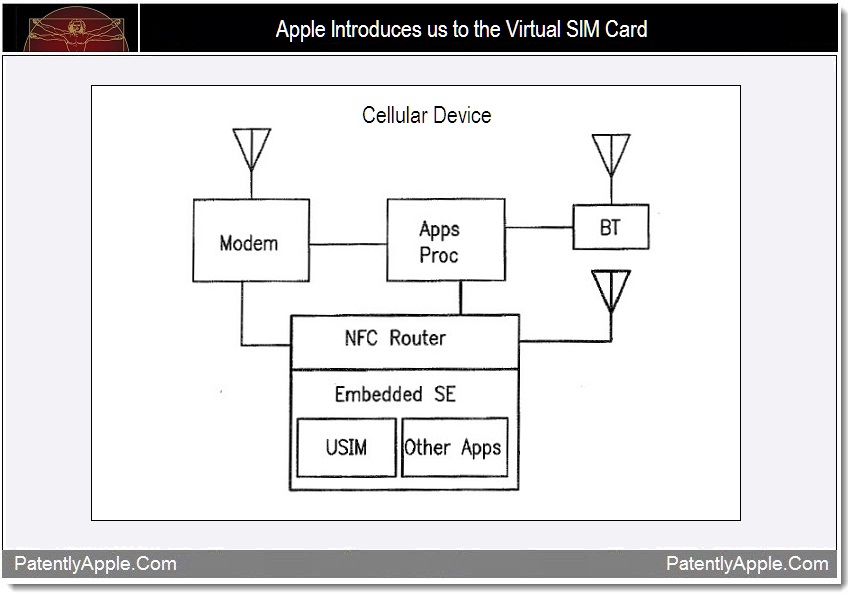
The US Patent & Trademark Office published a patent application from Apple today (via PatentlyApple) detailing how a future iPhone could potentially utilize a virtual SIM card that integrates NFC technology. We reported back in October 2010 rumors of Apple experimenting with virtual SIM cards that would essentially allow consumers to bypass carriers when purchasing an iPhone and utilize a carrier-chooser App Store app to select the network of their choosing. Not long after, reports claimed Apple ditched plans due to concerns raised by European carriers who threatened to no longer subsidize the iPhone.

Today’s patent, which was originally filed in Q4 2010, gives us a much better look into Apple’s possible plans to integrate a custom SIM into a future iOS device. Of course, as reported before, the tech would potentially allow Apple to offer the device through their retail locations and cut the carriers out of iPhone sales. However, according to PatentlyApple, Apple claims another benefit the technology would provide is the ability to produce an even “thinner, astoundingly beautiful, next generation iPhone”, thanks to the lack of a SIM card slot and associated costs. PatentlyApple walk us through the patent:

Expand
Expanding
Close

Amazon launches Kindle Lending Library in anticipation of Fire launch, Apple’s not worried

Site default logo image

In a move that might drive more e-book-only tablet users to Amazon (opposed to iBooks or elsewhere), Amazon has announced a new book borrowing service called “Kindle Lending Library”.  The move is said to encourage Prime subscriptions, which are required for the service, but could be part of Amazon’s larger strategy as the $199 Kindle Fire prepares to enter the tablet market. Either way, Apple doesn’t seem to be too worried…

The service will allow users to borrow from a selection of approximately 5,000 books (up to one a month) that have been enabled for lending by the publisher. You’ll be able to return the book at any time without due dates, and bookmarks and highlights will be saved in the event you borrow or purchase the book in the future. Included in the available content will be 100 current and previous New York Times bestsellers.

Not so fast if you’re hoping to borrow books on your iPad or Mac, however. The service will only be made available to owners of an eligible Kindle device that are also Amazon Prime subscribers. A Prime membership is currently going for $79 per year, a pricey ask for just the book borrowing service if you’re not planning on taking advantage of the 10,000 movies and tv shows, and free two-day shipping available to Prime users. The good news is the $199 Kindle Fire will come bundled with one free month of Prime.

It appears Amazon hasn’t entirely convinced publishers of the long-term benefits of the service, as they note in the press release they are actually ” purchasing a title each time it is borrowed by a reader” to provide a “no-risk trial” for publishers:

Expand
Expanding
Close

Google releases native Gmail app for iPhone, iPad, and iPod touch

Site default logo image

Update: Google has now pulled the app from the App Store following a notifications bug many users have reported experiencing. Apps guy at Google David Giouard sent out the following tweet: “Googla culpa! Sorry but we pushed a bad version of our iOS app for Gmail. More info shortly – we’re working on it.” Google issued the following apology via their Twitter account:

Following reports that Google was about to launch a native iOS Gmail app, they just announced an official app for iPhone, iPad, and iPod touch. More sceenshots below.

We’ve created a new Gmail app for iPhone, iPad, and iPod touch. We’ve combined your favorite features from the Gmail mobile web app and iOS into one app so you can be more productive on the go. It’s designed to be fast, efficient and take full advantage of the touchscreen and notification capabilities of your device. And it’s one more reason to switch to Gmail.

Features listed on the iTunes page include notifications for new messages, threaded conversation views, the much-needed priority inbox feature, the ability to send and open attachments, and of course, search capabilities. You will also have access to archiving, labeling, starring, deleting, and reporting spam. It looks like we are finally getting the full-fledged, feature-rich native Gmail experience on iOS we’ve been missing. We’ll have to take some time to really dig into the app and see how it stacks up. More screenshots after the break.


Expand
Expanding
Close

Square Card Case update brings hands-free payments with iOS 5 geofencing

Site default logo image

Square just pushed out quite an interesting update to their Square Card Case that we told you about back in August when it was first released. Taking full advantage of iOS 5’s geofencing capabilities, the updated app can now establish a tab at your favorite retailers when within a virtual boundary of 100 meters, essentially allowing for a frictionless, hands-free payment experience.

Imagine walking by your favorite retail shop and a tab with your name is automatically opened on the merchant’s Square app for iPad, just in case you happen to stop in and make a purchase. If you do stop in to make a purchase, the merchant can authorize the payment using a credit card or debit card already linked to the Card Case app on your iPhone. If you don’t stop at the shop, the tab will automatically be closed once outside of the 100 meter range.

This obviously allows you to bypass the need of removing your phone from your pocket and interacting with the Square card case app to establish a connection with a merchant. You’ll only have to confirm your name, while merchants will use the same authorization methods as before, confirming the user with an image of their face within the Square iPad app. You’ll of course have to authorize which retailers you wants tabs to automatically be opened for first.

Square director of product Megan Quinn had this to say about the new update in an interview (via Wired):

Expand
Expanding
Close

What is different about a Tim Cook Apple?

Site default logo image

It wasn’t much of a surprise when Tim Cook said “Apple is not going to change” in his letter to employees as newly appointed CEO following Steve Jobs’ resignation. Not long after that, we published a story about what we called Cook’s first “anti-Jobsian move”. Of course many questions arose surrounding how Cook’s sales and operations background may influence his leadership style, and how it might differ from Jobs.

Today we get a look at just how the company has changed under Cook’s guidance with the Wall Street Journal publishing a story detailing the moves the new CEO has made since taking over in August:

In recent weeks, Mr. Cook has tended to administrative matters that never interested Mr. Jobs, such as promotions and corporate reporting structures, according to people familiar with the matter. The new chief executive, 50 years old, has also been more communicative with employees than his predecessor, sending a variety of company-wide emails while addressing Apple employees as “Team,” people close to the company said.

According to the report, Cook was also behind a recent restructuring of the company’s education division, a move which split the business (which until now operated “fairly independently”) into a sales and marketing structure and incorporated it into the company-wide sales and marketing divisions. The restructuring will place additional responsibilities on Apple execs Phil Schiller and John Brandon.

Citing “former executives” and others close to the company, the WSJ claims Cook will also “be more open with shareholders” and note he’s expressed desire to meet with investors more often than Jobs. After Cook’s statement that he’s “not religious about holding cash or not holding it” during Apple’s earnings call last month, it’s not much of a surprise many expect the new CEO to be more open to stock buybacks or dividends as well.


Expand
Expanding
Close