AAPL Company

See All Stories

Breaking news from Cupertino. We’ll give you the latest from Apple headquarters and decipher fact from fiction from the rumor mill.
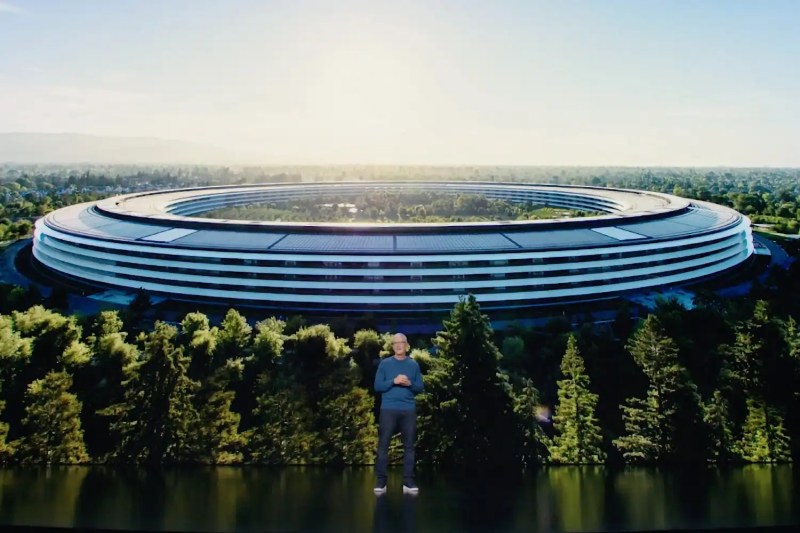
Apple Park Tim Cook AAPL

AAPL is a California-based computer company that became the most successful smartphone company in the world.

AAPL defined by Apple

Here’s how Apple defines itself:

Apple revolutionized personal technology with the introduction of the Macintosh in 1984. Today, Apple leads the world in innovation with iPhone, iPad, Mac, Apple Watch, and Apple TV. Apple’s five software platforms — iOS, iPadOS, macOS, watchOS, and tvOS — provide seamless experiences across all Apple devices and empower people with breakthrough services including the App Store, Apple Music, Apple Pay, and iCloud. Apple’s more than 100,000 employees are dedicated to making the best products on earth, and to leaving the world better than we found it.

Key AAPL history

From Apple I to iMac

Apple was founded in 1976 by Steve Jobs (Steve), Steve Wozniak (Woz), and (briefly) Ronald Wayne as a business partnership: Apple Computer Company. The following year it became Apple Computer, Inc. The company’s first product was the Apple I, a personal computer hand-built by Woz and sold in part-completed kit form. The Apple II and Apple III followed.

The modern Apple as we know it today began in 1983, with the launch of the first personal computer with a graphical user interface, the Lisa. Way too expensive to succeed, it was replaced by the Macintosh in 1984, launched with the single showing of a Ridley Scott commercial during the Super Bowl. The Macintosh transformed the world’s understanding of what a computer was, and would eventually lead to Microsoft adopting the GUI approach.

Steve Jobs and then Apple-CEO John Scully fell out in 1985, when Steve wanted to focus on the Macintosh while Scully wanted to put more attention on the Apple II, which was still selling well. That led to Steve being forced out of the company and going off to form NeXT.

Apple focused on selling Macintosh models at the highest possible margins, but would eventually fall foul of a mix of unsustainable pricing in the face of competition from Windows machines, and an overly complex product lineup. By 1996, the company was in trouble, and in 1997 Steve was brought back, along with the NeXT operating system, which would eventually form the basis of Mac OS X.

Steve simplified the Mac lineup and had industrial designer Jony Ive work on a whole new look for a consumer desktop Mac, the colorful iMac. The iMac, like the original Macintosh, again changed the world’s understanding of what a computer was, and who should want one.

From Apple Computer, Inc. to Apple, Inc.

In 2001, Apple launched the iPod. Although this wasn’t the first mp3 player, it was massively better than anything on the market at the time, and succeeded in turning a geeky piece of technology into a consumer electronics product with mass-market appeal.

The success of the iPod paved the way into other mobile devices. Apple was working on what would eventually become the iPad, when Steve realized that this was the basis of a smartphone. He diverted the team’s work into this, to launch the iPhone in 2007. The iPad launched later, in 2010.

The iPhone was yet another transformational product. While most other smartphones of the time were clunky devices with a keyboard and stylus, the iPhone was a sleek-looking device operated with a finger, and so simple that no user guide was needed. It was with the launch of the iPhone that Apple Computer, Inc. was renamed to Apple, Inc.

From Intel to Apple Silicon

While the iPhone, iPad, Apple Watch, and more are made with Apple-designed processors, the Mac lineup has historically relied on third-party companies for its CPUs. Over the years, Macs progressed from Motorola 680000 series chips through PowerPC to Intel.

In 2020, Apple began a two-year transition to the final stage in that journey, with Macs too finally getting Apple-designed chips. The first such is the M1 chip, used in the latest Mac mini, MacBook Air, and 13-inch MacBook Pro. Other Apple Silicon Macs followed.

AAPL today

Apple is one of the largest companies in the world. It was the first publicly traded company to hit a trillion-dollar valuation in 2018, $2 trillion in 2020, and $3T in 2022.

The company’s product lineup includes five different Mac families (MacBook Air, MacBook Pro, iMac, Mac Pro, and Mac mini); four iPad ranges (iPad mini, iPad, iPad Air, iPad Pro); four iPhone 12 models (12, 12 mini, 12 Pro, 12 Pro Max); three main Apple Watch models (SE, Series 3, Series 6); as well as other products, including Apple TV, AirPods, and HomePod mini.

In addition to hardware sales, Apple derives a growing proportion of its income from Services, including the App Store, iCloud, Apple Music, and Apple Pay.

Could Amazon or Alphabet beat AAPL to be the first trillion-dollar company? [Poll]

Back in 2014, some of the biggest investors in the U.S. suggested that Apple could be the first company to achieve a trillion dollar valuation by market cap, having gotten two-thirds of the way there that year before later slipping. Investment site Motley Fool yesterday acknowledged that the company could indeed be just ‘one home-run product’ away from this, but made the seemingly-unlikely argument that Amazon may get there first …


Expand
Expanding
Close

Apple to build first R&D center in China by the end of the year

Beijing, China

Reuters reports that Apple is to build its first research and development center in China, citing a statement by the official Chinese state broadcaster.

Tim Cook reportedly made the commitment to Vice Premier Zhang Gaoli, stating that the center will be built by the end of the year.

The pledge comes after the head of China’s industry and technology regulator in May told Cook he hoped Apple could deepen its cooperation with the country in research and development and stressed information security.

Apple likely has two reasons for investing in R&D within China …


Expand
Expanding
Close

Warren Buffett’s Berkshire Hathaway boosts AAPL stake to almost $1.5B, likely made $194M profit to date

One-time AAPL skeptic Warren Buffett appears to now be strongly invested in the company’s future. Just three months after it was discovered that his conglomerate Berkshire Hathaway had purchased more than a billion dollars worth of AAPL stock, a new regulatory filing reveals that the Berkshire has boosted its stake by 55% to a holding worth $1.46B, reports Reuters.

Berkshire owned 15.23 million Apple shares worth $1.46 billion as of June 30, up from 9.81 million shares as of March 31, according to a regulatory filing from Buffett’s Omaha, Nebraska-based conglomerate … 


Expand
Expanding
Close

An insider talks Apple Watch development: engineering versus design; innovation; secrecy

Bob Messerschmidt is in a good position to talk about the development of the Apple Watch. It was his heart-rate sensor startup that Apple bought for use in the Watch, and the company then hired him from 2010 to 2013 to work on the project. An interview with Messerschmidt by FastCo provides a fascinating glimpse into the world of developing a new Apple product.

Of particular interest is the tension between the engineering and design teams, engineers putting forward the best approach from a technical perspective, designers pushing back where that approach conflicts with their knowledge of trends, fashion and user behaviour …


Expand
Expanding
Close

Apple is gifting flag-themed Watch bands to Olympic athletes in Rio, skirting official sponsorship

Apple isn’t an official Olympics sponsor, but it’s managed to still take advantage of the event for its own marketing purposes with limited-edition Apple Watch bands themed with country flag designs. Not only is it selling those watch bands for 14 different country flags to coincide with the Olympics this month, it’s also reportedly giving them away for free to athletes at its Apple Store in Rio (via iphone-ticker.de).


Expand
Expanding
Close

Site default logo image

Apple looking to further expand its presence in the Seattle-area

A week following Apple’s $200 million acquisition of Seattle-Based machine learning and AI company Turi, GeekWire is now reporting that Apple is looking to dramatically expand its presence in the state. Currently, Apple occupies less than two floors of an office tower in downtown Seattle. This expansion, however, could see Apple occupy “several hundred thousand square feet” of space.


Expand
Expanding
Close

Apple rehires former senior iOS engineer turned Flipboard co-founder for health software

Site default logo image

As it continues to expand its health services for users, Apple has rehired Flipboard co-founder Evan Doll. According to Doll’s LinkedIn profile, he will work in the company’s health software department. Doll apparently rejoined Apple last month as a “director of health software engineering” (via Bloomberg).


Expand
Expanding
Close

Apple details its ConnectED efforts, says it has provided over 32,000 devices to students

Site default logo image

Apple has a storied history of being popular in classrooms around the world. The company today announced that its ConnectED efforts have helped the company reach more than 32,000 students throughout the United States. Most recently, Carver Elementary School in Indianola, Mississippi joined the ConnectED program, becoming the 66th school to which Apple has provided iPads.


Expand
Expanding
Close

iPhone sales growing again in US & Europe, iPhone outsells Samsung S7 in US, iPhone SE best-selling phone in UK

The latest data from Kantar Worldpanel shows that iOS returned to growth in Q2 in both the U.S. and the five biggest markets in Europe in Q2, Apple’s share of the smartphone market growing by 1.3% in the USA and 3.1% in the UK. This gave Apple a 31.8% share in the U.S. and 37.2% in the UK.

In the USA, the iPhone 6s/6s Plus outsold the Samsung Galaxy S7/S7 edge to make the iPhone the best-selling device in the quarter at 15.1% against Samsung’s 14.1%, with the iPhone SE taking third place at 5.1% …


Expand
Expanding
Close

In new interviews, Eddy Cue explains why Apple launched a public beta for iOS, as Tim Cook outlines future ambitions

A FastCo piece based on interviews with CEO Tim Cook and SVPs Eddy Cue and Craig Federighi may be long on commentary and light on quotes, but it does provide a few interesting insights along the way.

Apple’s decision to offer a public beta program for iOS, for example, was in direct response to the Maps debacle …


Expand
Expanding
Close

Apple buys Seattle-based Turi to bolster machine learning and AI efforts

Site default logo image

Apple has successfully acquired Turi, a machine learning company based out of Seattle. According to sources in discussion with GeekWire, Turi’s team will be able to remain in the Seattle region as Apple builds out the technologies further. Turi’s original product, GraphLab, was developed as an open source project for machine learning tasks, but eventually moved into data-mining tasks as it out-performed competitors.


Expand
Expanding
Close

Nobel prize-winning economist describes Apple’s Irish tax arrangements as fraudulent

Nobel prize-winning economist Joseph Stiglitz has said that the arrangements by which Apple attributes a large chunk of its European sales to a small unit in Ireland amount to a ‘fraud.’ Bloomberg reports that Stiglitz made the comment when asked about the feasibility of Clinton and Warren developing a plan to repatriate Apple’s overseas cash …


Expand
Expanding
Close