China

See All Stories
China

China has been fundamental to Apple’s historical success, but is also arguably the greatest risk to the company’s future.

Why are most Apple products made in China?

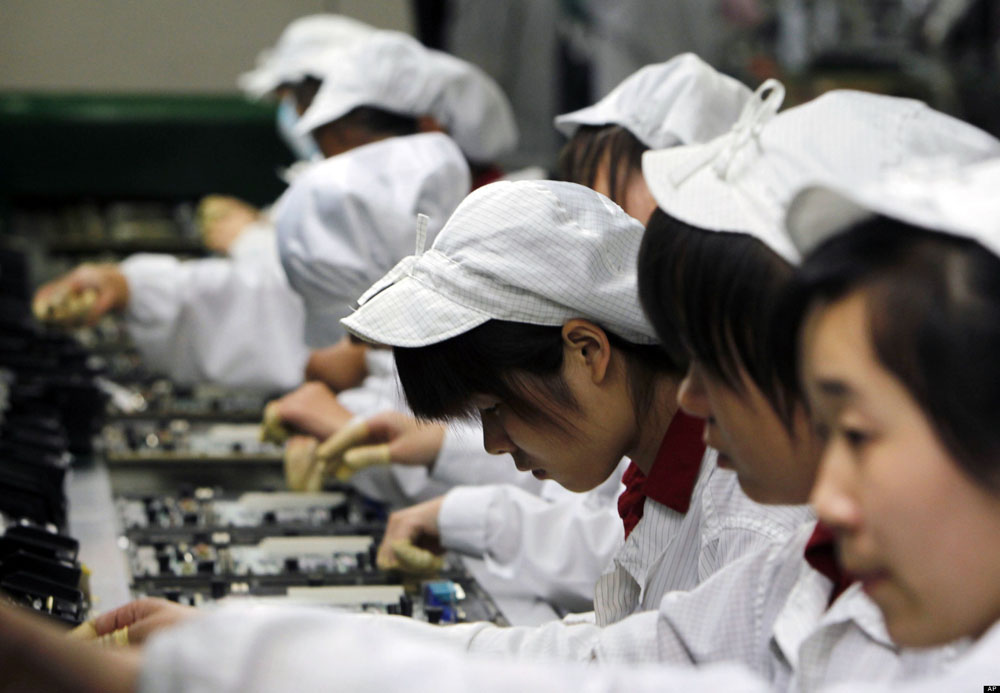
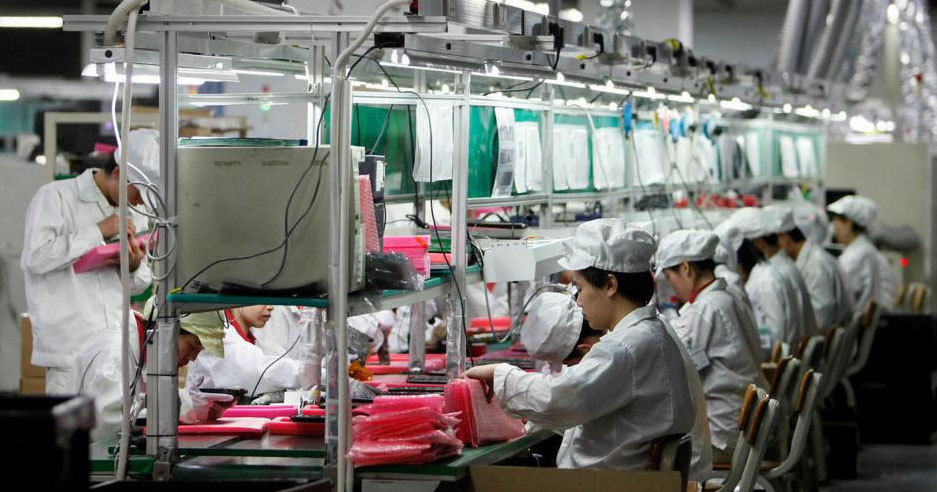
Although everyone assumes Apple products are made in China because labor is cheap there, that’s only part of the story – and an increasingly small part, as the company’s assembly partners move toward more and more automated operations.

Steve Jobs originally transferred most Apple manufacturing to China because it was the only country in the world with a huge ready-made supply-chain network, and the ability to scale up production almost overnight. There are three main reasons China – and specifically the Shenzhen area – is such a powerful manufacturing center.

First, the city is strategically placed, serving as the gateway between mainland China and Hong Kong. It is one of the largest shipping centers in the world, with a massive container port.

Second, the Chinese government established Shenzhen as the first Special Economic Zone (SEZ) in the country. SEZs are designed to encourage enterprise through relaxed planning regulations and generous tax incentives – and crucially, to facilitate foreign investment in local companies. It is this, as much as its geographical advantages, which has enabled it to grow at such a pace.

Third, that SEZ was established way back in 1980, meaning that the city has had over 40 years to grow into the manufacturing center of the tech world. Apple relies on a huge network of suppliers and sub-contractors, some of which may make just a single tiny component. The majority of them are based in Shenzhen and its immediate surrounds, so the logistics of bringing everything together in one place for assembly are straightforward.

What are the risk factors with China?

Being over-dependent on China carries a number of risks.

First, there is the generic one: Being overly dependent on any one country is a strategic risk. For example, the COVID-19 pandemic originated there, and had a massive impact on manufacturing capacity. Anything from a natural disaster to political upheaval could disrupt operations within a single country, so it is always wise to have a diverse range of manufacturing centers around the world.

Second, the relationship between the US and China has often been fraught. The trade war started by the previous US administration was a particularly low point, but continued tensions mean that there is always a risk of disruptions to trade between the two countries.

Third, it is increasingly damaging to Apple’s reputation to be so closely associated with a country that has a worsening human rights record – especially when the iPhone maker has no choice but to comply with local laws, however much they may conflict with the company’s own values. Apple has been required to remove VPN and a variety of other apps from the Chinese App Store, allow the iCloud data of Chinese customers to be stored on government-controlled servers, and more. Additionally, there have been growing reports of forced labor in China, including within many different areas of Apple’s supply chain.

What is Apple doing about it?

Apple has been working for a long time on diversifying its manufacturing operations, and has in recent years accelerated the pace at which it is doing so.

As explained above, this is far from an easy undertaking, but Apple now has major manufacturing operations in India, Thailand, Malaysia, and the Philippines, among other countries.

In India in particular, we are seeing the very early stages of a complete supply-chain infrastructure as the government uses a mix of carrot and stick to encourage companies to manufacture more of their components within the country – namely, tariffs on imports of components and tax breaks for local production. COVID-19 lockdowns in China also saw Apple move some iPad production to Vietnam for the first time, but it’s clear that the risks of over-dependence on China have never been greater.

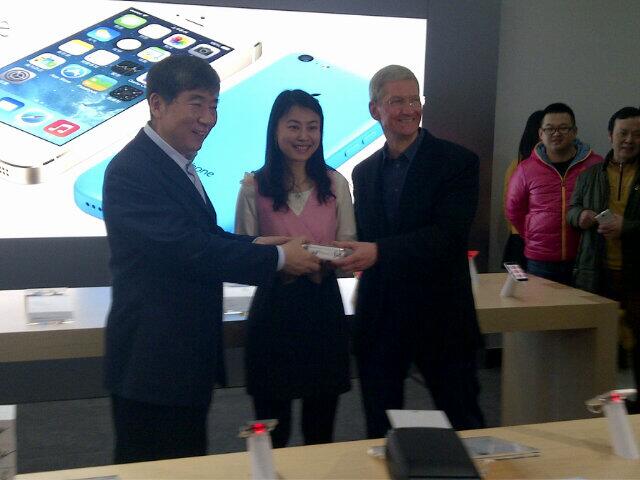
Apple CEO Cook hands out autographed iPhones at China Mobile launch, says ‘great things’ coming

Site default logo image

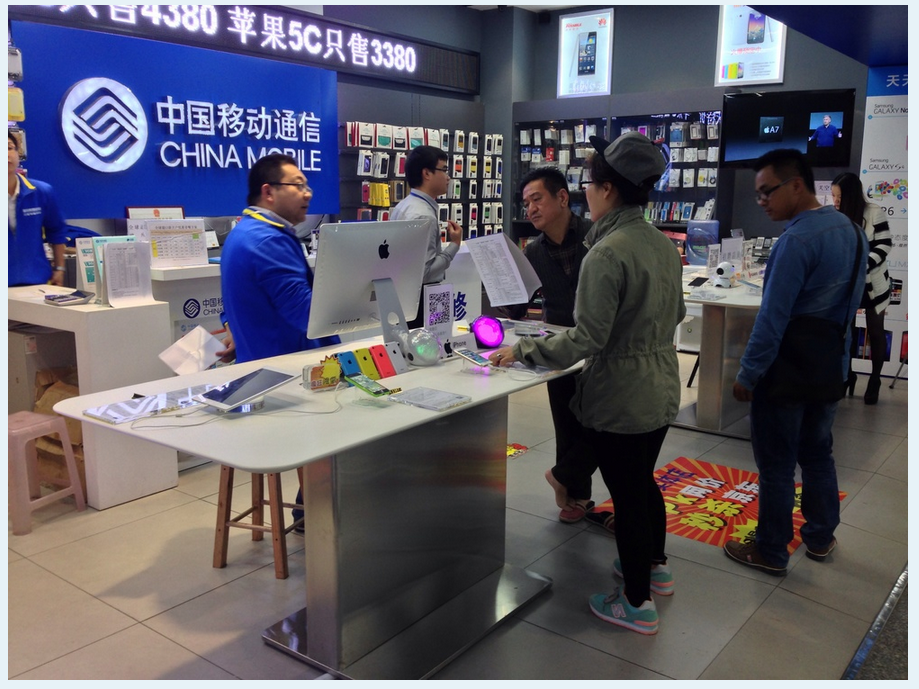
As planned, iPhone sales have started via China Mobile, the largest carrier in China, today. The official iPhone China Mobile deal, which covers both the iPhone 5s and iPhone 5c, was announced in December. Earlier this week, Apple CEO Tim Cook promoted the event with multiple interviews, calling the partnership a “beginning.” Subsequent reports indicated that millions of iPhones have already been ordered through China Mobile…


Expand
Expanding
Close

In rare TV interview, Tim Cook says he is ‘honored’ to be doing business with China Mobile

Site default logo image

In a rare TV interview, Tim Cook described this week’s launch of the iPhone on China Mobile as “a watershed day” for the company. While the soft-spoken Apple CEO is noted for the humbleness with which he speaks, it’s hard to imagine him describing Apple as being “honored” to do business with many other companies.

I’m so honored to be doing business with … China Mobile. It’s a huge announcement…we’re incredibly impressed with them, we have deep respect for them, and have had from the very first discussion that we’ve had together” … 
Expand
Expanding
Close

Site default logo image

Tim Cook calls China Mobile launch ‘a beginning’ as Chairman says ‘multi-million’ iPhones ordered

(Image via Getty Images)

Ahead of the launch of the iPhone on China Mobile on January 17th, Apple CEO Tim Cook sat down with the Wall Street Journal and other publications for a brief interview. Cook hints that this iPhone deal is only the beginning of a longer-term partnership between Apple and China’s largest mobile carrier:

Speaking in a small media briefing to Chinese media and The Wall Street Journal, Apple Chief Executive Tim Cook said he is “incredibly optimistic” about the outcome of the cooperation with the Chinese carrier.

“We’ve gotten to know each other….today is a beginning, and I think there are lots more things our companies can do together in the future,” Mr. Cook said.

Cook is likely referring to future generations of the iPhone, and other products such as the iPad, appearing on China Mobile’s network in the future. Cook also shares that half a million of the App Store developers are from China:

Mr. Cook said Apple wants to reach as many Chinese consumers as possible by offering iPhones through China Mobile, and added that the country has more than half a million people writing apps for the U.S. company’s iOS operating system.

“Apple has always been about making the best products, not the most products, so that’s always our North Star and that’s not going to change ever,” said Mr. Cook.

“Multi-millions” of iPhones have already been pre-ordered through China Mobile, according to a statement from China Mobile’s Chairman in the same interview. Earlier today, the WSJ reported that over one million iPhone 5s units were shipped from Foxconn to China Mobile. 


Expand
Expanding
Close

Site default logo image

Report: Apple ships 1.4 million iPhone 5s units to China Mobile ahead of Jan. 17 launch

The Wall Street Journal reports that Apple has shipped approximately 1.4 million iPhone 5S units to China Mobile in preparation of the carrier’s iPhone launch on Jan. 17. The report notes it likely doesn’t present sales for the full month of January with preorders having kicked off under three weeks ago, but it is a good indication of how many new iPhone customers Apple could potentially get on a monthly basis through the deal:

“Shipping one million or more iPhones to a single carrier per month is substantial. But we have limited visibility beyond this month as Apple hasn’t informed Foxconn of  the volume for the next shipment to China Mobile,” said the person.

Apple finally made things official last month when it announced in a press release that it had struck a deal with China Mobile to begin selling the iPhone 5s and 5c, marking the first time the iPhone would be sold through the carrier’s retail stores. China Mobile, the world’s largest carrier with over 760 million subscribers, started taking preorders for the device on December 25 following Apple’s announcement. No word on estimates for iPhone 5c shipments, but China Mobile is set to begin selling that device too starting Friday.

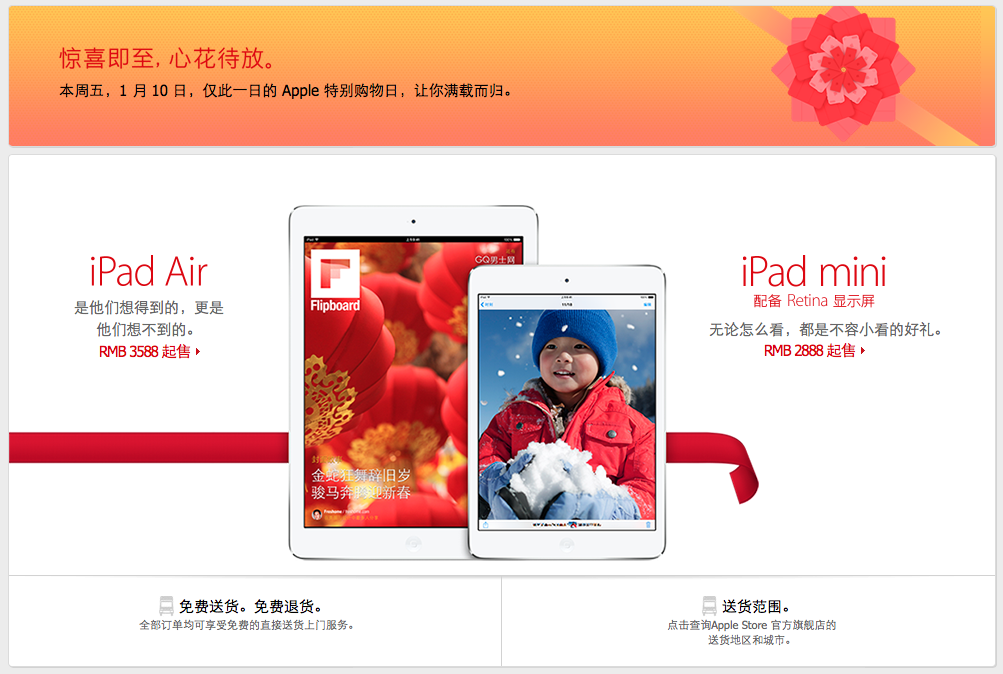
Apple Asia online stores offer deals on iPhones, iPads, & Macs for Lunar New Year sale

Site default logo image
 

Earlier this week we told you that Apple had announced an upcoming sale in many of its Asian online stores to celebrate the Chinese Lunar New Year taking place at the end of January. The sales see Apple offering discounts in China, Thailand, Korea, Singapore, Hong Kong, Taiwan, and Malaysia online stores similar to deals on offer for Black Friday in the US and other countries.

This year Apple is offering cash discounts on the usual products— up to $40 off iPads, $100 off Macs, and smaller discounts on iPods and Smart Covers— it’s also offering a rare discount on iPhones at around $50 off both the iPhone 5s and 5c. In addition, a much larger selection of accessories are on sale compared to the company’s Black Friday sale including popular products from Parrot, Apogee, Belkin, LaCie, and Apple.

Apple opens official online store through Chinese e-commerce site Tmall

Site default logo image

Apple has launched a new online store through Tmall, a Chinese popular e-commerce site Tmall, reports the Wall Street Journal. Tmall, which is owned by the Alibaba Group, is already home to thousands of official retail outlets for other brands, such as Nike. The new storefront will not replace Apple’s own first-party store, but will instead complement it.

Like the store on Apple’s website, the Tmall store will be participating in Apple’s “Red Friday” sales event later this week. Unlike Apple’s eBay store in the United States, the Tmall site sells brand-new products rather than refurbished ones.


Expand
Expanding
Close

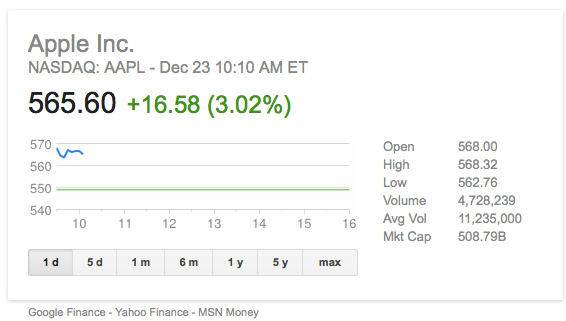
AAPL stock more than 3 percent up on China Mobile news

Site default logo image

After the fall in Apple’s stock value when the China Mobile failed to materialise as expected on 18th December, yesterday’s news that the deal had finally been concluded sent the stock shooting back up again, having climbed more than 3 percent at the time of writing (it was up 4% in pre-market trading but has settled).

With the WSJ having reported that 18th December was the day, the market was clearly jittery when nothing materialized. Everything had appeared to be in place: regulatory approval, Apple putting the handsets on sale in China on the opening weekend, China Mobile posters, a pre-order website, in-store displays – and 4G service up-and-running on schedule … 
Expand
Expanding
Close

Delayed China Mobile iPhone launch may be due to renegotiations based on 5c vs 5s sales

Site default logo image

Photo: arstechnica.net

KGI’s Mingchi Kuo has suggested in a note to investors that the mystery of the apparent delay in the iPhone launching on the world’s largest carrier, China Mobile, may be due to last-minute renegotiations with Apple on volume discounts across the two new models.

We believe weak sales of iPhone 5C may trigger a re-negotiation of the Apple-China Mobile partnership. While previously we estimated that Apple originally planned the TD-LTE version would account for 30% of total iPhone 5C shipments, our latest survey indicates that demand for the TD-LTE iPhone 5C has declined dramatically due to 5S being far more popular than 5C among China Mobile subscribers […]

We believe this would necessitate a re-negotiation of the Apple-China Mobile deal and therefore defer its finalization …


Expand
Expanding
Close

AAPL stock down as market ponders the mystery of the missing China Mobile deal

Site default logo image

AAPL stock took a 1.8 percent hit in pre-market trading as China Mobile not only failed to announce its iPhone launch today as had been expected, but its chairman Xi Guohua specifically told reporters that the world’s largest carrier had no announcement to make.

While neither Apple nor China Mobile ever officially confirmed today as the launch date, the Chinese government confirmed the date as the one on which 4G service would begin, China Mobile had said it would launch “a new brand” today and the WSJ seemed confident last month that today was the day.

The deal has been a very long time in the coming, but all the pieces of the puzzle looked to have fallen into place … 
Expand
Expanding
Close

iPhone market share in China more than doubled following 5s and 5c launch

Site default logo image

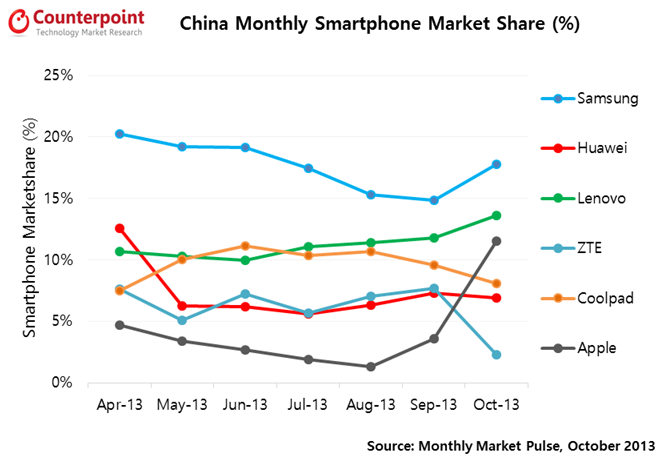
Data from smartphone market intelligence specialist Counterpoint shows that iPhone market share in China more than doubled between September and October even before launching on the country’s biggest carrier, China Mobile.

Apple’s market share rose from just under 5 percent to 12 percent, taking it from 6th place to 3rd place, behind Samsung and Lenovo … 
Expand
Expanding
Close

Pegatron faces renewed labor scrutiny after death of under-age worker at iPhone 5c factory [Updated]

Site default logo image

Update: Apple has issued a statement stating that it sent medical experts to investigate and found no link to the boy’s employment. It has not commented on the fact that the worker was under-age, but it has been revealed that he used his 21-year-old cousin’s ID to get the job.

Last month we sent independent medical experts from the U.S. and China to conduct an investigation of the (Pegatron) factory. While they have found no evidence of any link to working conditions there, we realize that is of little comfort to the families who have lost their loved ones.

Apple has a long-standing commitment to providing a safe and healthy workplace for every worker in our supply chain, and we have a team working with Pegatron at their facility to ensure that conditions meet our high standards.

Original story:

China Labor Watch says Pegatron has failed to properly explain the deaths of five young workers at a factory making the iPhone 5c, including one who was found to be just 15 years old, reports the Sydney Morning Herald.

Pegatron, the Taiwanese manufacturer that employed him, said the workplace environment at the Shanghai plant was not the cause of his illness. But a spokeswoman acknowledged that several other young workers at the factory had also died in the past few months […]

“Considering the sudden deaths of five people and the similar reason of the deaths, we believe there should be some relations between the tragedy and the working conditions in the factory,” said Li Qiang, who runs China Labor Watch … 
Expand
Expanding
Close

WSJ: Apple and China Mobile strike a deal, iPhone finally headed to world’s largest mobile carrier around Dec. 18

Site default logo image

The Wall Street Journal reports that Apple has finally reached an agreement with China Mobile to carry the iPhone. China Mobile is currently the world’s largest mobile carrier with well over 700 million subscribers. Yesterday a subsidiary of the carrier started taking pre-orders for the smartphone, though the page was quickly pulled from its website.

[tweet https://twitter.com/MarketWatch/status/408416053140946945 align=’center’]

In September the advertisment above leaked to the media. The image is a promotion for the iPhone 5s and 5c running on China Mobile’s network. The Chinese government, which controls China Mobile, confirmed that the phone would be available on December 18th last month, although neither Apple nor China Mobile would actually confirm the rumor.

China Mobile subsidiary briefly accepting pre-orders for iPhones in possible soft launch

Site default logo image

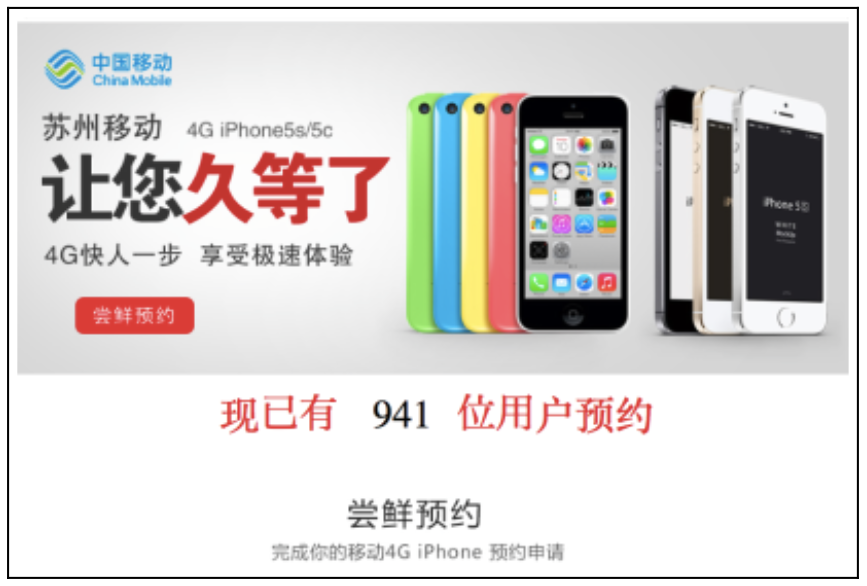
With the iPhone launch on the biggest carrier in the world’s most populated market confirmed for 18th DecemberFortune spotted what appears to have been a soft launch in the city of Suzhou. The city is one of the richest in China, so would be a logical place for an early launch.

The attached screen grab comes from a website owned by a subsidiary of China Mobile Limited in Suzhou, a city of 5 million just west of Shanghai.

The site went live late Monday local time, when it began taking pre-orders for the iPhone 5S and iPhone 5C … 
Expand
Expanding
Close

China Mobile launch for iPhone as good as confirmed for 18th December [Update: It’s official]

Site default logo image

Image: appadvice.com

Update: The Chinese government has now confirmed this date.

The iPhone looks set to be launched by China Mobile – the biggest carrier in the world’s biggest country – on Wednesday 18th December, reports the WSJ. While neither the carrier nor Apple have made a definitive announcement, China Mobile has said this is the date it will “introduce a new brand.”

The launch is expected during the company’s 4G global partners conference in Guangzhou, according to China Mobile’s website. An executive at the world’s largest mobile operator has said it is ready to start fourth-generation mobile services, though China has yet to issue 4G licenses. In September, China’s Telecom Equipment Certification Center gave Apple Inc.the final license necessary for the iPhone to run on China Mobile’s network … 
Expand
Expanding
Close

Site default logo image

Foxconn stops iPhone 5c production at one factory, switches capacity to 5s

Photo: Sunday Mirror

Foxconn is ceasing production of the iPhone 5c at one of its factories in order to boost production of the iPhone 5s, according to sources cited by Digitimes.

Foxconn Electronics (Hon Hai Precision Industry) will stop production of the iPhone 5c at its factory in Zhengzhou, northern China, and shift the capacity to iPhone 5s, according to industry sources.

Digitimes is not the most reliable of sources, but this one gels with other reports suggesting that Apple is cutting back on production of its plastic handset in order to keep up with demand for the iPhone 5s.

The reports can, of course, be viewed as indicating either success for the 5s or failure for the 5c. Given the numbers reported last month, following on from record opening weekend sales, it seems pretty clear that while Apple got its predictions wrong, the reason is good news rather than bad: more people than expected opting for the high-end handset.

Site default logo image

Tim Cook forges closer ties to China by joining board of prestigious Beijing university

In a move likely aimed at fostering high-level networking opportunities in China, Apple CEO Tim Cook has joined the advisory board of Tsinghua University’s School of Economics and Management (SEM), according to its website (via TechCrunch).

The board includes several key politicians, including Wang Qishan, the Secretary of the Central Commission for Discipline Inspection, the Communist party’s anti-corruption body; Chen Yuan, the Vice Chairperson of the 12th National Committee of the Chinese People’s Political Consultative Conference (CPPCC); Ma Kai, one of China’s fourth vice premiers; and Zhou Xiaochuan, the Vice Chairman of the 12th National Committee of the CPPCC.

Tim Cook has described China as a “hyper-market” for Apple, with the iPhone 5c reportedly developed largely with developing markets like China in mind, and the gold model of the iPhone 5s designed in part to appeal to Chinese buyers.

Like iPad 3, new iPad mini could be technically thicker to fit Retina Display

Site default logo image

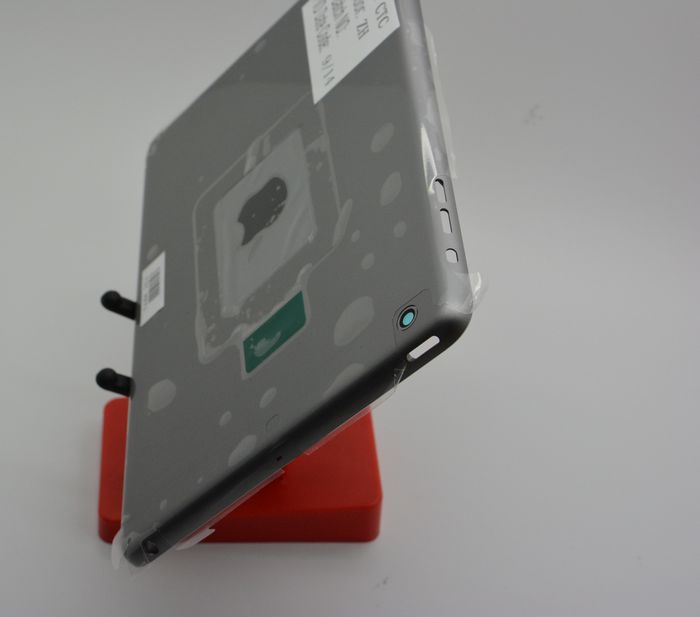
Space Gray iPad mini 2 casing (via <a href="http://sonnydickson.com/2013/09/27/hands-on-with-the-ipad-mini-2-in-space-gray/">Sonny Dickson</a>)

One of the most exciting new features of the upcoming iPad mini successor is perhaps the long-rumored Retina display. Apple has been developing a Retina-version (Apple’s term for the crisper display found on iPhones, the larger iPads, and some MacBook Pros), but the company has been reluctant to ship it due to cost, hardware size, and battery-life concerns. Though for October 22nd, it sounds like Apple has an iPad mini with Retina display ready to go.

But, it could potentially have a very minor trade-off: some extra thickness and width that will likely not be noticeable to the human eye. Just like the the full-sized iPad went thicker (and heavier in that case) to accommodate the much higher-resolution Retina display, the iPad mini could slightly bulk up to fit the new display, according to Macotakara. At a conference in China, the website went hands-on with some purported cases for the next-generation iPad mini. These cases fit a device with a thickness of 7.5mm and width of of about 0.2mm wider than the current iPad mini…


Expand
Expanding
Close

Apple now says iPhone 5s ships in 2-3 weeks, customers seeing mid-November deliveries

Site default logo image

Apple today has changed its iPhone 5s shipping estimates in the United States (and other countries such as China, Canada, and Australia), to note that the phones will ship in 2-3 weeks. Previously, Apple said that phones would ship in October. The high-end of the new quoted time will put some phones in the range of shipping during the first week of November…


Expand
Expanding
Close

Apple TD-LTE job listing serves as additional confirmation for China Mobile iPhone

Site default logo image

While a possible deal with China Mobile, one of the world’s largest telecoms, was rumored for quite sometime leading up to launch of the new iPhones, the company said in August that it was still working out “commercial and technical issues” with Apple. Today, Bloomberg points us to an Apple job listing in China that provides some evidence that the company is indeed preparing to launch the iPhone on the carrier’s network:

The manager, who will be based in Beijing, will “support and drive the carrier approval of mobile phones,” Apple said in an advertisement on its China website. The position seeks experience with TD-SCDMA, China Mobile’s own third-generation standard that isn’t used by other carriers.

On top of TD-SCDMA, the job listing is also seeking an engineer with experience in TD-LTE, which is the LTE standard that China Mobile has quickly been rolling out. Back in August the often reliable KGI analyst Mingchi Kuo claimed that Apple was ramping up TD-LTE supported iPhone 5c production and estimated that the iPhone 5s and 5c on China Mobile could account for penetration of 25% and 35% of total shipments for the two devices. Currently the carrier has approximately 756 million subscribers, around 63% of the 1.2 billion wireless subscribers in China.
Expand
Expanding
Close

Chinese iPhone buyers desperate for gold turn to $2 stickers

Site default logo image

The new gold color option for the iPhone 5s might be driving higher demand over the 5c in China, but for those unable to find or afford the more expensive model, gold stickers and skins have quickly become an inexpensive alternative. The Wall Street Journal reports that a long list of retailers in the country have started offering gold skins for the iPhone 5/5s, allowing users to give their iPhone a similar gold appearance for as little as $2.

“Dear, you don’t need to sell your kidney for the new iPhone,” one of the ads said.“Instead of paying 5288 yuan (the retail price of the 16-gigabyte iPhone 5S in China), you only need to spend 35 yuan to make your iPhone 5 look like a golden iPhone 5S in seconds.”

The report notes that online retailers through taobao.com have sold thousands of gold iPhone skins in less than a month, and there is certainly no shortage of similar options through Amazon and other online retailers.

The new gold iPhone is in limited supply at most retailers around the world, and even Apple’s own retail stores have had extremely limited supply of the model compared to other color options since the device’s launch on September 20.

As noted by WSJ, the gold iPhone 5s is considered somewhat of a status symbol in the country with local Chinese media often referring to the gold 5s model as “Tuhao Jin” or “local tyrant’s gold.”
Expand
Expanding
Close

China Mobile posters for the iPhone 5s and 5c leak, 4G certification imminent

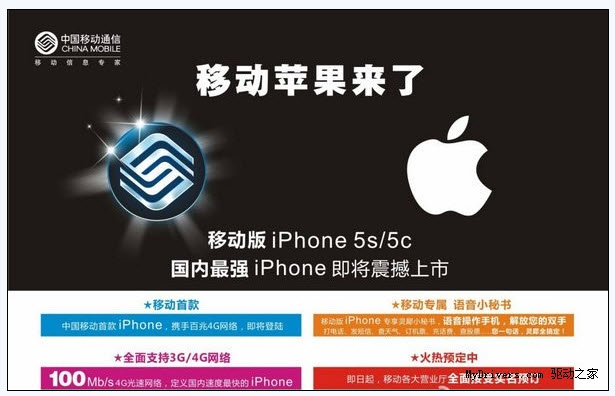
Supposed posters from China Mobile promoting the iPhone 5s and 5c have leaked out, touting “the strongest iPhone in China” (via UnwiredView). The ‘100’ visible on the poster indicates the network’s 100Mb/s maximum speed will be supported by the iPhone. Naturally, the iPhone will be China Mobile’s flagship 4G phone.

Apple has already received the necessary certification to put the iPhone on all Chinese spectrum, including the TD-LTE strand used by China Mobile, earlier this month. Now, the only holdup is getting permission from the MITT governing body to let China Mobile use the spectrum on a commercial basis.


Expand
Expanding
Close

New report claims China leads demand for iPhone 5s over 5c, 78% of new iPhones globally are 5s

Site default logo image

How many of those 9 million first weekend sales were for the iPhone 5s vs the iPhone 5c? There’s been a lot of speculation about how many of each device Apple is selling, and whether or not lack of availability of the gold iPhone 5s is due to low supply or simply the higher demand. Apple is staying quiet on the breakdown of 5s units vs 5c, but today we get some solid insight from Localytics after the research firm tracked over 20 million unique active iPhones since launch day on Friday.

72 hours after the launch of the new devices, Localytics found that China, not the U.S., had the highest relative share of iPhone 5s vs 5c sales.

Globally an average of 78% of new iPhones sold were iPhone 5s models, while China came in at 91% 5s. It’s somewhat surprising considering analysts have largely expected the 5c to do well in China and other emerging markets, but the report speculates that the fact that gold is a popular color in the country could be driving higher demand for the 5s.That compares to the U.S. at 76% and an average of 82% in other countries. It appears the UK has the highest share of 5c sales as “the only country that didn’t have at least a 3 to 1 ratio of 5s  to 5c activations.”

Localytics also tells us that currently “the U.S. accounts for 68% of all active iPhone 5s and 5c devices worldwide, with Japan in second place with 13% of 5s and 5c’s
Expand
Expanding
Close

Site default logo image

$0 down on both 5c and 5s in China, but high monthly cost and 3-year lock-in

TechInAsia reports that Chinese buyers are buying from China Unicom rather than Apple as the carrier offers both iPhone 5c and 5s with no up-front cost.

The catch? Monthly costs higher than in the USA, and contracts that run for either 30 or 36 months. Those monthly costs are massive in a country where the average monthly salary is around $800, and a 36-month contract means that buying an iPhone 5c or 5s today will see you sitting out the iPhone 6 and 6s/c/whoknowswhat.

It’s estimated that China already had 42M iPhone users before the launch of the new phones, and before they were officially supported by any of the local carriers.

Full comparison of U.S. and China Unicom costs below … 
Expand
Expanding
Close

Site default logo image

Apple Stores in Asia/Oceania go down ahead of iPhone 5s launch, 5c shipping times slip again

Ahead of the iPhone 5s launch tomorrow morning in Apple Stores around the world at 8AM local time, Apple appears to be preparing for online orders with its websites for China, Hong Kong, Australia, and Singapore currently experiencing downtime. Orders from Apple’s online store are about to kick off in the coming hours in Australia, while China and Hong Kong opened up reservations for the device earlier this week and also plan 8am retail launches. In the U.S. and most other countries online orders will start at 12am (PST in the US) and local time in other locations. Word has it the iPhone 5s will be in short supply at launch, but it’s taken Apple’s iPhone 5c over a week before experiencing any significant shipping delays.

Shipping times for certain models of the iPhone 5c began slipping over the last week, but most models in the initial launch countries remained available for delivery by the expected September 20 launch date. Today that has started to change with many more models of the iPhone 5c experiencing delays in several countries.

In the U.S. and Canada, all models of the device are currently listed as shipping in 1-3 business days, while France and Germany are now listing “5 working days” for most models and “7-10 working days” for others. Of course, shipping times could easily change again tomorrow when the iPhone 5c officially hits Apple retail stores alongside the 5s. We’ll keep you updated if they do.