Author

Avatar for 9to5 Staff

9to5 Staff

Mountain Lion available for download

Site default logo image

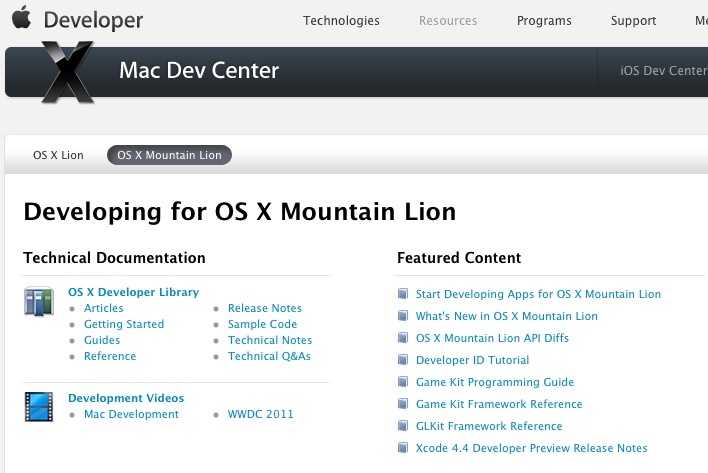
Apple’s Developer Center just updated with the new Mountain Lion resources only available to registered Mac developers. Most importantly: Those with a paid developer account can now immediately download OS X Mountain Lion Developer Preview. The software delivers through the Mac App Store and it replaces your previous operating system version, so make sure to use it on a test machine and not your primary productivity system. Just log in to your developer account, access the Mac section, click the OS X Mountain Lion tab, and then hit the Get Redemption Code button next to the OS X Mountain Lion Developer Preview or OS X Mountain Lion Server Developer Preview. This will launch the Mac App Store and start the download process. You must use a 64-bit, Intel-based Mac running either Mac OS X v10.6.7 Snow Leopard or OS X Lion and have at least 8GB of free disk space to install the OS.

In addition to the pre-release version of the operating system, Apple also made a number of related resources available, including guidelines for developing apps for Mountain Lion, GameKit, and GLKit programming guides that explain how to write Game Center-compatible games using social gaming and graphics technologies that debuted in iOS 5 and more. Finally, following a brief removal of Xcode 4.3 from the Mac App Store this morning, the new Xcode 4.4 Developer Preview for OS X Mountain Lion is now available in your dev account and it includes the Mac OS X 10.8 SDK and iOS 5 SDK.
Expand
Expanding
Close

Here, Apple’s demo video for Mountain Lion

Site default logo image

[youtube=http://www.youtube.com/watch?v=DoR08T26IPU]

If you are still feeling overwhelmed with today’s news of OS X Mountain Lion Preview and the first public beta of Messages for the Mac, do not be: Apple just published a nice video demonstration of key new features on the new OS X Mountain Lion Sneak Peek page. It will take some time before the clip goes live on Apple’s official YouTube channel. Until then, enjoy the above Newsit Tech’s conversion of the Mountain Lion showcase that is likely to be pulled soon.


Expand
Expanding
Close

Apple posts Messages Beta for the Mac on the heels of Mountain Lion announcement

Site default logo image

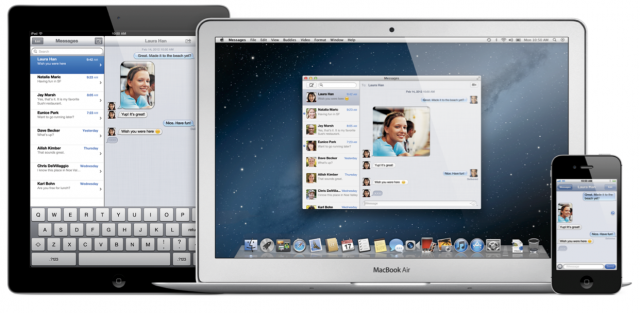
Just as we are chewing on the news that Apple is working on Mountain Lion, a major new Mac OS X release, the company published Messages Beta for the Mac, an early taste of what is coming in Mountain Lion. Certain code leaks indicated such an application could be in the works and now it is coming. The Messages application lets you send unlimited iMessages to any Mac, iPad, iPhone, or iPod touch user.

You can start an iMessage conversation on your Mac and continue it on your iOS device, and even start a FaceTime video call and bring the conversation. Messages also supports sending photos, videos, attachments, contacts, locations and more and it comes with built-in support for iMessage, AIM, Yahoo!, Google Talk and Jabber accounts. Apple noted that when you install Messages, it replaces iChat—even though iChat services will continue to work.

You can download your copy of iMessges Beta for the Mac here.


Expand
Expanding
Close

Apple unveils Mountain Lion Preview: iOS-ification of OS X continues with Messages, AirPlay Mirroring, Notification Center, Game Center, Twitter and more

Site default logo image

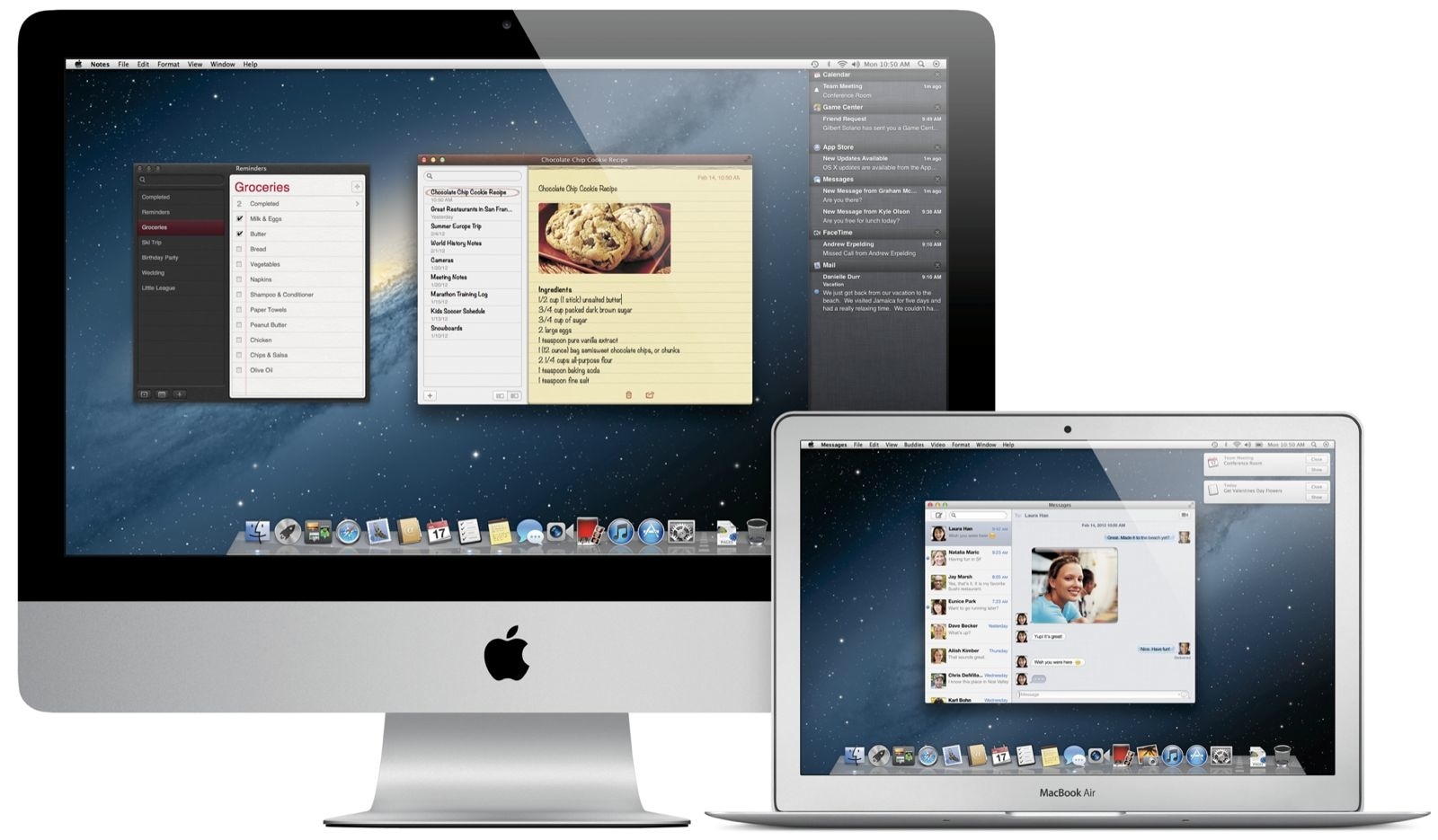
It has been only seven months since Apple released Mac OS X 10.6.7 Lion and today the company announced Mountain Lion—the next major update to its desktop operating system. As 9to5Mac first learned in October, Mountain Lion brings even more popular iOS features to the Mac platform. The notion is shared by those Apple invited to a private briefing a few day ago: Mountain Lion is all about putting even more of iOS into the bowels of OS X. Meanwhile, iOS-ification of OS X continues with Twitter integration in Mountain Lion and new iOS-esque apps, such as Messages, Notification Center, AirPlay Mirroring, Notes, Reminder, Game Center, and deep iCloud integration.

With over a hundred million iCloud accounts now in use, Mountain Lion’s setup assistant will now ask you to set up an iCloud account for the Documents in the Cloud and Find My Mac features, as well as to sync contacts, email and chat messages and calendar entries. You can also access your iCloud storage in Finder and drag and drop documents for manual syncing between iOS apps that support Documents in the Cloud and their desktop counterparts.

AirPlay Mirroring is another welcome addition for those wishing to securely beam a 720p video stream of what is on your Mac to a HDTV through the Apple TV. Share Sheets, a new system-wide feature, is accessible from Apple’s and third-party apps for sharing links, photos, and videos. Like in iOS, Twitter integration means you give your Twitter credentials once and tweet directly from Safari, Quick Look, Photo Booth, Preview and supported third-party apps.

Mountain Lion Beta is available to Mac Developer Program members starting today whilst end-users can upgrade to Mountain Lion from the Mac App Store in late summer 2012. The company also pledged to update OS X once a year from now on. For more information, check out Apple’s new OS X Mountain Lion Sneak Peek page.

The full release, more features and two press shots are after the break.


Expand
Expanding
Close

Apple responds to iOS contact data sharing: ‘It’s a violation’

Site default logo image

Apple officially responded to the mounting privacy concerns related to how third-party iOS apps access address book data on users’ devices. Tom Neumayr, a spokesperson for the Cupertino, Calif.-headquartered gadget giant told AllThingsD’s John Paczkowski:

Apps that collect or transmit a user’s contact data without their prior permission are in violation of our guidelines. We’re working to make this even better for our customers, and as we have done with location services, any app wishing to access contact data will require explicit user approval in a future software release.

So, there you have it. A forthcoming iOS software update will make sure no app can get access to iPhone contacts without your explicit approval. We are inclined to think Apple should not limit user approvals to just location data and contacts. While we are at it: Why not implement toggles for accessing the camera roll, photo library, and even your music library for that matter? This stuff is just waiting to be uploaded by rogue apps. By the time Apple discovers those violations and pulls misbehaving software from the App Store, it will already be too late and the damage will have been done. Any thoughts?


Expand
Expanding
Close

Lawmakers grill Apple’s Cook on iOS developer data access following Path address book privacy debacle

Site default logo image

The Path debacle just took another turn for the worse with House Energy & Commerce Committee Ranking Member Henry Waxman and Commerce Manufacturing and Trade Subcommittee Chair G.K. Butterfield issuing a letter to Apple CEO Tim Cook (via The Next Web). In it, the legislators seek to find out whether Apple is doing enough to protect personal data on users’ iPhones, including their contacts. Specifically, the letter asserts there have been claims that the practice of collecting address book data without users’ consent is “common and accepted among iOS app developers.”

As a consequence, the legislators argue, “This raises questions of whether Apple’s iOS app developer policies and practices adequately protect consumer privacy.” They want Apple to respond to questions by Feb. 29. Apple is asked to detail its App Store review practices in respect to protecting users’ information. Whichever way you look at it, it is hard to escape the notion that everything on your iPhone is waiting to be uploaded.

As you know, with the exception of location services, iOS does not prompt users when apps tap APIs to access personal data stored in an iPhone’s address book, camera roll, music library and other places. This also includes little things such as geolocation information embedded in image files taken on the device. This is bothering the legislators and now they want to know why Apple has not implemented a simple toggle that lets users control access to their data other than location.

You have built into your devices the ability to turn off in one place the transmission of location information entirely or on an app-by-app basis. Please explain why you have not done the same for address book information.

We included the letter in its entirety below the fold.


Expand
Expanding
Close

FLA president: iPad plants are no sweatshops; boredom and monotony contributing to suicides

Site default logo image

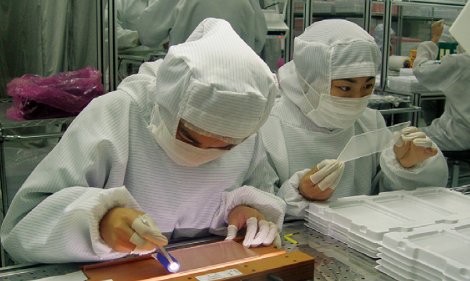
With the Fair Labor Association audit of Apple suppliers at Foxconn City underway for several days now, the first details are starting to trickle in. The non-profit agency’s head Auret van Heerden told Reuters that working conditions at Foxconn’s iPad plant are “far better” than those at their factories elsewhere in the country. It is a personal impression and not the official stance, because 30 FLA staff members have three weeks to interview about 35,000 workers at two Foxconn plants in China.

Workers will answer questions anonymously by entering their responses with iPads. Van Heerden was also surprised, he confessed, with how “tranquil” the floor at Foxconn plant is compared with a garment factory.

I was very surprised when I walked onto the floor at Foxconn, how tranquil it is compared with a garment factory. So the problems are not the intensity and burnout and pressure-cooker environment you have in a garment factory. . It’s more a function of monotony, of boredom, of alienation perhaps.

He speculated that workers are jumping out of windows to take their life due to boredom and alienation stemming from repetitive assembly tasks:


Expand
Expanding
Close

Apple’s market clout shaking S&P 500, making a run at $500B market cap

Site default logo image

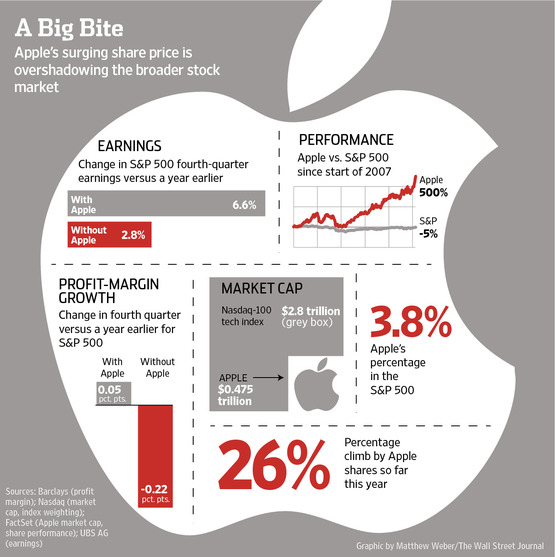
Apple’s record-breaking holiday quarter catapulted the stock north of $500 a share for the first time, and now the company’s market size is skewing some pretty important market indices, including the S&P 500 index. Already Apple of California passed 10 percent of all of NASDAQ value and now the company won an “ex-” designation on the S&P 500 index. Beginning in 1957, S&P has published prices of 500 large-cap common stocks actively traded in the United States through the New York Stock Exchange or the NASDAQ. S&P 500 fourth-quarter earnings increased a whopping 6.6-percent year-over-year due to Apple’s gangbuster quarter. Without Apple, S&P 500 grew only 2.8 percent (click the illustration).

The company’s share of S&P 500 now stands at 3.8-percent. For comparison’s sake, Exxon Mobil’s share of S&P 500 is 3.3-percent, Microsoft’s 1.9-percent and IBM’s 1.85-percent. This prompted institutions such as Morgan Stanley, Goldman Sachs, Barclays Capital, Wells Fargo, and UBS AG to begin publishing one version of market updates for the companies that make up the S&P 500 and the other for S&P 500 excluding Apple.

Crazy or what? Here are some more nuggets from Wall Street Journal’s Jonathan Cheng:


Expand
Expanding
Close

Adobe demos content-aware move in Photoshop CS6

Site default logo image

[youtube=http://www.youtube.com/watch?v=UrlsnQ32YhY]

Software-maker Adobe posted an interesting video on its Photoshop channel through YouTube. The clip showcases content-aware move, which is one of the new features in the upcoming Photoshop CS6 update. Similar to content-aware fill in Photoshop CS5 that replaces the missing pixels behind removed image elements, the new feature lets you define a region and move it around with the background replacing automatically. What’s best is that one only needs to draw a rough boundary around the wanted object and the software will figure out the rest to —in most cases— define a pixel-perfect selection. Moreover, ite lets you stretch and extend objects intelligently without suffering any of the nasty artifacts. More sneak peek videos are after the break. Oh, and 9to5Toys offers some sales promotions on Adobe products.


Expand
Expanding
Close

Apple tells Amazon China to pull iPads over Proview trademark dispute, customs say it’s too popular to be banned

Site default logo image

A country-wide import and export ban on Apple’s iPad that ProView is pushing for over an ongoing litigation with the iPad moniker will not be easy to implement, or at least that is what Chinese customs officials told Reuters this morning. Chinese company ProView owns the “iPad” trademark and is petitioning Chinese customs to stop shipments of iPads in and out of the country.

Foxconn manufactures the iPads in Shenzhen, China, and such a ban would disrupt global iPad supply. Another result of the legal battle over the iPad name: At Apple’s request, online shopping websites Amazon China and Suning reportedly removed the iPad until the trademark dispute is resolved. Proview is hoping to extract an estimated $1.5 billion from Apple for the rights to use the iPad moniker in China.

The plan reportedly is not working as expected, because local customs think implementing a country-wide ban on such a successful and globally popular product would be impractical, to say the least. Moreover, customs authorities are unlikely to intervene in the trademark battle, or so the story has it. For its part, Proview insists it started developing a tablet called the iPad in 2000. The company’s boss Yang Long-san confirmed the latest development to the news gathering organization:


Expand
Expanding
Close

Advertising tricks Samsung uses to win over Apple fans

Site default logo image

While Samsung does not think Apple can compete in the television market (and it is not alone), the company is moving aggressively to win over Apple’s fan base with the now infamous ‘Samsunged’ campaign— a cornerstone of the South Korean conglomerate’s communications strategy. So, who is behind those pesky adverts? Director Bobby Farrelly, who is the brother of movie director Peter Farrelly of the “There’s Something About Mary,” “Dumb and Dumber” and “Kingpin fame.”

However, it was Samsung’s ad agency 72andSunny that hired Farrelly to film a series of anti-Apple adverts depicting bored Apple fans waiting in line for a new iPhone. The mocking began last November and culminated with a 90-second Super Bowl commercial for the 5.3-inch Galaxy Tab device with a stylus. An interesting profile by AdWeek revealed some of the secrets and tactics marketers use to talk iPhone fans into considering Samsung products for their next gadget.

Click here for key takeaways.


Expand
Expanding
Close

Report: Apple to return to Nvidia for Mac Pro graphics in Nehalem update

Site default logo image

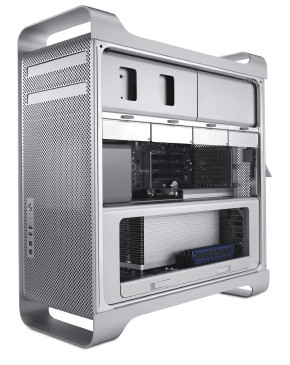
It looks like Apple could (again) select the graphics giant Nvidia as the primary GPU provider for the upcoming Mac Pro hardware refresh. According to a mostly speculative story by MIC Gadget based on unnamed industry sources, new Mac Pros will feature Intel’s upcoming Ivy Bridge chipset fabbed on the chip maker’s latest 22-nanometer Trigate transistor technology (no surprise there). According to Intel, 22nm Ivy Bridge silicon claims a 37 percent speed jump and lower power consumption compared to the chip giant’s 32 nanometer planar transistors. ‘Trigate’ Ivy Bridge chips can feature up to eight processing cores and are more power-savvy, so they should help scale frequency, too. On a more interesting note, MIC Gadget speculates Apple could switch back to Nvidia as the primary supplier of next-generation GPUs for the new Mac Pros.

Nvidia has their “Kepler” platform due out around the same time as Intel is making their changes, and our sources within the company indicate that they have chosen to have Nvidia lead the charge so to speak on the graphics front.

Eagle-eyed readers could mention that AMD recently released the Radeon HD 7970 graphics card powered by the Tahiti GPU (its nearest rival is Nvidia’s GeForce GTX 590), with observes deeming it Apple’s go-to graphics card for future Mac Pros. Indeed, traces of support for Tahiti-driven AMD GPUs are found in Mac OS X Lion 10.7.3, at least indicating people might be able to upgrade their future Mac Pro with this card. Oh, and it’s great for Hackintosh builders, too.

Also indicative is a March 2011 Snow Leopard 10.6.7 update that enabled support for a bunch of AMD/ATI Radeon HD 5xxx and 6xxx cards, not all of which were in Macs at the time. On the other hand, a speculative switch to Nvidia would not be out of character as California-based Apple is known for frequently switching between Nvidia chips and those manufactured by rival AMD…


Expand
Expanding
Close

Apple’s Time Capsules go missing from retail stores globally

Site default logo image

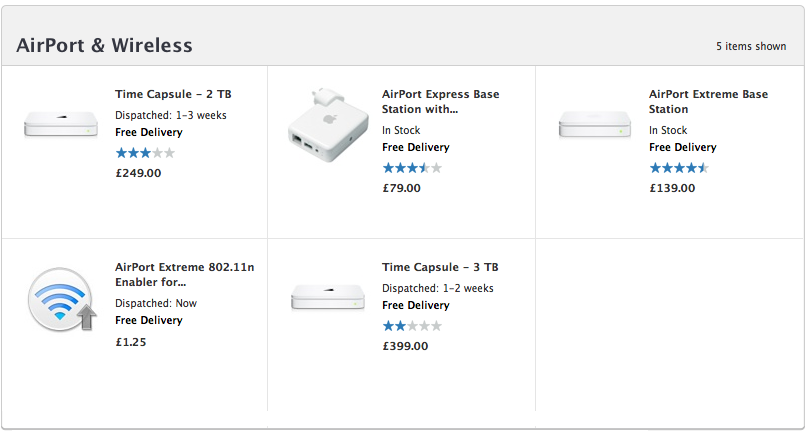
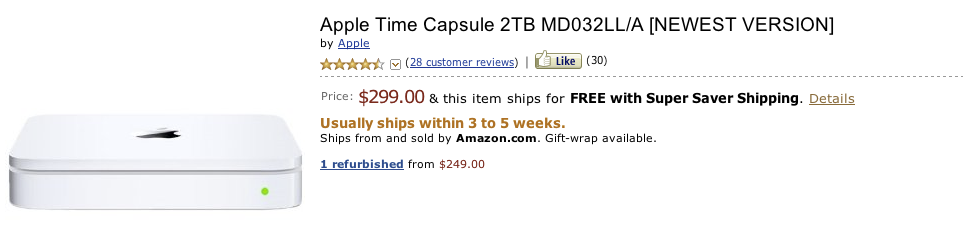
Shipping times for Time Capsules are increasing steadily across regional online Apple stores in the United States, Australia, New Zealand, Germany, Italy, United Kingdom, France and other territories. While the 3TB version of Time Capsule is in stock at certain online Apple Stores, most now list the wireless backup appliance with up to one to three weeks delivery time. Meanwhile, 2TB Time Capsules in some stores take one to two weeks. Over at Amazon (temporarily out of stock) and Best Buy (sold out) things are not looking peachy either.

This is similar to the AppleTV shortages we noted over the weekend but may not be for the same reason.

Time Capsule constrains could be linked to the Thai floods that have led to global shortages of hard drives and subsequent jacked prices by as much as 28 percent. A disruption in the hard drive supply already affected the 27-inch iMac. That, plus the fact that other AirPort-branded products stay in stock only reinforce the notion that constrained supplies of Apple’s Time Capsule is likely caused by global hard drive shortages.

According to an unnamed tip that 9to5Mac received this morning, several Apple outlets in Australia no longer have Time Capsules in stock:


Expand
Expanding
Close

Proview tries to block iPads from coming in or going out of China

Site default logo image

Not content with officials yesterday confiscating iPads in Shijiazhuang over an ongoing litigation on the iPad moniker, Taiwanese company Proview Electronics is now looking to put a ban on both iPad imports and exports, according to Reuters. The company is already petitioning Chinese customs to stop shipments of iPads. Proview sued Apple last year over its “I-PAD” trademark and could seek up to $1.5 billion for the name from the Cupertino, Calif.-headquartered gadget powerhouse.

Apple is in an increasingly difficult place here. Considering every iPad is built in China (until Brazil plants go online), a full-blown export ban could disrupt the iPad business on a global scale. Proview’s legal position stems from Chinese laws that seek to prevent the sale of counterfeit goods in the country. The news gathering organization confirmed the development this morning:

A Chinese tech firm claiming to own the “iPad” trademark plans to seek a ban on shipments of Apple Inc’s computer tablets into and out of China, a lawyer for the company, Proview Technology (Shenzhen), said on Tuesday.

Proview also asked the country’s Administration Industry and Commerce to put in effect iPad confiscations in as much as 30 cities. Apple’s position in this dispute remains unchanged as a spokesperson re-iterated the official line:

We bought Proview’s worldwide rights to the iPad trademark in 10 different countries several years ago. Proview refuses to honor their agreement with Apple in China and a Hong Kong court has sided with Apple in this matter.


Expand
Expanding
Close

Apple Store coming to Amsterdam [VIDEO]

Site default logo image

[slideshow]

Here is one more reason to visit Amsterdam—the largest city and the capital of the Netherlands: Apple is busy putting the finishing touches on a new retail store. According to Dutch-language website iPhoneclub.nl, the rumored Leidseplein store is now a reality as the company raised huge orange storefront stickers adorned with three Apple logos – a subtle hint at the three crosses on top of each other from the Coat of Arms of Amsterdam. The customary stickers read:

Apple Store, Amsterdam. Opening soon.

While employees speculate the store could open this coming Saturday, Feb. 18, that may not be feasible due to scaffoldings and plastic sheets inside (additional snaps at the source link). Moreover, a recent job ad in the Metro newspaper indicates Apple has only recently begun hiring store staff, so Feb. 18 could be the date when employee training starts (as the website noted itself, employees have a mandatory day off on Saturday)…


Expand
Expanding
Close

Pegatron: Apple hasn’t informed us about forthcoming labor audits

Site default logo image

Apple’s contract manufacturer Pegatron Technology of Taiwan is unaware of any forthcoming labor inspections at its Asian plants because its client has not officially tipped them about labor audits, according to Chief Financial Officer Charles Lin tells to Bloomberg. Lin was reacting to yesterday’s announcement by Apple of California that the first audits in cooperation with the Fair Labor Association have started at Foxconn City in Shenzhen, China.

Pegatron Corp., a maker of Apple Inc.’s iPhones, said it hasn’t been informed of any pending inspections of factory work conditions by labor groups, a day after the U.S. company said checks would start this spring. Pegatron is aware of Apple’s corporate social responsibility policies, Charles Lin, chief financial officer of the Taipei-based company, said by telephone today. The client hasn’t informed him about any upcoming audits, Lin said.

Apple previously confirmed that audits at Pegatron and Quanta Computer, the company assembling Mac notebooks, are due this spring. The company said the results of FLA audits will be made available on its website at the end of March. In the wake of the Foxconn scandal, a month ago Apple became the first technology company admitted to the FLA. That announcement followed Apple’s release of 2012 Supplier Responsibility Report that for the first time named 156 companies currently supplying components for Apple products, which left only three percent of suppliers absent from the list.


Expand
Expanding
Close

Apple is testing 8-inch iPad, says WSJ

Site default logo image

Following Wall Street Journal’s report last night that AT&T and Verizon will carry the LTE iPad 3, the publication is reporting that Apple is now testing an 8-inch iPad in its labs. While WSJis not exactly sure the version will launch, it does claim the iPad is being tested.

Officials at some of Apple’s suppliers, who declined to be named, said the Cupertino, Calif.-based company has shown them screen designs for a new device with a screen size of around 8-inches, and said it is qualifying suppliers for it. Apple’s latest tablet, the iPad 2, comes with a 9.7-inch screen. It was launched last year.

WSJ’s sources said the 8-inch iPad’s screen would pack a 1,024-by- 768 display similar to the current iPad. The smaller version will apparently also pack a LTE chip inside, as WSJ said the iPad 3 would.

There is always the chance that the 8-inch iPad will not see the light of day, because Apple tests things and sometimes does not bring them to market. An 8-inch variant of the iPad would be a close competitor to Amazon’s Kindle Fire, which has seen great growth.


Expand
Expanding
Close

NPD: Apple grabs almost a fifth of all holiday consumer electronics sales, Apple Stores second only to Best Buy and Walmart in revenue

Site default logo image

Apple’s $46.33 billion dollar holiday quarter and the 73+ million shipped Macs and iOS devices are clear standouts in the newest NPD research note exposing Apple as the only brand to have grown sales in the all-important holiday quarter. The same cannot be said for rivals Hewlett-Packard, Samsung, Sony, and Dell, which all experienced missteps in holiday-quarter gadget sales. Five consumer electronics categories (PCs, TVs, tablets/e-readers, mobile phones and video game hardware) drove nearly 60 percent of all sales in 2011. Apple’s share of total revenue across these five important categories rose 36 percent year-over-year, according to NPD.

As a result, Macs, iPhones, iPods, iPads, Apple TVs and the company’s other consumer electronics gear accounted for 19 percent of all sales dollars. That is almost twice as much as No. 2 Hewlett-Packard. HP’s, Samsung’s, Sony’s and Dell’s sales dipped 3 percent, 6 percent, 21 percent, and 17 percent, respectively. Apple Retail was No. 3 in terms of revenue, right after No. 1 Best Buy and second-ranked Walmart. Staples and Amazon tied for fourth place to round out the top five—a repeat of 2010.

By the way, did you notice which two consumer electronics categories lack a dedicated Apple offering?


Expand
Expanding
Close

Apple snatches top corporate reputation score from rival Google

Site default logo image

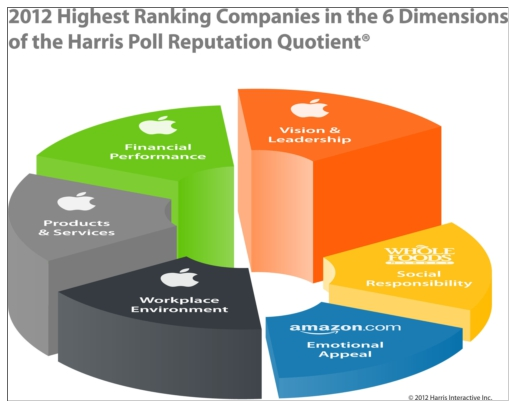
Apple earned the top spot in a new corporate reputation study by Harris Poll (via TechCrunch). It awarded Apple with a corporate reputation quotient of 85.63, which is enough to displace a second-ranked Google with a score of 82.82. Only eight companies earned an RQ score of 80 or above that denotes “excellent reputation.” Apple’s achievement is even more noteworthy knowing Google ranked as last year’s most reputable corporation. Facebook and Intel did not appear on the list this year at all. As for Apple’s rise:

Apple’s current dominance is built on strong investments in its brand, predominantly through its products and services. This one-dimensional approach to building reputation has ultimately yielded high associations with all six reputational dimensions. Conversely, Hewlett Packard, which once out-ranked Apple, has headed in the reverse direction. Hewlett Packard’s slowly eroding reputation has been injured by negative perceptions on Ethics and Vision & Leadership dimensions, and its brand is beginning to feel the damage.

Beverages giant Coca-Cola (No. 3), online retailer Amazon (No. 4) and multinational confectionery, food and beverage conglomerate Kraft Foods (No. 5) round out the top five. Apple ranked the highest in Financial Performance, Products & Services, Vision & Leadership and Workplace Environment—four  out of the six key dimensions in reputation. Interestingly, Amazon.com rules the Emotional Appeal category, even though it lacks brick-and-mortar stores and has a limited human interaction with its customers…


Expand
Expanding
Close

AAPL crosses $500 per share for the first time, now worth more than twice its smartphone rivals combined

Site default logo image


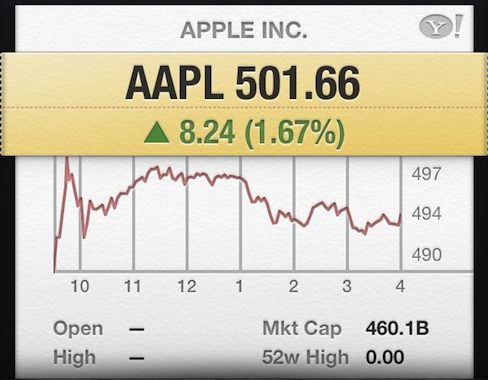
Shares of California-based Apple broke a new record today. Image via Chronic

Shares of Apple, Inc. hit a new high this morning. Just as you thought passing 10 percent of all of NASDAQ value was too good to be true, shares of Apple continue to rise and challenge the most intrepid analyst out there. Blame it on an early-March iPad 3 launch hype, but in NASDAQ trading this morning, AAPL crossed $500 a share for a market valuation north of $460 billion. In other words, a single share of Apple now commands a higher price than an iPad 2—remarkable. It rather makes you want to bang your head against the wall for not buying shares at $7 each back in 2003.

Essentially, Apple is now worth a whopping $70 billion more than the oil giant Exxon Mobil, whose market cap stands at $397.85 billion. Moreover, BGR noted Apple is worth more than each one of its smartphone vendor rivals combined. As of Friday’s close, the publication explained, the combined market value of Samsung, Nokia, HTC, Motorola Mobility, RIM, Sony and LG is $225.36 billion, which is less than half Apple’s today valuation. Oh, and remember Apple was weeks from bankruptcy 15 years ago.

Another way to look at it: On Steve Jobs’ Oct. 5, 2011 passing, AAPL traded at $378.25. Note that Microsoft was worth $583 billion in 1999, so Apple still has some catching up to do to become the most valuable company of all time. However, Apple is still undervalued even at $500 a share. Therefore, beating Microsoft’s all-time high market valuation should be a matter of when, and not if.


Expand
Expanding
Close

Report: Apple forcing contract manufacturer Pegatron to choose sides, give up Asustek Zenbook orders

Site default logo image

The high-profile Apple business with Asian contract manufacturer Pegatron Technology is facing scrutiny as the iPhone-maker is reportedly exercising its supply chain influence by asking Pegatron to drop new Ultrabook orders from Asustek or else it will lose orders for iOS devices. According to today’s article in Chinese-language Commercial Times, the similarities between Apple’s MacBook Air and Asustek’s Zenbook (released last year) instigated the Cupertino, Calif.-based firm to demand that Pegatron choose sides. As you know, the unique unibody metal enclosure of Apple’s notebooks is manufactured by Catcher Technology.

Pegatron currently assembles Asustek’s ultra-thin Zenbook family, but it will stop doing so by the end of March. As a result, Asustek will have to outsource the Zenbooks to either Compal Electronics or Wistron. Pegatron only recently landed iPhone orders and is hoping to assemble iPads, too. The Japanese blog Macotakara reported last month that Pegatron and Foxconn began assembly of iPad 3 for an early-March launch.

Even though the initial batch of Ultrabooks largely disappointed, upcoming models are looking to close the gap with lower prices and a unibody construction. Chinese-language Apple Daily reported in January (via DigiTimes) that Pegatron landed orders for at least five Ultrabooks by second-tier brands set to ship in April or May. One tiny interesting bit: Pegatron is an Asustek spin-off that happens to make Ultrabooks for other vendors, too.


Apple’s MacBook Air (left) and Asustek’s Zenbook (right). Image vie Ecoustics.com


Expand
Expanding
Close

Leaked iPad 3 parts match, suggest Sharp-made Retina Display

Site default logo image


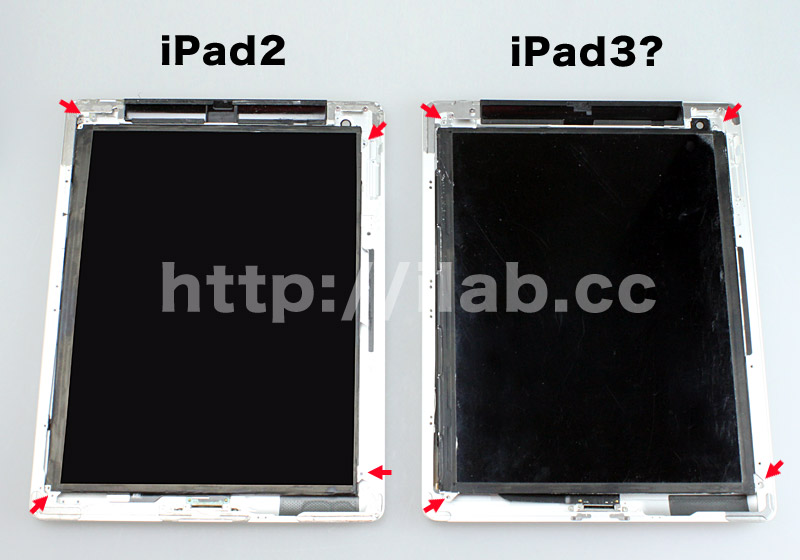
Mounting screw holes on an alleged iPad 3 back plate fit those found on Sharp’s high-resolution LCD panel, believed to be designed specifically for iPad 3.

As the rumored early-March iPad 3 introduction draws near, purported parts have leaked increasingly. One of the more prominent spy shots came last week through Japanese blog Macotakara that published an image supposedly representing a high-resolution iPad 3 panel manufactured by Sharp, which was obtained by parts reseller Eye Lab Factory. Today, the reseller matched the leaked parts, namely the alleged iPad 3 dock connector, back plate, and Sharp’s LCD panel.

According to the post, the back panel hints at a slightly thicker iPad 3 gaining about 1mm in profile that is likely to house new components and a bigger battery to drive more on-screen pixels and a dual-LED backlit system. Other than that, the back panel part purportedly belonging to iPad 3 is the same width and height as on iPad 2. As for the 2,048-by-1, 536-pixel resolution display allegedly manufactured by Sharp, it is a perfect fit…


Expand
Expanding
Close

VLC 2.0 arriving with all-new UI, native full screen in Lion, Blu-ray support, more

Site default logo image

[slideshow]

VideoLAN, the organization behind the open-source cross-platform VLC media player, is geared to launch VLC 2.0—a total rewrite of the program with new capabilities and an all-new user interface on the Mac platform. Available on Mac OS X, Windows and a variety of Linux/Unix platforms, VLC 2.0 [changelog] includes enhancements such as a native full screen mode in Lion, a redesigned subtitle manager, support for multiple video files inside RAR archives and enhanced video output modes. The Mac version will also support unprotected Blu-ray media, and Windows users will get to enjoy a 64-bit version.

The developers also added support for VLC’s lua-based extensions, letting users get information about movies from Allociné, post to Twitter, fetch subtitles automatically, and so forth. No disc burning features are included because “there are more suited apps for that.” One of the developers on the project Felix Kühne published a series of screenshots (more available on Flickr) highlighting the new Mac interface, credited to designer Damien Erambert. According to Kühne:


Expand
Expanding
Close