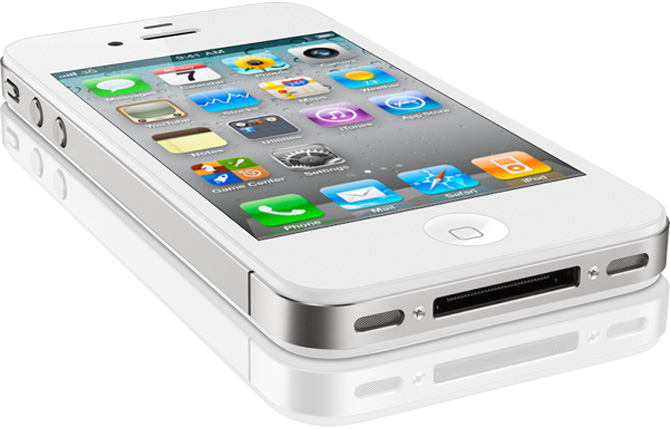
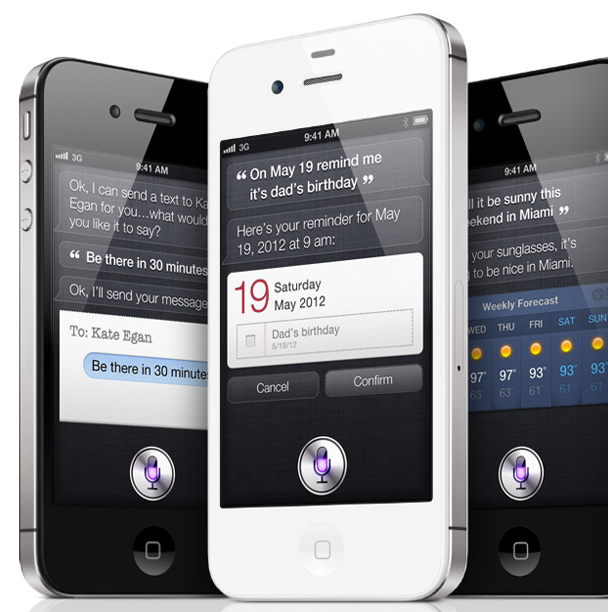
Research firm comScore today released September 2011 mobile subscriber market share data for the United States and the results bode well for Apple’s handset. Of the 234 million Americans age 13 and older, 10.2 percent owned an iPhone during the third quarter, earning Apple the #4 ranking among the nation’s top device manufacturers. It’s the first time the iPhone zoomed past the ten percent milestone in comScore metrics.
Apple between the June and September quarter grew its share by 1.3 percentage points. The achievement is that much more notable because it excludes strong iPhone 4S sales as that handset launched mid-October. In fact, everybody but Apple lost market share, with the exception of Samsung which held on to its 25.3 percent share of U.S. mobile subscribers.
LG came in second with a 20.6 percent share, Motorola was third with a 13.8 percent share, Apple was #4 and RIM came in fifth with a 7.1 percent share. When you consider smartphones only, Apple and Google put together controlled three-quarters of the nation’s mobile platform market share. Talk about the iOS-Android duopoly. Moreover…
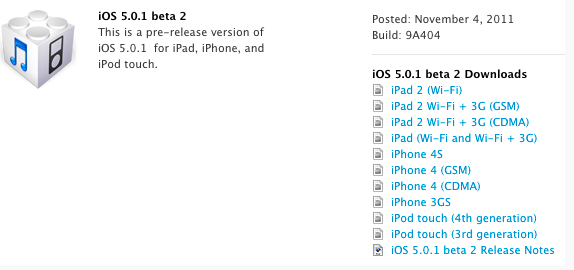
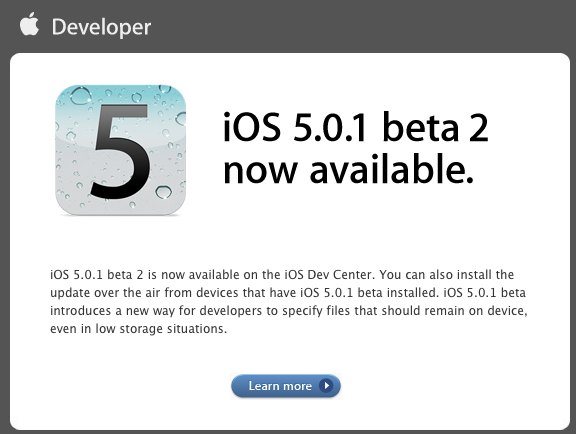
Just two days following the release of iOS 5.0.1 Beta 1 (which fixed bugs affecting battery life, enabled multitasking gestures on the original iPad and fixed the Smart Cover security flaw, among other things), and on the heels of yesterday’s release of iTunes 10.5.1 Beta 2, Apple today seeded its developer community with another point release, the iOS 5.0.1 Beta 2 software build 9A404 (the previous beta carries a build number of 9A402).
Developers should be able to download a standalone iOS 5.0.1. Beta 2 build through the iOS Dev Center, but we were having issues downloading the files at post time. Alternatively, registered developers can apply an over-the-air update directly on devices running iOS 5.0.1 Beta 1 by opening the Settings app, tapping General and then Software Update. Changelog is not available yet, but count on us to update the post accordingly.
U.S. Cellular turned down Apple’s management, deciding against carrying the iPhone 4S because the Cupertino, California company’s terms of business were reportedly “unacceptable”, reportsFierce Wireless. The confirmation came from the highest authority, CEO Mary Dillon, during a third-quarter conference call with analysts:
Dillon said that the carrier had the opportunity to sell the iPhone but that Apple’s “terms were unacceptable from a risk and profitability standpoint.” Dillon added that the potential strain on the company’s network was not a factor in the decision, and that U.S. Cellular remains open to carrying the iPhone in the future.
The CEO reportedly remains open to carrying Apple’s phone in the future. U.S. Cellular isn’t exactly a nobody. The Chicago, Illinois-headquartered company is the nation’s sixth-largest wireless carrier, serving about 6.1 million customers in half the country’s states.
Nonetheless, this files as a slap in their face as rival C Span gets to carry the iconic handset beginning November 11. Czech carrier Telefónica Czech Republic AS also passed on iPhone 4S and dropped all prior iPhone models over “business terms”.
We know iPhone is “worth every penny”, but it’s also a big cash drain for cash-strapped companies that cannot afford waiting for years to recover billions in upfront subsidies to Apple (which are also higher than the industry average). No wonder Apple commands the highest margins in the biz and controls more than half the handset industry’s operating profits.
A delayed launch of Apple’s iPhone, which had been pushed back from the usual summer time frame to mid-October, affected slightly Apple’s earnings, but the effects were felt in the entire smartphone industry which experienced a lower-than-expected growth in the third quarter, research firm IDC reported yesterday. Vendors shipped 118.1 million smartphones during the September quarter, a 42.6 percent growth from the 82.8 million units a year ago. However, IDC’s forecast for the quarter was 49.1 percent and they attribute the difference to the iPhone launch delay:
Smartphone growth came in lower than expected due to the delayed launch of the updated Apple iPhone. In previous years, the introduction of a new iPhone resulted in a spike in shipment volumes during the third quarter. Western Europe and the United States, two key regions for the iPhone launch each year, still posted sizable year-over-year gains, but lower than anticipated.
“Broad and deep product portfolio” and “a welcome reception” of Bada-branded smartphones helped Samsung overtake Apple as the world’s leading smartphone maker in the third quarter, IDC said. But i’s bound to be a short-lived victory as “Apple’s fourth quarter launch of the iPhone 4S and lower pricing of older models will certainly boost volumes”, the research firm explained. But it’s when you drill Apple’s biz deeper when it really starts to come together. Read on… Expand Expanding Close
Apple bid for this McDonald’s spot at Galleria del Duomo in Milan, Italy and lost to Prada.
Apple has become content in its ability to secure any landmark spot it sets its sights on and their status as America’s greatest retailer coupled with a $70+ billion cash hoard is an important persuading factor in negotiations. But when Apple wanted to open a flagship retail store in one of the most prestigious landmark spots in the heart of Milan, Italy’s business capitol, they got outbid handsomely by the country’s signature fashion label Prada, Macitynet.itreports.
The Commission of the City of Milan last night opened the envelopes containing bids for a premium retail space in Galleria del Duomo, which is currently occupied by McDonald’s. Surprisingly, Apple’s offer came in just one meager percent higher than the asking price compared to a whopping 150 percent premium offered by Prada.
The Municipality of Milan was asking for €2.118 million for the first five years and €3.629 million for the remaining thirteen years of lease. Surely this misstep on Apple’s part is not a sign of greater trouble coinciding with the departure of retail wizard Ron Johnson, we hope. Apple was reportedly so sure in its victory that it turned down several offers for other city landmarks. No wonder, considering the Cathedral’s beautiful octagon with its unmatched visibility as one of the most prestigious landmarks in the city of Milan.
But there’s no slowing down, even as the company is licking its wounds from the failed job in Italy. Apple re-iterated in a conference call with analysts last month plans to open 40 new stores during fiscal 2012, thirty of which will open outside of the United States. As the show goes on, Apple appears to be in the early stages of opening their first stores in The Netherlands and Sweden.
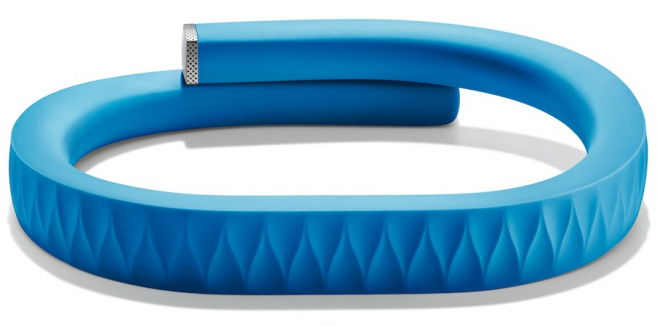
Back in September, we told you about a cool iPhone bracelet from the Bluetooth headset maker extraordinaire Jawbone. It captured our attention for its unique design and the ability to track users’ activity and meals 24/7. It’s all-encompassing, really. The Jawbone Up can track your steps, distance traveled, pace and calories burned throughout a day, to name a few.
It uses the proprietary MotionX engine, the result of years of research, and even vibrates when it’s time to get active. Today, the company today formally announced availability of the Up band.
According to the website, the Jawbone Up costs $99 and will be available November 6 in Apple and AT&T online and brick-and-mortar stores, the Jawbone.com online store and Target and Best Buy locations. It will also be available at 24 Hour Fitness and other major global retailers and carriers later this year. The Up by Jawbone app is required, available free from the App Store.
Three sizes will be offered, along with seven different colors: Dark Black, Dark Brown, Dark Red, Bright White, Bright Silver, Bright Red and Bright Blue. The accessory requires iPhone 3GS, iPhone 4, iPhone 4S, iPad or iPod Touch with iOS 4.1 and greater. Two more promo videos after the break.
[youtube=http://www.youtube.com/?v=GiC8QR_oHhk] Expand Expanding Close
Everyone and their brother is working on toppling Dropbox these days, including Google which is said to be close to unveiling a solution named Google Drive, basically a Google Docs storage system lending itself to their other web properties. While Apple is yet to introduce something akin to Dropbox, turns out users can now sync files between Macs – with a bit of trickery.
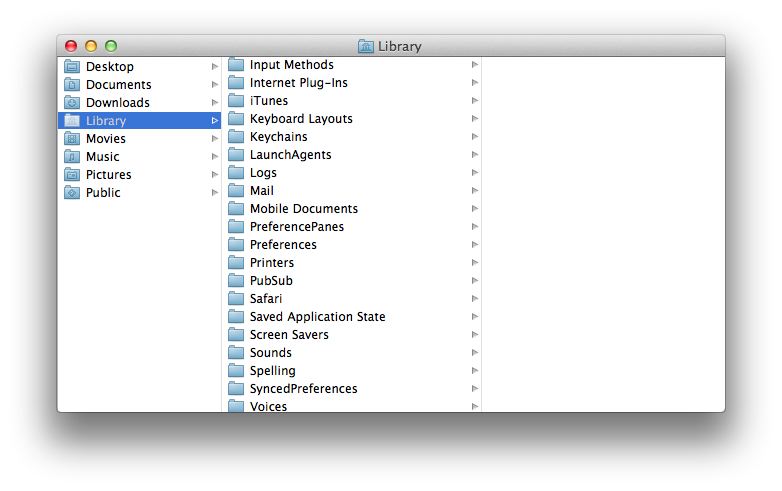
MacWorlddiscovered that any file put inside the ~/Library/Mobile Documents/ folder gets synced between Macs via iCloud. This is interesting because this folder was meant only to sync documents in apps that support the Documents & Data feature. MacWorld explains:
This doesn’t really matter. What is of use is that any files put into the ~/Library/Mobile Documents folder will automatically upload to iCloud and push to any other Mac you have that is signed in to the same iCloud account and has the ‘Document & Data’ iCloud preference checked. Lion even notifies you of version conflicts and allows you to resolve them when you open the document.
Of course, the finding isn’t terribly surprising. The trick simply uses the iCloud documents storage but it’s noteworthy because it indicates Apple has the backend file syncing infrastructure in place.
With iCloud, Apple retired some of the less popular MobileMe services, including iDisk which enabled Mac and Windows machines to mount their MobileMe cloud storage as a local drive. Per conventional wisdom, it would be prudent if Apple introduced a file syncing solution for Macs (possibly including iOS devices) down the road. It wouldn’t be hard to make this trick standard across all home folders, making a true Dropbox replacement – perhaps even allowing for the home folder roaming via the iCloud.
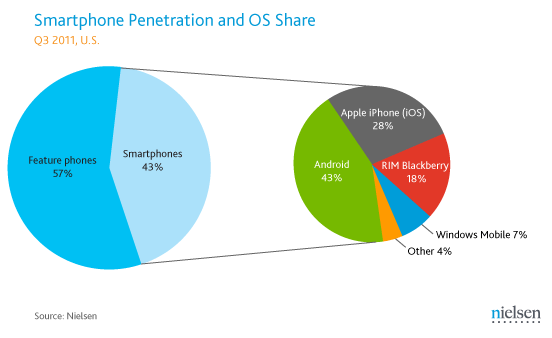
Research firm Nielsen today published its third-quarter survey of mobile users, confirming that the smartphone market remains a two-horse race between Android and iOS. Google’s smartphone platform grew its share of the smartphone market in the United States by four percentage points, from 39 percent to 43 percent. Apple’s iOS during the same period remained relatively flat at 28 percent, making them the nation’s top smartphone manufacturer (Canalyis begs to differ).
Nielsen’s study has more than four out of ten mobile phone user, or 43 percent, reporting owning a smartphone in the third quarter. The numbers don’t bode well for other players who continue seeing their share shrink as a result of Android’s growth, unlike Apple. Microsoft’s mobile platforms combined took a seven percent share, a two percentage points decline. Research In Motion’s BlackBerry OS lost two percentage points during the September quarter, down to 18 percent from 20 percent. In other news, RIM’s stock has fallen below book value.
And look what happened to Hewlett-Packard’s webOS and Nokia’s Symbian: Both are now filed under the Other category. The third-quarter survey largely echoes Nielsen’s June data. While Android remains the king of the hill in smartphones, things change if you consider the broader mobile market.
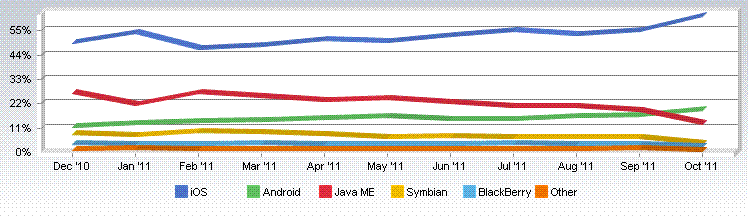
Per another survey released yesterday by Net Applications, which monitors 40,000 web sites, iOS devices combined widened Apple’s lead in October by seven percentage points to 61.64 percent web usage share. Android? Its usage share went up from 16.9 percent to 18.9 percent, barely one-fifth of the entire mobile market. Just as Apple CEO Tim Cook said during the October 4 iPhone 4S unveiling, smartphone penetration among various age groups is growing. More on that and another pretty chart after the break.
Retrospect is an old Mac standby. They’ve been around since OS 6-7, earning the users’ trust with their easy to use and comprehensive Mac backup solution. EMC acquired the original Retrospect developer, Dantz Development Corp, in 2004. In 2010, Roxio snapped up the company from EMC, but they spun off of Roxio later. Today, the new company introduced a new team which announced a major new version of the Retrospect utility.
Retrospect 9 for Mac brings an all-new 64-bit network backup client for Intel Macs, sporting Growl notifications and AES-256 encryption so it’s more secure as a corporate backup solution. Network backup supports Mac, Linux and Windows boxes and the software is now speedier, has a prettified user interface and introduces task workflows. What’s more, it supports popular WebDAV storage system in an attempt to remain relevant in this world of cloud backups and online services.
Other changes, per press release:
Specifically, Retrospect can now run twice as many simultaneous operations as the previous version; it uses less memory and fewer processor cycles at idle; tape library management has been improved; Retrospect’s configuration file is more resistant to corruption; and client backups and restores are faster. Retrospect 9 also offers a new view of past backups that show only those files that were copied during the backup, making it easy to see Retrospect’s data deduplication technology at work conserving backup storage space.
Retrospect 9 for Mac is available in many flavors. More after the break…
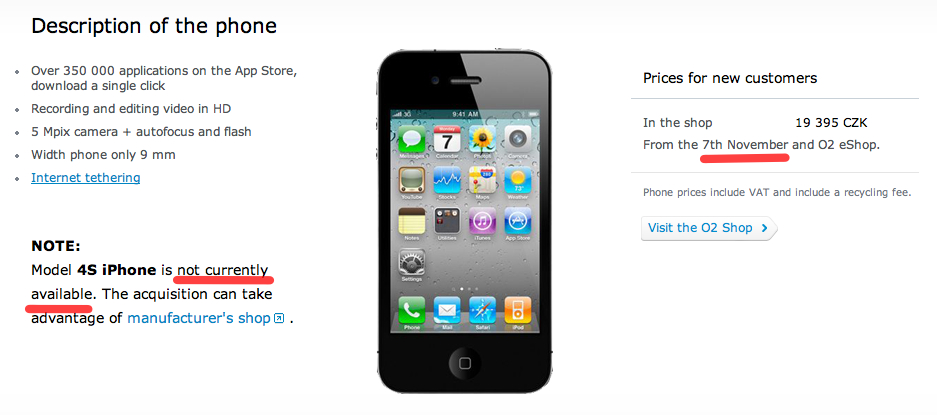
Bloombergreports that Czech carrier Telefónica Czech Republic AS (which owns O2 and operates under the O2 brand) is refusing to carry Apple’s iPhone 4S and is dropping all prior iPhone models, citing “business terms”. The iPhone 4S page on their site lists the handset as unavailable and provides a link to Apple’s Czech online store instead. Contrary to the report, iPhone 4S is coming to their network November 7, the official web site says (see the screenshot below).
Bloomberg explains:
Telefonica Czech Republic AS won’t sell Apple’s new iPhone 4S and will end sales of all Apple’s models because of Apple’s business terms, Hospodarske Noviny reported, citing Telefonica’s local spokesman Hany Farghali.
A Dow Jones Newswirereport from last week claimed Apple and O2 failed to come to terms on offering the device in the Czech market. Telefónica’s spokesperson confirmed his company did not agree with Apple “on mutually acceptable conditions yet”. The spokesperson blamed it on struggling sales in the local market, describing iPhone sales in the country as “pretty small and well below Android models and even still Nokia phones”.
Note that Telefónica was one of Apple’s biggest backers in Europe, bringing the iconic phone to Spain and the United Kingdom first with O2. Of course, “business terms” can entail a lot of things, including the product’s exclusivity, product placement, marketing terms and subsidies.
Boy Genius Reportis pointing to a recent report from local Czech newspaper Hospodarske Noviny, which asserted that the carrier is having a major problem with Apple’s high subsidies on the handset, which Sprint CEO confirmed as being $200 higher on a per-device basis versus the industry average.
Telefónica, majority owned by Spain’s Telefonica SA, in 2005 acquired state-owned Český Telecom and its wholly owned subsidiary Eurotel, creating Telefónica Czech Republic AS. According to Apple’s support document last updated October 14, 2011, the online Apple Store is carrying unlocked iPhone in Czech Republic, in addition to Czech operations of Vodafone and Deutsche Telekom-owned T-Mobile, which both start selling iPhone 4S today. We hope Apple and Telefónica will resolve this dispute and that it will not degrade their relationship in the broader European Union region.
Raising the stakes in the ongoing legal battle between Apple and Samsung over copycat accusations involving mobile devices, Samsung is upping the ante by asking to depose Apple’s iPhone designers, including Apple’s leading industrial design guru Jonathan Ive.
According to Josh Rosenthall of Edible Apple, depositions of Apple’s iPhone inventors Jonathan Ive, Douglas Satzger, Shin Nishibori and Christopher Stringer “will be taking place relatively soon” and ahead of the expedited trial between Apple and Samsung in the United States, scheduled for July 30, 2012.
According to Samsung’s motion, none of the aforementioned designers will be able to sit for deposition for various reasons. In the case of Jony Ive, the motion mentions “personal reasons”. Ive is especially important in this case. Jobs’s spiritual partner, it is said that no one could tell Ive what to do, at least until Jobs resigned. According to Jobs’s authorized biographer Walter Isaacson:
He called Jonathan Ive, Apple’s design chief, his “spiritual partner” at Apple. He told Isaacson that Ive had “more operation power” at Apple than anyone besides Jobs himself — that there’s no one at the company who can tell Ive what to do. That, says Jobs, is “the way I set it up.”
As such, Ive is the holder of Apple’s many secrets and inner workings, something Samsung is legitimately hoping to exploit ahead of the trial. And while Apple’s design guru really needs no introduction, here’s a brief overview of the others.
Game maker Rovio today announced a milestone that is incredible no matter how you look at it: Their Angry Birds franchise (which consists of the games Angry Birds, Angry Birds Seasons and Angry Birds Rio) has hit the half a billion downloads mark. This makes Angry Birds the best-selling mobile game in the world and one of the most downloaded titles in the history of gaming.
But an even bigger story is the Angry Birds merchandise. Rovio will open the world’s first official Angry Birds retail shop in Helsinki and they have already shipped more than ten million Angry Birds toys worldwide. We’re also hearing that Rovio will open the official story with Angry Birds merchandise in China, projecting a $100 million revenue in the first year. As if weren’t enough, Rovio also launched print publishing operations and released their first Angry Birds books.
If you’re into stats, here are some pretty mind-blowing factoids about the Angry Birds phenomenon, right after the break.
Apple took the maker of this Android tablet to court and asserted criminal charges.
Despite winning two injunctions related to Samsung’s Galaxy Tab tablets in Germany (here and here), Apple has lost an iPad-related lawsuit against NT-K, a smallish Android tablet vendor from Spain. The fact, highlighted by the FOSS Patents blog, was made public yesterday in a triumphant post over at NT-K’s official company blog. Machine-translated from Spanish:
Needless to clear all the damage it has caused this unjust accusation , both economically and emotionally to our company. We are a small company like many others in these times of crisis we are trying to get ahead, and it seems grossly unfair that a company the caliber of Apple has to use its dominant influence. Parallel to this, start the corresponding civil suit against Apple for
consequential damages, lost profits and moral damage.
According to this Expansiónstory and this EuropaPress.esarticle, Apple filed a complaint against NT-K in November 2010, months after the original iPad hit the market, seeking a customs ban on their low-cost Android tablet. As a result of Goliath dragging David into court room, Spanish customs seized NT-K’s shipments from China, the Spanish company had been listed on the European Union list of product pirates and had even found itself on the receiving end of criminal charges brought by Apple on December 9, 2010.
Siri, Apple’s digital assistant exclusive to iPhone 4S, needs a network connection to talk to the Apple cloud in order to retrieve answers, the company confirmed at the October 4 iPhone 4S unveiling. But how much data does Siri typically consume per month? Ars Technica conducted a series of eleven test, using Siri to perform five network actions such as looking up information from Wolfram|Alfa and other online sources and six common local tasks, including dictation and setting up reminders and alarms, among other things.
Your mileage may wary depending on your Siri habits. As a rule of thumb, Siri isn’t consuming (too) much data. This is an important feat for those on capped plans, which pretty much includes everyone but Sprint and C Spire customers in the United States. Internet lookups require between 23KB and 187KB data, depending on the question at hand, or an average of 63KB per query. Local tasks average at 72.5KB. Summing up, the publication wrote:
If you own an iPhone 4S and perform all 11 of these same queries every single day for a month over your carrier’s 3G connection, you can expect to use roughly 20MB or so in a 30-day month. If you use Siri 2-3 times per day at an average of 63KB per instance, you might expect to use 126KB to 189KB per day, or 3.7 to 5.5MB per month. For 4-6 times a day, that might come out to 252KB to 378KB per day, or 7.4 to 11MB per month. If you use it 10-15 times per day, you might end up using 630KB to 945KB per day, or 18.5 to 27.7MB per month.
It’s easy to get carried away playing with Siri and it’s all good if you’re on a WiFi connection. Otherwise…
Google today updated its Google+ client on iOS devices with the ability to use the service (and the app) with Google-hosted custom domains via the Google Apps service, the feature unveiled last week. In addition to the obligatory bug fixes and performance improvements, the new version also supports typing notifications and presence information in the built-in Messenger feature. And if you share a lot of photos and love browsing through other people’s albums, you will love the ability to +1 photos. A completely redesigned Google+ client for Android also went live in Android Market yesterday, with the user interface that closely resembles its iOS counterpart and other stuff. Release notes after the break.
Apple likes to maintain tight control over its image and that extends to any outwardly-facing public social network, especially Facebook.
Sure, the Cupertino firm maintains its own Facebook pages and Twitter channels, basically outlets to spread news about new iTunes content, product updates, support documents, etc. in a tightly controlled manner. But If you thought each Apple employees is his or her own person and entitled to express opinion about the brand, you’re in for a surprise: Tweet/post/blog negatively about Apple and you’ll get fired. Period.
One employee in the UK went on to berate Apple “privately on Facebook”, arguing the posts were not public. ifoAppleStore.comhas the story of an Apple employee named Crisp who appealed to the UK labor after being fired for “gross misconduct”:
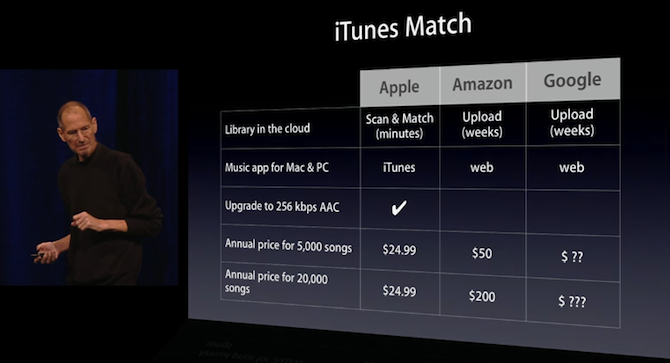
As noted by MacRumors, Apple’s self-imposed end of October deadline has come and gone without the promised public launch of iTunes Match. The service will scan your local iTunes library and fingerprint songs in order to make them available for download (or was it streaming?) via iCloud to all authorized devices – for $25 a year flat fee, no strings attached. It’s unknown what’s behind this unusual setback. Could be last-minute backend issues that needed sorting out. Be that as it may, we’re keeping our fingers crossed for Tim Cook to keep a tight rein on his team now that the ultimate micro-manager is gone.
It’s worth mentioning, however, that Apple removed support for iTunes Match from the public release of iTunes 10.5 even though it’s been present in prior developer betas. iTunes Match resurfaced in iTunes 10.5.1 beta that was seeded to developers on October 11 and subsequently expired. Apple also last week sent notices informing developers their cloud libraries will get wiped out, another sign of an imminent launch.
Apple has just announced that its iPhone 4S will land in Hong Kong, South Korea and thirteen additional countries this coming Friday, November 4, when the company will begin taking reservations in those countries (with the exceptions of Albania, El Salvador, Guatemala, Malta, Montenegro and Panama, where pre-orders won’t be available).
The full list of new markets goes as follows: Albania, Armenia, Bulgaria, El Salvador, Greece, Guatemala, Hong Kong, Malta, Montenegro, New Zealand, Panama, Poland, Portugal, Romania and South Korea. With the aforementioned countries included, Apple’s device will be available in 44 markets come this Friday. The company re-iterated that iPhone 4S will be available in 70 countries and on a hundred carriers by the end of the year, “our fastest roll out ever”.
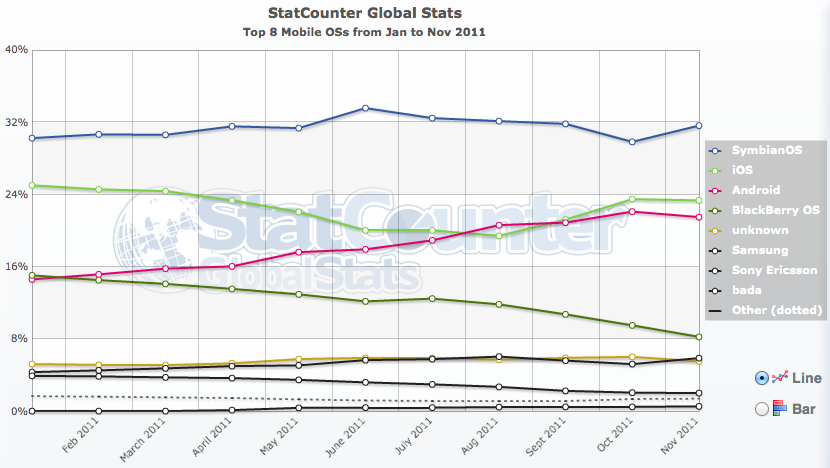
Market share numbers and shipped vs. sold units can be deceiving and (too) often fail to paint an accurate picture of the mobile space. Heck, statistics can bend the truth and is frequently used to skew the realities and grab headlines. One of the most precise methodologies for measuring the impact of any given mobile platform includes tracking web browser clients in order to determine the number of devices in the wild being actually used. Net Applications, which collects data from the 40,000 sites participating in its network, and StatCounter, another mobile analytics service tracking three million sites, both published the latest figures for October.
The numbers show Apple’s platform increasing its web usage share, in spite of the reports describing the ongoing Android march and its ever-growing market share. According to Net Applications, web usage share for iOS devices has risen by seven percentage points to 61.64 percent share in the month of October. At the same time, Android grabbed just shy of one-fifth (18.9 percent, up from 16.9 percent) of web usage share.
The rise of iOS comes amid the October 14 launch of iPhone 4S, which sold four million units at launch and is in stark contrast with a modest growth in September. Interestingly, October also marks a milestone for Android, which for the first time recorded greater usage share than Java ME devices, which fell 12.84 percent from 18.52 percent.
Another takeaway: iOS’s lead in web page-heavy tablets is bigger than Android’s lead in relatively light usage smartphones. StatCounter uses a different methodology so their overall figures differ significantly to those of rival Net Applications. More on that after the break.
This week, we are co-sponsoring iPhone 4S + Monster Accessory Pack giveaways with Monster Cable. You can win the iPhone 4S + Accessory Pack from Monster Cable by liking their Facebook page and entering their contest here: https://www.facebook.com/monstercable. Enter once for a chance to win every week until December 23rd.
Additionally, this week only, we at 9to5Mac are offering you guys the Monster Accessory Pack which can be won by liking our page https://www.facebook.com/9to5mac.
Monster’s 8x iPhone 4S Sweepstakes: What better way to fully enjoy Monster Cable’s lineup of mobile-friendly accessories than on the supreme gadget of today – the iPhone 4S! Monster is giving its fans the chance to win an iPhone 4S & Monster Accessory Pack every week for eight straight weeks! In addition to the iPhone 4S, the Monster Accessory Pack includes our sleek ($300) Turbine In-Ear Monitors, the static-free Monster iCable 800, the convenient Monster Mobile PowerPlug Dual USB 700, and the practical CleanTouch Pen! So go ahead, click the button… and remember, you only have to enter once and you’re then eligible to win each of the 8 weeks! (sorry this is for US residents only).
Research firm Canalys in its new report ranked Taiwanese handset maker HTC (owned by the Formosa Plastics Group conglomerate) the leading smartphone vendor in the United States. The finding is based on the reported third-quarter shipments by major phone makers including HTC, Samsung and Apple. And, per-country performance estimates stemming from historic trends. As you know, Apple sold 17.07 million iPhones during the September quarter, a 16 percent sequential decline the company blamed on the rumor-mill hype. Meanwhile, Samsung passed Apple by an estimated ten million units and HTC today reported shipments of 13.2 million handsets.
As for the United States, Canalys estimated HTC’s shipments at 5.77 million devices (5.7 million handsets under its own brand and 70,000 units with T-Mobile branding). Apple shipped an estimated 4.6 million iPhones in the quarter (4.9 million for Samsung). In all, HTC in the September quarter was the leading phone vendor in the United States, Samsung was second (plus #1 smartphone maker globally) and Apple ranked third. Canalys analyst Chris Jones said:
However you count it, HTC has become a deserved leader in the US smart phone market. This is an awesome achievement for HTC, which has built a premium brand in a highly competitive market in just a few short years. It now has a strong range of 4G Android products, with devices ranged by each of the major carriers, and offers some of the most compelling and differentiated products found on the platform today.
There is, however, a difference between selling and shipping. As for Samsung’s numbers, these could be called into question to a certain extent because the company stopped divulging smartphone and tablet sales back in June, citing competition from Apple. Let’s not forget the mobile space is a fickle one and prone to seasonalities and that Apple could regain its crown during the holiday quarter. That’s not to say HTC’s lead in the United States isn’t well-deserved, quite the contrary…
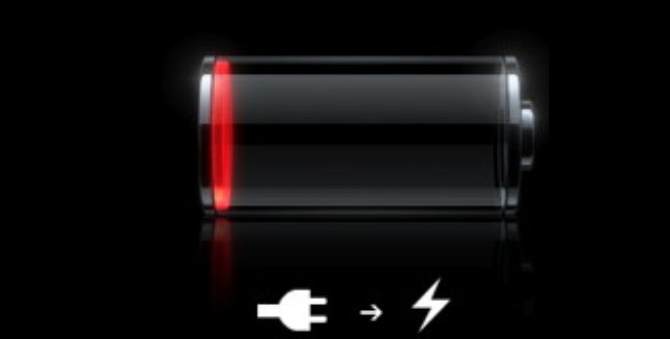
Poor battery performance is one of the major teething issues that’s been plaguing early iPhone 4S adopters who are flocking to Apple Support Communities forum in search for answers. Apple has remained mum on the matter thus far. The problem appears to be affecting some iPhone 4 and iPhone 3GS users as well, indicating a likely software bug rather than a hardware defect. There’s an interesting remedy that may not work for everybody, even though some folks are reporting seeing an improved battery performance.
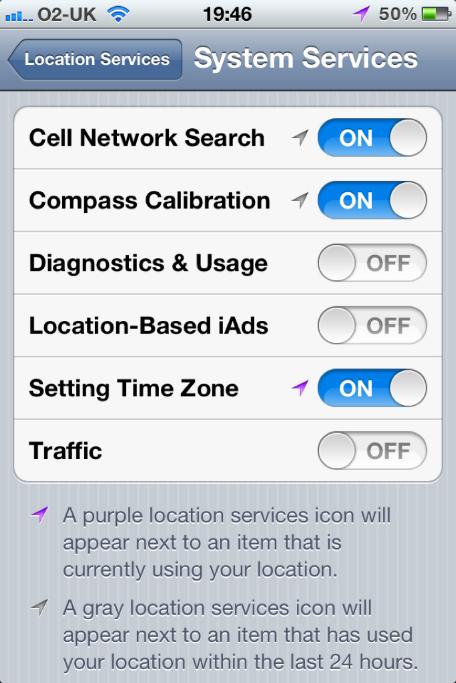
It appears that the ‘Setting Time Zone’ function in iOS 5 can lead to excess power drain because the device is repeatedly polling the user’s location in order to set the time zone based on their current location (which is useful when traveling). To disable this functionality, launch the Settings app, navigate to Location Services > System Services and turn off the ‘Setting Time Zone’ option. You should see a purple location services icon in the iPhone’s status bar disappear:
Switching it off may mean that your iPhone will no longer set its own time zone when you travel, but that’s a small price to pay for having your iPhone last more than 12 hours on a full charge. We have tested this method on 4 different iPhone 4s handsets, including an iPhone 4 and an iPhone 3GS. All have reported drastically improved battery life after switching “Setting Time Zone” off.
Yes, it’s a band-aid solution but a helpful one, at least until Apple delivers a fix through a firmware update. While we’re at it, you may also want to disable Location-Based iAds and Diagnostics & Usage and leave only the essential system location services running (Cell Network Search, Compass Calibration and Traffic).
Gates defends himself slightly but seems smart enough (and secure enough) not to handle the tough words head on.
“Well, Steve and I worked together, creating the Mac. We had more people on it, did the key software for it.”
“So, over the course of the 30 years we worked together, you know, he said a lot of very nice things about me and he said a lot of tough things. I mean, he faced several times at Apple the fact that their products were so premium priced they literally might not stay in the marketplace. So, the fact that we were succeeding with high-volume products, including a range of prices, because of the way we worked with multiple companies, its tough.”
“At various times, he felt beleaguered. He felt like he was the good guy and we were the bad guys. You know, very understandable. I respect Steve, we got to work together. We spurred each other on, even as competitors. None of that bothers me at all.”
I don’t know about you, but this is one freakily awesome Halloween costume. If you have a pair of iPad 2s lying around, you could put them to work and create an illusion of a huge hole in your torso. How? Dead simple, says one Mark Rober, a NASA employee. Just strap one iPad to your front and the other to your back and start a FaceTime chat between them.
The front iPad will display live video feed recorded by the back camera of the device strapped to your back and vice versa. The effect is totally believable, as if someone shot a hole through your body. Spray a little red paint around cutouts in your T-shirt and paint some gruesome flesh parts and you could easily become the star of this year’s Halloween amongst your geek friends.