AAPL Company

See All Stories

Breaking news from Cupertino. We’ll give you the latest from Apple headquarters and decipher fact from fiction from the rumor mill.
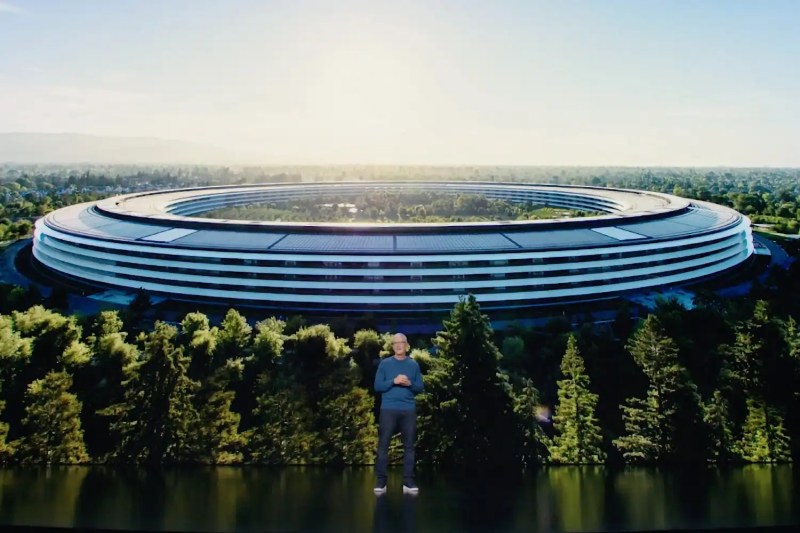
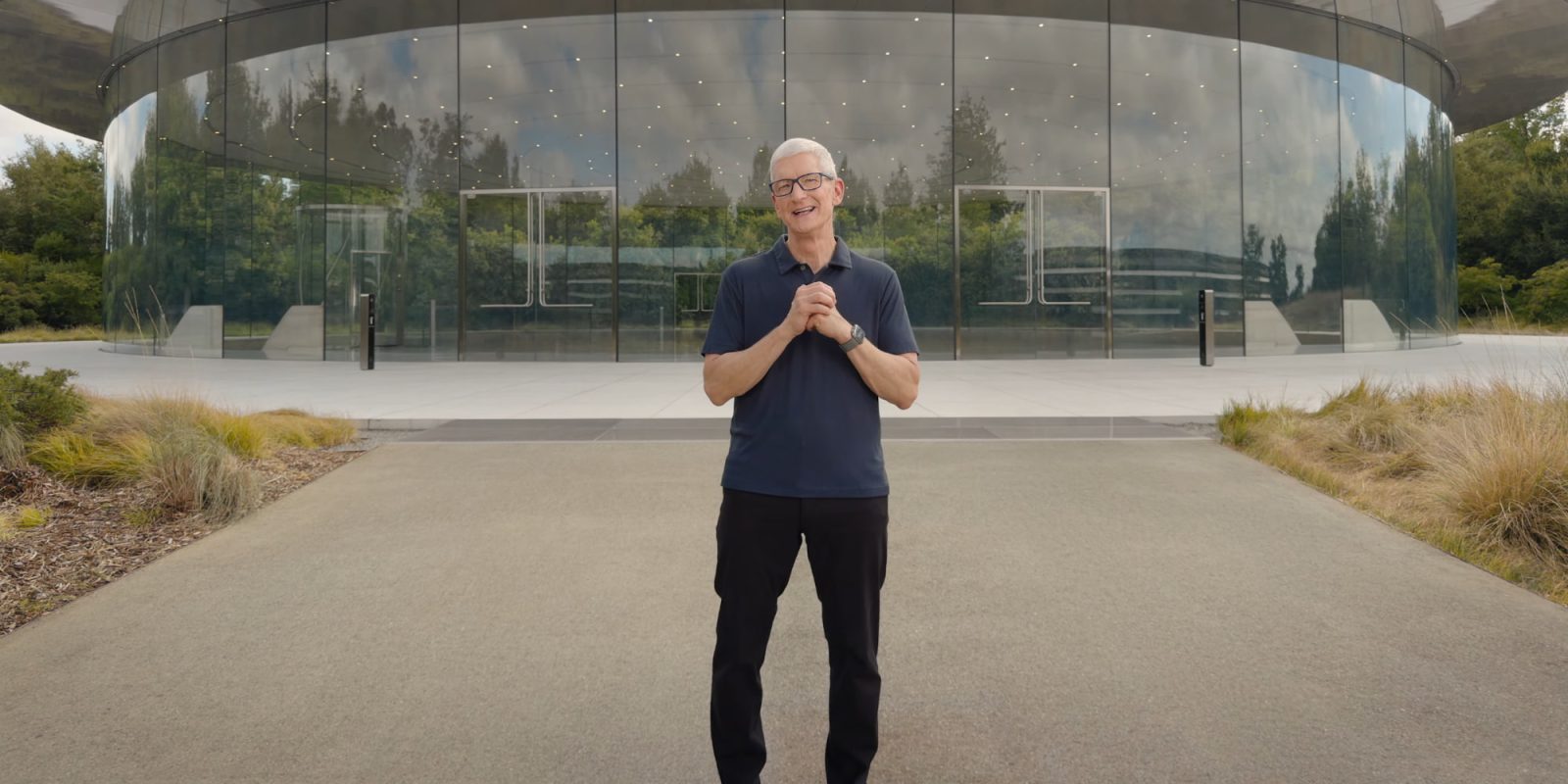
Apple Park Tim Cook AAPL

AAPL is a California-based computer company that became the most successful smartphone company in the world.

AAPL defined by Apple

Here’s how Apple defines itself:

Apple revolutionized personal technology with the introduction of the Macintosh in 1984. Today, Apple leads the world in innovation with iPhone, iPad, Mac, Apple Watch, and Apple TV. Apple’s five software platforms — iOS, iPadOS, macOS, watchOS, and tvOS — provide seamless experiences across all Apple devices and empower people with breakthrough services including the App Store, Apple Music, Apple Pay, and iCloud. Apple’s more than 100,000 employees are dedicated to making the best products on earth, and to leaving the world better than we found it.

Key AAPL history

From Apple I to iMac

Apple was founded in 1976 by Steve Jobs (Steve), Steve Wozniak (Woz), and (briefly) Ronald Wayne as a business partnership: Apple Computer Company. The following year it became Apple Computer, Inc. The company’s first product was the Apple I, a personal computer hand-built by Woz and sold in part-completed kit form. The Apple II and Apple III followed.

The modern Apple as we know it today began in 1983, with the launch of the first personal computer with a graphical user interface, the Lisa. Way too expensive to succeed, it was replaced by the Macintosh in 1984, launched with the single showing of a Ridley Scott commercial during the Super Bowl. The Macintosh transformed the world’s understanding of what a computer was, and would eventually lead to Microsoft adopting the GUI approach.

Steve Jobs and then Apple-CEO John Scully fell out in 1985, when Steve wanted to focus on the Macintosh while Scully wanted to put more attention on the Apple II, which was still selling well. That led to Steve being forced out of the company and going off to form NeXT.

Apple focused on selling Macintosh models at the highest possible margins, but would eventually fall foul of a mix of unsustainable pricing in the face of competition from Windows machines, and an overly complex product lineup. By 1996, the company was in trouble, and in 1997 Steve was brought back, along with the NeXT operating system, which would eventually form the basis of Mac OS X.

Steve simplified the Mac lineup and had industrial designer Jony Ive work on a whole new look for a consumer desktop Mac, the colorful iMac. The iMac, like the original Macintosh, again changed the world’s understanding of what a computer was, and who should want one.

From Apple Computer, Inc. to Apple, Inc.

In 2001, Apple launched the iPod. Although this wasn’t the first mp3 player, it was massively better than anything on the market at the time, and succeeded in turning a geeky piece of technology into a consumer electronics product with mass-market appeal.

The success of the iPod paved the way into other mobile devices. Apple was working on what would eventually become the iPad, when Steve realized that this was the basis of a smartphone. He diverted the team’s work into this, to launch the iPhone in 2007. The iPad launched later, in 2010.

The iPhone was yet another transformational product. While most other smartphones of the time were clunky devices with a keyboard and stylus, the iPhone was a sleek-looking device operated with a finger, and so simple that no user guide was needed. It was with the launch of the iPhone that Apple Computer, Inc. was renamed to Apple, Inc.

From Intel to Apple Silicon

While the iPhone, iPad, Apple Watch, and more are made with Apple-designed processors, the Mac lineup has historically relied on third-party companies for its CPUs. Over the years, Macs progressed from Motorola 680000 series chips through PowerPC to Intel.

In 2020, Apple began a two-year transition to the final stage in that journey, with Macs too finally getting Apple-designed chips. The first such is the M1 chip, used in the latest Mac mini, MacBook Air, and 13-inch MacBook Pro. Other Apple Silicon Macs followed.

AAPL today

Apple is one of the largest companies in the world. It was the first publicly traded company to hit a trillion-dollar valuation in 2018, $2 trillion in 2020, and $3T in 2022.

The company’s product lineup includes five different Mac families (MacBook Air, MacBook Pro, iMac, Mac Pro, and Mac mini); four iPad ranges (iPad mini, iPad, iPad Air, iPad Pro); four iPhone 12 models (12, 12 mini, 12 Pro, 12 Pro Max); three main Apple Watch models (SE, Series 3, Series 6); as well as other products, including Apple TV, AirPods, and HomePod mini.

In addition to hardware sales, Apple derives a growing proportion of its income from Services, including the App Store, iCloud, Apple Music, and Apple Pay.


Apple Intelligence Chinese launch remains problematic as talks continue

Apple Intelligence Chinese launch remains problematic as talks continue | Illustration of circuit board with AI chip

An Apple Intelligence Chinese launch isn’t looking much closer, as the company continues forced talks with local companies about partnerships.

Apple reportedly wanted to use its own generative AI models in China, but that would require government approval which – it has been strongly implied – would not be forthcoming …

Expand Expanding Close

Apple collaborates with NVIDIA to research faster LLM performance

In a blog post today, Apple engineers have shared new details on a collaboration with NVIDIA to implement faster text generation performance with large language models.

Apple published and open sourced its Recurrent Drafter (ReDrafter) technique earlier this year. It represents a new method for generating text with LLMs that is significantly faster and “achieves state of the art performance.” It combines two techniques: beam search (to explore multiple possibilities) and dynamic tree attention (to efficiently handle choices).

Expand Expanding Close

Apple’s foldable iPad is likely a test-bed for a future MacBook

Apple's foldable iPad is likely a test-bed for a future MacBook | Render of an all-screen MacBook

Bloomberg this weekend reported that Apple has made prototypes of a foldable iPad, and plans to release it in 2028. The device is said to open out into a screen with a size approaching 20 inches.

The report is intriguing, because it describes a product that might seem almost as niche as Vision Pro, but it may be that Apple will launch it for similar reasons …

Expand Expanding Close

Apple’s AR smart glasses likely aren’t being released anytime soon, sadly

Meta Orion Smart Glasses

For the longest time, we’ve heard rumors about Apple developing some form of AR smart glasses. Nothing has come to light of that, though we do now have Apple Vision Pro, which has a number of similarities with potential AR glasses, albeit in a much bulkier form factor.

However, despite companies like Meta and Snapchat showing off cool demos of augmented reality glasses, Mark Gurman from Bloomberg reports that Apple is around 3-5 years away from “getting the approach right.”

Expand Expanding Close

DOJ forced Apple to hand over customer call and message data without the required authorization

DOJ did not follow procedure when demanding customer call and message data from Apple | Office of the Inspector General report graphic

An official government report has concluded that the Trump-era Department of Justice (DOJ) did not obtain the required authorizations before demanding customer call and message data from Apple and others.

It also failed to obtain authorization from the Attorney General before imposing a gag order on Apple, preventing it from disclosing the fact that it had been forced to hand over the personal data

Expand Expanding Close

Apple made a prototype cellular MacBook in 2007 – should it finally sell one? [Poll]

Apple made a prototype cellular MacBook in 2007 – should it finally sell one? | MacBook in a coffee shop

Apple actually built a working cellular MacBook as a prototype all the way back in 2007, and Bloomberg reports that the company may finally release one using its own radio chip.

Steve Jobs was not sold on the idea at the time, for two reasons, but neither of those would apply today. So 18 years later, is it finally time … ?

Expand Expanding Close

Apple is reportedly exploring cellular connectivity for Vision Pro, and that’s a great thing

Vision Pro

Apple has been internally working towards developing new 5G modems for the longest time, and we’re finally expected to see them debut in the iPhone SE 4 next spring. However, a new report from Bloomberg yesterday provides a much more detailed roadmap on Apple’s modem plans, and it includes cellular coming to a couple new products, including Apple Vision Pro.

Expand Expanding Close

Tim Cook denies OpenAI rumors; talks AI energy use; Apple Glasses; saving lives

Tim Cook Wired interview | Cook seen against abstract background

A wide-ranging interview with Apple CEO Tim Cook reveals him (kind of) denying OpenAI rumors; addressing the potential conflict between the power requirements of AI and Apple’s environmental goals; the journey toward Apple Glasses; and how Apple’s greatest legacy may be saving lives.

Cook kicks off by denying that Apple was late to AI, pointing out that the company first built a neural engine into its products back in 2017 …

Expand Expanding Close

Software issues delay HomePod with display until late 2025 – Kuo

Apple analyst Ming-Chi Kuo says a HomePod with display now won’t launch until the third quarter of next year. He’d initially expected it to be launched in the first half of 2024, then said it had been pushed back to the first half of 2025.

The reason for the latest delay, he says, is that software development for the new device is taking longer than expected …

Expand Expanding Close

Apple turns to Amazon chips for AI pre-training and more

As reported by CNBC, Apple’s senior director of machine learning and artificial intelligence, Benoit Dupin, made a surprise appearance at Amazon’s AWS re:Invent conference in Las Vegas today.

Dupin used the opportunity to explain that Apple uses custom artificial intelligence chips from Amazon Web Services for many of its cloud services. Apple is also evaluating using Amazon’s newest AI chip to pre-train its Apple Intelligence models.

Expand Expanding Close

Apple offered Indonesia $10M then $100M, but it now expects $1B within a week

Apple offered Indonesia $10M then $100M, but it now expects $1B | View of Jakarta

Apple is known for playing hardball when it comes to negotiations, but it seems the Indonesian government is capable of giving as good as it gets.

The country banned the sale of the iPhone 16, saying the Cupertino company hadn’t invested enough in the local economy. Apple responded by offering to increase its manufacturing spend from $10M to $100M, but Indonesia now says it expects a billion dollars – and it wants the investment agreed within a week …

Expand Expanding Close