Author

Avatar for Jordan Kahn

Jordan Kahn

jordankahn

Dir. Partnerships

9to5Mac / 9to5Google / 9to5Toys / Electrek.co / DroneDJ / SpaceExplored

Jordan manages the internal Partner Program for sponsorships and partnerships across the 9to5 network’s media brands including 9to5Mac, 9to5Google, 9to5Toys, Electrek.co, SpaceExplored and DroneDJ.com.

Jordan also writes about all things Apple as a Senior Editor of 9to5Mac. He covers Google for 9to5Google.com, the best gadgets and deals on 9to5Toys.com, and EV and solar news on Electrek.co. He also co-authors 9to5Mac’s Logic Pros series and makes music sometimes.

Contact Jordan with partnership inquiries and long-winded complaints:  

Connect with Jordan Kahn

LiquidKeyboard prototype could revolutionize iPad typing with fully adaptive layout (Video)

Site default logo image

[youtube=http://www.youtube.com/watch?v=N4lIAxt-4eI&feature=player_embedded]

It’s no secret typing on an iPad isn’t nearly as efficient as the traditional hardware keyboards we’re used to. However, over time frustrations with Apple’s onscreen keyboard have settled as users acclimate to a new method of typing. The problem? If you were to use the iPad’s keyboard like a hardware keyboard, you would inevitably experience accidental key presses. This greatly slows down typing speed as users are forced to not rest their fingers on the keyboard. LiquidKeyboard aims to fix that.

A report from The Economist  profiles Christian Sax and Hannes Lau of the University of Technology in Sydney and their LiquidKeyboard prototype which hopes to provide a truly adaptive typing experience on tablets in the near future.

The video above starts off by showing the limitations of the iPad’s system wide keyboard in comparison to the LiquidKeyboard’s ability to adapt to a user’s natural finger position. It does this by allowing you to place all fingers on the screen at once, opposed to one or two fingers, and appears and aligns ergonomically in relation to your fingers and wrist position.

Expand
Expanding
Close
Apple granted injunction banning Galaxy smartphones EU-wide by October 13 (UPDATED 2x)

Site default logo image

Update 1: Samsung comments below the fold

Update 2: Judge declares Apple’s “slide-to-unlock” patent invalid

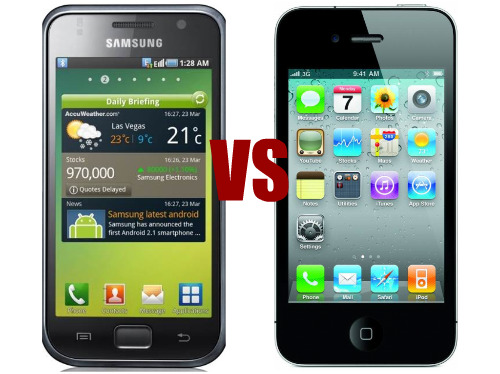
A Dutch court today issued an “EU-wide preliminary injunction against Samsung’s Galaxy” devices (excluding the Galaxy tablets), according to a report from FOSS Patents who just posted the official court order.

From the report:

The Rechtbank ‘s-Gravenhage (a Dutch court in the city of The Hague) today issued an EU-wide preliminary injunction against Samsung’s Galaxy smartphones — but not the Galaxy tablets — at Apple’s request. The decision follows a hearing held on August 10 and 11, 2011.

While the majority of Apple’s claims have reportedly been rejected by the court, one patent detailing swiping gestures  between images in a gallery has apparently lead to the court’s ultimate decision (according to Tweaker via MacRumors). The “EU-wide” ruling will take effect October 13 and will ban Samsung subsidiaries from selling several devices including the Galaxy S, Galaxy S II, and Ace smartphones. However, “EU-wide” in this case is not necessarily all of Europe, rather only in countries where that specific swipe gesture-related patent (image below) is valid. Foss Patents explains:

Expand
Expanding
Close

Apple ranks #1 in retail sales per square foot among U.S. retailers

Site default logo image

Apple officially ranks number one in retail sales per square foot, according to a new study published by retail analysis firm RetailSails that analyzed 160+ top U.S.-based retailers. As you can see from the graphic above (full graphic below), Apple is almost two times ahead of their closest competitor (Tiffany & Co), and almost five times ahead of the closest technology related retailer (GameStop). What’s most impressive is the fact Apple has much less experience in retail (ten years as of May) than most of other retailers included in the study.

Apple has been on a roll lately opening new retail shops in the US, UK, Spain, and then three more slated to open in Charlotte, Little Rock, and Paris this weekend. This is all part of a massive retail expansion which recently lead the company to become the nation’s fastest growing retailer, according to USA Today. Apple retail stores in the U.S. grew nearly 80% from the year prior with U.S. retail sales increasing $4.6 billion during the first quarter of 2011.

Expand
Expanding
Close
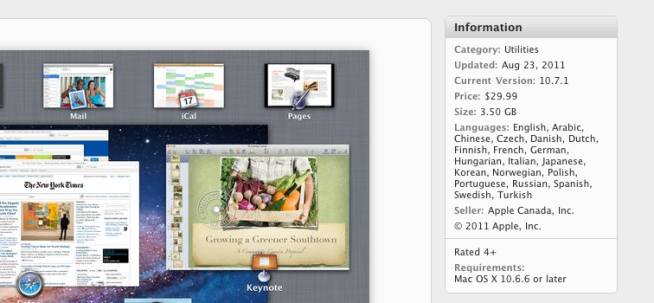
Mac OS Lion updated to 10.7.1 on Mac App Store

Site default logo image

When we reported the release of the Mac OS 10.7.1 update last week we were unsure whether or not new updaters would have to always grab additional updates through Software Update. However, it now looks like that won’t be the case as Apple has today updated Lion and the roughly 4GB installer to 10.7.1 on the Mac App Store. Apple will most likely carry on this new trend of releasing the delta update via SU first, followed by updating Lion in the Mac App Store for new downloaders.

The changelog from 10.7.1, which included the usual bug fixes and apparently improved issues users have had with Wi-Fi, is below if you’re interested.

Expand
Expanding
Close
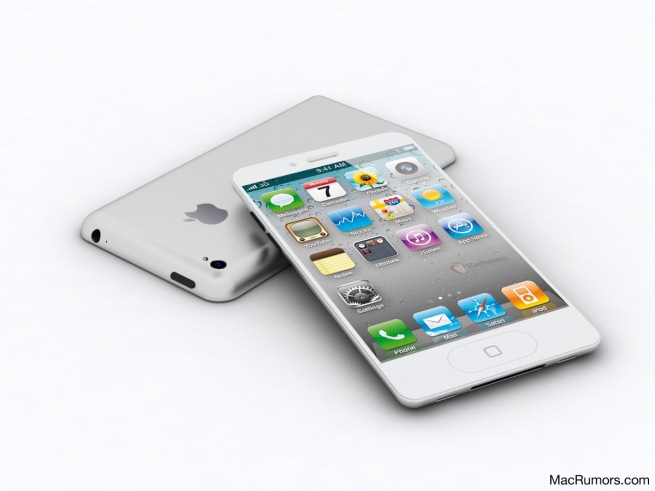
Apple granted patents related to solar, multi-touch, and iOS devices

Site default logo image

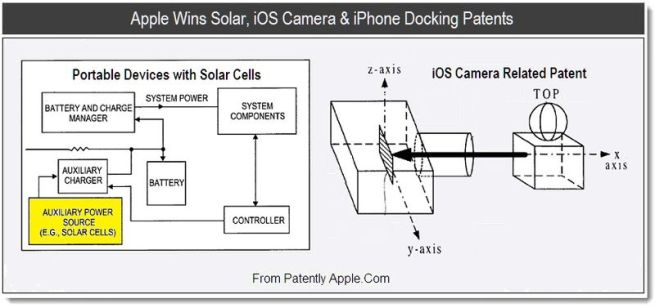
Apple has won 16 new patents published by the the US Patent and Trademark Office today (via PatentlyApple) that cover everything from possible methods of charging future Apple products via solar power, to key multi-touch technology and iOS camera related patents. Certainly more fuel for the ongoing patent wars between Apple and the rest of the smartphone industry.

We already know Apple is experimenting with solar power from past patents, even going as far as considering which company would produce panels for future products. We also heard reports in March of a superthin solar panel layer from French company Wysips that could be rolling out to handset manufactures within a year. Today one of the 16 newly granted patents gets us a step closer by detailing “methods and apparatuses for operating devices with solar power”.

PatentlyApple explains:

“a solar power tracking apparatus includes, but is not limited to, a voltage converter and a controller coupled to the voltage converter. The voltage converter includes an input capable of being coupled to a solar power source and an output capable of being coupled to an electronic load, such as, for example, a portable electronic device. The voltage converter is configured to monitor or detect an amount of power drawn by the electronic load at the output of the voltage converter. In response to the monitored power drawn, the controller is configured to control the voltage converter to reduce amount of power to be drawn subsequently if the monitored amount of power exceeds a predetermined threshold. As a result, the output voltage from the solar power source is maintained within a predetermined range.”


Expand
Expanding
Close

Apple plans to launch entirely new Mac this year?

Site default logo image

Apple may be planning on unveiling an all new Mac that is “absolutely different from current products”, according to a rough translation from the sometimes reliable macotakara.jp. The site’s track record is less than perfect, however they did accurately predict the iPad 2’s march release.

The report seems to claim the product will be so different from current product lines that it will indeed be given a new name. Other than that, there aren’t many details offered up in terms of specs on the potential next-gen Mac (iOS/OS X hybrid?), but it may be one of the new products Apple is already rumoured to be working on.

It’s a possibility these are the ultra-thin air-like MacBooks we’ve been hearing are in the final stages of testing, or perhaps Apple is designing an all new product that will see a platform switch from Intel to ARM processors. And don’t forget the rackable, stackable Mac Pro and that iMac touch patent,below.

Expand
Expanding
Close
Mozilla wants web apps to compete with native iOS apps

Site default logo image

Apple and Google are clearly the two front-runners competing for market share in the mobile world, which is why it’s no surprise we think of iOS and Android when we think of apps. With the growth of the smartphone industry also came the resurgence of native apps (thanks largely in part to Apple’s App Store which still dominates the space). However, Mozilla hopes that web apps will soon mature to provide a comparable experience for end users and an even better alternative for developers.

“We are aiming at providing all the necessary APIs to build a basic HTML5 phone experience within the next 3-6 months”

While Chrome OS has shown promise, it isn’t the only browser-based platform planning on entering the web app space… If Mozilla has its way, developers can use the results of their new WebAPI project to build an “HTML5 phone experience” that’s compatible across all operating systems (whether it’s Android, iOS, Windows Phone, etc).

report from CNET claims Mozilla has plans for the APIs to “interact with a phone’s dialler, address book, contacts list, and camera”, essentially giving you access to the same functionality of native apps but directly in your device’s browser.

The WebAPI project certainly isn’t trying to create a full-blown operating system. However, working hand in hand with Mozilla’s Boot to Gecko project, which aims to build a “complete, standalone operating system for the web”, it could create a potentially compelling alternative to Google’s browser-based Chrome OS.

It appears that Mozilla is serious about the project, as a report from CNET claims they’re in the process of hiring full time programmers and plan to have the basics in place by February…

Expand
Expanding
Close

Samsung claims Apple doctored Galaxy phone images in Netherlands court

Site default logo image

According to a report from Dutch publication Webwereld (via Computerworld)Apple has once again submitted doctored evidence related to their claims of design patent-related infringement by Samsung, this time to a court in Netherlands. This further supports claims by Bas Berghuis of Simmons and Simmons (Samsung’s lawyer) that Apple has been “manipulating visual evidence, making Samsung’s devices appear more similar to Apple’s.”

“It surprises me that for the second time incorrect presentations of a Samsung product emerge in photographic evidence filed in litigation,” said Mark Krul, lawyer and IP law specialist at Dutch firm WiseMen. “This is not appropriate and undermines Apple’s credibility both inside and outside the court room.”

If you aren’t up to speed with the legal disputes between Apple and Samsung in Europe… a court in Germany already granted a preliminary injunction halting sales of Samsung’s Galaxy tab 10.1 tablet in the EU (which has been since lifted pending an appeal). We already heard about Apple manipulating images in that case related to the iPad and Galaxy tab. This time, however, the report claims Apple doctored images of the Samsung Galaxy S smartphone in comparison to the iPhone 3G.

Apparently the changes made the Galaxy S appear smaller than it actually is to closer resemble the dimensions of the 3G, which is odd given the fact Computerworld reports Apple has confirmed the Galaxy S does include “some non-identical elements, such as the slightly larger dimensions.” This supports the idea that Apple isn’t trying to secretly submit this evidence to the courts. Many have noted a German court’s decision to grant Apple with the original preliminary injunction on the Galaxy tab didn’t take the doctored images into account. In fact, patent expert Florian Mueller noted “the court’s decision was based on both Apple’s motion and Samsung’s pre-emptive opposition pleading” and also stated “Samsung is in a legally weak position against Apple. If Samsung wants to inspire confidence, it has to understand that half the truth is sometimes tantamount to a whole lie.”

Expand
Expanding
Close
Who has the most patents? Apple sues despite smaller patent portfolio

Site default logo image

It’s no secret patent-related legal disputes have become the subject of most media coverage lately…Whether it’s Apple halting sales of Samsung’s tablets, HTC going after Apple, or Google snatching up Motorola to beef up their patent portfolio, it’s clear the company with the most patents will have an advantage over others in the legal proceedings that we’re bound to continue encountering down the road. This is why we’re intrigued by the graphic above (via GigaOM) from mobile analyst Chetan Sharma charting the number of issued patents (in the US and Europe) between 1993 and 2011.

While these estimates of mobile communications related patents don’t take the quality of patents into account (which is obviously a huge factor in determining their long-term value), you can see from the breakdown below that Nokia and Samsung top the list, with the other expected players including IBM, Microsoft, Sony, Motorola, and Intel following.

Noticeably far down the list is Apple, the one company who seems to have had more success than others fighting patent-related issues recently. Again, these numbers in no way represent the quality of patents and the ability for companies to protect their IPs in the courtroom… which is also a good indication that perhaps we should be looking more closely at the quality of patents rather than the sheer number.

Recently patent expert Florian Mueller took to Twitter following the Google/Motorola acquisition saying he“would caution everyone against overestimating the strength of Motorola Mobility’s patent portfolio,”  he continued, “Apple and Microsoft sued Motorola Mobility anyway”. Remember kids… all patents aren’t created equally.

Expand
Expanding
Close
Apple takes top spot from HP for “Mobile PC Market Share” (including iPads)

Site default logo image

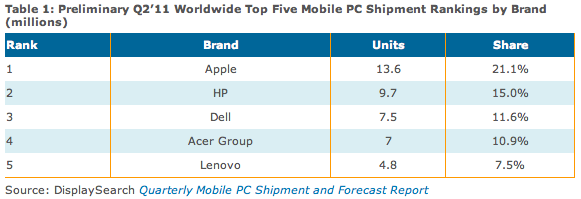
According to analytics firm DisplaySearch, Apple has officially passed HP (by nearly 4 million units) to become the top PC manufacturer worldwide with a 21.1% share. However, these numbers are somewhat controversial given the fact it includes iPad sales in the stats, a device that makes up 80% of Apple’s total PC shipments in Q2.

The research notes tablet shipments are up almost  “70% Q/Q and over 400% Y/Y”, while notebook shipments were down 2% Q/Q. This just reinforces the fact that the iPad shipments greatly inflate Apple’s market lead in the “Mobile PC Market”. Even with incredible growth in the tablet market (thanks to the iPad), the 48 million notebook PCs shipped in Q2 2011 still greatly outweigh tablet shipments of 16.4 million. If you take tablets (iPads) out of the equation, Apple’s frenemy Samsung still tops the list for growth, up  44% for shipments Y/Y.

Apple shipped 3.9 million units more than HP’s 9.7 million units, making for a total of approximately 13.6 million MacBooks and iPads. The report also notes that PC shipment worldwide growth is on the rise even without Apple, noting  “non-Apple tablets reached over 5.6 million units for the quarter” putting Y/Y tablet shipments up 25%.

From the report:

“Preliminary results show a second consecutive quarter of Y/Y shipment growth rate decline,” said Richard Shim, Senior Analyst for DisplaySearch. “While part of the Y/Y decline can be attributed to a strong first half of 2010, the rising tablet PC shipment growth rate begins to point to notebook PC shipment cannibalization.”


Expand
Expanding
Close
Apple squeezes suppliers, cuts costs by nearly 50 percent

Site default logo image

A report from Digitimes claims that, although touch panel orders from the iPhone and iPad 2 have increased significantly for the third quarter, Apple is allegedly placing orders at nearly half the cost of previous shipments. This leads us to believe they are either trying to reduce BOM (and increase margins) at the expense of suppliers, or they’re prepping for the usual price cuts in the wake of new product releases (iPhone 5, we’re looking at you).

The report notes:

Wintek has received touch sensor orders from Apple at prices nearly 50% lower than the ones previously offered by the client. The impact of Wintek’s low-margins is expected to ripple out to other downstream players

The move is expected to result in lower than usual profit-margins for the supplier and also affect other suppliers down the chain. The report is also quick to point out that “Wintek has previously rejected low-margin orders from Apple”.  We’ll keep you posted as more becomes available.

Explore the history of nearby locations with the Historypin iPhone app

Site default logo image

[youtube=http://www.youtube.com/watch?v=FdT3eKdto4w&feature=player_embedded]

Historypin, a user-generated map displaying historical data of nearby locations, is now available as an iOS app for iPhone, iPad, and iPod touch. Created in partnership with Google by not-for-profit We Are What We Do, the app allows users to add their own historical photos by pinning them to a map, capturing historic moments as they happen, and creating replicas of historical images. The images are then shared with users requesting data for a specific location….

Historypin uses Google Maps and Street View technology to reveal the user-generated photos and data related to historical events that happened close to your current location. It does this by “overlaying them onto the live camera view”…essentially aiming to give you a live snapshot of what your surroundings looked like in the past.

Simply holding your phone up in the street will provide you with relevant nearby images. Selecting one of the images allows it to be overlaid onto the iPhone’s camera view. You can then fade between the image and your live shot for comparison, as well as pull up stories and data related to the image and your current location.

Full list of features and some shots of the app in action after the break…

Expand
Expanding
Close
Google Catalogs app for iPad lets you browse and shop digital magazines

Site default logo image

[youtube=http://www.youtube.com/watch?v=FaPgVUJ9A8w&feature=player_embedded]

Today Google has announced “Google Catalogs”, a new app designed specifically for “tablet devices” (iPad only currently) that allows you to flip through digital versions of catalogs from a number of popular brands and “interact with new layers of rich-media content”. Not too long ago Google updated their Shopper app for iPhone… and now, with the Catalogs app, are providing an entirely new experience for browsing products and finding local retailers (presumably integrated with Google Offers).

Some of the more notable features include the ability to zoom, tap elements of a page to learn more, view and create photo albums, and most importantly, find products you’re viewing in nearby stores (an interesting approach to offering local deals).

There are currently a bunch of well known brands partnering with Google to create content for the newly launched free app… some of which include Urban Outfitters, Macy’s, Neiman Marcus, Nordstrom, Saks Fifth Avenue, and Williams-Sonoma, among others.

You can swing by the App Store to grab the free Google Catalogs app for iPad now. If you’re interested in getting your catalog included in the app, you can go here to learn more.

Expand
Expanding
Close

Apple testing 4G LTE-capable iOS Device with carriers?

Site default logo image

It appears that Apple is now putting an LTE 4G-capable iPhone or iPad through the usual carrier testing. The proof comes from a .plist hinting at “LTE” (discovered by BGR) in an internal iOS test build that is allegedly from “one of Apple’s major carrier partners”. Of course at this point we don’t know whether this is the iPhone 5 (iPhone 4S variant?) or even a new iPad, but its a good sign that the company has plans to take advantage of 4G LTE networks in the future… even if it isn’t the iPhone 5 “worldphone” you might be hoping for.

This wouldn’t be the first time Apple prototyped a device to take advantage of the latest carrier networks.

Plist file reproduced below:

Expand
Expanding
Close

Macotakara: iPhone 4S and iPad 3 may land in September, public release in October

Site default logo image

Digitimes previously reported that manufacturers have already begun preparing for production of the iPhone 5 and iPad 3, which would be unveiled in September and reach customers as early as October. Now, adding more weight to these claims, Macotakara is reporting that an iPhone 4S variant along with a new iPad will arrive in the same timeframe.

According to the rough translation, it appears sources have provided information on a possible iPhone 4S based on the current CDMA iPhone 4. The report doesn’t rule out an iPhone 5 saying it “can not be confirmed”. It also briefly suggests a new iPad will be released in October as well. Could it be possible Apple is planning on releasing an iPhone 4S as the rumored entry-level model in addition to an iPhone 5?

Of course the mention of a new iPad is less than likely. Apple appears to be quite a long way from releasing a refreshed model, especially if you are counting on them including those new 28-nanometer, TSMC-built A6 chips that just started trials.
Expand
Expanding
Close

Apple Patents: iPhone antenna clip, fingerprint reducing display coating, and solar power

Site default logo image

A few more interesting Apple Inc-filed patents have surfaced today (via Patently Apple) as part of the many applications published by the US Patent & Trademark Office recently. Perhaps the most notable include a design for an iPhone antenna clip, new finger reducing oil resistant coating, and a patent describing using solar energy as an alternate power source in portable devices (something we know Apple has been researching from patents and other sources in the past).

One of the more interesting patents with technology that could (and probably should) make its way to iOS devices in the near future is a the method of reducing “finger oils on touch surfaces”. The patent describes Apple’s method of “Direct Liquid Vaporization for Oleophobic Coatings”. Fingerprints have seem to become less of an issue to iPhone users over the years, but are definitely still a major annoyance to users in less than desirable lighting conditions.

From the report:

Apple states that to prevent the deposition of oils on an electronic device surface, an oleophobic ingredient could be bonded to the electronic device surface. The oleophobic ingredient could be provided as part of a raw liquid material in one or more concentrations. To avoid adverse reactions due to exposure to air, heat, or humidity, the raw liquid material can be placed in a bottle purged with an inert gas during the manufacturing process.

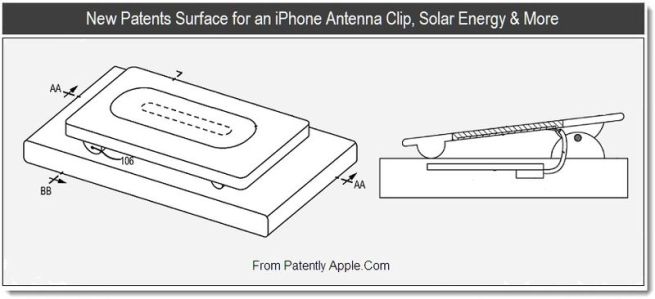
The image below shows what appears to be an antenna attached to a small device’s housing via an “attachment member”. Patently Apple reports Apple states the antenna invention could be used in “their iPod family (MP3 players), a radio, an audio/video recorder, a mobile telephone, personal digital assistant, tablet computing device, or other similar device”. They also speculate from the “exploded view above that it might even be an “iPhone-nano-like device”.

Expand
Expanding
Close

Apple begins testing TSMC A6 processor with 28-nanometer process, coming Q2 next year

Site default logo image

Taiwan Economic News is reporting that local Taiwan Semiconductor Manufacturing Co., Ltd (TSMC), the company slated to supply Apple with the A6 processor after a shift from Samsung, has begun trials of the new chip made with the company’s “newest 28-nanometer process and 3D stacking technologies”. However, dont expect to see the A6 in a new iteration of the iPad anytime soon, as the report suggests the processor wont be officially unveiled until Q2 of next year, at the earliest.

Included in the report:

TSMC has applied its newest 28-nanometer process and 3D stacking technologies to produce the next-generation processor A6, which is based on the ARM architecture and will undergo TSMC’s cutting-edge silicon interposer and bump on trace (BOT) methodologies. Industry insiders said that the manufacturing will help to pump considerable momentum into TSMC’s business growth starting next year, though the company has yet to comment on the deal for the moment.

This contradicts an earlier report thru Reuters which stated that test production had already begun in July.  Both reports agreed that the final A6 processors would be complete and ready for iPad 3 in early 2012.  EETimes had reported the move back in March which was said to involve Apple’s current A5 chip but that never materialized.

An Apple switch to TSMC would obviously be a huge blow to ‘frenemy’ Samsung who currently makes the iPad CPU, DRAM and supplies Flash storage as well.


Expand
Expanding
Close

Pinch? Swipe? How about “dig a hole” or “open the window”… Apple files patent for new iOS interface elements

Site default logo image

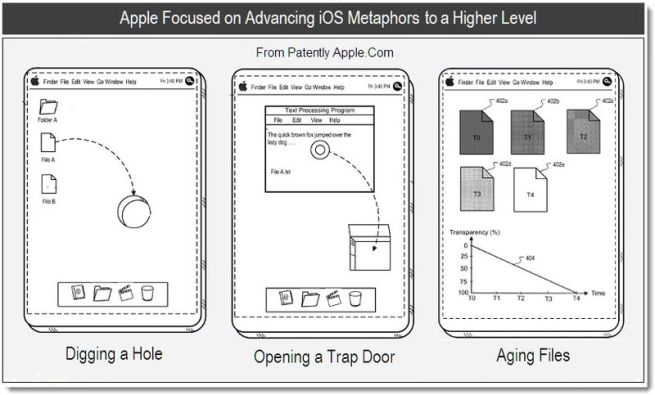
Pinch? Swipe? How about “dig a hole” or “open the window”? Another round of Apple Inc filed patents have been published today by the US Patent & Trademark Office. The most interesting of the latest patents (via Patently Apple) is one focused on “advancing iOS metaphors to a higher level”. What does this mean exactly?

Essentially it would see iOS including a number of new interactive UI elements, many of which will replicate the experience of being able to “manipulate and organize various graphical objects”, similar to the desktop-like environment of “conventional personal computers” (OS X). In other words, Apple wants you to have more control over what you can do with elements within iOS, presumably to close the gap between what’s possible on OS X compared to current iOS builds… which also highly supports theories of iOS and OS X becoming one in the future.

Perhaps the most clear example of how these new UI elements might appear to the end user comes from the “Example Interactions Digging a Hole in a Device User Interface” section of the patent…

From Patently Apple:

Apple is always looking for new ways to distinguish iOS from the pack and today Apple introduces us to a number of new GUI gestures and metaphors that are fun and Kooky – if not creatively insane. The first one describes the notion of “digging a hole” in your interface that will allow you to drop a file into it quickly or act as a garbage bin or other uses.

Apple also described a number of other interactions similar to “digging a hole” including opening a trap door or window via gestures.

Expand
Expanding
Close

Investors urge Nintendo to develop games for iPhone and iPad

Site default logo image

Will Nintendo begin to produce titles for iOS devices? It’s a possibility if they take the advice of Tokyo-based Stats Investment Management Co, “Nintendo should try to either buy its way into this platform (smartphones) or develop something totally new.”

Bloomberg reports:

 “The rift highlights the dilemma President Satoru Iwata faces as consumers shun Nintendo devices to play games on iPhones, iPads and Facebook Inc.’s website. The flop of the 3DS debut prompted the company to cut prices 40 percent in Japan and 32 percent in the U.S., the first time the games developer has resorted to such a move within six months of a product’s debut.”

Historically Nintendo has made their stance clear on developing for platforms other than their own. President Satoru Iwata even went as far as saying the company would never develop for other platforms as long as he’s in charge. While their new 3DS handheld hasn’t received a great reception, investments Nintendo has made recently in the 3DS (competitor to Sony’s  Vita) portable device and Wii U makes it unlikely they will divert their attention to developing games for Apple devices anytime soon. This is especially true when talking about hallmark franchises like Mario and Donkey Kong. To provide these titles to iOS users would kill any incentive the company has to offer potential 3DS and Wii U customers.

That being said, the market opportunity is huge (just look how well Nintendo emulators do on jailbroken devices).  If the game-maker continues to lay eggs with its portable products, it might be forced to join up with Apple, or build a 3DS Android phone like Sony did with its Xperia Play.

At the very least Nintendo should build a generation-behind Emulator App like Atari’s Greatest hits.

Expand
Expanding
Close

Apple patents projector technology and “Shared Projected Workspace” concept for MacBooks and iOS devices

Site default logo image

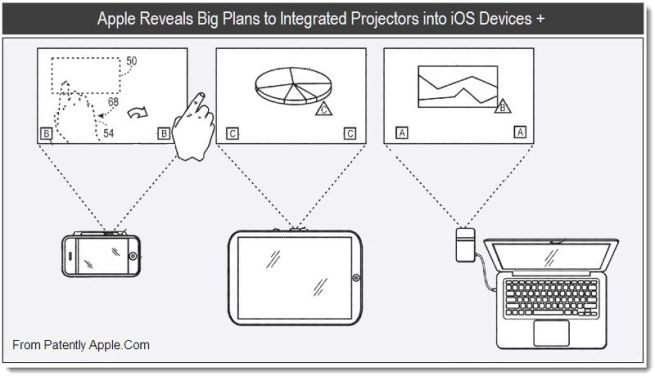
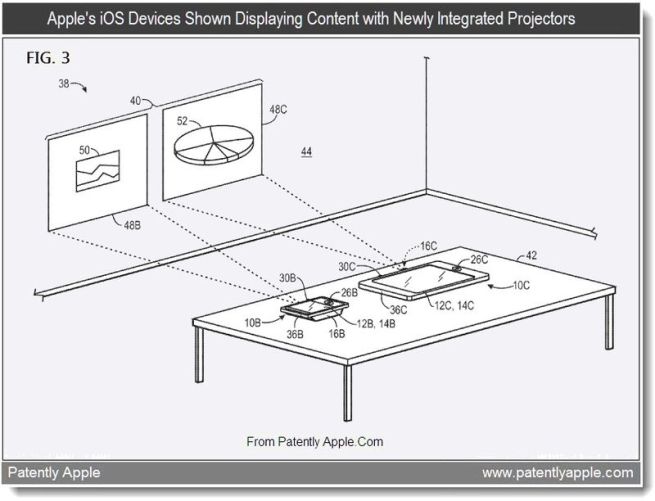
There certainly isn’t a shortage of Apple patents being published today (probably more fuel for a legal battle a year from now). We just told you about a new Map related (Placebase acquisition) patent, and now Patently Apple reports Apple has been granted a patent that will allow them to integrate tiny projectors into future mobile devices.

This latest patent describes, in rather clear detail, exactly how Apple could integrate projectors into iPhones, iPads, and MacBooks. It even suggests Apple cameras will be able to detect gestures and “shadows and/or silhouettes” (Kinect-style iOS games anyone?).

The patent also describes what Apple calls a “shared projected workspace”. This appears to essentially be the ability for users to share content with one another over two projected displays. For example, if I were to project an image from one iOS device, and you from another, we could then share content (via gestures?) between both displays. The patent explains:

Expand
Expanding
Close

Placebase team at Apple file “Schematic Maps” patent dynamically detailing important data

Site default logo image

In a report from Computerworld way back in 2009, we learned that Apple had quietly acquired Maps API company Placebase. Then, founder of Placebase and CEO, Jaron Waldman, started working at Apple on a new “Geo Team”, presumably helping to integrate Placebase mapping technologies into future Apple products.

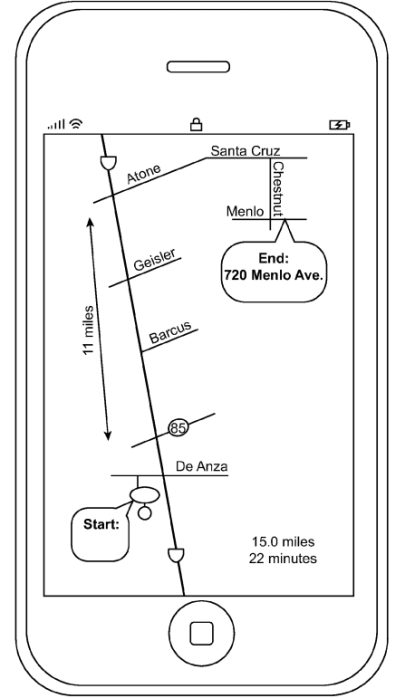
Fast forward two years to a new patent application titled “Schematic Maps”, filed by Apple Inc. and published today with Waldman, along with Placebase co-founder Moran Ben-David, listed as inventors.

Essentially the patent describes new methods of modifying a map in order to highlight certain objects by distorting others. For example, Apple could provide more data to the user (especially those on smaller screens) by blurring useless data and highlighting what it predicts is most useful to the user at any given time. You can imagine this being particularly useful for navigation. If a user were to request directions to a specific location, the maps could dynamically blur data that isn’t helpful and modify objects or landmarks that would otherwise be difficult to locate.

A snippet from the patent summary explains:

The following relates to preparing and presenting schematic maps, which are maps that present information in a format that presents only information that is most relevant to a given situation in order to provide a simple and clear representation sufficient to aid a user in guidance or orientation. The schematic maps as described herein can be formatted based on the attributes of a display on which they are presented so that the map layout and presentation can be optimized for the particular display. The schematic maps can be “distorted” to better illustrate important maps areas in greater detail and using a relatively larger display area while deemphasizing less important map areas by illustrating them in less detail and using a relatively smaller display area, and thus the schematic maps can be devoid of adherence to a particular scale.

There was originally speculation that Apple might be acquiring Placebase in order to build their own native Maps application, rather than having to rely on Google Maps. With the patent wars heating up and relationships between smartphone makers weakening, the likelihood of Apple not wanting to rely on their rivals for key technologies is increasing.

Expand
Expanding
Close

Samsung updates MacBook Air class SSDs to 6Gbps SATA 3, 500MB/s reads and 350MB/s writes

Site default logo image

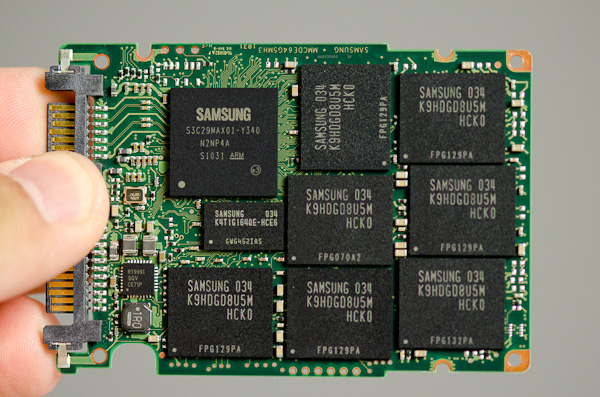
Variant of SSD that could go in future MacBooks Pros and Airs

We told you back in April that Apple was upgrading from Toshiba SSDs to Samsung-built drives in the latest MacBook Air lineup. Today a report from Anandtech notes the Samsung PM810 (a customized variant of the same drive currently ships in the 2011 Air) has received some substantial upgrades in its latest refresh.

Samsung has announced the PM830, the latest generation of the PM810, which is slated to pack a 6Gbps SATA 3 that provides up to 500MB/s reads and 350MB/s writes, according to Samsung.  That 150% to double the real world speed of the current Samsung Air SSDs and easily beats Apple’s Pro line options.

The new drive will also be shipping with up to 512GB capacity, a nice bump up from the current 256GB offered in the MacBook Air.

Normally it wouldn’t be much of a stretch to think that Apple might naturally include this upgraded SSD in the next MacBook Air refresh. However, with tension growing between Apple and Samsung due to patent related lawsuits (if you haven’t heard by now), more and more questions are being raised about the sustainability of Samsung being one of their main competitor’s part suppliers.

According to a story from The Economist, Samsung might turn out to be a much more important supplier than you may have thought. While companies like Taiwanese-based Foxconn are known to provide many of the cheaper components that make up Apple devices, the report notes Samsung “provides some of the phone’s (iPhone) most important components” including flash memory, DRAM, and processor components. However, they are also quick to point out Apple is one of “Samsung’s largest customers”.

Expand
Expanding
Close

New in OS X Lion: “Network Link Conditioner” utility lets you simulate internet and bandwidth conditions

Site default logo image

What is it? Network Link Conditioner is a new utility in OS X Lion (via the free Xcode 4.1 app) that will allow you to simulate less than desirable network conditions, such as a bad 3G connection or Edge with “Good Connectivity”. This is an especially useful utility for those developing apps and sites that highly rely on network connectivity, whether it’s a multiplayer game or just an animation heavy web app.

Expand
Expanding
Close