AAPL Company

See All Stories

Breaking news from Cupertino. We’ll give you the latest from Apple headquarters and decipher fact from fiction from the rumor mill.
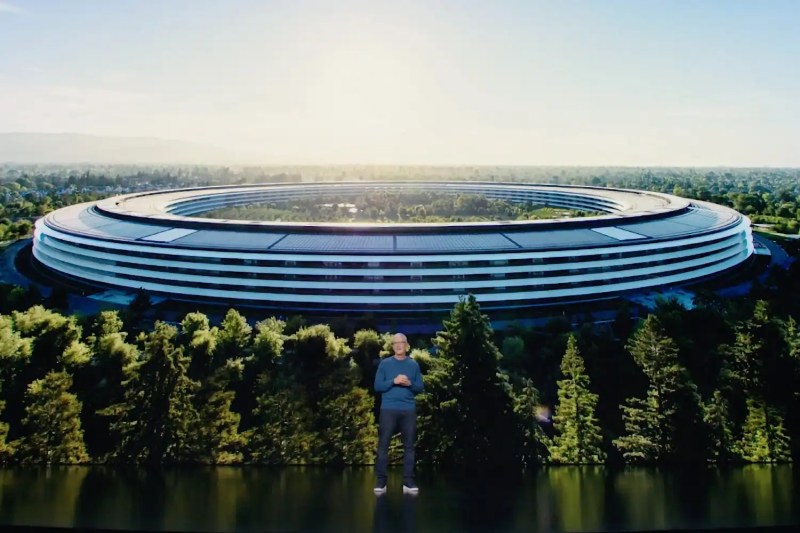
Apple Park Tim Cook AAPL

AAPL is a California-based computer company that became the most successful smartphone company in the world.

AAPL defined by Apple

Here’s how Apple defines itself:

Apple revolutionized personal technology with the introduction of the Macintosh in 1984. Today, Apple leads the world in innovation with iPhone, iPad, Mac, Apple Watch, and Apple TV. Apple’s five software platforms — iOS, iPadOS, macOS, watchOS, and tvOS — provide seamless experiences across all Apple devices and empower people with breakthrough services including the App Store, Apple Music, Apple Pay, and iCloud. Apple’s more than 100,000 employees are dedicated to making the best products on earth, and to leaving the world better than we found it.

Key AAPL history

From Apple I to iMac

Apple was founded in 1976 by Steve Jobs (Steve), Steve Wozniak (Woz), and (briefly) Ronald Wayne as a business partnership: Apple Computer Company. The following year it became Apple Computer, Inc. The company’s first product was the Apple I, a personal computer hand-built by Woz and sold in part-completed kit form. The Apple II and Apple III followed.

The modern Apple as we know it today began in 1983, with the launch of the first personal computer with a graphical user interface, the Lisa. Way too expensive to succeed, it was replaced by the Macintosh in 1984, launched with the single showing of a Ridley Scott commercial during the Super Bowl. The Macintosh transformed the world’s understanding of what a computer was, and would eventually lead to Microsoft adopting the GUI approach.

Steve Jobs and then Apple-CEO John Scully fell out in 1985, when Steve wanted to focus on the Macintosh while Scully wanted to put more attention on the Apple II, which was still selling well. That led to Steve being forced out of the company and going off to form NeXT.

Apple focused on selling Macintosh models at the highest possible margins, but would eventually fall foul of a mix of unsustainable pricing in the face of competition from Windows machines, and an overly complex product lineup. By 1996, the company was in trouble, and in 1997 Steve was brought back, along with the NeXT operating system, which would eventually form the basis of Mac OS X.

Steve simplified the Mac lineup and had industrial designer Jony Ive work on a whole new look for a consumer desktop Mac, the colorful iMac. The iMac, like the original Macintosh, again changed the world’s understanding of what a computer was, and who should want one.

From Apple Computer, Inc. to Apple, Inc.

In 2001, Apple launched the iPod. Although this wasn’t the first mp3 player, it was massively better than anything on the market at the time, and succeeded in turning a geeky piece of technology into a consumer electronics product with mass-market appeal.

The success of the iPod paved the way into other mobile devices. Apple was working on what would eventually become the iPad, when Steve realized that this was the basis of a smartphone. He diverted the team’s work into this, to launch the iPhone in 2007. The iPad launched later, in 2010.

The iPhone was yet another transformational product. While most other smartphones of the time were clunky devices with a keyboard and stylus, the iPhone was a sleek-looking device operated with a finger, and so simple that no user guide was needed. It was with the launch of the iPhone that Apple Computer, Inc. was renamed to Apple, Inc.

From Intel to Apple Silicon

While the iPhone, iPad, Apple Watch, and more are made with Apple-designed processors, the Mac lineup has historically relied on third-party companies for its CPUs. Over the years, Macs progressed from Motorola 680000 series chips through PowerPC to Intel.

In 2020, Apple began a two-year transition to the final stage in that journey, with Macs too finally getting Apple-designed chips. The first such is the M1 chip, used in the latest Mac mini, MacBook Air, and 13-inch MacBook Pro. Other Apple Silicon Macs followed.

AAPL today

Apple is one of the largest companies in the world. It was the first publicly traded company to hit a trillion-dollar valuation in 2018, $2 trillion in 2020, and $3T in 2022.

The company’s product lineup includes five different Mac families (MacBook Air, MacBook Pro, iMac, Mac Pro, and Mac mini); four iPad ranges (iPad mini, iPad, iPad Air, iPad Pro); four iPhone 12 models (12, 12 mini, 12 Pro, 12 Pro Max); three main Apple Watch models (SE, Series 3, Series 6); as well as other products, including Apple TV, AirPods, and HomePod mini.

In addition to hardware sales, Apple derives a growing proportion of its income from Services, including the App Store, iCloud, Apple Music, and Apple Pay.

Comment: IBM’s Apple deployment stats should be a lesson to enterprise companies everywhere

IBM reported some pretty impressive stats this week. Not least among them the fact that 73% of IBM employees – the company whose personal computer division was once almost synonymous with Microsoft – want a Mac as their next PC. The company is currently equipping its employees with Macs at the rate of 1300 people per week.

Indeed, IBM Japan has gone as far as making Macs standard-issue: any employee wanting a Windows machine instead has to make a special request justifying their need.

The company said that it had to overcome a number of assumptions – or prejudices – in order to make the transition …


Expand
Expanding
Close

The obscure legal mechanism Apple uses to keep its trademark filings secret for six months

If you want to know what products a company like Apple plans to launch, trademark filings can be a good way to find out because anyone can search them. Apple’s registration of the trademark ‘Apple Watch’ was a bit of a giveaway, for example.

But there is one way tech companies can keep them secret for the first six months, and it’s a method Apple has used no fewer than 343 times: taking advantage of section 44(d) of the US Trademark Act …


Expand
Expanding
Close

Interview: Tim Cook says Apple’s aim is a cashless society; working to boost the role of AI

Tim Cook has told the Nikkei Asian Review that the company hopes that Apple Pay will help to bring about a cashless society. The statement was made a month before the iPhone 7 becomes the first iPhone to support FeliCa, the contactless payment standard used in Japan.

We would like to be a catalyst for taking cash out of the system. We don’t think the consumer particularly likes cash.

Cook also spoke rather mysteriously about the work that will be performed by the R&D center the company is building in Yokohama, expected to open in March …


Expand
Expanding
Close

A sneak preview of the stunning $17B redevelopment that will be home to Apple’s new UK campus

We learned a few weeks ago that Apple would be opening a major new UK campus inside the iconic Battersea Power Station building. A developer video has now given us a sneak preview of how the $17B redevelopment will look once it is complete in 2021 – and it’s pretty spectacular.

As we mentioned last time, Apple will be the main tenant of the building, which will also be home to shops, leisure facilities and luxury residential apartments …


Expand
Expanding
Close

Apple announces plans for second R&D center in China to ‘work more closely with manufacturing partners’

Shenzhen skyline

Even before Apple has built its first Chinese R&D center in Beijing, Tim Cook has announced that a second one is on the way. Reuters reports that the second one will be in the country’s largest manufacturing district, Shenzhen.

Apple said that this center will be specifically focused on allowing Apple to work more closely with its manufacturing partners in the country …


Expand
Expanding
Close

Samsung looks likely to win Supreme Court appeal against damages in Apple patent case

The never-ending court battle between Apple and Samsung over three iPhone design patents finally reached the Supreme Court yesterday. It had earlier been found that a total of 11 Samsung phones copied three design elements patented by Apple – including the famous ‘black rectangle with rounded corners.’ Lower courts ruled that Samsung should have to pay 100% of the profits earned from those phones, while Samsung thinks it should pay less.

Remarks by two of the Justices seem to indicate that they are leaning heavily towards Samsung’s side of the argument. Samsung’s position is that the patented features represent only part of the reason for purchase, and that they should accordingly have to hand over only part of the profits earned from them …


Expand
Expanding
Close

Why today’s Apple v Samsung Supreme Court case is so important, and why it won’t end there

The BBC has an interesting take on the Apple versus Samsung patent case that is finally heading to the Supreme Court today, arguing that a definitive ruling is needed in order to bring a 19th Century law into the 21st Century.  It also explains why the legal battle probably won’t end with the Supreme Court’s ruling.

A one-paragraph recap for anyone who hasn’t been following the case closely. Samsung infringed several of Apple’s design patents – that is, patents concerned with how things look (in either hardware or software) rather than what they do. Samsung is no longer denying that. The lower courts ruled that Samsung must pay all of the profits made by infringing these patents. That’s the bit Samsung is fighting, arguing that it should pay a much smaller sum.

And it is this element of patent law which the BBC’s Dave Lee suggests needs to advance a century or two …


Expand
Expanding
Close

It’s over: Samsung permanently ends production of Note 7 after multiple fires in replacement devices

Samsung has officially ceased worldwide production of its Galaxy Note 7 after multiple reports of replacement models, like the original ones, catching fire.

I argued yesterday that the company ‘might as well write-off this year’s flagship phone as a lost cause,’ and there are today multiple reports (The Verge, Bloomberg and the BBC) that it has now done so.

South Korean tech giant Samsung has permanently ceased production of its high-end Galaxy Note 7 smartphones after reports of devices it had deemed safe catching fire.

“We recently readjusted the production volume for thorough investigation and quality control, but putting consumer safety as top priority, we have reached a final decision to halt production of Galaxy Note 7s,” the company said. “For the benefit of consumers’ safety, we stopped sales and exchanges of the Galaxy Note 7 and have consequently decided to stop production.”

The announcement was made in response to growing pressure …


Expand
Expanding
Close

Comment: Samsung’s literal meltdown will mostly benefit Google & LG, but should help Apple too

You might have thought things couldn’t get any worse for Samsung after a series of fires and explosions forced it to recall its flagship Galaxy Note 7. It had already been forced to recall almost 2.5 million devices at an estimated cost of a billion dollars, with all U.S. major carriers offering customers the option to return replacement devices also.

But things have now gotten worse. Much worse. The Verge has found that no fewer than five replacement devices have caught fire in the U.S. alone.

When it was just one case, I cautioned against jumping to conclusions, but with five separate fires in such a short time, we’re well beyond the point of being able to ascribe this to the simple statistics of lithium battery failures. All four major U.S. carriers have now pulled the Note 7 altogether, and Samsung has ‘temporarily’ halted production of replacement Note 7s …


Expand
Expanding
Close

Class action lawsuit against Apple over iPhone 6 ‘Touch Disease’ hardware flaw gains momentum

Site default logo image

A few months back, we reported on a hardware flaw plaguing a growing number of iPhone 6 and iPhone 6 Plus users, which garnered the name of “Touch Disease.” Shortly after the flaw was initially reported on, a trio of iPhone users filed a class action lawsuit against Apple, claiming that Apple refuses to repair devices affected by Touch Disease for free. Over a month later, Apple has yet to publicly acknowledge the issue.

Now, Motherboard reports that the push to get Apple to respond to the issue is growing thanks to more backing behind the original class action lawsuit in California and a separate, new lawsuit in Utah…


Expand
Expanding
Close

Apple to expand Italy developer program, will partner w/ five universities for new iOS Foundation Program

Site default logo image

Apple’s first iOS Developer Academy opened in Naples, Italy this week, but the company doesn’t plan to make that its only presence in the company. At an event celebrating the opening of the Naples location, Apple’s VP of environment, policy, and social initiatives Lisa Jackson announced that Apple plans to expand its program further (via Macitynet).


Expand
Expanding
Close

Apple’s new ‘Orchard’ program aims to discover the next best marketing talent [U]

Site default logo image

Update: The Orchard page has now been removed from Apple’s site and redirects back to Apple’s homepage.

Apple has quietly created a new program called Orchard with the goal of seeking out the next best marketing talent. Job listings have been appearing gradually over the past few weeks for the program, but Apple this evening has launched a new Orchard page on its website that talks about the program.


Expand
Expanding
Close

Apple ecosystem key to company remaining world’s most valuable brands, says Interbrand

Interbrand’s annual brand value report lists Apple as the world’s most valuable brand for the fourth year running, estimating the total worth of the brand at $178B, up 5% on the previous year. Apple first knocked Coca-Cola out of Interbrand’s top slot in 2013.

Apple is a technology company that leads innovation with their products and software platforms, providing seamless experiences across devices, and empowering people with breakthrough services.

The company says that Apple’s ecosystem is the biggest contributor to the value of the brand …


Expand
Expanding
Close

PSA: Now is a good time to educate your less-techy friends about ‘Apple’ phishing emails

Site default logo image

A number of friends have recently forwarded me examples of some relatively convincing-looking phishing emails purporting to be from Apple. These include fake Apple Music subscriptions or purchases, inviting the user to login to the Apple website to cancel the transaction if it wasn’t made by them.

The link, of course, goes to a fraudulent site, but many of them are close copies of the real thing. No 9to5Mac reader would be taken in by any of them, but a non-tech person might be. So if you’re the person who acts as unofficial tech advisor to your friends, you might want to ensure they are up to speed on these …


Expand
Expanding
Close

Apple’s first Chinese R&D center will be in Zhongguancun Science Park Beijing, employ 500

Beijing’s Zhongguancun Science Park

Tim Cook last month told the Chinese government that Apple would be building its first research and development center in China by the end of the year, and local media now appears to have some specifics.

The center will reportedly be located in Beijing’s Zhongguancun Science Park and employ 500 staff.

The R&D center has a registered capital of CNY100 million (US$14.994 million), with total investment likely to reach CNY300 million in the future. The center plans to hire a total of 500 employees, focusing on the development of computer software and hardware products, communication, audio and video devices, as well as advanced technologies for consumer electronics products and the information industry.

The Digitimes report – citing local media – says that the role of the center is expected to go beyond research …


Expand
Expanding
Close

Apple opening major new UK campus in iconic Battersea Power Station building

Site default logo image

The four chimneys make Battersea Power Station one of the most recognizable buildings in London

London’s Evening Standard reports that Apple is to create a spectacular new UK campus in the iconic Battersea Power Station building alongside the Thames.

The iPhone and iPad maker will move 1,400 staff from eight sites around the capital into what it calls “a new Apple campus” at the Grade II listed former electricity generator.

Its employees will occupy all six floors of office space in the brick “cathedral of power”, which is being painstakingly restored after 33 years standing derelict on the banks of the Thames … 


Expand
Expanding
Close

Apple responds to campus sexism allegations, says it has investigated & taken action

Site default logo image

Seemingly overshadowed by the chaos of iPhone 7 launch week were a pair of articles that highlight an alleged “very toxic atmosphere” at Apple’s Cupertino headquarters. An article from Mic pointed to a variety of instances of alleged sexism and inappropriate behavior.

Now, Recode has sat down with Apple’s head of human resources Denise Young Smith to discuss the issues raised in the article and what Apple is doing to combat them.


Expand
Expanding
Close