Apple

See All Stories

Apple News and Brief History

Before you can properly understand Apple News, it’s important to know its history. Apple was founded by Steve Jobs and Steve Wozniak in 1976. In 1977, Apple’s sales were growing with the success of its early computers. Within a few years, Jobs and Wozniak hired designers and a production line crew. Apple went public in 1980 and was an instant success. Over the next few years, Apple shipped new computers featuring new graphical user interfaces, such as the original Macintosh in 1984. As the market for personal computers expanded through the 1990s, Apple lost market share to the cheaper Microsoft Windows on PC clones. Eventually, Wozniak and Jobs both left Apple. Jobs would go on to found NeXT and would return to Apple when NeXT was acquired in the late 90s. Apple then began a journey to the great second act in the history of the business world.

Since the release of the iPod in 2001, Apple has become a major player once again in the technology industry. After releasing the iPhone in 2007, the iPad in 2010, and the Apple Watch in 2015, Apple is now one of the largest companies in the world. Apple’s worldwide annual revenue totaled $274.5 billion for its 2020 fiscal year.

Today, Apple operates retail stores all across the world, has a growing services division, and an ever-expanding hardware lineup. The technology industry follows Apple news to see where the company is headed in the future.

Keep reading for the latest Apple news

Analyst: Apple to sell 22 Million iPads in 4th Quarter

Site default logo image

Another day, another analyst making bold predictions about Apple. Though this time it’s the usually accurate Jason Schwarz. In a post on SeekingAlpha.com (via Forbes) Schwarz writes:

“With the era of the laptop coming to an end how should we extrapolate Apple’s recent quarter of 9.25 million iPads into the holiday quarter? It’s logical to assume that the iPad will mirror the growth that the iPhone experienced in 2010 as it grew from 8.4 million units sold in Q2 to 16.2 million in Q4, 92% growth. We also take into consideration the 183% year over year growth that the iPad experienced in its most recent quarter to come up with a forecast of 21.9 million iPads to be sold in this year’s holiday quarter.”

2011 has been a difficult year for Apple’s tablet competitors. HP recently halted production of their WebOS powered TouchPad device after only three months on the market (though it has been selling well at $99). Blackberry’s new PlayBook has been panned by many reviews. Android manufacturers have been sued by Apple for violating many of their software patents. Even laptop manufacturers are starting to feel the pain of the increasingly popular and powerful tablet. Traditionally the holiday quarter has always been the strongest for Apple. Furthermore, we would be remiss to leave out the very unlikely possibility of a rumored iPad holiday refresh. Such an event, though unlikely, could help push these numbers into the stratosphere.

It’s pretty amazing to see how far the iPad has come in such a short period of time. Starting out for many as “just a big iPod touch”, the device has matured and found a place in millions of homes throughout the world. The iPad has played a major role in defining and boosting the stagnant tablet market. Could it help boost that market beyond laptops in 2012? 22 million sales for the holiday quarter would certainly be a good start.


Expand
Expanding
Close

Apple not honoring some Amazon purchases in Lion up-to-date program?

Site default logo image

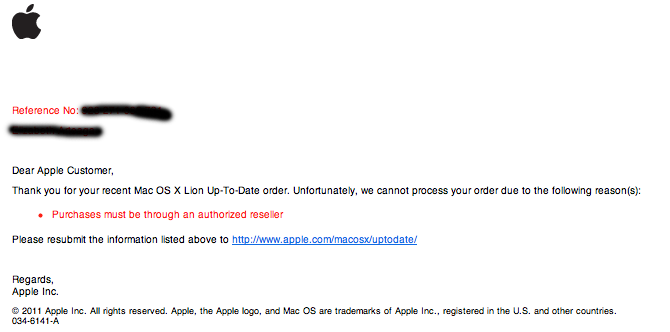
We’ve received multiple complaints from readers that Apple isn’t honoring customers who purchased their Macs at Amazon as part of their Lion Up to Date program. Purchases were to have been made on or after July 21st 2011 and it stipulates that they include refurbished or new computers bought at an Apple Authorized Reseller. The above was sent to a customer who bought directly through Amazon on July 31th. Here’s another. We imagine this is a clerical error on Apple’s part.

Expand
Expanding
Close

Apple drops refurbished iPads to $299

Site default logo image

From 9to5toys.com:

The Apple Store dropped its price on the factory-refurbished, 1st-generation Apple iPad 16GB Wi-Fi (pictured), model no. MB292LL/A, to $299 with free shipping. That’s $30 under our June mention and is $184 under the lowest total price we could find for a new one. (It’s also the lowest we’ve ever seen for any iPad.) This 0.5″-thick tablet weighs 1.5 lbs. and features an Apple A4 1GHz processor, 9.7″ 1024×768 LCD touchscreen display, 802.11a/n wireless, Bluetooth 2.1 + EDR, accelerometer, compass, up to 10 hours of battery life, and more.

Also available is the factory-refurbished, 1st-generation Apple iPad 32GB Wi-Fi, model no. MB293LL/A, for $399. That’s another price-low, this time by $121. Both units carry a 1-year Apple warranty, the same as new units.

We also briefly saw a 32GB iPad for $299 at Cowboom this morning. Does all of this have anything to do with the TouchPad $99 nuttieness from the weekend? Unlikely.

Update: 16GB just went out of stock. Cowboom has 32GB for $299 on and off.

Expand
Expanding
Close

Chinese maker pulls the glowing Apple logo trick with the iSD Card Reader

Site default logo image

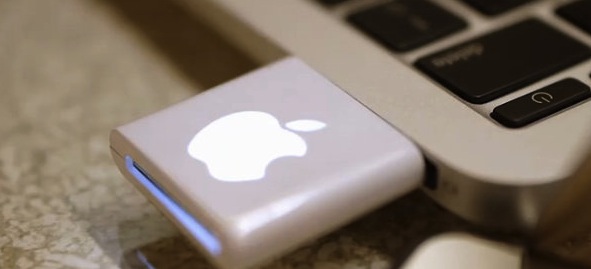
Remember the iHub, a four-port USB port that set itself apart with the cool-looking, glowing Apple logo – until Cupertino outlawed them? Apparently someone in China was inspired enough with the iHub and walked away concluding this must be the way to roll with everything. Check out a Chinese SD card reader in the below clip. We actually love its miniaturized all-white design with round corners and the advert certainly looks business, if we disregard the too obvious focus on the many close-ups of the glowing Apple logo. The iSD Card Reader is interesting because it lets the 11-inch MacBook Air owners accept SD and SDHC memory cards via USB as the notebook lacks an SD card slot. It can be yours for $9.90 over at the K.O. Gadget store. And while you’re there, make sure to check out their obnoxious white iPhone 4 air cooler. And what’s with the “Apple and 7 Pioneers” article (mark 00:13)

[youtube=http://www.youtube.com/watch?v=Df8VCRrPuGU]

another video below


Expand
Expanding
Close

Apple killing developer access to UDID in iOS 5

Site default logo image

As noted by TechCrunch, Apple has alerted developers in recent documentation that it is in the process of deprecating access to the uniqueidentifier alphanumeric string that is unique to each iOS device.

Apple recommends developers create a UDID specific to apps.

Obviously,  UDIDs were a security threat as marketers and advertisers (and worse) could follow your usage patterns and gather data through different apps.

Apple likely will continue to use the UDID for its iAds, GameCenter, subscriptions and other services it offers across iOS devices, or so one industry CEO thinks:

 “I guarantee Apple will not stop using UDID,” predicts one mobile industry CEO. If Apple does continue to use UDID for itself but denies it to developers that would be an “extremely lopsided change.” It would give Game Center and iAds yet one more advantage over competing third-party services.”


Expand
Expanding
Close

Mozilla wants web apps to compete with native iOS apps

Site default logo image

Apple and Google are clearly the two front-runners competing for market share in the mobile world, which is why it’s no surprise we think of iOS and Android when we think of apps. With the growth of the smartphone industry also came the resurgence of native apps (thanks largely in part to Apple’s App Store which still dominates the space). However, Mozilla hopes that web apps will soon mature to provide a comparable experience for end users and an even better alternative for developers.

“We are aiming at providing all the necessary APIs to build a basic HTML5 phone experience within the next 3-6 months”

While Chrome OS has shown promise, it isn’t the only browser-based platform planning on entering the web app space… If Mozilla has its way, developers can use the results of their new WebAPI project to build an “HTML5 phone experience” that’s compatible across all operating systems (whether it’s Android, iOS, Windows Phone, etc).

report from CNET claims Mozilla has plans for the APIs to “interact with a phone’s dialler, address book, contacts list, and camera”, essentially giving you access to the same functionality of native apps but directly in your device’s browser.

The WebAPI project certainly isn’t trying to create a full-blown operating system. However, working hand in hand with Mozilla’s Boot to Gecko project, which aims to build a “complete, standalone operating system for the web”, it could create a potentially compelling alternative to Google’s browser-based Chrome OS.

It appears that Mozilla is serious about the project, as a report from CNET claims they’re in the process of hiring full time programmers and plan to have the basics in place by February…

Expand
Expanding
Close

What if Google closes Android and goes the Apple model with Motorola?

Site default logo image


Assuming Android goes proprietary to Motorola, it falls behind Apple in market share by 2012 and Windows Phone (the Other category) gulps up nearly half the mobile phone market.

There’s a good reason why Apple’s products “just work”. But it’s been a bumpy road for the Cupertino, California company because right from the onset competitors were ridiculing its vertically integrated approach to business. Apple’s supposedly ‘closed’ ecosystem is a major weakness, critics cry. The past decade, however, saw the marketplace validate the strategy through booming sales of Apple gear. But what if GOOG actually tried the AAPL model with Motorola, which today makes about one in ten Android smartphones?

That’s the dilemma Piper Jaffray resident Apple analyst Gene Munster set out to explore in his Friday note to clients. In short, making Android proprietary and exclusive to Motorola would add about 35 percent to operating income for Google, the accidental hardware company. By 2015, the phone biz would add $10.5 billion in operating profit and $56 billion in revenue, resulting in a per-share earnings of $25.16 by 2015. There’s just one problem with this hypothetical strategy:
Expand
Expanding
Close

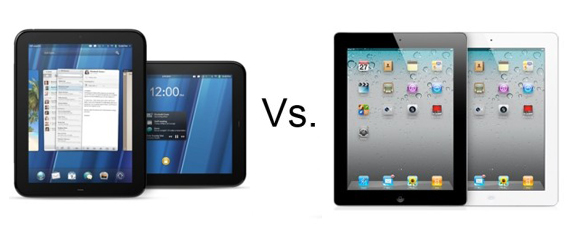
iPad 2 runs webOS twice as fast as the TouchPad, internal HP testing revealed

Site default logo image

Hewlett-Packard engineers did dare pull unthinkable: They hacked iPad to install webOS only to find out Apple’s hardware runs their mobile operating system more than twice as fast compared to their own TouchPad hardware, a source “close to the subject” told The Next Web. The finding had devastating effects on the team’s morale:

The hardware reportedly stopped the team from innovating beyond certain points because it was slow and imposed constraints, which was highlighted when webOS was loaded on to Apple’s iPad device and found to run the platform significantly faster than the device for which it was originally developed.

It should be pointed out that webOS  runs on Qualcomm ARM chips while iPad 2 runs on Samsung silicon. This little nugget is even more revealing:

With a focus on web technologies, webOS could be deployed in the iPad’s Mobile Safari browser as a web-app; this produced similar results, with it running many times faster in the browser than it did on the TouchPad.

In fact, the webOS team wanted HP’s TouchPad and Pre hardware “gone” even before the products hit the marketplace according to TNW.  With a hardware refresh a year off and similar issues with the Pre phones, this could have contributed to the decision to shutter the webOS and perhaps license it out to other companies (with better hardware).

In a separate report, TNW details how the news was broken to the webOS group within HP.

Almost everyone at HP found out about the death of the TouchPad and Pre hardware as the public did, in the press release. Only the top executives knew anything about this decision and even senior staff as high as Ari Jaaksi, the Vice President of webOS software, didn’t know about the shuttering of hardware before it happened.

After the press release came out, there was a company wide meeting filled with a bunch of ‘corporate speak’, in which staff were told that they were going to be in limbo for 3-4 weeks.


Expand
Expanding
Close

Apple goes to court in Netherlands to ban Samsung’s Galaxy devices from all of the EU

Site default logo image


Apple is intent on stopping Samsung from marketing and selling “copycat” Galaxy devices in all of the European Union.

Apple has already tried to ban the Galaxy Tab 10.1 in most of Europe (injunction lifted), but today they are going even farther with their legal proceedings, asking a Dutch court to ban all Galaxy series devices. The ban includes the widely popular Galaxy S II, which has seen some success in Europe.

Apple’s complaint, seen by Webwereld, a Dutch IDG publication, seeks an injunction for the entire Galaxy series. This includes smartphones — the Galaxy Ace, Galaxy S and Galaxy SII — and tablets: the Galaxy Tab 7 and Galaxy Tab 10.1. Other Galaxy devices, like the Gio, Nexus, 551, Europa, Apollo and Mini are also involved, albeit only in a footnote in which Apple states, “It is expected that these devices are also covered by one or more of the patent rights invoked.”

On top of trying to ban sales, Apple is trying to push the thought of Samsung sending a letter to all of their partnered retailers within 14 days to end sales. Stated strongly:

For the record we would like to mention the fact that by storing, offering and/or selling of the above mentioned Galaxy smartphones [and tablets], you commit infringement of the intellectual property rights of Apple Inc.

The trial will take place in The Hague, Netherlands September 15th, and the judge said  if he grants any injunctions, they would take effect no sooner than October 13, reported Webwereled (via Computerworld)

Who has the most patents? Apple sues despite smaller patent portfolio

Site default logo image

It’s no secret patent-related legal disputes have become the subject of most media coverage lately…Whether it’s Apple halting sales of Samsung’s tablets, HTC going after Apple, or Google snatching up Motorola to beef up their patent portfolio, it’s clear the company with the most patents will have an advantage over others in the legal proceedings that we’re bound to continue encountering down the road. This is why we’re intrigued by the graphic above (via GigaOM) from mobile analyst Chetan Sharma charting the number of issued patents (in the US and Europe) between 1993 and 2011.

While these estimates of mobile communications related patents don’t take the quality of patents into account (which is obviously a huge factor in determining their long-term value), you can see from the breakdown below that Nokia and Samsung top the list, with the other expected players including IBM, Microsoft, Sony, Motorola, and Intel following.

Noticeably far down the list is Apple, the one company who seems to have had more success than others fighting patent-related issues recently. Again, these numbers in no way represent the quality of patents and the ability for companies to protect their IPs in the courtroom… which is also a good indication that perhaps we should be looking more closely at the quality of patents rather than the sheer number.

Recently patent expert Florian Mueller took to Twitter following the Google/Motorola acquisition saying he“would caution everyone against overestimating the strength of Motorola Mobility’s patent portfolio,”  he continued, “Apple and Microsoft sued Motorola Mobility anyway”. Remember kids… all patents aren’t created equally.

Expand
Expanding
Close

Project “Fatih” could see Apple build fifteen million iPads for Turkish schools

Site default logo image

Apple, Microsoft and Intel are locked in a bid for a contract to supply Turkish schools with up to fifteen million iPads. The government-funded project is nick-named “Fatih”, a Turkish word for “conqueror”. The government will require the winner to build the tablets and/or peripherals in the country, however. This little nugget has been officially confirmed to Anatolia news agency by the country’s trade minister Zafer Caglayan. Bloomberg has the story:

Apple officials told Caglayan during his visit to the U.S. that the Cupertino, California-based maker of smart devices may also decide to use some Turkish manufacturers to make some peripheral equipment such as covers, earphones for its iPad and iPhone models, Caglayan said at a news conference with Turkish reporters in Seattle, according to the Ankara-based agency.

Frankly, we somehow don’t see Apple building fifteen million iPads in Turkey as the country may lack the manufacturing capacities necessary to produce such a precisely engineered gadget that is the iPad. As for Microsoft and Intel, the Windows maker “may inquire about the project” and Intel could be interested in opening a research and development center in Turkey.


Expand
Expanding
Close

China Mobile had secret iPhone meetings with Steve Jobs

Site default logo image

Reuters reported this morning that top brass from China Mobile, the world’s largest carrier by both subscribers and market valuation, and Apple’s head honcho Steve Jobs met “several times on introducing an iPhone based on its network standard”. Did Jobs travel incognito or was he accompanying Apple’s operations wizard Tim Cook during his China tour (snapped paparazzi-style in the shot below)?

More likely, Jobs probably hosted China Mobile reps in Cupertino.

Interestingly, China Mobile counts a cool 7.44 million iPhone users on its network, although it doesn’t carry the handset yet and iPhone users cannot tap 3G speeds on their TD-SCDMA 3G network.

Apple’s been alleged previously as wanting to release an iPhone optimized for China Mobile’s fourth-generation TD-LTE network. The Wall Street Journal chimed in with sources saying the gadget maker and China Mobile are close to cutting a deal set to open up the carrier’s 600+ million subscribers to Apple’s phone. The highest-level meeting isn’t surprising considering that Apple is only “scratching surface” in China, having reported in the June quarter a sixfold growth in the country for a total of $3.8B in revenues from operations in the country.


Expand
Expanding
Close

iTunes updates authorized Steve Jobs biography with price and new cover

Site default logo image

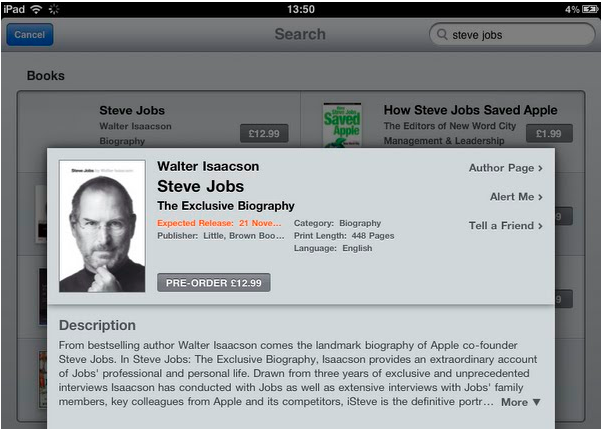
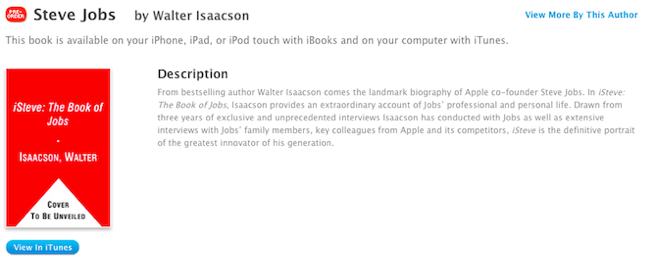
The official Steve Jobs biography by Walter Isaacson, which is now set for the November 21 release, has been available for pre-order on Amazon for a while and Apple’s iBooks store also had an entry and meta data in place, but without a price and sporting the old cover, depicted below. A tipster told us (thanks, Roshan Z.) that iTunes now lists the book for pre-order for $17 (or 13 quid, above), also featuring the new cover by Albert Watson and the official description from publisher Simon & Schuster, as evident in the updated iTunes listing on the web.

Interesting that Amazon has also updated the blurb, but they still show wrong publication date (the original release date of March 6, 2012) and incorrect tittle, “Steve Jobs: A Biography” as opposed to just “Steve Jobs” (the original, rather painful title, was “iSteve: The Book of Jobs”). The online retailer has a $19.50 price tag for the hardcover, which makes it a much better deal for those preferring a dead tree version – $2.50 more compared to the digital download over at the  iBooks store. iTunes already has nine “reviews” from fans eagerly awaiting this high-profile release. Also find two screenshot for the iPhone below the fold.


Expand
Expanding
Close

Apple bumps up Thunderbolt Display deliveries, 3rd parties expect delivery in a week

Site default logo image

Apple updated its Thunderbolt display delivery page today, indicating that Thunderbolt Displays would ship in 2-4 weeks. 9to5Mac readers who ordered on launch date got shipment estimates anywhere from September 14th – 26th.

Perhaps more enticing, 9to5Mac affiliate partner MacConnection takes $20 off (as well as Tax advantages in most states) and believes they will begin taking delivery on August 26th, just 8 short days away (below).


Expand
Expanding
Close

Apple squeezes suppliers, cuts costs by nearly 50 percent

Site default logo image

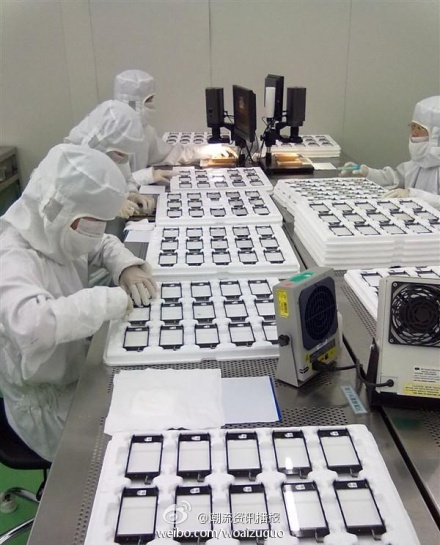
A report from Digitimes claims that, although touch panel orders from the iPhone and iPad 2 have increased significantly for the third quarter, Apple is allegedly placing orders at nearly half the cost of previous shipments. This leads us to believe they are either trying to reduce BOM (and increase margins) at the expense of suppliers, or they’re prepping for the usual price cuts in the wake of new product releases (iPhone 5, we’re looking at you).

The report notes:

Wintek has received touch sensor orders from Apple at prices nearly 50% lower than the ones previously offered by the client. The impact of Wintek’s low-margins is expected to ripple out to other downstream players

The move is expected to result in lower than usual profit-margins for the supplier and also affect other suppliers down the chain. The report is also quick to point out that “Wintek has previously rejected low-margin orders from Apple”.  We’ll keep you posted as more becomes available.

Logitech brings K750 solar keyboard over to the Mac side, speaker to iPad

Site default logo image

We’ve been pretty envious of the Logitech Solar Wireless Keyboard that has been selling for months now for Windows PCs (though it does work on Macs with key mapping).   Amazon reviewers give it overwhelmingly positive feedback on the PC, it is thin and goes for three months without light.

Today, Logitech announced that a Mac version is on the way.  As a bonus, it is available in 5 colors including black, white and 3 different admittedly ugly pastels.  Interestingly, Logitech is selling it for $20 less than the list price of the $79.99 PC version at $59.99.  So much for the Mac Tax?

Besides the pastels, this product looks like a winner.  Sign us up.

Additionally, Logitech launched a $50 back mounted iPad speaker earlier this week.  It has batteries which last about as long as an iPad and also charges via USB.  I’m not immediately sure if I like this idea or more importantly, the implementation but, there it is:

.

Details below:
Expand
Expanding
Close

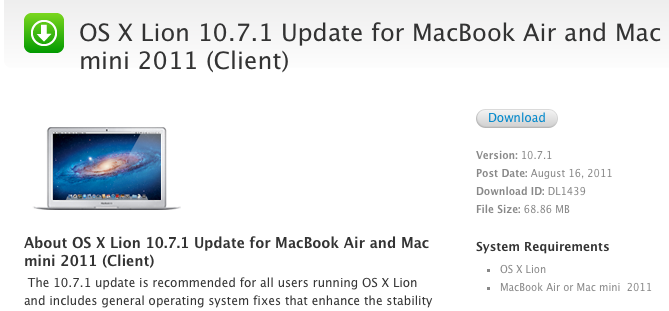
Mac OS 10.7.1 is ready for your downloading…(Update: More fixes for new Minis and Airs)

Site default logo image

The update addresses a few issues including the Wifi issues we’ve been hearing much about.  It also appears to incorporate the recent Migration Assistant update.  It is available via Software Update and weighs in at a paltry 17.4MB on our rig.

The 10.7.1 update is recommended for all users running OS X Lion and includes general operating system fixes that enhance the stability and compatibility of your Mac, including fixes that:

– Address an issue that may cause the system to become unresponsive when playing a video in Safari
– Resolve an issue that may cause system audio to stop working when using HDMI or optical audio out
– Improve the reliability of Wi-Fi connections
– Resolve an issue that prevents transfer of your data, settings, and compatible applications to a new Mac running OS X Lion

For detailed information on this update, please visit this website:http://support.apple.com/kb/HT4764.

The Mac App store still lists Lion at 10.7 so it isn’t clear if new updaters will always have to do additional updates.  We’re also left wondering if this update fixes the “video performance after a sleep” that new Lion Mac users have been reporting.

Update: Interesting there is a direct link (here) for New Mac Mini and MacBook Air users (68MB) which updates a few more issues (below):

Verizon LTE is also being installed in Apple Stores

Site default logo image

About a month and a half ago, one of our Apple Store sources told us that some Verizon techs had visited that day and upgraded the in-store cell equipment to LTE.  At the time, LTE iPhones seemed like a distant possibility for upcoming iPhones and a Verizon source told us that upgrades to cell boxes were happening somewhat arbitrarily all over the country.  Tim Cook, in a conference call earlier this year, made it sound like LTE was going to have to wait until later builds.

Tim Cook said that these early generation LTE chips would require too many compromises in design.

But yesterday things changed when a report detailled the LTE (specifically Verizon in this case) strings that were pulled from a carrier version of iOS OTA updates.  Could the changing of the iPhone release schedule be timed to allow Apple to get the most modern LTE chips in iPhones aas well as give the networks time to mature?

Fast forward to this today, where Engadget says AT&T is also upgrading its on-premise Apple Store Cells to LTE.


Sure, but it possible that AT&T is just building up its nationwide infrastructure ahead of its LTE rollout, which today it announced (below) was going to start in 5 cities next month and…

By the end of 2011, AT&T plans to offer 4G LTE to customers in at least 15 markets, covering 70 million Americans.

Realistically, does that sound like the type of  mainstream network Apple will aim its iPhone 5 towards?
Expand
Expanding
Close

Apple currently plans to start pre-orders for next iPhone on Sept. 30, launch Oct. 7

Site default logo image

We’ve independently heard that Apple has plans to begin selling the next-generation iPhone on Friday, October 7th; the date first reported by TiPB. According to our sources, Apple has been weighing between launching the new iPhone on October 7th or October 14th, but with the product’s latest stages of pre-mass-production currently moving along nicely, Apple is presently shooting towards a launch on the 7th. On top of this, unlike with the iPad 2, Apple plans to offer pre-orders for the new iPhone.

Apple currently plans to begin pre-orders for their next-generation smartphone in the final days of September. The company has still not finalized the pre-order start date, but is debating between Thursday, September 29th and Friday, September 30th. The 30th seems more likely at this point according to one of our sources.

Pre-orders for the new iPhone starting in late September will also mean that Apple’s fall event will take place in September; which would seem to counter NewsCorp’s Kara Swisher’s combative insistence of an October iPhone 5 event. Additionally, the first week of October date for the new iPhone’s availability, fits nicely with our report about AT&T’s major early October changes: data throttling and a new insurance plan for $199 devices. This release date would also jive with John Paczkowski’s report about the iPhone 5 becoming available in October.

Apple is rumored to be producing two new iPhones for a fall debut; one as an upgrade to the iPhone 4 and one as a cheaper, possibly prepaid, addition to the Apple smartphone lineup. The ‘iPhone  5’, at least, will likely feature Apple’s dual-core A5 processor, an eight megapixel camera, and iOS 5. In addition, the new flagship phone is expected to feature new software such as a powerful voice-based navigation system and other goodies like panorama photography capabilities.


(note the elongated gesture home button)

There has been mixed chatter about the device’s exterior design, with cases, which we first revealed, pointing to a thinner form factor. Others, though, have said the design will be largely similar to the current iPhone 4. As with any launch date report, we have to note that Apple is constantly shifting their launch plans. As we noted earlier, the launch date was already moved up a week in the company’s recent launch planning. We are reasonably confident, though, that as of today, Apple is planning to unleash their next iPhone on October 7th and offer pre-orders starting on September 29th or 30th. The date could and likely will change again, but we feel it is necessary to report the company’s current plan.


Expand
Expanding
Close

New Apple HQ has a bigger footprint than the Pentagon, almost mile in circumference

Site default logo image

John Martellaro at MacObserver got his protractor out and used those drawings that the City of Cupertino released this weekend to extrapolate the real size of Apple’s new HQ building.  In a word, it is BIG.

Given that comforting sanity check, I measured the diameter of the Apple spaceship as 1615 ft, plus or minus a few ft., depending on where one places the ruler. That’s a radius of 807.5 ft.

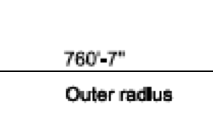
The outside measurement on the plans is 760′ but the large outside shader structures could account for the additional size.

Interestingly, that is a bigger footprint than the world’s largest office building, the Pentagon, which at five stories tall, two basement levels and with a smaller courtyard, still has significantly more usable square footage.

Also (using our geometry skillz) plugging the 1615 ft diameter into a perfectly round circle, you get an outside circumference of just under a mile (5074 ft).  That means taking some paperwork all the way to HR might be a lunch killer.

Update: Obama Pacman notes that Apple could install 3 full sized Football fields in the courtyard (below).
Expand
Expanding
Close

Early biography publication “not related to any decline” in Steve Jobs’s health (BONUS: front and back cover detailed)

Site default logo image


Image courtesy of Simon & Schuster. Click for larger.

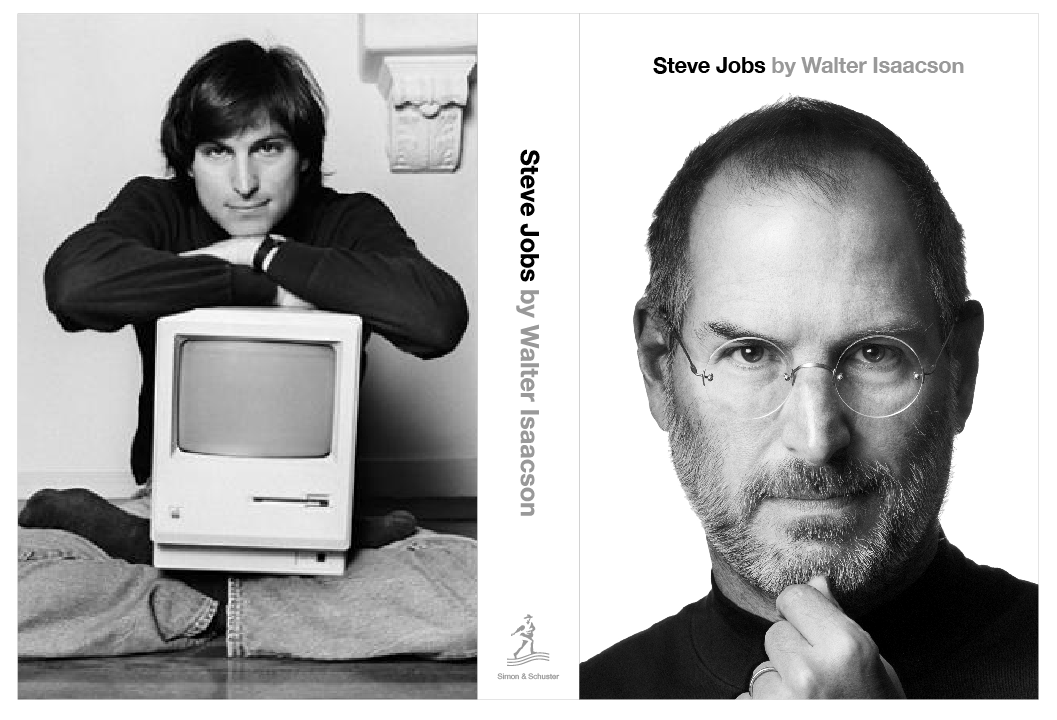
The official Steve Jobs biography, which is based on forty interviews and set for publication by Simon & Schuster November 21, sports the memorable front cover shot depicting Apple’s leader touching his guru-like beard, his eyes piercing intensely at the camera and eyebrows slightly lifted as if he is imagining Apple’s next big thing. That image, also found on Apple’s recently revamped PR website under the Apple Leadership section, is the Albert Watson portrait taken in 2009, author Walter Isaacson revealed in a private email exchange with Fortune’s Philip Elmer-DeWitt. The back cover?

The back is a Norman Seeff portrait of him in the lotus position holding the original Macintosh, which ran in Rolling Stone in January 1984. The title font is Helvetica. It will look as you see it, with no words on the back cover.

More important to Apple fans, the earlier than expected book launch – which had been originally pinpointed for March 6, 2012 – has nothing to do with the state of Steve Jobs’s health, Isaacson told Fortune’s Elmer-DeWitt. Apple’s boss has gone on an indefinite sick leave in January 2011, his third health-related leave of absence from the company he co-founded. Here’s from Isaacson:

It’s actually not related to any decline. I turned most of the book in this past June. It’s now all done and edited. The March 2012 date (or whatever date it was) was never a deeply-considered pubdate. Like the original cover design, it came about because the publisher wanted to put something in the database last spring.

This is obviously an important tidbit for Apple fans concerned about Steve’s well-being. Go past the fold for the publisher’s long description of the book.  The book is available for Pre-Order at Amazon for $20.


Expand
Expanding
Close

Official Steve Jobs biography set for November 21 release, based on forty interviews

Site default logo image

According to Barnes and Noble’s website, the official Steve Jobs biography – titled Steve Jobs: A Biography – is becoming available on November 21, 2011. This is a big leap from the previously announced March 6, 2012 release date for the first Steve Jobs-approved biography.  In addition, the book seller’s website has seemingly revealed the cover for the biography (shown above), and it is unsurprisingly simple. (via AllThingsD).

The book is also 448 pages long and is based on over 40 interviews with Steve Jobs in addition to interviews with his family and friends. Interestingly, although approved by Jobs, the Apple CEO had no control over the biography’s contents. The Apple CEO had this to say about the biography:

I’ve done a lot of things I’m not proud of, such as getting my girlfriend pregnant when I was 23 and the way I handled that, he said. But I don’t have any skeletons in my closet that can’t be allowed out.

Here is the full description of the biography (available for pre-order for $20):


Expand
Expanding
Close

Apple ups iPhone orders to 56M units for 2H11, iPhone 5 to be almost half

Site default logo image

According to Digitimes, Apple has increased their second-half of 2011 iPhone orders to 56 million units from a previous goal of 50 million units. These 56 million iPhones cover current and next-generation models: iPhone 3GS, iPhone 4 (GSM + CDMA), and the upcoming “iPhone 5.” As previously reported, the iPhone 5 will make up almost half of Apple’s 2H11 iPhones with 25.5-26 million total units.

In addition, Apple reportedly originally planned to build 7 million iPhone 5 units for the third quarter, but adjusted their production plans to 5.5-6 million units. On the other hand, Apple is expecting major iPhone 5 demand in the fourth quarter and has increased Q4 iPhone 5 orders to 20 million units from 14 million units.

The iPhone 5 will go on sale this fall and will almost certainly include the dual-core A5 processor found in the iPad 2 and an eight megapixel camera possibly made by Sony. There has been debate over the new iPhone’s design, with some reporting a design that is largely similar to the iPhone 4, and others calling for a major redesign. As the iPhone 5 moves into Apple’s product lineup (in addition to a possible cheaper iPhone), Apple will be eliminating the iPhone 3GS.


Expand
Expanding
Close

SCinemax’s Max Go App somehow skirts App Store porn police

Site default logo image

If you’ve ever been *ahem* channel surfing late at night and stumbled upon HBO subsidiary Cinemax programming you know that there isn’t much differentiation between what you see there and all out pornography.

The news this weekend is that Apple just gave the go-ahead to Cinemax’s MaxGo App(free) for both iPhone and iPad.  Yes, it includes “Late Night” content.

Far be it from us to judge what should and shouldn’t be on the App Store, but it seems that Apple is continuing to create controversy with its “no porn” stance.

In an email exchange with Gawker’s Ryan Tate last year, Jobs said that the iPad would offer users “freedom from porn.” And in a Q&A session after the launch of iOS 4, Jobs told reporters that porn was one reason Apple wouldn’t allow unsigned or unapproved apps onto iOS devices like the iPhone and iPad.

“You know, there’s a porn store for Android. You can download nothing but porn. You can download porn, your kids can download porn. That’s a place we don’t want to go – so we’re not going to go there.”

Playboy,which is at least as “soft-core” as SCinemax, was denied access to the App Store for its nude pictorials.  For what it is worth, access to the Max Go app is parental controlled to users 17 or older.

If this story picks up, Apple will probably force  HBO to curtail its mature content retroactively, not that there aren’t plenty of other outlets via Safari for such material.
Expand
Expanding
Close