Jordan manages the internal Partner Program for sponsorships and partnerships across the 9to5 network’s media brands including 9to5Mac, 9to5Google, 9to5Toys, Electrek.co, SpaceExplored and DroneDJ.com.
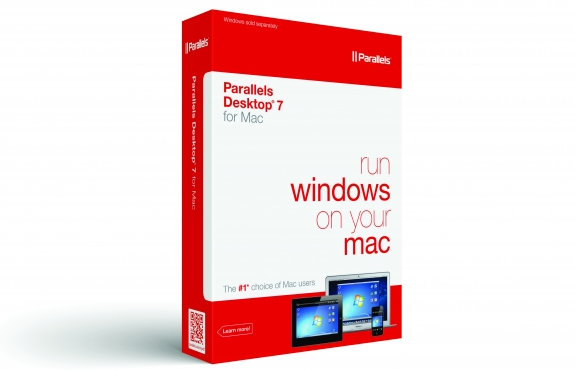
If you are not new to Parallels, you will already be familiar with its ability to run Windows in a virtual machine within OS X. You might also be familiar with its Coherence view mode that allows you to run Windows and Mac OS applications side by side, rather than a full-blown Windows 7 in a separate window. However, Parallels Desktop 7 takes it to the next level with some of the deepest Windows/OS X integration yet.
The name of the game for the new Parallels Desktop 7 for Mac is definitely OS X Lion integration. Pretty much every new UI feature incorporated into Lion has been integrated into Parallels, and thus Windows 7. We put the new version to the test with both Windows 7 and Windows 8 developer preview on last year’s iMac with 4GB of RAM.
Apple’s patent war with the rest of the smartphone industry clearly has mixed results. According to Bloomberg, Apple could potentially cut its losses and collect as much as a $10 royalty per device if it were to reach settlements with competitors. Apple could also leverage its patents to reach deals with rivals that would allow the company to better control adoption of new technologies and avoid competitors modifying products to workaround patents.
With Apple suing just about every major smartphone maker in the industry regarding patent infringement, 3LP Advisors’ Kevin Rivette, previously vice president of IP strategy at IBM, said it is in Apple’s best interest to strike settlements to have access and control over their competitor’s technologies.
Speaking to Bloomberg, Rivette described a scenario where Apple allows rivals to adopt Apple patented technologies to essentially squeeze them into a favorable ecosystem that avoids litigation:
“If I’m Apple, I want divided loyalties [from Android licensees]. At this point, it would make more sense for Apple to build an ecosystem that everyone can live in. If you’re going to license, why not go for the big deal where you lock down supply chains, get your technologies broadly adopted and slow down competitors? That is the game.”
Rivette provided a few interesting scenarios. In one, he suggested that Apple drop its court cases with Samsung in exchange for the company agreement to not use Apple technology for a year. He also imagined Tim Cook negotiating better prices on components that Samsung currently provides as one of Apple’s largest component suppliers. He also suggested Apple could agree to not go after the 7-inch tablet market or even allow Samsung to use iTunes:
According to Taiwanese PC manufacturers (via DigiTimes), Intel is preparing to release the first round of 22nm Ivy Bridge desktop, notebook, and ultrabook CPUs around April, 8 2012. Seventeen models are slated to be launched, but some desktop and notebook CPUs will likely replace current CPU options in next-generation iMacs and Macbooks.
The 3820QM and 3720QM i7 CPUs, detailed by DigiTimes, are candidates for a next-gen MacBook Pro. Meanwhile, quad-core Core i7 and Core i5 desktop models could land in a future iMac. Ultrabook CPUs, possibly headed to future MacBook-air-like devices are scheduled for later in the year (most likely May).
A few weeks back, a leaked roadmap for Intel’s upcoming Ivy Bridge mobile CPU lineup gave us a look into the new standard voltage M-series and ultra low voltage U-series lineups. The document shows the CPUs will probably make their way into MacBook Pros and MacBook Airs, and will most likely be available to OEMs sometime in April or May 2012. The document leaked days after a report claimed Ivy Bridge desktop processors would roll out to partners sometime in the second quarter of 2012.
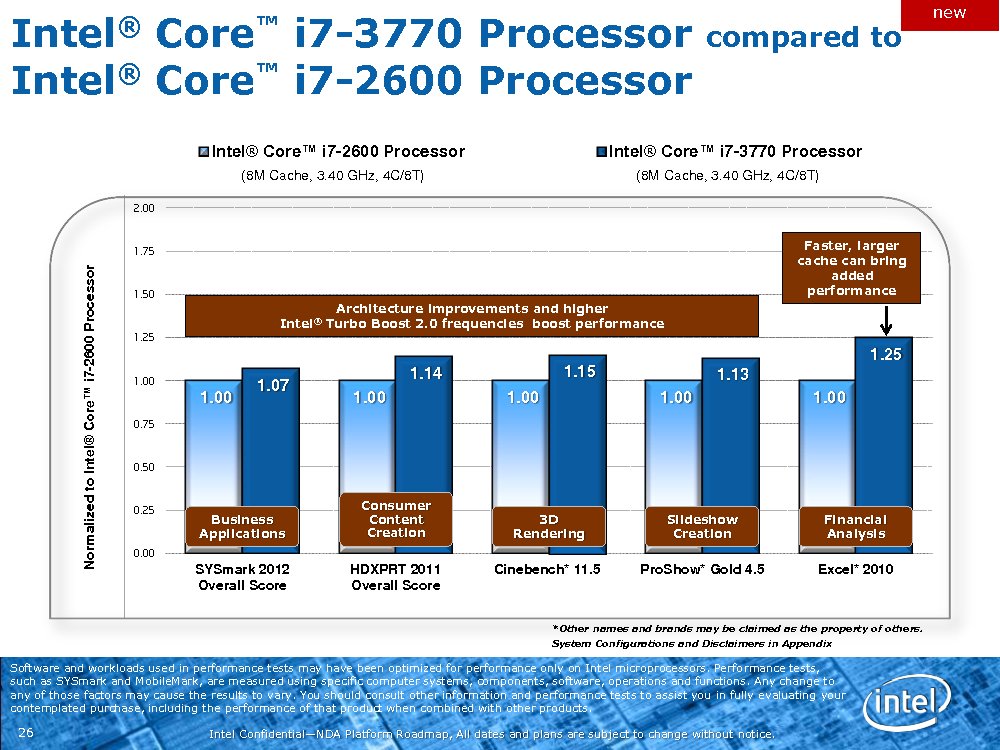
The new Ivy Bridge lineup marks a significant performance increase over previous Sandy Bridge models found in current Macs. According to 3DMark Vantage GPU benchmark from Intel, there is an average 199 percent improvement in graphic intensive applications, and 25 percent overall better performance over Sandy Bridge CPUs. Improved power consumption could lead to increased battery life, while the lineup will also include OpenCl 1.1 support and DirectX 11 for more than 30 percent faster graphics performance. They could also support 4K video.
Following reports yesterday that Apple’s suppliers are prepping an HDTV in 32-inch and 37-inch variants for a summer 2012 launch, a new report from DigiTimes today suggested Apple will use its own custom chips, similar to the A5 chips found in iPhone 4S and iPad 2.
According to the report, three manufacturers are currently bidding to win contracts to provide components for Apple’s smart TV including: Taiwan Semiconductor Manufacturing Company, Siliconware Precision Industries, and Advanced Semiconductor Engineering.
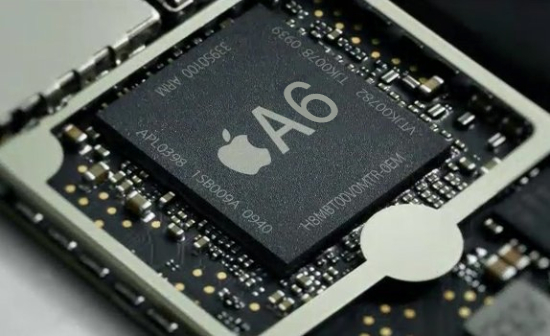
There were originally reports in July that TSMC signed a foundry agreement with Apple to begin testing next-generation A6 chips using its 28-nanometer process and 3D stacking technologies. That was followed by reports in October that Samsung began production of an A6 chip at its Texas factory. The A6 chip is expected to appear in next-gen iOS devices.
Apple’s longtime manufacturing partner Foxconn Electronics is expected to win contracts for the assembly of the Apple HDTV. The report also mentions that Apple plans to complete hardware standards for the device by Q2 in 2012. Apple will apparently deal directly with contract manufacturers to provide components, much the same as the iPhone and iPad.
Yesterday’s report claimed that Samsung would be providing chips for an Apple branded HDTV, along with Sharp supplying displays. Today’s report also confirmed a late 2012 launch.
Stern Agee’s Shaw Wu backs up the reports and claims Apple should pursue a “disruptive” internet streaming model to rival traditional cable providers and subscriptions, despite the licensing hurdles. He also wrote that Apple should continue its Apple TV set-top box product line, something that also backs up the DigiTimes report from yesterday:
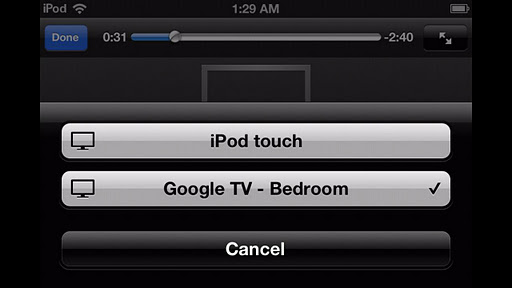
A new application in the Android Market available for GoogleTVs running 3.0 and up will allow users to stream content from the iPad or iPhone using Airplay, Apple’s wireless streaming feature built into iOS.
After downloading the 99-cent app called “Airtight” to Google TV, users will be able to stream videos and pictures by selecting a device from within the Airplay UI on the iPhone, iPad, or iPod touch (pictured above). Unfortunately, mirroring, DRM protected video, and music is not supported. Users will of course need the latest Google TV update to access the Android Market.
Apple has nothing to do with the app, and the developers said they are looking into methods of including music and the rest of Airplay’s functionality in a future update. We will keep you posted.
We got a sneak peak at the first untethered jailbreak for iOS 5.0.1 earlier this month, and now Dev Team just announced @pod2g has made the solution available for non-A5 devices. That means iPad 2 and iPhone 4S are obviously left out on this one, but the chronic devteam and iPhone devteam have been working hard to package it into redsn0w 0.9.1.0 and PwnageTool for everyone else.
The post mentions pod2g is working on a solution for iPhone 4S and iPad, but it warns A5 devices “cannot use geohot’s limera1n exploit to inject the untether, they require exploits above and beyond those used for this release.”
If you are interested in giving it a shot, you can grab it through Cydia and follow the steps below (via Dev-Team Blog):
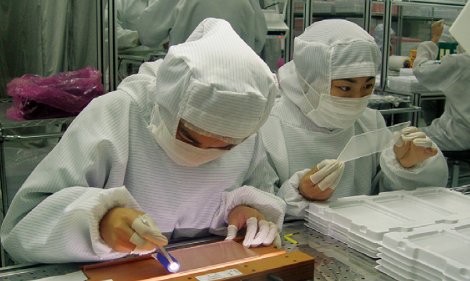
Construction of the “world’s largest smartphone” plant is set to begin in 2012 at Foxconn Science Park in Zhengzhou, China, increasing production lines and bringing in approximately $20 billion USD in revenue over the next year.
The base will be centered on the Foxconn science park in Zhengzhou, the provincial capital of Henan, increasing its current production lines to 95, said the Henan provincial development and reform commission during a conference…The expansion plan, which will cost 7 billion yuan (US$1.1 billion), is expected to bring US $20 billion in sales revenue in 2011.
Foxconn’s Zhengzhou plant that opened last year already employees roughly 130,000 people and is capable of producing about 200,000 iPhones a day. According toMIC Gadget, this could allow Apple to double current iPhone production at the location.
Apple is being fined 900,000-euro-or approximately $1.2 million USD-by Italian antitrust authorities after the company was “found responsible for bad commercial practices that harmed consumers.” According to a report byAFP, Autorità Garante della Concorrenza e del Mercato is imposing the fines related to an investigation regarding AppleCare and the Italian Consumer Code:
Apple had given “unclear information on payments for additional assistance offered to consumers” and the company had not “fully implemented the two-year guarantee by the producer
The Italian Consumer Code -and European Union law- provides consumers with a minimum, mandatory two-year warranty on all electronics. The antitrust authority essentially claims Apple is deceiving its customers by selling AppleCare warranties and providing its one-year manufacturer warranty without explicit indication of consumers’ rights to the complimentary two-year warranty. Apple does not currently offer the free, mandatory two-year warranty in Italy or elsewhere.
Targeted in the fines are Apple Inc., Apple Sales International, and Apple Retail Italy. Apple was asked to “cease practice and notify the Authority” of a new warranty policy for Italy, as well as publish a document on Apple.com to inform consumers of the resolution.
The European Antitrust Commission is also probing Apple over its e-book business. Earlier this month, they claimed Apple has “engaged in illegal agreements or practices that would have the object or the effect of restricting competition in the EU or in the EEA.” That EAC investigation is ongoing. Expand Expanding Close
Citing their usual industry sources within the Asian supply chain, DigiTimes claimed Dec. 27 that Apple is prepping an HDTV for a summer 2012 launch that will be initially available in 32-inch and 37-inch variants.
According to its report, suppliers will begin the early stages of production in the first quarter of 2012. Apple is apparently shooting for a Q2 or Q3 2012 release window. DigiTimes also confirmed that the device will indeed be a full-fledged HDTV. In addition, other sources indicate Apple could also possibly release a refreshed Apple TV set-top box:
Instead of a form of set-top box (STB) like the Apple TV launched in 2006, Apple’s new products will be full TV sets…However, other sources also revealed that Apple may continue to launch its next-generation STB-like Apple TVs in 2012 as it has lowered the price of its current version of Apple TV listed on Amazon by 9% recently.
The report also claimed the Korean press are running stories that confirm Samsung Electronics is producing chips for the Apple branded HDTV, while Sharp will supply the displays. This information supports a report from The Tokyo Times in November that claimed Apple signed with Sharp to begin production of large displays in January.
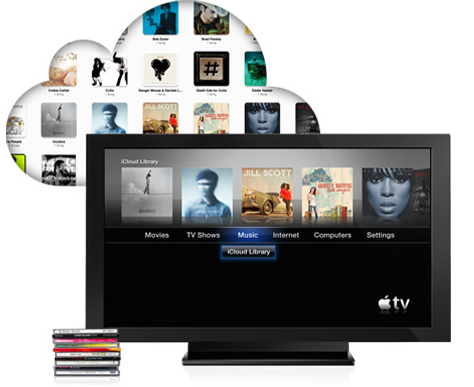
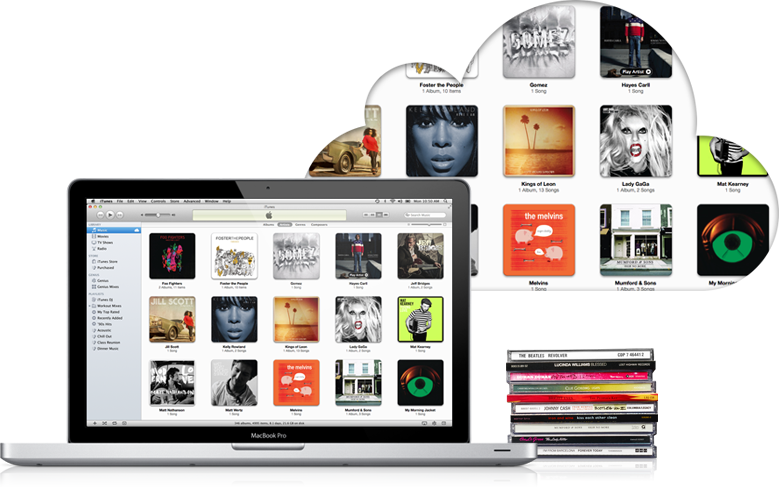
Apple just posted a document detailing exact availability of iTunes Match and iTunes in the Cloud internationally. There was some confusion leading up to what many reported as the international rollout of iTunes Match, and Apple even began issuing refunds to abroad customers having issues accessing the service.
According to Apple, iTunes Match is now available in the following 17 countries:
Australia, Belgium, Canada, Cyprus, Czech Republic, France, Germany, Ireland, Luxembourg, Malta, Mexico, New Zealand, Slovakia, Spain, Switzerland, United Kingdom, and the United States.
There are some countries not included in Apple’s list of officially supported countries, such as Brazil where users report having access to the service.
Apple also detailed what specific purchased content is eligible to download again through iTunes in the Cloud in each supported country. In other words, certain countries will be limited in the type of content that can be re-downloaded. iTunes in the Cloud is now available in over 120 countries worldwide. Currently only the United States, Canada, Australia, and the United Kingdom have access to all content including: music, music videos, television shows, apps, and books. All countries on the list do have access to at least apps and iBooks.
Check out the full list below to find out what specific content is available in your country:
Leading up to the New Year, Sprint is running a limited time promotion that allows customers of the soon-to-be discontinued Premier service to access an early upgrade, according to internal documents obtained by SprintFeed.
The promotion is not advertised, but according to the report – all Sprint CDMA devices are eligible. Sprint will apparently check to make sure your account is in good standing, and this will of course replace your next available upgrade. The promotion is already available now through Sprint brick-and-mortar stores and will expire before the end of the year on Dec. 31.
In other Sprint/iPhone news, a minor update to the Google Voice iOS client yesterday brought one major feature: the ability to send GV calls to a Sprint iPhone’s native dialer.
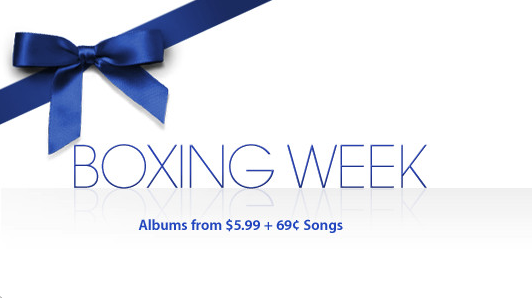
Apple does not often have or advertise sales on Boxing Day, a holiday recognized in the United Kingdom, Canada, Australia, and New Zealand. On the holiday, retailers discount products similar to Black Friday in the United States. However, this year, Canadians are getting a Boxing Week sale on iTunes.
As of right now, Apple is running a promotion in at least the Canadian iTunes store with a selection of 69-cent songs and albums from $5.99, including: Mylo Xyloto by Coldplay, Scary Monsters and Nice Sprites by Skrillex, Foo Fighters’ Wasting Light, and Take Care (Deluxe Version) by Drake. Each album is selling between $5.99 and $7.99. Altogether, there are 30 or more albums offered.
There is also a selection of 69-cent song collections consisting of the top-selling songs from 2011, best songs of 2011, classic hits, and more.
It is unclear whether Apple will have a Boxing Day or Week sale in its Canadian, U.K., or Australian online and retail stores. Canadian retailers typically run Boxing Week sales from Dec. 24 through Jan. 2, but Boxing Day is traditionally recognized on Dec. 26. It appears the iTunes sale has not popped up in the U.K. or Australian stores, but let us know in the comments if it does.
The Recording Academy announced today the recipients of its 2012 Special Merit Awards. Among the Lifetime Achievement Award recipients were the Allman Brothers Band and Diana Ross. Steve Jobs was honored with this year’s Trustees Award for “outstanding contributions to the industry in a nonperforming capacity.”
The ceremony will be held on Feb. 11 during Grammy Week, and the recipients will be acknowledged at this year’s “54th Annual Grammy Awards” telecast on Feb. 12 at 8 p.m. ET on CBS.
Apple also won a technical Grammy in 2002 for “contributions of outstanding technical significance to the recording field.” In October, following the passing of Steve Jobs, The Recording Academy released this statement highlighting Steve’s significant contributions to the industry:
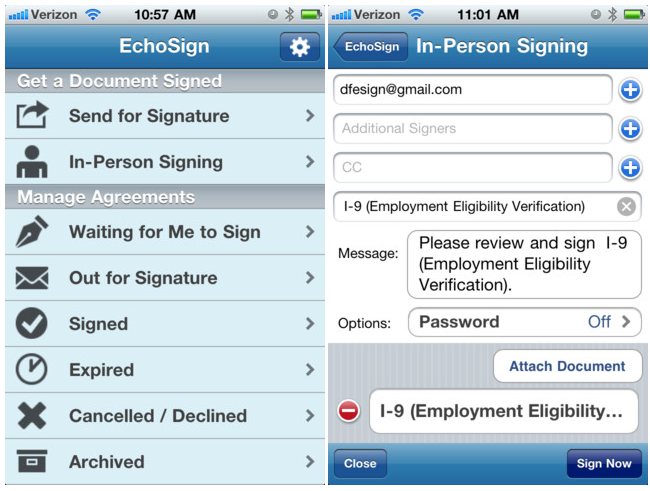
Adobe just -the No. 1 e-signature service used by over four millions users- for both iPhone and iPad as a free universal iOS application. The new app is available now, and it allows users to send documents and have them signed with a legally binding e-signature on the iPad or iPhone.
Users will access their EchoSign account, search and send from the EchoSign library, or send documents from their photo album, an email attachment, or apps like Box.net and Dropbox. There is also built-in, real-time status tracking, and the ability to quickly view signed agreements in an EchoSign account. Adobe promised the signing process within the app includes all of EchoSign’s “key authentication and privacy, fraud protection, and consumer disclosure”.
Out of EchoSign’s four million users, some of the estimated 50,000 paid subscribers include Twitter, Google, Facebook, VMware, Dell, and Groupon. Jason Lemkin started the company in 2006, and it was eventually acquired by Adobe in July of 2011 when the company had around 35,000 paid subscribers.
You can grab the app for free from the App Store now (iTunes link). Apple iPad screenshots are below:
Clay Caviness, systems administrator on Google’s internal Macintosh Operations team, just announced on Google+ that the team will begin releasing a selection of scripts, tools, and utilities used internally. The goal is to help other Mac administrators, and the team is releasing the first set of items today for “managing and tracking a fleet of Macintoshes in a corporate environment.”
The first tool is an application usage module for crankd – a Mac administration tool used to execute scripts and Python code related to network and system activity. Administrators can find the Application Usage tool here. Also announced today was a simple facter script that will allow administrators to “create facts from the database.”
Caviness promised to release more Mac specific tools, scripts, and utilities over time. (Simian?)
The Kindle iPhone and iPad app were given a significant update, bringing it up to version 2.9 and introducing many new and highly requested features.
First up are a few iPad specific changes, such as a new user interface for magazines on the larger screen, and you now have the ability to “read print replica textbooks” with support for layout and rich formatting of the print editions, notes, zoom and pan, and table of contents.
When it comes to updates that apply to the iPhone, iPad, and iPod touch, you can now email documents to your “Send-to-Kindle” address to store in Amazon Cloud, open PDFs from within Safari or Mail by sending them to your Send-to-Kindle address. Moreover, a new library organization view lets you manage content from Newsstand, Docs, and Kindle Books.
You can grab the Kindle iOS app as a universal download from the App Store (iTunes link). Check out a full list of changes below:
Apple’s App Store is currently taking approximately four times more revenue generated by the 200 highest grossing apps in comparison to the Android Market. According to research firm Distimo’s recently published 2011 report, a significantly increasing portion of app downloads are originating in China.
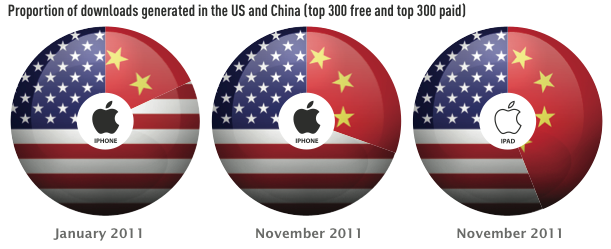
Likely further increased by Apple’s recent announcement to begin accepting App Store payments in Chinese Yuan, Distimo said when comparing the United States and China, 30 percent of downloads are coming from China. This is up from approximately 18 percent reported by Distimo in January 2011.
Growth in China is even more impressive when looking at just iPad numbers with China now accounting for 44 percent of all downloads from the two countries. Distimoreported late last month that App Store downloads for the top 100 paid apps in China nearly doubled just days following Apple’s decision to accept Yuan.
During Apple’s fourth quarter earnings call, CEO Tim Cook called the progress in China “amazing” and said the country represents “enormous opportunity.” As of that time, revenues from China accounted for 16 percent of Apple’s revenue for the September quarter – approximately $4.52 billion.
Some of the other interesting numbers reported by Distimo, include: 50 percent of App Store revenue for iPhone is now generated by freemium apps and in-app purchases for the 200 highest grossing apps; there are currently 79,077 games for iPhone, 28,683 for iPad, and 46,045 for the Android Market.
While the report noted App Store downloads have been on the decline for the year, downloads peaked following the release of the iPad 2 and iPhone 4S. Distimo attributed the increase to what they call the “anticipation effect” for Apple’s new devices.
Distimo put together their App of the Year Award based on total downloads worldwide across all platforms. Not surprisingly, Angry Birds took the top spot, followed by Facebook, Skype, Google Maps, and iBooks. Check out the full top 10 below.
There are fewer options for speech recognition these days, and now there are even fewer with Nuance announcing they acquired Vlingo for an undisclosed figure. Following multiple lawsuits related to patent infringement, the two companies apparently came to what CEO of Vlingo Dave Grannan called “a good outcome.” Grannan elaborated in a prepared statement (via AllThingsD):
Vlingo and Nuance have long shared a similar vision for the power and global proliferation of mobile voice and language understanding. As a result of our complementary research and development efforts, our companies are stronger together than alone. Our combined resources afford us the opportunity to better compete, and offer a powerful proposition to customers, partners and developers.
Vlingo is notably used in various voice-controlled Android apps, and it is viewed as competitors to Apple’s Siri built into the iPhone 4S. However, Siri, also used it prior to it being used by Apple, before switching to Nuance…
In an interview with 9to5Mac, Siri co-founder Norman Winarsky said Vlingo was originally used as the speech recognition component of Siri before switching to Nuance. He noted: “Theoretically, if a better speech recognition comes along (or Apple buys one), they could likely replace Nuance without too much trouble. ” The full quote is below.
9to5Mac: How important is Nuance speech recognition to the Siri technology? Expand Expanding Close
We had an inclination that it was coming, especially when the AT&T and T-Mobile merger was withdrawn from the FCC, but AT&T just confirmed in a press release that it agreed to kill the $39 billion purchase of T-Mobile USA announced in March. The result of the decision is AT&T both paying the agreed to $4 billion pretax charge by Q4 2011, as well as entering “a mutually beneficial roaming agreement with Deutsche Telekom”.
AT&T chairperson and CEO Randall Stephenson said this, regarding the issue:
AT&T will continue to be aggressive in leading the mobile Internet revolution. Over the past four years we have invested more in our networks than any other U.S. company…To meet the needs of our customers, we will continue to invest. However, adding capacity to meet these needs will require policymakers to do two things. First, in the near term, they should allow the free markets to work so that additional spectrum is available to meet the immediate needs of the U.S. wireless industry, including expeditiously approving our acquisition of unused Qualcomm spectrum currently pending before the FCC. Second, policymakers should enact legislation to meet our nation’s longer-term spectrum needs.
The full press-release from Stephenson is shown below.
Update: The auction was pulled, but it is unknown as to the reason.
A fourth-generation iPod shuffle autographed by Apple co-founder Steve Jobs is depicted in the image above. The owner put the device up for auction on eBay, and the bidding currently sits around US $4,000 US $10,000.
The iPod’s owner said he and three colleagues were invited to attend an Apple event in conjunction with the “innovators of tomorrow” program, where they had the rare opportunity to ask Jobs for his signature. After the event wrapped, the owner approached Jobs:
“I hear you’re not really one to give autographs, but I just gotta ask…. will you sign my iPod? It’s fine if you don’t want to. I’m not normally one to even ask for autographs.”
International web standards organization W3C last year created the Web Events Working Group to create a standard for the way touchscreen enabled devices interact with web content. The standard is known as the W3C Touch Events Specification. Now, according to Opera browser developer Haavard, Apple is delaying the process by using “invalid or irrelevant patents” to buy time, something the company has apparently done in the past.
Just days after detailing the first Bluetooth 4.0-enabled iPhone accessory and app, Apple approved another application that takes advantage of the low-power standard. This time it’s the first Bluetooth 4.0 heart rate monitor app approved by Apple for use with Bluetooth smart and SmartHRM accessories.
Available in the App Store for $1.99, CardioMapper provides “full real time and post exercise analysis” with statistics for the typical calories, distance, duration, speed, and pace. It will allow a user to track burned calories using the iPhone’s GPS, but the real benefit is the ability to connect to the latest Bluetooth 4.0 SmartHRM and Bluetooth Smart accessories. That will allow a user to track heartbeat rhythms, and there is also a live GPS accuracy indicator to make sure a user stays on route during a workout.
The company promises to show off some of the accessories and new Bluetooth smart accessories at CES 2012. However, the app’s iTunes page does warn: “Continued use of GPS running in the background can dramatically decrease battery life.”
Last time we checked with research firm IDC, they listed Apple at 68.3-percent of the worldwide tablet market with approximately 9.3 million units of the iPad 2 shipped in quarter two of 2011. While the firm’s estimates for Q3 saw a drop to 61.5-percent of the market, Apple still leads the market and increased shipments from the 9.3 million in Q2 to approximately 11.1 million units in Q3.
To put that in perspective, Apple’s closest competitor, Samsung, is over 10 times behind with just 5.6-percent of the market. The overall tablet market increased 23.9-percent to approximately 18.1 million units, representing a 264.5-percent increase from the year-ago quarter.
As for where Apple stands in comparison to the overall Android tablet market, IDC expects Android tablet market share to increase rapidly in Q4 from just 33.2-percent in Q3 to 40.3-percent. It’s important to note that IDC recently included “media tablets,” such as Amazon’s Kindle Fire and Barnes & Noble’s Nook Tablet, in their worldwide tablet market estimates. These additions will more than likely account for much of the increase.
This morning, Morgan Stanley significantly raised its forecasts for 2012, predicting Apple could possibly sell 90 million iPads during the year (in addition to 190 million iPhones). The analysts apparently have high hopes for Android 4.0’s ability to offer a competitive alternative to iPad going forward:
Since the launch and rise of Apple’s coveted iPhone, the mainstream media is quick to jump on any story where thieves are specifically targeting Apple users.
This is because the iPhone is seen as a high-end, luxury device in comparison to its Android counterparts – despite having an entry price tag lower than most competitors.
While the price isn’t preventing the average smartphone user from grabbing an iPhone anymore, thieves still seem to target iPhone users, presumably for their high resale value.
A report fromNBC New York profiled a pair of robbers in upper Manhattan who chose to not take an Android and other non-iPhone devices found on their victims.
A pair of would-be robbers targeting Columbia students in upper Manhattan seem to be rather picky as they prowled. Twice at 526 114th St., and once at 556 114th St., the suspects demanded the victims hand over their iPhones, police said.
The first victim complied, but the second only had a Droid, according to police. The thieves apparently didn’t want a Droid, so they took cash instead.
“I think it speaks to the resale value of an iPhone,” said one student.
Another student said: “It’s insulting they don’t want my BlackBerry.”
Another student interviewed by NBC on the nearby Columbia campus said: “I don’t like mine [BlackBerry], I’m waiting to get an iPhone myself.”
Police have yet to catch the two suspects, but they are hoping someone recognizes the men shown briefly in snapshots in the video above, as well as one suspect caught on surveillance video.