Mac

See All Stories

Apple’s Mac lineup consists of MacBook, MacBook Air, MacBook Pro, iMac, Mac Pro, and Mac Mini. The Mac runs macOS for its operating system.
Mac lineup

History

The Mac is Apple’s lineup of computers, and it can be considered the company’s oldest product. The name “Mac” comes from the original Macintosh, which was introduced in 1984 and is also considered the first personal computer for the masses to have a graphical user interface. The first Macintosh hit the stores on January 24, 1984, costing $2,945.

Among all these years, Apple has introduced many different Mac models, ranging from desktops to laptops to professional tower machines. The current lineup consists of the MacBook Air, MacBook Pro, Mac mini, iMac, and Mac Pro. However, there have been other Mac models were discontinued, such as the eMac, MacBook, and iMac Pro.

The history of modern Macs began in 1998, a year after Steve Jobs returned to Apple. Apple had dozens of Macintosh computers at that time, but Steve decided to rethink the entire lineup. In 1998, Apple announced the iMac G3, which ditched the floppy disk and serial ports in favor of USB connectors.
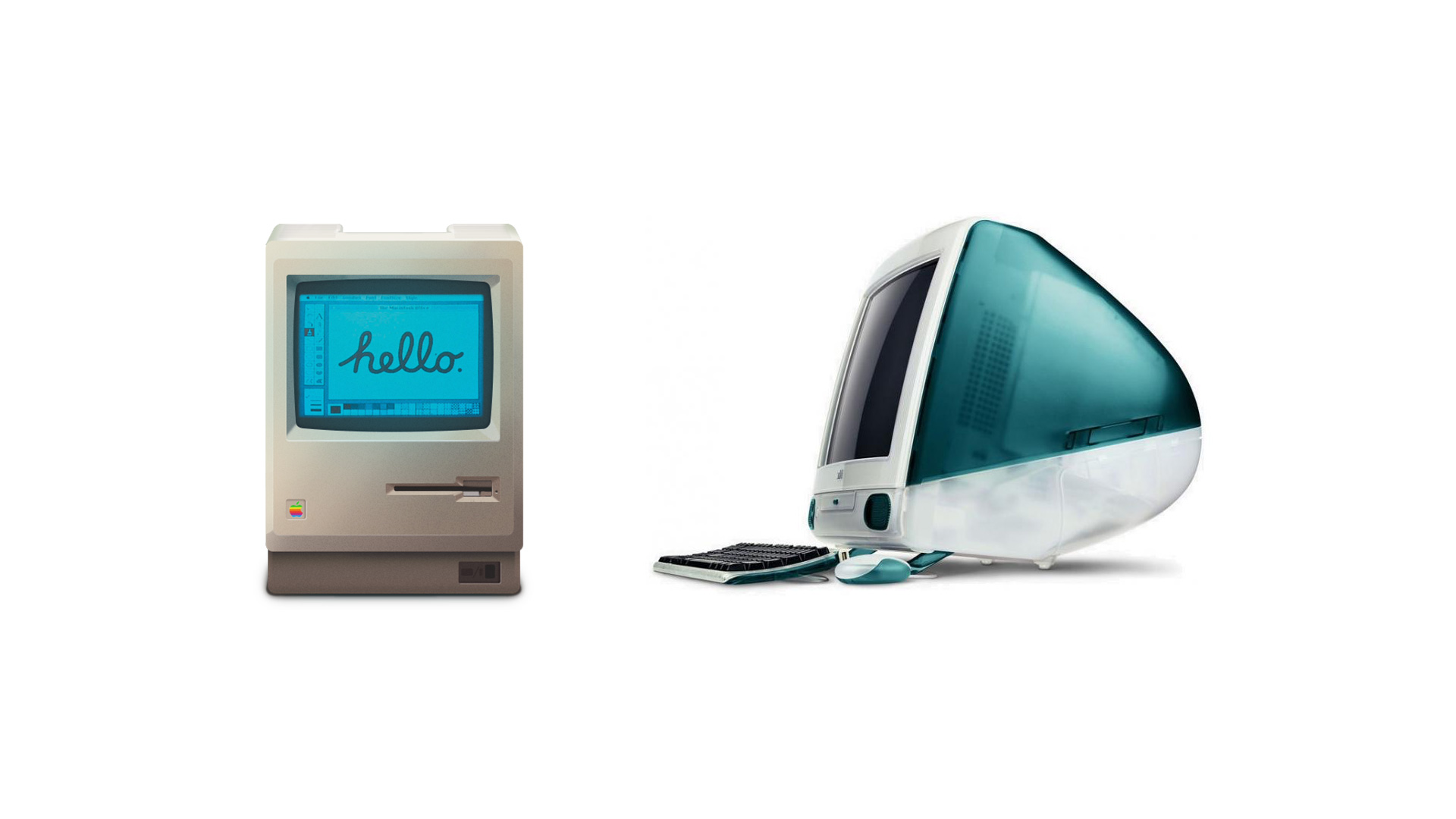
Macintosh and iMac G3.

Unlike the Macintosh, the first iMac was considered a huge success — not only for its technology, but also for its unique design with colorful translucent plastic. Apple quickly expanded the Mac lineup with other models, which included the iBook and PowerBook (which became the MacBook and MacBook Pro) and the PowerMac, which is now the Mac Pro.

macOS

What makes a Mac the Mac is the macOS operating system, which has also had a long history since the introduction of the first Macintosh. Initially called Mac OS, the operating system was rebuilt when Steve Jobs returned to Apple.

The first version of Mac OS X was released on March 24, 2001 with a new interface that is still present in some ways in current versions of macOS. Apple’s desktop operating system comes with many free applications such as Pages, Keynote, Numbers, iMovie, and GarageBand.

With macOS, users also have access to deep integrations with other Apple devices. For instance, you can answer calls and send SMS from your iPhone using your Mac. Handoff lets you switch from one device to the other and pick up where you left off. Apple Watch users can unlock their computer without entering a password, and you can even copy and paste between devices.
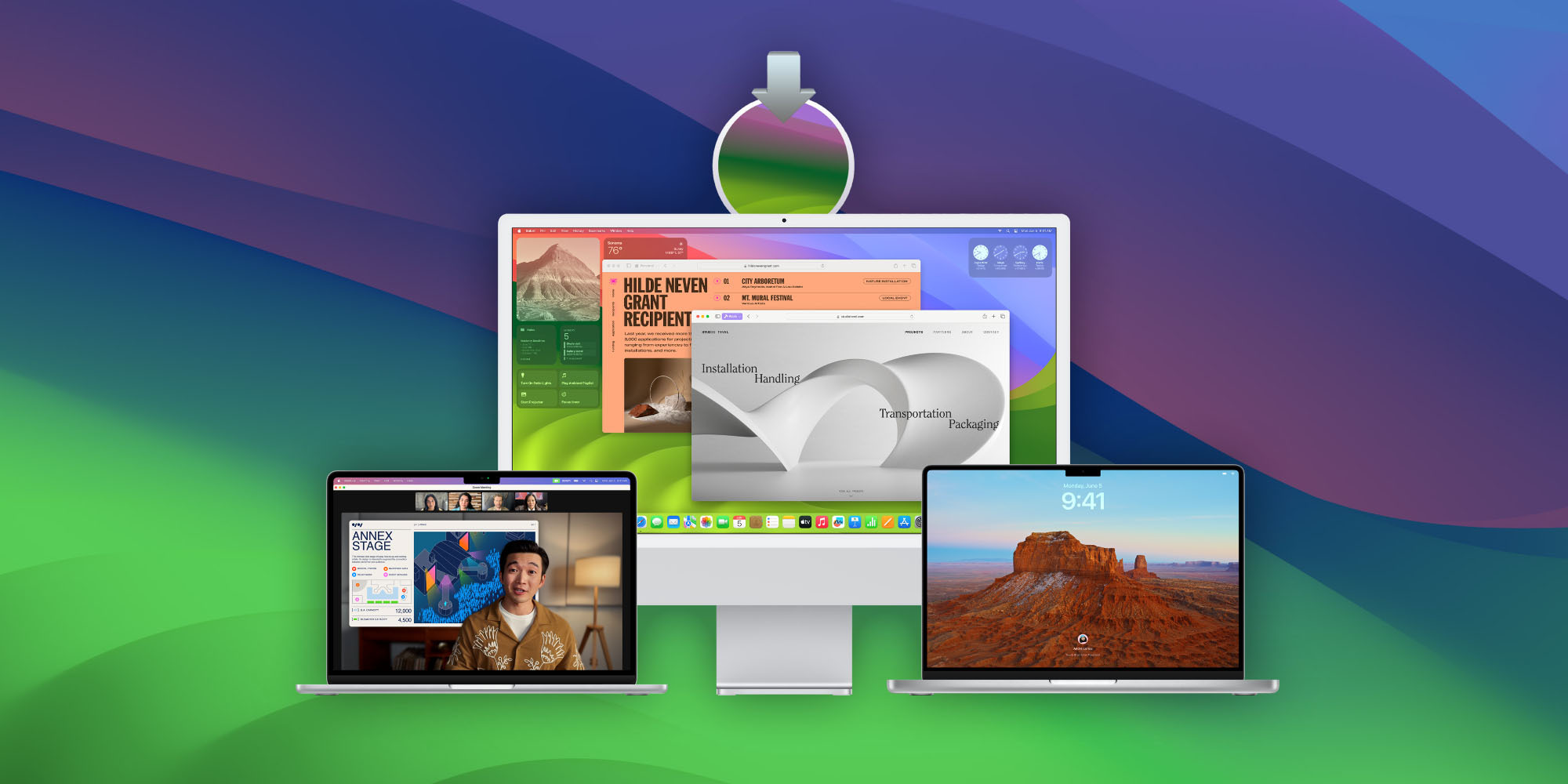
macOS Sonoma

Apple’s desktop operating system is also integrated with services offered by the company, such as iCloud, Apple Music, and Apple TV+.

The current version of macOS is Sonoma (version 14), which features new slow-motion screen savers, widgets on desktop, camera effects on FaceTime and other apps, web apps, passkey sharing, improved PDF support, and Game Mode. The update also comes with a new API that lets developers easily port Windows games to macOS.

Architecture Transitions

The Mac has had three major architecture transitions in its history. Apple’s first computers ran on Motorola processors, but the company decided to migrate to the new PowerPC platform in 1994. While this brought benefits at the time, the PowerPC processors were not delivering what Apple expected.

It was in 2005 that Apple confirmed the transition from PowerPC to Intel. Intel processors had become faster and more efficient than PowerPC, which enabled the development of new Mac computers that were more powerful and also more compact. Developers have been given access to a Developer Transition Kit running Mac OS X Tiger with Intel Pentium 4 to update their apps before the transition begins.
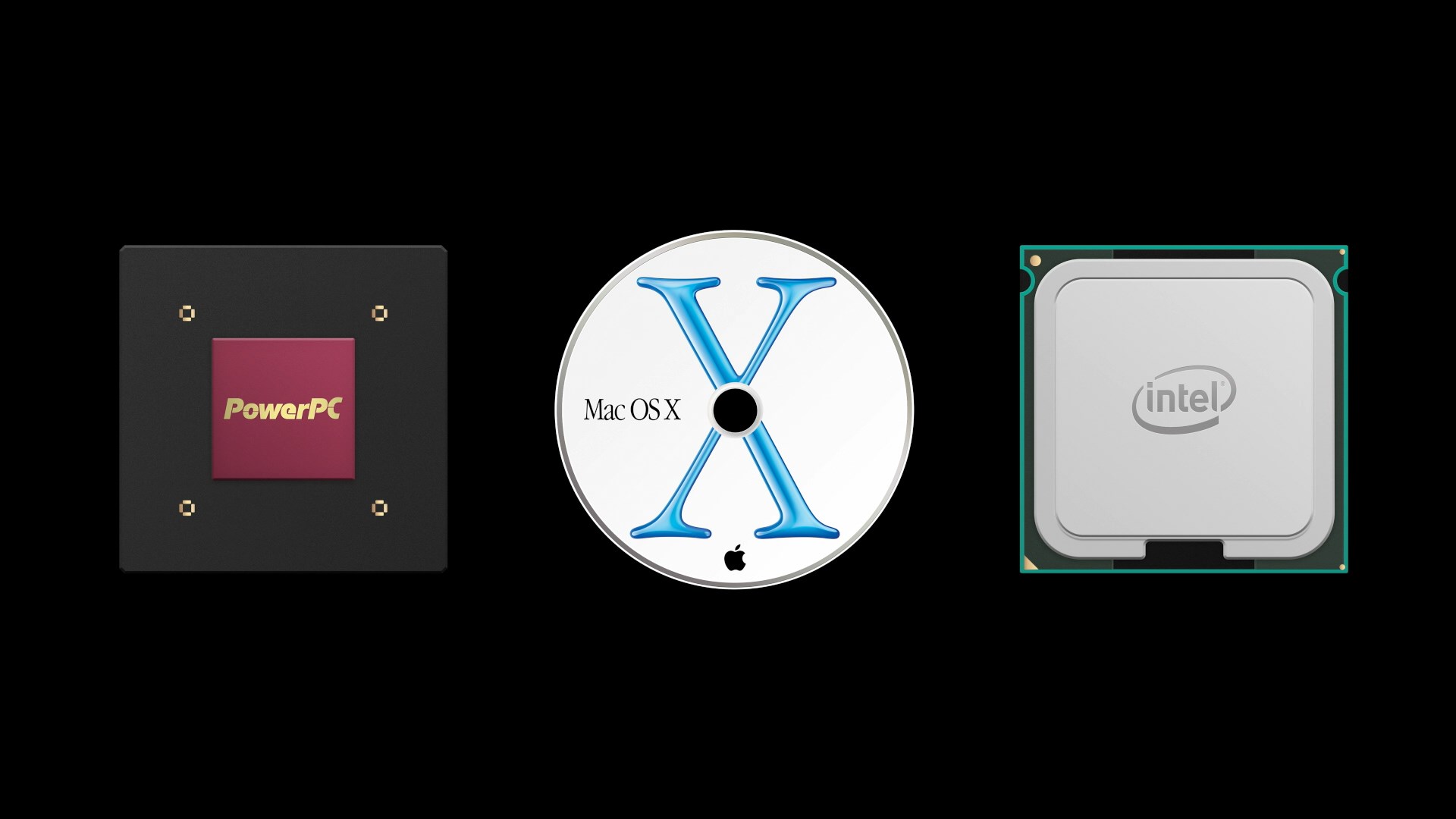
Power PC, Mac OS X, and Intel processor.

Apple said that the transition would begin in June 2006 and be finished by the end of 2007. However, the transition to Intel was fully completed in August 2006 when the company replaced the PowerMac with the new Intel Mac Pro.

As the years went by, Apple once again felt the need to have more powerful and efficient processors for its computers. This time, the company was already working on its own chips for the iPhone and iPad. In June 2020, Apple confirmed that it was changing the architecture of the Mac, now from Intel to ARM chips, which are called Apple Silicon.

Apple offered a Mac mini DTK running on the same A12Z Bionic chip as the 2020 iPad Pro. This way developers could once again update their apps ahead of the transition. In addition to being more powerful and energy efficient, the ARM architecture of Apple Silicon chips has enabled Macs to run iOS apps for the first time.
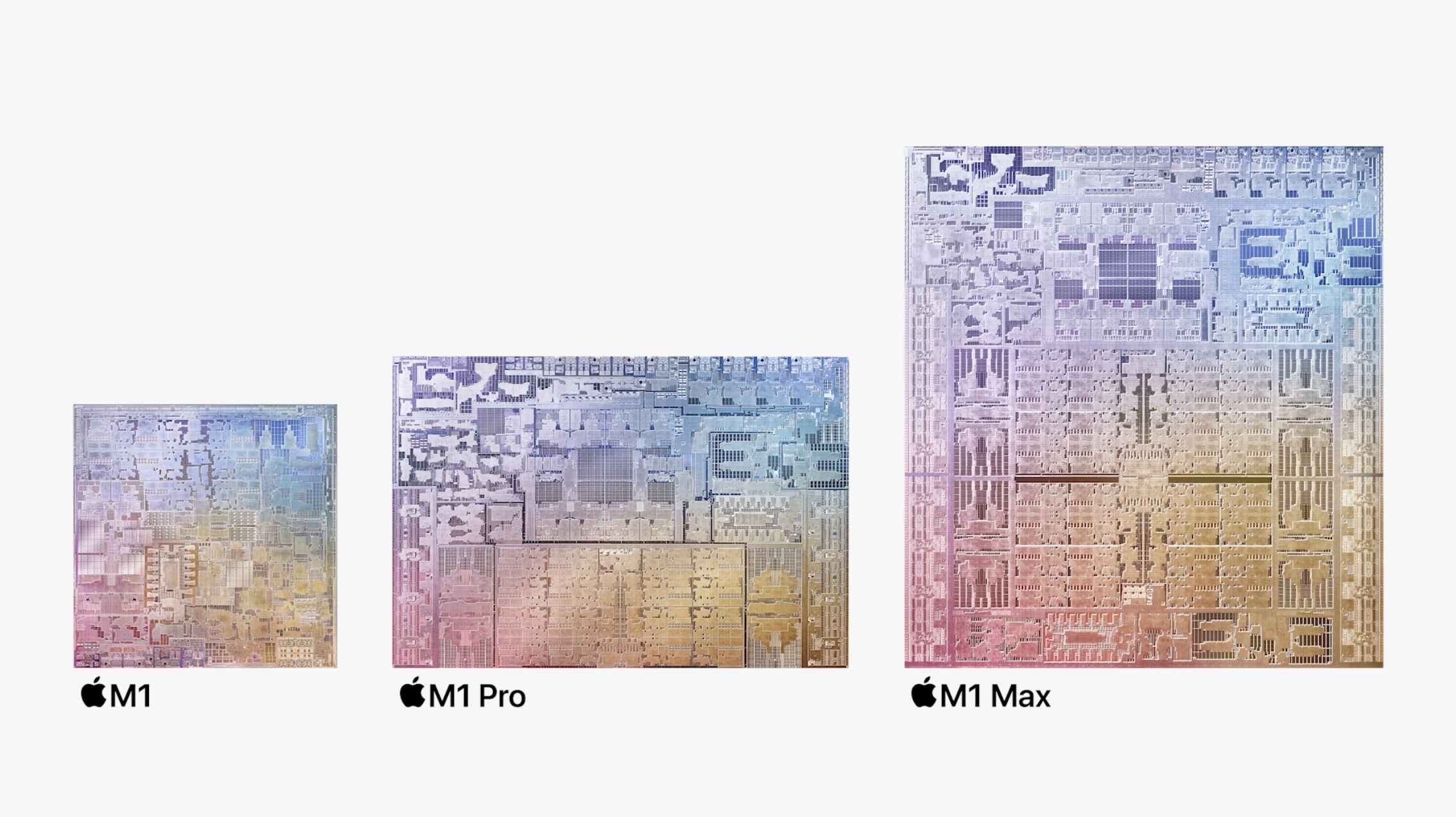
Apple M1 chip | Mac

The first Apple Silicon Macs were released in November 2020 with the M1 chip. The company later introduced more powerful variants of the M1 chip, called M1 Pro, M1 Max, and M1 Ultra. Macs with Apple Silicon have become known for being more powerful while consuming much less power, which has resulted in MacBooks with extended battery life.

In June 2022, Apple introduced the M2 chip, which is around 20% faster than the M1 and also supports more RAM. M2 also has more powerful variants: M2 Pro, M2 Max, and M2 Ultra.

Apple unveiled the M3, M3 Pro, and M3 Max chips in October 2023. The main highlight of this generation is the 3 nanometer technology, the same as the A17 Pro chip. The M3 family also features better GPUs with support for hardware-accelerated ray-tracing.

Current Mac lineup

Apple currently sells a variety of Mac computers, which includes MacBooks, Mac mini, iMac, and Mac Pro. While some of the Macs have already been updated with an Apple Silicon chip, others remain with Intel processors.

MacBook Air

The MacBook Air is Apple’s most affordable laptop and it has become popular for its light, compact design. The 2022 version is powered by the M2 chip and is offered with 8GB, 16GB, or 24GB of RAM. Plus, it has a new, edge-to edge 13.6-inch Retina display.

The laptop features Touch ID and has two Thunderbolt 3 compatible USB-C ports, a MagSafe connector for charging, and a headphone jack. Prices start at $1099 in the US. It’s offered in silver, space gray, starlight, and midnight.
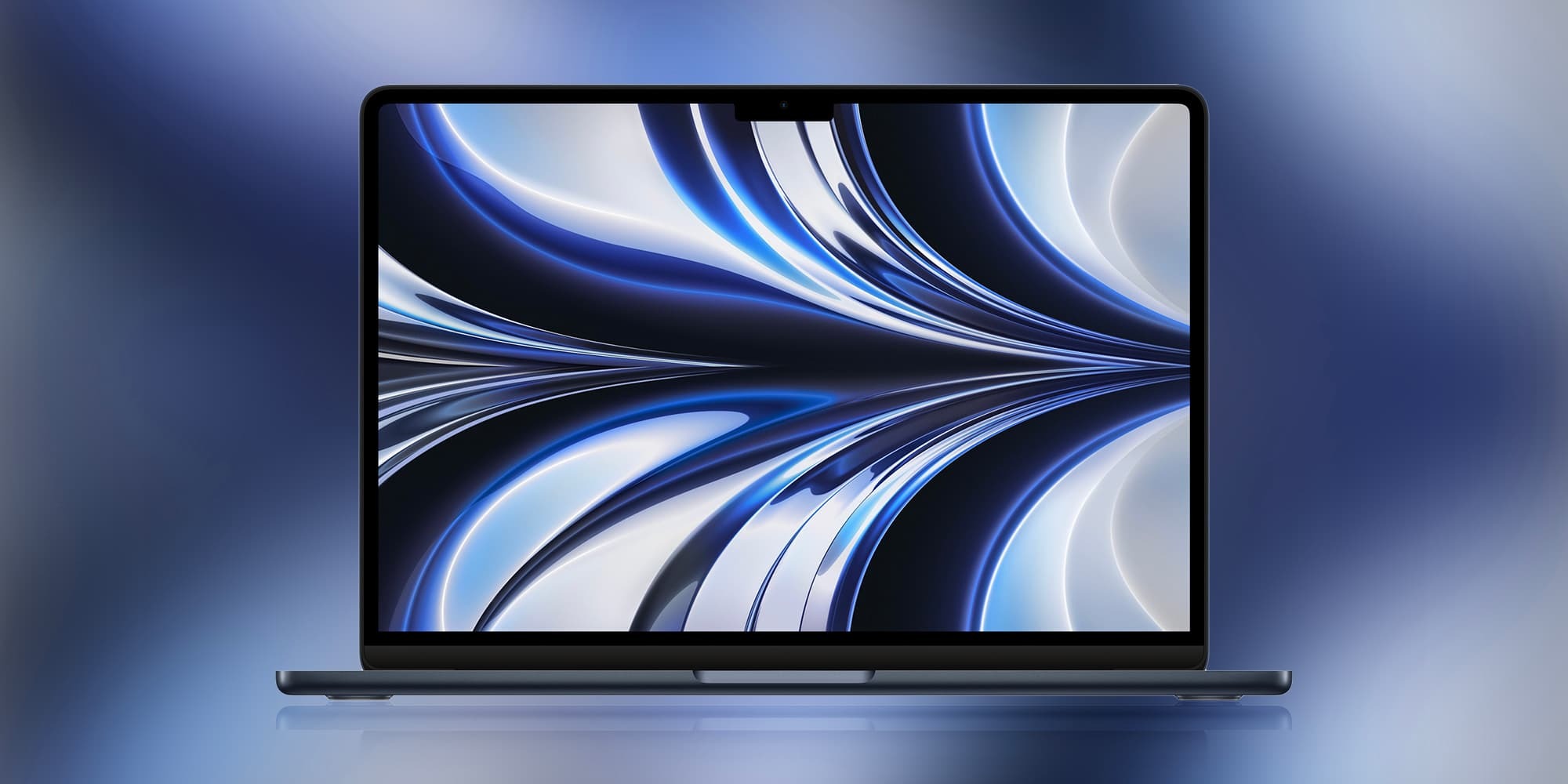
M2 MacBook Air.

A year later, Apple introduced the first 15-inch MacBook Air. It has essentially the same hardware as the smaller version with a similar design, but with a larger display. Prices start at $1299 in the US.Apple is still selling the M1 MacBook Air for prices starting at $999.

MacBook Pro

The 2023 MacBook Pro is available in multiple versions, and customers can choose between 14-inch and 16-inch screen sizes. For the first time, Apple has introduced a less expensive version of the 14-inch MacBook Pro with the base M3 chip. This version has the same design and display as the high-end versions, except that it only has two USB-C ports instead of three.
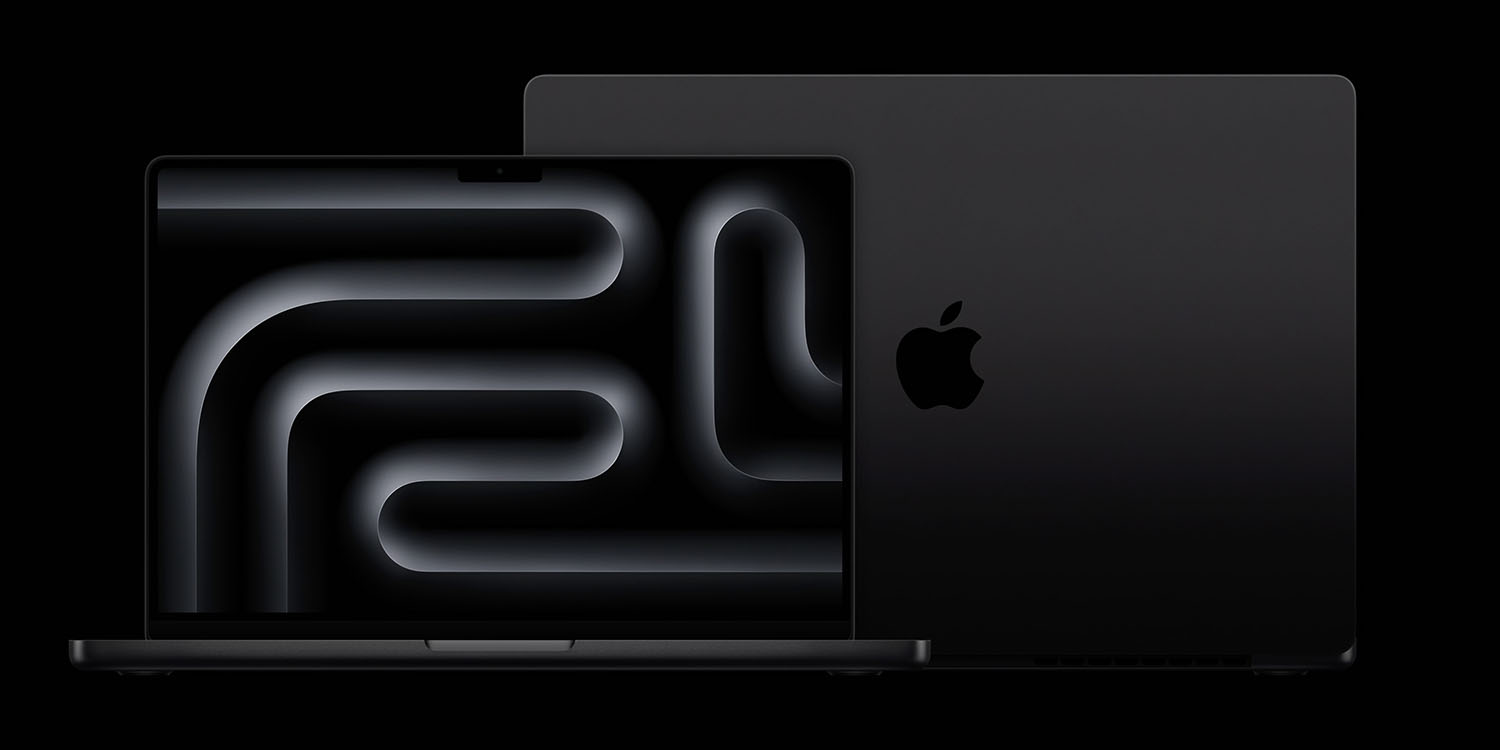
M3 MacBook Pro

The most expensive versions of the MacBook Pro are equipped with the more powerful M3 Pro and M3 Max chips. The laptop can be configured with up to 128GB of RAM and 8TB SSD. These versions also come in a new Space Black color.

Unlike the MacBook Air, the MacBook Pro comes with an HDMI port and an SD card reader. It also features MagSafe and Touch ID on the keyboard. Apple no longer sells MacBooks with the Touch Bar. Prices start at $1,599 in the US.

Mac mini

Mac mini is the cheapest Mac currently available since it’s basically a desktop without a built-in display or other peripherals. The base model with the M2 chip features one Ethernet port, two USB-C/Thunderbolt 4 ports, HDMI 2.0, two USB-A ports, and a headphone jack.

Apple sells a more powerful version of the Mac mini with the M2 Pro chip, which also comes with four USB-C ports instead of two. Mac mini can be configured with up to 32GB of RAM and up to 8TB of storage. Customers can also opt for a 10 Gigabit Ethernet port. The Apple Silicon Mac mini is only available in silver, while the now discontinued Intel model was available in space gray.
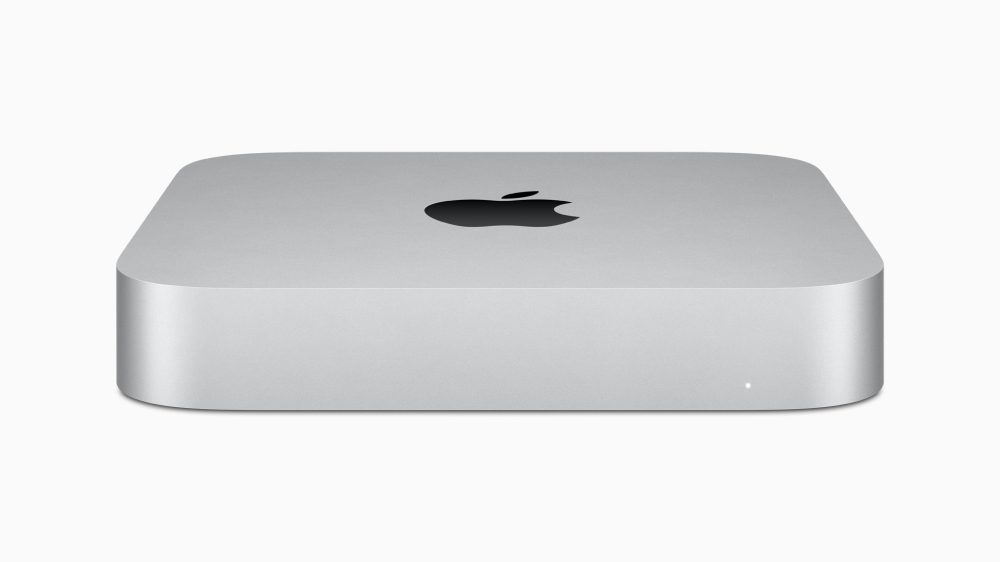
Apple Silicon Mac mini.

Prices for the Mac mini start at $599 in the US. Again, it’s worth noting that it doesn’t come with a keyboard or mouse in the box – you need to buy them separately or use your current ones.

Mac Studio

Mac Studio represents a new category between Mac mini and Mac Pro. It features a design based on the Mac mini, but with a taller body to support the more powerful hardware and also a better cooling system.

The new Mac Studio is targeted at professional users who work with demanding tasks such as video editing, 3D rendering, and machine learning. 

Embraced by creative pros everywhere, Mac Studio now delivers next-generation power in the form of the lightning-fast M2 Max and the boundary-breaking M2 Ultra. It packs outrageous performance and extensive connectivity in an unbelievably compact form, putting everything you need within easy reach and transforming any space into a studio.

By default, Mac Studio already comes with the M2 Max chip, 32GB of RAM, and 512GB SSD storage. A more expensive option lets users customize Mac Studio with M2 Ultra. While M2 Max has a 12-core CPU and a 30-core GPU, M2 Ultra doubles all of those specs. The new chip has a 24-core CPU and a 60-core GPU.

Mac Studio can also be configured with up to 192GB of RAM and 8TB of SSD storage. The machine offers up to six Thunderbolt ports, 10 Gigabit Ethernet, headphone jack, two USB-A ports, and one HDMI port.
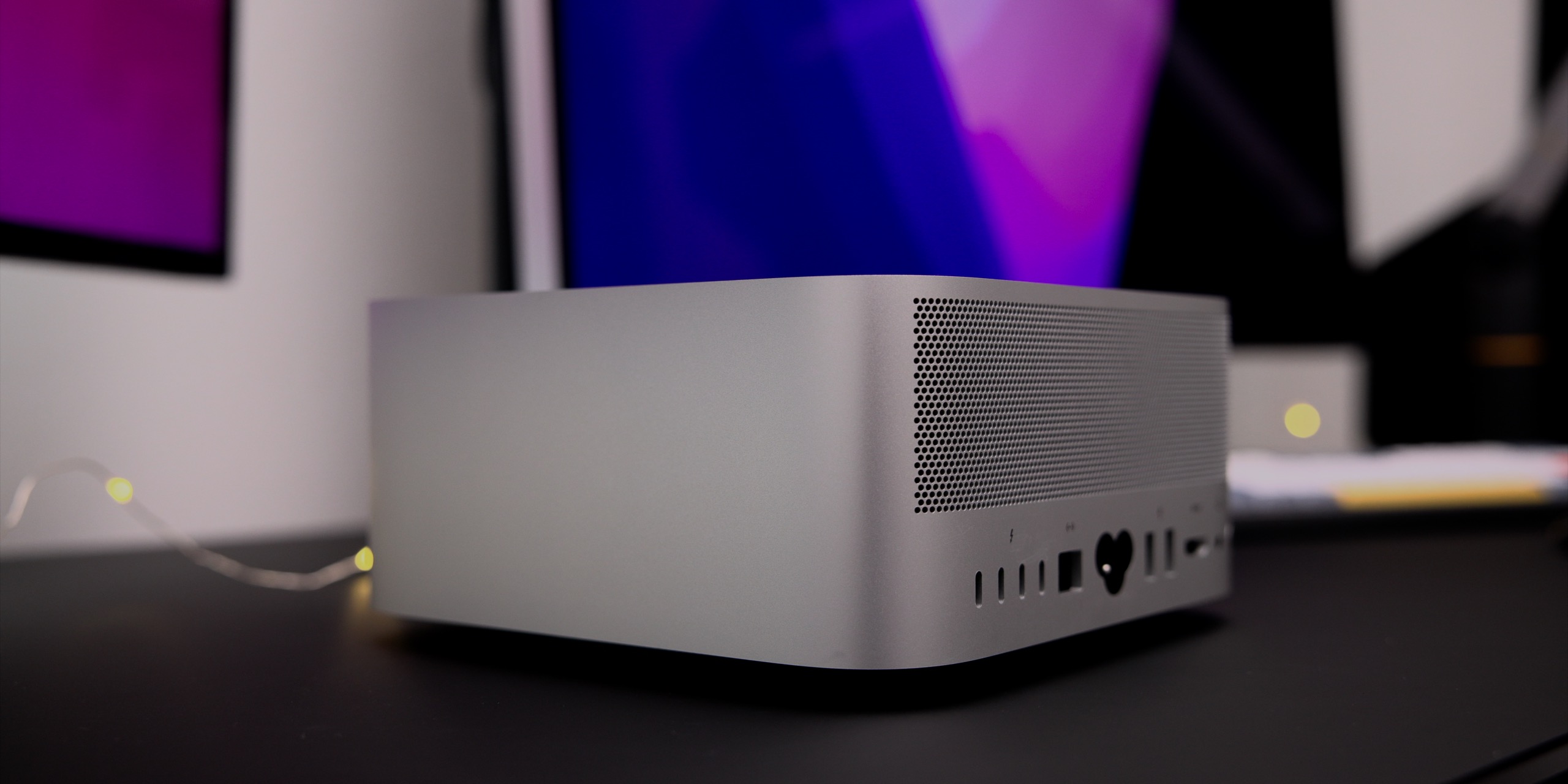
Mac Studio

Apple has been rumored to be working on new versions of this machine with the M3 Max and M3 Ultra chips. However, these versions may not be ready until 2025. Bloomberg’s Mark Gurman said in November last year that the M3 Ultra chip “hasn’t yet gone into broad testing” inside Apple.

In the US, prices for the Mac Studio with M2 Max chip start at $1999. The M2 Ultra chip version starts at $3999. Just like the Mac mini, Mac Studio doesn’t come with a keyboard and mouse in the box. You can find accessories for your Mac Studio here.

iMac

iMac is Apple’s most popular desktop computer with an all-in-one construction. It features a 4.5K display in its 24-inch version and a 5K display in the 27-inch version. At the same time, Apple still sells an entry-level iMac with a regular 1080p display.

The 24-inch iMac is the first to feature the M1 chip, the same as in the Mac mini, MacBook Air, and MacBook Pro. This allowed Apple to introduce a completely redesigned model with a slimmer design, which is also offered in seven new colors. Customers can customize the new 24-inch iMac with up to 16GB of RAM and 2TB of storage.
Site default logo image

The company ships the 24-inch iMac with Magic Mouse and Magic Keyboard, plus a Lightning cable for recharging accessories. Prices in the US start at $1299. Apple has discontinued its old 21.5-inch iMac and the 27-inch iMac 5K.

Mac Pro

Mac Pro is a computer built for professional users who depend on extremely powerful hardware. Available in tower and rack versions, it has a completely modular design. That means users can replace RAM, SSD, GPU, and other internal components.

By default, it features four USB-C/Thunderbolt 3 ports, two USB-A ports, and two 10Gb Ethernet ports. However, the ports can be expanded using the PCI Express slots. Apple also ships the computer with a Magic Mouse and Magic Keyboard, but it does not come with an external monitor included.

All models feature Intel Xeon W processors, which are the most powerful processors offered by Intel. Consumers can configure Mac Pro with up to 28-core processor, 1.5TB RAM, and 8TB of SSD storage. In addition to supporting multiple dedicated GPUs, Apple also offers the Afterburner card — which accelerates the decoding of ProRes videos.

The company recently updated the Mac Pro with new graphics card modules, which include Radeon Pro W6800X and Radeon Pro W6900X.

Site default logo image

Mac Pro prices start at $5999 in the US.

Rumors about upcoming Macs

Top stories about the Mac

MacMall opening up more retail stores in Huntington Beach on Saturday and Chicago in February

Site default logo image

Conventional wisdom once was that as Apple expanded its retail footprint, Apple resellers would fall by the wayside.  And that has happened to a certain extent, plus stores like CompUSA and Circuit City have folded.

Fortunately, other retailers have been able to succeed alongside Apple by offering differentiated services.

One of our favorite Apple resellers, MacMall, is expanding their retail stores to Huntington Beach, California this Saturday and Chicago, Illinois in the coming months. Currently, the retailer has a booming online store coupled with two retail stores in Santa Monica and Torrance that are also seeing success, the company said in a press release sent out today. The Huntington Beach store opens this Saturday, December 10th with some pretty killer deals (seen after the break). MacMall’s Chicago store, located 321 West Grand Avenue, will be seeing a later January/February opening.

We hear that MacMall is even shopping for some space in Manhattan, alongside one of our other favorite resellers, Tekserve.

MacMall, naturally can offer more to customers than Apple Stores with their unscheduled technical support, broader range of accessories (even a few PCs and Android tablets), and most importantly “online prices in a retail store”. We often tip you guys on MacMall’s awesome deals, so we’re certainly familiar with some of the deals they carry.  As you can see below, they offer so many more accessories than an Apple Store (iPhone Alarm Clocks, standalone GPS, Photoframes, Cameras, etc, etc).

MacMall says Apple has encouraged them to keep expanding to more stores and with over $100 million in Apple product sales this year, that isn’t hard to believe.

At the Huntington Beach store’s grand-opening on Saturday, the first 300 people to visit the store will be entered to win free Apple TVs, MacBook Airs, iPod touchs, and iPod Nanos. Early shoppers will have a 1 in 22 chance of taking home some free holiday gifts.

Press release and circular follow:


Expand
Expanding
Close

Canalys: Apple on track to become the world’s #1 PC maker, with a little help from iPad 3

Site default logo image

Research firm Canalys on Monday said it expects Apple to overtake Hewlett-Packard to become the world’s leading PC maker before the second half of 2012. That is, if you count tablets as computers (many people don’t). The launch of iPad 3 early next year is predicted to boost Apple’s share of the global PC market. Canalys Analyst Tim Coulling:

Apple has seen its PC market share expand from 9 percent to 15 percent in just four quarters, though iPad shipments in its core market – the United States – are likely to come under pressure in Q4 due to the launch of the Fire and Nook at extremely competitive price points.

Charlie Wolf of Needham and Co last week said the Mac passed the magic five percent global market share. Canalys’ data includes computer and tablet sales. Earlier this month Canalys pegged Apple’s share of the global PC market at 15 percent, right behind the #1 HP with 16 percent share. CAnalys predicts that 2011 PC sales will grow 15 percent to hit 415 million units, of which 211 million should be notebook units where Apple absolutely dominates.

Ultrabooks? “For Ultrabooks to become widespread, prices have to drop considerably”, Canalys said. As for other tablets, DigiTimes expects high inventory levels of non-Apple tablets following the holiday season. This is partly due to the launch of the Kindle Fire and Nook Tablet  which undercut other Android tablets, meaning “several waves of price cuts are expected in the new year”. Meanwhile, white box tablets, which dropped below $100, are not expected to affect iPad sales.

Expand
Expanding
Close

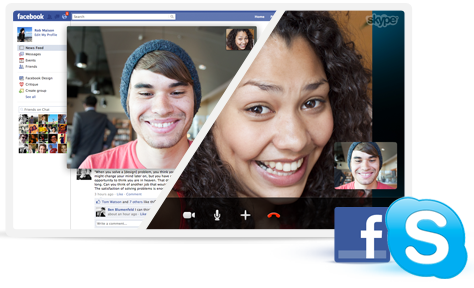
Skype adds Facebook-to-Facebook calling to desktop client

Site default logo image

Skype announced in a blog post today a new version of its desktop client that supports Facebook0-to-Facebook video calls and other enhancements such as smoother video rendering on the Mac platform and group screen sharing for Windows users with a Premium subscription, which is currently available for Mac users. Users who are chatting one-on-one will also be able to screen share with live video streaming.

The Facebook video calling is obviously the most interesting feature. You could previously see your Facebook friends’ social feed, like posts and update your Facebook status from within the Skype app and now you can call them in-app:

Initiating a Facebook-to-Facebook call from within Skype is quite easy; all you need to do is connect your Skype and Facebook accounts. Then, select a Facebook friend and hit the video call button in Skype- your friend simply picks up the call from Facebook. 

If Skype weren’t such a unwieldy app, we’d be tempted to consider it as a replacement for Facebook clients. To get the aforementioned features, download Skype 5.4 Beta for Mac or Skype 5.7 Beta for Windows.

[youtube=http://www.youtube.com/v=DO5GbYHv7HM]

Expand
Expanding
Close

Forrester relents: Recommends Macs for business because your boss wants one

Site default logo image

IT managers’ thinking is influenced by a myriad of business factors, including research studies advising them not to adopt Apple’s computers. But their attitude is changing as Forrester Research, one of the most outspoken proponents of the Mac-free business environment, now backpedals on their 2008 report which called for a total banishment of Macs in the workplace – even for the most mundane tasks such as handling email.

According to the Fortune’s Philip Elmer-DeWitt, a new Forrester survey (available for sale on the corporate card here) of 590 IT managers, Mac users comprise “the 17 percent of information workers who use new technologies and find innovative ways to be more productive and serve customers more effectively”. Wow, talk about change in stance. But wait, there’s more. “Mac users are your HEROes and you should enable them not hinder them”, the report concludes, HEROes being a Forrester acronym for Highly Empowered and Resourceful Operatives.

Just like with iPhone, “Macs are being freewheeled into the office” by corporate higher-ups – typically executives, sales reps and other workaholics – who rely on MacBook Pro machines rather than Windows notebooks which “are slowing them down”:

Employees want their PCs to boot in 10 seconds, not 10 minutes, and they don’t want to have to get a cup of coffee while opening a 20 MB spreadsheet in Excel. They’re drawn to uncluttered Macs — especially those with solid-state drives, which are more responsive and boot in seconds.

That, and the looks…


Expand
Expanding
Close

Review: BookBook case, the ultimate hollowed out book trick for your Air

Site default logo image


I took Twelve South’s BookBook for Air for an extensive spin through a bunch of everyday usage scenarios and in various urban and Mediterranean settings.

I have an admission to make: I’ve never been a big fan of protective cases for Apple products. There, I said it. I especially have an issue with notebook cases, many of which unfortunately can be brushed off as cheap-looking, overpriced gimmicks that don’t hold a candle to Apple’s industrial design. I didn’t cave even after the paint had started to come off of my first Apple notebook, a titanium-clad PowerBook G4, because I bumped it one time too many.

It is fair to say that in all those years I’ve never gotten my head around utilizing protective sleeves to keep my pricey hardware in pristine condition. To me, Apple gear is meant to be displayed, touched and marveled at. The BookBook case for Air has changed my preconceived notions overnight. Oozing style, premium quality, convenience and authenticity, it’s the first case I reckoned would actually protect my Air whilst keep those prying eyes at bay. It’s what notebook cases are meant to be, at least in my view.


If there ever was such a thing as the ultimate hollowed book trick, this is probably it.


Expand
Expanding
Close

Some upset as iCloud wipes out docs from iWork apps

Site default logo image

We’re receiving numerous reports from disgruntled users claiming iCloud deleted their documents from iWork apps on their iPhones, iPod touches and iPads after restarting devices. Worse, documents from the Pages, Numbers and Keynote iOS apps are also wiped out from the iCloud servers and cannot be found using the web interface. Sure enough, a bunch of threads on Apple’s Support Communities site (here and here) highlight the issue which affects an unknown portion of users.

A forum user NickFro describes the catastrophic bug:

I can reliably reproduce the error as follows. Create a document in Numbers on an iOS device, or upload to iCloud.com manually. Wait for sync. Restart iOS device. Launch Numbers. The document will be deleted. If you have iCloud.com open, the file will still appear but clicking on it generates a “File not present on server” error. Pretty serious bug, but I can’t tell if it’s in iCloud or the iWork apps. Or both.

He also offers this remedy:

Delete the iCloud account at both the main level of Settings (i.e., by selecting iCloud) AND by deleting the account in the Mail, Calenders, and Contacts section of Settings. Have it remove everything from your device. Once it’s done. Go to the main level, select iCloud, and re-enable your account there and set all settings there for sync. Let the sync happen.

If that didn’t help, try the solutions described here and here.

If you backup your iOS devices with iTunes instead with iCloud, you’re in luck: Just restore to a device backup containing your files and launch Pages, Keynote or Numbers on your device – but don’t enable iCloud in any of those apps. As you know, iTunes creates a device backup at each sync (unless iCloud backup is enabled in iTunes or Settings on your device). This lets you use Time Machine to go back in time and retrieve a specific backup file containing your device’s settings, app data, documents and more. The affected users who enabled iCloud Backup on their device (Settings > iCloud > Storage and Backup) are in a much worse situation as any document created on their device and synced with iCloud gets deleted from both places without a warning, as shown in the below clip.

[youtube=http://www.youtube.com/watch?v=q1vHhIY_uqw]

For some, the problem stems from migrating MobileMe accounts to the iCloud ones so deactivating the “old” MobileMe account on every iOS device, Mac or PC should help.

According to a forum user Felix Leiter:

As long as there is still one machine with a functioning “MobileMe” in the System Preferences, this will erase all files on startup. I found it out when I turned on my wife’s machine, having forgotten that I had created a temporary user account there to store some of my MobileMe information. As soon as I switched to that user account, zap!, all iWork files disappear. Now that all former MobileMe panels have been deactivated, the remote reset is no longer occurring. or at least so it seems.

For others, iWork documents are disappearing upon syncing with a computer, too. This happens after a document has been created on an iOS device or uploaded from the computer. Here’s one possible remedy…

Expand
Expanding
Close

Apple begins seeding OS X 10.7.2 GM to developers

Site default logo image

Following up the official announcement of iCloud and iOS 5 this afternoon, Apple has begun seeding OS X 10.7.2 GM to the Developer Center. This final release gets the Mac prepared for iCloud’s official release October 12th, to the general public. The GM also features bug fixes, enhancements, and Safari 5.1.1. If you find anything interesting, we’re all ears.

Also, check out the iOS 5 GM!


Expand
Expanding
Close

AnandTech reviews the Thunderbolt Display

Site default logo image

Anand, as per usual, does one of the more in-depth reviews we’ve seen of the Thunderbolt Displays. Some interesting notes:

  • The Thunderbolt Display uses less power than the previous Cinema Display at its dimmest setting (likely just panel efficiency variance) and draws a bit more at max brightness.
  • Pegasus hardware seems to cause serious audio issues which corrupts sound while large file transfers are happening. Expect a fix.
  • There are some nuances with display daisy chaining. For instance, in one configuration Anand had to put a Promise RAID array between the two displays in a daisy chain to get them to work.
  • Next year’s Ivy Bridge will bring more Display options to Macs (and likely USB 3 since the controller is built into the Intel chipset). The future may also hold displays with GPUs built in.
  • For a $1000 display, the speakers “were OK, but not great”. The Camera and Mic were both good.

If you are considering getting one of these displays, check out the full review which was very favorable overall. MacConnection also has the lowest price we could find on the new Thunderbolt display at $979.

Update: Macworld put up a review this morning as well. 4/5 Stars.


Expand
Expanding
Close

Review: Western Digital My Passport Studio portable hard drives go high class

Site default logo image

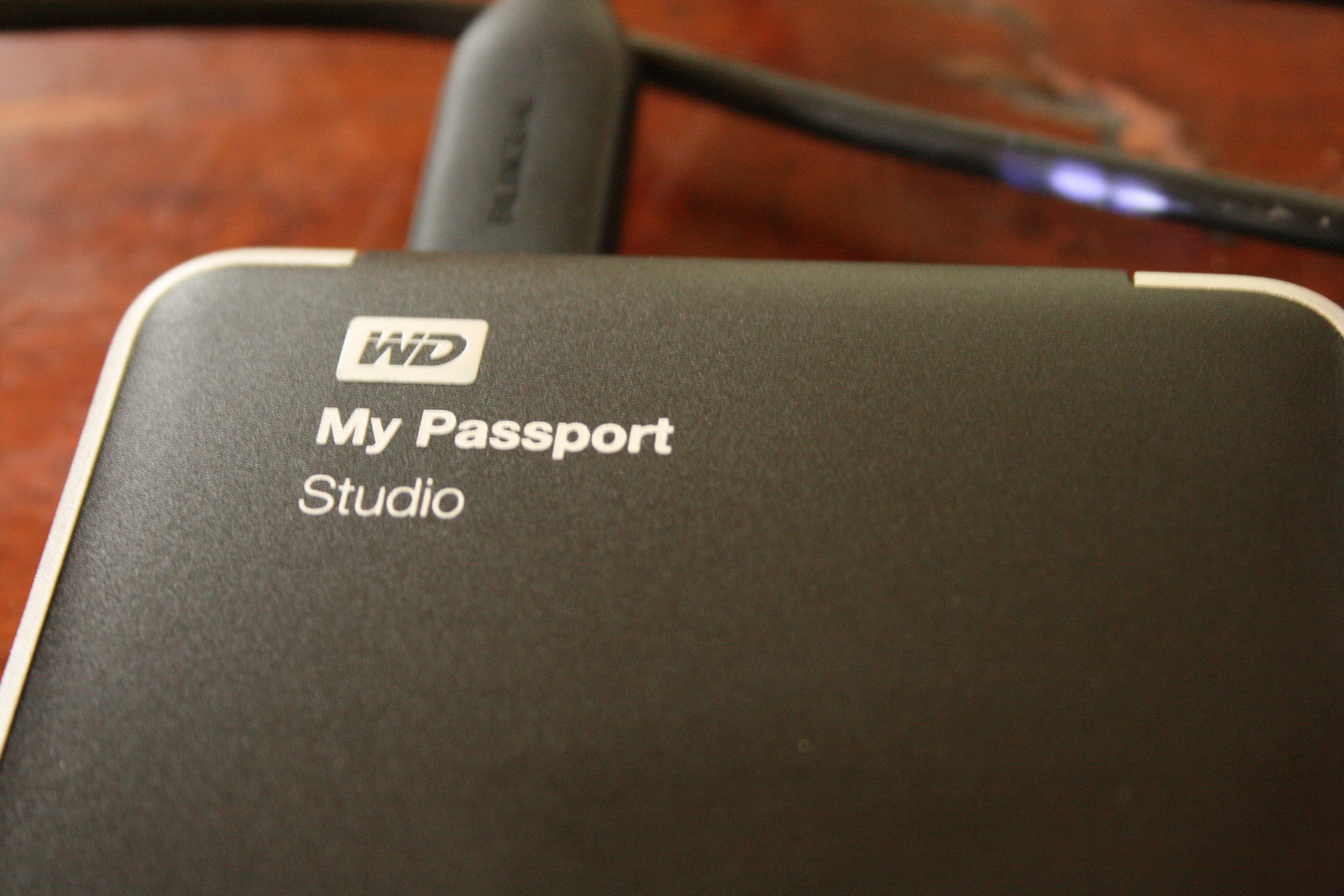
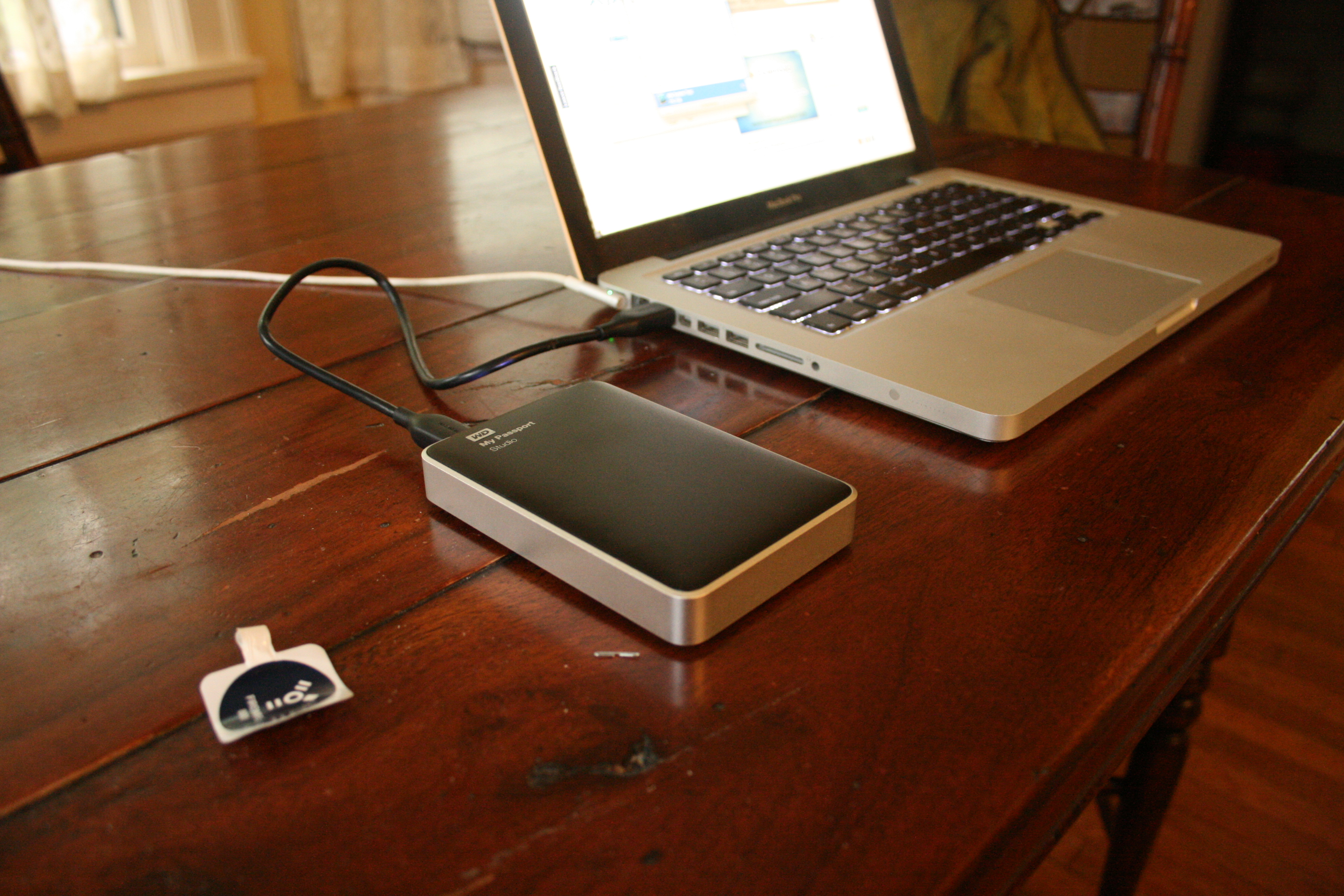
We’ve been messing around with a damn fine looking set of portable hard drives for the past few days from Western Digital called My Passport Studio and My Passport Mac. They are encased in an all-aluminum shell, the My Passport Studio comes with two FireWire 800 ports as well as a Mini USB port around back; the latter only has a Mini USB port. The speed tests on these guys (see results below) was pretty average for 2.5-inch Firewire hard drives at just under 80MB/sec read, making the slight premium Western Digital is asking for these mostly “an aesthetic upgrade”.

…not that there is anything wrong with that. You can feel the quality in these drive enclosures. The aluminum shell is going to protect these from more drops than a plastic casing and these drives look the part of a high quality Mac setup. These drives are also so whisper quiet that the only way to know if they are running is the white LED on the back (much better than the front). As you can see from the pictures, both the Studio (formatted Windows) and Mac go well with a Unibody MacBook.

On the downside, these are slightly heavier than your typical hard drive at half a pound. Still though, that’s a small price to pay for quality. They are available now for $189.99 from Amazon for the Studio and $159 for the 1TB Mac

Press release follows:


Expand
Expanding
Close

$49 MacUpdate bundle ends today, Toast, Data Rescue, FX Studio, more…

Site default logo image

From 9to5Toys.com:

[youtube=http://www.youtube.com/watch?v=MgaVYa42BL0]

Ending today, MacUpdate’s latest $49.99 Mac software bundle is headlined by Roxio’s Toast Titanium optical disc authoring tools (which retails for $100 by itself), the bundle includes Data Rescue (fix corrupt drives – also over $100), FX Studio Pro 2 (we reviewed v1 here) photo effects as well as seven other useful applications and one nice bonus… Details below or at MacUpdate.com.

Update: Craig Reid from Austin Texas won our retweet contest.  MacUpdate is offering one more free bundle available to those who retweet this post by midnight.
Expand
Expanding
Close

Google releases new stable Chrome version, featuring full-screen mode and overlay scrollbars

Site default logo image

Google has announced on the Chrome Blog a new release on the Chrome stable channel. The new release has been available to developers in the dev channel since August, where developers got the chance to use the full-screen mode (Ctrl+Shift+F) and overlay scrollbars inside of Lion. Today, these features have landed for everyone; download it here.

Also landing in the new version are two new technologies for developers: Web Audio API and Native Client. Web Audio API adds the ability for developers to use different audio effects, but even better, Native Client brings the ability to execute C and C++ code in the browser. Check it out in the video after the break:

Download
Expand
Expanding
Close

MacBook Pro refresh coming before Christmas?

Site default logo image

AI reports that the MacBook Pro line will receive minor processor updates before the holiday shopping season.  In fact, they say the updates should come before the end of the month.

According to people with proven insight into Apple’s future product plans, the late-2011 MacBook Pro refresh will deliver marginal speed bumps to the notebooks’ Core i-Series of Sandy Bridge processors but will otherwise introduce no material changes over the existing models.

While precise timing for the update may change, those same people say the Mac maker currently anticipates an introduction of the refreshed line before the end of the month,

The report seems to stem from the recent release of Intel Core i7 2700 series processors fit for use in MacBook Pros (right).

This seems to fly counter to earlier reports from MacRumors that the next update to the MacBook Pro line would be a big redesign.

MacRumors has heard reliable confirmation that the next revision of Apple’s MacBook Pro line will utilize a new case design for the first time in several years.

For what it is worth, we’re seeing no hiccups in the supply chain on current models.  Silent updates aren’t unheard of however.


Expand
Expanding
Close

Apple plans to launch entirely new Mac this year?

Site default logo image

Apple may be planning on unveiling an all new Mac that is “absolutely different from current products”, according to a rough translation from the sometimes reliable macotakara.jp. The site’s track record is less than perfect, however they did accurately predict the iPad 2’s march release.

The report seems to claim the product will be so different from current product lines that it will indeed be given a new name. Other than that, there aren’t many details offered up in terms of specs on the potential next-gen Mac (iOS/OS X hybrid?), but it may be one of the new products Apple is already rumoured to be working on.

It’s a possibility these are the ultra-thin air-like MacBooks we’ve been hearing are in the final stages of testing, or perhaps Apple is designing an all new product that will see a platform switch from Intel to ARM processors. And don’t forget the rackable, stackable Mac Pro and that iMac touch patent,below.

Expand
Expanding
Close

Boxee releases iPad app that features Mac to iPad video streaming

Site default logo image

Boxee has just released a free iPad app that allows users to stream almost any video type from their computer. Streaming features aside, the app is focused at helping users find content to watch online from their friends and what’s popular. Sharing is done through the Friends tab, which is a queue of everything your friends are sharing through Boxee’s social service. There is a also a Popular tab showing what the world can’t get enough of.

The social features are cool, but we really love the Watch Later bookmark you can use to bookmark videos from around the web. The bookmark takes an Instapaper approach and will queue up the videos on your iPad for viewing later. To go along with their Boxee Box, you can also send a video that you were watching on your iPad to your big screen — almost Air Play like.

Check it out in the App Store.


Expand
Expanding
Close

Skype launches HD video calls for Mac OS X Lion with 5.3 update

Site default logo image

Today Skype announced the 5.3 update for Mac OS X which brings HD video calls to Lion among a handful of other UI enhancements and bug fixes. The official Skype blog explains:

With Skype 5.3 for Mac OS X, you’ll also be able to send and receive HD quality video when talking to your friends and family. You’ll need to use the Mac’s built-in webcam or choose from a variety of webcams from our Skype Shop, such as the Logitech C910, to make video calls in crystal clear HD quality. To receive clear HD video calls on your Mac, we recommend an upload/download speed of 1.5Mbps.

While previous versions of Skype, even 2.8, seem to run rather well on Lion, official support should iron out any bugs you’ve been noticing since upgrading. The new update is not only available for Lion users, however, Skype’s blog post notes it is also compatible back to Leopard.

You can grab Skype 5.3 for Mac OS X here. We’ll let you know if we find anything else interesting in this latest update.

Expand
Expanding
Close

Most 9to5Mac Macintosh readers have moved to Lion

Site default logo image

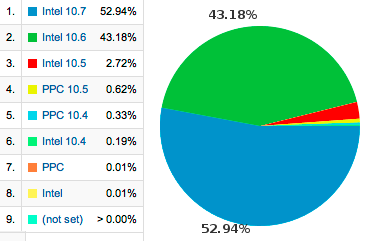
We were just rummaging through our web logs today to see how many of you guys have been upgrading to Lion.  Imagine our surprise when we saw that 53% of Mac users who visit 9to5mac have already done the update.  Here is the breakdown:

Today’s MacOS breakdown on 9to5mac

While our readership isn’t necessarily indicative of the larger Mac community, it does show that you guys have jumped in the deep end in a big way.  We should note that a full 10% of our readers were on Lion on Monday (below), having downloaded it ahead of time.  Apple today announced that a million people had upgraded to Lion overall, making  it the fastest MacOS update in history.
Expand
Expanding
Close

President Obama tweets from Mac during Twitter Townhall

Site default logo image

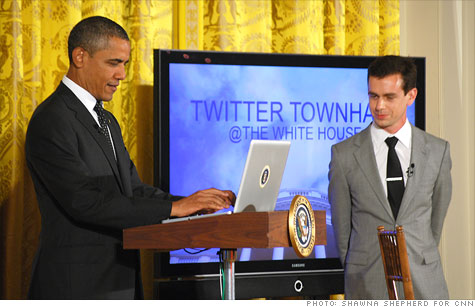
Today, President Obama made history by hosting the first ever Twitter Townhall, with Twitter co-founder Jack Dorsey. During the event, President Obama made the first live presidential tweet ever…on a MacBook Pro.

[youtube=http://www.youtube.com/watch?v=Fe-rIymyxys&start=470]

Besides using a Mac, President Obama shared his praise for Apple, but mentioned that he would love to see device parts manufactured in the United States.

via CNN


Expand
Expanding
Close

WWDC 2011: 200M iOS devices, 14B app downloads and other milestones

Site default logo image

Image credit: Engadget

Apple has kicked off its highly anticipated San Francisco developer conference with a Stevenote. As we’re  learning more about iOS 5, Lion and iCloud and fastening our seatbelt for a possible “one more thing”, other details emerge as Jobs & Co. provide us with some updates related to Apple’s business metrics. Here are your key takeaways…

• three quarters of all Macs shipped today are notebooks
• the Mac App Store has become the #1 place where users get their Mac apps over the past six motnhs
• Apple sold 200 million iOS devices to date, which includes iPhones, iPod touches, iPads and Apple TVs
• 14 billion app downloads so far2

As Steve Jobs and other Apple executives reveal more product news, we’ll report them in our complete WWDC 2011 coverage. You may also want to follow us @9to5mac for the latest from the keynote.


Expand
Expanding
Close

Bento 4 released with label printing, voice memos, geolocation and more

Site default logo image

Mac database application Bento has been updated with several noteworthy features and made its Mac App Store debut. Additionally, companion iPhone and iPad apps, each costing five bucks, have been enhanced with support for Bento 4 for Mac and the ability to record voice memos and sync iCal tasks. Mac folks who own a previous Bento version can upgrade for just $29 with a $20 instant rebate upgrade and newcomers are free to download Bento 4 from the Mac App Store for fifty bucks. Here’s a quick rundown of the new stuff.


Expand
Expanding
Close

Why the Mac still matters to Apple

Site default logo image

COMPUTERWORLD: A note to all the folk out there complaining that Apple isn’t paying any attention to Mac sales– you’re wrong. Just look at the data. Cast your mind back to 2007, perhaps call it up by attempting to remember what your cellphone did for you then. Think back to January that year when Apple CEO, Steve Jobs, introduced the iPhone, then take a look at this data:

READ MORE:

Notes from Tim Cook’s Goldman Sachs talk (Updated with transcript)

Site default logo image


Apple COO Tim Cook spent an hour this afternoon answering analyst questions about Apple.

You can hear the audio here.

Update: We’ve pasted the full text of Cook’s Q&A below:

From SAI

4:08 Clapton’s “Change the World” is playing leading up the presentation. Now “Sunny Came Home.”

4:09 Getting underway. Tim Cook reads disclosure.

4:10 Q&A begins. Steve Jobs was very clear about leadership in mobile devices. Is that how we should think about Apple at this point? Tim Cook: Yes. Let me elaborate. If you look at Dec. quarter results, which included revenues of almost $15.7 billion, as we compared ourselves to every other company in the world, including Sony and Nokia and Samsung, which now have huge mobile device businesses, we found out we were the largest in the world, measured by revenues.

4:11 How are you channeling resources differently? Transition to mobile devices began in 1991 with first introduction of portable product for Apple with introduction of the TFT screen. During that time, the Mac business has become a predominantly mobile device business. Huge difference between us and the balance of the industry in portable share.

4:12 Ah, a history lesson. Going through all the mobile devices Apple has ever launched. Vast majority of Apple’s revenue now comes from mobile devices and content purchased for those devices. Believe we’re well positioned to do extremely well because we can seamlessly offer software and hardware.

4:13 Who are biggest competitors and who are biggest partners? Tim Cook: I wish the world were that simple. Many people you can’t cleanly put in one or another. Take Microsoft. In Microsoft, we love the Mac Office division. They do a great product and we partner with them and work with them very tightly. Most of the balance of Microsoft we compete vigorously against, in OS, in mobile OS, etc. If you look at Google, I would say Google is similar in that respect. We partner with them in maps, in search for most of our products, but we also compete with them in the mobile OS space and now in the hardware phone space. So, it’s difficult to put people in one camp or the other always. There are some companies like the media companies where we partnered with so well that Apple is now selling billions of dollars of digital content.

4:15 Also companies like carriers where we partnered with to bring iPhone to in 86 countries. Ones that draw the most attention are the ones that are more complex, where we’re both competitors and partners.

4:16 Apple TV is still a hobby. We’ve been very clear about that. The reason that we call it a hobby… if you look at the other businesses we’re in, these businesses are all in huge markets. The unit volumes in these things is huge. Apple TV is in a market that’s very small. Today. Apple TV did grow in the quarter we just finished by 35% in a unit basis year-over-year.

4:17 No interest in going into the TV market. But still think there’s something there. So we continue to invest in this as a hobby.

4:18 iMac is very key, will continue to be very key. I think people will continue to want a very gorgeous large screen, all-in-one, simple to use, very elegant machine, we’re going to continue to deliver it.

4:19 Where growth coming from going forward? Here’s the exciting thing. If you take a look at the Mac, the Mac has outgrown the market 20 of the last 21 quarters. 5 years in a row. Has outgrown the market. And in many of those quarters, outgrew it by multiple. The PC industry is over 300 million units per year. Last fiscal year, Mac did over 10 million units. Ceiling is far above. Continue to invest in enormous amount of energy and talent in the Mac. Doesn’t take Market growth. 50% of customers in Apple store are from Windows.

4:20 iPod touch has been a runaway hit, and it helps the platform that you’re talking about. If you look at the iPod touch, it grew 100% last fiscal year. 55% y/y last quarter. Each fuels more app sales, more developers. iPad? Haven’t sold one yet. A lot of interest in it. I’ve been using one for 6 months or so, I’ll tell you the experience is just absolutely incredible. Can’t wait to start shipping it.

4:21 iPhone, I feel we’ve just gotten started.

4:22 Over 3 billion downloads on app store, over 140,000 apps for sale, these are incredible numbers. Who would have dreamed of these? I see opportunity all over the place.

4:23 The word “complete” is not in our dictionary. We’re all about innovation. Many times that means we’re all about obsoleting ourselves. Going to continue to make things better and going to continue to innovate. I’d say the ecosystem is really good, the platform is really good. Certainly all the foundation is in place. Will it get better? Clearly yes. But great now.

4:24 iPad new use case or replacement for netbooks? We haven’t sold one. I’m a paranoid guy by nature, but I’m not losing any sleep over cannibalization, to be honest with you. Who would buy it? I’ve been very clear about my view of netbooks. I think they are an experience that most people will not want to continue to have. People were interested in the price and they got it home and used it and went ‘Why did I buy this?’ so I think when somebody looks at iPad and compares it to a netbook, I find it hard to believe that people are going to buy netbooks. Not everyone will make the comparison so I’m not suggesting that. But I think what I’d rather do with this question is report back to you.

4:26 iPad will launch in direct channel first, and indirect channels where we have assisted sales, such as store-in-store at Best Buy, and Internationally, Apple Premium Resellers. Initially, it will be around places with really great assisted sales. Over time, it will expand. Where it goes and how fast it goes, we’ll see.

4:27 Why so cheap? We didn’t want to leave pricing umbrella for competition. For those who haven’t focused on this, it has best browsing experience you could ever imagine. Very anxious to start getting it out.

4:28 Extended key partnership with AT&T. Can you talk about advantages and disadvantages of having exclusive agreement? The primary advantages on a single carrier model, and I’ll talk about the iPhone, is simplicity and in some cases, we’re able to innovate along with the carrier and provide a feature it would be difficult to work with multiple carriers and provide. We brought visual voicemail to market, which took innovation from Apple and carrier partner. On a multi-carrier model, the question is, can you sell more units? And so what that gets at is, in some countries, carriers have very sticky relationships with their countries, so having more carriers and more distribution allows you to sell more units. If you look where are from the end of our Q1 in December, if you looked at top 10 iPhone countries, 5 were single carrier countries. 3 of those we had a contractual exclusivity, 2 we can add carriers when we desire. Across 2009, we added carriers in France, UK, Singapore, several Scandinavian countries. A great deal of our work on distribution side was expanding carriers in existing countries. Pleasantly surprised that in every single country, our units increased significantly, and our share with it. Feel like we made really good decisions. Not saying we would do it in every country. But that was our experience with the ones we did it in 2009. We do it on country by country basis.

4:32 Would another carrier need to match pricing on iPad to become carrier for it? I think AT&T’s pricing is revolutionary. (Unlimi

ted data for $30/month, 250 MB for $15/month.)

4:33 Talked a little before about virtuous cycle we have with devs. How do you protect user experience as developers go out and develop products? This is the privilege and curse of technology. Same as you’d see in PC world; at some point, if you include every hardware you’ve ever shipped, you stifle innovation. Because we’ve done this for so long, I feel like we’ve come to a really intelligent conclusion on these each time. I think that’s part of our knowledge and heritage as a platform provider.

4:35 Which way is OS market moving? I don’t see it as this or that — iPhone vs. Mac — or this over that. I think there is a place for both. What you’re seeing for Apple is that the Mac OS is very scalable. Huge competitive advantage for Apple. Use the Mac OS in a lot of products. Don’t think there’s another company that can use the foundation of their OS that way. Move at a fast speed with many fewer people than it would take if we were geographically north. (Slap at Microsoft.)

4:36 Our surveys indicate Mac and iPhone are attracting significant interest in enterprise. What are you doing?

4:36 For the iPhone, 70% of Fortune 100 companies in US are either deploying iPhone or currently testing for deployment. 50% of the FT 100 are doing the same thing. Huge uplift in interest as we went to iPhone 2.0 software and then 3.0 because we put a number of enterprise features in the software. We clearly see this continuing. On Mac side, amazing how many CIOs are now visiting Apple and are interested in the Mac. We haven’t put on a huge channel, and don’t have a huge sales force, but many CIOs that once thought standardization was the most important thing in life, they now look at salaries of people and the importance of having peoples’ creativity at peak, and are increasingly allowing employees to decide. This helps Apple immensely.

4:39 I think people in general and they think enterprise is bigger than consumer. But it’s not. In PCs, it’s 10%, which is sizable, but consumers are over 50%. Our heart and soul and DNA is in consumer. It just so happens there are consumers working in enterprises who want to use these products.

4:41 People are looking at this differently. At least the people with a lot of vision are.

4:41 Just short of 300 stores. Ron Johnson has built a retail team Bar None. We went into retail not as a test, not as pilot, but to sell to consumers, because many wanted it. We knew we’d never have enough stores to cover the world. So after we got going, we set a range of 25-50, reasonable range we could execute really well. Made a strategic call in 2008, we thought we’d see many more opportunities — some top properties would come on the market with better economics. And guess what? Now, there’s a lot of great properties on the market. So we’re going to do about 50 this year. We’ve always had the team to do 50. It’s not easy to do, it’s very hard to do. But we’re going to do it. We didn’t lower the bar at all. These stores are among the best we’ve ever done. If you haven’t been to NYC Upper West Side store, it will make your jaw drop. Next time you’re in Paris, go to the Louvre; it’s just amazing. Another store in China in Shanghai in the summer that is mind blowing. Another one in London that will also drop your jaw.

4:45 New chip. Apple has been in silicon design business for years. Not new to us to be in silicon design business. As we looked at some of the products that we are doing like the iPad, and some we will do in the future, we felt that we had the best knowledge of what we wanted the silicon to do. And were in the best ability to deliver that ourselves versus going out to somebody else and buying something that wasn’t exactly what they wanted.

4:47 Acquisition strategy: Historically, we have acquired companies for technology and talent. And they have been on the small size. We’ve looked at large companies, but we have not had a large company pass a strategic and a financial test. We don’t let our money burn a hole in our pocket. Unless we find something that really makes sense for Apple shareholders, we’re not going to do it. The small ones have been incredibly valuable for us, mainly from the talent POV, but also from technology. If we find a large one, we won’t be shy about it. But we won’t do it to do it. We have never been about being the biggest, we’ve always been about making the best products. Not having highest market share or most revenue. Acquiring something that makes our revenue go higher wouldn’t be a reason why we’d buy a company.

4:49 How do you stop hubris from creeping in? Executive team in the company spends a lot of time thinking and discussing how to retain and recruit the best talent in the world. At the end of the day, I know it’s a cliche, but people are our most important asset in the world by far. It’s people who deliver innovation. We are the most focused company that I know of or have read of or have any knowledge of. We say no to good ideas every day. We say no to great ideas in order to keep the amount of things we focus on very small in number so that we can put enormous energy behind the ones we do choose. The table each of you are sitting at today, you could probably put every product on it that Apple makes, yet Apple’s revenue last year was $40 billion. I think any other company that could say that is an oil company. That’s not just saying yes to the right products, it’s saying no to many products that are good ideas, but just not nearly as good as the other ones. I think this is so ingrained in our company that this hubris you talk about that happens to companies that are successful and sole role in life is to get bigger, I can tell you the management team at Apple would never let that happen. That’s not what we’re about. Small list of things to focus on.