Opinion pieces & commentary
See All Stories

Opinion pieces are intended to provide interesting perspective on an Apple-related topic, and to be an entertaining read. They represent the opinions of their authors, and not of the site as a whole: this is the reason we don’t label them as editorials.

We use the ‘Opinion’ prefix for longer pieces, and ‘Comment’ for shorter pieces that may be making just a single observation.

We fully encourage discussion and debate on opinion pieces, and you are of course welcome to strongly disagree with both the author and other commenters. All we ask is that you apply the golden rule to your interactions: treat others as you’d wish to be treated. In particular, debate the topic not the person – it’s absolutely fine to say that you think someone is completely wrong because x, y and z; it’s not ok to call their views idiotic.

That said, we love to hear your thoughts and views, and really appreciate those who take the time to give their considered opinions.

Opinion: Here’s what I’d do to rationalize Apple’s MacBook lineup

Site default logo image

Apple has long been about simplicity and minimalism. Steve Jobs’ philosophy was effectively that usability trumps choice. Sure, you lose the ability to customize your iPhone or iPad in the way you can an Android device without jailbreaking it, but what you gain in return is a device that is both more reliable and a lot more secure.

Jobs applied that same philosophy to Apple’s product range. When he returned to Apple in 1997, one of the first things he did was to rationalize the company’s product lineup, paring it back to the essentials. In 2008, he proudly told Fortune that “Apple is a $30 billion company, yet we’ve got less than 30 major products.”

Apple has, for the most part, maintained that approach ever since, famously saying ‘no’ to a thousand product ideas for every time it says ‘yes.’ But I still think there’s a little more work to be done in terms of rationalizing the company’s MacBook lineup …


Expand
Expanding
Close

Opinion: The three things I think Apple needs to do to unlock the full potential of Touch ID

Site default logo image

I mused recently about the limited support for 3D Touch, not just from third-party developers but even by Apple itself. That’s not something I consider a huge deal: the novelty appeal of 3D Touch soon wore off for me, and I decided I could happily live without it when switching from the iPhone 6s to the iPhone SE. It was just something that struck me as odd.

But exactly the same issue exists with Touch ID, and that’s something I do think is a big deal.

Passwords are horrible. They were fine way back in the days when we only needed a handful of them, but these days you need a password to do everything from transferring photos from a camera to an iPad through to ordering a pizza. We probably each have hundreds of the darned things.

And passwords are especially horrible on iOS devices – where we have to switch an on-screen keyboard between letters, numbers and symbols multiple times to type a single password. That’s a problem that ought to have been almost completely solved by Touch ID – yet that’s not the case …


Expand
Expanding
Close

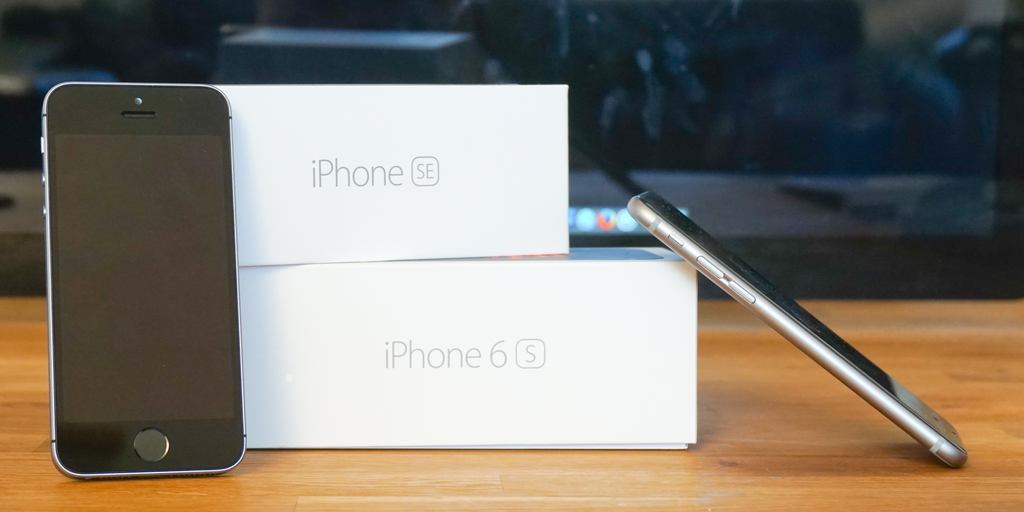
iPhone SE diary: It’s day 5, and my decision is already made

I use this diary format to provide my take on iDevices for three reasons. First, because initial impressions can be misleading. Second, because tastes, of course, vary. And third, in recognition of the fact that you can’t really look at a single device in isolation – we also need to understand the role it plays in our own personal Apple ecosystem.

If I were looking to have just two devices – a laptop and a phone – then there would be only one sensible choice for me: the iPhone 6s Plus. As a pocket computer (which is of course what the iPhone is), the iPhone 6s Plus is an extremely capable device which offers an excellent compromise between a smaller iPhone and an iPad.

But, for me, that would be too great a compromise. I’d be giving up the ability to carry it in most trouser pockets (YTrousersMV) without gaining the usability benefits of an iPad-sized screen. It is, to me, a little too large for comfortable handling and a little too small for comfortable viewing and typing.

I am, though, in the fortunate position of not having to make that kind of compromise. I have an array of iDevices, so I’m able to assign each a much more specific role – something which has a significant impact on my perception of the relative pros & cons of the iPhone 6s versus the iPhone SE …

Expand Expanding Close

iPhone SE diary: Day 1, first impressions

I had two immediate impressions when first picking up the iPhone SE. First, ‘wow this feels small!’. Having gotten used to the iPhone 6 and 6s as the new normal, the SE really does feel like an iPhone mini when you first handle it.

But the second, which followed seconds later, was ‘… in a good way.’

I’m old enough to have used the very first mobile phones, which were ginormous. For many years, the primary goal of manufacturers as they introduced successive models was to make them smaller and smaller. Smaller was newer, sexier and more hi-tech.

Picking up the iPhone SE gave me that feeling all over again. It didn’t feel like a step down, it actually felt like a step up. It was like ‘wow, Apple has managed to fit (almost) all of that 6s tech into this much more pocketable phone.’ And yes, this thing fits sideways into jeans pockets, and gives no sense of being at risk of falling out of other trouser pockets while cycling.

My third impression – and I think this is something I could only say to a tech audience like you, because you’ll understand – was feeling like I was welcoming back an old friend. I remembered how much I love this design. It truly is a classic that looks every bit as great today as it did when it was first introduced …


Expand
Expanding
Close

iPhone SE first impressions: Migrating from the iPhone 6s Plus is huge

Site default logo image

My experience with using every iPhone and iPad screen size to date has taught me two things: one size does not fit all, and you can usually get used to using any screen size if you use it long enough. The tricky part is that it’s not super easy to know immediately which screen size is right for you, and using any one screen size for an extended period of time tends to make it feel normal.

iPhone displays were at first large by most standards at 3.5-inches diagonally in 2007; BlackBerry “smartphones” had tiny displays and large keyboards. Android handsets gradually raised the scope of what qualified as a phone, pressuring Apple to go bigger with the 4-inch iPhone 5 in 2012. Then even bigger and much bigger in 2014 with the iPhone 6 and iPhone 6 Plus.

I spent just a few days with the 5.5-inch iPhone 6 Plus before I decided I needed to exchange it for the 4.7-inch iPhone 6, but after a year with that screen size I decided to size up with the iPhone 6s Plus last September. The experience has been mostly okay as I really think we can all get used to any screen size (even 3.5-inch!), but extended use this go around has made the drawbacks for me very clear. More on that below, but as promised I’m venturing over to the 4-inch iPhone SE at least until the new iPhones come out in September. These are my day one observations after making the jump:


Expand
Expanding
Close

Opinion: Why the FBI accessing the San Bernardino iPhone doesn’t mean it’s all over

See italicised updates below, with statements from both the Department of Justice and Apple.

The battle between the FBI and Apple over accessing a work phone used by one of the San Bernardino terrorists started as headline news and ended in a rather anti-climactic fashion.

The high-profile congressional hearing was due to be followed by a big showdown in court. Instead, the FBI asked that the hearing be vacated, and later quietly announced that it had, with help, managed to gain access to the phone. Nothing to see here, move along.

But while this particular case may be settled, it’s extremely unlikely that this will be the end of the matter – for two reasons …


Expand
Expanding
Close

Opinion: Apple Music in major need of search improvements as Apple plans more original video content

Before Apple Music even launched on iOS I knew there would be a difficulty in finding a way to balance the iTunes Store, Apple Music, and a user’s current music library. What I never expected was how long it would take for Apple to begin addressing the issues that were introduced. The most exasperating part of Apple Music on iOS has to be searching for video content. Nearly every time I search for a specific video (music video or otherwise), I end up getting frustrated and just head to iTunes on my computer instead.


Expand
Expanding
Close

Opinion: Unpacking Apple’s March event, pre-ordered iPhone SE, and tech spring cleaning

Site default logo image

Well, I did it. After absorbing the March event on Monday and unpacking it with Benjamin on the 9to5Mac Happy Hour podcast this week, I set my alarm for 1:58 am last night and pre-ordered the iPhone SE. Based on Mark’s reporting, I had an early feeling that the iPhone SE would be compelling (aside from color, the iPhone 5c never was to me) and overall Apple delivered.

The FaceTime selfie camera is a bit disappointing and the display contrast is weak, but the price points for 16GB and 64GB had a surprise and delight effect that I wasn’t expecting. So in one week I’ll make the giant leap back down from a 5.5-inch iPhone to a 4-inch one. Expect my thoughts on that experience in a couple of weeks. I’ll also share my iPhone SE review after some testing so send any questions or ideas over; I’m primarily interested in comparing it to the iPhone 5s and measuring the differences.

And now that I’ve had a few days to digest this year’s March Apple event, I have a few thoughts on everything it contained including Apple’s new Woven Nylon bands, the differences between the two iPad Pros, and a comment on tech spring cleaning …


Expand
Expanding
Close

Opinion: iPhone 7 should be imaginative, not status quo, or risk spectacular fail

Site default logo image

Walt Mossberg, “Friend of Apple” and Personal Technology Columnist at The Verge, is out today with his take on the iPhone SE announcement from Monday. His not terribly hot take?

Ouch. That’s not a great sign. Neither is the fact that Apple’s Chief Design Officer Jony Ive didn’t make the 2-building over commute to see the show.

We, however, thought the iPhone SE $399 price was a big deal. Its incredible power in small size was unprecedented and frankly lustworthy.

But Mossberg glossed over any meaningful discussion of the SE and instead ultimatum-ed a wishlist for the iPhone 7…
Expand
Expanding
Close

Opinion: The iPhone SE is a smart, long-term move – and creates the prospect of a $299 iPhone

I argued a couple of months ago that ‘peak iPhone’ was likely a temporary phenomenon, but that Apple might have to be willing to accept lower margins if it is to continue to grow its sales.

I think it will also need to learn to be a little more flexible when it comes to its profit margins, especially in growth markets. That ~40% markup has served it well for a great many years, but I don’t think it can necessarily expect to maintain it indefinitely.

Yesterday, the company indicated its willingness to do just that. For the first time, Apple’s entry-level phone is a brand-new device that offers close to flagship specs at a price level close to the previous-generation phone. That will hit Apple’s margins on the device for sure, but the company is looking to the long-term …


Expand
Expanding
Close

Comment: Dissing owners of older PCs, even accidentally, may not be the best way to sell them an iPad

Site default logo image

One remark Schiller made during yesterday’s launch event raised a few eyebrows. In noting that the majority of 12.9-inch iPad Pro customers had actually switched from Windows PCs, he pointed to the huge potential switchers market still out there for Apple. There are, he said, over 600 million PCs more than five years old.

What he said next generated laughter in the room, but may not have gone down quite so well with those owners.

This is really sad. It really is.

Now, he may be right. A Windows PC more than five years old is going to be creaking somewhat by now. But it seems to me that there are three types of owners of old PCs, and the remark may well offend all of them …


Expand
Expanding
Close

Opinion: Should Apple be more aggressive in its defensive PR to correct misleading allegations?

When the celebrity nudes story broke back in 2014, it was headline news in the mainstream media. The story was that ‘iCloud had been hacked.’ The truth, of course, was a little different. As we suspected at the time, and Apple later confirmed, the ‘hack’ wasn’t really any such thing. A combination of two techniques were used to gain access to the iCloud accounts.

First, phishing: sending emails designed to look like they were from Apple asking the celebrities to login to their accounts, and directing them to a fake website made to look like the real thing. Second, guessing the answers to security questions – something easier to do with celebrities given the amount of biographical information available in the public domain.

That’s not to say Apple was entirely blameless. iCloud did not, at the time, offer two-factor authentication. Given that an iCloud backup is a near-complete copy of all the data stored on an iPhone, that was something which should have been included from the start. But the bottom-line is that iCloud itself wasn’t really hacked in any meaningful sense of the word.

It was this week confirmed that phishing was the approach taken by the main offender in this case. In other words, nothing whatsoever to do with iCloud security. This news hasn’t resulted in a single headline in the mainstream media. The average non-tech person out there still believes ‘iCloud was hacked’ …


Expand
Expanding
Close

Opinion: This is what the 4-inch iPhone SE needs (and doesn’t need) for me to downsize

Site default logo image

Apple’s March 21st event is just five days away and we have a comprehensive rundown on what to expect including details on the new 4-inch iPhone SE. As I’ve previously written about and discussed on 9to5Mac’s Happy Hour podcast, rumors of a smaller iPhone with modern specs sound mighty compelling to me for multiple reasons.

But the iPhone SE isn’t a 4-inch iPhone 7 (or a 4-inch iPhone 6s for that matter) which does dilute the appeal a bit for me. Based on what we currently know, however, I’m likely going to switch from the iPhone 6s Plus to the iPhone SE — at least for a while — but I’m drawing my line in the sand now on what the new 4-inch iPhone would need to have for me to really consider it.


Expand
Expanding
Close

Poll: Will you upgrade to the iPhone 7 if the design is largely the same as the 6s?

Site default logo image

While we’re still a ways off from the announcement and subsequent release of the iPhone 7, early rumors have suggested that the device will largely feature the same design as the iPhone 6 and iPhone 6s. This goes against Apple’s general habit of refreshing the design of its flagships every other year, so we’re curious: Would you upgrade to the iPhone 7 if the design was largely the same as the iPhone 6 and iPhone 6s?


Expand
Expanding
Close

Opinion: Why Apple is likely to end up paying that estimated $8B European back-tax bill – and more

The European Union warned us this week not to expect a speedy conclusion to the long-running investigation into the legality of Apple’s tax arrangements in Europe. The delay follows a decision back in December to expand the scope of the investigation.

But while the wheels of EU tax investigations may grind exceedingly slowly, I’d be willing to wager quite large sums of money on the final outcome. It looks to me increasingly clear that Apple’s tax arrangements with the Irish government are going to be declared illegal, and that Apple is going to be faced with a significant bill for unpaid tax …


Expand
Expanding
Close

Opinion: Why the final e-book ruling was right in theory but wrong in practice

Site default logo image

Well, the e-book case that began in 2012 when the US government accused Apple of price-fixing finally ended yesterday  when the Supreme Court declined to hear Apple’s appeal. That left the original ruling intact, meaning that Apple is officially guilty of anti-competitive behavior and will have to fork out $450M in compensation.

There’s no doubt in my mind that the correct result was reached in law. Apple did deliberately set out to fix prices, it did strike secret deals, and it did intend to manipulate the e-book market. Emails from Steve Jobs confirmed the government’s claim that Apple struck the deals in the belief that consumers would end up paying more for e-books.

Throw in with Apple and see if we can all make a go of this to create a real mainstream ebooks market at $12.99 and $14.99. [Up from the typical $9.99 at the time.]

So far, so good. If you’d brought that evidence to me at the time Apple did the deals, I’d have agreed with the government that the company’s behavior was both illegal and morally wrong. But I’d argue that by the time the case was finally brought to court, it was already abundantly clear that it was not in the public interest to pursue it …


Expand
Expanding
Close

Opinion: Could Google’s Hands Free payment be the one mobile wallet service to challenge Apple Pay?

There have been many attempts at mobile wallet products over the years, from letting your phone simulate a swipe of your magnetic strip through NFC-based replication of contactless cards to the laughable CurrentC that relies on scanned QR codes. Over on Android phones, there’s Google Wallet, Android Pay and Samsung Pay – along with a whole slew of smaller competitors.

But for iPhone users, Apple Pay is the undisputed champion. Security is unrivalled. Your card details are never stored at all, replaced with a unique Device Account Number. That number is stored in the Secure Enclave. And a one-time code is generated for every single transaction.

Convenience too is maximized. iPhone users need only hold out their iPhone with their thumb or finger on the Touch ID button, while Apple Watch owners simply raise their wrist to the reader. I didn’t think there was any way to improve on it, but Google may be about to prove me wrong with its Hands Free service …


Expand
Expanding
Close

Opinion: Apple won yesterday’s FBI hearing 7-5, but also scored the knockout punch

There were a few face-palm moments in yesterday’s House Judiciary Committee hearing, from committee members who appeared not to know what encryption is to Apple’s lead lawyer Bruce Sewell having to make a hasty switch from his iPad Pro to paper when the device apparently failed. (Some suggested it may simply have timed-out and auto-locked, but it’s unclear why he wouldn’t use Touch ID to let himself back in.)

Overall, though, it was a serious discussion of the issue, with each side making its points in a calm, rational manner and being subjected to many probing and intelligent questions.

It wasn’t a one-sided battle by any means. FBI Director James Comey made some solid arguments that clearly hit home. But my view is that Apple not only won on points, but also scored the knock-out blow …


Expand
Expanding
Close

Opinion: Why Apple’s sales-based retail reward scheme is a bad way to boost iPhone numbers

Site default logo image

Mark Gurman revealed on Friday that Apple has introduced a new reward program designed to boost iPhone sales in Apple Stores.

The program’s goal is to push Apple retail employees to sell more iPhones by promising rewards and all-expense paid vacations to Cupertino, California to employees who sell the most iPhones in their region, according to sources.

I do, of course, recognize the pressure Apple is under following flat iPhone sales last quarter and the company warning that its revenue will this quarter see its first ever year-on-year decline since 2003. But Tim Cook has himself repeatedly claimed that Apple focuses on making great products rather than sales numbers, repeating this line earlier this month.

Offering staff incentives to push iPhone sales strikes me as a mistake with the potential to damage the company’s image …


Expand
Expanding
Close

Opinion: Why an iPhone master key is better than a backdoor, but still too dangerous

Discussing the FBI case with a friend yesterday, one distinction that seems worth addressing is the difference between a backdoor into iPhones – which is what law enforcement agencies have so far been calling for – and what we might term a master key, which is what the FBI is calling for in this particular case.

Law enforcement agencies have so far been calling for Apple to abandon its use of strong encryption. Technically, they want Apple to build in a backdoor route into that encryption for use by law enforcement agencies, but that’s the same thing: strong encryption with a built-in flaw is not strong encryption. It’s only a matter of time before hackers find and exploit it.

What the FBI is asking in the San Bernardino case is quite different. Instead of asking Apple to weaken the encryption, they want it to weaken the lock guarding access to the phone by removing the auto-wipe and time-delay functions. That would leave the phone vulnerable to a brute-force attack.

And, the FBI assures us, it isn’t asking Apple to do this for all iPhones, just this one specific device. It’s a very different scenario, and one that sounds superficially harmless …


Expand
Expanding
Close

Opinion: Apple’s software bugs may be overplayed, but they do still need faster fixes

Site default logo image

No one will be surprised to hear that I greatly prefer Apple’s platform to those of competitors. I’ve often argued that if you want a single ecosystem where everything Just Works across devices, Apple still has a significant lead, even if other platforms are gaining ground.

But that doesn’t mean I think Apple’s own platform is perfect. There are reliability issues that mean the platform doesn’t always live up to that Just Works ideal, and there are annoyingly persistent bugs which the company doesn’t seem in any hurry to fix.

In a podcast interview on Friday, Eddy Cue and Craig Federighi argued that while all software has bugs, the sheer number of users means that complaints are “amplified,” making them appear more prevalent than they are in reality. There may be some truth in this – at least on the iOS side – but I’d argue that Apple allows known bugs to persist through too many platform and app releases …


Expand
Expanding
Close

Feature Request: 7 ways Apple Music Connect could be improved to prevent it from being the next Ping

Site default logo image

Apple’s history when it comes to social networks is not the brightest. The company launched the infamous Ping social networking tool back in 2010, only to shut it down two years later. This year, alongside the announcement of the highly anticipated Apple Music streaming service, the company launched Connect, a different take on a social network based entirely around music. Connect is much different from traditional social networks like Twitter and Facebook, though.

To unveil Connect, Apple brought out popular hip-hop artists Drake, who gave the service a ringing endorsement, as well as Trent Reznor. Drake touted that the service would provide a revolutionary way for artists to interact with their fans, but 8 months after the launch of Connect, it has yet to catch on with artists and listeners alike. Likewise, the feature hasn’t really received any updates or improvements from Apple in that time period either and there are certainly things that could be improved. Read on to find out some ways in which Apple Music could be enhanced…


Expand
Expanding
Close

Opinion: Why Apple’s releasing an iPhone 5se, not a 4-inch iPhone 7

Site default logo image

Holdouts awaiting a modern 4-inch iPhone have a lot to look forward to with the expected iPhone 5se next month. A mix of iPhone 6 and iPhone 6s technology in a one-hand friendly, iPhone 5-sized case.

It sounds compelling enough that I’ve already considered parting ways with my giant iPhone 6s Plus megaphone and returning to the days of easily pocketable iPhones next month. But based on what we know now, the “upgrade/downgrade” depending on how you look at it would mean losing 3D Touch and a 128GB storage option. That’s not a huge deal for me, especially with Live Photos as an expected feature, but dropping from the 6s cameras back to the 6 cameras really sours the deal for me.

While 4-inch iPhone fans will likely be plenty happy with the iPhone 5se next month and the mid-cycle release is an interesting new strategy, a 4-inch iPhone 7 released in the fall alongside the expected 4.7-inch and 5.5-inch upgrades with comparable specs would simplify the buying decision for me. Here’s why I don’t think that will happen anytime soon (and how Apple could pull it off).


Expand
Expanding
Close

Opinion: Apple should lead iOS feature adoption, encourage major players to follow

Site default logo image

There’s been a lot of conversation this week around the quality of Apple’s software and services, and yesterday’s brief App Store outage certainly didn’t help. It’s true that new services like Apple Music and iCloud Photo Library are improving but aren’t rock solid yet, but there are two things that currently sour the app experience for me.

First, Apple only does a so-so job of implementing new software features from operating system updates into their own apps. It’s too easy to rattle off a dozen examples. Second, major players like Facebook and YouTube don’t have first class apps that showcase new software features either, and this is where customers spend the most amount of time.


Expand
Expanding
Close