Wildly long terms of service that normal humans don’t read – but usually agree to – have been used by tech companies including Apple for decades. Now lawmakers have introduced a new Congressional bill that would require websites, app-makers, and others to provide a TL;DR (Too Long; Didn’t Read) section in “easy-to-digest language” explaining terms as well as any “sensitive personal data they collect.”
Just a day after a prominent legal expert described the proposed anti-encryption Burr-Feinstein bill as unconstitutional, unenforceable and harmful, Apple has called the proposal ‘well-intentioned but ultimately unworkable.’
The description is in an open letter from the Reform Government Surveillance coalition, of which Apple is a key member, alongside companies such as Google, Dropbox, Facebook, Microsoft and Twitter. The letter, addressed to the two Senators behind the proposed bill, explains why it would be harmful to the interests of both the U.S. people and American businesses …
While the FBI abandoned its court case against Apple, the dispute of course still rumbles on in Congress, with hearings today and a proposed bill to force U.S. tech companies to break encrypted devices on demand. But at least one legal expert thinks the Feinstein-Burr bill is deeply flawed, arguing that it is unconstitutional, unenforceable and would harm U.S. investigative capabilities.
And not just any legal expert: you can’t really ask for better credentials in this area than those of Paul Rosenzweig.
Paul Rosenzweig is the founder of Red Branch Consulting PLLC, a homeland security consulting company [and] formerly served as Deputy Assistant Secretary for Policy in the Department of Homeland Security. He is a Distinguished Visiting Fellow at the Homeland Security Studies and Analysis Institute. He also serves as a Professorial Lecturer in Law at George Washington University [and] a Senior Editor of the Journal of National Security Law & Policy.
In a blog post on Lawfare, Rosenzweig sets out the three problems he sees with the Feinstein-Burr bill …
In what feels like a never-ending battle, Apple and the FBI will once again testify in Congress next week regarding encryption. Reuters reports that Apple general counsel Bruce Sewell and FBI executive assistant director Amy Hess will testify on separate panels before House Energy and Commerce subcommittee next Tuesday, April 19th.
A proposed law that would force Apple and other tech companies to decrypt devices for law enforcement agencies has reached the stage of a draft bill – but one Senator has vowed to filibuster it. A filibuster is when a parliamentarian makes a lengthy, uninterrupted speech which results in running out of time to debate the bill, causing it to fail.
The Senate Intelligence Committee first proposed to introduce the bill in February, and the FBI lent its support by briefing two sponsoring senators. However, many lawmakers oppose the bill, and it has been reported that the White House will not publicly support it.
The Verge now reports that one senator has pledged to filibuster the bill if it gets as far as a Senate debate …
There were a few face-palm moments in yesterday’s House Judiciary Committee hearing, from committee members who appeared not to know what encryption is to Apple’s lead lawyer Bruce Sewell having to make a hasty switch from his iPad Pro to paper when the device apparently failed. (Some suggested it may simply have timed-out and auto-locked, but it’s unclear why he wouldn’t use Touch ID to let himself back in.)
Overall, though, it was a serious discussion of the issue, with each side making its points in a calm, rational manner and being subjected to many probing and intelligent questions.
It wasn’t a one-sided battle by any means. FBI Director James Comey made some solid arguments that clearly hit home. But my view is that Apple not only won on points, but also scored the knock-out blow …
In the ongoing controversy over Apple’s refusal to unlock the San Bernardino suspect’s iPhone on behalf of FBI, today Apple’s General Counsel Bruce Sewell will appear before the House Judiciary Committee at a hearing titled “The Encryption Tightrope: Balancing Americans’ Security and Privacy,” as will FBI Director James Comey.
A live stream of the hearing (embedded below) will begin today at 9:30AM PT/12:30PM ET. Expand Expanding Close
Attempts by states like California and New York to ban the sale of encrypted phones could be overruled by federal law. The Verge reports that a cross-party bill is being introduced today in Congress by Rep. Ted Lieu (D-CA) and Rep. Blake Farenthold (R-TX).
The ENCRYPT Act of 2016, or by its longer name, the Ensuring National Constitutional Rights of Your Private Telecommunications Act, would preempt state and local government encryption laws. The two men said today they are “deeply concerned” that varying bills surrounding encryption would endanger the country as well as the competitiveness of American companies. The argument is that it wouldn’t be easy or even feasible to tailor phone encryption capabilities for specific states.
New York last month kicked off the attempt to ban the sale of encrypted phones in the state unless the manufacturer built in a back door, with a virtually identical bill proposed in California later the same month. The moves – which would effectively outlaw the sale of current iPhones in both states – followed similar proposals in the UK last year …
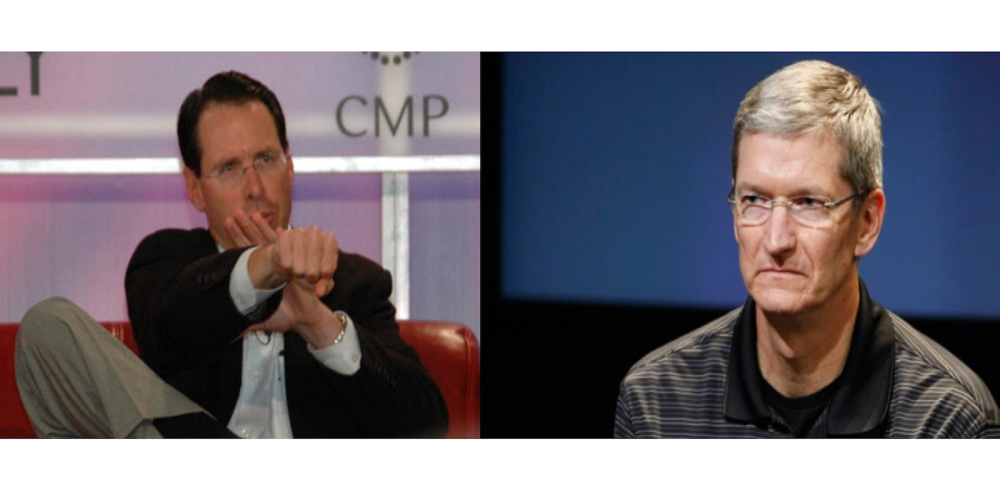
AT&T CEO Randall Stephenson is the latest to weigh in on the issue of data encryption policy with the executive telling The Wall Street Journal that Apple CEO Tim Cook and other tech execs should leave the decision making on encryption policy up to Congress:
“I don’t think it is Silicon Valley’s decision to make about whether encryption is the right thing to do. I understand Tim Cook’s decision, but I don’t think it’s his decision to make”… I personally think that this is an issue that should be decided by the American people and Congress, not by companies,”
…The AT&T chief said his own company has been unfairly singled out in the debate over access to data. “It is silliness to say there’s some kind of conspiracy between the U.S. government and AT&T,” he said, adding that the company turns over information only when accompanied by a warrant or court order.
That statement follows a meeting among Cook, other Silicon Valley executives and White House officials last week to discuss topics related to encryption policies and government access to data.
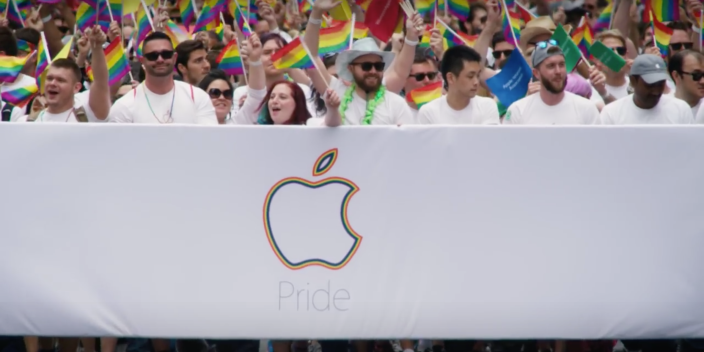
Apple is officially putting its weight behind new LGBT anti-discrimination legislature currently being proposed in Congress. The company said in a statement to the Human Rights Campaign that it actively supports the Equality Act.
At Apple we believe in equal treatment for everyone, regardless of where they come from, what they look like, how they worship or who they love. We fully support the expansion of legal protections as a matter of basic human dignity.
Apple’s support for the bill that would expand federal protections in the workplace to LGBT Americans in all states follows several years of Apple CEO Tim Cook calling on Congress to pass such legislation, and Apple’s backing is in line with its own company policies. Expand Expanding Close
Bloomberg reports that groups representing Apple, Google, Facebook and other high profile tech companies are lobbying to pass a new bill that attempts to limit NSA spying of email and communications of their users. The report says the groups are “pushing the Senate to pass legislation limiting National Security Agency spying before the Republican majority takes control of the chamber.” The news comes ahead of the Senate vote on the new bill scheduled for Nov. 18 and an upcoming Republican controlled Congress taking over in January: Expand Expanding Close
In a rare move, Apple CEO Tim Cook has written an opinion article in the Wall Street Journal. Tim Cook discusses his feelings about race, gender, nationality, and sexual orientation equality in the context of life inside of and outside of Apple. Cook says that Apple fosters an environment where every single person is safe and welcomed. He goes on to share details about this and Apple’s policies:
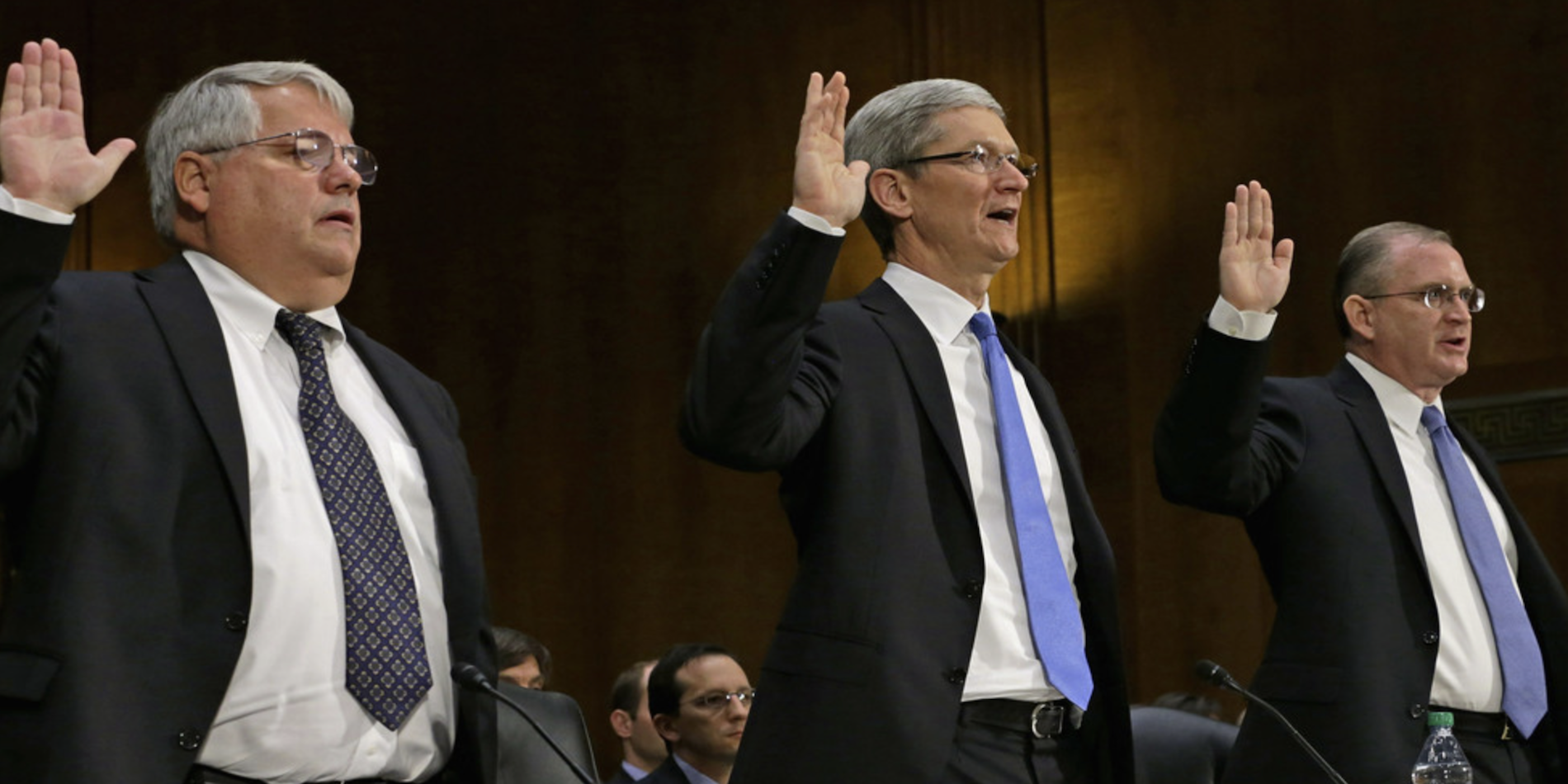
Before either Apple CEO Tim Cook or Apple CFO Peter Oppenheimer took the stand to testify on behalf of Apple to defend the company’s tax practices, Senator Rand Paul of Kentucky lashed out on Senator John McCain and Senator Carl Levin for the “spectacle of dragging in here executives from Apple using the brute force of government to bully a great success story.”
Senator Paul, a notable Tea Party leader and son of Representative Ron Paul, is often outspoken on issues of tax reform and made no effort to align for his Republican colleague Senator John McCain.
Chairman Levin didn’t hesitate to bring the narrative against Apple and its tax practices back to the center stage soon after Senator Paul’s comments.
In the testimony, Apple proposed what it called comprehensive corporate tax reform that should: Be revenue neutral, eliminate all corporate tax expenditures, lower corporate income tax rates; and implement a reasonable tax on foreign earnings that allows free movement of capital back to the US.
While some Subcommittee members may have differing views on these tax policy matters, Apple hopes the Subcommittee will see that these recommendations aim to create meaningful change and go well beyond what most US companies propose. As both a pioneer and participant in the American innovation economy, Apple looks forward to working with the Subcommittee on its efforts to encourage comprehensive reform of the US corporate tax system. Apple appreciates the opportunity to appear before the Subcommittee to contribute constructively to this important debate.
Apple also detailed the company’s current tax practices and noted it “made income tax payments to the US Treasury totaling nearly $6 billion – or $16 million per day.” Apple points out that, at a rate of 30.5%, that accounts for around “$1 out of every $40 of corporate income taxes collected by the US Treasury last year.”
Apple continued by commenting on its recent decision to borrow $17 billion in debt instead of repatriating offshore funds to help fund its shareholder return: Expand Expanding Close
Tim Cook and Apple tend to avoid any public discussion aside from comments during quarterly earnings calls, but it seems the company is on a PR offense leading up to next week’s public hearings.
“We don’t have a large presence in Washington, as you probably know, but we care deeply about public policy and believe creative policy can be a huge catalyst for a better society and a stronger economy.”
Cook went on to defend Apple against any accusations that may come its way next week.
“I can tell you unequivocally Apple does not funnel its domestic profits overseas. We don’t do that. We pay taxes on all the products we sell in the U.S., and we pay every dollar that we owe. And so I’d like to be really clear on that.”
The Apple CEO also noted the company’s $100 million project to produce a Mac line in the United States this year, which the company says will add jobs to the economy. Expand Expanding Close
Following a statement from the White House on Monday confirming it would support “narrow legislative fixes” to make unlocking cellphones legal again, several lawmakers have announced plans to introduce legislation. According to a report from The Hill, Senate Judiciary Committee Chairman Patrick Leahy and Chair of the Judiciary Committee’s Subcommittee on Antitrust, Competition Policy, and Consumer Rights Senator Amy Klobuchar have confirmed they will introduce bills in support of the legalization of cellphone unlocking:
“I intend to work in a bipartisan, bicameral fashion to restore users’ ability to unlock their phones and provide them with the choice and freedom that we have all come to expect in the digital era,” Leahy said in a statement.
The Judiciary Committee, which handles copyright issues, would likely have jurisdiction over any bill to legalize cellphone unlocking.
Sen. Amy Klobuchar (D-Minn.), who chairs the Judiciary Committee’s Subcommittee on Antitrust, Competition Policy and Consumer Rights, said she plans to introduce her own bill this week.
During a recent panel discussion on Capitol Hill, other lawmakers voiced their support for the legislation, including Representatives Darrell Issa and Jared Polis, while The Hill reported the Federal Communication Commissions’Jessica Rosenworcel “encouraged Congress to re-examine the Digital Millennium Copyright Act.”
The decision was made by the Library of Congress in October to make unlocking cellphones illegal, and that policy officially took effect in January. Following the White House’s statement in response to a petition with over 110,000 signatures, the Library of Congress issued a statement and agreed that “the question of locked cell phones has implications for telecommunications policy and that it would benefit from review and resolution in that context.” Expand Expanding Close
Reutersreported today that Congress is set to discuss whether companies that hold patents considered essential to an industry standard, “such as a digital movie format,” should be allowed to request bans on infringing devices. A hearing will take place this Wednesday with the Senate Judiciary Committee, and Federal Trade Commission officials are expected to testify:
“If they (smartphone makers) had taken the conservatively $15 to $20 billion dollars they’ve spent on this fight, imagine how much better a place the world would be,” said Lemley.
As we reported earlier this month, Apple was set to appeal a $1.2 million fine imposed by Italian anti-trust authorities Autorità Garante della Concorrenza e del Mercato. The authorities argued Apple is misleading consumers by selling its one-year AppleCare warranties without informing customers of a two-year warranty mandatory by European Union law. Apple officially lost the appeal in court this week, which forced the company to pay the €900,00 fine and alter its AppleCare policies to properly inform consumers going forward. Apple can still appeal the decision, but consumer groups from 10 other countries are also requesting Apple change its policies—indicating this could soon be EU-wide. (via Repubblica.it)
Following the Path incident, a letter sent from lawmakers to Apple in February requested information on how the company collects personal data. The two congressional representatives behind the letter, Henry A. Waxman and G. K. Butterfield, sent letters to 34 app developers requesting similar information. One of the letters was sent to Tim Cook and Apple about the “Find My Friends” app. The letters are requesting that developers answer questions about their privacy policies and how they handle user data. In response to Path, Apple already confirmed, “Any app wishing to access contact data will require explicit user approval in a future software release.”
Earlier this month, we reported that U.S. Circuit Judge Richard A. Posner ruled in favor of Apple’s request to view documents related to the development of Android and the Google/Motorola acquisition. Apple claimed, “The Android/Motorola acquisition discovery is highly relevant to Apple’s claims and defenses.”According to Bloomberg, Apple told the courts last week that Motorola has yet to fulfill the original request, but Judge Posner denied Apple’s request this week and said, “Motorola’s objections are persuasive.” Two patent infringement-related trials between Apple and Motorola are set for June, and Posner warns Apple will have to “narrow its request to a manageable and particularized set of documents” for any future production of data requests. Expand Expanding Close
Manage push notifications
We would like to show you notifications for the latest news and updates.
Please wait...processing
We would like to show you notifications for the latest news and updates.