AAPL Company

See All Stories

Breaking news from Cupertino. We’ll give you the latest from Apple headquarters and decipher fact from fiction from the rumor mill.
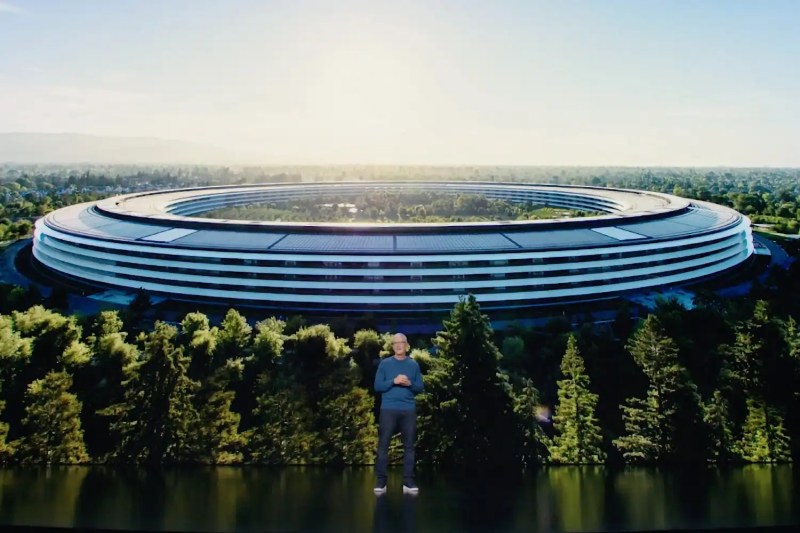
Apple Park Tim Cook AAPL

AAPL is a California-based computer company that became the most successful smartphone company in the world.

AAPL defined by Apple

Here’s how Apple defines itself:

Apple revolutionized personal technology with the introduction of the Macintosh in 1984. Today, Apple leads the world in innovation with iPhone, iPad, Mac, Apple Watch, and Apple TV. Apple’s five software platforms — iOS, iPadOS, macOS, watchOS, and tvOS — provide seamless experiences across all Apple devices and empower people with breakthrough services including the App Store, Apple Music, Apple Pay, and iCloud. Apple’s more than 100,000 employees are dedicated to making the best products on earth, and to leaving the world better than we found it.

Key AAPL history

From Apple I to iMac

Apple was founded in 1976 by Steve Jobs (Steve), Steve Wozniak (Woz), and (briefly) Ronald Wayne as a business partnership: Apple Computer Company. The following year it became Apple Computer, Inc. The company’s first product was the Apple I, a personal computer hand-built by Woz and sold in part-completed kit form. The Apple II and Apple III followed.

The modern Apple as we know it today began in 1983, with the launch of the first personal computer with a graphical user interface, the Lisa. Way too expensive to succeed, it was replaced by the Macintosh in 1984, launched with the single showing of a Ridley Scott commercial during the Super Bowl. The Macintosh transformed the world’s understanding of what a computer was, and would eventually lead to Microsoft adopting the GUI approach.

Steve Jobs and then Apple-CEO John Scully fell out in 1985, when Steve wanted to focus on the Macintosh while Scully wanted to put more attention on the Apple II, which was still selling well. That led to Steve being forced out of the company and going off to form NeXT.

Apple focused on selling Macintosh models at the highest possible margins, but would eventually fall foul of a mix of unsustainable pricing in the face of competition from Windows machines, and an overly complex product lineup. By 1996, the company was in trouble, and in 1997 Steve was brought back, along with the NeXT operating system, which would eventually form the basis of Mac OS X.

Steve simplified the Mac lineup and had industrial designer Jony Ive work on a whole new look for a consumer desktop Mac, the colorful iMac. The iMac, like the original Macintosh, again changed the world’s understanding of what a computer was, and who should want one.

From Apple Computer, Inc. to Apple, Inc.

In 2001, Apple launched the iPod. Although this wasn’t the first mp3 player, it was massively better than anything on the market at the time, and succeeded in turning a geeky piece of technology into a consumer electronics product with mass-market appeal.

The success of the iPod paved the way into other mobile devices. Apple was working on what would eventually become the iPad, when Steve realized that this was the basis of a smartphone. He diverted the team’s work into this, to launch the iPhone in 2007. The iPad launched later, in 2010.

The iPhone was yet another transformational product. While most other smartphones of the time were clunky devices with a keyboard and stylus, the iPhone was a sleek-looking device operated with a finger, and so simple that no user guide was needed. It was with the launch of the iPhone that Apple Computer, Inc. was renamed to Apple, Inc.

From Intel to Apple Silicon

While the iPhone, iPad, Apple Watch, and more are made with Apple-designed processors, the Mac lineup has historically relied on third-party companies for its CPUs. Over the years, Macs progressed from Motorola 680000 series chips through PowerPC to Intel.

In 2020, Apple began a two-year transition to the final stage in that journey, with Macs too finally getting Apple-designed chips. The first such is the M1 chip, used in the latest Mac mini, MacBook Air, and 13-inch MacBook Pro. Other Apple Silicon Macs followed.

AAPL today

Apple is one of the largest companies in the world. It was the first publicly traded company to hit a trillion-dollar valuation in 2018, $2 trillion in 2020, and $3T in 2022.

The company’s product lineup includes five different Mac families (MacBook Air, MacBook Pro, iMac, Mac Pro, and Mac mini); four iPad ranges (iPad mini, iPad, iPad Air, iPad Pro); four iPhone 12 models (12, 12 mini, 12 Pro, 12 Pro Max); three main Apple Watch models (SE, Series 3, Series 6); as well as other products, including Apple TV, AirPods, and HomePod mini.

In addition to hardware sales, Apple derives a growing proportion of its income from Services, including the App Store, iCloud, Apple Music, and Apple Pay.

Firm accusing Apple of patent infringement wants to ban Siri in China

Chinese firm wants to ban Siri in China

A Chinese company that has accused Apple of patent infringement wants to ban Siri in China until the case is finally decided. It is asking the court for an injunction of the sale of all products which include Siri – which is almost everything Apple makes.

The application follows an earlier court victory in which Xiao-i (whose full name is Shanghai Zhizhen Network Technology Co) was awarded a Chinese patent for a virtual intelligent assistant …

Expand Expanding Close

Tim Cook explains how Apple’s acquisition strategy differs from other big tech companies

apple facebook

Acquisitions were a major topic of discussion during the big tech antitrust hearing earlier this week, but the focus was primarily on Apple’s competitors, including Amazon and Facebook. In a new interview with CNBC today, Apple CEO Tim Cook offered additional details on what he believes sets Apple’s acquisition strategy apart from the competition.

Expand Expanding Close

Apple overtakes Saudi Aramco as world’s most valuable company, nearing $2 trillion market cap

Apple most valuable publicly traded company nearing $2 trillion

Apple posted impressive Q3 results yesterday as well as announcing a 4-1 stock split. This morning with the market open, AAPL shares hit a new all-time high and now the company’s market value has briefly exceeded Saudi Aramco’s to become the world’s most valuable public company on its way to a $2 trillion market value.

Expand Expanding Close

Comment: Analysts half-right about AAPL’s Q3 … but so wrong!

Prior to yesterday’s earnings call, analysts were united in one view on AAPL’s Q3 – that whatever the numbers might be, they were going to be affected by the coronavirus crisis, so we shouldn’t read too much into them.

The assumption was that disrupted supply-chains, store closures and an economic downturn would all hit sales of Apple products. It turned out they were half-right … but very wrong!

Expand Expanding Close

Apple announces fiscal Q3 2020 earnings: revenue of $59.7 billion, more

What Apple's restructure means for Apple and Cook

Apple earnings day is upon us, and with it, we learn how the company performed during the third fiscal quarter of 2020, despite the ongoing COVID-19 pandemic. Of note, Apple did not provide any official guidance for Q3 2020 due to the economic uncertainty caused by the pandemic.

How did the COVID-19 outbreak affect Apple’s business during the third quarter? The company has announced revenue of $59.7 billion and profit of $11.25 billion. This compares to $53.8 billion in revenue and $10.04 billion profit reported in the same quarter last year.

Expand Expanding Close

Today’s earnings call won’t tell us the usual things about AAPL, say analysts

Apple accused of censoring pro-democracy app in Hong Kong

In normal times, today’s earnings call would tell us two important things about AAPL: how well the company did last quarter, and how well it expects to do in the current one. But these are not normal times.

Although today’s earnings report will answer the first question, there’s widespread agreement among analysts that the Q3 results are not particularly important – the coronavirus crisis has hit Apple’s supply chain, and dampened demand, so the numbers are going to say more about the state of the global economy than they do about Apple specifically …


Expand
Expanding
Close

Analysts say AAPL Q3 is a throwaway; want at least broad brushstrokes on Q4

Analysts say AAPL Q3 is a throwaway

With the coronavirus crisis having hit Apple’s supply chain and consumer willingness to spend money on shiny new toys, analysts are expecting AAPL Q3 results to be rather underwhelming. Confirmation of this in tomorrow’s earnings announcement is unlikely to cause any great concern.

Many analysts don’t expect to get any Q4 earnings guidance from Apple: There is still too much uncertainty. But they do want to have at least some understanding of where things stand in terms of the iPhone 12 launch…


Expand
Expanding
Close

Tim Cook argues Apple doesn’t have a ‘dominant market share’ in prepared comments for antitrust hearing

Man accused of stalking Tim Cook

Apple CEO Tim Cook will testify to the House Judiciary Committee as part of an antitrust probe. While the hearing will be tomorrow, Cook shared a statement with the press today about how he believes Apple doesn’t conduct anticompetitive practices, claiming that the App Store does just the opposite.


Expand
Expanding
Close

Apple shares resources for parents and teachers as part of its Racial Equity and Justice Initiative

Apple last month announced a new Racial Equity and Justice Initiative, committing $100 million to help support social justice initiatives in the United States and eventually around the world. As part of this project, Apple has announced today that it is rolling out a series of challenge-based curriculum projects for educators.


Expand
Expanding
Close

Airbnb and ClassPass clash with Apple, raising yet another antitrust issue

Airbnb and ClassPass clash with Apple

Airbnb and ClassPass have found themselves in an interesting dispute with Apple, as they adapt their business models in response to the coronavirus crisis. Apple is, they say, now demanding a cut of their revenue.

The issue is a tricky one, but may prove yet another antitrust concern for the Cupertino company …


Expand
Expanding
Close