It turns out that his hobby 9to5Mac blog was always his favorite and in 2011 he went full time adding his Fortune Google followers to 9to5Google and adding the style and commerce component 9to5Toys gear and deals site. In 2013, Weintraub bought one of the Tesla’s first Model S EVs off the assembly line and so began his love affair with the Electric Vehicle and green energy which in 2014 turned into electrek.
In 2018, DroneDJ was born to cover the burgeoning world of drones and UAV’s led by China’s DJI.
From 1997-2007, Weintraub was a Global IT director and Web Developer for a number of companies with stints at multimedia and branding agencies in Paris, Los Angeles, New York, Sydney, Hong Kong, Madrid and London before becoming a publisher/blogger.
Seth received a bachelors degree in Industrial and Systems Engineering from the University of Southern California with a minor in Multimedia and Creative Technology in 1997. In 2004, he received a Masters from NYU’s Tisch School of the Art’s ITP program.
Hobbies: Weintraub is a licensed single engine private pilot, certified open water scuba diver and spent over a year traveling to 60 cities in 23 countries. Whatever free time exists is now guaranteed to his lovely wife and two amazing sons.
As Penn Olson pointed out, the confiscations are in one city and so far just on third-party retailers. However, the action forced other retailers to take iPads off the shelves, though they can still be purchased if asked for. However, this latest action might be a sign of things to come…
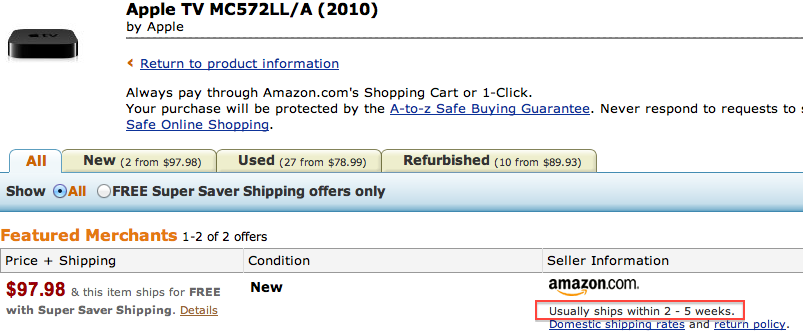
One of our Best Buy sources just pinged us and alerted us that Apple TV is not just out of stock at his store, but Apple TVs are no longer shipping to the stores at all anymore.
A customer was inquiring tonight about Apple TV. However right now we are out of stock (Which hasn’t happened since I started). Not only were we out of stock, but also I was also unable to order one from our product ordering system (OMS). Product was listed as “currently unavailable”. From prior experience, this usually is associated with a product that is being “discontinued”.
The next iPad will have the name “iPad 3,” according to the consensus of rumors, and it features a faster processor/GPU while remaining the same size as the current iPad 2. Its unveiling is in a month (March 7th is the first Wednesday) and will be available (in Wi-Fi certainly) almost immediately after.
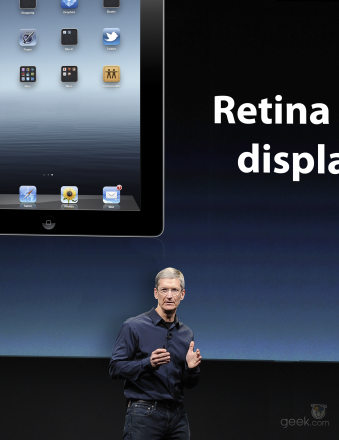
The big differentiator this year is the “Retina Display” with a staggering 2048-by-1536 pixel screen, likely made by Sharp/Samsung/LG. An Apple employee told The New York Times that the display was “truly amazing” and it must be with a pixel count that lies between the 21- and 27-inch iMacs squeezed into a 9.7-inch display. Consider: You can watch a Blu-ray movie at native resolution with over 100 pixels on the side and nearly 500 pixels below to “play with.”
Oh, by the way: How many megapixels is 2048-by-1536? Just over 3.
That screen sounds like it might take more juice to power, but Apple will add some extra battery capacity, which might make the iPad 3 slightly thicker. The battery life will likely continue with 10 hours as the baseline (why make the case slightly bigger or smaller otherwise?).
Sources say the company has chosen the first week in March to début the successor to the iPad 2 and will do so at one of its trademark special events. The event will be held in San Francisco, presumably at the Yerba Buena Center for the Arts, Apple’s preferred location for big announcements like these. No word yet on a street date for the iPad 3 (assuming that’s what it’s called), though my guess is retail availability will follow roughly the same schedule as that of the iPad 2: available for purchase a week or so after the event.
As you can see above: Wednesday, March 7 is available at Yerba Buena, which is Apple’s traditional venue for such events. Last year’s announcement was on Wednesday, March 2, and the iPad 2 went on sale about a week later (March 11).
AllThingsD’s sources also backed the prevailing rumors for the iPad 3: HD display, faster GPU/CPU, and similar design to iPad 2. Is anyone excited?
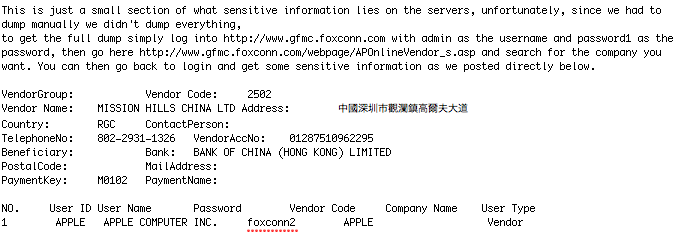
Hacker group SwaggSec just released a dump of Foxconn internal information, including a mail server login/password dump and logins to various online procurement sites and Intranets. The hack seems to be a retaliation for the working conditions that have swarmed the news lately. The hackers gained access through an unpatched Internet Explorer vulnerability used by a worker inside Foxconn.
We were able to verify these logins worked on more than one Foxconn server, and you can find bits like the following from the large dump:
.
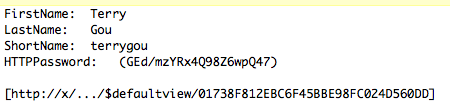
The server is now closed—hence why we are posting this stuff. Every single username and password from the company is also in the mail dump, including the company’s CEO Terry Gou:
.
We are certain that Foxconn admins are shutting down outside access; however, it is currently uncertain if any sensitive data leaked. The servers we see are mostly client Intranets. We will update as we find out more.
The full message from SwaggSec is available below:
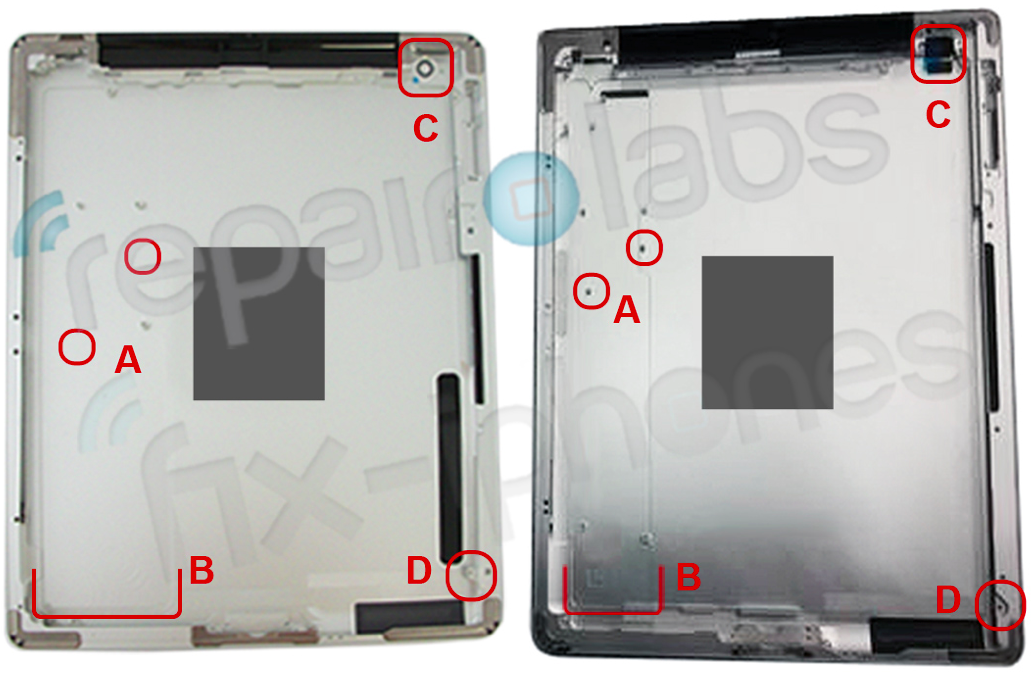
Repair Labs (via MacRumors) said it got ahold of an iPad 3 case that has numerous differences from an iPad 2—listed below:
A. You can see here that the mounts for the logic board are very different, which means the logic board shape will be different allowing for . . . .
B. More battery. The width of where the logic board sits on the iPad 2 appears much larger than that of the iPad 3. We have long heard that the iPad 3 was going to provide longer battery life, and this back housing seems to support that. [Ed: Actually, this could be to compensate for the additional power draw of the screen and possibly a faster processor]
C. The camera is different. It is hard to make a judgment just by looking at the casing, but what we can expect is a different camera on the iPad 3 than what we had on the 2.
D. LCD will be different than what we have had before. Whether or not it will be the super screen we have seen reported will have to wait. But the different mounting does mean that the LCD has been redesigned at the very least.
The report said the iPad 3 case was not noticeably thicker than the iPad 2, countering previous rumors that the new iPad would be thicker.
It is hard to vouch for the authenticity of the case above, but the changes mentioned do seem to mesh with what’s floated around.
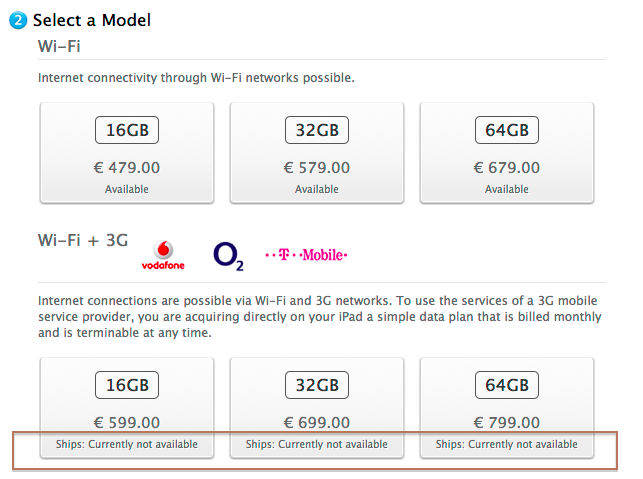
Update: 8PM ET: Apple has updated the store and all 3G devices are again available.
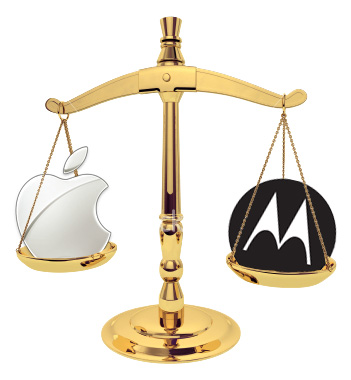
Just this morning Apple was dealt a patent blow by a German court that ruled Apple’s 3G products outside of the iPhone 4S were in violation of Motorola patents. The “Fair, Reasonable, and Non-Discriminatory” (FRAND) nature of the patents means Apple should be able to purchase licensing rights to those patents at market rates (i.e. what Nokia, Samsung, and others pay). According to Apple, Motorola has not offered those types of terms.
Fast forward to a few minutes ago: Apple stated the 3G devices in question would be back on sale “shortly”…
Apple has been granted a suspension of the German injunction against 3G-enabled iOS devices, with the iPad WiFi + 3G, iPhone 4 and other gadgets back on sale through the company’s online store. ”All iPad and iPhone models will be back on sale through Apple’s online store in Germany shortly” the company told us in a statement. “Apple appealed this ruling because Motorola repeatedly refuses to license this patent to Apple on reasonable terms, despite having declared it an industry standard patent seven years ago.”
Apple lost its first significant patent battle today as it was forced to take 3G iPads and iPhone 3GS and iPhone 4’s off its virtual Apple Store shelves in Germany today.
The Mannheim Regional Court found Apple infringed a patent used to synchronize e-mail accounts. The ruling also allows Motorola Mobility to ask Apple for information about past sales and holds Apple liable for damages, Presiding Judge Andreas Voss said in delivering the ruling.
“The court has come to the conclusion that the wording of the patent does cover functioning that were at issue here,” said Voss. Apple “wasn’t able to convince the court that it isn’t infringing.”
The licenses at issue are supposedly “Fair, Reasonable, and Non-Discriminatory” (FRAND) patents that are considered industry standards. This follows a previous ruling in Motorola’s favor at the end of last year. The court order is directed against Apple Sales International in Ireland, which operates the online store of Apple in Europe.
Perhaps not comical for German consumers (but certainly elsewhere) is that German courts have also banned a number of Samsung products, including its first stab at a tablet, based on Apple patent complaints. Soon their only option will be Motorola XOOMs :P.
The iPhone 4S, Apple’s current flagship device, remains on sale at the German Online Apple Store. It is not immediately certain why this device does not fit into Motorola’s complaint— maybe it is just too new and was not included as part of the original complaint. In addition, the 4S (and CDMA iPhone 4 and iPad 2) use Qualcomm chips while the banned devices use Infineon baseband, so it is possible Qualcomm has patents that indemnify its chips.
Just last week we heard that Foxconn was gearing up for production of the iPhone 5 ahead of a likely summer launch. Today, Commercial Timesquoted Daiwa Securities analysts in its latest report on the iPhone 5 that claimed the same.
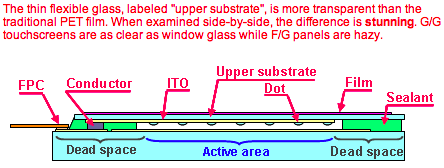
The iPhone 5 will continue to utilize glass to glass (G/G) touch panel technology which will benefit current touch panel suppliers TPK Holding and Wintek, the paper quoted the securities house as saying.
The report expects the iPhone 5 to be announced at Apple’s WWDC held in June (likely June 10 to June 15) of this year. Obviously, last year the iPhone 4S was released in October— a significant change from the previous four generations of iPhone that were released at or around WWDC in June.
For those who bought the iPhone 4 at launch on a two-year contract (guilty), their contract will be up this summer.
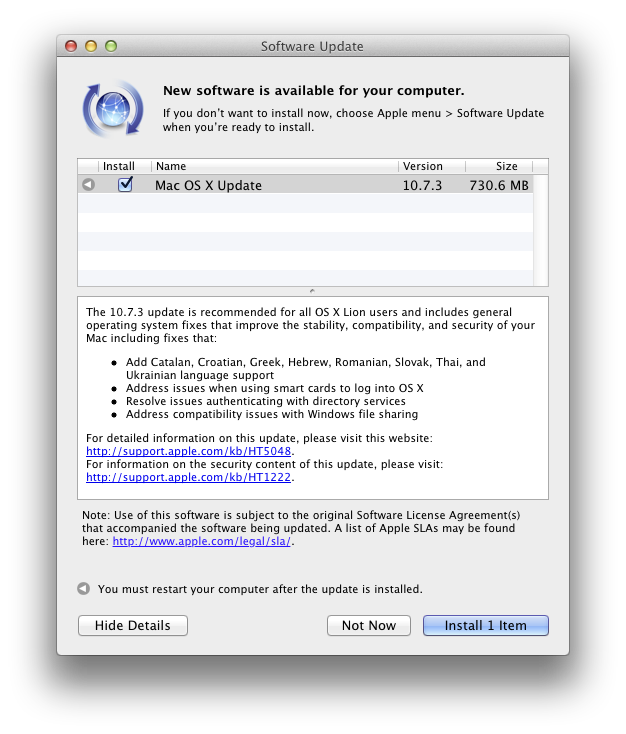
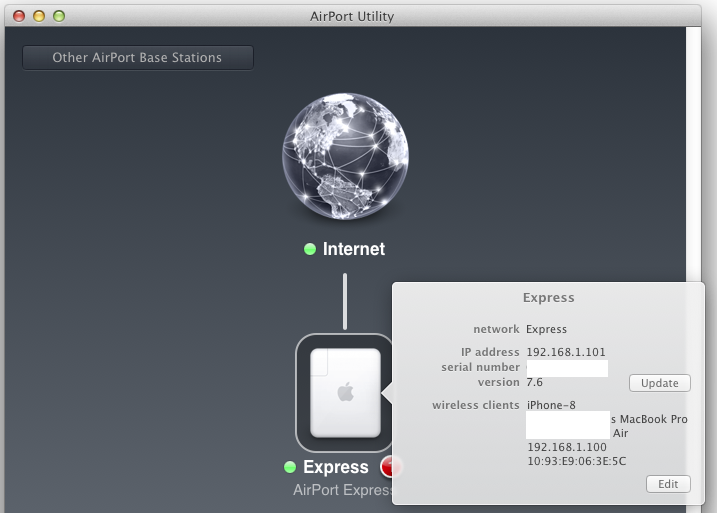
This update is for all 802.11n AirPort Express, 802.11n AirPort Extreme and Time Capsule models. It fixes an issue with wireless performance and provides support for remote access to an AirPort disk or a Time Capsule hard drive with an iCloud account.
Also getting an update is AirPort Utility 6.0 for Mac OS X Lion (Release Notes), which looks a lot like the iOS AirPort Utility. This application only works with 802.11N Airports. Yes, everything Mac is going iOS.
AirPort Utility 5.6 (Release Notes) for Mac OS X Lion is also receiving the following updates for those with 802.11G stations:
Resolves an issue with using network passwords stored in the Keychain
Works with AirPort Express 802.11g and AirPort Extreme 802.11g base stations
We had some time to talk to a well-connected developer at Macworld who was building an app that— among other capabilities— includes NFC reading for the purpose of mobile transactions. We were obviously curious why they would do that, noting that third party NFC readers for iPhone were not popular (aside from the recently announced Moneto, above). The developer told us that he had no hardware knowledge, but he had spoken to Apple iOS engineers on multiple occasions, and they are “heavy into NFC.”
I asked how confident he was, and he said, “Enough to bet the app development on.”
This is not the first we have heard that iPhone 5 would have NFC, however. Besides the deluge of ideas Apple has patented with NFC, the New York Times said pre-iPhone 4S that an upcoming iPhone would have NFC. While it did not turn out to be the iPhone 4S, it could be the one coming up.
(Moneto again)
The question is now: Who will Apple partner with for its payment systems? Over the weekend we received some hints… Expand Expanding Close
Fortune’s Phillip Elmer-DeWitt pointed us to an hour long interview and Q&A session at LinkedIn headquarters with “Inside Apple” author Adam Lashinsky.
The interview is conducted by our former boss and current LinkedIn Executive Editor Dan Roth. As PED noted, one of the more notable exchanges is with a former Apple employee who thought CEO Tim Cook is charismatic enough to be the United States President. See the clip below (plus another interview this week at Davos).
Interestingly, the former Apple Engineer discusses how his friends at Apple were put on dummy projects until they could be trusted.
We heard earlier today that the next iPhone may have a bigger screen which could make the chassis slightly bigger. How do you feel about this? What size would you prefer?
We received word from a reliable source at Foxconn in China that the iPhone 5, as it is currently being called, is now gearing for production. The source said various sample devices are also floating around (they vary slightly from one another), so it is impossible to tell which one will be the final. Some things in common with all of them, however, are:
4+ inch display (made by LG on at least one of them).
No teardrop-shaped devices, as rumored in the lead up to the iPhone 4S. Samples so far have been symmetrical in thickness (also longer/wider).
Neither of the sample devices have the iPhone 4/4S form factor.
Neither of the devices are the final versions.
We also heard the non-teardrop and 4-inch display information previously in a report from iLounge, but what is important to note here is that iPhone 4S production did not gear up until late spring of last year. If we follow patterns and give a five month-ish lead time, it would appear that Apple is back on its new iPhone launch for summer/WWDC pattern that it maintained until last year.
We are still a long way off however.
This source is the same that indicated to us late last summer that the iPhone 5 was not happening against the prevailing tide of information, and that Apple was building the iPhone 4S model instead. (Love the comments in that post, by the way.)
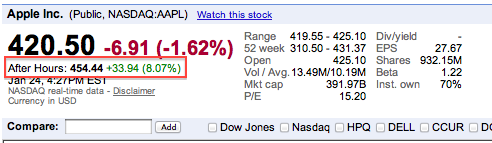
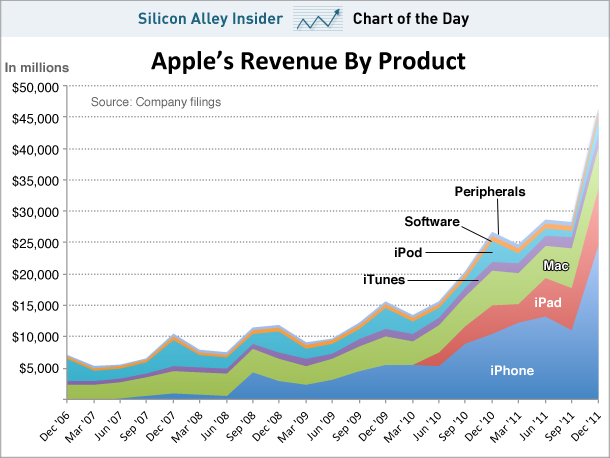
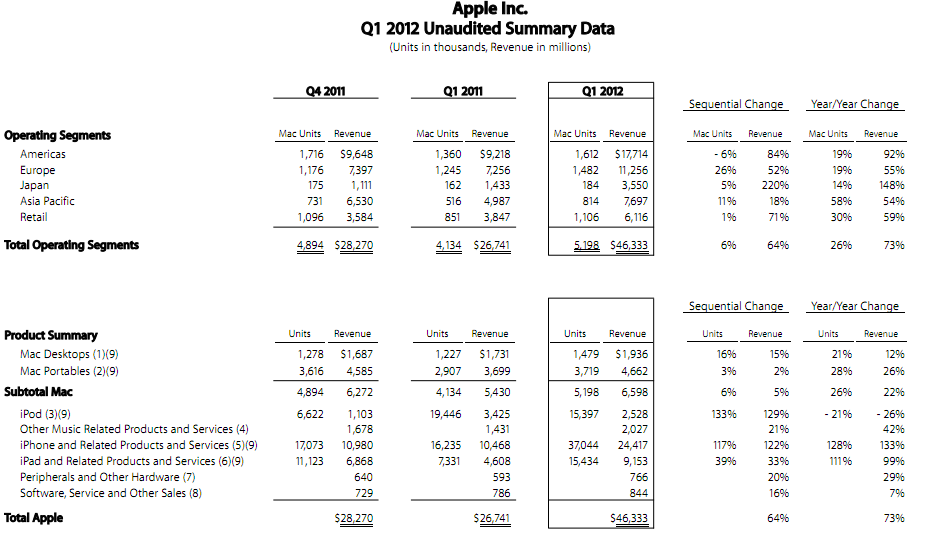
Apple had another blowout quarter this holiday and set records across the board. iPhones, which many estimated optimistically at 30 million, leapt to over 37 million to create the biggest quarter ever. iPads crossed 15 million for the first time, and even Apple’s venerable Mac line crossed 5 million units for the first time (likely helped by the popular MacBook Air lineup). iPods, if you needed a downside, were off by 20-percent —which is not terrible, because Apple did not upgrade most of the iPods available last Christmas.
Apple recorded revenues of $46.33 billion and record quarterly net profit of $13.06 billion, or $13.87 per diluted share.
(Click to enlarge)
“We’re thrilled with our outstanding results and record-breaking sales of iPhones, iPads and Macs,” said Tim Cook, Apple’s CEO. “Apple’s momentum is incredibly strong, and we have some amazing new products in the pipeline.”
“We are very happy to have generated over $17.5 billion in cash flow from operations during the December quarter,” said Peter Oppenheimer, Apple’s CFO. “Looking ahead to the second fiscal quarter of 2012, which will span 13 weeks, we expect revenue of about $32.5 billion and we expect diluted earnings per share of about $8.50.”
Apple plucked a high-ranking executive from the folding Sony Ericsson Joint Venture, 9to5Mac has learned. President of Sony Ericsson U.S. and Head of Region North America Anderson Teixeira will be heading Apple’s Latin America region. He is leaving Sony Ericsson after a decade at the JV.
Sony is buying out Ericsson’s piece of the venture and the group is folding into Sony Electronics.
Teixeira started at Apple this month.
Internally at Apple, he is “Latin America General Manager,” but to the greater world he’s “Head of Latin America.” He will be operating out of Apple’s small Coral Gables Florida office at 1 Alhambra Plaza Suite 700. He has nine reports at that office.
A mid-2009 profile listed some background on his appointment at Sony:
Anderson Teixeira was based at the company’s US operations in Raleigh, North Carolina. A native of Brazil, Teixeira has been part of Sony Ericsson since the formation of the joint venture in 2001. He has led the company’s operations in Latin America, as Head of Region Latin America, based in Miami, Florida, and subsequently in Western Europe, based in Munich. As President of Sony Ericsson US, Teixeira will report to Sony Ericsson President Dick Komiyama. In his role as Head of Region North America, Teixeira will have overall responsibility for Sony Ericsson’s sales and marketing operations in the US and Canada.
It is not immediately clear who Teixeira will report to but we will update that information as it becomes available.
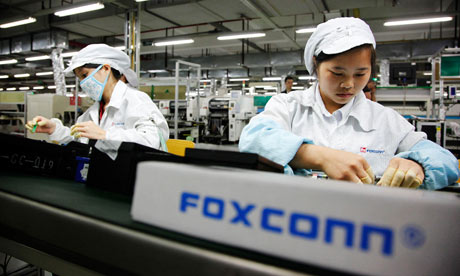
The short of it is that companies like Apple simply cannot manufacture products in the United States. The cost (though it is cheaper in China) is not the reason, however. Years ago, the Chinese government subsidized building cities of factories that can hire 3,000 workers to live in a dorm per day —or 8,700 Industrial Engineers in two weeks (it would take 9 months to do this in the U.S.). Today’s gadgets require thousands of little parts that are all made in the same areas. This whole global supply chain cannot be moved to the U.S.
The most interesting tale might have been the last minute decision to make the iPhone’s display glass:
In 2007, a little over a month before the iPhone was scheduled to appear in stores, Mr. Jobs beckoned a handful of lieutenants into an office. For weeks, he had been carrying a prototype of the device in his pocket.
Mr. Jobs angrily held up his iPhone, angling it so everyone could see the dozens of tiny scratches marring its plastic screen, according to someone who attended the meeting. He then pulled his keys from his jeans.
People will carry this phone in their pocket, he said. People also carry their keys in their pocket. “I won’t sell a product that gets scratched,” he said tensely. The only solution was using unscratchable glass instead. “I want a glass screen, and I want it perfect in six weeks.”
After one executive left that meeting, he booked a flight to Shenzhen, China. If Mr. Jobs wanted perfect, there was nowhere else to go.
New screens began arriving at the plant near midnight.
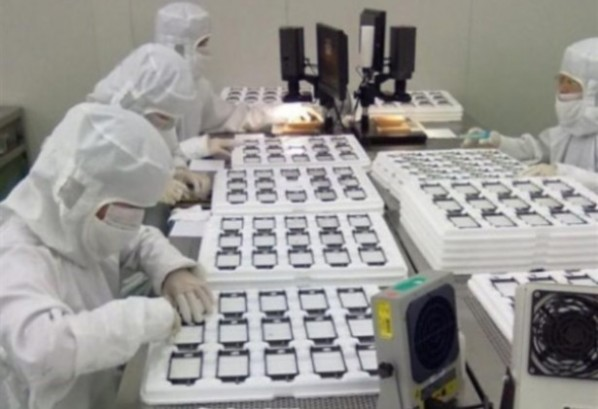
A foreman immediately roused 8,000 workers inside the company’s dormitories, according to the executive. Each employee was given a biscuit and a cup of tea, guided to a workstation and within half an hour started a 12-hour shift fitting glass screens into beveled frames. Within 96 hours, the plant was producing over 10,000 iPhones a day.
For over two years, the company had been working on a project — code-named Purple 2 — that presented the same questions at every turn: how do you completely reimagine the cellphone? And how do you design it at the highest quality — with an unscratchable screen, for instance — while also ensuring that millions can be manufactured quickly and inexpensively enough to earn a significant profit?
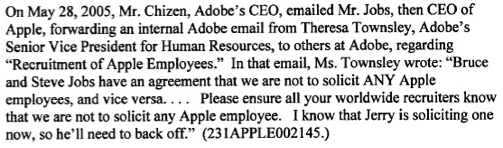
It appears the U.S. Justice Department has some solid evidence against companies including Apple, Google, Adobe, Intuit, Pixar, Lucasfilm and Intel. TechCrunch obtained a document from the DOJ that is now posted to Scribd. Among the pieces of evidence, include:
The DOJ settled with the six companies, but a class action lawsuit is pending. The complaint regards entering into non-poach and no bidding war agreements. The above mentioned companies allegedly lowered employee compensation artificially while hindering mobility.
The plaintiffs seek damages for any salaried employee who worked for one of the defendants during a 4-year period in the late 2000s. That means a lot of Silicon Valley tech workers could receive a payout if the defendants lose or settle the case. The civil case will be heard by Judge Koh in San Jose starting January 26th, 2011
The defendants, including Apple, asked the case to be dismissed, stating that the DOJ found “no overarching conspiracy” and that these bilateral agreements were separate. Expand Expanding Close
Along with today’s Education updates, Apple released a new version of iTunes today to allow the syncing of interactive iBooks textbooks to your iPad and to presumably add new features for the “iBooks 2.0” app and the updated iTunes U program. On my install, the 107MB download took an additional 257MB of storage space. Get downloading folks.
What’s new in iTunes 10.5.3
iTunes 10.5.3 allows you to sync interactive iBooks textbooks to your iPad. These multi-touch textbooks are available for purchase from the iTunes Store on your Mac or from the iBookstore included with iBooks 2 on your iPad.
iBooks textbooks are created with “iBooks Author” — now available as a free download on the Mac App Store