AAPL Company

See All Stories

Breaking news from Cupertino. We’ll give you the latest from Apple headquarters and decipher fact from fiction from the rumor mill.
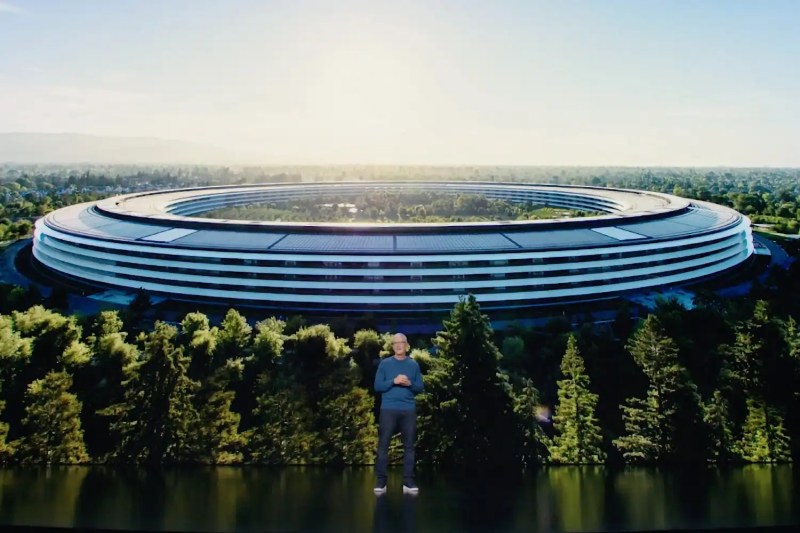
Apple Park Tim Cook AAPL

AAPL is a California-based computer company that became the most successful smartphone company in the world.

AAPL defined by Apple

Here’s how Apple defines itself:

Apple revolutionized personal technology with the introduction of the Macintosh in 1984. Today, Apple leads the world in innovation with iPhone, iPad, Mac, Apple Watch, and Apple TV. Apple’s five software platforms — iOS, iPadOS, macOS, watchOS, and tvOS — provide seamless experiences across all Apple devices and empower people with breakthrough services including the App Store, Apple Music, Apple Pay, and iCloud. Apple’s more than 100,000 employees are dedicated to making the best products on earth, and to leaving the world better than we found it.

Key AAPL history

From Apple I to iMac

Apple was founded in 1976 by Steve Jobs (Steve), Steve Wozniak (Woz), and (briefly) Ronald Wayne as a business partnership: Apple Computer Company. The following year it became Apple Computer, Inc. The company’s first product was the Apple I, a personal computer hand-built by Woz and sold in part-completed kit form. The Apple II and Apple III followed.

The modern Apple as we know it today began in 1983, with the launch of the first personal computer with a graphical user interface, the Lisa. Way too expensive to succeed, it was replaced by the Macintosh in 1984, launched with the single showing of a Ridley Scott commercial during the Super Bowl. The Macintosh transformed the world’s understanding of what a computer was, and would eventually lead to Microsoft adopting the GUI approach.

Steve Jobs and then Apple-CEO John Scully fell out in 1985, when Steve wanted to focus on the Macintosh while Scully wanted to put more attention on the Apple II, which was still selling well. That led to Steve being forced out of the company and going off to form NeXT.

Apple focused on selling Macintosh models at the highest possible margins, but would eventually fall foul of a mix of unsustainable pricing in the face of competition from Windows machines, and an overly complex product lineup. By 1996, the company was in trouble, and in 1997 Steve was brought back, along with the NeXT operating system, which would eventually form the basis of Mac OS X.

Steve simplified the Mac lineup and had industrial designer Jony Ive work on a whole new look for a consumer desktop Mac, the colorful iMac. The iMac, like the original Macintosh, again changed the world’s understanding of what a computer was, and who should want one.

From Apple Computer, Inc. to Apple, Inc.

In 2001, Apple launched the iPod. Although this wasn’t the first mp3 player, it was massively better than anything on the market at the time, and succeeded in turning a geeky piece of technology into a consumer electronics product with mass-market appeal.

The success of the iPod paved the way into other mobile devices. Apple was working on what would eventually become the iPad, when Steve realized that this was the basis of a smartphone. He diverted the team’s work into this, to launch the iPhone in 2007. The iPad launched later, in 2010.

The iPhone was yet another transformational product. While most other smartphones of the time were clunky devices with a keyboard and stylus, the iPhone was a sleek-looking device operated with a finger, and so simple that no user guide was needed. It was with the launch of the iPhone that Apple Computer, Inc. was renamed to Apple, Inc.

From Intel to Apple Silicon

While the iPhone, iPad, Apple Watch, and more are made with Apple-designed processors, the Mac lineup has historically relied on third-party companies for its CPUs. Over the years, Macs progressed from Motorola 680000 series chips through PowerPC to Intel.

In 2020, Apple began a two-year transition to the final stage in that journey, with Macs too finally getting Apple-designed chips. The first such is the M1 chip, used in the latest Mac mini, MacBook Air, and 13-inch MacBook Pro. Other Apple Silicon Macs followed.

AAPL today

Apple is one of the largest companies in the world. It was the first publicly traded company to hit a trillion-dollar valuation in 2018, $2 trillion in 2020, and $3T in 2022.

The company’s product lineup includes five different Mac families (MacBook Air, MacBook Pro, iMac, Mac Pro, and Mac mini); four iPad ranges (iPad mini, iPad, iPad Air, iPad Pro); four iPhone 12 models (12, 12 mini, 12 Pro, 12 Pro Max); three main Apple Watch models (SE, Series 3, Series 6); as well as other products, including Apple TV, AirPods, and HomePod mini.

In addition to hardware sales, Apple derives a growing proportion of its income from Services, including the App Store, iCloud, Apple Music, and Apple Pay.

Lisa Jackson says Apple buys carbon offsets, but 80% is real clean energy

Apple buys carbon offsets but 80% is real clean energy

Environmental lead Lisa Jackson has acknowledged in a podcast that Apple buys carbon offsets in order to hit its “100% carbon neutral” claim, but says that this is a relatively small proportion of the company’s total usage.

Interviewed on the Jane Goodall Hopecast, Jackson said that a lot of companies are satisfied with simply buying offsets, but that’s not Apple’s approach …

Expand Expanding Close

Apple continues to take home most of the global smartphone profits

Apple keeps taking home most global smartphone profits

While Apple doesn’t ship more phones than anyone else, a new report today shows that it continues to take home most of the global smartphone profits – even before the launch of the iPhone 13.

In the second quarter of the year, iPhones accounted for only 13% of global shipments, but it’s a very different story when it comes to revenue and profit …

Expand Expanding Close

Apple’s dependence on China is dangerous, say public advocacy groups

Apple's dependance on China is dangerous, say public advocacy groups

Apple’s dependence on China has been a recurring concern, with trade wars, COVID-19-related supply constraints, and human rights abuses all being highlighted at different times. Now a group of public advocacy groups has written to congressional house leaders to flag their own worries.

The letter was written in response to claims that US antitrust legislation would disadvantage American companies, and even pose national security risks …

Expand Expanding Close
Site default logo image

Europe can’t agree on how to regulate tech giants like Apple and Google

The question of how to regulate tech giants has been high on the agenda for most countries around the world, but a new report today says that Europe is struggling to answer it.

The European Union has been working on its plans for several years, and appeared to have reached some kind of consensus last year – which would include limiting Apple’s powers in regard to the App Store, and could also place limits on its ability to acquire companies.

Expand Expanding Close

Ex-Apple employee accused of leaking trade secrets now under criminal investigation

Apple Lawsuit

We learned back in May this year that Apple filed a lawsuit against its former materials lead, Simon Lancaster for allegedly stealing trade secrets about “Project X,” leaking them to the media, and more. Now in new legal documents, it’s surfaced that the Santa Clara District Attorney’s Office has an open criminal investigation into Lancaster regarding Apple’s claims.

Expand Expanding Close

Apple LA Culver City campus confirmed by company; will say more later

Site default logo image

A report back in July described a search for an Apple LA Culver City campus, and the company has today confirmed its plan for a complex totaling more than half-a-million square feet – but hasn’t confirmed the rumored reason for it.

The previous report said that the facility would primarily be used for Apple TV+ production soundstages …

Expand Expanding Close

Apple Japanese antitrust investigation opens, six weeks after another one closed

Site default logo image

An Apple Japanese antitrust investigation was closed last month, when the Cupertino company made a major concession. But just six weeks later, a new antitrust investigation has been opened in Japan, into the market dominance of iOS and Android.

The news comes on the same day that the Dutch antitrust authority found Apple’s in-app payment arrangements to be anti-competitive …

Expand Expanding Close

Apple employee activism is shifting the balance of power, suggests report

Site default logo image

Apple employee activism is shifting the balance of power within the company, suggests a report today. It says that more employees are willing to speak out about issues which concern them – such as pay disparity – and feel more protected than they have in the past.

The evidence presented is mixed, but it does indicate there has been at least some shift in the culture of secrecy at the company …

Expand Expanding Close

App Store third-party payment plans must be revealed next month, says Korea

App Store third-party payment plans must be revealed

A new antitrust law in South Korea will force both Apple and Google to support app store third-party payment options – and the two companies have now been given to the middle of the month to explain their plans to comply.

This could have wide-ranging implications, as similar pressures are being applied in other countries, and Apple is likely to want to adopt a consistent approach around the globe. Whatever the company proposes in October could reveal its third-party payment plans worldwide …

Expand Expanding Close