China

See All Stories
China

China has been fundamental to Apple’s historical success, but is also arguably the greatest risk to the company’s future.

Why are most Apple products made in China?

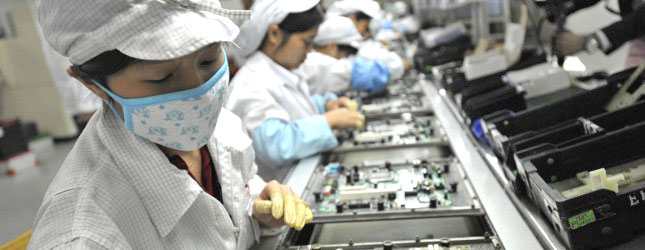
Although everyone assumes Apple products are made in China because labor is cheap there, that’s only part of the story – and an increasingly small part, as the company’s assembly partners move toward more and more automated operations.

Steve Jobs originally transferred most Apple manufacturing to China because it was the only country in the world with a huge ready-made supply-chain network, and the ability to scale up production almost overnight. There are three main reasons China – and specifically the Shenzhen area – is such a powerful manufacturing center.

First, the city is strategically placed, serving as the gateway between mainland China and Hong Kong. It is one of the largest shipping centers in the world, with a massive container port.

Second, the Chinese government established Shenzhen as the first Special Economic Zone (SEZ) in the country. SEZs are designed to encourage enterprise through relaxed planning regulations and generous tax incentives – and crucially, to facilitate foreign investment in local companies. It is this, as much as its geographical advantages, which has enabled it to grow at such a pace.

Third, that SEZ was established way back in 1980, meaning that the city has had over 40 years to grow into the manufacturing center of the tech world. Apple relies on a huge network of suppliers and sub-contractors, some of which may make just a single tiny component. The majority of them are based in Shenzhen and its immediate surrounds, so the logistics of bringing everything together in one place for assembly are straightforward.

What are the risk factors with China?

Being over-dependent on China carries a number of risks.

First, there is the generic one: Being overly dependent on any one country is a strategic risk. For example, the COVID-19 pandemic originated there, and had a massive impact on manufacturing capacity. Anything from a natural disaster to political upheaval could disrupt operations within a single country, so it is always wise to have a diverse range of manufacturing centers around the world.

Second, the relationship between the US and China has often been fraught. The trade war started by the previous US administration was a particularly low point, but continued tensions mean that there is always a risk of disruptions to trade between the two countries.

Third, it is increasingly damaging to Apple’s reputation to be so closely associated with a country that has a worsening human rights record – especially when the iPhone maker has no choice but to comply with local laws, however much they may conflict with the company’s own values. Apple has been required to remove VPN and a variety of other apps from the Chinese App Store, allow the iCloud data of Chinese customers to be stored on government-controlled servers, and more. Additionally, there have been growing reports of forced labor in China, including within many different areas of Apple’s supply chain.

What is Apple doing about it?

Apple has been working for a long time on diversifying its manufacturing operations, and has in recent years accelerated the pace at which it is doing so.

As explained above, this is far from an easy undertaking, but Apple now has major manufacturing operations in India, Thailand, Malaysia, and the Philippines, among other countries.

In India in particular, we are seeing the very early stages of a complete supply-chain infrastructure as the government uses a mix of carrot and stick to encourage companies to manufacture more of their components within the country – namely, tariffs on imports of components and tax breaks for local production. COVID-19 lockdowns in China also saw Apple move some iPad production to Vietnam for the first time, but it’s clear that the risks of over-dependence on China have never been greater.

Site default logo image

Apple imports more Apple TVs – but is it a refresh?

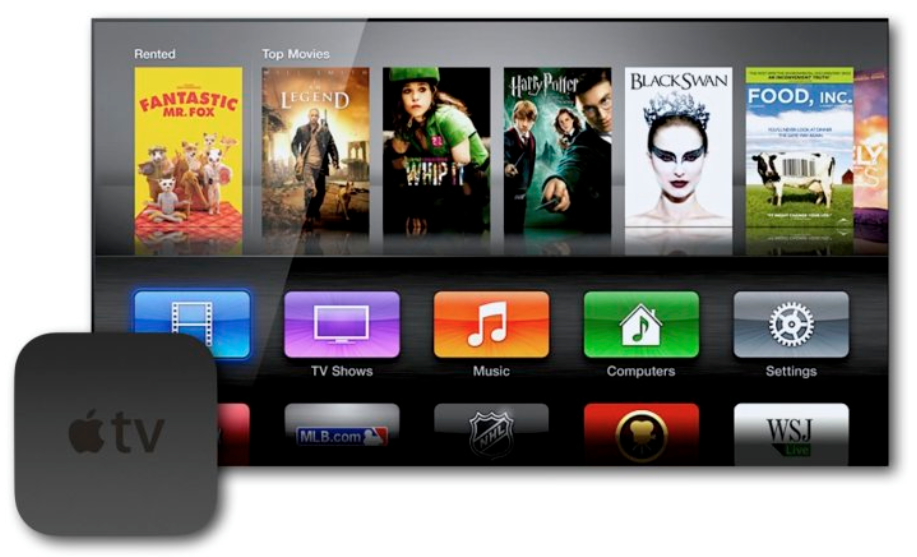
A blog post by supplier-sourcing company Panjiva (via GigaOM) is being cited as evidence that Apple plans to launch a refreshed Apple TV alongside the iPhone 5S and iPhone 5C at its media event on September 10th.

  • On August 25th, Apple received a shipment described as “Set Top Box with Communication Function” from BYD Precision Manufacture in Shenzhen, China.
  • On August 18th, Apple received another shipment, again from BYD, described as “Set Top Boxes.”
  • And on August 11th, Apple received its first shipment from BYD of “Set Top Box with Communication Function.

While it’s possible that the timing aligns with plans to have a new model in stock this month, and a refresh is somewhat overdue, it’s rather thin evidence on which to base this assumption: it’s equally possible that this is merely a routine shipment of existing stock. Either way, we won’t have long to wait to find out.

Japan’s largest wireless carrier, NTT DoCoMo, reportedly in talks to sell iPhone

Site default logo image

iPhone 5S Champagne

Bloomberg is reporting that shares of NTT DoCoMo are rising on rumors that Japan’s largest carrier will get the iPhone this year. The company’s rivals, KDDI and Softbank (who just bought Sprint) both currently carry the iPhone and saw their share price drop in morning trading.

[DoCoMo]Chief Financial Officer Kazuto Tsubouchi said there are compelling reasons for Apple and his company to reach an agreement, according to an interview published in SankeiBiz. For Apple, it doesn’t make business sense not to allow Japan’s largest wireless carrier to sell the iPhone, while DoCoMo wants to be able to sell most popular handsets, Sankei said.

The original Sankei article is here (translated) with the relevant bit translated by 9to5Mac reader Kazuto Kusakari:

A new iPhone from Apple is expected in September.  The Japanese market are paying close attention to whether NTT docomo will be selling the new model or not.  Having sold two other models as their main phones in the past summer season, the company is ready, as the vice-president Kazuto Tsubouchi has commented “the only problem is WHEN we are going to sell it.”…

Tsubouchi adds, “Nothing has changed.  It will be difficult (to sell the iPhone on September 10th). But for Apple, it is not economically reasonable to not sell the iPhone on Japan’s largest carrier.  As for NTT docomo, we must sell phone the customers desire.  It’s a matter of terms.

Apple is also working on China’s largest carrier, China Mobile, which also doesn’t currently carry the iPhone. If Apple can hook one or optimally both of these two monster carriers, it will be able to sell significantly more iPhones in Asia.
Expand
Expanding
Close

Approvals process will delay iPhone 5C launch in China until end of November – rumor

Site default logo image

An earlier prediction by KGI’s Mingchi Kuo that the iPhone 5C would go on sale in China by the first week in October has been contradicted by a report in First Financial Daily claiming that the approvals process needed would push the launch date back by almost two months, to 28th November …


Expand
Expanding
Close

Survey suggests iPhone 5C could make Apple the top-seller in the world’s largest market – China

Site default logo image

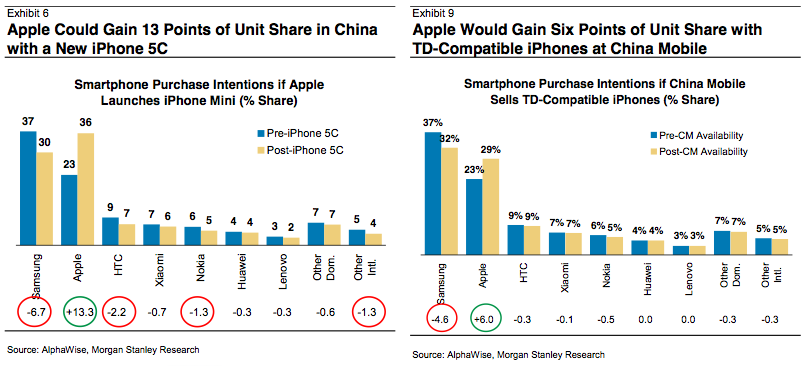
If the iPhone 5C is launched in China at $400, and Apple’s partnership with China Mobile for a TDD-LTE version of the handset proceeds as expected, Apple’s market share in China could jump by a massive 19.3 percent – enough to make Apple the number one seller.

The prediction, reported in Fortune, was made by Morgan Stanley’s Katy Huberty on the back of an AlphaWise survey of 2,000 mobile phone owners in China. Full details below … 
Expand
Expanding
Close

Apple gears up for expansion in China with more than 200 senior job openings

Site default logo image

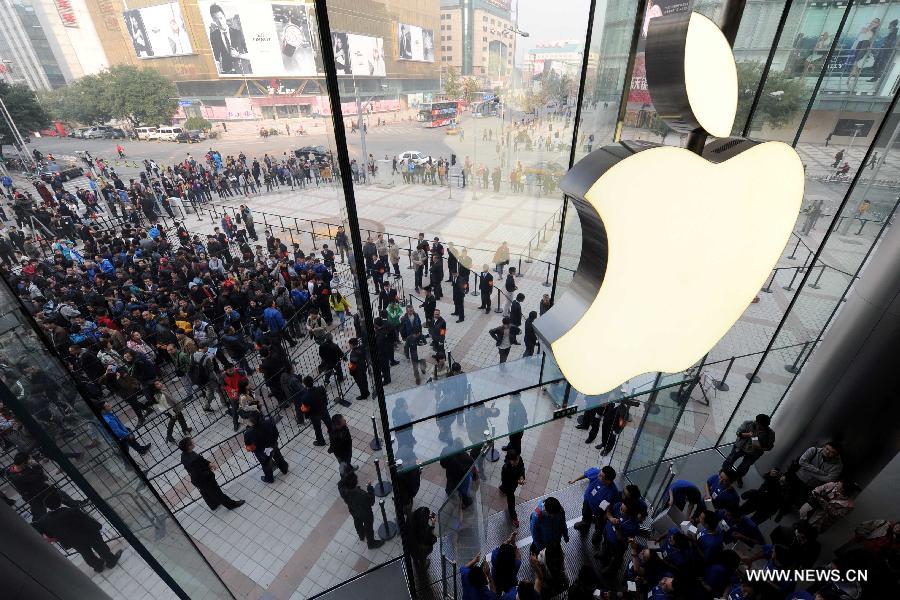
Photo of Beijing Apple Store: news.cn

Apple appears to be preparing for increased focus on the Chinese market, with more than 200 (mostly) senior job openings appearing on LinkedIn, reports the WSJ. Some of these were added in the past three weeks, many within the last few days. Digitimes reported yesterday on Apple also seeking senior engineers in Taiwan.

With the developed market close to saturation point, the BRIC markets – Brazil, Russia, India and China – are key to Apple’s future expansion. Worldwide, smartphones represent only just over half of the total cellphone market, generating massive potential for future growth.

Apple’s challenge in China is as much a political one as it is marketing-based … 
Expand
Expanding
Close

Tim Cook visits China again hoping to entice local carriers with upcoming iPhones

Site default logo image

January File Photo

According to a local Chinese report, Apple CEO Tim Cook was recently back in China hoping to jumpstart relations with Chinese carriers this week. Cook met with China Telecom, already a strong Apple partner. The topic of conversation wasn’t revealed but likely on the plate is Apple’s lower cost plastic iPhone, perhaps called the iPhone 5C, and overall flattening growth in Apple’s second biggest market.

The article speculates that he probably met with the other local carriers including partner China Unicom and the world’s biggest carrier, China Mobile who has around 700M subscribers – none of which have direct access to Apple’s iPhone yet.

It is Cook’s third known trip to China since he took over as CEO almost two years ago. Other things that may come up include Pegatron’s supposed worker violation issues and perhaps even another Beijing scalping problem.

Rough translation below:
Expand
Expanding
Close

Site default logo image

Chinese scalpers booking up all Genius Bar appointments & selling online

Apple Store, Shanghai

Beijing Morning News reports that local ticket scalpers have found a new way to make money on Apple: booking up all available Genius Bar appointments and then offering them for sale online.

Ticket scalpers usually make their money by buying large quantities of event tickets as soon as they go on sale then illegally selling them for more than face value once the event is sold out. With Genius Bar appointments, they don’t even need to fork out cash in the first place: they just use a bunch of email addresses to make the appointments then advertise them online.

Appointments sell for 10- yuan ($1.60-6.40) in a country where the average monthly salary is equivalent to $580. A Beijing Morning News reporter found there were no appointments available on the Apple site for iPhone, iPad or iPod. They contacted one of the advertisers asking for an appointment the next day and were offered a choice of two local stores and two time slots. The reporter was sent login details for the booking by instant messenger, and was then able to access the booking on the Apple site to change the details to their own.

The reporter contacted Apple for comment, but had not received a reply at the time of writing.

Thanks, Numble.
Expand
Expanding
Close

Working conditions at Apple manufacturing partner Pegatron come under fire

Site default logo image

According to an upcoming report from the China Labor Watch, outlined by the Wall Street Journal, Apple’s China-based manufacturing partner Pegatron has come under fire for worker conditions. The report outlines several claims which shed a negative light on Pegatron:

  • Pegatron is claimed to be withholding worker IDs. This means that Pegatron employees are unable to work elsewhere because they lack proper identification.
  • The company is also claimed to be providing “poor living conditions” with “30-minute waits to enter their production facility, tight living quarters, and packed cafeterias.” Cold showers and packed dorms are also noted.
  • Workers are claimed to be working over 60 hours a week (Apple’s limit), while Apple’s June Supplier Responsibility paper points to a 46-hour work-week average for Pegatron employees.
  • At a Pegatron subsidiary, employees are said to be provided gloves that do not sufficiently protect from the materials used to create metal backplates for the iPad.

As for pay, the report claims that some workers are seeing their payment withheld. Within this issue, recruiting companies for Pegatron have come under fire for not paying the workers enough. These recruiting companies, in some situations, are even fining employees:


Expand
Expanding
Close

Site default logo image

Rumored iPhone 5S production shots & specs: IGZO display, fingerprint reader, NFC, 12MP cam

Some unverified news out of China this morning points to new iPhone 5S production shots and specs which don’t seem out of the realm of possibility. The production shots above claim to be of the iPhone 5S, but with the case expected to be identical to the 5, it is hard to tell the difference.

Specs for the iPhone 5S from this same leak include NFC reader (which was taken out of the iPhone 5 late in production we’ve heard), a Fingerprint Reader (which may or may not be causing production delays), Sharp 4-inch 1136×640 (and maybe LG) IGZO display for power savings and better image quality and new 12 megapixel backside camera with dual LED flash.

Other purported improvements include 2GB of RAM, same A6 CPU at a higher clock with improved quad-core SGX 554MP4 (upgrade from the 3-core PowerVR SGX543MP3 in the iPhone 5) and improved LTE. Perhaps the power savings in display will offset the higher power usage needed for this improved hardware. That and a slightly bigger battery.

None of these seem outside of the realm of possibility (which is suspicious), but taken together seem to paint a picture of a dramatically improved iPhone 5S with some pretty incredible sensor improvements.

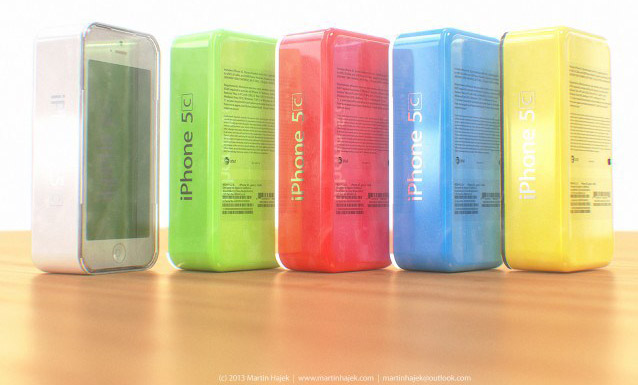
For those looking at upgrading to the lower cost plastic iPhone, the site also includes shells for those compared to iPhone 5, below (originally from Sonny Dickson):
Expand
Expanding
Close

Apple investigating electrocution death of Chinese flight attendant while charging iPhone

Site default logo image

The South China Morning Post is reporting that Apple is investigating reports that a Chinese flight attendant was fatally electrocuted when getting out of the bath to answer a call on her iPhone 5 while it was plugged into the charger.

A spokeswoman for the technology company said: “We are deeply saddened to learn of this tragic incident and offer our condolences to the … family. We will fully investigate and co-operate with authorities in this matter.”

According to mainland media reports, Ma Ailun, a 23-year-old flight attendant with China Southern Airlines, was picking up her iPhone 5 to answer a call while the battery was being charged when she was electrocuted and killed … 
Expand
Expanding
Close

Site default logo image

….and here are your plastic iPhone volume controls in Green, Red, Blue and Yellow

All of these could be knockoffs of course as we’ve said countless times since news of the plastic iPhone is months old and Chinese companies are already confirmed to be building Android knockoffsBenjaminTech via Gene

Site default logo image

Amazon’s iPad shopping app makes its way to key China, Japan markets

Today, Amazon has updated its popular shopping app for the iPad to work in China and Japan. Both of those countries are known as critical growth markets for the mobile shopping and technology industries, making today’s update notable. Additionally, the update brings a new “Shop by Department” mode and performance improvements for the iPhone and iPod touch Amazon app. 


Expand
Expanding
Close

Site default logo image

Blind Chinese dissident at NYU given iOS devices loaded with tracking software and spyware


not an iPad

Reuters has an interesting story on Chinese dissident/activist Chen Guangcheng who currently is at NYU on a Fellowship. Apparently he was given an iPhone and an iPad with tracking and spying software aboard.

The devices were screened by NYU technicians within a few days and were found to have been loaded with hidden spying software, said Cohen, who arranged the fellowship for Chen at NYU Law School, helping defuse a diplomatic crisis between the United States and China after Chen took refuge in the U.S. Embassy in Beijing.

“These people supposedly were out to help him and they give him a kind of Trojan horse that would have enabled them to monitor his communications secretly,” said Cohen.

The iPad was eventually cleaned up and returned to Chen at his request, the second source said.

NYU is pointing the finger at Heidi Cai, the wife of activist Bob Fu who gave Chen the iOS devices (along with other electronics).

Among the first visitors in May 2012 to the New York apartment Chen had moved into with his family after a dramatic escape from house arrest in China was Heidi Cai, the wife of activist Bob Fu. She brought an iPad and iPhone as gifts.

In examining the iPad and the iPhone, [NYU] found software that allowed a third party to secretly connect to an inbuilt global positioning system, essentially turning a device into a tracking device, said the second source. The technicians also found hidden, password-protected software that backed up the contents to a remote server, the source added.

“It’s perfectly consistent with their desire to manipulate and control the situation and know whatever confidential advice he is getting,” [NYU’s] Cohen said.

Bob Fu is of course denying the accusations, saying that it is some sort of “007 thing”.

Asked about the gadgets, Fu told Reuters that his wife had given two Apple devices to Chen shortly after the dissident had settled in New York. Fu runs a Christian group called ChinaAid that supports underground churches in China and victims of forced abortions.

“This is the first time I’ve heard of spyware,” said Fu, who was in southeast Asia when his wife delivered the devices. He called the allegations “ridiculous” and “like a 007 thing.”

“We knew that the first thing after they arrived, they’d want to call their family members, so we wanted to provide communication devices, iPhone and iPad,” Fu said by telephone from Texas.

Chen is accusing NYU of forcing him out of his fellowship due to pressure from the Chinese government which is also allowing NYU to build a campus in Shanghai. So really, everyone is a suspect.

Apple updates homepage in China to recognize earthquake, offers donations and support

Site default logo image

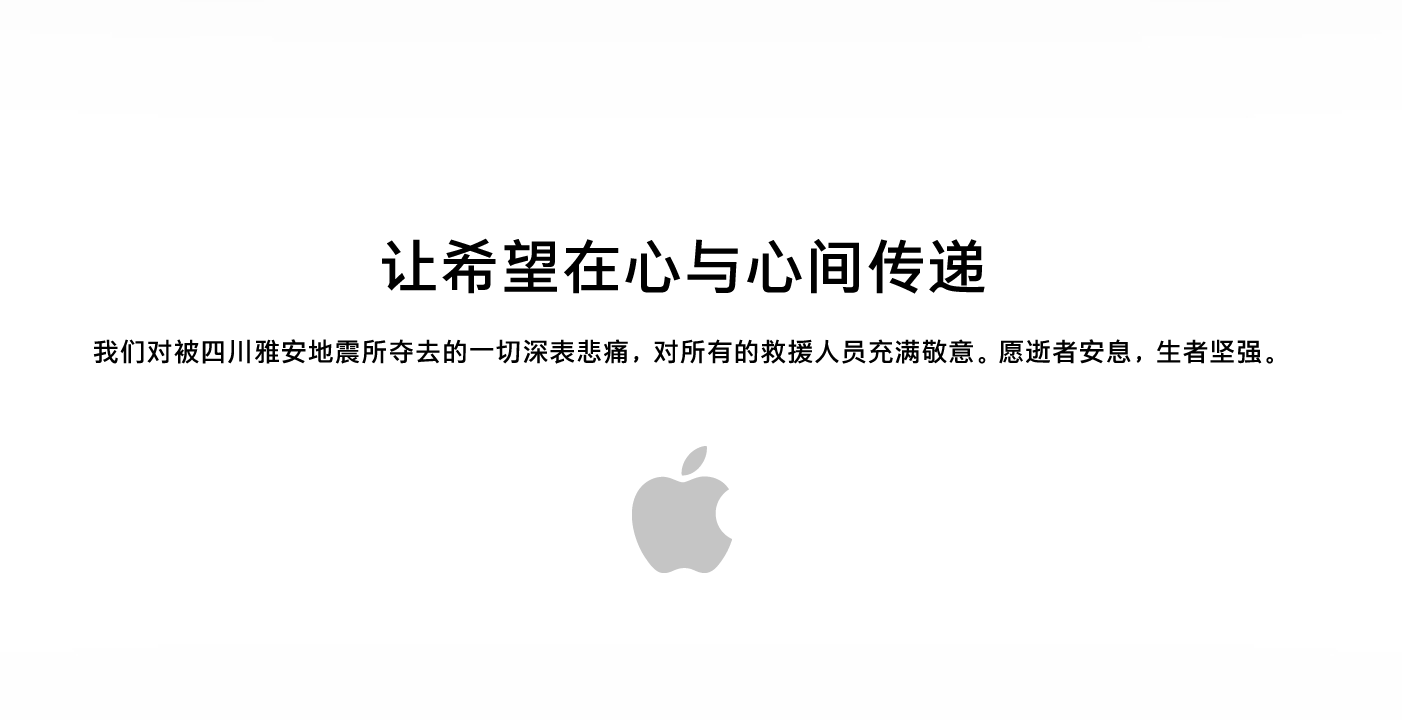
Apple has updated its official China website homepage to offer its respect and sympathy following the disastrous earthquake that has affected the country over the past few days.

The acknowledgement present on Apple’s site reads as follows:

Our deepest condolences to those who were taken away by the Sichuan Yaan earthquake, and respect to all the rescuers. May those who have passed away rest in peace, and may the survivors stay strong.

The company has also offered a statement that pledges cash donations and new Apple devices to help schools that have been affected:

In this difficult time our hearts are with the Sichuan earthquake victims. In addition to cash donations to help the victims ride out the storm, we will also commit to donating brand new Apple equipment to some of the schools in the affected region, and the local Apple staff will be on standby to provide support.

Apple has reportedly pledged 50 million Yuan in total. (Thanks to Richard Lai from Engadget for the translations.)

Tim Cook’s decision to address warranty controversy in China earns Apple praise from state-run media

Site default logo image

According to a new report from Reuters, Apple’s decision to publicly address controversy over its warranty policies in China yesterday has already resulted in a positive reaction from the state-controlled media outlets that originally organized the smear campaign.

With its rare apology, Apple Inc went from pariah to praiseworthy in the eyes of China’s state-controlled media, a lesson for other foreign firms not to underestimate the speed and power of the government press… The Chinese newspapers that threw brickbats at Apple a few days ago have since changed their tune.

Apple attempted to appease government in China yesterday by issuing a letter from CEO Tim Cook to announce changes to its warranty policies in the country. The move followed a campaign by state-run media outlets that bashed Apple over its warranty policies compared to other countries and provided first-hand accounts from disgruntled customers. Apple initially stood its ground after the first critical reports as far back as July, but yesterday’s “rare” apology from Cook appears to be already having a positive impact in the country.

One of the media outlets that has now changed its tune is tabloid the Global Times, a newspaper published by the Communist Party’s People’s Daily, while government officials are also praising Apple for its decision:
Expand
Expanding
Close

Apple in Shanghai court over Siri speech recognition patent infringement claims

Site default logo image

AFP reported Apple is in court in Shanghai, China again today, but this time it’s over a lawsuit alleging the company copied components of Siri’s speech recognition software. According to the report, Shanghai-based Zhizhen Network Technology Co. claimed in pretrial proceedings that Apple infringed its patent related to voice recognition technology via Siri. While the suit notes that development of Siri began in 2007, there is no mention of Nuance. Apple currently partners Nuance with to implement the speech recognition component in Siri, and it is also a market leader that presumably has its own arsenal of speech recognition related patents.

Zhizhen says it patented its “Xiao i Robot” software in 2004, while Apple’s Siri, which made its debut with the release of the iPhone 4S in 2011, was first developed in 2007.

“The company will ask Apple to stop manufacturing and selling products using its patent rights, once Apple’s infringement is confirmed,” Si Weijiang, a lawyer representing Zhizhen, told AFP.

“We don’t exclude the possibility of demanding compensation in the future,” he added.

The company is behind Siri-like software called ‘Xiao i Robot’ that it claimed was first developed before Siri in 2004. The technology is apparently available on some smart TVs and enterprise applications, but it doesn’t appear to be available as a consumer-facing app for smartphones or tablets. The video below appeared online when the company originally filed suit against Apple last year, and it shows the Xiao i Robot software running on a Lenovo smartphone:

http://www.youtube.com/watch?v=Ku0H10_G1X4

Apple renews efforts in India with increased distribution, marketing & installment plans

Site default logo image

Despite comments from Apple CEO Tim Cook last year about India remaining a lower priority than many other emerging markets, a report from Reuters today detailed how Apple is “aggressively pushing” the iPhone in India through payment plans and a new marketing campaign. Cook suggested last year that India wasn’t the biggest international focus for Apple and multi-layer distribution in the country “really adds to the cost of getting products to market.” According to Reuters, on top of an aggressive marketing campaign and payment plans, Apple also aims to increase the distribution channels Cook mentioned last year:
Expand
Expanding
Close

Site default logo image

Analyst more confident low-cost iPhone is on the way following meeting with Apple’s CFO

Morgan Stanley analyst Katy Huberty issued a note to clients today claiming she is even more confident Apple will introduce a low-cost iPhone following a meeting with Apple CFO Peter Oppenheimer. This certainly isn’t the first time we’ve heard an analyst discuss the much-rumored low-cost iPhone. Since its release, the success of the lower-priced iPad mini has been the rationale behind many analysts prediction of a less expensive iPhone expected to launch sometime later this year. We’re not so sure Oppenheimer let anything slip that we wouldn’t have otherwise heard at the most recent earnings call, but Huberty wrote she is even more confident that the device is in the works following the meeting with the Apple executive (via BusinessInsider). Her reasoning: success of the iPad mini in emerging markets, desire among Chinese consumers to purchase a new, low-cost device, and the continued success of iPhone 4 during last quarter:

We also see several signs that a lower priced iPhone makes sense: 1) iPad Mini is expanding Apple’s customer base with 50% of purchases in China/Brazil representing new customers to the ecosystem. 2) Chinese consumers show a desire to purchase the latest version of iPhone (instead of discounted older generations). 3) iPhone 4 demand surprised to the upside in the December quarter. Even at a low 40% gross margin and 1/3 cannibalization rate, we see an “iPhone Mini” as incremental to revenue and gross profit dollars.

Foxconn reportedly halts hiring due to slow iPhone 5 production, resumes next month (for next iPhone?)

Site default logo image

Update: While it’s hard to read too much into these reports, Foxconn told The Wall Street Journal the freeze on hiring is a result of “a high employee return rate following the Lunar New Year holiday.”

According to the report from Financial Times, Apple’s major assembly partner Foxconn has halted new hiring at its facilities due to a slow down in production for the iPhone 5:

The suspension in hiring by China’s largest private sector employer and the biggest assembler of Apple products, is the first such countrywide move since the 2009 downturn, prompted by the financial crisis. It underscores the weakening demand for some Apple products, which has put pressure on the US company’s battered share price.

Foxconn confirmed it is not currently hiring in its plants located in mainland China, and FT reported the company’s employees were informed that hiring would stop until at least the end of March “in response to reduced orders for the iPhone 5.” While the iPhone 5 doesn’t seem to be experiencing a slow down, according to the latest numbers from Strategy Analytics, the March time frame would line up nicely with rumors of iPhone 5S production beginning in March. Many analysts are calling for a June or July launch of the next-generation iPhone, and Apple could begin initial production as early as next month if true. The decreased production at Foxconn is likely thanks to the expected falloff in new sales in the months following the busy holiday season. Less likely is speculation that Apple could be switching manufacturers.

Recruiters in China told FT that Foxconn has stopped hiring specifically for the iPhone and iPad production lines in many of its factories:


Expand
Expanding
Close

Site default logo image

Analyst says $300 price point is sweet spot for unsubsidized iPhone mini

Topeka Capital analyst Brian White issued a report to clients today (via Forbes) to provide what he thinks Apple has in store for the much-rumored low-cost iPhone. According to White, Apple will introduce the lower-priced iPhone as early as June. This is of course something we heard before from previous reports, but White also predicted pricing and a possible name for the device…

Some new information that White added: He said the device will be called the “iPhone mini” or “iPhone Air” and sell for an unsubsidized price of $250 to $300.

“A $250-$300 price range would also be competitive with China-based Xiaomi that offers a high-end phone experience at a mid-range price of ~$320 in China,” he writes. “We believe a $250-to-$300 price point will allow Apple to significantly expand its reach in the smartphone market and better address developing markets such as China, while opening up more opportunities in Brazil, Russia, India and elsewhere.”

Site default logo image

Alleged iPhone 5S assembly line shots show new internal layout, linear motor (Update: clone)

Update: These are likely an iPhone 5 clone (with better vibrating motor). Note the smaller 1150 mAh battery and the (d’oh) SD card slot.

The images above allegedly show a Foxconn assembly line in addition to some up close spy shots of what could be Apple’s next generation iPhone 5S. The images were originally posted by Chinese CNET/CBSi-owned tech site sjbbs.zol.com and later reposted by GizChina. We see a front panel largely resembling the currently shipping iPhone 5 in the images and some rather nice shots of the devices’ components, providing clues that this is indeed the next-gen iPhone and not the iPhone 5.

As noted by German language website PCgameshardware.de, the iPhone shown in the images above appears to have a vibrating motor that differs from the iPhone 5. Apple used a linear oscillating vibrator with the iPhone 4S, as pictured in this teardown image. iFixit noted the change was a “head-scratcher”:

Unlike the iPhone 4S, which used a linear-oscillating vibrator, Apple has gone back to a rotational motor with a counterweight.We praised Apple in the past for going with the quieter and less annoying linear oscillating vibrator, but now we’re scratching our heads as to why they went back.

While it wasn’t exactly clear as to why, Apple switched back to the sometimes louder, rotational motor that utilizes a counterweight for the iPhone 5. The alleged images of the iPhone 5S show that Apple appears to be going to a linear vibrating motor design (which also makes these spy shots a bit more believable than otherwise).

The post also provides a rare shot of workers relaxing on Foxconn’s assembly line:
Expand
Expanding
Close

Site default logo image

WSJ says Apple’s PR goes on offensive as competition heats up

The Wall Street Journal is out with a report today that claimed Apple’s press relations team has tried “a little harder to get its message out” by sending members of the press an increasing number of positive third-party reports about the company. The Wall Street Journal described one of the reports Apple PR sent out as a “study predicting that by 2014, Apple will be as accepted in the enterprise as Microsoft is today.” According to article, Apple has sent out five reports in a month since the starting of 2013, representing quite an increase compared to the past.

Apple issued a press release last month for the minor iOS 6.1 release, as well as the 128GB iPad released today ahead of Microsoft’s new 128GB Surface product. The Wall Street Journal said a person familiar with the matter claimed it’s a “recognition that competition is heating up.”

Apple, and indeed virtually all its competitors, send reporters favorable studies from time to time. But the five reports Apple has sent since the start of the year, mostly related to mobile market share, represent more than recent months… Apple has long been willing to sing its own praises when it needs to, issuing press releases about major milestones, products and sales. So rather than a big shift, the latest moves represent a recognition that competition is heating up, a person familiar with the matter says. Apple also has more to cheer internationally, with growth in countries like China very strong.

Site default logo image

Report: Apple’s rumored R&D center confirmed to open in Shanghai this summer

Following reports earlier this month that CEO Tim Cook’s most recent visit to China included talks about a new R&D center in China, new reports have claimed the Shanghai Municipal Commission of Commerce confirmed the facility will open this summer. Today’s report came from Chinese news website yicai.com and was translated by BrightWire:

Apple has registered three firms in three buildings in Pudong, Shanghai, and one of them will be dedicated to procurement management and R&D, according to documents on the Shanghai Municipal Administration for Industry and Commerce’s website.

(via MacRumors)