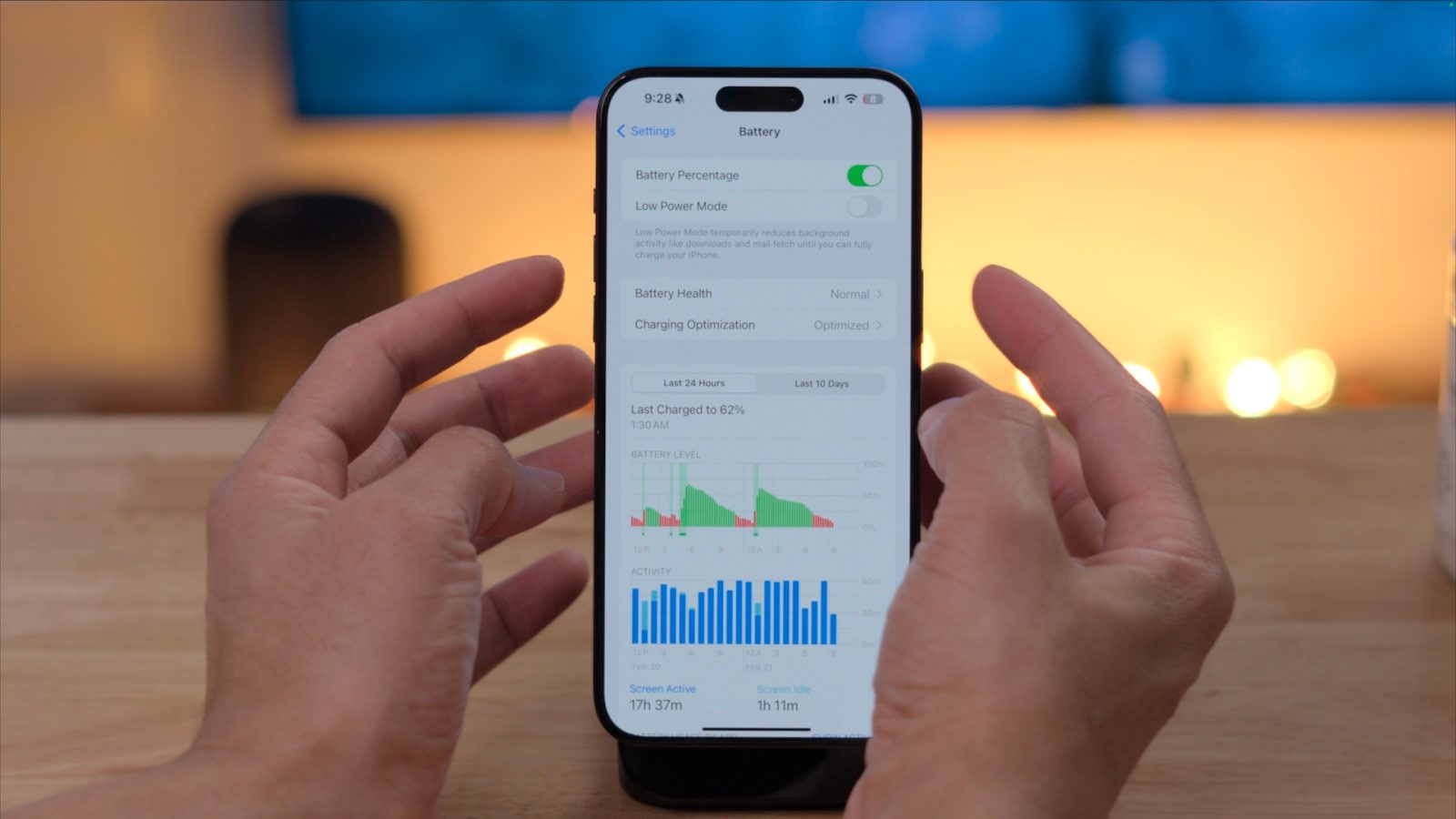
Google denies reports of Google Now battery drain issues on iOS

Google-Now-Google-Search-screenshot-01In the days following the launch of Google’s predictive ‘Now’ feature now baked into its Google Search iOS app, some users complained of experiencing noticeable battery drain due the app’s process of accessing location data. Today, Google has weighed in with an official response to LifeHacker calling reports of battery drain “incorrect”:

Reports that Google Now drains battery life are incorrect. We understand people’s concern about seeing the Location Services icon stay on when they use Google Now. Many apps that keep the icon on actually do drain the phone’s battery because they require very accurate location. (For example a navigation app has to run your GPS all the time to keep you from missing your turn.)

Google explained that Now is “built very differently” than other apps that utilize Location Services by using “cell towers and wifi hot spots for much lower battery impact.” 

Google’s response continues by noting it didn’t receive any reports of battery drain during its extensive month of testing the feature on iOS and encouraged users to contact them if they continue to see a problem: Read more

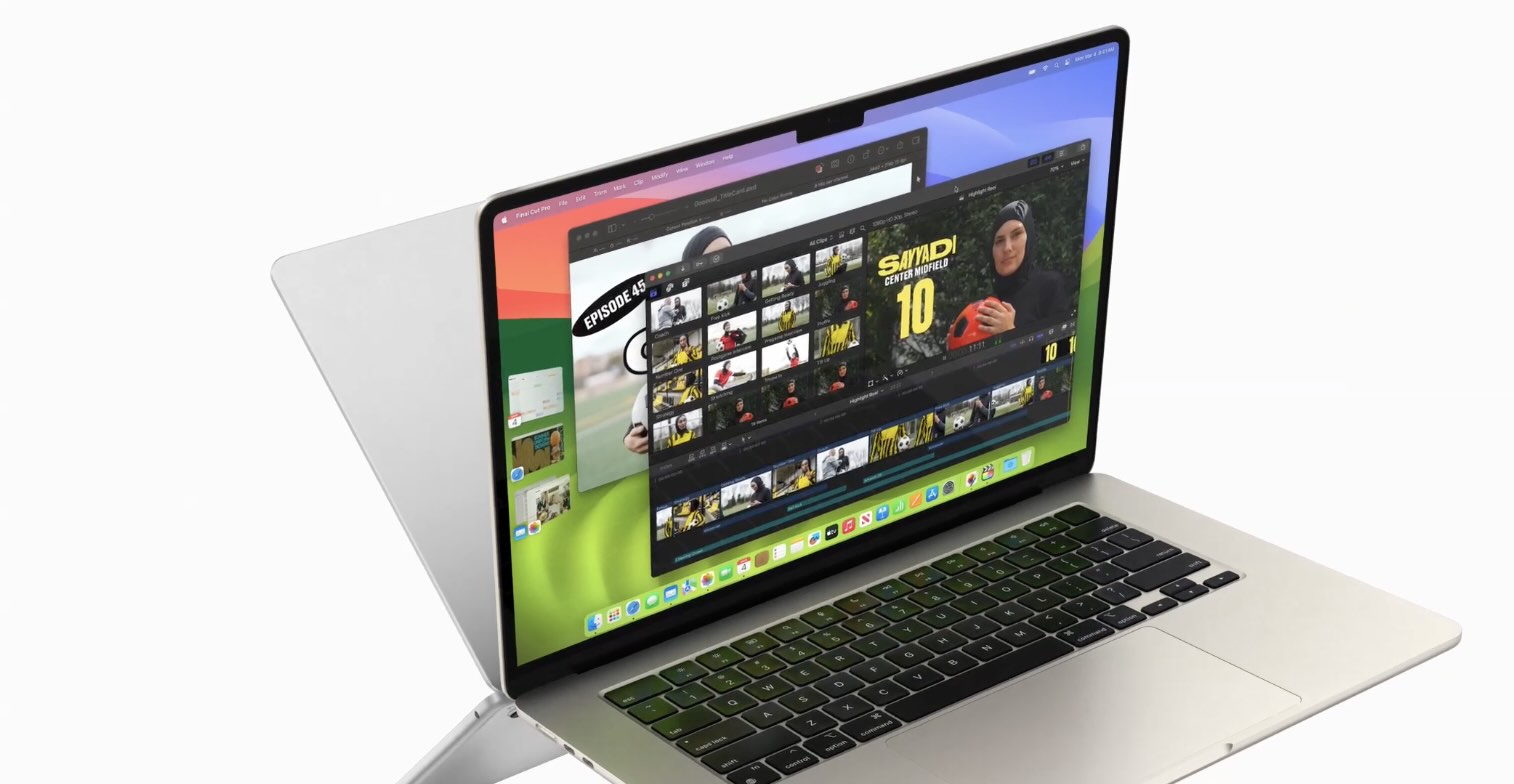
MacBook Pro with Retina display: Problems in every dimension

MacBook-Problems-In-Every-Dimension

When Apple unveiled its first Retina MacBook Pro with the 15.4-inch model in June, it came with an all-new, slimmed down design, all-flash architecture, and its flagship Retina display with over 5 million pixels. Apple has built its reputation on quality, craftsmanship, and customer/user experience, but that hasn’t been the case with its latest lineup of MacBooks. What many consumers don’t know is that buying a new Retina MacBook means taking your chances with possibly receiving a unit that is subject to display defects, battery, graphics, and fan-related issues among other major stability problems. These widespread issues have received limited coverage in the press and many consumers claim Apple is failing to sufficiently address the problems by not informing consumers and employees.

Leading the reports of problems is one that causes burn-in or ghosting on the device’s display. The result is a support thread with over 364,769 views and, most recently, a class-action lawsuit in California that alleged Apple is failing to inform consumers of the issue. Users experiencing the problem eventually realized the source of the issue was with LG, one of Apple’s display suppliers for the new Retina MacBooks. Unfortunately, models with Samsung displays aren’t totally free from a myriad of other significant issues.

Apple described the image-retention problems on this user’s display as normal after two visits. The display was eventually replaced with a Samsung but continues to experience other display related problems. 

Problems at the Apple Store

Finally, after 4 LG screened rMBPs I give up!

The problems are severe enough that it’s affecting the buying experience for consumers, driving customers to opt for other devices, and forced me personally to stop recommending the machine. Not only is Apple not addressing the issues publicly, Apple retail employees and 9to5Mac readers confirmed Apple is failing to properly inform retail and repair staff of the problems… Read more

Could charging the iPad battery beyond 100 percent ‘harm the longevity of the battery’?

We are hearing additional little tidbits about the new iPad’s battery and its ability to charge beyond 100 percent. CNBC’s John Fortt reports Apple has stated that charging beyond 100 percent could somehow “harm the longevity of the battery.”

Apple is saying when it reads 100% the battery indicator reads 100%. It’s actually full enough to give you the kind of performance that they promise in their marketing. That’s ten hours of all-day battery life. They say if you charge it more than that, you could harm the longevity of the battery. So they say this isn’t just an issue with the new iPad. It was an issue with the previous ones well but this battery is 70% bigger so you’re more likely to notice it.

This would be extremely odd, so we are skeptical and looking for clarification on the issue. We already observed the new iPad continues charging for an hour beyond its 100 percent and noted you get longer battery-use if you let the iPad stay on those extra 60 minutes.

But are those extra minutes coming at a cost? It would be surprising if Apple wanted people to pull the plug on the new iPad when it hits 100 percent (especially because it now requires an overnight charge to fill it up).

Apple says nothing about this on its iPad battery usage/optimization page.

Charge Cycles (Charge cycles vary by use, environment, settings, configuration, and many other factors.)

A properly maintained iPad battery is designed to retain up to 80% of its original capacity at 1000 full charge and discharge cycles. You may choose to replace your battery when it no longer holds sufficient charge to meet your needs.

Read more

Why does the new iPad continue charging after it hits 100 percent?

Since the launch of the third-generation iPad, Dr. Raymond Soneira, president of DisplayMate Technologies Corporation, has put the device through its paces testing just about every aspect of its “resolutionary” new Retina display. The lengthy report provided a detailed comparison of the new iPad’s display versus the iPad 2 and iPhone 4.

In a running time time of the new iPad’s battery, Dr. Soneira found its “batteries do not actually reach full charge when 100% is shown,” and noted up to an extra hour of charging is required before reaching full capacity. We already discovered that the third-generation iPad’s new 42.5-watt-hour battery takes considerably longer to charge than the iPad 2—up to several hours. One explanation suggested is that Apple is trying to shorten the amount of time people think it takes to charge to line up with iPad 2 expectations. Soneira found the new iPad running no applications at maximum brightness lasted for 5.8 hours in comparison to the iPad 2 at 7.2 hours.

He did not go into detail about his findings in the report, but Soneira provided an explanation of the charging issue below:

Read more

As we suspected, new iPad takes longer to charge. Also gets warm inside

While we are waiting for iFixit to tear apart the new iPad so we can get a look at the device’s new 42.5-watt-hour rechargeable lithium-polymer battery, we received confirmation that the battery does take hours longer to charge than the iPad 2 (iPad 2 pictured above). We know battery life remains the same with the 70 percent larger battery going mostly toward powering the new Retina display, A5x chip, and LTE-capabilities, but we wondered last week whether the new battery could take up to 70 percent longer to charge. MG Siegler confirmed in his review on TechCrunch that charging the new iPad takes “several hours” longer compared to earlier generations:
Read more