AAPL Company

See All Stories

Breaking news from Cupertino. We’ll give you the latest from Apple headquarters and decipher fact from fiction from the rumor mill.
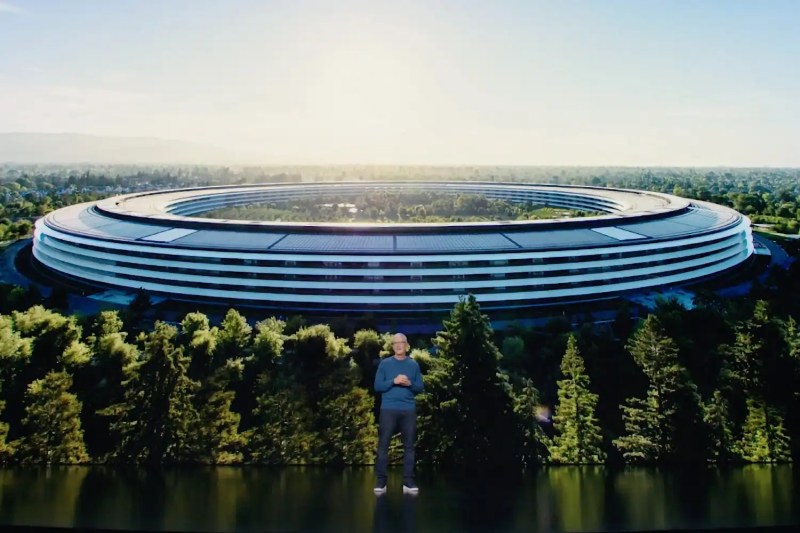
Apple Park Tim Cook AAPL

AAPL is a California-based computer company that became the most successful smartphone company in the world.

AAPL defined by Apple

Here’s how Apple defines itself:

Apple revolutionized personal technology with the introduction of the Macintosh in 1984. Today, Apple leads the world in innovation with iPhone, iPad, Mac, Apple Watch, and Apple TV. Apple’s five software platforms — iOS, iPadOS, macOS, watchOS, and tvOS — provide seamless experiences across all Apple devices and empower people with breakthrough services including the App Store, Apple Music, Apple Pay, and iCloud. Apple’s more than 100,000 employees are dedicated to making the best products on earth, and to leaving the world better than we found it.

Key AAPL history

From Apple I to iMac

Apple was founded in 1976 by Steve Jobs (Steve), Steve Wozniak (Woz), and (briefly) Ronald Wayne as a business partnership: Apple Computer Company. The following year it became Apple Computer, Inc. The company’s first product was the Apple I, a personal computer hand-built by Woz and sold in part-completed kit form. The Apple II and Apple III followed.

The modern Apple as we know it today began in 1983, with the launch of the first personal computer with a graphical user interface, the Lisa. Way too expensive to succeed, it was replaced by the Macintosh in 1984, launched with the single showing of a Ridley Scott commercial during the Super Bowl. The Macintosh transformed the world’s understanding of what a computer was, and would eventually lead to Microsoft adopting the GUI approach.

Steve Jobs and then Apple-CEO John Scully fell out in 1985, when Steve wanted to focus on the Macintosh while Scully wanted to put more attention on the Apple II, which was still selling well. That led to Steve being forced out of the company and going off to form NeXT.

Apple focused on selling Macintosh models at the highest possible margins, but would eventually fall foul of a mix of unsustainable pricing in the face of competition from Windows machines, and an overly complex product lineup. By 1996, the company was in trouble, and in 1997 Steve was brought back, along with the NeXT operating system, which would eventually form the basis of Mac OS X.

Steve simplified the Mac lineup and had industrial designer Jony Ive work on a whole new look for a consumer desktop Mac, the colorful iMac. The iMac, like the original Macintosh, again changed the world’s understanding of what a computer was, and who should want one.

From Apple Computer, Inc. to Apple, Inc.

In 2001, Apple launched the iPod. Although this wasn’t the first mp3 player, it was massively better than anything on the market at the time, and succeeded in turning a geeky piece of technology into a consumer electronics product with mass-market appeal.

The success of the iPod paved the way into other mobile devices. Apple was working on what would eventually become the iPad, when Steve realized that this was the basis of a smartphone. He diverted the team’s work into this, to launch the iPhone in 2007. The iPad launched later, in 2010.

The iPhone was yet another transformational product. While most other smartphones of the time were clunky devices with a keyboard and stylus, the iPhone was a sleek-looking device operated with a finger, and so simple that no user guide was needed. It was with the launch of the iPhone that Apple Computer, Inc. was renamed to Apple, Inc.

From Intel to Apple Silicon

While the iPhone, iPad, Apple Watch, and more are made with Apple-designed processors, the Mac lineup has historically relied on third-party companies for its CPUs. Over the years, Macs progressed from Motorola 680000 series chips through PowerPC to Intel.

In 2020, Apple began a two-year transition to the final stage in that journey, with Macs too finally getting Apple-designed chips. The first such is the M1 chip, used in the latest Mac mini, MacBook Air, and 13-inch MacBook Pro. Other Apple Silicon Macs followed.

AAPL today

Apple is one of the largest companies in the world. It was the first publicly traded company to hit a trillion-dollar valuation in 2018, $2 trillion in 2020, and $3T in 2022.

The company’s product lineup includes five different Mac families (MacBook Air, MacBook Pro, iMac, Mac Pro, and Mac mini); four iPad ranges (iPad mini, iPad, iPad Air, iPad Pro); four iPhone 12 models (12, 12 mini, 12 Pro, 12 Pro Max); three main Apple Watch models (SE, Series 3, Series 6); as well as other products, including Apple TV, AirPods, and HomePod mini.

In addition to hardware sales, Apple derives a growing proportion of its income from Services, including the App Store, iCloud, Apple Music, and Apple Pay.

Apple announces fiscal Q2 2020 earnings: revenue of $58.3 billion amid COVID-19 concerns

Apple faces antitrust worries

Apple today has officially reported its fiscal Q2 2020 earnings amid the COVID-19 pandemic. We already knew that Apple wouldn’t hit the guidance it originally provided for the quarter, and today’s release provides the official numbers.

How did the COVID-19 outbreak affect Apple’s business during Q2 2020? The company has announced revenue of $58.3 billion and profit of $11.25 billion. This compares to $58 billion in revenue and $11.56 billion profit reported in the same quarter last year.


Expand
Expanding
Close

iPad app downloads return to growth in Q1 after 4-year slump, cross $2B in revenue

iPad Home screen apps

We’re set to learn about Apple’s March quarter performance in detail and just ahead of the company’s earnings call, data shared by SensorTower estimates that iPad app downloads have seen solid growth amid the pandemic. That comes after they saw a steady decline for four years. Along with the uptick in downloads, iPad app Q1 revenue has crossed the $2B mark for the first time.


Expand
Expanding
Close

Analysts expect Apple Q2 2020 earnings to be down, but not disastrously so

Predictions for Apple Q2 2020 earnings not disastrous

We’re waiting for Apple Q2 2020 earnings to be announced on Thursday, and with both supply-chain disruption and reduced demand due to the coronavirus crisis, it’s obvious that the company’s financials are going to take a hit.

But while analysts do expect both revenue and earnings per share to be down, they are not expecting a bloodbath…


Expand
Expanding
Close

Remember this Apple Car? Porsche’s early race replica up for sale at $500K

Apple Porsche replica race car

About forty years ago, Apple sponsored a Porsche race car. It didn’t stick around long but was a neat moment in the company’s history and was a smart business move to associate with the luxury German automaker. Now a replica of the Apple-sponsored 1979 Porsche 935 K3 Turbo is up for grabs at a cool half-million-dollar asking price.


Expand
Expanding
Close

iPhone and Android COVID-19 contact tracing FAQ: What govt. sees, where data is stored, more

Apple Google COVID-19 contact-tracing

Apple and Google announced their partnership two weeks ago to develop contract-tracing via Bluetooth in iOS and Android. Last week we shared details about how it will work and roll out, and today we’ve got answers to frequently asked questions about COVID-19 contact tracing for iOS and Android as well as updates on the Bluetooth and cryptography specifications.

Expand
Expanding
Close

First version of Apple/Google contact tracing API will be available on April 28

Tim Cook held talks with European Commissioner Thierry Breton yesterday regarding the upcoming contact tracing frameworks, that Apple and Google are jointly collaborating on. The companies announced a privacy-preserving API that allows devices to be notified when another user’s device who reports positive for COVID-19 was in close proximity, based on Bluetooth, without sharing the identities of said user.

However, some governments want more data like location information and user identification. Breton said that tech companies should do everything possible to develop solutions for the national use cases, but did not mention specific cases. As reported by iGeneration, Cook also announced a new date for the rollout of the contact tracing API.


Expand
Expanding
Close

Apple planning to boost iPhone production over last year whatever sales levels

Boost iPhone production – Apple to suppliers

Apple has reportedly told several suppliers that it plans to boost iPhone production over last year’s levels, despite fears that the economic fallout of the coronavirus crisis could significantly dampen demand.

Analysts had widely predicted a ‘supercycle’ of around 220M iPhone sales this year when the company launches its first 5G models, but with a global recession now expected due to coronavirus lockdowns, and record unemployment in the US and other countries, that idea has been thrown into doubt …


Expand
Expanding
Close

Apple launches App Store, Music, Arcade, Podcasts, and iCloud in new countries

Apple officially expanded the reach of its services offerings today, bringing key content businesses to more countries.

The expansion sees the App Store, Apple Arcade, Apple Podcasts, and iCloud launch in 20 new countries. Meanwhile, Apple Music debuts in a total of 72 new markets. Users signing up to the Apple Music free trial in 52 of the new countries will be able to use the service for free for six months, compared to the usual three-month trial offers.


Expand
Expanding
Close

Comment: Apple really needs to spell out the contact tracing privacy features

Coronavirus contact tracing privacy features 1

If there’s one thing that’s become abundantly clear since Apple and Google’s API partnership, it’s that the coronavirus contact tracing privacy protections need to be spelled out in terms that non-technical people (even POTUS) can understand.

The two companies have gone to pains to explain that privacy was top priority in the design of the application programming interface, but mainstream media reports and conversations with non-techy friends have made it obvious that many don’t understand why apps that use this can be trusted …


Expand
Expanding
Close