AAPL Company

See All Stories

Breaking news from Cupertino. We’ll give you the latest from Apple headquarters and decipher fact from fiction from the rumor mill.
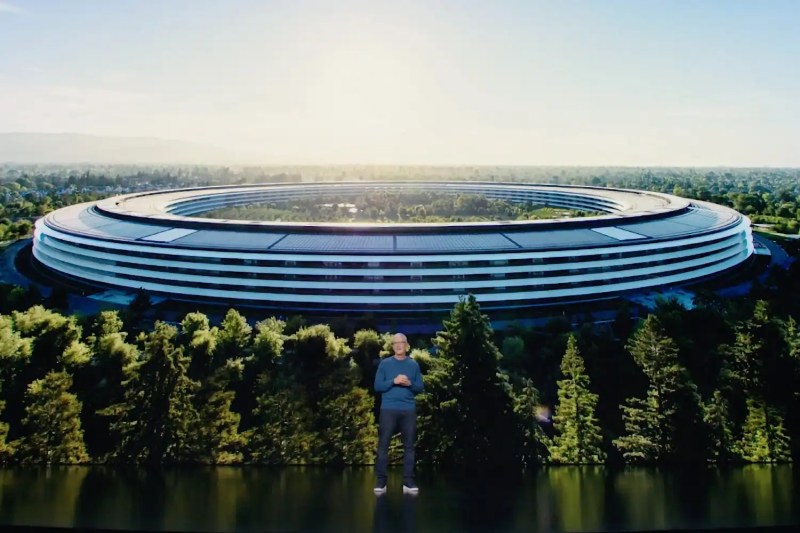
Apple Park Tim Cook AAPL

AAPL is a California-based computer company that became the most successful smartphone company in the world.

AAPL defined by Apple

Here’s how Apple defines itself:

Apple revolutionized personal technology with the introduction of the Macintosh in 1984. Today, Apple leads the world in innovation with iPhone, iPad, Mac, Apple Watch, and Apple TV. Apple’s five software platforms — iOS, iPadOS, macOS, watchOS, and tvOS — provide seamless experiences across all Apple devices and empower people with breakthrough services including the App Store, Apple Music, Apple Pay, and iCloud. Apple’s more than 100,000 employees are dedicated to making the best products on earth, and to leaving the world better than we found it.

Key AAPL history

From Apple I to iMac

Apple was founded in 1976 by Steve Jobs (Steve), Steve Wozniak (Woz), and (briefly) Ronald Wayne as a business partnership: Apple Computer Company. The following year it became Apple Computer, Inc. The company’s first product was the Apple I, a personal computer hand-built by Woz and sold in part-completed kit form. The Apple II and Apple III followed.

The modern Apple as we know it today began in 1983, with the launch of the first personal computer with a graphical user interface, the Lisa. Way too expensive to succeed, it was replaced by the Macintosh in 1984, launched with the single showing of a Ridley Scott commercial during the Super Bowl. The Macintosh transformed the world’s understanding of what a computer was, and would eventually lead to Microsoft adopting the GUI approach.

Steve Jobs and then Apple-CEO John Scully fell out in 1985, when Steve wanted to focus on the Macintosh while Scully wanted to put more attention on the Apple II, which was still selling well. That led to Steve being forced out of the company and going off to form NeXT.

Apple focused on selling Macintosh models at the highest possible margins, but would eventually fall foul of a mix of unsustainable pricing in the face of competition from Windows machines, and an overly complex product lineup. By 1996, the company was in trouble, and in 1997 Steve was brought back, along with the NeXT operating system, which would eventually form the basis of Mac OS X.

Steve simplified the Mac lineup and had industrial designer Jony Ive work on a whole new look for a consumer desktop Mac, the colorful iMac. The iMac, like the original Macintosh, again changed the world’s understanding of what a computer was, and who should want one.

From Apple Computer, Inc. to Apple, Inc.

In 2001, Apple launched the iPod. Although this wasn’t the first mp3 player, it was massively better than anything on the market at the time, and succeeded in turning a geeky piece of technology into a consumer electronics product with mass-market appeal.

The success of the iPod paved the way into other mobile devices. Apple was working on what would eventually become the iPad, when Steve realized that this was the basis of a smartphone. He diverted the team’s work into this, to launch the iPhone in 2007. The iPad launched later, in 2010.

The iPhone was yet another transformational product. While most other smartphones of the time were clunky devices with a keyboard and stylus, the iPhone was a sleek-looking device operated with a finger, and so simple that no user guide was needed. It was with the launch of the iPhone that Apple Computer, Inc. was renamed to Apple, Inc.

From Intel to Apple Silicon

While the iPhone, iPad, Apple Watch, and more are made with Apple-designed processors, the Mac lineup has historically relied on third-party companies for its CPUs. Over the years, Macs progressed from Motorola 680000 series chips through PowerPC to Intel.

In 2020, Apple began a two-year transition to the final stage in that journey, with Macs too finally getting Apple-designed chips. The first such is the M1 chip, used in the latest Mac mini, MacBook Air, and 13-inch MacBook Pro. Other Apple Silicon Macs followed.

AAPL today

Apple is one of the largest companies in the world. It was the first publicly traded company to hit a trillion-dollar valuation in 2018, $2 trillion in 2020, and $3T in 2022.

The company’s product lineup includes five different Mac families (MacBook Air, MacBook Pro, iMac, Mac Pro, and Mac mini); four iPad ranges (iPad mini, iPad, iPad Air, iPad Pro); four iPhone 12 models (12, 12 mini, 12 Pro, 12 Pro Max); three main Apple Watch models (SE, Series 3, Series 6); as well as other products, including Apple TV, AirPods, and HomePod mini.

In addition to hardware sales, Apple derives a growing proportion of its income from Services, including the App Store, iCloud, Apple Music, and Apple Pay.

2019 AAPL shareholders meeting: New iPad Pro features, philanthropy controversy, Apple health push

Apple 2019 shareholders meeting

Apple held its annual shareholders meeting today at the Steve Jobs Theater at Apple Park. While Tim Cook expressed excitement as he walked on stage, the meeting quickly saw some controversial topics brought up by a couple of shareholders. The meeting also included a vote on whether Apple’s board should be required to disclose ideological information about nominees. And we also got tease about a new iPad Pro functionality coming at some point from Craig Federighi.


Expand
Expanding
Close

Report: Phil Schiller has a friendly ‘NFW’ shorthand for killing bad ideas

Phil Schiller NFW

A new report from The Information today takes a look at 180 influential leaders at Apple who are molding the future of the company. Among the topics discussed including Tim Cook and his management style and the rise of other leaders at the company, is an interesting detail about a “NFW” shorthand that SVP Phil Schiller allegedly uses to shoot down bad ideas.


Expand
Expanding
Close

End-to-end encryption ‘infects’ law enforcement, says FBI, as Apple and others seek to protect it

End-to-end encryption 'infects' law enforcement

A senior FBI official who testified to Congress during its battle with Apple over access to a locked iPhone has said that end-to-end encryption ‘infects’ law enforcement.

The remark was made as Apple and other tech companies warn of the danger of compromising strong encryption after the Australian government passed a law which would require them to help access encrypted messages on demand …


Expand
Expanding
Close

Survey suggests healthy iPhone upgrade intent, lukewarm interest in an Apple streaming service

iPhone walkie-talkie

Amid slowing iPhone upgrade rates and slowing smartphone sales in general, a new survey from investment firm Baird indicates higher iPhone upgrade intentions than past years. As noted by Barron’s, Baird analyst William Power has reiterated his bullish stance on AAPL thanks to Services and iPhone upgrade intentions.


Expand
Expanding
Close

Apple Goldman Sachs partnership surprised Wall Street, but it makes sense – WSJ

Concept image for Apple Goldman Sachs credit card

The WSJ reported last week that Apple is partnering with Goldman Sachs to launch a new credit card later in the year.

The new credit card will integrate with the Apple Wallet app on the iPhone to offer special features like the ability to set spending goals and track purchase rewards. The card would purportedly offer rewards like 2% cashback, and maybe more when buying Apple gear.

The paper has more today on Apple’s choice of partner …


Expand
Expanding
Close

Galaxy Fold ‘the main challenge’ for Apple; Samsung may withhold OLED tech

Samsung Galaxy Fold is 'the main potential challenge' for Apple

The Samsung Galaxy Fold, the foldable smartphone the Korean company unveiled yesterday, is ‘the main potential challenge’ for Apple, says Goldman Sachs.

The bank – which is partnering with Apple in the launch of a new credit card later this year – believes the Fold could prove troublesome for Apple in two ways …


Expand
Expanding
Close

With four estimates of Q1 iPhone shipments now out, Gartner is the most pessimistic

iPhone 11 2020 OLED

Apple didn’t reveal its fiscal Q1 iPhone shipments or sales this time around. We know from its revenue of $84.3B that sales must have been significantly down year-on-year, but we’re dependant on market intelligence companies to provide estimates of the actual numbers for the holiday quarter.

We’ve previously seen estimates from Counterpoint, IDC and Strategy Analytics – and now Gartner has completed the set with the most pessimistic view of the four …


Expand
Expanding
Close

WSJ: Joint Apple and Goldman Sachs credit card launching later this year, enables special features with Wallet app

Apple Pay Cash

Apple and Goldman Sachs are readying a joint credit card, according to the Wall Street Journal. The new credit card will integrate with the Apple Wallet app on the iPhone to offer special features like the ability to set spending goals and track purchase rewards. The card would purportedly offer rewards like 2% cashback, and maybe more when buying Apple gear.

The report says the new card will be tested with employees in the next month or so with a launch later in the year. The Wallet app has undergone a significant design change in the iOS 12.2 beta, so it makes sense that Apple has bigger plans in the offing.


Expand
Expanding
Close

Report claims Huawei tried to copy Apple Watch heart rate sensor by asking Apple supplier to share its secrets

Apple Huawei trade secrets

In a new report from The Information, the site details a few purported anecdotes of Huawei trying to steal Apple trade secrets. The tactics involved Huawei engineers appealing to Apple’s manufacturers and suppliers with promises of big orders, but instead using the opportunity to pry on processes specific to Apple’s component production.

In one example, Huawei engineers working on a smartwatch met with a supplier last fall. According to the report, the engineers tried to eke out specs about the Apple Watch’s heart rate sensor by making promises of big orders.


Expand
Expanding
Close

Apple’s streaming video service expected to cost $15/month; faces three big problems, says analyst

Apple's streaming video service expected to cost $15/month

While some are pointing to Apple’s long-awaited streaming video service as a key element in replacing lost iPhone income with Services revenue, at least one major analyst is skeptical.

Predicting that Apple will charge $15/month for the service, Jefferies analyst Tim O’Shea says the company faces two big challenges – and even the best-case forecast doesn’t help the company that much …


Expand
Expanding
Close

Apple removed five minerals suppliers in 2018 for failing to pass human rights audits

Apple Conflict Minerals Report

Apple’s latest Conflict Minerals Report reveals that it removed five mineral smelters and refiners for failing to meet the company’s human rights standards.

In 2018, Apple directed its suppliers to remove from its supply chain five smelters and refiners not willing to participate in, or complete, a Third Party Audit or that did not otherwise meet Apple’s requirements on the responsible sourcing of minerals …


Expand
Expanding
Close