AAPL Company

See All Stories

Breaking news from Cupertino. We’ll give you the latest from Apple headquarters and decipher fact from fiction from the rumor mill.
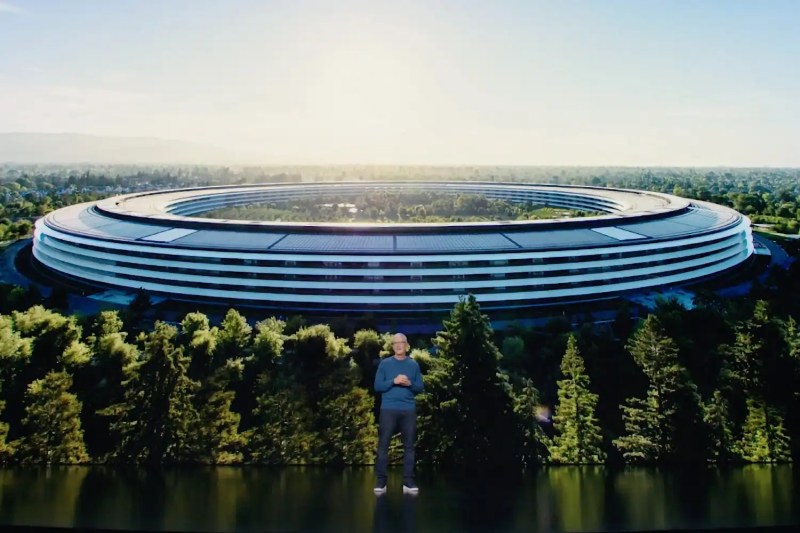
Apple Park Tim Cook AAPL

AAPL is a California-based computer company that became the most successful smartphone company in the world.

AAPL defined by Apple

Here’s how Apple defines itself:

Apple revolutionized personal technology with the introduction of the Macintosh in 1984. Today, Apple leads the world in innovation with iPhone, iPad, Mac, Apple Watch, and Apple TV. Apple’s five software platforms — iOS, iPadOS, macOS, watchOS, and tvOS — provide seamless experiences across all Apple devices and empower people with breakthrough services including the App Store, Apple Music, Apple Pay, and iCloud. Apple’s more than 100,000 employees are dedicated to making the best products on earth, and to leaving the world better than we found it.

Key AAPL history

From Apple I to iMac

Apple was founded in 1976 by Steve Jobs (Steve), Steve Wozniak (Woz), and (briefly) Ronald Wayne as a business partnership: Apple Computer Company. The following year it became Apple Computer, Inc. The company’s first product was the Apple I, a personal computer hand-built by Woz and sold in part-completed kit form. The Apple II and Apple III followed.

The modern Apple as we know it today began in 1983, with the launch of the first personal computer with a graphical user interface, the Lisa. Way too expensive to succeed, it was replaced by the Macintosh in 1984, launched with the single showing of a Ridley Scott commercial during the Super Bowl. The Macintosh transformed the world’s understanding of what a computer was, and would eventually lead to Microsoft adopting the GUI approach.

Steve Jobs and then Apple-CEO John Scully fell out in 1985, when Steve wanted to focus on the Macintosh while Scully wanted to put more attention on the Apple II, which was still selling well. That led to Steve being forced out of the company and going off to form NeXT.

Apple focused on selling Macintosh models at the highest possible margins, but would eventually fall foul of a mix of unsustainable pricing in the face of competition from Windows machines, and an overly complex product lineup. By 1996, the company was in trouble, and in 1997 Steve was brought back, along with the NeXT operating system, which would eventually form the basis of Mac OS X.

Steve simplified the Mac lineup and had industrial designer Jony Ive work on a whole new look for a consumer desktop Mac, the colorful iMac. The iMac, like the original Macintosh, again changed the world’s understanding of what a computer was, and who should want one.

From Apple Computer, Inc. to Apple, Inc.

In 2001, Apple launched the iPod. Although this wasn’t the first mp3 player, it was massively better than anything on the market at the time, and succeeded in turning a geeky piece of technology into a consumer electronics product with mass-market appeal.

The success of the iPod paved the way into other mobile devices. Apple was working on what would eventually become the iPad, when Steve realized that this was the basis of a smartphone. He diverted the team’s work into this, to launch the iPhone in 2007. The iPad launched later, in 2010.

The iPhone was yet another transformational product. While most other smartphones of the time were clunky devices with a keyboard and stylus, the iPhone was a sleek-looking device operated with a finger, and so simple that no user guide was needed. It was with the launch of the iPhone that Apple Computer, Inc. was renamed to Apple, Inc.

From Intel to Apple Silicon

While the iPhone, iPad, Apple Watch, and more are made with Apple-designed processors, the Mac lineup has historically relied on third-party companies for its CPUs. Over the years, Macs progressed from Motorola 680000 series chips through PowerPC to Intel.

In 2020, Apple began a two-year transition to the final stage in that journey, with Macs too finally getting Apple-designed chips. The first such is the M1 chip, used in the latest Mac mini, MacBook Air, and 13-inch MacBook Pro. Other Apple Silicon Macs followed.

AAPL today

Apple is one of the largest companies in the world. It was the first publicly traded company to hit a trillion-dollar valuation in 2018, $2 trillion in 2020, and $3T in 2022.

The company’s product lineup includes five different Mac families (MacBook Air, MacBook Pro, iMac, Mac Pro, and Mac mini); four iPad ranges (iPad mini, iPad, iPad Air, iPad Pro); four iPhone 12 models (12, 12 mini, 12 Pro, 12 Pro Max); three main Apple Watch models (SE, Series 3, Series 6); as well as other products, including Apple TV, AirPods, and HomePod mini.

In addition to hardware sales, Apple derives a growing proportion of its income from Services, including the App Store, iCloud, Apple Music, and Apple Pay.

Site default logo image

Apple will appeal court decision to deny sales ban on Samsung devices

We learned on Wednesday that Apple was denied a request to have certain Samsung devices banned from sale in the ongoing patent case between the two companies, and today The New York Times reports that Apple will appeal that decision.

A judge this week issued a decision denying a sales ban, and Apple on Friday said it would appeal the decision.

In the trial, which wrapped up in May, jurors concluded that Samsung should pay $119.6 million in damages for violating three of Apple’s patents — far below the $2 billion that Apple had asked for. Samsung’s Galaxy S III, a flagship smartphone, accounted for the biggest portion, contributing $52 million worth of the damages.

 Both Samsung and Apple agreed earlier this month to end all patent disputes outside of the United States, but as you can see that is not the case here.

Apple wearable reportedly only being previewed at iPhone event, shipping next year

Site default logo image

via @EA_Roa

Following Re/code’s report earlier this week that Apple will announce its wearable product (iWatch, iBand) alongside new iPhones on September 9th, Re/code now adds that the device won’t actually be available this year.

Sources in position to know tell me it won’t arrive at market for a few months. “It’s not shipping any time soon,” said one. So when does Apple plan to ship its eagerly anticipated wearable? That’s not clear, but my understanding is that we’re unlikely to see it at retail until after the holiday season — think early 2015. 
Expand
Expanding
Close

Apple Store promoting upcoming iTunes Festival w/ pins and wristbands, music-related events

Site default logo image

After bringing the iTunes Festival to the US earlier this year at Austin SXSW, Apple’s annual music event in London kicking off next week has been the focus of much of the company’s attention recently. Earlier this week, Apple’s newly acquired Beats Music began promoting the iTunes Festival with a contest within the app to attend the festival.

Apple will also use its retail stores to further promote the event with iTunes Festival Pins to be worn by retail employees to “spark conversation about the event,” according to an internal document obtained by 9to5Mac. Retail employees will also receive iTunes Festival wristbands and redemption codes for music. Select Apple Stores will also host “music-related events” with local artists, according to the document.
Expand
Expanding
Close

Seeing Through the Illusion: Understanding Apple’s Mastery of the Media

Site default logo image

Apple CEO Tim Cook with former VP of Worldwide Communications Katie Cotton

“Beautifully, unapologetically plastic.”

“Feature for feature, it’s identical to iPad Air in every way.”

“Just avoid holding it in that way.”

Apple’s public relations (PR) department is probably the best in the world — certainly more impressive at shaping and controlling the discussion of its products than any other technology company. Before customers get their first chance to see or touch a new Apple product, the company has carefully orchestrated almost every one of its public appearances: controlled leaks and advance briefings for favored writers, an invite-only media debut, and a special early review process for a group of pre-screened, known-positive writers. Nothing is left to chance, and in the rare case where Apple doesn’t control the initial message, it remedies that by using proxies to deliver carefully crafted, off-the-record responses.

Except for a few big exceptions, such as the memorably off-pitch quotes above, Apple’s “tell them what to believe” PR strategy has worked incredibly well for years. But it has also created tensions between the company and the people who cover it, as well as within Apple itself. The company’s long-time head of PR, Katie Cotton, left the company earlier this year as CEO Tim Cook openly sought to make a major change in the way Apple interacted with the press and its customers. As the hunt for Cotton’s replacement is still in progress, and the depth of Apple’s commitment to change remains unclear, we look today at the techniques Apple has used to quietly manipulate its coverage over the years.

You can navigate between the chapters, below:

– Part 1) Apple Events and Shredded White Booklets

– Part 2) Introducing the Teams: How PR Is Organized at 3 Infinite Loop

– Part 3) Strategies: The “Art of Deep Background” and Controlling the Press

– Part 4) The Departure of a “Tyrant”

– Part 5) Two Heads In Place Of One

– Part 6) Controversies: From Maps to Beats to Haunted Empires

– Part 7) Product Reviews, Briefings, & Reviewer’s Guides

– Part 8) Steve Jobs and the Process Behind Press Releases

– Part 9) A Friendlier, More Transparent Future?

Two months in the making, this article is the product of over a dozen interviews with journalists, bloggers, and PR professionals, including many who have worked at Apple.


Expand
Expanding
Close

Site default logo image

Part 1) Apple Events and Shredded White Booklets

From Seeing Through the Illusion: Understanding Apple’s Mastery of the Media, a profile examining Apple’s PR strategy:

“The keynote is like a production. You have to have a special appreciation for it.”

You probably never knew that an audience member fainted during one of Steve Jobs’s keynotes. Quickly and without a pause, Apple PR representatives quickly guided paramedics to escort the ill man out of the venue, without causing even a blip in the presentation. As a member of Apple’s PR team recalled, preventing what would otherwise have been a show-stopping disruption was seamless, as potential hiccups in the event had been pre-considered “down to a science.” This anecdote demonstrates both Apple’s detailed approach to event planning and wider communications strategy: it has mastered the ability to control situations invisibly, without having its efforts noticed.


Expand
Expanding
Close

Site default logo image

Part 2) Introducing the Teams: How PR Is Organized at 3 Infinite Loop

From Seeing Through the Illusion: Understanding Apple’s Mastery of the Media, a profile examining Apple’s PR strategy:

Unlike Microsoft, Samsung, Adobe, cellular carriers, or Wal-Mart-sized corporations, Apple handles its PR and Communications strategies wholly in-house, mirroring its control over its hardware and software strategies. While Apple still works with external agency Media Arts Lab of TBWA on print, digital, and TV marketing efforts, it is actively reducing its reliance on that firm by boosting its in-house marketing resources. According to sources, Apple is “aggressively” poaching select members of Media Arts Lab for its in-house team, but not undertaking a full-on corporate raid.

Though Apple is a gigantic and ever-growing company, its PR and Communications group is surprisingly tiny. There are only around over 30 PR employees in Apple’s Cupertino offices, with another few dozen-some individuals scattered around the world to organize events, translate press releases, and either answer or dodge questions from journalists in every time zone. The Cupertino-based office is a wing on the third floor of Apple’s Product Marketing building, 3 Infinite Loop. Framed posters of vintage Apple advertisements decorate the area, which otherwise consists of plain white hallways with offices on either side, and two small common areas.


Expand
Expanding
Close

Site default logo image

Part 3) Strategies: The “Art of Deep Background” and Controlling the Press

From Seeing Through the Illusion: Understanding Apple’s Mastery of the Media, a profile examining Apple’s PR strategy:

Apple’s PR department presents a cool, measured public-facing image: it only responds to press inquiries when it wants to, doesn’t offer quotes unless they’ll be reprinted without criticism, and responds directly only when it determines that something needs to be said by “Apple” rather than “sources familiar with the matter.” You could picture Apple’s PR strategy as the work of a wise, wealthy, and not particularly friendly queen – one always too busy to be bothered, until for some reason, she’s not.

So it’s a surprise that Apple actually isn’t that detached from the media: it’s more like a teenage girl obsessively keeping her fingers on the pulse of coverage. Members of Apple PR seek tabloid photos of celebrities holding iPhones, while others read Apple-focused blogs actively, and keep tabs on prominent Apple beat writers using anonymized social media accounts. A former Apple PR employee notes that the team enjoys being an “overall watchdog,” monitoring what the media is saying about the company every day. This oversight is so important to Apple that a few times a week, top executives are sent a document detailing the company’s latest press coverage. When Apple is not pleased with coverage, it sometimes works to shift the narrative, even attempting to undermine giant news organizations.


Expand
Expanding
Close

Site default logo image

Part 4) The Departure of a “Tyrant”

From Seeing Through the Illusion: Understanding Apple’s Mastery of the Media, a profile examining Apple’s PR strategy:

While Apple PR portrayed former VP of Worldwide Corporate Communications Katie Cotton’s departure as a way for the executive to spend more time with her children, the true reason for her departure more likely was Tim Cook’s different vision for Apple’s future public-facing appearances.

As a former member of Apple’s PR team recounted, Cotton was the company’s “ace in the hole” for journalists. Known to control all media access for Apple, Cotton’s power and attitude made some journalists fear that their access to Apple events and early product briefings would be cut off. These are two privileges that, if taken away, could negatively alter a writer’s career. Internally, Cotton was described by some Apple employees as a “tyrant.” One Apple employee called Cotton’s reign a “battle for the front facing image of the company” and said that the executive ran the group like a “fiefdom.”


Expand
Expanding
Close

Site default logo image

Part 5) Two Heads In Place Of One

From Seeing Through the Illusion: Understanding Apple’s Mastery of the Media, a profile examining Apple’s PR strategy:

Two Heads In Place Of One

Months after announcing her departure, Katie Cotton has moved on from Apple, according to a person close to the former executive. She is no longer involved in the media strategy that she led for 18 years, and is not participating in recruiting a replacement. A source told us that “Cotton does not believe in searching for her own successor.” While Tim Cook is pondering the future of the department, Cotton left Apple PR in the hands of two longtime deputies: Steve Dowling and Natalie Kerris. The interim leaders (pictured left and top right, respectively) took over in May, and now both report directly to Cook.

Cotton’s “emotional” departure announcement in May indicated that Cook would oversee an internal and external search for a replacement, according to people briefed on the process. It’s somewhat surprising that an 18-year veteran of Apple would abruptly depart the firm with no successor in place, and have no obvious say in who her replacement may be. Considering that Cotton left Apple the work day before WWDC, Apple’s largest event of the year, and also that she technically remains an Apple employee (following Scott Forstall, who served as an “advisor” for a few months short of a year following his departure), evidence suggests that she did not leave entirely of her own accord.


Expand
Expanding
Close

Site default logo image

Part 6) Controversies: From Maps to Beats to Haunted Empires

From Seeing Through the Illusion: Understanding Apple’s Mastery of the Media, a profile examining Apple’s PR strategy:

The number of major controversies in Apple’s recent history could be counted on a single hand, but because of the company’s size and history of PR dominance, each one has attracted global attention. Most Apple-watchers agree that the company’s largest debacle was the iPhone 4’s faulty antenna. Steve Jobs took an extended period of time before holding a press conference, simultaneously spinning the reports as overblown, and debuting a free case program. Before that Friday press conference in the summer of 2010, the iPhone 4’s negative press had spun out of control, resulting in viral YouTube videos and class action lawsuits. Although Apple downplayed the controversy publicly, it fired and quietly blamed a senior engineering executive for the issue, redesigning and then doing away with the antenna design in subsequent iPhones. Tim Cook hasn’t been perfect, but he has tended to respond quickly to controversies, suggesting that he is willing to handle controversies before they turn into crises.

Maps:

Asked to describe the iOS Maps debacle, a member of Apple PR told us that “it was certainly tough,” as “a lot of people were upset that Scott [Forstall] was not taking responsibility for his product.” The employee went on to say that that it felt internally like Forstall “was skirting the responsibility” and that it was becoming a “waiting game,” an “icky” situation. Cook did not wait too long to circumvent Forstall, however. Just a few days into iOS 6’s public launch, Cook “displayed real leadership” and “started to take Apple and make it the best company it could be both internally and externally.”

Cook wrote a Maps apology letter and decided to terminate Forstall, promoting executives such as Jony Ive, Eddy Cue, and Craig Federighi to take on Forstall’s responsibilities. “Tim played a huge personal role in writing the letter alongside the PR and Product Marketing teams,” according to the Apple employee.

After witnessing the iPhone 4 Antennagate situation, Cook knew that he had to do better than his predecessor at handling a real problem. Instead of simply watching as executives passed blame around a board room table, Cook took control of the situation and promised a solution. Whatever you may think of the decision, it was a giant moment in Apple leadership, given Forstall’s prior importance to the company; the detail-obsessed executive had been called Apple’s CEO in waiting. While Apple’s Maps team is still clouded by internal politics and incomplete features, Apple is clearly pushing forward and attempting to resolve the many problems with its Maps app. Since the apology was issued, Maps has expanded to OS X and been redesigned on iOS, but it has also gained distractions like Flyover Tours.

Beats:

Apple’s acquisition of Beats Electronics and Beats Music was not so much an issue of negative PR, but it demonstrates one of the current problems with Apple’s internal culture. When news broke of Apple being in late talks to acquire Beats on a Thursday afternoon, Apple PR had a difficult time responding to the situation because the team had no inside knowledge as to whether the claims were accurate, Apple employees told us. The company’s need-to-know culture restricts information to individuals who must know about an upcoming product, service, or announcement. In the case of the Beats leak, Apple PR could not act on the situation because they had no information beyond what had been published in media reports.

Normally, when a product leak occurs, Apple PR’s top brass typically meets with Product Managers from the respective groups to gauge how accurate the leak is. The PR team then meets to decide how to comment on the record, off the record, or when to say nothing at all. Leaks also offer Apple the opportunity to watch how consumers and other media outlets respond to particular upcoming products, and if there is time for the engineering and marketing teams to make changes, the groups now know which direction to move the products. Sometimes the leaks come from Apple itself; other times, they do not. But when an inadvertent leak is corporate- rather than product-related, the PR team’s only option is to climb high up the totem pole for assistance.

Haunted Empire:

Another low-point for Apple in recent years was the debut of former Wall Street Journal reporter Yukari Iwatani Kane’s book titled Haunted Empire: Apple After Steve Jobs. The book took a grim approach to detailing Apple under the leadership of Tim Cook, saying that the company’s best days are behind it, as Steve Jobs is no longer at the helm.

In a twist from the usual process, Apple PR did not respond to the book’s assertions via spokespeople; instead, Tim Cook and other Apple executives did so themselves. As a member of Apple’s PR team said, Apple’s executives were “personally affected” by the narrative and Cook “made the call” to respond himself. In an email sent to CNBC, Cook said:

“This nonsense belongs with some of the other books I’ve read about Apple. It fails to capture Apple, Steve, or anyone else in the company. Apple has over 85,000 employees that come to work each day to do their best work, to create the world’s best products, to put their mark in the universe and leave it better than they found it. This has been the heart of Apple from day one and will remain at the heart for decades to come. I am very confident about our future. We’ve always had many doubters in our history. They only make us stronger.”

In smaller jabs, Phil Schiller took to Twitter to dispute a comment from the book about his taste in cars, and Senior Vice President of Internet Software and Services Eddy Cue shot down a claim that Jobs had tossed a pen at Cue’s face. While Schiller and Cue disputing minor facts within the larger story may seem trivial, Apple executives rarely if ever personally respond to books and media reports publicly. The commentary from Cook, Cue, and Schiller represents Apple executives personally taking full control of the PR situation and not leaving it up to the PR team. Apple employees recall feeling that this was a very “Steve” move on Cook’s part.

Negative reviews of Haunted Empire quickly piled up on Apple-focused web sites. Whether Apple PR helped to coordinate some of those reviews remains a minor mystery.

— See Part 7) Product Reviews, Briefings, & Reviewer’s Guides

Site default logo image

Part 7) Product Reviews, Briefings, & Reviewer’s Guides

From Seeing Through the Illusion: Understanding Apple’s Mastery of the Media, a profile examining Apple’s PR strategy:

Pogue, Baig, former <em>Newsweek</em> columnist Steven Levy, and Mossberg (left to right)

Product Reviews, Briefings, & Reviewer’s Guides

The attention that Apple’s PR and Communications group puts into events can even be seen in the packages that reviewers receive with new iPhones, iPads, and Macs. Apple’s review units are considered the holy grails of pre-release technology products, and only a small number of hand-selected, generally positive writers are granted the first shot at reviewing the new gear. Former Apple PR representatives recalled being instructed to specifically inspect individual iPhone and iPad boxes for scuff marks and minor scratches before handing the units off to reviewers such as Walt Mossberg, David Pogue, and Ed Baig. Every unit had to be perfect.

Mossberg was the Personal Technology Columnist for the Wall Street Journal and is now Co-Executive Editor of Re/code. Pogue was lead tech reviewer for The New York Times and is now the chief of Yahoo’s tech section. Ed Baig is a long-time columnist for USA Today. These writers not only have a common denominator of working at major publications, but are also the only three U.S. journalists to have been granted early access to every new iOS device (including the first iPhone and iPad) since 2007. According to a report, Apple’s concern over these writers was significant enough that an engineer was reportedly pulled off vacation to personally help Pogue when he experienced a problem with an Apple TV before its debut in stores. Two of them were mentioned in Walter Isaacson’s biography of Steve Jobs as the only journalists Apple really cares about.


Expand
Expanding
Close

Site default logo image

Part 8) Steve Jobs and the Process Behind Press Releases

From Seeing Through the Illusion: Understanding Apple’s Mastery of the Media, a profile examining Apple’s PR strategy:

Steve Jobs and the Process Behind Press Releases

A former Apple PR member recalls that Steve Jobs once scrapped an entire Apple press release announcing a new partnership with another company solely because he did not like the name of the new partner. Apple ended up re-writing the entire press release to work around having to actually name the company. When Steve Jobs was at the helm, the buck stopped at his office for even the smallest PR minutiae. Even beyond the bigger picture deals like magazine covers and major interviews, Jobs was involved with Apple’s communications down to individual words in press releases.

It was Jobs who came up with the strategy of assigning an adjective to each Apple product for usage in press releases. For instance, the iPad is consistently referred to as “Magical,” while the App Store is “Legendary” and the iPhone is “Revolutionary.” These terms were not mentioned just once in a single press release, but are commonly used for those respective products across Apple’s marketing materials, internal presentations, and high-profile media events.


Expand
Expanding
Close

Site default logo image

Part 9) A Friendlier, More Transparent Future?

From Seeing Through the Illusion: Understanding Apple’s Mastery of the Media, a profile examining Apple’s PR strategy:

Post-Katie Cotton, members of Apple’s PR and Communications team are said to be excited about the new opportunities and tactics they will be able to execute under a friendlier, more transparent leader. Current and former employees say that Cook is likely looking at candidates with ties to world governments, expansive knowledge of labor force regulations, a deep understanding of China’s economics, and, of course, expertise in consumer technology and social media.

Cook has already expanded Apple’s executive team over the past year, adding leaders who fit those characteristics. For example, Cook hired former Environmental Protection Agency chief Lisa P. Jackson as an executive to run Environmental Initiatives. He has also hired a new retail executive with immense experience with China, Angela Ahrendts, as well as people like Musa Tariq with extensive knowledge of social media-based communication and marketing. Cook has also brought former Senate staffer Amber Cottle into the fold, and has met with government officials more frequently than his predecessor.


Expand
Expanding
Close

Claimed production model of iPhone 6 casing shows more subtle Space Gray antenna breaks

Site default logo image

French site NWE claims to have found photos of a finished production model of the casing of the 4.7-inch version of the iPhone 6, shown in gray.

While not revealing anything new about the overall design of the phone, it does appear to give a much clearer view of how the antenna breaks are handled, with a significantly more subtle appearance than had been suggested by some earlier leaked parts, mockups and renders – as seen in the photo below … 
Expand
Expanding
Close

“Thinner, brighter, lighter” – Samsung attack ads on Apple continue with anti-iPad NYers

Site default logo image

[youtube=https://www.youtube.com/watch?v=wCrcm_CHM3g]

Samsung’s series of attack ads on Apple continue with a video of supposed voxpops in which New Yorkers are shown both the iPad Air and Galaxy Tab S and asked to compare them. Would you believe it, everyone prefers the Samsung, even the guy with limited room in his purse … 
Expand
Expanding
Close

Apple reportedly working with Dutch company NXP to include NFC in iPhone 6, possibly iWatch

Site default logo image

Apple is reportedly planning to include NFC in the iPhone 6 for secure wireless payments using chips sourced from a Dutch company called XNP, the Financial Times reported today. It’s not the first time this rumor has cropped up before an iPhone launch, but other recent reports seem to indicate that this year it might just be happening.

In fact, earlier this year Apple was said to have reached a deal with China UnionPay, the nation’s only domestic mobile payment processor, to include NFC support at countless retailers in the next iPhone. What’s perhaps even more interesting is that the technology may not be limited solely to the handset itself…


Expand
Expanding
Close

Site default logo image

Bloomberg corroborates Apple wearable to be announced at Sept. 9 event

As we reported earlier today, Apple has sent out invitations to the press for a September 9th media event. During that event the company will likely unveil the next-gen iPhone, but a report from Re/code also indicated that it may debut a wearable device at the same time. A new report from Bloomberg lends further credence to this claim:

Now the Cupertino, California-based company will attempt to repeat that feat [the success of the iPod, iPhone, and iPad] in wearables, an emerging group of devices that track people’s activity and health. Apple will introduce a wearable gadget along with new iPhones on Sept. 9, a person with knowledge of the plans said. Notices for the event, which will also take place in Cupertino, were sent out today.

As we’e exclusively reported in the past, Apple has been assembling a team of fashion and fitness experts to create a wearable device with a focus on health and fitness applications.

More photos of the structure Apple is building at the Flint Center ahead of iPhone event

Site default logo image

In addition to officially announcing its special event to be held on September 9th where two new iPhones and the long rumored wearable device is expected to debut, Apple has begun to build some sort of structure at the Flint Center for Performing Arts in Cupertino, California, as noted in our previous post. Additional images of the venue and mysterious structure have been shared by The Loop which reveal more sides to the structure as you can see above…


Expand
Expanding
Close

Apple announces special event for September 9th: ‘Wish we could say more’

Site default logo image

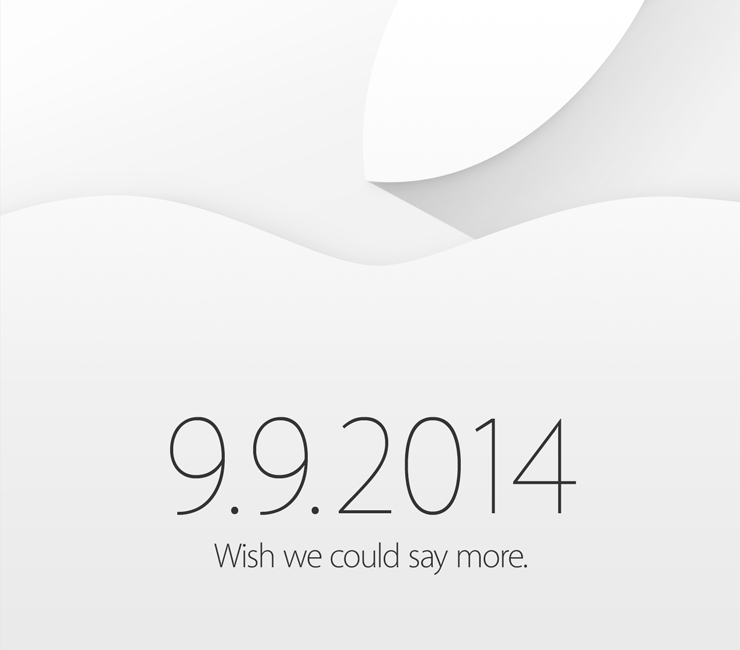
Apple has just sent out press invites for its latest event, via The Loop, where the company is expected to announce the iPhone 6. The event is scheduled for 10 AM Pacific Time on September 9th. Atypically, Apple is holding the event at a new venue, the Flint Center for the Performing Arts in Cupertino. This is the same venue that Apple introduced the original Mac, over 30 years ago. Apple has constructed a ‘three-story structure’ at the site, which may be used as the hands-on area after the presentation is over. Usually, Apple’s demo areas are only the size of a large room and do not span multiple floors.

Yesterday, Recode reported that Apple will also show off its new wrist wearable device (‘iWatch’) at the September 9th event. Unsurprisingly, the invite does not reveal specifics about what Apple will announce, bearing a rather bland image of the Apple logo coupled with the slogan ‘Wish we could say more’. Feel free to speculate what you think will be announced in the comments. A full screenshot of the email is after the break.
Expand
Expanding
Close

Analyst & GTAT investor claims all 5.5-inch iPhone 6 models get sapphire, some 4.7-inch models

Site default logo image

An investment note we’ve seen from analyst and GTAT investor Matt Margolis claims that all 5.5-inch models of the iPhone 6 will come with sapphire screens, while the 4.7-inch model will get either sapphire or Gorilla Glass depending on the specification.

According to sources close to Foxconn’s manufacturing operations the iPhone 6 will come built with sapphire cover screens in both sizes. These sources have also indicated that the 4.7” Phone 6 is being assembled in two varieties, a sapphire cover screen version and a version featuring Gorilla Glass. At this point I do not know the approximate mix between the two cover screen options on the 4.7” iPhone 6. My latest check on the 5.5” iPhone 6 indicates that all units of the device are expected to come protected by a sapphire cover screen at this point …


Expand
Expanding
Close

WIRED now also saying iPhone 6 will have NFC and mobile payments

Site default logo image

WIRED is the latest publication to report that the soon-to-be-announced iPhone 6 will be accompanied by a new mobile payment system using NFC technology.

The company’s next iPhone will feature its own payment platform, sources familiar with the matter told WIRED. In fact, that platform will be one of the hallmark features of the device when it’s unveiled on September 9. We’re told the solution will involve NFC.


Expand
Expanding
Close

Site default logo image

Apple successfully patents iconic glass cube design of Fifth Avenue store in NYC

A few weeks after Apple was granted a European trademark on the key design elements of its retail stores, the company has been awarded a U.S. patent on the iconic glass cube design of its Fifth Avenue store in Manhattan. Steve Jobs is one of those credited as an inventor.

Patently Apple reports that Apple also applied for a trademark for the design back in 2010, but no decision has yet been made on that.

Apple was granted a patent for the similarly iconic glass cylinder design for its Shanghai store back in 2012.

Apple has been renewing the interior design of its stores around the world, and creating a new organizational structure as Angela Ahrendts focuses on further international expansion. It is reportedly working on the largest Apple Store in the world in Dubai.

More iPhone 6 component photos ‘confirm’ silver, gray and gold colors, depict larger internal speaker and new vibrator design

Site default logo image

In the latest round of iPhone 6 images, NowhereElse.fr has a new set of photos showing a selection of SIM trays, home buttons, speakers and vibrator motors. The SIM trays are once again show in the same three colors as the iPhone 5s, silver, gray and gold. It seems like the gray is of a slightly lighter shade than the Space Gray of the iPhone 5s, but the quality of the pictures makes it difficult to tell for sure. What is very noticeable is the curved edge to the SIM tray, which will make a seamless line with the iPhone 6’s curved edges, seen countless times before. The images also depict some changes to the speaker and vibrator motor of the device …


Expand
Expanding
Close