Opinion pieces & commentary
See All Stories

Opinion pieces are intended to provide interesting perspective on an Apple-related topic, and to be an entertaining read. They represent the opinions of their authors, and not of the site as a whole: this is the reason we don’t label them as editorials.

We use the ‘Opinion’ prefix for longer pieces, and ‘Comment’ for shorter pieces that may be making just a single observation.

We fully encourage discussion and debate on opinion pieces, and you are of course welcome to strongly disagree with both the author and other commenters. All we ask is that you apply the golden rule to your interactions: treat others as you’d wish to be treated. In particular, debate the topic not the person – it’s absolutely fine to say that you think someone is completely wrong because x, y and z; it’s not ok to call their views idiotic.

That said, we love to hear your thoughts and views, and really appreciate those who take the time to give their considered opinions.

Opinion: The secret Apple Watch port should probably stay hidden… for now

photo credit: iFixit

This weekend, my colleague Jordan Kahn broke the news that “accessory makers plan to tap Apple Watch’s hidden port for battery straps and faster charging,” which is entirely true based on already-expressed developer interest. There is indeed a six-pin port nestled inside one of the watch band recesses, completely covered with a metal panel to obscure its functionality. Unfortunately, Jordan’s story has been picked up elsewhere to support the claim that the hidden port will be “a goldmine for accessory makers.” I hate to take issue with these reports, as the concept — exploiting a hidden port to make new accessories — is exciting, but I have one word for people who are planning to build or buy accessories reliant upon that port:

Stop.

Stop before you spend $250 to order an accessory that might never arrive or work properly. Stop before you spend $250,000 to build an accessory that might never ship, or might ship and then stop working.

The Apple Watch is not the first Apple product with an undocumented connector. There’s a very good reason the hidden port is there — and it’s not for accessories. I’ll explain below…


Expand
Expanding
Close

Opinion: Here’s why Apple won’t offer internal upgrades for the Apple Watch

At the height of my Apple fandom, I purchased one of the company’s most iconic and quixotic designs: a used Power Mac G4 Cube, the beautiful floating computer Apple initially described as “revolutionary” before putting it on ice — Apple’s words — less than a year later. Like many other people, I had fallen in love with the Cube’s design the first time I saw it, but wouldn’t spend $1,800-$2,300 to own one. So I waited until the price fell significantly and bought it used on eBay.

Back then, I wondered why Apple had discontinued its “revolutionary” computer so quickly. And why it hadn’t opted to “reintroduce an upgraded model of the unique computer in the future,” as its discontinuation press release had suggested was possible. After rebuilding my Cube inside and out, I completely understood the answer: Apple and technology had both moved on. Old replacement parts were still available, but new parts were smaller, faster, and more reliable. Apple had effectively redesigned the Cube to become the more reasonably priced Mac mini, unsympathetically abandoning the original form factor because it had fundamental problems.

Just like every major new Apple product released over the past decade, the Apple Watch’s first-generation design will give way to a better second-generation design in the not-too-distant future. Recall that Apple discarded the first iPhone, iPad, iPod touch, and Apple TV enclosures after only a single generation, in each case making major design changes to address early concerns. So although some people have suggested otherwise, this means that there won’t be an “upgrade” program to swap the S1 core of the Apple Watch when the S2 is introduced. Instead, there will be a whole new watch designed to entice new customers, and remedy early adopters’ complaints…


Expand
Expanding
Close

Soft launch: Why the Apple Watch isn’t getting the ‘blockbuster’ debut it deserves

Site default logo image

It’s no secret that Apple’s launch plan for the Apple Watch hasn’t gone as well as the original iPhone and iPad launches.

Extremely limited supplies have led to long wait times for pre-orders. The lineup of choices is so complex that the company needed to give people weeks to try them on in stores before they were supposed to be available. And the confusing online-only purchase process advertised in Apple’s retail stores didn’t initially disclose that stores won’t have any units in stock on launch day. No part of the process has thrilled potential customers.

Yesterday, Apple’s SVP of Retail Angela Ahrendts sent an internal video memo to employees about the Apple Watch rollout in an attempt to help answer questions and assuage concerns about the many issues plaguing the launch, not the least of which is the lack of a “blockbuster launch” at retail outlets that customers and employees alike have come to expect from Apple. Some people took the video as an admission of guilt by Ahrendts. But although she may share responsibility for some of Apple’s missteps, she isn’t solely or even largely responsible for the issues.

Here’s where I believe things fell apart during this launch…


Expand
Expanding
Close

Opinion: Don’t judge – Apple Watch accessories are supposed to be personal, not universal

Over the past fifteen years, I’ve seen certain commenters pick the same fight literally every time Apple releases another device: “are accessories really needed for _____?” Fill the blank in with “iPod,” “iPhone,” “iPad,” “Apple TV,” or “Apple Watch” and you’ll see how the answer has eventually turned out to be “yes” every time. Even though I’ve tested virtually every type of Apple accessory out there, I couldn’t help but shake my head when companies first announced cases for the Apple TV’s remote control. Crazy, right? But there were eventually behind-TV mounts, Bluetooth keyboards, and universal remote controls that became truly handy for even Apple’s least-accessorized device.

Now the Apple Watch is coming, and despite Apple’s focus on its purely aesthetic customizability — including welcoming third-party band makers to the party — the “is this necessary?” comments are appearing again. “Nothing like a faux carbon fiber decal on your watch to convey your sense of good taste,” said one commenter, who separately opined that “every protective product listed here is the modern day equivalent of plastic-covered furniture.” To be honest, I personally agree with the first sentiment, but I’m not the target market for stickers. And I can still remember some people describing iPhone cases as plastic-wrapped furniture, back before Apple started selling them, too. So who’s actually right here, a handful of anonymous commenters acting as arbiters of universal style, or consumers looking to have fun customizing their new toys to their personal tastes?…


Expand
Expanding
Close

Opinion: I’ve seen the future of Apple’s online/offline retail experience, and it’s magic

Site default logo image

‘Seen’ is something of an exaggeration, but ‘had a small glimpse of’ would have made for a rather lengthy headline.

Despite the fact that I’d placed my Apple Watch order online within a few minutes of pre-orders opening, I also made a same-day appointment for a try-on. This was partly because I wanted to handle the watch right away: Apple PR does not smile on a website that consistently reports upcoming product information, so we are firmly crossed-off the list of invitees to launches. But it was also partly because I was curious how the watch would be presented by store staff.

But let me begin by backing up a step or two … 
Expand
Expanding
Close

Opinion: The pros & cons of existing streaming music services & what Apple’s needs to succeed

Site default logo image

Apple’s upcoming music streaming service comes at an interesting time in the industry. Jay-Z recently relaunched his own streaming music service dubbed Tidal, recruiting help from other A-list artists like Rhianna, Alicia Keys, Coldplay frontman Chris Martin, and Kanye West. There are existing services from Spotify, Beats, Google, and others. All of these offerings have their own pros and cons, but I’ve used them all and none of them accomplish streaming music perfectly. Apple now has the opportunity to take the best features of each service and offer its own competitive service.

Last week, Ben Lovejoy broke down exactly what Apple’s streaming music service would need for him to stop buying music. Even without Apple’s new service, I’ve already done that. Most of my music is streamed from Spotify. Rarely do I actually buy albums on iTunes, and I almost never buy physical CDs. The problem with this approach is no streaming music service gets it 100 percent right for me.

I’m hoping that Apple incorporates the best of each existing subscription music service into its own upcoming music service. What are those key points? Let’s discuss…


Expand
Expanding
Close

Opinion: Roku’s new media players use voice search and apps to make Apple TV feel old

Just so there’s no ambiguity on this point, I’m definitely an Apple TV fan. The first-generation model was a (literally) hot mess, but Apple did a much better job with the streamlined second- and third-generation versions, which I use every day and have strongly recommended for years. If you have an iPad, iPhone, or iPod touch, the Apple TV is one of the top three accessories you can buy for under $100, and nearly a no-brainer at Apple’s recently announced $69 price point.

Even as a fan, though, I give Apple TV’s chief competitor Roku great credit for developing compelling alternatives. According to reports, Roku is the number one seller of media streamers, and has been outselling the Apple TV for some time now. While it’s true that sales don’t necessarily reflect quality, Roku has earned its numbers by frequently iterating on its products — ironically unlike Apple, which has spent years letting an old Apple TV design chug along as a “hobby.” The difference in Roku’s and Apple’s approaches became starker yesterday when Roku released the new Roku 3 with Voice Search ($100) and new Roku 2 ($70), updates to two of its already-successful devices. These media streamers include several of the key features Apple should be adding to the Apple TV, including voice search, downloadable apps, games, and more…


Expand
Expanding
Close

Opinion: Could the 1080p Apple TV 4 hint at a 4K Apple TV set?

Site default logo image

The Apple TV set-top box hardware is expected to be updated this summer after 3 years since the last real refresh and a recent price drop from $99 to $69. While the last Apple TV upgrade boosted video output from 720p to 1080p, the rumored Apple TV 4 is not believed to support ultra high definition 4K video output featured on newer TV sets. Here’s why that’s no surprise and what I think it could mean for an actual Apple TV set:


Expand
Expanding
Close

Opinion: How soon is too soon for an Apple Watch 2?

Apple’s<a href="http://9to5mac.com/2015/03/29/apple-store-revamp-for-apple-watch-revealed-magical-tables-demo-loops-sales-process/" target="_blank"> upcoming retail overhaul</a> for displaying the Watch

A lot of my techie friends are saying that the entry priced-Apple Watch Sport will be their pick next month, and not because of the exterior look. The theory is that Sport is the cheapest way to experience Apple’s new product category in 2015, and since the second-gen Apple Watch will inevitably be upgraded, why pay a premium this year for nicer materials such as stainless steel and sapphire glass?

Despite the Apple Watch’s desire to marry jewelry with technology, it hasn’t lost the baggage gadgets carry, namely the reality that they’ll be outdated and replaced in a relatively short period of time. If the Apple Watch evolves anything like the original iPad did when it became the iPad 2, the differences could be dramatic.

Personally, when I think about getting more perceived value out of a higher-priced stainless steel Apple Watch rather than testing the waters with the cheaper aluminum model, I’m more concerned with how soon the Apple Watch 2 will be announced rather than how much more functional the newer device could be. No matter what happens with the first-generation model, an Apple Watch 2 will come to market. How will Apple balance keeping the Apple Watch evolutionary momentum going with keeping the first-generation model “modern” for enough time to satisfy early adopters?


Expand
Expanding
Close

Opinion: Why iPod nano’s three-week battery life is and isn’t a fair benchmark for Apple Watch longevity

Site default logo image

Over the past month, I spent several weeks testing the battery of an Apple watch. Not the Apple Watch, of course, but the first product Apple released with the option of being worn like one: the sixth-generation iPod nano. Back in 2010, Steve Jobs mentioned during the “instantly wearable” nano’s introduction (video at 26:30) that one of Apple’s directors planned to use it as a watch. That brief aside directly inspired the creation of nano watchband makers Lunatik and Hex, as well as simple, cheap bands from Apple accessory specialists including GriffinIncipio, and SwitchEasy. A year later, Apple updated the nano’s software to expand its watch functionality, adding “16 new digital clock faces and improved built-in fitness features.” The nano-as-watch test was at least somewhat successful; Hex even shared pictures showing Snoop Dogg and Justin Bieber wearing its nano watch bands.

Today, Apple is three weeks away from releasing the “real” Apple Watch — a product that clearly shares the old iPod nano’s DNA, but was thoroughly redesigned from top to bottom. Yet despite including a battery that’s around twice as powerful as the nano’s, the Watch is promising only 18 hours of typical battery life, maxing out at three days if used solely as a watch in a low-power mode. So when I ran a “watch-only” test of my used four-year-old nano and found that it ran for just over three weeks, keeping perfect time without ever touching a charger (or synchronizing with an atomic clock), I was genuinely surprised. It turns out that Apple really optimized the nano to work well as a timepiece without requiring constant recharging. So what happened with the Apple Watch?…


Expand
Expanding
Close

Opinion: As Nintendo ponders iOS, it’s time for Mac console game emulators to shine

When Nintendo announced last week that it will collaborate with DeNA to release iPhone and iPad games, gamers split into two camps: people intrigued by the promise of brand new Nintendo titles designed for mobile devices, and others — including myself — who expect Nintendo to release shallow mobile minigames, mostly to promote console titles. Nintendo hasn’t actually committed to bringing the Super Mario games people love into the App Store; instead, it’s saying only that its characters will appear in new titles that won’t require complex controls. The implication is that only Nintendo consoles are capable of playing Nintendo’s console games.

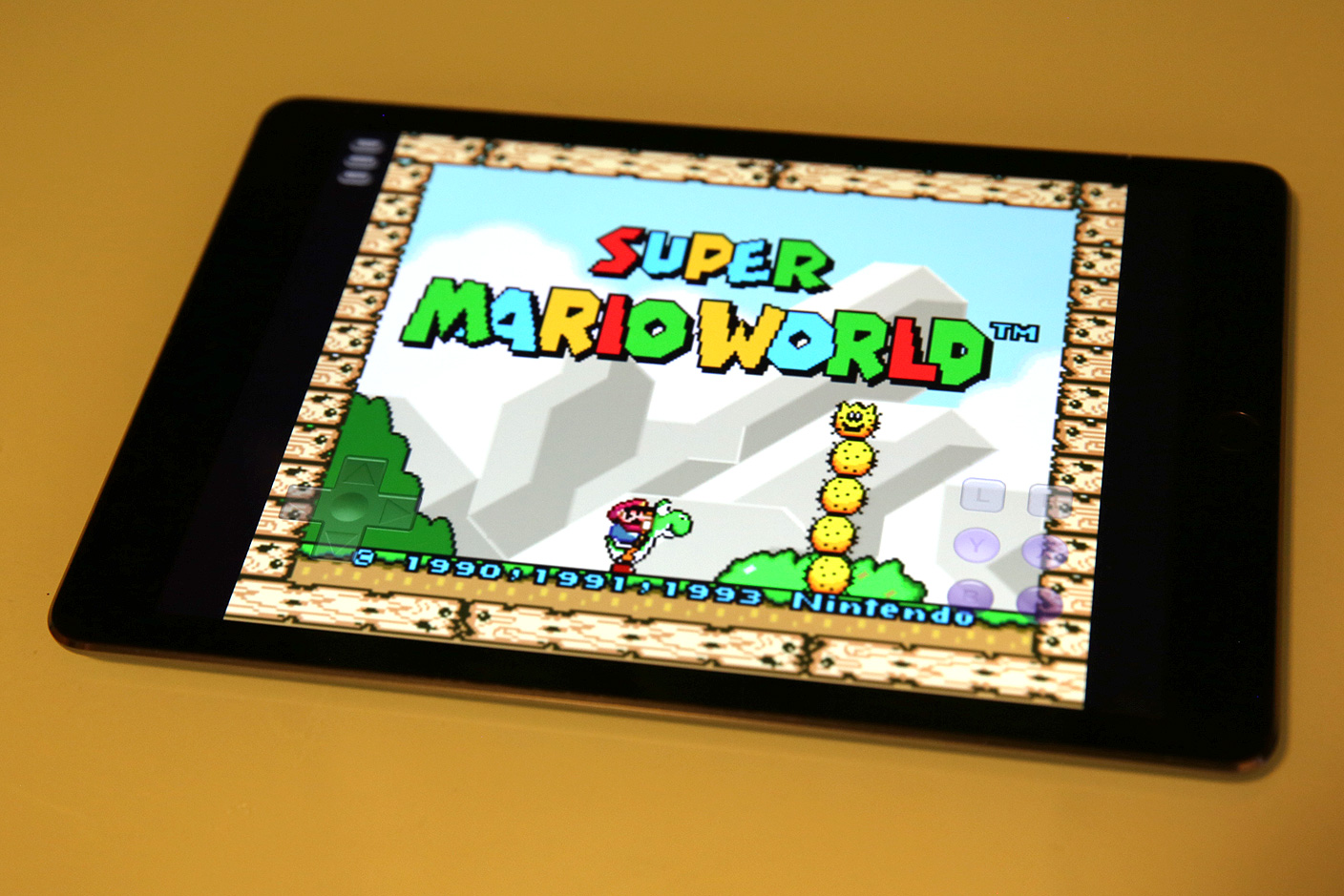
I disagree with that. For years, Macs and PCs have been able to run thousands of classic console and arcade games, including Nintendo’s best-known titles, using emulators. These free programs let discontinued, often HDTV-incompatible games play on computers — in many cases, with noticeably better graphics than you remember. Freed from the fuzzy, low-contrast televisions people used to own, classic games can look pixel-sharp on Retina displays, and some emulators actually improve the edges and textures of 3-D objects. Nintendo may not want you to play its prior console games on your favorite Apple device’s screen, but thanks to emulators, it’s possible today. The picture above? That’s Super Mario Galaxy, running on a Retina MacBook Pro…


Expand
Expanding
Close

10 reasons why Apple is to blame for the decline of iPad sales

Site default logo image

KGI

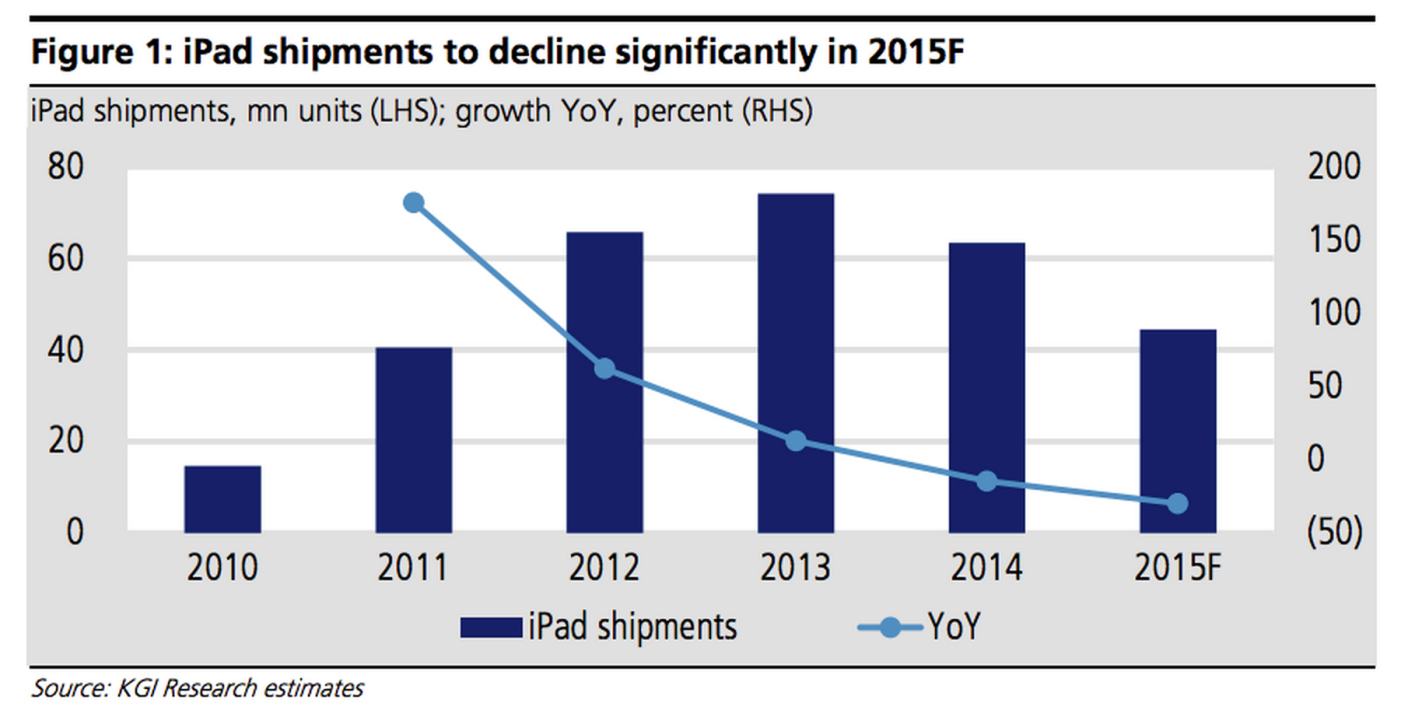
It has been a tough slough for Apple’s iPad since the height of its popularity in 2013. Facing its second straight year of negative growth, there isn’t a consensus on why iPad sales have declined. I believe the slump is attributable to a combination of factors.

Apple CEO Tim Cook called the declining iPad sales a “speed bump” last year before the launch of the 2014 models, but we haven’t seen what Apple plans to do to rejuvenate the product. From my point of view, Apple itself has done more to hurt iPad sales than any external factor, such as Microsoft or Google.

But that’s not necessarily a bad thing. Here’s a full explanation of my theory…


Expand
Expanding
Close

Opinion: My cable subscription woes and the appeal of an ‘Apple Cable’ service

Site default logo image

My cable provider is pretty terrible. I don’t need to name any names because this likely applies to your cable provider as well. They are all horrible. I often experience drops on popular channels, get bonus filler channels that no one wants, and see indiscriminate additional subscription fees and charges without any real reason. This Onion article, though it is satire, doesn’t stray too far from the truth.

For a very casual TV watcher, it’s not a great experience – to put it mildly.

So the prospect of an Apple web TV service with a price tag of around $40, as the WSJ and others reported last night, is highly appealing to me if it means I can catch the few shows I watch now without the hassle of my cable subscription. I’ll still be tied to the monopolies for Internet service which isn’t terrific, but the theoretical ‘Apple Cable’ service has the potential to fix a number of problems for me.

Apple started off its March event with the announcement that HBO Now, the premium network’s new $15/month web service, will be available with 3-month exclusivity on the App Store and Apple TV at launch next month. While we’ve heard for quite some time that Apple is developing a web TV service, and the upcoming HBO Now channel seems to be the best taste of what that could offer. I’m hopeful that the potential ‘Apple Cable’ can solve my cable subscription woes. Here’s how:


Expand
Expanding
Close

Opinion: Don’t hold your breath for real Nintendo games on your iPhone or iPad

My feelings for Nintendo are complicated. I’ve loved its games ever since the original Donkey Kong, owned every Nintendo console (including the Virtual Boy), and recommended the Wii U as the best game console for families and kids. But if I was mildly displeased with Nintendo as a company during its haughtiest years — the time when most of its key third-party developers walked away — I’m downright angry with it today. At a press conference in Japan this morning, Nintendo announced its second collaboration with a mobile game publisher in two months, the headline from which was what millions of people have been waiting years to read:

“Nintendo to start making iPhone games, including first-party IP like Mario.”

Sure, the official Nintendo press release actually says “smart devices” including phones and tablets, but iPhones and iPads are a safe bet. The press release also says “gaming applications” rather than games, but a press release from Nintendo’s new mobile partner DeNA confirms that the companies will indeed produce mobile games together. Just think about it: Super Mario World on the iPad! Donkey Kong Country on the iPhone! That’s just what everyone has wanted! But there’s a catch…


Expand
Expanding
Close

Opinion: Do we need to use the Apple Watch to know whether we want one?

Site default logo image

I’m a self-confessed smartwatch skeptic. Early attempts like the original Pebble just seemed to me an extremely ugly solution in search of a problem. Some of the later models, like the Moto 360 and LG G Watch R (as well as the rather familiar-looking latest Pebble), overcame the ‘ugly’ part, but I still couldn’t see a reason to want one. I haven’t worn a watch for more than a decade, and smartwatches weren’t showing me any reason to change that.

Then along came the Apple Watch. It’s far and away the best smartwatch I’ve seen to date, and for someone deeply embedded into the Apple ecosystem, it would also be the most logical smartwatch to go for if I were to go for one at all. Yet I’m still not seeing a compelling user case–and as Benjamin observed in his own recent opinion piece, Apple doesn’t appear to be doing much to help me.

However, I’m not ready to join the ranks of those dismissing it, and there’s one very good reason for that … 
Expand
Expanding
Close

Opinion: Understanding the extended period between the Apple Watch event and next month’s launch

Site default logo image

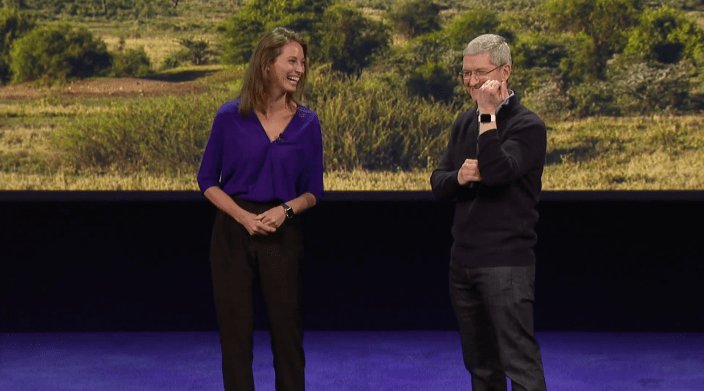
Christy Turlington Burns & Tim Cook

Apple has shown off the Apple Watch at a special event now on two occasions: first after the iPhone 6 last September, then after the new 12-inch MacBook last week. We know how the Apple Watch will look, how much it will cost, when we can buy it and for how much. Many developers are ready to ship apps for the Apple Watch, and we’re already seeing an accessory market for Apple’s wearable.

Since last week’s event, I’ve been thinking about why Apple might have chosen to have its second Apple Watch unveiling more than a month before people can actually buy the device. My conclusion? It’s complicated, but mostly necessary considering the complexity of actually buying the right watch.

Apple’s motivation is to ensure that you have an iPhone 5 or later before next month, and that you have the answer to a number of questions including how many millimeters your wrist measures if you plan to pre-order before trying on an Apple Watch. And because we know how major iPhone launches go with getting the exact model you want, pre-ordering will be the first opportunity to secure the Apple Watch of your choice or risk waiting even longer.
Expand
Expanding
Close

Opinion: Why I think the Apple Watch marketing so far is mediocre

Site default logo image

In the run up to the Spring Forward event, many people were expecting to see a lengthy exposition of the Apple Watch, to clarify confusion and offer a clean explanation as to how this product plays an essential role in people’s lives. What transpired was not that, at all. Apple’s event was a grab-bag procession of various product announcements, from Mac to Apple TV, concluding with a review of Watch features alongside pricing and availability details.

It did not help consolidate the vision for the Watch. Apple’s messaging for this product is almost the same as it was back in September. The company has not succinctly provided a reason for the Watch’s existence.

That’s not to say it doesn’t have one. I think the Watch is a great product with a good sales trajectory ahead of it, especially the $349 Sport models. The marketing aspects are lacking, so far. The Watch does not have clearly defined themes. Apple’s attempts at promoting three ‘tentpole’ use cases have, in my view, been conveyed poorly.


Expand
Expanding
Close

Opinion: Are we bidding farewell to MagSafe, and does it matter?

Site default logo image

When Apple unveiled the new 12-inch MacBook with just a single port (plus a headphone socket), it was doing not just one radical thing, but two. Reducing a machine to just one port was the first; dropping MagSafe was the second.

MagSafe has been one of the key features of MacBooks since it was first introduced by Apple in 2006. It is still highlighted on Apple’s website as one of the key design features of both the MacBook Pro and MacBook Air.

MacBook Air offers innovations you won’t find anywhere else — like the MagSafe 2 power connector, which breaks cleanly away from the notebook if you accidentally trip over the power cord.

The magnetic power cord attaches securely and detaches cleanly.

It’s one of the features that even the most die-hard opponents of Macs tend to grudgingly admit is a good idea. And yet that (very) shiny new MacBook aimed at the largest slice of the MacBook Air market doesn’t have it. Is this a one-off move for a single model, or will we see USB C power replacing MagSafe across the entire MacBook range … ? 
Expand
Expanding
Close

Opinion: Why I’m not the target for the new ultra-portable MacBook, but most MacBook Air owners are

Site default logo image

Mark Gurman nailed it, so there were few surprises for 9to5Mac readers in yesterday’s launch of Apple’s new, ultra-portable 12-inch MacBook. But one thing we didn’t know for sure then was whether the new machine would be a cut-down, entry-level MacBook or a high-spec premium one.

The answer, we now know, is neither–or both. It’s cut-down in some respects, specced-up in others. A lower-spec CPU, but more RAM and SSD storage. A lower-spec GPU, but a higher-res screen. It loses Thunderbolt, but gains USB C. Clever things done with battery space and power-efficiency, but potential gains in battery-life wiped out by the smaller, thinner form-factor.

It makes for a slightly odd positioning in the line-up … 
Expand
Expanding
Close

Opinion: Apple TV should get these 10 updates at next week’s event, but probably won’t

Site default logo image

Nearly eight years have passed since Apple released the first-generation Apple TV, a product originally hyped as “something really special” but quickly demoted to a “hobby” after initial sales fizzled. The second-generation version arrived with much less fanfare in late 2010, and the modestly tweaked third-generation model got a mere five-minute launch at a March event three years ago. Since then, there’s been plenty of evidence that Apple was working on updated hardware, a major partnership with cable companies, and major new content deals, but apart from the quiet addition of new channels, nothing’s actually happened.

Since total Apple TV sales remain soft by comparison with Apple’s other product lines, next week’s fashion-focused and celebrity-packed Apple Watch special event would be a great opportunity to launch an updated Apple TV to a broader audience. The current-generation Apple TV is older than its predecessor was when Apple replaced it, and there are at least 10 software and hardware tweaks that could fundamentally improve the Apple TV experience. Here’s our list of 5 features Apple TV really needs, and 5 features it would really benefit from having…


Expand
Expanding
Close

Results: 60% want Apple to thicken the next iPhone to improve battery life

Site default logo image

A recent poll of over 3,100 9to5Mac readers indicates that most are not satisfied with current-generation iPhone battery life. Over 90% of respondents said that they want to see Apple improve iPhone battery life, versus less than 7% saying that “iPhone battery life and battery cases are good enough as-is.”

The split in responses interestingly suggests that Apple can safely stop prioritizing thinness over superior battery performance. A solid majority of over 60% of respondents said that Apple should thicken the next iPhone to improve its battery life, which is especially noteworthy given that there were other poll options. Over 31% said that Apple should achieve whatever battery improvements it can by improving the iPhone’s chips, while just under 2% said that Apple should instead focus on improving battery cases.


Expand
Expanding
Close

Opinion: Should Apple improve iPhone battery life, or just battery cases?

Site default logo image

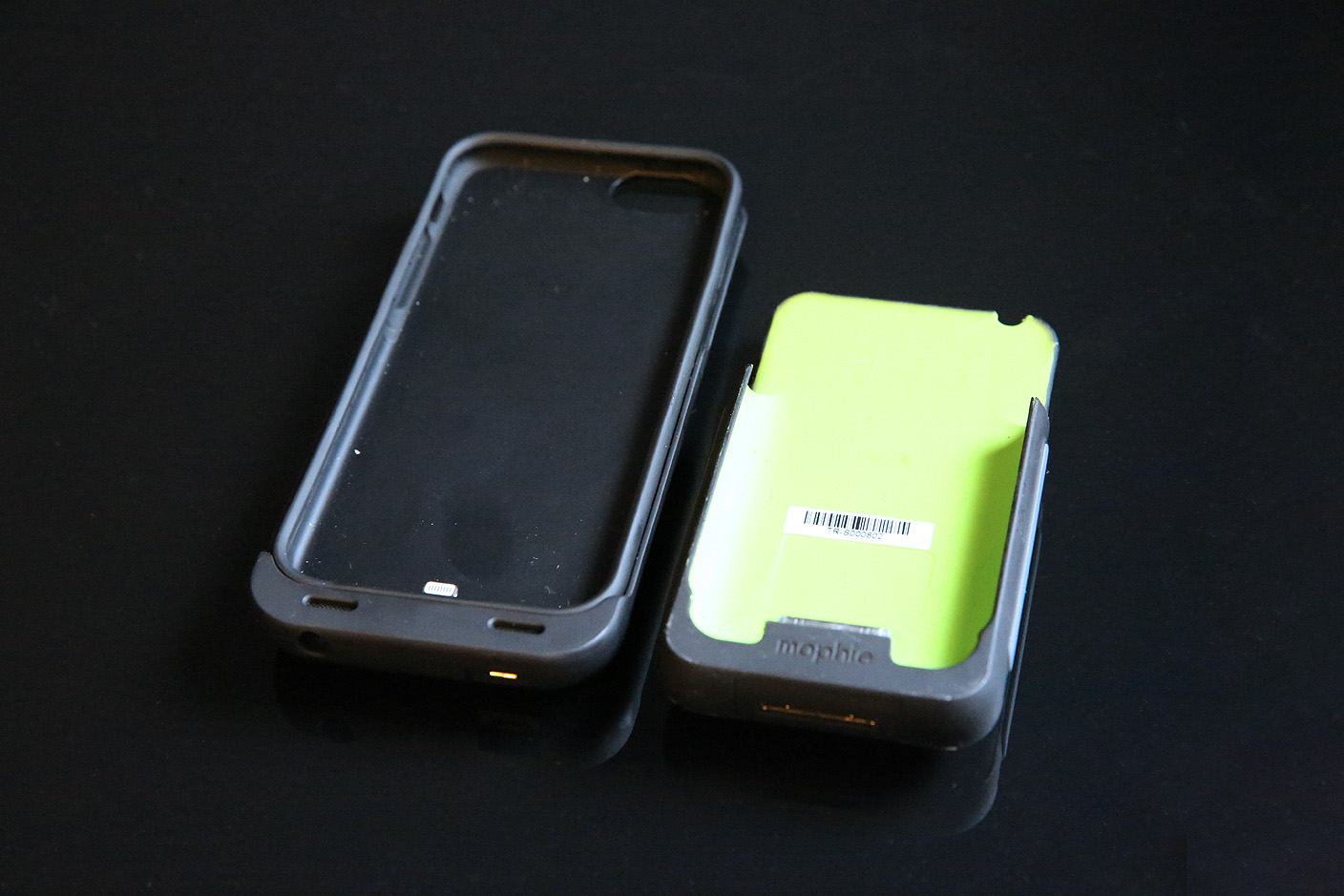
As this photo of the original Mophie Juice Pack and Tylt’s Energi for iPhone 6 shows, iPhone battery cases haven’t changed much over the years. They’ve existed for almost as long as iPhones, and remained ubiquitous due to Apple’s continued focus on thinness over longevity. That hasn’t been great for consumers: as 9to5’s Seth Weintraub put it, people are more impacted by their phones’ battery life than an extra 2mm of thinness.

It took until 2014 for Apple to offer one iPhone model — the iPhone 6 Plus — with all-day battery life, though you have to be willing to accept a much larger footprint to get that. By comparison, the smaller and reportedly more popular iPhone 6 improved only around 7% upon the iPhone 5s in run time, so the typical iPhone user isn’t seeing much of an improvement over prior models.

With a variety of alternatives at Apple’s disposal, including some major chip improvements that are just around the corner, we wanted to pose two questions to our readership. Should Apple take a break from slimming down iPhones to focus on improving battery life? Or should it instead focus its efforts on making battery cases better? Read on for our thoughts, and share yours in the comments section below…


Expand
Expanding
Close

Opinion: If any Apple Watch will cost thousands of dollars, Apple needs to start telling that story

Site default logo image

Here’s a thought: Assume that the 18k gold Apple Watch Edition is several thousand dollars, as some people are currently predicting. How will Apple deliver that piece of news — which hasn’t officially been confirmed before, and remains the subject of increasingly wild speculation — to the public?

Depending on your perspective, a high price won’t be bad news for people who expect their jewelry to carry four- or five-digit price tags. But it’s going to be hard to explain why the Apple Watch Edition is priced so far apart from the entry level Apple Watch Sport… or most of Apple’s other products for that matter. Fake gold or not, golden iPhones starts at $99, and iPads at $399 or $499, just like non-gold ones.

While Apple has already started telling the story of what the Apple Watch will do for people that wear it, it has barely told the story on its own of how much it will cost and why. I believe that detail alone is worthy of a second Apple Watch event led by Tim Cook before the Watch hits the market in April.
Expand
Expanding
Close