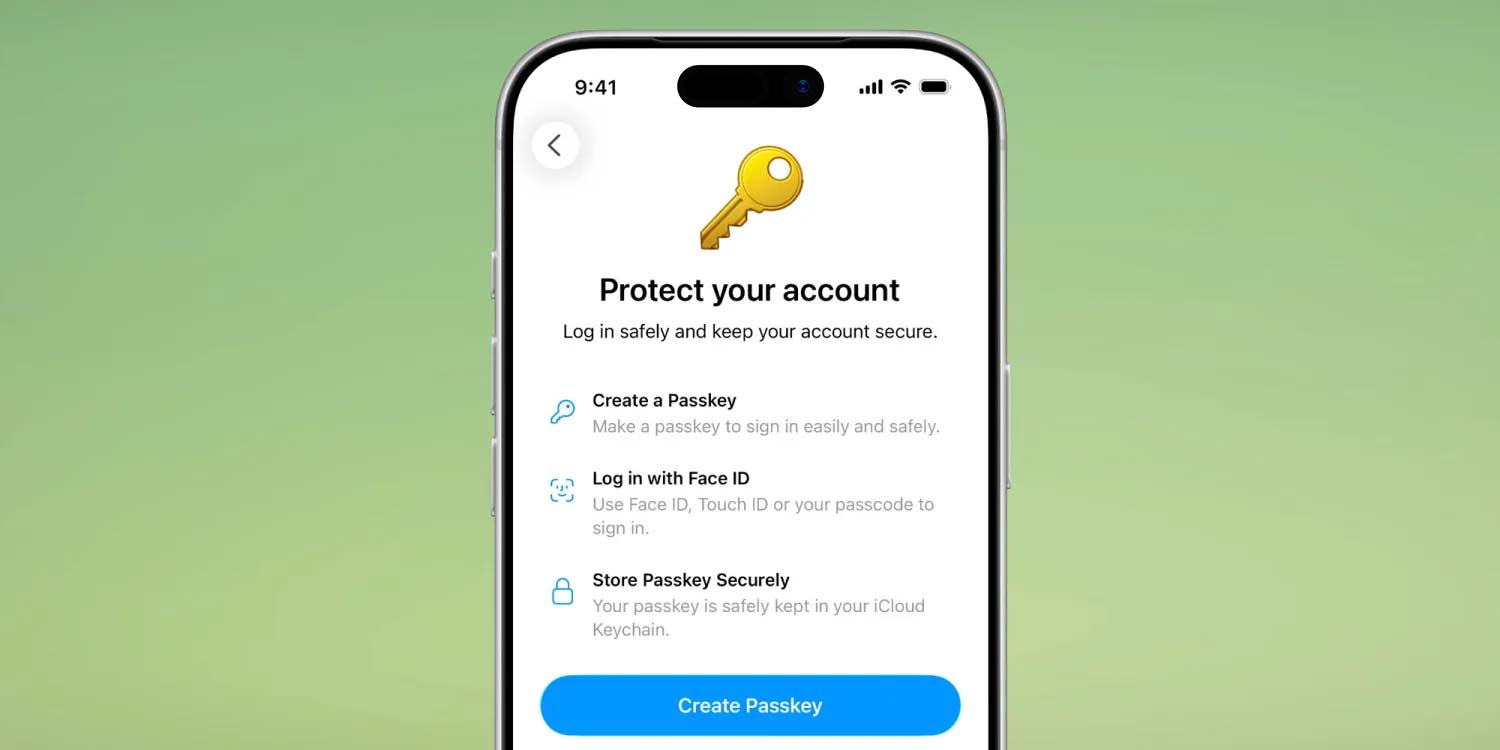
With the latest update, Telegram users can now create a passkey to instantly log in to their accounts without needing an SMS code or password. Here’s how to activate it.
Apple’s next round of OS updates will introduce a long-overdue feature for anyone trying to live in a world without passwords: a seamless, secure way to export and import passkeys across platforms and apps. Here’s how it’s going to work.
I’ve been arguing that passwords are horrible for the best part of a decade now, and was an enthusiastic early adopter of the far better approach of passkeys.
Passkeys were supposed to achieve the holy grail of an approach which is both more secure than passwords and so easy to use that everyone would adopt them. But a new piece outlines four problems with the technology …
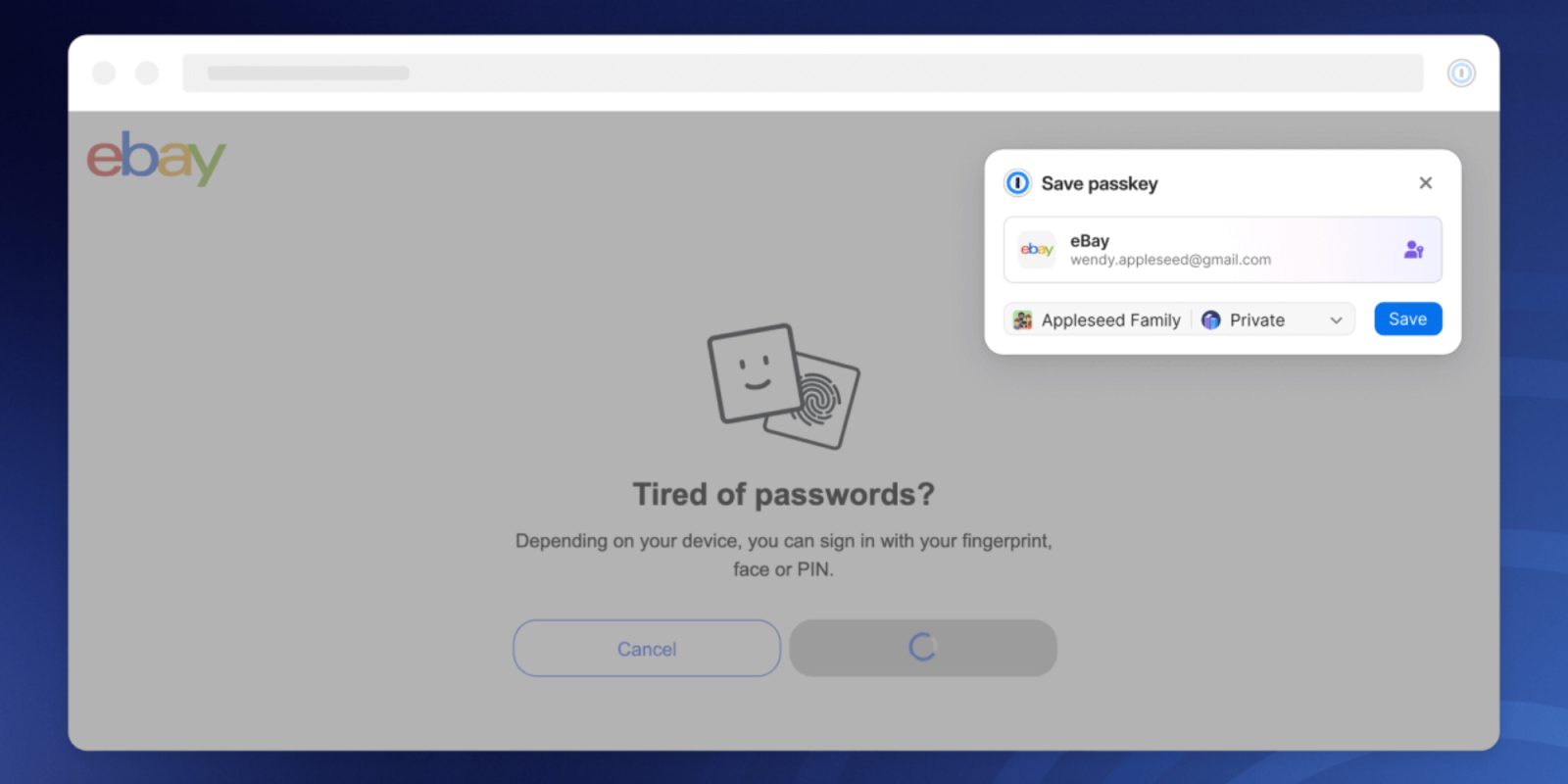
The passwordless future is rapidly becoming a reality as more than 200 companies have now added passkey support to their websites and apps. This significant milestone, revealed by the company behind 1Password, signals a growing shift towards more secure and convenient authentication methods.
Passkeys were introduced two years ago, and they replace traditional passwords with more secure authentication using a security key or biometrics. To make the technology even better, the FIDO Alliance published on Monday new specifications for passkeys, which ensure a way to let users import and export them.
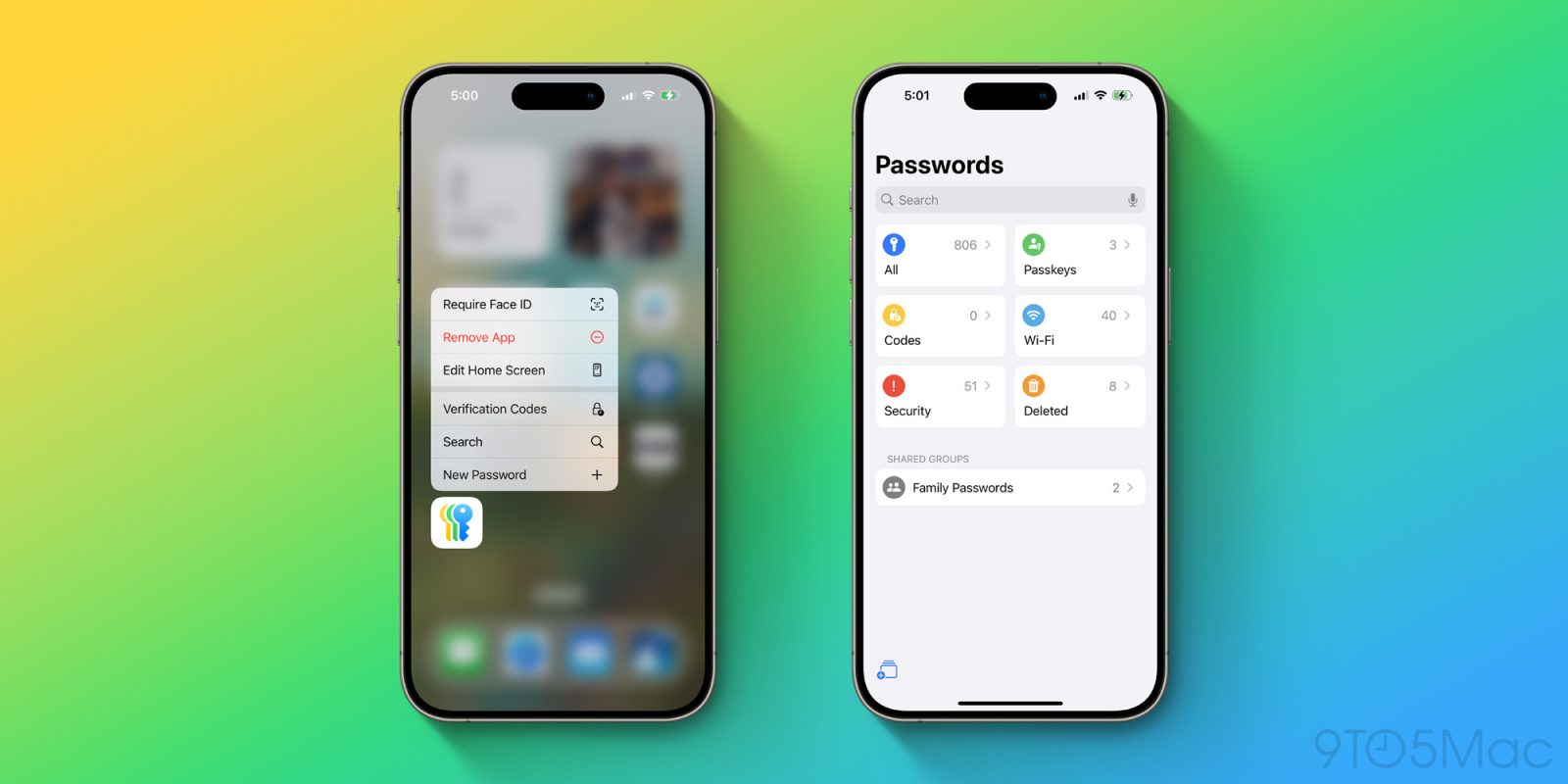
Apple’s new Passwords app in iOS 18 aims to provide a secure, convenient location for saving all of your important logins and passwords. There’s one key feature, however, that could eventually make the app largely obsolete: automatic passkey upgrades.
We’re getting closer every day to a password-free future. Less than two years after Apple launched passkeys with iOS 16 and macOS 13, more and more companies continue adding support. Following in the footsteps of Amazon and Nintendo, among others, today Microsoft announced that passkey support is rolling out for all its consumer accounts across Apple platforms, Windows, and Google products.
Users of Word, Excel, and the host of other popular products requiring Microsoft sign-in will be able to authenticate using simple biometric tools like Face ID or Touch ID.
Back in May, password manager DashLane announced it was working on ditching the master password for its credential vaults. Now, the company has launched its initial wave of access to the feature and says it is the “first credential manager” to offer passwordless login.
The popular password manager Bitwarden announced on Tuesday that it’s now rolling out support for passkeys to its users. The news follows a Bitwarden survey last month revealing that 68% of software developers have been using passkeys for work applications – although only 36% believe that passkeys will replace passwords completely.
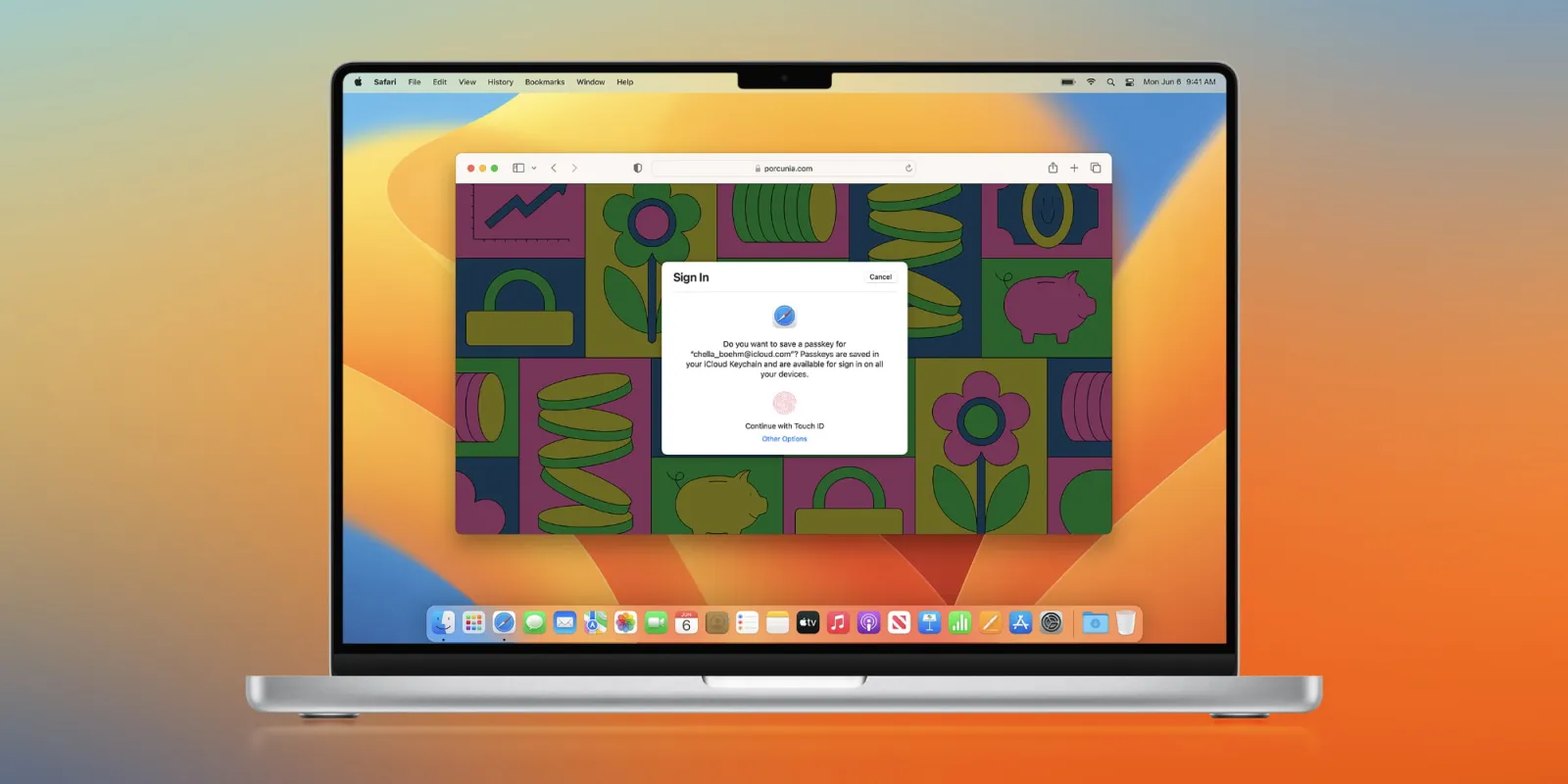
Now that iOS 17 and macOS Sonoma are available, you can forgo entering your password on icloud.com and apple.com domains thanks to newly added passkey support. Any Apple site on the web can rely instead on Face ID or Touch ID to authenticate your login. As part of iOS 17, iPadOS 17, and macOS Sonoma, your Apple ID is automatically assigned a passkey that can be used for iCloud and Apple sites.
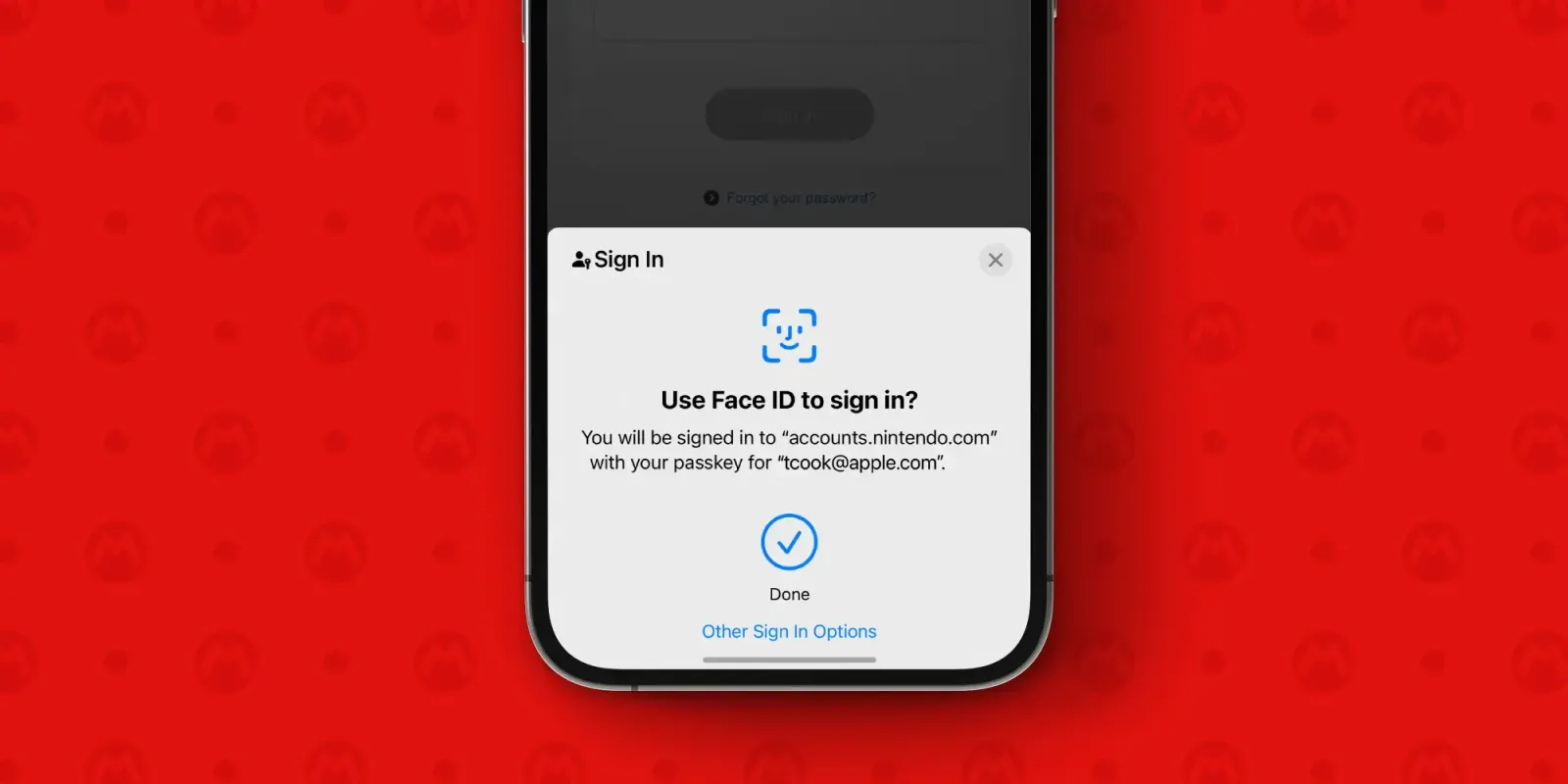
In the continued march toward a passwordless future, Nintendo has signed on as the latest company to support passkey authentication. Starting this week, you can now register a passkey to your Nintendo Account and use biometrics to log into your account instead of a password.
Earlier this year, 1Password announced its plans to bring passkey support to its iOS app since iOS 17 lets third-party apps store the new passwordless sign-in method. Now that iOS 17 is available to the public, 1Password is rolling out the update with passkey support to iPhone and iPad users.
Passwords are steadily becoming a thing of the past thanks to new passkeys. Plenty of apps and services have made passwords optional already, and more are on the way.
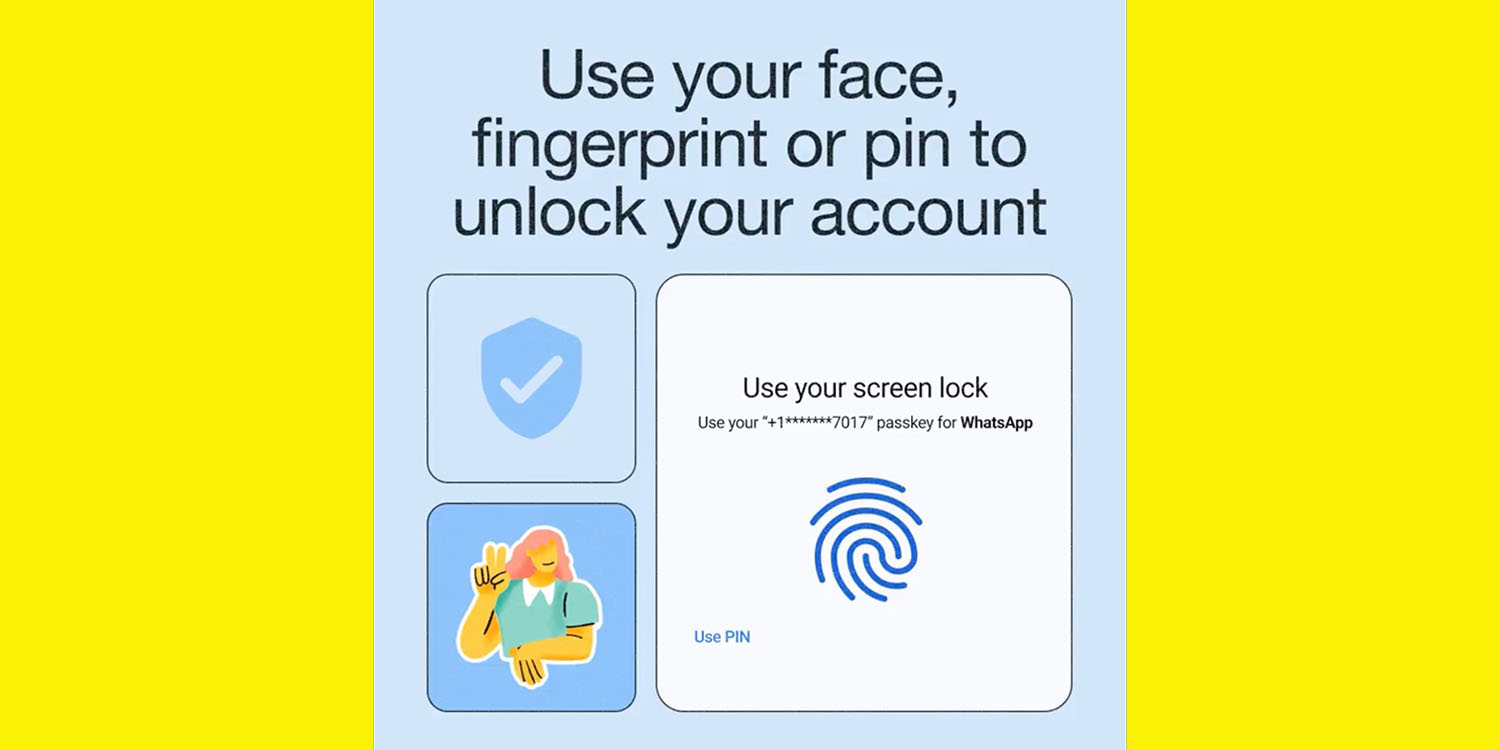
If you’re a WhatsApp user, there are different ways to protect your account – such as using a traditional password and two-factor authentication. And soon, users will have another option to secure their account, as WhatsApp has been working to implement passkey support.
Apple is a major proponent of the post-password world. Last year, it built passkey technology into the iPhone with iOS 16. As a result, more and more services are letting users say goodbye to passwords and hello to passkeys.
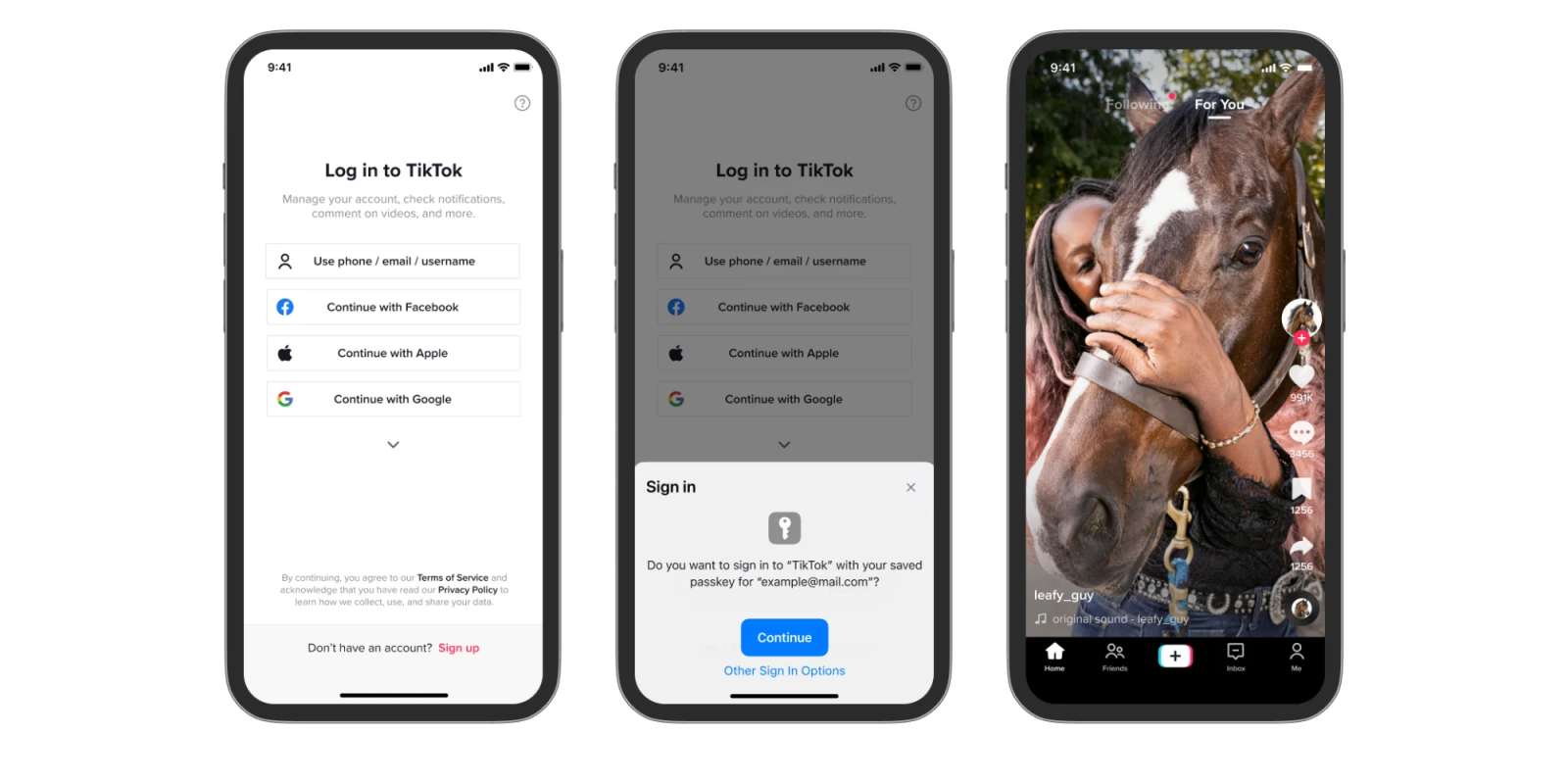
Soon, TikTok users across the world will be able to make the shift from passwords to passkeys as well.
Following the official announcement of passkeys last year, many companies have already adopted the new standard in their apps and operating systems – including Apple. With iOS 17, password manager apps will also be able to offer native passkey support, and 1Password is now teasing how this will work once available.
More pieces are coming into place for the gradual transition from passwords to passkeys. Apple already supports passkeys with iCloud Keychain, and now 1Password is launching support on the web for its browser extensions.
We’re moving closer and closer to a passwordless future thanks to passkeys. After announcing that 1Password would officially launch support on June 6, now the popular password management platform has a handy tool for developers to add passkey support to apps and websites “with just a few lines of code.”
The company has revealed that passkeys will go live within 1Password on June 6. Unlocking 1Password itself with a Passkey will possible the following month. Video demos (below) show how the security feature will work …
World Password Day is celebrated on the first Thursday of May every year to raise awareness about the importance of password security. Ahead of this event, 1Password CEO Jeff Shiner spoke to 9to5Mac in an exclusive interview about what to expect in the future of password managers with passkeys, a new technology that promises to put an end to traditional passwords.
Apple has described its vision for a passwordless future a number of times over the years, and this vision was bolstered in iOS 16 and macOS Ventura with the addition of passkey support. Even though we’re slowly seeing websites and apps adopt Passkey support, there’s still plenty of room for Apple to make a dedicated Passwords app.