See italicised updates below, with statements from both the Department of Justice and Apple.
The battle between the FBI and Apple over accessing a work phone used by one of the San Bernardino terrorists started as headline news and ended in a rather anti-climactic fashion.
While the FBI has successfully accessed the data on the iPhone 5c in the San Bernardino shootings, and the court battle is over for now, the government says that it may not accede to Apple’s demand to be told the method used.
The White House said back in 2014 that the government would consider the pros and cons of disclosing vulnerabilities discovered by its various law enforcement agencies. ArsTechnica asked whether the FBI would reveal the method used in this case, and was told that it wasn’t saying one way or the other …
Apple may be battling one branch of U.S. law enforcement on a terrorist-related issue, but CNN reports that the company is working closely with another on a broader fight against ISIS. Apple is one of six leading tech and media companies offering assistance to the Department of Justice in countering ISIS messaging and posts on social media.
At a meeting conducted at the Justice Department on Wednesday, executives from Apple, Twitter, Snapchat, Facebook, MTV and Buzzfeed offered their input to top counter intelligence officials, according to an industry source familiar with the meeting.
In all, nearly 50 companies and community groups participated, along with the National Security Council, the State Department and the British Embassy.
The issue is not just one of propaganda, said National Counterterrorism Center director Nick Rasmussen, but of directly encouraging acts of terrorism …
Victims and families of victims in the San Bernardino shootings have expressed divided views on the Apple vs FBI battle over access to an iPhone used by one of the terrorists.
We noted earlier that the mother of one of those killed in the attack has expressed support for Apple’s position, stating that the constitutional right to privacy “is what makes America great.”
This is what separates us from communism, isn’t it? The fact we have the right to privacy. I think Apple is definitely within their rights to protect the privacy of all Americans.
However, Reuters reports that some victims of the attack plan to file a legal brief in support of the FBI …
The U.S. Justice Department has said that is now satisfied with Apple’s measures to guard against any repetition of the type of anti-competitive behaviour ruled illegal in the long-running ebooks trial. Bloomberg reports that the department has recommended that the court-appointed monitor is no longer necessary.
In a letter to the Manhattan federal judge who found in 2013 that Apple illegally conspired with publishers to set e-book prices, the U.S. said Apple has “now implemented meaningful antitrust policies, procedures, and training programs that were obviously lacking at the time Apple participated in and facilitated the horizontal price-fixing conspiracy found by this court.”
The letter did, however, note that Apple “never embraced a cooperative working relationship with the monitor” … Expand Expanding Close
A New York federal judge has indicated that he is likely to refuse a government request to compel Apple to unlock a customer’s iPhone, but will first ask Apple to explain why decrypting iPhones would be “unduly burdensome.” The iPhone concerned is apparently not running iOS 8 or 9, and so Apple would have the technical ability to decrypt it.
The Washington Post reports that Magistrate Judge James Orenstein of the U.S. District Court for the Eastern District of New York is an activist judge who is believed to be attempting to open up public debate on the issue of privacy versus law enforcement … Expand Expanding Close
Some law enforcement officials are frustrated that Apple and other tech companies appear to be winning the PR battle over data privacy, reports the NYT.
Some Justice and F.B.I. officials have been frustrated that the White House has not moved more quickly or been more outspoken in the public relations fight that the tech companies appear to be winning, the law enforcement officials said, speaking on the condition of anonymity because they were not authorized to discuss the private conversations.
The comments came in the wake of a DOJ drugs and guns investigation where the agency obtained a court order to obtain iMessages between suspects, and Apple responded that it was unable to comply as end-to-end encryption is used, meaning that Apple has no way to decrypt the communications. Tim Cook said of iMessages a year ago that the content is “encrypted and we don’t have the key.”
There has long been tension between Apple and law enforcement agencies over encryption, Apple arguing that its customers right to privacy outweighs the right of law enforcement agencies to intercept communications – a stance strengthened by the Snowden revelations into large-scale electronic surveillance by governments. Law enforcement officials have become increasingly strident and hyperbolic in their statements on the subject.
Some of the judges in Apple’s appeal of last year’s ebook trial verdict appear sympathetic to the company’s argument that its deals with publishers helped, rather than hindered, competition, reports Reuters.
Circuit Judge Dennis Jacobs asked a Department of Justice lawyer why it was wrong for the publishers to get together to defeat a “monopolist” that was using “predatory pricing.”
“It’s like the mice getting together to put a bell on the cat,” Jacobs said.
The court had earlier heard evidence that at the time Apple entered the ebooks market, Amazon held a 90% market share … Expand Expanding Close
Just as we thought Apple’s long-running ebooks suit might finally be settled, the out-of-court agreement has been thrown into doubt. The judge required to approve the settlement terms has expressed concern that they may be unfair to consumers, reports Business Insider.
U.S. District Judge Denise Cote in Manhattan said she found “most troubling” a clause requiring Apple to pay only $70 million if an appeals court reversed her finding that the company is liable for antitrust violations and sent it back to her for further proceedings.
Apple was found guilty of price-fixing, an allegation it always denied and is currently appealing. To speed things up, lawyers on both sides agreed what would happen for each of the three possible outcomes of the appeal.
If Apple wins the appeal, it will pay nothing. If it loses the appeal, it will pay $50M in legal costs and $400M to a compensation fund for consumers. The contentious part is what happens if the appeals court overturns the original verdict but sends the case back for new proceedings. In this event, the proposal is that Apple would pay just $70M, of which the compensation fund would receive $50M.
Cote questioned if that would be fair and what might happen if the appeals court reversed her ruling on a minor issue.
This is not the first example of post-trial arguments, Apple having earlier called for the removal of the court-appointed antitrust monitor, a request rejected by the court.
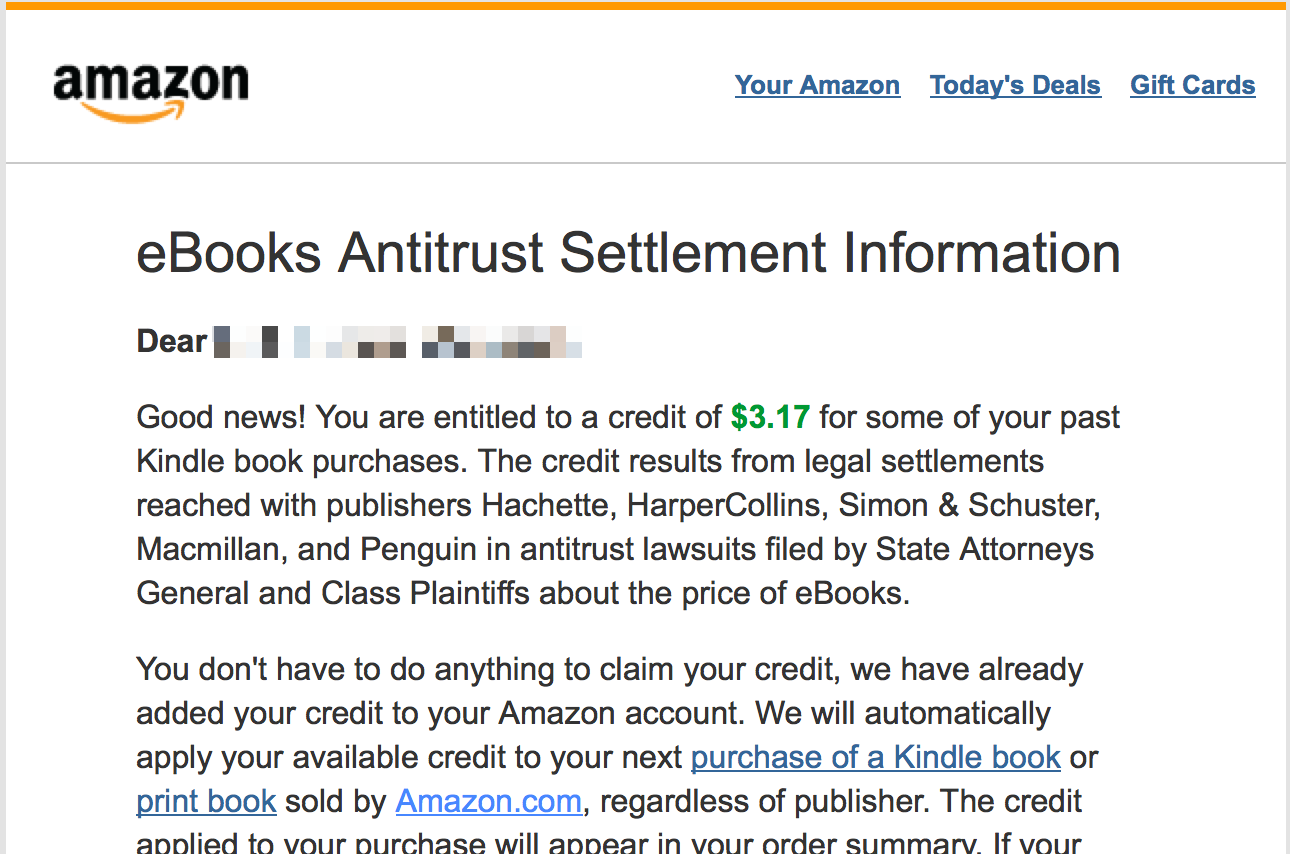
Amazon has begun issuing credit to accounts that qualify for a refund as a result of the price fixing settlement reached between Amazon and publishers. Customers are eligible for refund credit on ‘qualifying’ Kindle book purchases between April 1st 2010 and May 21st, 2012.
Apple claims it was ignorant of any inter-publisher price fixing and that Apple setup iBooks through legal arrangements without knowledge of any behind-the-scenes collusion.
Regrettably, it is now clear that Apple has chosen a campaign of character assassination over a culture of compliance. Apple could have been spending the past months working with the External Compliance Monitor with the ultimate goal of reforming its policies and training, and in the process change its corporate tone to one that reflects a commitment to abiding by the requirements of the antitrust laws. Instead, Apple has focused on personally attacking Mr. Bromwich, and thwarting him from performing even the most basic of his court-ordered functions. Expand Expanding Close
Apple CEO Tim Cook has been ordered by U.S. District Judge Lucy Koh in San Jose to give a deposition related to an ongoing private lawsuit that claims Apple, Google, and others entered “no-poach” agreements, as reported by Bloomberg. Cook isn’t the only executive named in yesterday’s order. Google Chairman Eric Schmidt will also be deposed on Feb. 20, as well as Intel Chief Executive Officer Paul Otellini later this month.
Koh told lawyers yesterday that Apple founder Steve Jobs was copied on e-mails at issue in the case, and that she found it “hard to believe” that Cook, as Apple’s chief operating officer at the time in question, wouldn’t have been consulted about such agreements.
The judge said she was disappointed that senior executives at the companies involved hadn’t been deposed before yesterday’s hearing over whether she should certify the case as a group lawsuit. The class would include different categories of employees whose incomes, their lawyers argue, were artificially reduced because of the collusion. Koh didn’t rule on class certification. Expand Expanding Close
We noted last month that Apple filed a document with the Southern District of New York attempting to have settlements with the U.S. Department of Justice and three publishers delayed until after the high profile eBook price-fixing case goes to trial in June 2013. The Wall Street Journal reported today that a federal judge approved the settlements, which would allow Amazon and other retailers to return to its previous model and freely set eBook prices. Not surprisingly, Apple is expected to appeal the decision:
In a move that could reshape the publishing industry, a federal judge has approved a settlement with three of the nation’s largest book publishers over alleged collusion in the pricing of e-books… Apple has previously indicated in court papers that it would seek to appeal any decision approving the settlement. As a result, it could take some time before consumers see lower prices on e-books… “It’s devastating to bookstores,” said Paul Aiken, executive director of the Authors Guild. “For two years the settling publishers must allow vendors to discount e-books at any price they want. The court acknowledges that this restores the status quo conditions before 2010, when Amazon was able capture 90% of the e-book market. The Justice Department is reshaping the literary marketplace without submitting a single economic study to the court to justify its actions.”
The U.S. Department of Justice announced a settlement in April with three of the publishers involved in the eBook price-fixing antitrust suit against Apple. Hachette, HarperCollins, and Simon & Schuster were part of the settlement, which would allow Amazon to return to its previous wholesale model and the publishers to set and reduce prices for eBook titles freely. PaidContent provided an update today on the case by reporting Apple has filed a document with the Southern District of New York. It called the proposed settlements with the three publishers “fundamentally unfair, unlawful, and unprecedented.” Apple argued that since it is not settling, the settlement would unlawfully end contracts those publishers have with Apple.
The proposed settlement would require the three settling publishers — HarperCollins, Hachette and Simon & Schuster — to terminate their existing agency pricing contracts with Apple. Apple says that isn’t fair: “The Government is seeking to impose a remedy on Apple before there has been any finding of an antitrust violation.” This case, the company states, revolves around “an alleged conspiracy to force Amazon to adopt agency.” So a settlement “enjoining collusion or precluding publishers from forcing agency on Amazon would be appropriate,” but Apple is entitled to defend its contracts in court.
Apple is hoping the courts decide to reject the settlements or delay a ruling until after the June 2013 trial. Apple also discussed Amazon’ role in the case. It claimed the government has “unwittingly placed a thumb on the scales in favor of Amazon”: Expand Expanding Close
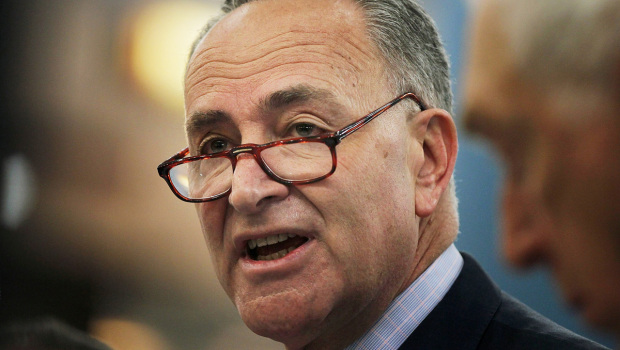
Sen. Charles Schumer pleaded with the U.S. Justice Department in the Wall Street Journal yesterday to drop its antitrust lawsuit against Apple and publishers by suggesting it will only lay the foundation for Amazon to reclaim control over the eBook industry.
Recently the Department of Justice filed suit against Apple and major publishers, alleging that they colluded to raise prices in the digital books market. While the claim sounds plausible on its face, the suit could wipe out the publishing industry as we know it, making it much harder for young authors to get published.
The suit will restore Amazon to the dominant position atop the e-books market it occupied for years before competition arrived in the form of Apple. If that happens, consumers will be forced to accept whatever prices Amazon sets.
The Justice Department filed suit last spring against Apple, Macmillan, and Penguin Group for allegedly fixing eBook prices, while Hachette, HarperCollins, and Simon & Schuster settled to dodge the legal dispute.
Amazon set its eBook prices at $9.99, but, according to the government (via The Hill), Apple and the publishers supposedly colluded to build a new business model that drove the standard price of eBooks up and placed pricing in the hands of publishers instead of retailers.
Schumer claimed the business model would effectively relinquish the eBook market from Amazon’s dominion. He also mentioned Amazon’s share dropped to 60 percent after the publishers launched the new pricing matrix, while older eBook prices also lowered.
The Justice Department has ignored this overall trend and instead focused on the fact that the prices for some new releases have gone up. This misses the forest for the trees. While consumers may have a short-term interest in today’s new release e-book prices, they have a more pressing long-term interest in the survival of the publishing industry.
Like Apple contended in its legal response, Schumer is concerned the Justice Department’s lawsuit allows “monopolists and hurt innovators,” while having a “deterrent effect not only on publishers but on other industries that are coming up with creative ways to grow and adapt to the Internet.”
He further beseeched the Justice Department to “reassess its prosecution priorities” and assemble inclusive guidelines before filing antitrust suits in the future.
Ars Technica posted Apple’s legal response (PDF) to the U.S. Department of Justice’s lawsuit against the Cupertino, Calif.-based Company, and six publishers, for allegedly conspiring to fix eBook prices. In the document, Apple condemned the federal government for siding with “monopoly, rather than competition,” and then called the Department of Justice’s complaint “fundamentally flawed as a matter of fact and law.”
Phrases like “false” and “absurd” appear throughout Apple’s response to the accusations, which parallels the company’s statement from April, in regards to the suit’s filing, where Apple essentially said it is breaking monopolies, rather than starting them. Daring Fireball cropped this little nugget from the legal response that summarizes the entire 31-page document:
The Government sides with monopoly, rather than competition, in bringing this case. The Government starts from the false premise that an eBooks “market” was characterized by “robust price competition” prior to Apple’s entry. This ignores a simple and incontrovertible fact: before 2010, there was no real competition, there was only Amazon. At the time Apple entered the market, Amazon sold nearly nine out of every ten eBooks, and its power over price and product selection was nearly absolute. Apple’s entry spurred tremendous growth in eBook titles, range and variety of offerings, sales, and improved quality of the eBook reading experience. This is evidence of a dynamic, competitive market. These inconvenient facts are ignored in the Complaint. Instead, the Government focuses on increased prices for a handful of titles. The Complaint does not allege that all eBook prices, or even most eBook prices, increased after Apple entered the market.
Following an investigation into alleged eBook price-fixing, the U.S. Department of Justice filed an antitrust lawsuit against Apple and publishers Macmillan and Penguin earlier this month, who refused to settle. Other publishers, including Hachette, HarperCollins, and Simon & Schuster, settled and reached an agreement to return Amazon to its previous wholesale model and dismantle Apple’s agency model. The settlement also included agreements with select states that would see $51 million in restitution paid to those who purchased eBooks through Apple’s platform. Now, several Canadian publications are reporting class-action lawsuits were filed against Apple and the five publishers throughout Canada.
Lawyer Normand Painchaud spoke withThe Montreal Gazetteabout his class-action suit filed in Quebec Superior Court and talked about two others filed in Ontario and British Columbia:
The DOJ’s accusation of collusion against Apple is simply not true. The launch of the iBookstore in 2010 fostered innovation and competition, breaking Amazon’s monopolistic grip on the publishing industry. Since then customers have benefited from eBooks that are more interactive and engaging. Just as we’ve allowed developers to set prices on the App Store, publishers set prices on the iBookstore.
The civil antitrust suit alleged that Apple’s move to let publishers set their own prices—and it is a requirement that publishers do not sell their digital books for cheaper elsewhere—forced consumers to pay millions more for books than they should have.
Yesterday, the U.S. Department of Justice filed a lawsuit against Apple and five other publishers over eBook price-fixing. The Department of Justice reached a settlement with three of the publishers in the suit, but Apple, MacMillan, and Penguin are standing strong (the U.S. is also after Simon and Shuster). Yesterday, MacMillan’s CEO released a letter on the matter and explained why the publisher chose not to settle. In the note, he said the Department of Justice’s settlement demands “could have allowed Amazon to recover the monopoly position it had built before our switch to the agency model.” He also said it is “hard to settle a lawsuit when you know you have done no wrong” and called the agency model the future of an “open and competitive market.”
As CNETnoted, the Department of Justice may have a more difficult case against Apple. For one, Apple does not have a strong-hold in the eBook market, because Amazon has the commanding lead with its Kindle sales. The Department of Justice has a case against the publishers rather—and that is most likely why three of them have already chosen to settle. Apple only holds open the store, while publishers are the ones who choose the prices to set.
The settlement reached with three of the publishers yesterday is said to give them “freedom to reduce the prices of their e-book titles,” which allows Amazon to go back to its previous wholesale model.
A key point that the Department of Justice is using in its lawsuit is when all five of the publishers met together at a hotel in London to talk over eBook prices. Apple was not present at the meeting, so this may give the Department of Justice a harder time to press the Cupertino-based Company. Of course, the Department of Justice could still come out victorious, but it may have to dig a little deeper against Apple than it did with publishers. We are sure there will be more out of this case as time goes on.
The U.S. Department of Justice and Attorney Gen. Eric Holder just announced (via CNN) a settlement with three publishers—Hachette, HarperCollins, and Simon & Schuster— following this morning’s report that it would launch an antitrust suit against Apple, Macmillan, and Penguin, which refused to settle. The settlement is said to give publishers the “freedom to reduce the prices of their e-book titles,” allowing Amazon to return to its previous wholesale model.
The states are seeking $51 million in restitution that will be provided through a credit toward a future book purchase or a check, although the Department of Justice’s charges remain civil. The exact details of the settlements with the three publishers were not discussed, but Apple, Penguin, and Macmillan will continue to fight charges in the lawsuit filed earlier today in New York.
As for exactly why Apple and the two other publishers have decided to take the case to court, at least one publisher is speaking. Macmillan’s Chief Executive Officer John Sargent published an open letter today explaining the company’s stance (via PaidContent). In the letter, Sargent claimed the Department of Justice’s settlement demands “could have allowed Amazon to recover the monopoly position it had built before our switch to the agency model.” He also said it is “hard to settle a lawsuit when you know you have done no wrong” and called the agency model the future of an “open and competitive market.”
Interestingly, AllThingsD pointed us to a line from the Department of Justice’s official complaint that indicates Apple proposed teaming up with Amazon at one point:
In addition to considering competitive entry at that time, though, Apple also contemplated illegally dividing the digital content world with Amazon, allowing each to “own the category” of its choice—audio/video to Apple and e-books to Amazon.
Go past the break for Sargent’s full letter, which is a great rundown of the case from the perspective of the publishers that have decided not to settle: Expand Expanding Close
Big news today (surprisingly on a 4 day US weekend). The AT&T and T-Mobile merger was withdrawn from the FCC today.
On November 23, 2011, AT&T Inc. and Deutsche Telekom AG electronically withdrew without prejudice, as of that date, the pending applications listed in the Public Notice released by the Federal Communications Commission on April 28, 2011 in that proceeding. Associated manual notification of withdrawal filings also are being made.
The two companies look to be pursuing an alternative plan… Expand Expanding Close
I have taken the position that the AT&T merger with T-Mobile was kind of like gravity. It had to occur, because you had a company with a T-Mobile that had the spectrum but didn’t have the capital to build it out. AT&T needed the spectrum, they didn’t have it in order to take care of their customers, and so that match had to occur.
I don’t think that I’ve heard a rationale for the merger stated more succinctly.
But coming from AT&T and T-Mobile’s biggest rival, you know it is a bunch of horses**t.
Since when does a company CEO say something to the effect of “We want our competitors to be stronger and better equipped to compete with us and take our customers”?
The reason why Verizon is in favor of the deal is because it eliminates a low-cost player in the market and brings the U.S. closer to a telecom duopoly, in which AT&T and Verizon can set prices. Just recently, Verizon was forced to offer a $50 pre-paid data plan that competes with Sprint’s Virgin and T-Mobile. With Verizon/AT&T running the show, they won’t need to make moves like that.
It’s pretty obvious to anyone not on an AT&T or Verizon payroll (including fifteen members of Congress led by North Carolina’s Heath Shuler) that a merger would be horrific for wireless competition in this country.
No one with an eighth-grade education really believes that any merger, telecom or otherwise, has ever created jobs or competition in the marketplace which is what AT&T is somehow trying to argue. Hopefully this thing is killed. Soon. Expand Expanding Close
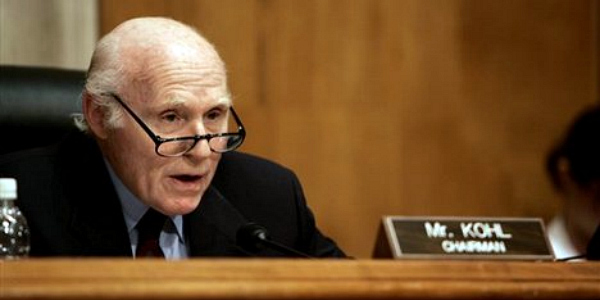
Sen. Herb Kohl, D-Wis., who chairs the Senate’s Antitrust Subcommitteee, is calling for regulators to block the proposed merger of AT&T and T-Mobile:
“I have concluded that this acquisition, if permitted to proceed, would likely cause substantial harm to competition and consumers, would be contrary to antitrust law and not in the public interest, and therefore should be blocked by your agencies.”
“We believe that AT&T’s acquisition of T-Mobile would be a troubling backward step in federal public policy–a retrenchment from nearly two decades of promoting competition and open markets to acceptance of a duopoly in the wireless marketplace,” House Energy and Commerce Communications and Technology Subcommittee Chairwoman Anna Eshoo, D-Calif., Rep. Edward Markey, D-Mass., and House Judiciary ranking member John Conyers, D-Mich., wrote in their letter to FCC and the Justice Department. “Such industry consolidation could reduce competition and increase consumer costs at a time our country can least afford it.”
Not exactly what AT&T wants to hear. T-Mobile, if it gets out of this AT&T merger, also gets a $3+B check from AT&T for the dance. Expand Expanding Close