AAPL Company

See All Stories

Breaking news from Cupertino. We’ll give you the latest from Apple headquarters and decipher fact from fiction from the rumor mill.
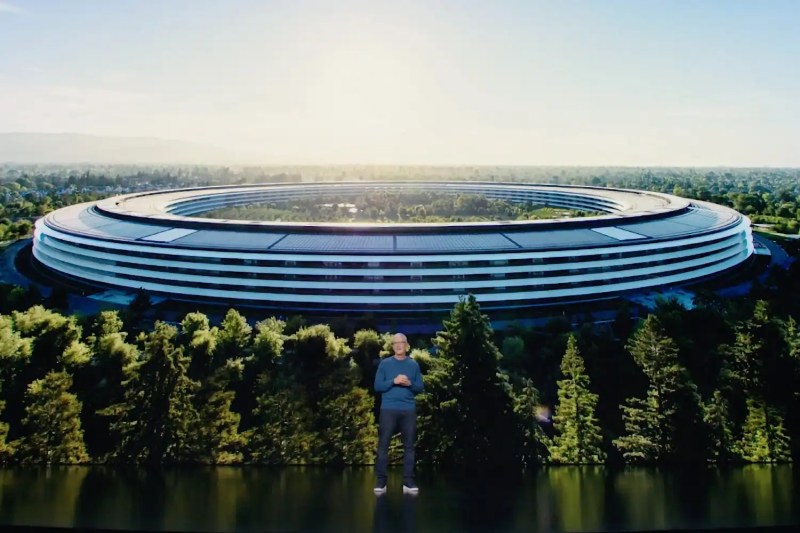
Apple Park Tim Cook AAPL

AAPL is a California-based computer company that became the most successful smartphone company in the world.

AAPL defined by Apple

Here’s how Apple defines itself:

Apple revolutionized personal technology with the introduction of the Macintosh in 1984. Today, Apple leads the world in innovation with iPhone, iPad, Mac, Apple Watch, and Apple TV. Apple’s five software platforms — iOS, iPadOS, macOS, watchOS, and tvOS — provide seamless experiences across all Apple devices and empower people with breakthrough services including the App Store, Apple Music, Apple Pay, and iCloud. Apple’s more than 100,000 employees are dedicated to making the best products on earth, and to leaving the world better than we found it.

Key AAPL history

From Apple I to iMac

Apple was founded in 1976 by Steve Jobs (Steve), Steve Wozniak (Woz), and (briefly) Ronald Wayne as a business partnership: Apple Computer Company. The following year it became Apple Computer, Inc. The company’s first product was the Apple I, a personal computer hand-built by Woz and sold in part-completed kit form. The Apple II and Apple III followed.

The modern Apple as we know it today began in 1983, with the launch of the first personal computer with a graphical user interface, the Lisa. Way too expensive to succeed, it was replaced by the Macintosh in 1984, launched with the single showing of a Ridley Scott commercial during the Super Bowl. The Macintosh transformed the world’s understanding of what a computer was, and would eventually lead to Microsoft adopting the GUI approach.

Steve Jobs and then Apple-CEO John Scully fell out in 1985, when Steve wanted to focus on the Macintosh while Scully wanted to put more attention on the Apple II, which was still selling well. That led to Steve being forced out of the company and going off to form NeXT.

Apple focused on selling Macintosh models at the highest possible margins, but would eventually fall foul of a mix of unsustainable pricing in the face of competition from Windows machines, and an overly complex product lineup. By 1996, the company was in trouble, and in 1997 Steve was brought back, along with the NeXT operating system, which would eventually form the basis of Mac OS X.

Steve simplified the Mac lineup and had industrial designer Jony Ive work on a whole new look for a consumer desktop Mac, the colorful iMac. The iMac, like the original Macintosh, again changed the world’s understanding of what a computer was, and who should want one.

From Apple Computer, Inc. to Apple, Inc.

In 2001, Apple launched the iPod. Although this wasn’t the first mp3 player, it was massively better than anything on the market at the time, and succeeded in turning a geeky piece of technology into a consumer electronics product with mass-market appeal.

The success of the iPod paved the way into other mobile devices. Apple was working on what would eventually become the iPad, when Steve realized that this was the basis of a smartphone. He diverted the team’s work into this, to launch the iPhone in 2007. The iPad launched later, in 2010.

The iPhone was yet another transformational product. While most other smartphones of the time were clunky devices with a keyboard and stylus, the iPhone was a sleek-looking device operated with a finger, and so simple that no user guide was needed. It was with the launch of the iPhone that Apple Computer, Inc. was renamed to Apple, Inc.

From Intel to Apple Silicon

While the iPhone, iPad, Apple Watch, and more are made with Apple-designed processors, the Mac lineup has historically relied on third-party companies for its CPUs. Over the years, Macs progressed from Motorola 680000 series chips through PowerPC to Intel.

In 2020, Apple began a two-year transition to the final stage in that journey, with Macs too finally getting Apple-designed chips. The first such is the M1 chip, used in the latest Mac mini, MacBook Air, and 13-inch MacBook Pro. Other Apple Silicon Macs followed.

AAPL today

Apple is one of the largest companies in the world. It was the first publicly traded company to hit a trillion-dollar valuation in 2018, $2 trillion in 2020, and $3T in 2022.

The company’s product lineup includes five different Mac families (MacBook Air, MacBook Pro, iMac, Mac Pro, and Mac mini); four iPad ranges (iPad mini, iPad, iPad Air, iPad Pro); four iPhone 12 models (12, 12 mini, 12 Pro, 12 Pro Max); three main Apple Watch models (SE, Series 3, Series 6); as well as other products, including Apple TV, AirPods, and HomePod mini.

In addition to hardware sales, Apple derives a growing proportion of its income from Services, including the App Store, iCloud, Apple Music, and Apple Pay.

Apple’s employee reservation system seemingly excludes iPhone 6 Plus, lends weight to short supply rumors

Site default logo image

Apple has advised store staff that those working overnight or morning shifts on Friday will be able to reserve an iPhone 6, but not a 6 Plus, if a tweeted photo is genuine (and we have evidence it is). This would lend further weight to longstanding rumors and overwhelming evidence that the 5.5-inch model would be in short supply … 
Expand
Expanding
Close

Apple announces record 4 million preorders for iPhone 6 and iPhone 6 Plus in first 24 hours

Site default logo image

Apple has just announced that preorders for iPhone 6 and iPhone 6 Plus have topped all previously set records, achieving 4 million sales in the first twenty-four hours. In the press release, Cook said he is thrilled that customers love them “as much as we do”.

Apple® today announced a record number of first day pre-orders of iPhone® 6 and iPhone 6 Plus, the biggest advancements in iPhone history, with over four million in the first 24 hours. Demand for the new iPhones exceeds the initial pre-order supply and while a significant amount will be delivered to customers beginning on Friday and throughout September, many iPhone pre-orders are scheduled to be delivered in October.


Expand
Expanding
Close

Apple Pay may mean the end of physical bank cards within 2-3 years, argues Moven CEO

Site default logo image

While we’d all expected plastic bank cards to be replaced by apps eventually, the CEO of mobile banking startup Moven is suggesting that Apple’s backing could mean the end of physical bank cards within 2-3 years.

The additional sweetners here are three fold. Firstly, tokenization will avoid much of the type of breaches we’ve seen at Target and Home Depot because the token is only a one-time use thing. Secondly, the move to tokens and the combination of biometrics, etc allow for the emergence of a ‘cardholder present’ approach to interchange rates that will potentially give mobile payments a competitive merchant rate. Lastly, the US might effectively jump straight from magstripe to mobile, especially if issuers can figure out how to reduce the cost of card replacement by moving straight to mobile SE and tokens …


Expand
Expanding
Close

Site default logo image

Square and Apple acquisition talks reportedly fell apart over pricing disagreements

TechCrunch is reporting today that Apple and mobile payment processor Square were briefly in talks about a possible acqusition. The talks didn’t get far, it seems, as the two companies couldn’t reach an agreement on how much Square was actually worth. Eventually, Square walked away:

Separately, TechCrunch has heard that Square and Apple were in acquisition talks, but that Square walked away. Apple wanted the company to come aboard, but the discussed price was a sticking point: Apple wanted to buy Square for around $3 billion, one source said. Square, valued at the time at a firm 66 percent delta to that price point, declined to accept.

It’s interesting to consider what Apple Pay might have looked like if the merger had gone through. You can read the more over at TechCrunch.

Apple reportedly earning 0.15% from each Apple Pay transaction over iPhone 6/Apple Watch

Site default logo image

The Financial Times has an interesting detail not disclosed or previously reported about Apple’s new payment system introduced earlier this week and due out next month. Through Apple Pay, which uses a combination of NFC and Touch ID for authorizing mobile payments, the iPhone maker will collect 0.15% of each transaction that goes through the service.

Bank chief executives fawned about the “exceptional customer experience” and the “exciting move”. They are also paying hard cash for the privilege of being involved: 15 cents of a $100 purchase will go to the iPhone maker, according to two people familiar with the terms of the agreement, which are not public. That is an unprecedented deal, giving Apple a share of the payments’ economics that rivals such as Google do not get for their services.

That means that every time you use your iPhone 6 or iPhone 6 Plus to check out at a supported vendor, a feature which is likely going to save you time, Apple is positioned to build a new revenue stream of its own for facilitating the transaction.
Expand
Expanding
Close

Tim Cook appears on Charlie Rose, talks Steve Jobs, Beats, and Apple TV

Site default logo image

[youtube https://www.youtube.com/watch?v=ZPp0Sc6KEnQ&channel=CharlieRose&op=9to5]

Tim Cook appeared on Charlie Rose in a multi-part interview, the first of which airs today. In three clips released by the show, Cook discusses Steve Jobs’s continuing inspiration at at Apple, the Beats Electronics acquisition, and the Apple TV, the company’s “hobby device” turned full product category.

The second half of the interview will air on Monday night. You can see the other two clips below:


Expand
Expanding
Close

Accessory makers hit delays as iPhone 6 production eats up Lightning connector supplies

Site default logo image

Record shipments of Apple’s new iPhone 6 models unveiled this week might mean more headaches for companies building accessories with Apple’s Lightning connectors. Several sources tell us in the lead up to the launch of the new iPhones this week, Apple has purchased all of the available bulk inventory of Lightning connectors and authentication chips leaving smaller accessory makers in its Made-for-iPhone licensing program stranded.
Expand
Expanding
Close

Site default logo image

Apple says some users experiencing issues with iCloud Mail & Notes (U: Apple says resolved)

On the same day as the rocky iPhone 6 and iPhone 6 Plus pre-order, Apple is reporting on its iCloud System Status site that a small percentage of users are experiencing issues with iCloud Mail and iCloud Notes. According to the detailed timeline, the issues began about 45 minutes ago and are ongoing for 0.05% of users. August proved a rough month for iCloud uptime, with major issues reported by Apple on multiple occasions, although the current outage seems minor so far.
Expand
Expanding
Close

Apple says iPhone 6 and iPhone 6 Plus set overnight preorder sales record

Site default logo image

In a statement to Re/code, Apple has announced that iPhone 6 and iPhone 6 Plus have set new records for overnight preorders.

An Apple representative said that the overnight sales of the new iPhones set a record, though Apple did not say how many have been sold.

“Response to iPhone 6 and iPhone 6 Plus has been incredible with a record number of preorders overnight,” Apple told Re/code.

Earlier today, AT&T announced that it saw the best iPhone demand in two years. The phones have received immense interest today, despite Apple Online Store issues. T-Mobile’s systems have been crunched due to the demand, meaning sales representatives have had to resort to pen and paper to reserve iPhones for customers.


Expand
Expanding
Close

Site default logo image

Wondering what it cost Apple to give away that U2 album to every customer?

If you were wondering how much it cost Apple to give away a copy of U2’s Songs of Innocence album to every customer, the answer, according the the New York Times, is more than $100M.

To release U2’s album free, Apple paid the band and Universal an unspecified fee as a blanket royalty and committed to a marketing campaign for the band worth up to $100 million, according to several people briefed on the deal. That marketing will include a global television campaign, the first piece of which was a commercial that was shown during the event.

Yep, that album that ended up on many people’s iPhones uninvited cost Apple whatever the royalty fee is for half a billion downloads plus a further $100M spend on marketing it. Nice. Perhaps the band will be donating a portion of it to Project RED?

Bono and Cook joked around about the cost during the keynote, with Bono telling Cook “you would have to pay for it, because we’re not going in for the free music around here.”

Site default logo image

Why Apple timed things perfectly with the launch of Apple Pay

After years of annual rumors that each successive iPhone would feature NFC, there was understandable skepticism when the rumor rolled around again this year for the iPhone 6. It was looking like Apple might have put all its short-range communication eggs in one basket with Bluetooth LE.

Instead, of course, the iPhone 6 and 6 Plus got NFC as the mechanism for Apple’s contactless payment service, Apple Pay. Pando suggests that the company’s timing may not be entire coincidental.

While U.S. banks have so far ignored the more secure chip-and-pin cards used in Europe, sticking doggedly to magnetic strips and signatures, all that will be changing next year. As of October 2015, banks are switching to chip-based cards – and that means merchants will need to upgrade their payment terminals.

You can still get chip-reading terminals without NFC, but it’s likely that the vast majority of stores will opt to go contactless at the same time. Which means that instead of the 220,000 places you can use contactless payment today, there will be much closer to nine million outlets by this time next year – and you’ll be able to pay with your iPhone 6 at any of them.

U.S. card issuers are already pushing Apple Pay, MasterCard running a full-page ad in today’s New York Times (via Business Insider).

Poll: So which iPhone 6 did you get?

Site default logo image

We polled you before the iPhone 6 announcement and we know things change at the last moment so we want to know which iPhone you got (if you got through):

Which color and GB size?…
Expand
Expanding
Close

iPhone 6 and 6 Plus already selling out, 5.5 inch model quoting 3-4 weeks shipping

Site default logo image

Update 2: AT&T says demand is higher than iPhone launches from the last two years (via Recode): “Demand for the new iPhones is higher than that seen in either of the past two years, AT&T spokesman Mark Siegel told Re/code.”

Update: All models of the 5.5 inch iPhone 6 Plus are now quoting 3-4 weeks shipping. Apple is still stocking most models of the iPhone 6, however.

The iPhone 6 and iPhone 6 Plus launch has not been smooth, to say the least. Many people are still unable to access the Apple Online Store to purchase Apple’s newest devices. Despite availability issues, many models are already selling out. Carrier websites are the first to be affected, naturally, as they always get less supply than Apple itself.

Both AT&T and Verizon are quoting three week shipping delays for the Plus, meaning customers buying now won’t get their phones until around the 7th of October. At the time of writing, the iPhone 6 is still available. At Apple’s own store, it seems like the 64 GB iPhone 6 Plus and the 128 GB iPhone 6 Plus is now also unavailable. However, the exact nature of supply is unclear due to the ongoing website issues.


Expand
Expanding
Close

Apple to offer in-store pickup option for iPhone 6 preorders

Pre-orders for the iPhone 6 will start at 12:01 a.m. PDT and will be available to purchase in Apple Stores on Sept. 19th, 2014, but what isn’t widely known is that it looks like Apple is kicking off Personal Pickup availability starting with preorders as well. This means that you’ll be able to preorder an iPhone 6 and select a store in your area and pick it up on launch day….


Expand
Expanding
Close

Apple VP Greg Joswiak to attend Code/Mobile conference next month

Site default logo image

Re/code announced today that Apple VP Greg Joswiak will be attending its inaugural Code/Mobile conference next month to talk about Apple’s new products announced earlier this week including the new iPhone 6 models, the new iOS 8, and the company’s mobile payment system due out next month called Apple Pay.

“Joz,” as he is called, is a veteran of Apple who manages both product marketing and product management for both iPhone and iPod hardware, as well as iOS. He usually keeps himself quite busy behind the curtain, so we’re delighted to have Joz on stage in what’s a rare public interview for Apple (and even rarer for Joswiak).


Expand
Expanding
Close

Apple’s second wave of iPhone 6 sales starts Sept. 26 for long list of countries

Site default logo image

When Apple announced its new iPhone 6 and iPhone 6 Plus models earlier this week, it only provided preorder and shipping info for a handful of initially launch countries. The company has now confirmed a second wave of iPhone 6 launches for a long list of countries will kick off on September 26.

Many of Apple’s websites abroad are now listing the September 26 order date. Here’s 20+ countries we’ve found so far:
Expand
Expanding
Close

Most analysts satisfied with Apple’s announcements, think AAPL stock will climb

Site default logo image

Big-name analysts seemed satisfied with what they saw and heard during Apple’s launch of the iPhone 6, Apple Watch and Apple Pay, reports Forbes. Summarising investor notes from a dozen major companies, Chuck Jones found the general feeling was that Apple had delivered what was expected.

The overall average of AAPL stock price targets was $109, against the current price of just over $100. Analysts pointed to a range of factors in forming their views, among them … 
Expand
Expanding
Close

Site default logo image

Sketchy supply-chain report says production gearing-up for 80M iPhone 6 sales this year

DigiTimes is citing supply-chain sources as stating that Apple is gearing-up its iPhone 6 production plans for an anticipated 80 million sales by year-end. If achieved, it would represent 33 percent year-on-year growth.

Makers in the iPhone supply chain are preparing parts and components for production of up to 80 million units of iPhone 6 and iPhone 6 Plus before year-end 2014, according to sources at Taiwan-based iPhone supply chain.

As ever with DigiTimes, the number should be taken with a large dose of salt: while manufacturers will be aware of their own order-books from Apple, and thus have some degree of insight into the company’s expectations for early sales, it’s a stretch to extrapolate from that to sales targets up to the end of the year.

We won’t have too long to wait for a good indication of how well the new models are selling. They go on sale on Friday 19th, and Apple is expected to issue its usual announcement of opening weekend sales on Monday 22nd September. Last year, Apple announced a record 9M iPhone sales in the first three days.

This year’s opening weekend numbers may take a hit, however, with the New York Times reporting that regulatory problems may mean the new models won’t go on sale in China – a massive market – on 19th September.

Via Business Insider

Apple reportedly pushes back iPhone 6 rollout in China due to regulatory problems

Site default logo image

According to a report from The New York Times, Apple is facing issues in China that have led the California tech giant to delay the launch of its latest devices in that country. While many countries will be getting the iPhone 6 and 6 Plus on September 19th, Chinese carriers have been told not to expect it on that date.

Last year’s iPhone 5s and 5c were the first iPhones to hit China the same day as the United States, whereas previous devices had been made available several months after their initial launches. The Times notes that all three of the country’s major carriers were already preparing staff to begin sales on the 19th, and the companies had already bought advertising campaigns for the phones with the expectation that they would have it on day one.


Expand
Expanding
Close

U2’s new album might be on your iOS devices right now even if you haven’t downloaded it

Site default logo image

Yesterday Apple and U2 announced that the band’s newest album Songs of Innocence would be given away to all 500 million iTunes customers for free. Most users likely assumed that they’d have the option of downloading the album if they wanted it, but that’s not exactly how it worked out.

In order to claim the record for “biggest album launch in history,” U2 and Apple needed every single iTunes customer to own the album, so they added it to everyone’s account as a purchase automatically. If you go into your iTunes purchase history right now, you’ll see it there. There’s another place you might see it as well, even though you weren’t expecting it…


Expand
Expanding
Close