AAPL Company

See All Stories

Breaking news from Cupertino. We’ll give you the latest from Apple headquarters and decipher fact from fiction from the rumor mill.
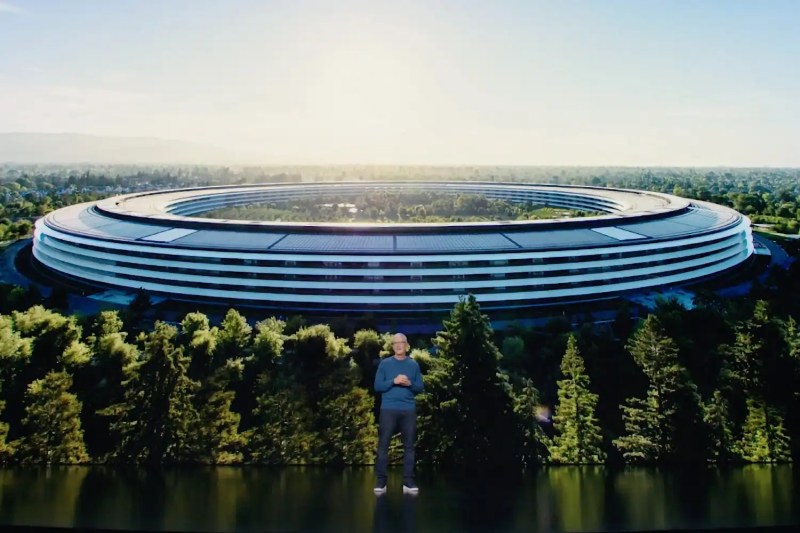
Apple Park Tim Cook AAPL

AAPL is a California-based computer company that became the most successful smartphone company in the world.

AAPL defined by Apple

Here’s how Apple defines itself:

Apple revolutionized personal technology with the introduction of the Macintosh in 1984. Today, Apple leads the world in innovation with iPhone, iPad, Mac, Apple Watch, and Apple TV. Apple’s five software platforms — iOS, iPadOS, macOS, watchOS, and tvOS — provide seamless experiences across all Apple devices and empower people with breakthrough services including the App Store, Apple Music, Apple Pay, and iCloud. Apple’s more than 100,000 employees are dedicated to making the best products on earth, and to leaving the world better than we found it.

Key AAPL history

From Apple I to iMac

Apple was founded in 1976 by Steve Jobs (Steve), Steve Wozniak (Woz), and (briefly) Ronald Wayne as a business partnership: Apple Computer Company. The following year it became Apple Computer, Inc. The company’s first product was the Apple I, a personal computer hand-built by Woz and sold in part-completed kit form. The Apple II and Apple III followed.

The modern Apple as we know it today began in 1983, with the launch of the first personal computer with a graphical user interface, the Lisa. Way too expensive to succeed, it was replaced by the Macintosh in 1984, launched with the single showing of a Ridley Scott commercial during the Super Bowl. The Macintosh transformed the world’s understanding of what a computer was, and would eventually lead to Microsoft adopting the GUI approach.

Steve Jobs and then Apple-CEO John Scully fell out in 1985, when Steve wanted to focus on the Macintosh while Scully wanted to put more attention on the Apple II, which was still selling well. That led to Steve being forced out of the company and going off to form NeXT.

Apple focused on selling Macintosh models at the highest possible margins, but would eventually fall foul of a mix of unsustainable pricing in the face of competition from Windows machines, and an overly complex product lineup. By 1996, the company was in trouble, and in 1997 Steve was brought back, along with the NeXT operating system, which would eventually form the basis of Mac OS X.

Steve simplified the Mac lineup and had industrial designer Jony Ive work on a whole new look for a consumer desktop Mac, the colorful iMac. The iMac, like the original Macintosh, again changed the world’s understanding of what a computer was, and who should want one.

From Apple Computer, Inc. to Apple, Inc.

In 2001, Apple launched the iPod. Although this wasn’t the first mp3 player, it was massively better than anything on the market at the time, and succeeded in turning a geeky piece of technology into a consumer electronics product with mass-market appeal.

The success of the iPod paved the way into other mobile devices. Apple was working on what would eventually become the iPad, when Steve realized that this was the basis of a smartphone. He diverted the team’s work into this, to launch the iPhone in 2007. The iPad launched later, in 2010.

The iPhone was yet another transformational product. While most other smartphones of the time were clunky devices with a keyboard and stylus, the iPhone was a sleek-looking device operated with a finger, and so simple that no user guide was needed. It was with the launch of the iPhone that Apple Computer, Inc. was renamed to Apple, Inc.

From Intel to Apple Silicon

While the iPhone, iPad, Apple Watch, and more are made with Apple-designed processors, the Mac lineup has historically relied on third-party companies for its CPUs. Over the years, Macs progressed from Motorola 680000 series chips through PowerPC to Intel.

In 2020, Apple began a two-year transition to the final stage in that journey, with Macs too finally getting Apple-designed chips. The first such is the M1 chip, used in the latest Mac mini, MacBook Air, and 13-inch MacBook Pro. Other Apple Silicon Macs followed.

AAPL today

Apple is one of the largest companies in the world. It was the first publicly traded company to hit a trillion-dollar valuation in 2018, $2 trillion in 2020, and $3T in 2022.

The company’s product lineup includes five different Mac families (MacBook Air, MacBook Pro, iMac, Mac Pro, and Mac mini); four iPad ranges (iPad mini, iPad, iPad Air, iPad Pro); four iPhone 12 models (12, 12 mini, 12 Pro, 12 Pro Max); three main Apple Watch models (SE, Series 3, Series 6); as well as other products, including Apple TV, AirPods, and HomePod mini.

In addition to hardware sales, Apple derives a growing proportion of its income from Services, including the App Store, iCloud, Apple Music, and Apple Pay.

Luca Maestri officially succeeds Peter Oppenheimer as Apple’s CFO and Senior VP

Site default logo image

In an SEC filing today, Apple announced that Luca Maestri has officially transitioned into the Chief Financial Officer and Senior Vice President role. His first official day on the job was yesterday, May 29th. Maestri is not yet on Apple’s executive biographies page, but an official profile will likely go live in the coming days. Apple says that Maestri’s previous job as Principle Accounting Officer will be folded into his CFO role.

Maestri, previously Corporate Controller and a Vice President at Apple, replaces long-time CFO Peter Oppenehimer. The transition was announced by Apple earlier this year. Oppenheimer will shift his remaining responsibilities to Maestri over the course of the next few months and completely retire from Apple at the end of September of this year. As part of his promotion, Maestri will now receive an annual salary of $1 million and new stock-based payment packages:


Expand
Expanding
Close

WWDC 2014 Roundup: Enhanced iOS 8, redesigned OS X 10.10, new hardware (plus fresh details)

Site default logo image

Despite Apple CEO Tim Cook teasing that Apple would introduce new products “across 2014,” so far this year the company has simply released a cheaper version of the iPhone 5c in select markets, marginally faster MacBook Airs, and the 2012 fourth-generation iPad at a lower price.

But on Monday, June 2nd, Apple will make major announcements that will indicate the immediate future of its two major platforms: iOS and OS X. The Cupertino company will share details behind the changes in iOS 8, a redesigned Mac operating system, and perhaps even new hardware.

Over the past several months, we have exclusively reported the majority of the news to expect next week and you can find our extensive roundup (along with new details) below:


Expand
Expanding
Close

Site default logo image

Katie Cotton finishes up at Apple just ahead of WWDC

Following up on their earlier report, Re/code is reporting that Katie Cotton’s last day at Apple is today. Cotton has been Apple’s PR chief and Vice President of Corporate Communications since the return of Steve Jobs in the 1990s. Her departure comes just days ahead of Apple’s developer conference, but you can bet Cotton was heavily involved in decisions surrounding the event. Kara Swisher has a great tribute to Cotton’s career that is well worth a read. 


Expand
Expanding
Close

Site default logo image

Trademark filings w/ Apple connections point to future OS X names, “Healthbook” and HealthKit”

Right as Apple confirmed Yosemite for OS X 10.10, a few more future OS X names have surfaced today in trademark filings.

In April trademark filings linked to Apple popped up that appeared to show possible California related names for future versions of OS X. Today a few more have appeared in trademark filings that aren’t specifically filed by Apple but have links to the company, according to MacRumors. Sequoia, Mojave, Sonoma, Ventura as well as variations like “OS X Sequoia” were all filed for in March in Trinidad and Tobago by a company that apparently has ties to Apple. 

Those names join the previous trademark filings that included: Yosemite, Redwood, Mammoth, California, Big Sur, and Pacific, Diablo, Miramar, Rincon, El Cap, Redtail, Condor, Grizzly, Monterey, Tiburon, Farallon, Skyline, Shasta, and Sierra.

Apple announced it would be sticking with the California named themes when it first revealed OS X Mavericks last year, and today it seems to have confirmed it will go with “Yosemite” when it unveils OS X 10.10 during its WWDC developer conference next week.

MacRumors also notes today that “healthbook” and “healthkit” trademark filings have been discovered with possible links to Apple, but there’s no proof Apple is actually behind them. We previously revealed the details of Apple’s upcoming Healthbook app that is expected to be unveiled during WWDC.

Apple’s OS X 10.10 WWDC banner appears to point to ‘Yosemite’ or ‘El Capitan’ name

Site default logo image

We’ve been watching as banners go up at Moscone West in preparation of Apple’s WWDC developer conference on Monday, and now the company appears to have revealed “Yosemite” as the name for its next OS X release. The image, however, appears to be of El Capitan, a rock formation in Yosemite and another name Apple has reportedly trademarked as “El Cap”. For that reason, there’s a possibility Apple could go with either the El Cap or Yosemite name for 10.10 on Monday”

The banner above (Via The Verge) shows an image of what appears to be a section of Yosemite National Park in California, as pointed out by our own Michael Steeber:
Expand
Expanding
Close

Report: Apple planning to introduce locally targeted ads, additional non-music content to iTunes Radio

Site default logo image

(Image via Apple)

According to a new report from The Information, Apple is planning to offer “locally targeted advertising” to users through its iTunes Radio platform sometime this year. The report also says Apple is planning on working with “broadcast radio stations” to increase the amount of content it offers on the platform. This additional content would focus on non-music offerings that would further expand Apple’s content streaming platform. Earlier this week, 9to5Mac reported that Apple is planning to introduce several local NPR stations as well as sports content from ESPN to iTunes Radio…
Expand
Expanding
Close

Opinion: It’s time to bring back the mobile professional’s workhorse, the MacBook Pro 17

Site default logo image

Many of us were deeply disappointed when Apple discontinued the MacBook Pro 17. While the Retina MacBook Pro 15 introduced at the same time offered higher resolution, sometimes there’s just no substitute for physical screen size. Photographers and videographers in particular loved the combination of the sheer size and the option of a matte screen.

I loved mine enough to immediately sell the three-year-old one I owned at the time in order to replace it with the last model made, to maximize its useful life. I still love it enough that I’ve just laid out a thousand bucks on a 2.5-year-old machine to fit 2TB of SSDs, giving it the best of both worlds: lightning-fast performance combined with huge storage that allows me to have all my files with me when I travel.

There may not be too many others who’ll follow my admittedly extravagant example, but I do think it’s time for Apple to revisit its decision and bring back the mobile professional’s workhorse … 
Expand
Expanding
Close

OkSiri brings always-on voice control to jailbroken iOS devices

Site default logo image

https://www.youtube.com/watch?v=oNUBWqr3AI4

Even if you’re strictly an iOS user, you’ve probably heard of Android’s “Ok Google” command, which automatically brings up the Google Now voice control interface from the home screen. iOS doesn’t really have an equivalent feature. In order to bring up Siri, you have to hold the home button down for a few seconds.

Today a new jailbreak tweak called OkSiri was released that enables the same functionality on iOS devices. It works just like you see in the video above, though there are a few little annoyances. Keep reading for a full breakdown on the upsides and downsides to this tweak.


Expand
Expanding
Close

Site default logo image

Apple continues to expand green retail efforts with new Omotesandō, Tokyo store

Image via @t_yukstr

Apple is continuing its push to expand its retail arm under the guidance of new Retail VP Angela Ahrendts, with new stores popping up around the world. Today another of those new stores has been revealed as green and white signs promoting the upcoming Apple Store, Omotestando in Tokyo, Japan. The store is said to be opening in June.

According to Macotakara [translation], the new store will use a “curtain of green” to control the interior climate and cut energy usage. This “green curtain” apparently consists of plants that will be grown to cover the exterior of the building, providing a type of organic insulation. The vegetation also helps absorb carbon dioxide in the area. The signage pictured above certain seems to hint at such a system for the Omotesandō location.

Of course, this step makes sense for Apple, which has always been comitted to finding environmentally-friendly ways to run its operations. From seeking renewable energy sources for retail stores and datacenters, to investigating green power for mobile devices, and designing what could be the world’s largest corporate solar power installation to power its new headquarters, Apple has certainly earned its place on the EPA’s list of top green-powered companies.

More photos of the store (via Ringo-Sanco) are below.

Apple discussing iPhone payments service with high-profile retail brands

Site default logo image

Apple wants to replace yet another daily tool with your iPhone: your wallet.

Executives from the Cupertino-based technology company have begun discussions with directors from retail store chains about a mobile payments service, according to a source with direct knowledge of the talks. Previous reports indicated that Apple is exploring new payments services through discussions with executives from existing payments companies. These latest mobile payments-related discussions, which have occurred with retail store brands such as those that sell luxury clothing and premium goods, have taken place over the past couple of months, according to the source. The source declined to be named and requested that the identities of the companies talking to Apple not be published.

The Apple mobile payments service would be integrated into iOS Devices such as the iPhone and would be a comprehensive solution that would allow an iPhone user to leverage their device as a form of payment in retail stores. Based on information from various people briefed on the matter, the service would tie directly to iTunes accounts. Apple Senior Vice President Eddy Cue noted last night that Apple has 800 million iTunes accounts with credit cards, and that this arsenal opens up the door for many future products and services. Apple CEO Tim Cook previously hinted that the iPhone’s Touch ID fingerprint identity sensor could someday be leveraged for mobile payment purposes beyond the existing iTunes and App Stores…


Expand
Expanding
Close

Beats Music streaming service worth less than $500M of $3B Apple paid for whole company

Site default logo image

With most agreeing that Apple was mostly interested in the talent behind the Beats Music streaming service rather than the headphone business, there has been lots of speculation about just how much that part of the business is worth. According to a new report from The Wall Street Journal, it’s actually around $500 million of the total $3 billion ($2.6B in cash and $400m in equity) that Apple paid for the company.

The report notes that the $500 million valuation for the streaming service unit of Beats is actually considered generous considering the young service’s still small subscriber base. It has just 250,000 paying subscribers at $10/month contributing to the $1.3 billion the business as a whole brought in during 2013:
Expand
Expanding
Close

Apple’s home automation system will be less of a hub, more of a ‘made for iPhone’ program

Site default logo image

Acquiring the Nest Learning Thermostat was Google’s big step into home automation

As first reported on Monday, Apple is said to be preparing a home automation system for debut at WWDC next week. While this was the first anyone had heard of any such plans, several different sources have quickly come together to give an idea of how an “Apple Smart Home” will likely function.

On Monday, as noted above, the Financial Times first reported that Apple’s new program would not consist of a group of first-party automated appliances or other devices connected to an iPhone. Instead, the program will work similarly to Apple’s existing “Made for iPhone” program. Essentially the only role Apple will play is to grant special branding to compliant devices.


Expand
Expanding
Close

Apple files conflict minerals disclosure for 2013 with SEC

Site default logo image

Apple filed its conflict minerals disclosure today with the United States Securities and Exchange Commission and in it detailed its process of ethical sourcing of minerals used in Apple products between January 1, 2013 and December 31, 2013.

Apple noted that it has identified 205 smelters and refiners of the “subject materials” that it works to ensure are conflict-free, but also admits it “does not have sufficient information to conclusively determine the country of origin of the Subject Minerals in its products or whether the Subject Minerals are from recycled or scrap sources.”
Expand
Expanding
Close

Site default logo image

IDC lowers tablet shipment forecast, expects a 5.5-inch iPhone could cannibalize iPad sales

Yet another lowered forecast for tablet shipments this year comes today from IDC following a similar move from Morgan Stanley earlier this month. IDC announced today that it’s lowering its tablet shipment 245.4 million units down from a total 260.9 million units, which is around 12.1% year-over-year growth for the category vs the 51.8% growth last year. We’ve seen how much growth potential there is for tablets vs PCs and smartphones, but IDC’s report notes that tablets might see increased competition from the phablet category this year. The report classifies phablets as smartphones with 5.5-inch to 7-inches and IDC thinks Apple’s new larger iPhone could eat into some of its iPad sales:

“Two major issues are causing the tablet market to slow down. First, consumers are keeping their tablets, especially higher-cost models from major vendors, far longer than originally anticipated. And when they do buy a new one they are often passing their existing tablet off to another member of the family,” said Tom Mainelli, Program Vice President, Devices & Displays at IDC. “Second, the rise of phablets – smartphones with 5.5-inch and larger screens – are causing many people to second-guess tablet purchases as the larger screens on these phones are often adequate for tasks once reserved for tablets.”

IDC notes that the share of smartphone shipments captured by so called phablets doubled from 4.3% in Q1 of 2013 to 10.5% in Q1 of this year. representing 30.1 million units shipped. “As large phones clearly impact near-term tablet growth, IDC expects the market to rebound by shifting its focus back toward larger-screened devices.”

Wall Street unimpressed by Beats acquisition: “Not what we want to see”

Site default logo image

Judging by a roundup in The Wall Street Journal, analysts and investors appear not to share the enthusiasm for Beats acquisition express by Tim Cook and Eddy Cue. While Cook said he was “excited […] about this new chapter in our history” and Cue believed that “combining the two companies will help [music] grow again,” Wall Street is more skeptical.

“To see this kind of money spent for a company that gets most of its revenue from hardware business is not what we want to see,” said Dan Niles, chief investment officer of hedge fund AlphaOne Capital Partners …


Expand
Expanding
Close

Cue praises Beats curated playlists and headphones; Iovine disses Apple’s EarPods

Site default logo image

(Image via Re/code)

It’s typical in any acquisition for both parties to sing the praises of their new partner, and Eddy Cue was certainly playing his part at Re/code’s Code Conference, saying that Beats’ curated playlists were a key strength and would help music grow again. As Mark Gurman reported in his live blog coverage at Code Conference:

Cue said Apple bought Beats because “music is dying. It hasn’t been growing.” He said combining the two companies will help it grow again […]

Cue said what makes Beats good is that it provides users with curated playlists.

He said: “When you bring what Beats has got and what we’ve got it’s not two plus two is four. It’s something much more than that” …


Expand
Expanding
Close

Site default logo image

Eddy Cue: Apple has the best product pipeline in 25 years coming later this year [Video]

(Image via Re/code)

In case you were wondering if Apple does indeed plan to release some new products this year, perhaps in time for WWDC early next month, Eddy Cue made an extremely confident statement about what Apple has planned. During his interview at the Code Conference, the same one where he shared some of the latest stats on iTunes, Cue just said that Apple has the best product pipeline he’s seen in over 25 years with new products coming later this year:

 I have been working with Tim since 1997. We started the online store together. Cook is extremely thorough, he has tremendous vision. He cares tremendously about building great products. Looking at the executive team, the reason we are successful is because of our focus. We are not smart enough to do 100 great things. We want to do a few incredible things, and that hasn’t changed. We’re going to keep going down that path… Later this year, we’ve got the best product pipeline that I’ve seen in my 25 years at Apple”

Video of the conversation is below:
Expand
Expanding
Close

Cue: The current TV experience “sucks,” billion-dollar Apple TV business will get bigger this year

Site default logo image


Speaking at Code Conference Wednesday night, Apple’s head of online services Eddy Cue took a swipe at the current state of television and presented his take on where the future of that industry lies. According to Cue, Apple TV sales have risen in recent years and over 20 million of the set-top box have been sold to date. Cue says that the device is billion-dollar business now and is expected to continue growing.

However, the Apple TV isn’t a true TV replacement. Cue took a few moments to point out just how much using TV “sucks” and bemoan the current range of DVR devices. He even went so far as to compare current technology with the VCRs of a bygone era—and he’s not wrong. Cue cited drawbacks such as having to remember to set a recording or trying to manage storage on the recorder as reasons on-demand streaming through the Apple TV is growing in popularity.

That’s not to say he’s especially fond of today’s on-demand systems either, though. Not only did Cue have sharp criticisms for modern recording tech, he even jabbed at the streaming experience on the iPad, noting that the process of authenticating with a cable provider to access streaming content is less-than-ideal. So what’s his solution?


Expand
Expanding
Close

Site default logo image

Eddy Cue: Apple passed 35 billions songs sold on iTunes last week, 40 million iTunes Radio listeners

Live from the Eddy Cue and Jimmy Iovine interview at the Code Conference, Cue is sharing some of the latest stats for iTunes and other services and noted that Apple just crossed 35 billion songs sold this past week. That’s up from the 25 billion songs purchased and downloaded that Apple announced in February of last year. Cue said sold, but we’re assuming that 35 billion number includes both purchases and downloads like Apple’s stat did in its press release last year. 

Cue also noted that iTunes has around 800 million customers total and around 40 million iTunes Radio listeners in the U.S. and Australia with a lot of growth coming internationally. Iovine also shared some stats confirming previous reports that Beats Music is now at around 250,000 subscribers from a total of 5 million downloads. Iovine claimed conversions from downloads to paid customers would have been a lot higher if Beats Music was using Apple’s in-app purchase mechanism.

Tune into our live blog of the interview happening now for the latest. 

Live blog: Apple’s Eddy Cue and Beats co-founder Jimmy Iovine interviewed at Code Conference

Site default logo image

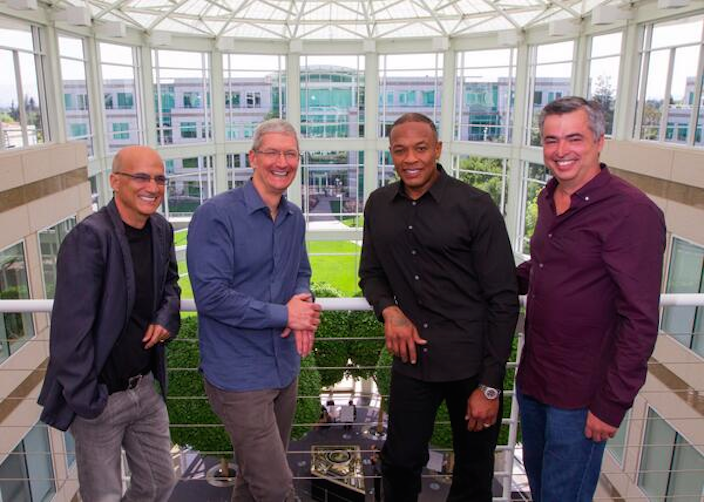
Cue on the right, Iovine on the left

Earlier today, Apple announced that it has acquired Beats Electronics and Beats Music for a total of $3 billion. Tonight, two of the masterminds behind the deal will be interviewed about a range of topics at the Code Conference. Apple Senior Vice President of Software and Services Eddy Cue along with Beats co-founder and music mogul Jimmy Iovine will be interviewed by Re/code’s Walt Mossberg and Kara Swisher. Previously, Cue was scheduled to be interviewed alongside Apple Senior Software Vice President Craig Federighi, but it appears that the acquisition’s announcement changed up the plans. We are on hand for the interview and we will be providing live coverage below. The interview starts around 8PM Pacific/11PM Eastern Standard time:


Expand
Expanding
Close

Analyst: Apple plans to release cheaper iMacs, 8 GB iPhone 5s at WWDC [Update: “Nope”]

Site default logo image

KGI analyst Ming-Chi Kuo has made a few more predictions about what we’ll see from Apple in the near future. According to a new KGI research note, Apple could potentially release cheaper versions of the iMac and iPhone 5s during its developer conference next week to accompany its software announcements.

Earlier today new references to an unreleased iteration of the the iMac appeared in an OS X developer preview, likely indicating the impending release of a new model. It’s quite possible that this could be the cheaper iMac referred to in the report. Despite the rumored upgrade, KGI has revised its iMac shipment estimates down, citing a slow PC market:


Expand
Expanding
Close