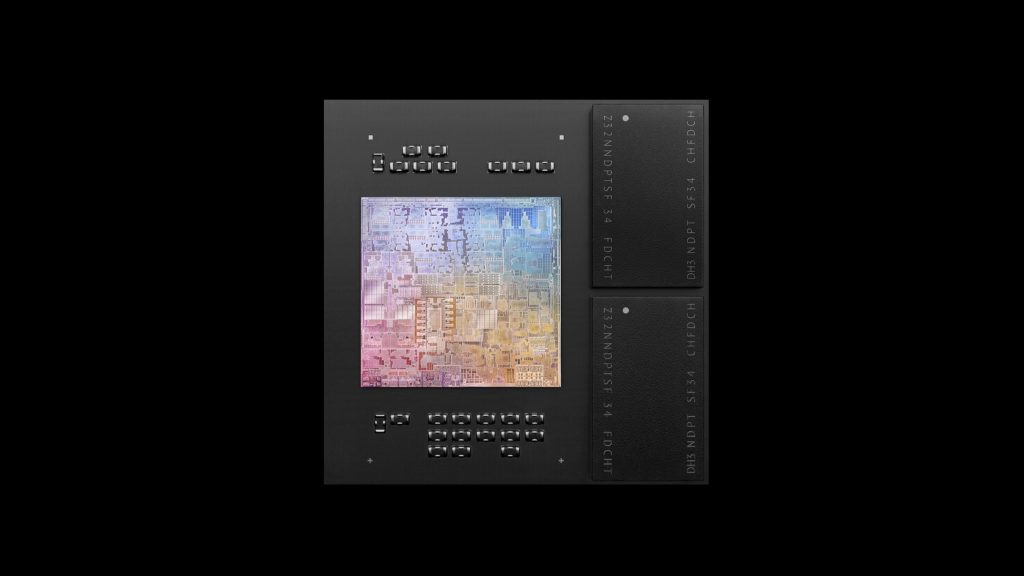
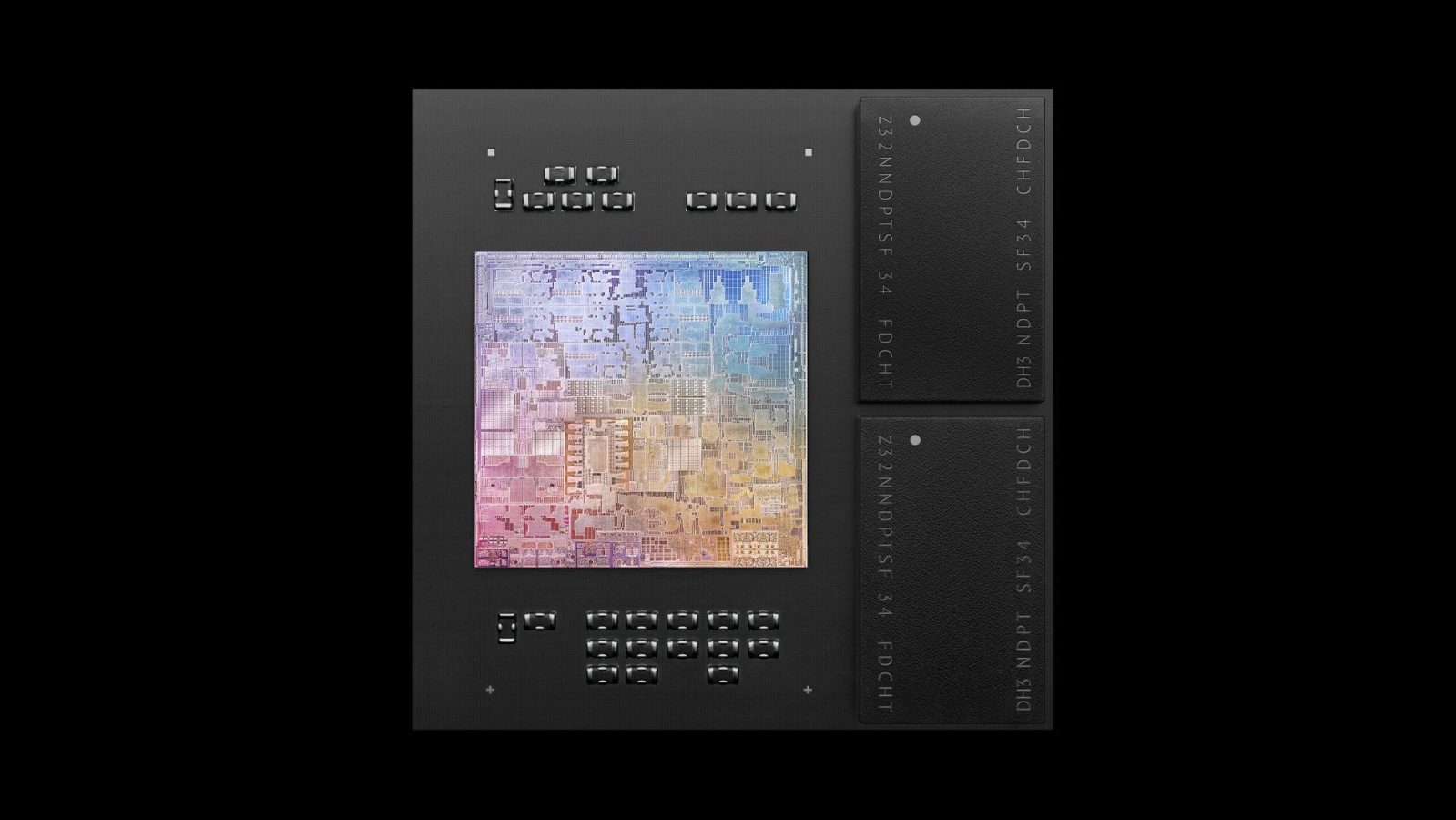
Apple Silicon is Apple's new lineup of processors for the Mac platform. It was announced in 2020 with the first Macs appearing at Apple's "One More Thing" event in November 2020. The first was the M1, and it first appeared in the MacBook Air, MacBook Pro, and Mac Mini.
The Apple Silicon M1 Macs offer some seriously impressive performance across a variety of workflows. While gaming still isn’t necessarily a strong suit for macOS, the custom M1 SoC definitely brings improvements to offer a solid-enough experience for some titles, and through the lens of Apple’s entry-notebooks even an surprisingly good one. Here’s a look at all M1 Mac compatible games and associated details.
One of the biggest differentiators between the new M1 Macs and their Intel predecessors is that any M1 Mac can run iPhone and iPad applications. Through the Mac App Store, you can now download M1 versions of popular iOS and iPadOS applications, though developers do have the ability to opt out.
Here’s what the experience of running iPhone and iPad apps on the Mac is like in the real world.
Last year I picked up a very expensive computer — a top of the line 2019 16-inch MacBook Pro upgraded to an i9, 1TB of storage, and 16GB of RAM. But I just couldn’t wait to see how these M1 chips actually perform, so I decided to pick up the base $999 MacBook Air to see how it would hold up side-by-side with my 16-inch behemoth. The results are incredible.
The Pixelmator team today announced the next major version of Pixelmator Pro, version 2.0. The update will be available in about a week’s time on Thursday, November 19th.
Pixelmator Pro 2.0 features an overhauled user interface with new layouts for the app’s toolbars and editor sidebars, including a dynamic Effects browser. There’s also drastically expanded customization options for the app’s interface, so you can tweak the chrome just the way you like. This update also brings support for macOS Big Sur and the new M1-powered MacBooks and Mac mini.
A wave of Apple M1 benchmarks has landed today with reviews of the new Macs as well as the computers now arriving to early customers. We’ve now got some great examples of what the impressive new M1 Mac capabilities mean for real-world performance.
As the first orders arrive to customers, early reviews of the M1 Mac mini, MacBook Pro, and MacBook Air have officially been published. As expected, the reviews praise the M1 chip’s performance and battery life, and they note that Apple Silicon will only get better from here.
Ever since Apple unveiled its new M1 SoC, it has been continuously impressing us as we learn more about it. That trend continues today as the M1 has been tested using the GFXBench 5.0 benchmarking tool. The results, while nothing awe-inspiring, are definitely impressive.
In this week’s top stories: Everything Apple announced during its November event, including the M1 processor alongside a new MacBook Pro, MacBook Air, and Mac mini.
Fantastical is adding a variety of new features on the Mac alongside this week’s release of macOS Big Sur. Fantastical for Mac features an updated design to fit in with Big Sur’s new aesthetic, alongside widget support, Apple Silicon optimization, and more.
Following Tuesday’s introduction of the first Apple Silicon Macs, Apple VPs Tim Millet and Bob Borchers have sat down for a pair of interviews to talk more about the M1 chip. Bob Borchers serves as vice president of product marketing for Apple, while Tim Millet is the company’s vice president of platform architecture.
Ahead of the first M1-powered Macs arriving to customers next week, Blackmagic Design has released a new beta of its popular DaVinci Resolve video editor and color correction tool with Apple Silicon support. This means that DaVinci Resolve will run natively on your M1-powered Mac when it arrives.
Sparkle is a popular Mac app that allows anyone to easily create a website through an intuitive and easy to use app. Following the release of macOS Big Sur, Sparkle has been updated to version 3 with a new design and several more features, including an SEO assistant and compatibility with Apple Silicon Macs.
Following the announcement of the first M1-powered Macs earlier this week, a trio of Apple executives spoke with The Independent to talk about Apple Silicon. In the interview, marketing chief Greg Joswiak, software VP Craig Federighi, and hardware engineering VP John Ternus went in-depth on the new M1 chip, the future of the Mac, and more.
Just two days after the “One more thing” event, the first Apple M1-powered MacBook Air orders are starting to ship to customers. The first deliveries are currently scheduled to arrive as early as next week, Apple says.
With macOS Big Sur landing today and Apple Silicon Macs arriving to customers by November 17, it’s awesome to see developers releasing updates to offer support for both. And of course that means impressive performance gains with the first M1 Macs. Affinity is out today with new versions of all of its Mac apps to take advantage of Apple’s latest software and hardware.
This past summer, Algoriddim released its djay Pro AI app for iOS and the same tech and capabilities came to the Mac with its Neural Mix Pro. The software brings powerful performance based on Apple’s Core ML for DJs and musicians to do things like separate, play, and remix tracks in real-time. Now the app has launched as a Universal build that brings support for the Apple Silicon M1 chip arriving in the newest Macs with what looks like huge performance gains.
Apple introduced its first Macs with the Apple Silicon “M1” chip, which brings the ARM architecture to the Mac with improved performance and energy efficiency. While the company said that the M1 chip is more powerful than most PC processors, a new benchmark test revealed that the new MacBook Air with M1 chip can beat all models of the 16-inch MacBook Pro with Intel processors.
App compatibility is top of mind for many as Apple has started the transition away from using Intel in its notebooks and desktops with the first M1-powered Macs. Today Microsoft announced that it will launch a new Universal build of its Mac Office 2019 beta today that includes support for Apple Silicon.
Apple has officially announced its first processor designed specifically for the Mac, dubbed the M1. The M1 chip features an eight-core design alongside a powerful Neural Engine and GPU, offering dramatic efficiency and performance improvements for the Mac.
If you’re buying a new Mac today and are confused by Apple’s M1 chip option in the MacBook Air, MacBook Pro, and Mac mini, read along for all of the details on what you need to know.
A number of people commented on what appears to be a comical difference in the new MacBook Air specs, between the $999 base model and the $1249 version.
Both models have an 8-core CPU with 4 performance cores and 4 efficiency cores, along with a 16-core Neural Engine. But while the higher-spec model has an 8-core GPU – also seen in the new MacBook Pro and Mac mini – the base model only has a 7-core GPU …
A detailed analysis by AnandTech says that Apple’s M1 chip can indeed credibly claim to be the fastest laptop CPU in the world. Apple made the claim during yesterday’s Mac event.
While the piece does level a couple of criticisms at Apple’s presentation, it says that a comparison of A-series and Intel chip trajectories tell a very clear story: Apple has long been on-track to overtake the PC chipmaker, and has now done so …
Apple today finally introduced its first Macs with Apple Silicon, as the company calls its own chips. The new MacBook Air, 13-inch MacBook Pro, and Mac mini come with the new M1 chip — and they all have USB-C with Thunderbolt 3. However, some accessories may not be compatible with these machines, and this includes eGPUs.
As Apple launched its new MacBook Air and MacBook Pro powered by its M1 custom Apple Silicon, we learned about the big performance gains to expect. Beyond processor and graphics performance, Apple says battery performance is seeing massive improvements giving them the “longest battery life ever in a Mac.” Here’s what Apple is rating battery runtime for the new MacBook Air and Pro.
The all-new Mac mini with the M1 Apple Silicon has launched today. Like the new MacBook Air and Pro, the Mac mini gains some impressive performance from the M1’s 8-core CPU and 8-Core GPU. But there have also been some I/O changes with the new model. Here’s what’s different…