China

See All Stories
China

China has been fundamental to Apple’s historical success, but is also arguably the greatest risk to the company’s future.

Why are most Apple products made in China?

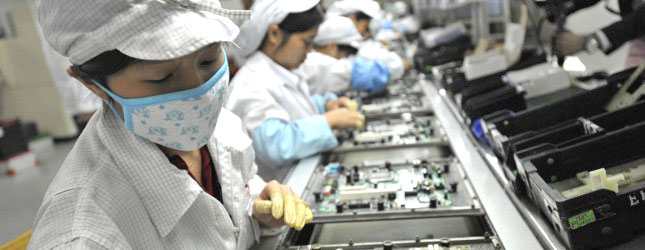
Although everyone assumes Apple products are made in China because labor is cheap there, that’s only part of the story – and an increasingly small part, as the company’s assembly partners move toward more and more automated operations.

Steve Jobs originally transferred most Apple manufacturing to China because it was the only country in the world with a huge ready-made supply-chain network, and the ability to scale up production almost overnight. There are three main reasons China – and specifically the Shenzhen area – is such a powerful manufacturing center.

First, the city is strategically placed, serving as the gateway between mainland China and Hong Kong. It is one of the largest shipping centers in the world, with a massive container port.

Second, the Chinese government established Shenzhen as the first Special Economic Zone (SEZ) in the country. SEZs are designed to encourage enterprise through relaxed planning regulations and generous tax incentives – and crucially, to facilitate foreign investment in local companies. It is this, as much as its geographical advantages, which has enabled it to grow at such a pace.

Third, that SEZ was established way back in 1980, meaning that the city has had over 40 years to grow into the manufacturing center of the tech world. Apple relies on a huge network of suppliers and sub-contractors, some of which may make just a single tiny component. The majority of them are based in Shenzhen and its immediate surrounds, so the logistics of bringing everything together in one place for assembly are straightforward.

What are the risk factors with China?

Being over-dependent on China carries a number of risks.

First, there is the generic one: Being overly dependent on any one country is a strategic risk. For example, the COVID-19 pandemic originated there, and had a massive impact on manufacturing capacity. Anything from a natural disaster to political upheaval could disrupt operations within a single country, so it is always wise to have a diverse range of manufacturing centers around the world.

Second, the relationship between the US and China has often been fraught. The trade war started by the previous US administration was a particularly low point, but continued tensions mean that there is always a risk of disruptions to trade between the two countries.

Third, it is increasingly damaging to Apple’s reputation to be so closely associated with a country that has a worsening human rights record – especially when the iPhone maker has no choice but to comply with local laws, however much they may conflict with the company’s own values. Apple has been required to remove VPN and a variety of other apps from the Chinese App Store, allow the iCloud data of Chinese customers to be stored on government-controlled servers, and more. Additionally, there have been growing reports of forced labor in China, including within many different areas of Apple’s supply chain.

What is Apple doing about it?

Apple has been working for a long time on diversifying its manufacturing operations, and has in recent years accelerated the pace at which it is doing so.

As explained above, this is far from an easy undertaking, but Apple now has major manufacturing operations in India, Thailand, Malaysia, and the Philippines, among other countries.

In India in particular, we are seeing the very early stages of a complete supply-chain infrastructure as the government uses a mix of carrot and stick to encourage companies to manufacture more of their components within the country – namely, tariffs on imports of components and tax breaks for local production. COVID-19 lockdowns in China also saw Apple move some iPad production to Vietnam for the first time, but it’s clear that the risks of over-dependence on China have never been greater.

Apple TD-LTE job listing serves as additional confirmation for China Mobile iPhone

Site default logo image

While a possible deal with China Mobile, one of the world’s largest telecoms, was rumored for quite sometime leading up to launch of the new iPhones, the company said in August that it was still working out “commercial and technical issues” with Apple. Today, Bloomberg points us to an Apple job listing in China that provides some evidence that the company is indeed preparing to launch the iPhone on the carrier’s network:

The manager, who will be based in Beijing, will “support and drive the carrier approval of mobile phones,” Apple said in an advertisement on its China website. The position seeks experience with TD-SCDMA, China Mobile’s own third-generation standard that isn’t used by other carriers.

On top of TD-SCDMA, the job listing is also seeking an engineer with experience in TD-LTE, which is the LTE standard that China Mobile has quickly been rolling out. Back in August the often reliable KGI analyst Mingchi Kuo claimed that Apple was ramping up TD-LTE supported iPhone 5c production and estimated that the iPhone 5s and 5c on China Mobile could account for penetration of 25% and 35% of total shipments for the two devices. Currently the carrier has approximately 756 million subscribers, around 63% of the 1.2 billion wireless subscribers in China.
Expand
Expanding
Close

Chinese iPhone buyers desperate for gold turn to $2 stickers

Site default logo image

The new gold color option for the iPhone 5s might be driving higher demand over the 5c in China, but for those unable to find or afford the more expensive model, gold stickers and skins have quickly become an inexpensive alternative. The Wall Street Journal reports that a long list of retailers in the country have started offering gold skins for the iPhone 5/5s, allowing users to give their iPhone a similar gold appearance for as little as $2.

“Dear, you don’t need to sell your kidney for the new iPhone,” one of the ads said.“Instead of paying 5288 yuan (the retail price of the 16-gigabyte iPhone 5S in China), you only need to spend 35 yuan to make your iPhone 5 look like a golden iPhone 5S in seconds.”

The report notes that online retailers through taobao.com have sold thousands of gold iPhone skins in less than a month, and there is certainly no shortage of similar options through Amazon and other online retailers.

The new gold iPhone is in limited supply at most retailers around the world, and even Apple’s own retail stores have had extremely limited supply of the model compared to other color options since the device’s launch on September 20.

As noted by WSJ, the gold iPhone 5s is considered somewhat of a status symbol in the country with local Chinese media often referring to the gold 5s model as “Tuhao Jin” or “local tyrant’s gold.”
Expand
Expanding
Close

China Mobile posters for the iPhone 5s and 5c leak, 4G certification imminent

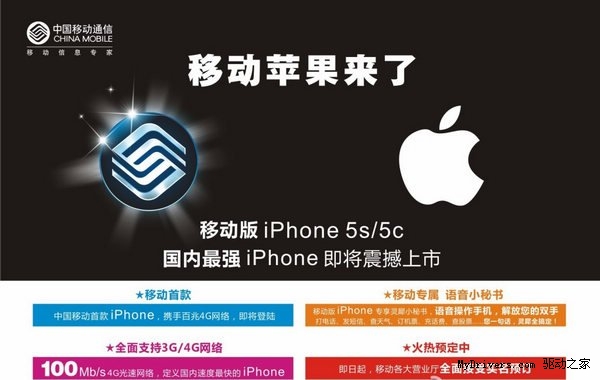
Supposed posters from China Mobile promoting the iPhone 5s and 5c have leaked out, touting “the strongest iPhone in China” (via UnwiredView). The ‘100’ visible on the poster indicates the network’s 100Mb/s maximum speed will be supported by the iPhone. Naturally, the iPhone will be China Mobile’s flagship 4G phone.

Apple has already received the necessary certification to put the iPhone on all Chinese spectrum, including the TD-LTE strand used by China Mobile, earlier this month. Now, the only holdup is getting permission from the MITT governing body to let China Mobile use the spectrum on a commercial basis.


Expand
Expanding
Close

New report claims China leads demand for iPhone 5s over 5c, 78% of new iPhones globally are 5s

Site default logo image

How many of those 9 million first weekend sales were for the iPhone 5s vs the iPhone 5c? There’s been a lot of speculation about how many of each device Apple is selling, and whether or not lack of availability of the gold iPhone 5s is due to low supply or simply the higher demand. Apple is staying quiet on the breakdown of 5s units vs 5c, but today we get some solid insight from Localytics after the research firm tracked over 20 million unique active iPhones since launch day on Friday.

72 hours after the launch of the new devices, Localytics found that China, not the U.S., had the highest relative share of iPhone 5s vs 5c sales.

Globally an average of 78% of new iPhones sold were iPhone 5s models, while China came in at 91% 5s. It’s somewhat surprising considering analysts have largely expected the 5c to do well in China and other emerging markets, but the report speculates that the fact that gold is a popular color in the country could be driving higher demand for the 5s.That compares to the U.S. at 76% and an average of 82% in other countries. It appears the UK has the highest share of 5c sales as “the only country that didn’t have at least a 3 to 1 ratio of 5s  to 5c activations.”

Localytics also tells us that currently “the U.S. accounts for 68% of all active iPhone 5s and 5c devices worldwide, with Japan in second place with 13% of 5s and 5c’s
Expand
Expanding
Close

Site default logo image

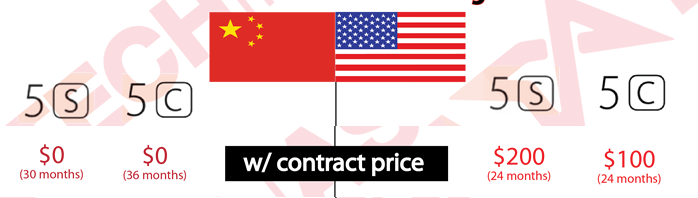
$0 down on both 5c and 5s in China, but high monthly cost and 3-year lock-in

TechInAsia reports that Chinese buyers are buying from China Unicom rather than Apple as the carrier offers both iPhone 5c and 5s with no up-front cost.

The catch? Monthly costs higher than in the USA, and contracts that run for either 30 or 36 months. Those monthly costs are massive in a country where the average monthly salary is around $800, and a 36-month contract means that buying an iPhone 5c or 5s today will see you sitting out the iPhone 6 and 6s/c/whoknowswhat.

It’s estimated that China already had 42M iPhone users before the launch of the new phones, and before they were officially supported by any of the local carriers.

Full comparison of U.S. and China Unicom costs below … 
Expand
Expanding
Close

Site default logo image

Apple Stores in Asia/Oceania go down ahead of iPhone 5s launch, 5c shipping times slip again

Ahead of the iPhone 5s launch tomorrow morning in Apple Stores around the world at 8AM local time, Apple appears to be preparing for online orders with its websites for China, Hong Kong, Australia, and Singapore currently experiencing downtime. Orders from Apple’s online store are about to kick off in the coming hours in Australia, while China and Hong Kong opened up reservations for the device earlier this week and also plan 8am retail launches. In the U.S. and most other countries online orders will start at 12am (PST in the US) and local time in other locations. Word has it the iPhone 5s will be in short supply at launch, but it’s taken Apple’s iPhone 5c over a week before experiencing any significant shipping delays.

Shipping times for certain models of the iPhone 5c began slipping over the last week, but most models in the initial launch countries remained available for delivery by the expected September 20 launch date. Today that has started to change with many more models of the iPhone 5c experiencing delays in several countries.

In the U.S. and Canada, all models of the device are currently listed as shipping in 1-3 business days, while France and Germany are now listing “5 working days” for most models and “7-10 working days” for others. Of course, shipping times could easily change again tomorrow when the iPhone 5c officially hits Apple retail stores alongside the 5s. We’ll keep you updated if they do.

Opening weekend iPhone sales estimated at 6-8 million units, reiterates 5s supply constraints

KGI analyst Mingchi Kuo has released his estimates for iPhone sales over the launch weekend. The forecast is set at between 6 – 8 million units, accounting  for both the 5c and the 5s. Apple opted not to report preorder sales figures for the 5c, leading some to speculate that demand for the device is weak. Kuo’s guidance does not seem to reflect this as an issue, however.

In 2012, the iPhone 5 shipped 5 million units across its launch weekend. If Apple hit the upper limit of Kuo’s forecast, 8 million units, that would result in sales growth of about 60%.

However, Kuo warns that supply is likely going to be a limiting factor in the near term. Kuo expects the available supply to skew heavily in the 5c’s favour, with only about a third of total supply in the launch period being 5s units. For the holiday quarter, Kuo says supply constraints will loosen to enable Apple to report record shipments of 55 million iPhones in fiscal Q4.

iPhone 5s stock in China sells out almost instantly, suggesting supply is low for rest of world

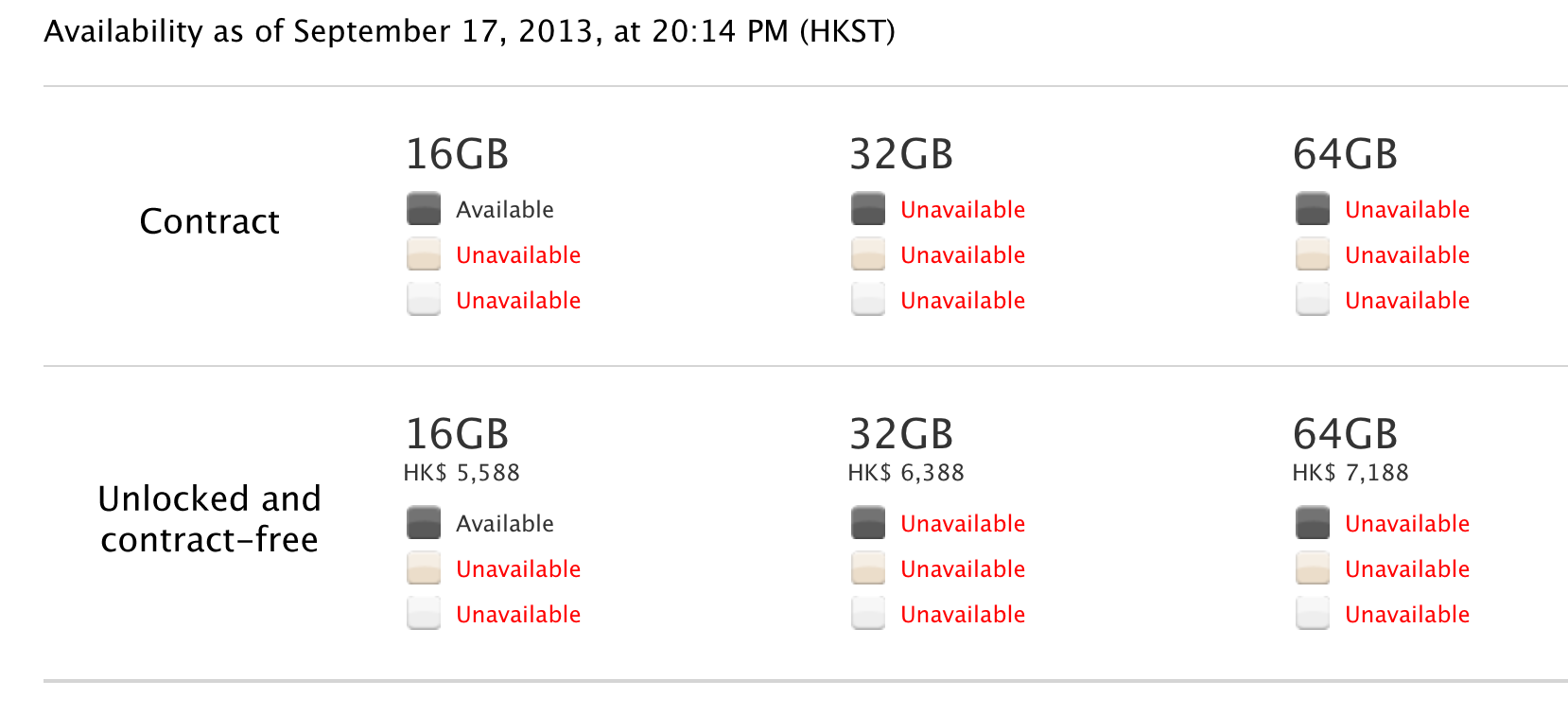
Unlike the rest of the world, China and Hong Kong can reserve the iPhone 5s starting today. However, just minutes after the phone became available, most models and colors sold out across the country.

At the time of writing, only the 16 GB ‘space grey’ SKU’s remain available for reservation. All other models have sold out and are “currently unavailable” according to the online store. Sina reported on the phenomenon, noting that the gold model, in particular, was in high demand…
Expand
Expanding
Close

iPhone 5c shipping times slip to October 4 for some models

Site default logo image

Update: Apple appears to have changed shipping times once again since we originally posted this article. The blue and green unlocked 16GB models are now listed as shipping by September 25 alongside the white, pink & yellow models.

Update 2: Now including 32GB models, all unlocked, non-T-Mobile iPhone 5c units shipping Sep. 25.

After opening up preorders for the iPhone 5c through its online stores and a number of carrier and retail partners three days ago, Apple is beginning to sell out of several models and continuing to push back shipping times.

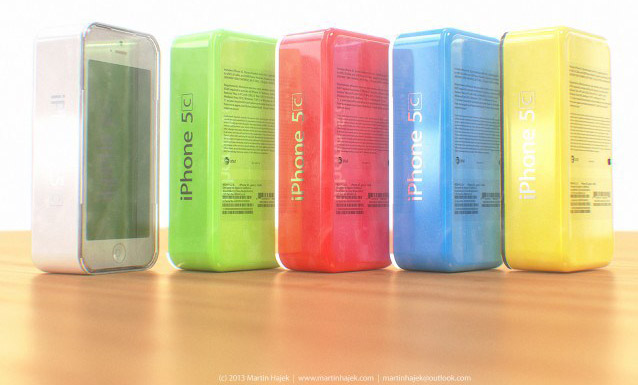
We reported last week that the unlocked 16GB version of the yellow iPhone 5c was the first to sellout with shipping times slipping to September 25, and all models of the new colourful iPhone were shipping in 1-2 weeks through Apple’s Hong Kong website. Today shipping times on several models in the U.S. have slipped from the expected Sept 20 release date to as late as October 4th.
Expand
Expanding
Close

China Mobile already has 42M iPhone users ahead of anticipated Apple deal, says Chinese tech site

Site default logo image

Image: Forbes.com

There were already 42M iPhones in use on China Mobile‘s network even before Apple’s anticipated deal with the carrier to offer the handset officially, claims Chinese site SinaTech.

Up to now, China Mobile iPhone users in the network has reached 42 million, which has exceeded the U.S. AT & T and Verizon combined sales of the two operators …

42 million is a huge number, especially when you consider that none of them were subsidised: all had to have been purchased at full price. If true, you can see why the potential for subsidised handsets in China is massive … 
Expand
Expanding
Close

China Apple Stores to start taking iPhone 5s & 5c reservations Sept. 17, pickup Sept. 20

Site default logo image

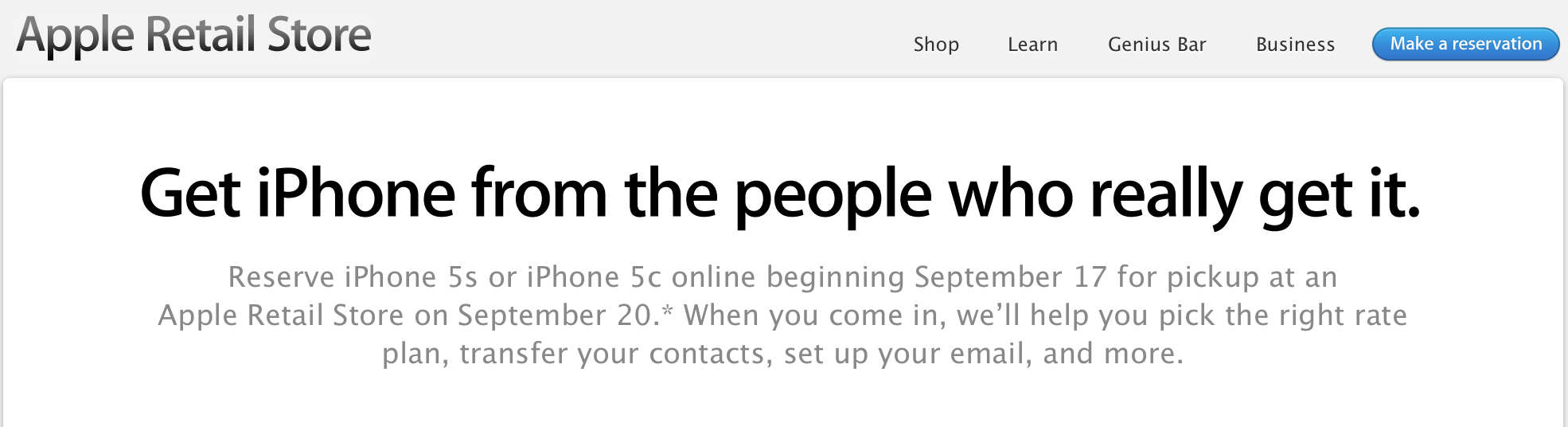
While the iPhone 5c became available for pre-order today in several countries via Apple’s website, Apple is currently not offering pre-orders for the iPhone 5s or reservations for pickup at Apple Stores for either model. However, this will change on September 17th in China. Apple began noting this on its website on the day the new iPhones were announced, and MacTrast brought it to our attention today.

Starting on September 17th, customers visiting both the general China Apple website and the Hong Kong Apple website will be able to reserve either an iPhone 5s or an iPhone 5c for pickup at an Apple Store. In line with the official launch date of the new devices, the pickups will begin on September 20th. At the Apple Store, employees will help customers who reserve devices choose carrier plans and setup the iPhone…


Expand
Expanding
Close

Samsung responds to new iPhones: will focus on China, says 64-bit chips coming for Galaxy phones

In an interview with the Korea Times, Samsung executives respond to Apple’s recent announcements in typical Samsung fashion. In order to better compete with Apple in China, Samsung confirmed that it would focus more on the huge Mainland market.

For example, the company says it has received clearance from Chinese authorities to sell TDD-LTE devices, to enable Samsung to offer phones that work on the world’s largest carrier, China Mobile.  As a result of “changing market situations” (i.e. Apple), Samsung is accelerating its schedule for releasing these Chinese-friendly devices. Apple is expected to announce a partnership with China Mobile to sell the iPhone before the end of the year.

In addition, Shin, Samsung’s co-CEO announced that Samsung’s next Galaxy phones will feature 64-bit architectures, to rival the A7 in the iPhone 5s.

“Not in the shortest time. But yes, our next smartphones will have 64-bit processing functionality,” Shin said, adding he followed the media coverage of Apple’s new iPhone.

Shin’s noncommittal reply indicates that although 64-bit chips are on the roadmap, they will not arrive this year. Meanwhile, the iPhone 5s ships on September 20th.
Expand
Expanding
Close

Site default logo image

All systems go for iPhone in China as regulator signs off final license

Photo: mshcdn.com

Apple now has all three of the licenses needed to allow the new iPhones to be used on China’s three major carriers: China Mobile, China Unicom and China Telecom. The WSJ reports that the final license was issued today.

According to the website of China’s Telecom Equipment Certification Center Wednesday, Apple was given a “network access license” for a handset resembling the iPhone that runs on the mobile standards used by China Mobile for third and fourth generation cellular services.

Apple announced yesterday that both iPhone 5c and iPhone 5s would go on sale in China on September 20th, in parallel with the US launch.

Analysts have estimated that Chinese and Japanese sales combined could add up to an extra 38M handsets a year.

Apple officially unveils the next-gen ‘iPhone 5S’ w/ fingerprint sensor & new gold color option

Site default logo image

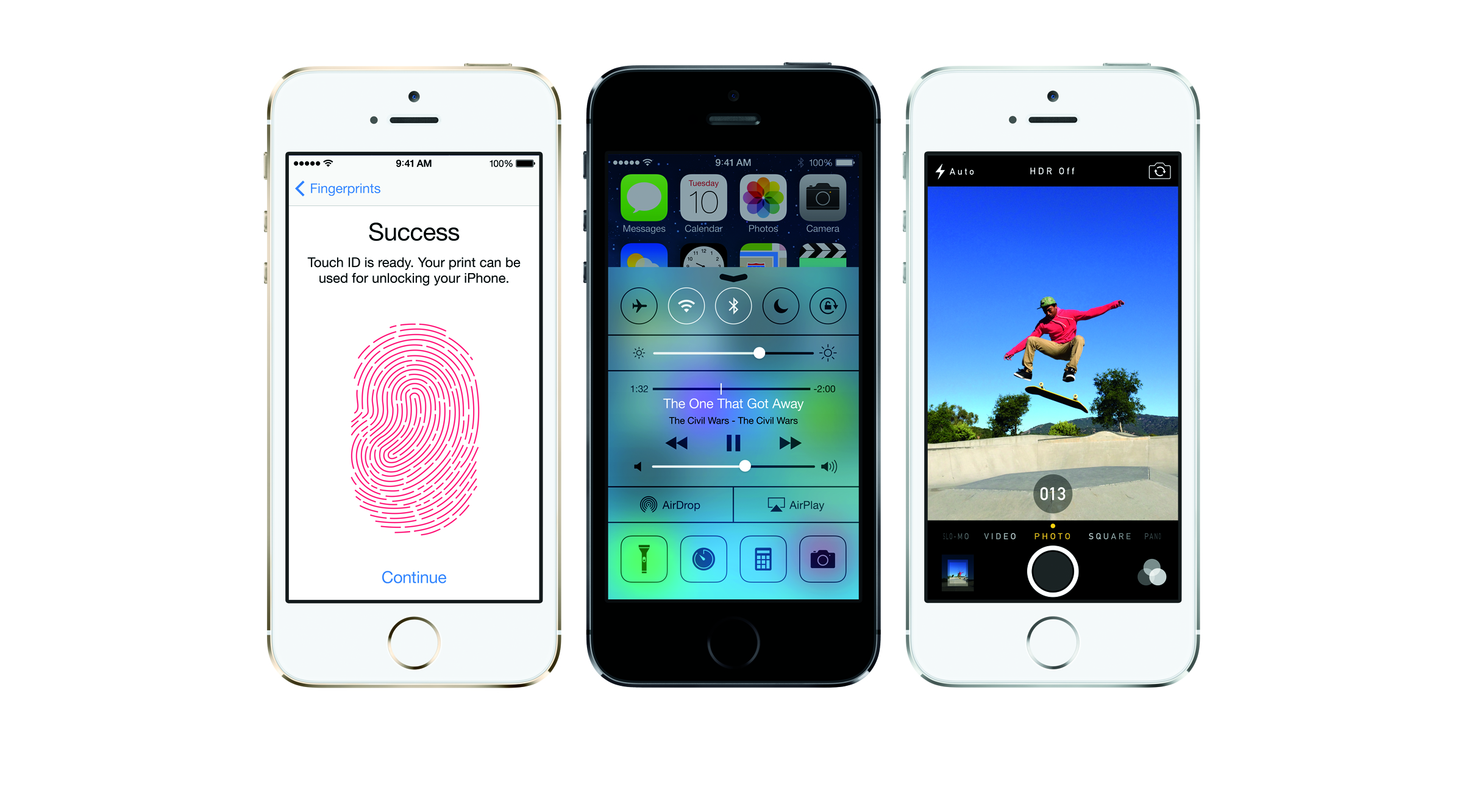
As we were expecting, Apple just officially announced its new iPhone 5S live on stage during its event taking place now on the company’s Cupertino campus. The new iPhone 5S largely retains the same glass and aluminum design as Apple’s previous generation iPhone, but it does include upgraded internals, and a new gold color option and fingerprint sensor that we previously reported. The new iPhone 5S comes alongside the announcement of Apple’s much rumored lower-cost, plastic iPhone 5C unveiled during the event earlier today.

The iPhone 5s includes a new A7 chip, which Apple notes is the first 64-bit chip in a smartphone, something we reported previously that the company was testing. Apple says the new chip includes 2x general-purpose registers, 2x floating-point registers, and includes over 1 billion transistors on a 102mm2 die size. A7 makes the iPhone 5s over twice as fast in terms of speed, according to Apple, and also provides a 40x increase in CPU performance and 56X faster graphics. The new iPhone 5s hardware will also support Open GL/ES 3.0 and will still support 32 bit apps.

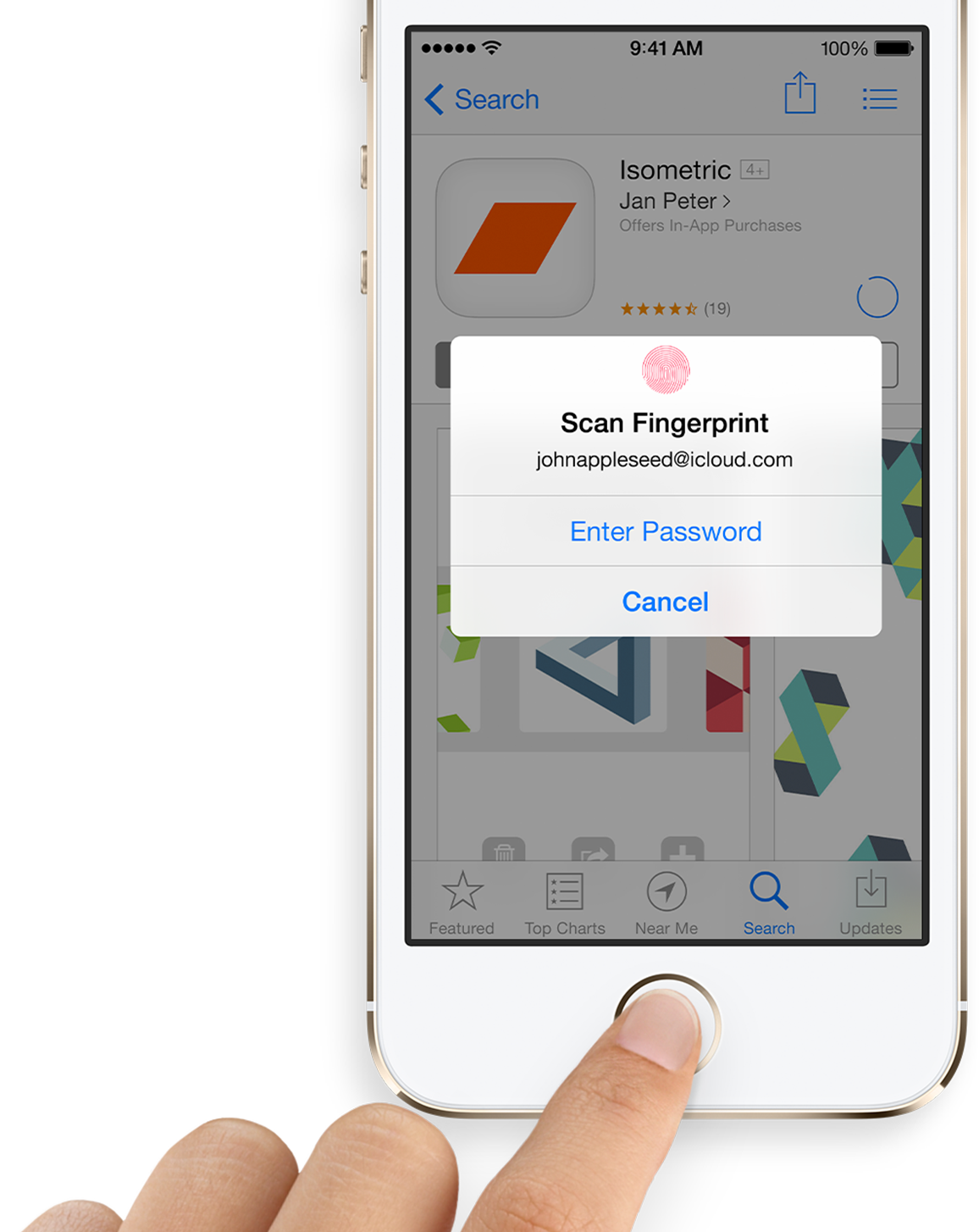
TouchID-iPhone5S-fingerprint-sensor-01Apple is also including a fingerprint sensor in the new iPhone 5s for a new security feature dubbed “Touch ID.” Embedded into the home button, the Touch ID capacitive sensor is 170 microns thin and will not only allow users to unlock their device, but also authenticate iTunes purchases.  Apple says that all fingerprints will be encrypted, stored securely and never uploaded to iCloud or its own servers. It also noted the fingerprint sensor will be able to support multiple fingerprints with the same device
The new iPhone 5s also include a new motion co-processor called the “M7” that Apple says works alongside the A7. It’s able to measure motion data continuously, as well as measure gyroscope, compass, and accelerometer data.

M7 knows when you’re walking, running, or even driving. For example, Maps switches from driving to walking turn-by-turn navigation if, say, you park and continue on foot. Since M7 can tell when you’re in a moving vehicle, iPhone 5s won’t ask you to join Wi-Fi networks you pass by. And if your phone hasn’t moved for a while, like when you’re asleep, M7 reduces network pinging to spare your battery.

The new chip will work with new CoreMotion APIs in iOS 7 that will allow developers to identify user movement. The first to take advantage of the technology is Nike with a new app called “Nike+ Move”.

Battery life: Apple says the new iPhone 5S will get 10 hours of 3G talk time, 8 hours of 3G browsing,a nd 10 hours of LTE and WiFi browsing. You’ll also get around 250 hours standby and 10 hours of video, according to Apple.

The iPhone 5s packs in a new camera system with a dual LED true tone flash, a new five-element lens designed by Apple, a F2.2 aperture, a sensor with a 15 percent larger active area, auto stabilization, and bigger 1.5 micron pixels. The camera also includes a new burst mode that will continuously take photos a rate of 10fps, and the 120fps slow mo mode that we reported about back in July. Head below for iPhone 5s pricing and availability:
Expand
Expanding
Close

Site default logo image

Analysts predicting record iPhone launch, China & Japan deals adding up to 38M extra sales

Photo: mshcdn.com

Analysts are predicting the the launch of the iPhone 5S and 5C will set new records for Apple with the company selling up to 13M handsets in the first nine days following the predicted availability date of 20th September. That’s close to double the 7M phones sold in the first nine days of the iPhone 5 launch.

The prediction is made by Pacific Crest analyst Andy Hargreaves, cited by AllThingsD:

For Hargreaves, that means fourth-quarter iPhone sales of 31 million iPhones. Of those, he figures 10 million will be the new models. That’s a big number considering the limited number of selling days left in the quarter, but Hargreaves feels it could go higher still — to 13 million, with some “extremely efficient supply chain management” … 
Expand
Expanding
Close

Site default logo image

What did Apple have to concede to get the China Mobile deal?

Photo: David Paul Morris/Bloomberg

Bloomberg is running an interesting piece speculating that Apple may be having to concede far more than it might wish in order to sign the all-important deal with China Mobile.

“In this relationship, China Mobile has all of the power,” said Edward Zabitsky, chief executive officer of Toronto-based ACI Research. “China Mobile will offer the iPhone as soon as Apple gives in on price.”

It is, as the piece observes, rather an unusual position for Apple to find itself in: the weaker party in negotiations with a carrier.

Speculation has encompassed significant discounts, a contribution to marketing spend and even a share of App Store revenue.

“China Mobile certainly believes they should be able to get a part of the content pie,” said HSBC’s Tucker Grinnan in Hong Kong. “Apple is going to have to be a bit more flexible on how they approach that.”

We’d be pretty astonished if Apple were willing to go that far, but it does need to bring this deal home, and its press event in Beijing on 11th September (the day after its global media event) creates a deadline it has to hit.

Other possibilities are offering exclusives on new models for a limited time, or exclusive colors. Neither would be at all likely in normal circumstances, but these circumstances are far from normal.

We may never get to learn the precise terms of the deal, but one thing will be very visible: the cost of the handsets. In a country where low-cost handsets proliferate, the expectation is that China Mobile wants price concessions not to boost its margins, but rather to make the iPhone 5C in particular sufficiently attractive to local buyers.

Site default logo image

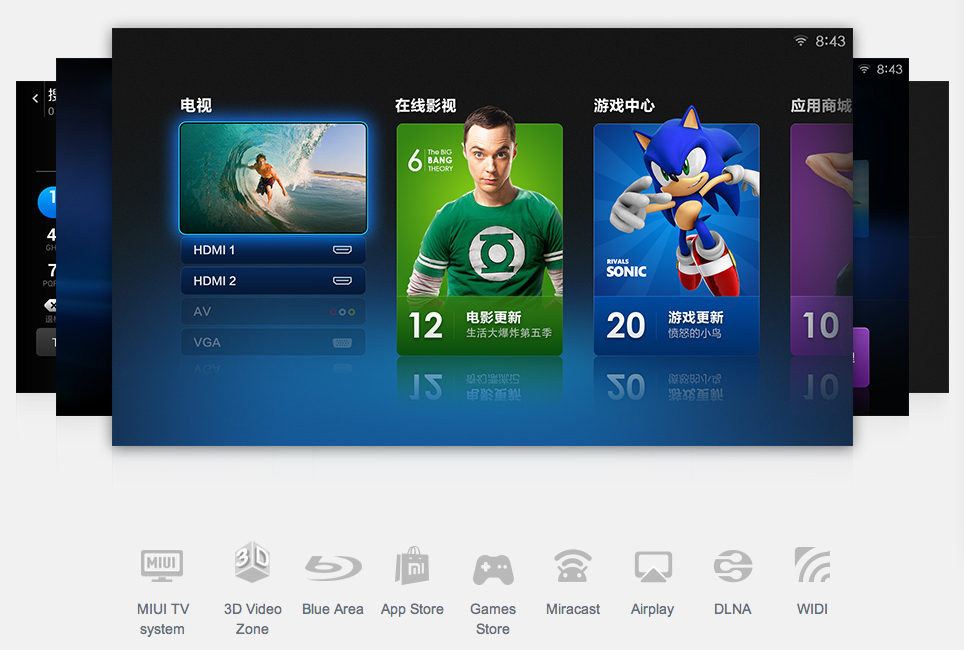
Xiaomi, the company run by ‘the Chinese Steve Jobs’, offers Airplay support on Smart TV

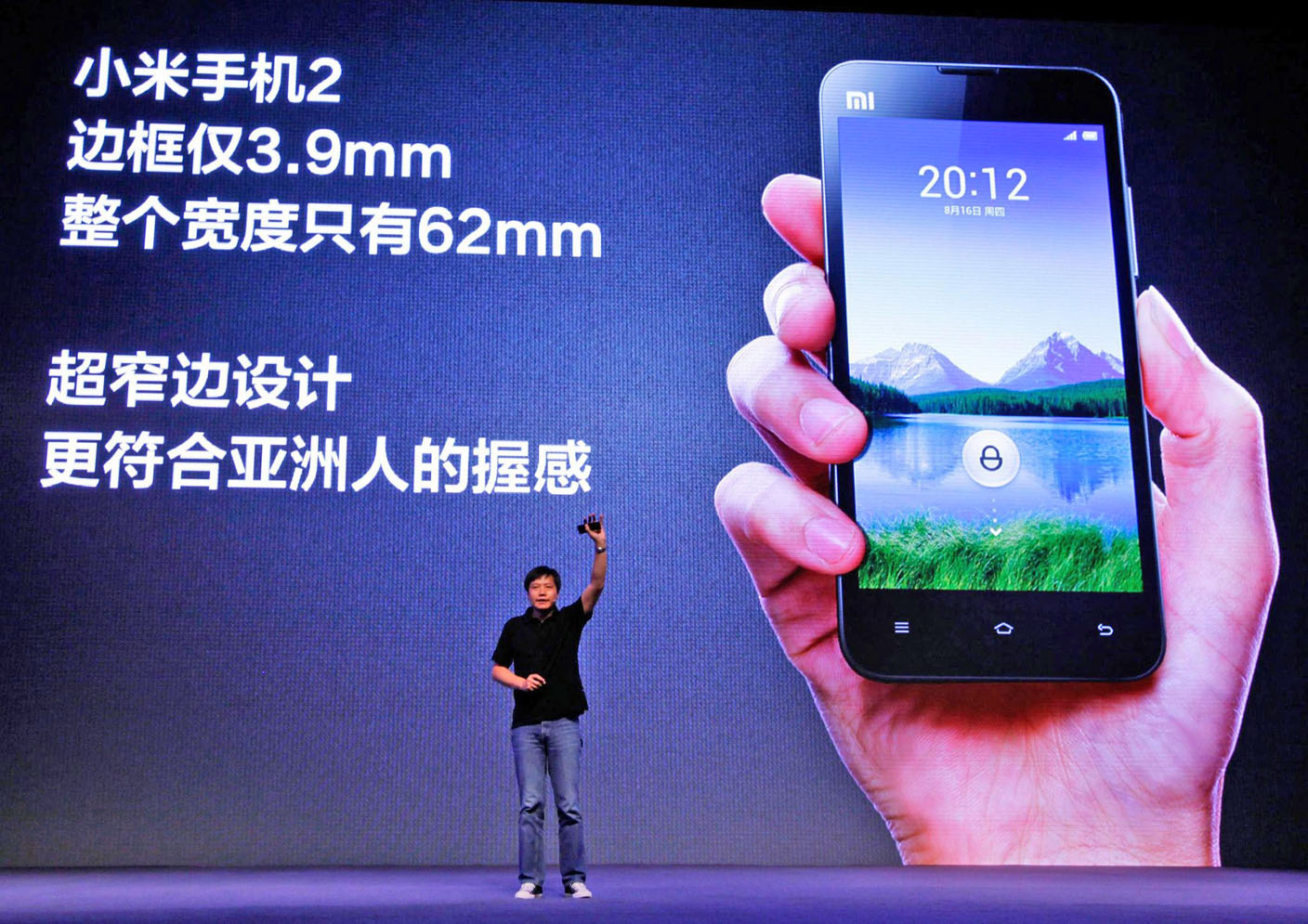
Xiaomi, the Chinese company noted for its similarity to Apple’s marketing style, has launched a Smart TV which claims to have AirPlay support. We’re not sure if Apple licensed AirPlay or if it, like a few other things (pictured below),  is a hacked version.

Xiaomi chairman and CEO Lei Jun has been described as ‘the Chinese Steve Jobs‘, dressing in blue jeans and black shirts for his Apple-like product launches.

Photo: NY Times

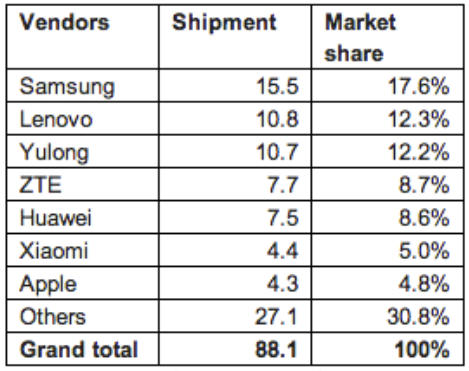
The company makes a range of Android handsets which closely resemble iPhones. Xiaomi recently overtook Apple in smartphone market share in China, a position Apple hopes to change with the launch of the iPhone 5C.

Site default logo image

Alleged Apple Supplier Jabil Circuit accused of numerous labor law violations [update: Apple responds]

Photo: STR/AFP/Getty Images

China Labor Watch, the organization behind the report accusing Apple supplier Pegatron of poor treatment of workers (that, in passing, seemingly confirmed that the iPhone 5C was plastic-bodied), has now made fresh allegations against Jabil Circuit, a company it says is also involved in production of the 5C.

Among the infringements uncovered by CLW include millions of dollars in unpaid overtime wages; over 100 hours of monthly mandatory overtime, three times in excess of legal limits; more than 11 hours of standing work every day with no rest outside of 30-minute meal breaks; illegally inadequate pre-work training; hiring discrimination; and more.

Apple previously responded to the Pegatron report with a lengthy statement on the steps already taken and the further steps it planned to take. Apple publishes an annual Supplier Responsibility Report and conducts frequent audits of its suppliers, along with commissioning the independent non-profit Fair Labor Association to conduct independent audits.

Jabil Circuit has not yet been confirmed as an Apple supplier. The iPhone 5C is expected to be unveiled on 10th September.

Via TNW


Expand
Expanding
Close

Site default logo image

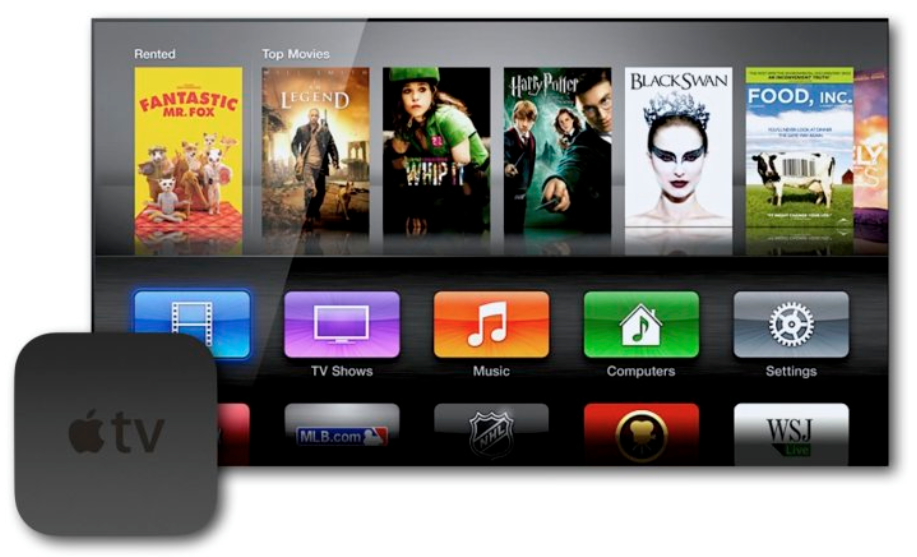
Apple imports more Apple TVs – but is it a refresh?

A blog post by supplier-sourcing company Panjiva (via GigaOM) is being cited as evidence that Apple plans to launch a refreshed Apple TV alongside the iPhone 5S and iPhone 5C at its media event on September 10th.

  • On August 25th, Apple received a shipment described as “Set Top Box with Communication Function” from BYD Precision Manufacture in Shenzhen, China.
  • On August 18th, Apple received another shipment, again from BYD, described as “Set Top Boxes.”
  • And on August 11th, Apple received its first shipment from BYD of “Set Top Box with Communication Function.

While it’s possible that the timing aligns with plans to have a new model in stock this month, and a refresh is somewhat overdue, it’s rather thin evidence on which to base this assumption: it’s equally possible that this is merely a routine shipment of existing stock. Either way, we won’t have long to wait to find out.

Japan’s largest wireless carrier, NTT DoCoMo, reportedly in talks to sell iPhone

Site default logo image

iPhone 5S Champagne

Bloomberg is reporting that shares of NTT DoCoMo are rising on rumors that Japan’s largest carrier will get the iPhone this year. The company’s rivals, KDDI and Softbank (who just bought Sprint) both currently carry the iPhone and saw their share price drop in morning trading.

[DoCoMo]Chief Financial Officer Kazuto Tsubouchi said there are compelling reasons for Apple and his company to reach an agreement, according to an interview published in SankeiBiz. For Apple, it doesn’t make business sense not to allow Japan’s largest wireless carrier to sell the iPhone, while DoCoMo wants to be able to sell most popular handsets, Sankei said.

The original Sankei article is here (translated) with the relevant bit translated by 9to5Mac reader Kazuto Kusakari:

A new iPhone from Apple is expected in September.  The Japanese market are paying close attention to whether NTT docomo will be selling the new model or not.  Having sold two other models as their main phones in the past summer season, the company is ready, as the vice-president Kazuto Tsubouchi has commented “the only problem is WHEN we are going to sell it.”…

Tsubouchi adds, “Nothing has changed.  It will be difficult (to sell the iPhone on September 10th). But for Apple, it is not economically reasonable to not sell the iPhone on Japan’s largest carrier.  As for NTT docomo, we must sell phone the customers desire.  It’s a matter of terms.

Apple is also working on China’s largest carrier, China Mobile, which also doesn’t currently carry the iPhone. If Apple can hook one or optimally both of these two monster carriers, it will be able to sell significantly more iPhones in Asia.
Expand
Expanding
Close

Approvals process will delay iPhone 5C launch in China until end of November – rumor

Site default logo image

An earlier prediction by KGI’s Mingchi Kuo that the iPhone 5C would go on sale in China by the first week in October has been contradicted by a report in First Financial Daily claiming that the approvals process needed would push the launch date back by almost two months, to 28th November …


Expand
Expanding
Close

Survey suggests iPhone 5C could make Apple the top-seller in the world’s largest market – China

Site default logo image

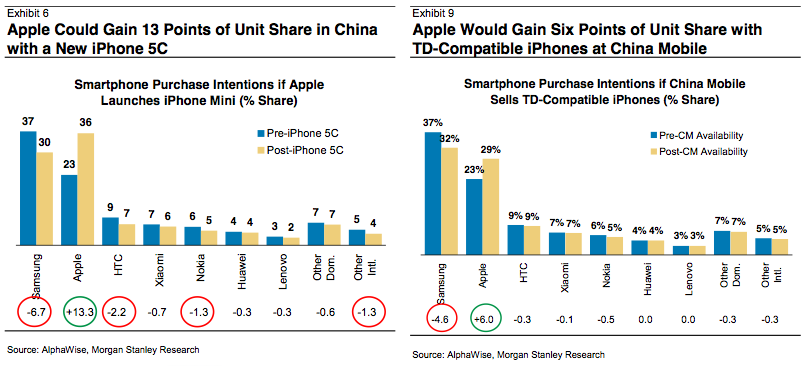
If the iPhone 5C is launched in China at $400, and Apple’s partnership with China Mobile for a TDD-LTE version of the handset proceeds as expected, Apple’s market share in China could jump by a massive 19.3 percent – enough to make Apple the number one seller.

The prediction, reported in Fortune, was made by Morgan Stanley’s Katy Huberty on the back of an AlphaWise survey of 2,000 mobile phone owners in China. Full details below … 
Expand
Expanding
Close

Apple gears up for expansion in China with more than 200 senior job openings

Site default logo image

Photo of Beijing Apple Store: news.cn

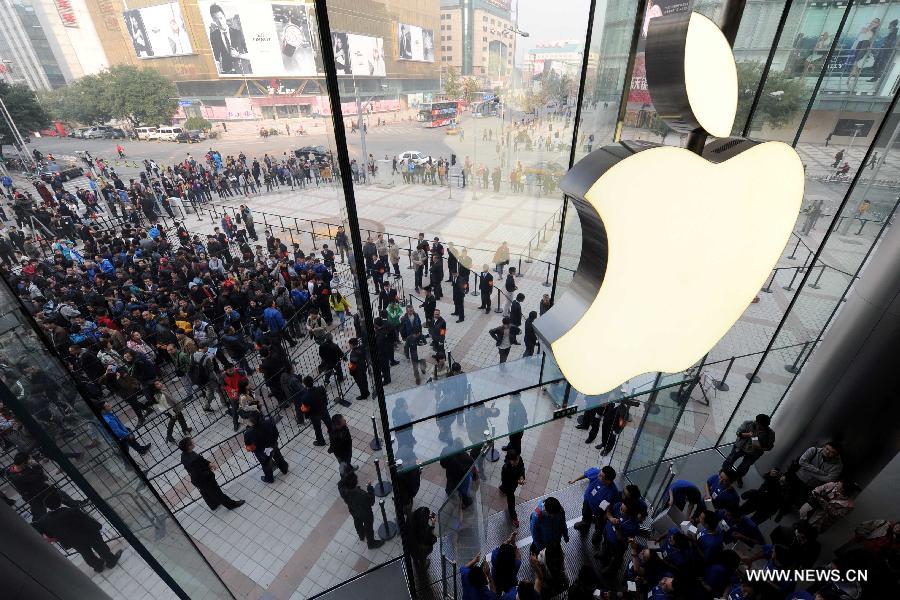
Apple appears to be preparing for increased focus on the Chinese market, with more than 200 (mostly) senior job openings appearing on LinkedIn, reports the WSJ. Some of these were added in the past three weeks, many within the last few days. Digitimes reported yesterday on Apple also seeking senior engineers in Taiwan.

With the developed market close to saturation point, the BRIC markets – Brazil, Russia, India and China – are key to Apple’s future expansion. Worldwide, smartphones represent only just over half of the total cellphone market, generating massive potential for future growth.

Apple’s challenge in China is as much a political one as it is marketing-based … 
Expand
Expanding
Close