AAPL Company

See All Stories

Breaking news from Cupertino. We’ll give you the latest from Apple headquarters and decipher fact from fiction from the rumor mill.
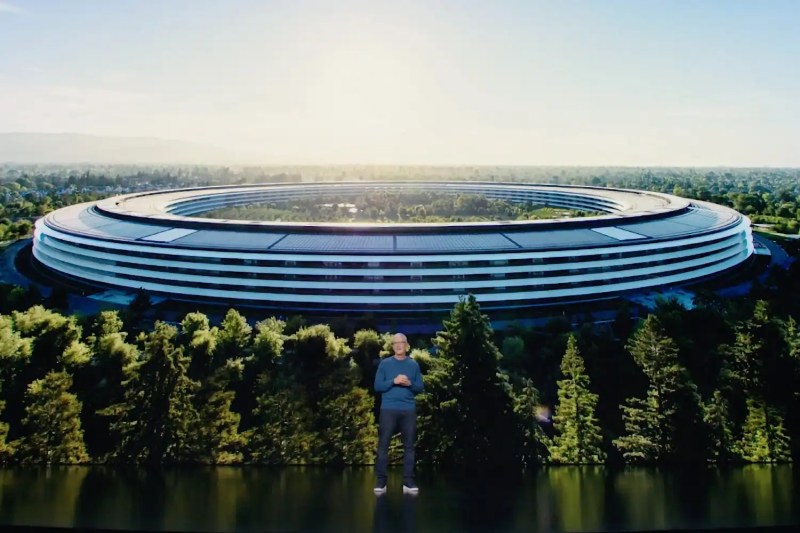
Apple Park Tim Cook AAPL

AAPL is a California-based computer company that became the most successful smartphone company in the world.

AAPL defined by Apple

Here’s how Apple defines itself:

Apple revolutionized personal technology with the introduction of the Macintosh in 1984. Today, Apple leads the world in innovation with iPhone, iPad, Mac, Apple Watch, and Apple TV. Apple’s five software platforms — iOS, iPadOS, macOS, watchOS, and tvOS — provide seamless experiences across all Apple devices and empower people with breakthrough services including the App Store, Apple Music, Apple Pay, and iCloud. Apple’s more than 100,000 employees are dedicated to making the best products on earth, and to leaving the world better than we found it.

Key AAPL history

From Apple I to iMac

Apple was founded in 1976 by Steve Jobs (Steve), Steve Wozniak (Woz), and (briefly) Ronald Wayne as a business partnership: Apple Computer Company. The following year it became Apple Computer, Inc. The company’s first product was the Apple I, a personal computer hand-built by Woz and sold in part-completed kit form. The Apple II and Apple III followed.

The modern Apple as we know it today began in 1983, with the launch of the first personal computer with a graphical user interface, the Lisa. Way too expensive to succeed, it was replaced by the Macintosh in 1984, launched with the single showing of a Ridley Scott commercial during the Super Bowl. The Macintosh transformed the world’s understanding of what a computer was, and would eventually lead to Microsoft adopting the GUI approach.

Steve Jobs and then Apple-CEO John Scully fell out in 1985, when Steve wanted to focus on the Macintosh while Scully wanted to put more attention on the Apple II, which was still selling well. That led to Steve being forced out of the company and going off to form NeXT.

Apple focused on selling Macintosh models at the highest possible margins, but would eventually fall foul of a mix of unsustainable pricing in the face of competition from Windows machines, and an overly complex product lineup. By 1996, the company was in trouble, and in 1997 Steve was brought back, along with the NeXT operating system, which would eventually form the basis of Mac OS X.

Steve simplified the Mac lineup and had industrial designer Jony Ive work on a whole new look for a consumer desktop Mac, the colorful iMac. The iMac, like the original Macintosh, again changed the world’s understanding of what a computer was, and who should want one.

From Apple Computer, Inc. to Apple, Inc.

In 2001, Apple launched the iPod. Although this wasn’t the first mp3 player, it was massively better than anything on the market at the time, and succeeded in turning a geeky piece of technology into a consumer electronics product with mass-market appeal.

The success of the iPod paved the way into other mobile devices. Apple was working on what would eventually become the iPad, when Steve realized that this was the basis of a smartphone. He diverted the team’s work into this, to launch the iPhone in 2007. The iPad launched later, in 2010.

The iPhone was yet another transformational product. While most other smartphones of the time were clunky devices with a keyboard and stylus, the iPhone was a sleek-looking device operated with a finger, and so simple that no user guide was needed. It was with the launch of the iPhone that Apple Computer, Inc. was renamed to Apple, Inc.

From Intel to Apple Silicon

While the iPhone, iPad, Apple Watch, and more are made with Apple-designed processors, the Mac lineup has historically relied on third-party companies for its CPUs. Over the years, Macs progressed from Motorola 680000 series chips through PowerPC to Intel.

In 2020, Apple began a two-year transition to the final stage in that journey, with Macs too finally getting Apple-designed chips. The first such is the M1 chip, used in the latest Mac mini, MacBook Air, and 13-inch MacBook Pro. Other Apple Silicon Macs followed.

AAPL today

Apple is one of the largest companies in the world. It was the first publicly traded company to hit a trillion-dollar valuation in 2018, $2 trillion in 2020, and $3T in 2022.

The company’s product lineup includes five different Mac families (MacBook Air, MacBook Pro, iMac, Mac Pro, and Mac mini); four iPad ranges (iPad mini, iPad, iPad Air, iPad Pro); four iPhone 12 models (12, 12 mini, 12 Pro, 12 Pro Max); three main Apple Watch models (SE, Series 3, Series 6); as well as other products, including Apple TV, AirPods, and HomePod mini.

In addition to hardware sales, Apple derives a growing proportion of its income from Services, including the App Store, iCloud, Apple Music, and Apple Pay.

Comment: Coronavirus justifies a fresh take on Apple production outside China

Apple production outside China – challenges in India

Apple’s reliance (some would say over-reliance) on China has been a hotly-debated topic for some time. The company’s efforts to boost Apple production outside China have never been of greater interest than now, however, when the coronavirus outbreak is having a substantial impact inside the country.

India has been one of the countries making a concerted effort to win more of Apple’s manufacturing business, but a couple of reports have highlighted some of the challenges to making this a workable option …


Expand
Expanding
Close

Apple’s major vendor Foxconn says coronavirus made Feb. revenue drop $1.6B

Foxconn

Apple previously warned that it wouldn’t meet its March quarter guidance and now one of its primary manufacturing partners, Foxconn has shared an update today on how coronavirus has affected its business. It shows how big of an impact the virus has had when comparing last month’s revenue to January as well as the same period last year.


Expand
Expanding
Close

Opinion: Apple could set an example in encouraging working from home

Working from home

One of the most impactful steps any company could take right now in limiting the spread of the coronavirus is to encourage working from home.

According to the CDC, the two biggest transmission risks are close contact (defined as within six feet) and droplets from coughs and sneezes. Office working seems almost tailor-made to maximize the risks of transmission …


Expand
Expanding
Close

AAPL stock climbed 9.3% in one day, with three factors likely responsible

AAPL stock climbed 9.3% in one day

AAPL stock climbed 9.3% in one day yesterday, after earlier falls due to concern about the impact of the coronavirus outbreak on Apple’s supply chain and demand in China.

Three factors likely explain the turnaround. First, investors seem to have decided that initial sell-offs were something of an over-reaction to what is likely to be a short-term problem …


Expand
Expanding
Close

Apple reliance on China on display as iPhone 11 production reportedly failed in India

iPhone 11

A new report from the Wall Street Journal today details Apple’s dependency on China for its supply chain, and how that is unlikely to change in the near future. According to the report, some Apple executives suggested relocating manufacturing of at least one product to Vietnam, but the idea was “rebuffed” by senior management.


Expand
Expanding
Close

Apple suppliers implicated in reports of Uyghur forced labor in China

A weekend report published in British newspaper The Independent put a renewed spotlight on the treatment of ethnic Uyghurs in China. Focusing on labor conditions at Chinese factories, the report says that the Chinese regime has relocated thousands of the Muslim Uyghurs from the west Xinjiang region, to be forced into work at these factories.

In addition to Nike, Dell, Volkswagen, and other big US brands, Apple is also linked to the story — specifically two Apple suppliers, BOE and O-Film.


Expand
Expanding
Close

Apple shuts down Clearview AI’s developer account for misusing enterprise certificate

Apple developer

Right about a year ago, Apple began enforcing its enterprise certificate policy for developers more strictly. It all started with Facebook who was abusing its certificate but it didn’t end there. Google’s account was pulled temporarily among a wave of others. Now another developer who was found to be abusing Apple’s policies has seen its account disabled.


Expand
Expanding
Close

Tim Cook shares optimistic long-term view for Apple amid coronavirus, details his approach to working w/ Trump

Yesterday Fox Business released a snippet from an interview with Tim Cook covering his current thoughts on coronavirus and more. Today we’ve got a look at the full interview and Cook details his optimism around coronavirus not causing long-term issues for Apple as well as how he approaches working with President Trump and more.


Expand
Expanding
Close

Tim Cook announces Ed Farm and Apple to use AR for transformative educational tools

Tim Cook continues tour of Asia in Thailand

As we previously reported, Tim Cook is in his home state of Alabama today to make an education-related announcement. Now we’ve learned that he shared in a keynote about educational firm Ed Farm planning to use augmented reality to “bring Civil Rights history to life” in Birmingham along with Apple’s Everyone Can Code and Everyone Can Create curriculum.


Expand
Expanding
Close

Report: iPhone 12 launch and availability called further into question over coronavirus

Apple iPhone production

So far there’s been uncertainty and doubt cast as to what availability of the iPhone 12 lineup will look like come this fall but most reports suggest Apple will still launch the new hardware in the early fall like normal even if production is delayed due to the coronavirus. However, this afternoon, a new report suggests the timeline for the iPhone 12 is becoming more unclear.


Expand
Expanding
Close

AAPL down 4.75%, other tech giants too, as coronavirus nears pandemic status

WHO says coronavirus nearing pandemic status

AAPL lost 4.75% of its value yesterday as fears grow that the coronavirus outbreak may be spreading to other countries too quickly to be contained. The World Health Organisation (WHO) has warned that the spread is now nearing the point at which it may be declared a pandemic.

The definition of a pandemic is a relatively loose one but is generally taken to mean a rapidly-spreading disease which affects a large number of people across international borders …


Expand
Expanding
Close