AAPL Company

See All Stories

Breaking news from Cupertino. We’ll give you the latest from Apple headquarters and decipher fact from fiction from the rumor mill.
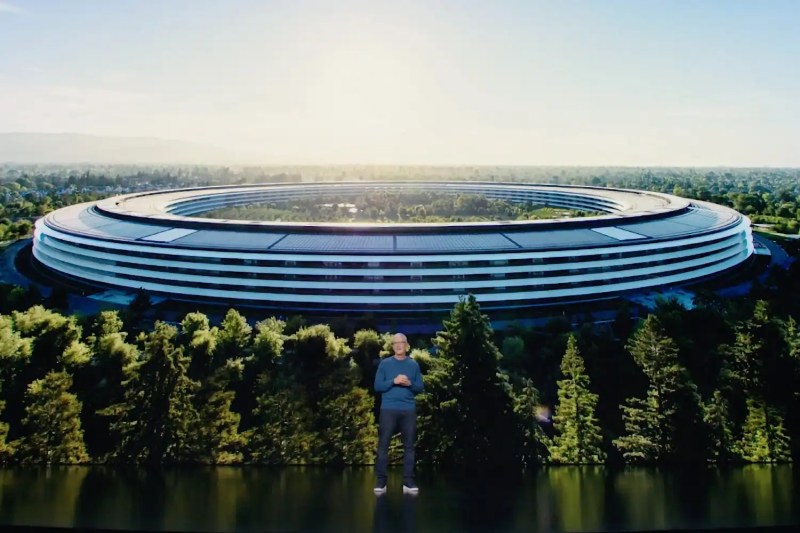
Apple Park Tim Cook AAPL

AAPL is a California-based computer company that became the most successful smartphone company in the world.

AAPL defined by Apple

Here’s how Apple defines itself:

Apple revolutionized personal technology with the introduction of the Macintosh in 1984. Today, Apple leads the world in innovation with iPhone, iPad, Mac, Apple Watch, and Apple TV. Apple’s five software platforms — iOS, iPadOS, macOS, watchOS, and tvOS — provide seamless experiences across all Apple devices and empower people with breakthrough services including the App Store, Apple Music, Apple Pay, and iCloud. Apple’s more than 100,000 employees are dedicated to making the best products on earth, and to leaving the world better than we found it.

Key AAPL history

From Apple I to iMac

Apple was founded in 1976 by Steve Jobs (Steve), Steve Wozniak (Woz), and (briefly) Ronald Wayne as a business partnership: Apple Computer Company. The following year it became Apple Computer, Inc. The company’s first product was the Apple I, a personal computer hand-built by Woz and sold in part-completed kit form. The Apple II and Apple III followed.

The modern Apple as we know it today began in 1983, with the launch of the first personal computer with a graphical user interface, the Lisa. Way too expensive to succeed, it was replaced by the Macintosh in 1984, launched with the single showing of a Ridley Scott commercial during the Super Bowl. The Macintosh transformed the world’s understanding of what a computer was, and would eventually lead to Microsoft adopting the GUI approach.

Steve Jobs and then Apple-CEO John Scully fell out in 1985, when Steve wanted to focus on the Macintosh while Scully wanted to put more attention on the Apple II, which was still selling well. That led to Steve being forced out of the company and going off to form NeXT.

Apple focused on selling Macintosh models at the highest possible margins, but would eventually fall foul of a mix of unsustainable pricing in the face of competition from Windows machines, and an overly complex product lineup. By 1996, the company was in trouble, and in 1997 Steve was brought back, along with the NeXT operating system, which would eventually form the basis of Mac OS X.

Steve simplified the Mac lineup and had industrial designer Jony Ive work on a whole new look for a consumer desktop Mac, the colorful iMac. The iMac, like the original Macintosh, again changed the world’s understanding of what a computer was, and who should want one.

From Apple Computer, Inc. to Apple, Inc.

In 2001, Apple launched the iPod. Although this wasn’t the first mp3 player, it was massively better than anything on the market at the time, and succeeded in turning a geeky piece of technology into a consumer electronics product with mass-market appeal.

The success of the iPod paved the way into other mobile devices. Apple was working on what would eventually become the iPad, when Steve realized that this was the basis of a smartphone. He diverted the team’s work into this, to launch the iPhone in 2007. The iPad launched later, in 2010.

The iPhone was yet another transformational product. While most other smartphones of the time were clunky devices with a keyboard and stylus, the iPhone was a sleek-looking device operated with a finger, and so simple that no user guide was needed. It was with the launch of the iPhone that Apple Computer, Inc. was renamed to Apple, Inc.

From Intel to Apple Silicon

While the iPhone, iPad, Apple Watch, and more are made with Apple-designed processors, the Mac lineup has historically relied on third-party companies for its CPUs. Over the years, Macs progressed from Motorola 680000 series chips through PowerPC to Intel.

In 2020, Apple began a two-year transition to the final stage in that journey, with Macs too finally getting Apple-designed chips. The first such is the M1 chip, used in the latest Mac mini, MacBook Air, and 13-inch MacBook Pro. Other Apple Silicon Macs followed.

AAPL today

Apple is one of the largest companies in the world. It was the first publicly traded company to hit a trillion-dollar valuation in 2018, $2 trillion in 2020, and $3T in 2022.

The company’s product lineup includes five different Mac families (MacBook Air, MacBook Pro, iMac, Mac Pro, and Mac mini); four iPad ranges (iPad mini, iPad, iPad Air, iPad Pro); four iPhone 12 models (12, 12 mini, 12 Pro, 12 Pro Max); three main Apple Watch models (SE, Series 3, Series 6); as well as other products, including Apple TV, AirPods, and HomePod mini.

In addition to hardware sales, Apple derives a growing proportion of its income from Services, including the App Store, iCloud, Apple Music, and Apple Pay.

5G smartphones could revitalize sales, says report, as AT&T accused of deceiving customers

5G smartphones

The launch of 5G smartphones could revitalize sales in a stagnant global market and a shrinking one in China, suggests a new report.

Apple CEO Tim Cook has been defending Apple’s prospects after the market was shocked by a dramatic downgrading of its own guidance for the holiday quarter. The fall in sales is, says the company, almost entirely in China – and this is something not specific to Apple …


Expand
Expanding
Close

Apple’s guidance failure resulted from three errors, suggests analyst; but he’s optimistic

Apple's failure

When it comes to mistakes, over-estimating your quarterly revenue by between $5B and $9B is a pretty big one – and the market was understandably shocked when Apple admitted it had done so. One analyst says Apple’s failure to predict its holiday quarter can be explained by three errors, and he’s written a blog post explaining each.

But he also believes there are three reasons for optimism about the coming year …


Expand
Expanding
Close

Apple camera lens supplier sees over 30% drop in sales due to weak iPhone demand in China

iPhone XR

Following Apple’s admission earlier this week that Q1 2019 revenue will be lower than anticipated, we’re starting to hear from suppliers who have been affected by the slump. Bloomberg reports this morning that Largan, a supplier of camera lenses to AAPL, has suffered a significant drop in revenue during the holiday quarter…


Expand
Expanding
Close

Trump responds to AAPL revenue drop over China iPhone sales, claims stock up ‘hundreds of percent’ since taking office

President Trump has responded to Apple’s rare earnings guidance revision two days after the company warned investors it saw fewer iPhone upgrades than expected during the holiday quarter. In a letter to investors written by CEO Tim Cook, Apple blamed the $5 billion to $9 billion drop in expected revenue in part on the president’s ongoing trade war with China:


Expand
Expanding
Close

Trump economic advisor says China may have stolen Apple technology

Larry Kudlow, financial analyst and economic advisor to the Donald Trump administration as head of the National Economic Council, today said that ‘Apple technology may have been picked off by China’ (via CNBC).

Although he qualifies his statements with no assertions of surety, Kudlow indicates that Apple trade secrets may have been stolen to help China’s domestic smartphone manufacturers catch up.


Expand
Expanding
Close

A closer look: Apple’s troubles in China grow as WeChat undermines iPhone’s appeal

Apple iPhone China WeChat

Apple’s share price has taken a steep tumble since rumors began to spread that the iPhone XS and XS Max weren’t selling well. Unlike past years, though, this time the rumors were right: the iPhone giant confirmed yesterday that it expects lower-than-expected sales for its newest line of iPhones. Markets that were already jittery over trade wars and a government shutdown heavily sold off on the news, pushing Apple’s share price down to $144 from a high of $233 in October.


Expand
Expanding
Close

Wall Street slashes AAPL target prices in response to ‘Apple’s darkest day in the iPhone era’

AAPL target prices

Most analysts have dramatically cut their AAPL target prices in response to what one of them described as ‘Apple’s darkest day’ in the iPhone era.

Wedbush analyst Daniel Ives used the description.

The magnitude of the top-line miss (~8%) with China demand the culprit was jaw dropping in our opinion and will heavily weigh on shares accordingly. Although the company had some quarters over the past 20 years that missed Street expectations, in the modern iPhone era last night was clearly Apple’s darkest day in our opinion and represents a challenging growth period ahead for the company …


Expand
Expanding
Close

Comment: This may be crunch time for AAPL on iPhone pricing – and revive hope of an iPhone SE 2

iPhone pricing

I argued almost exactly two years ago that we were approaching the point at which Apple might have to think the unthinkable on iPhone pricing.

Apple cannot afford to have anything resembling a sense of entitlement when it comes to customers at the premium end of the market. Leaving aside those geeks who have their own technical or philosophical reasons for favoring Android, it’s largely been the case to date that anyone who can afford to buy an iPhone does so almost automatically. That fact is testament to Apple’s extraordinary marketing prowess.

But players like Google, Huawei, Xiaomi, Lenovo and OnePlus are learning fast […] So while Apple’s current dominance of the premium end of the market gives it a massive head-start, it can’t count on forever remaining the automatic choice. It will need to learn to compete on a slightly more level playing field as its competitors continue to up their game.

Yesterday’s news suggests that crunch time may now have arrived …


Expand
Expanding
Close

Apple being investigated by investor rights law firm for ‘potential securities fraud’ related to China

Following Apple’s revision to its Q1 2019 earnings guidance earlier today, the company is being investigated by Bernstein Liebhard LLP, a “nationally acclaimed investor rights law firm” for potential securities fraud. The firm alleges that Apple executives made misleading comments about the company’s performance in China.


Expand
Expanding
Close