AAPL Company

See All Stories

Breaking news from Cupertino. We’ll give you the latest from Apple headquarters and decipher fact from fiction from the rumor mill.
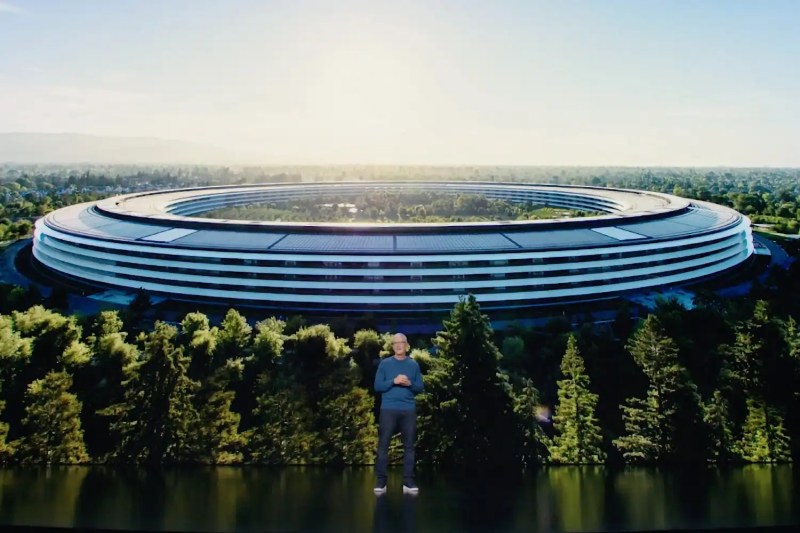
Apple Park Tim Cook AAPL

AAPL is a California-based computer company that became the most successful smartphone company in the world.

AAPL defined by Apple

Here’s how Apple defines itself:

Apple revolutionized personal technology with the introduction of the Macintosh in 1984. Today, Apple leads the world in innovation with iPhone, iPad, Mac, Apple Watch, and Apple TV. Apple’s five software platforms — iOS, iPadOS, macOS, watchOS, and tvOS — provide seamless experiences across all Apple devices and empower people with breakthrough services including the App Store, Apple Music, Apple Pay, and iCloud. Apple’s more than 100,000 employees are dedicated to making the best products on earth, and to leaving the world better than we found it.

Key AAPL history

From Apple I to iMac

Apple was founded in 1976 by Steve Jobs (Steve), Steve Wozniak (Woz), and (briefly) Ronald Wayne as a business partnership: Apple Computer Company. The following year it became Apple Computer, Inc. The company’s first product was the Apple I, a personal computer hand-built by Woz and sold in part-completed kit form. The Apple II and Apple III followed.

The modern Apple as we know it today began in 1983, with the launch of the first personal computer with a graphical user interface, the Lisa. Way too expensive to succeed, it was replaced by the Macintosh in 1984, launched with the single showing of a Ridley Scott commercial during the Super Bowl. The Macintosh transformed the world’s understanding of what a computer was, and would eventually lead to Microsoft adopting the GUI approach.

Steve Jobs and then Apple-CEO John Scully fell out in 1985, when Steve wanted to focus on the Macintosh while Scully wanted to put more attention on the Apple II, which was still selling well. That led to Steve being forced out of the company and going off to form NeXT.

Apple focused on selling Macintosh models at the highest possible margins, but would eventually fall foul of a mix of unsustainable pricing in the face of competition from Windows machines, and an overly complex product lineup. By 1996, the company was in trouble, and in 1997 Steve was brought back, along with the NeXT operating system, which would eventually form the basis of Mac OS X.

Steve simplified the Mac lineup and had industrial designer Jony Ive work on a whole new look for a consumer desktop Mac, the colorful iMac. The iMac, like the original Macintosh, again changed the world’s understanding of what a computer was, and who should want one.

From Apple Computer, Inc. to Apple, Inc.

In 2001, Apple launched the iPod. Although this wasn’t the first mp3 player, it was massively better than anything on the market at the time, and succeeded in turning a geeky piece of technology into a consumer electronics product with mass-market appeal.

The success of the iPod paved the way into other mobile devices. Apple was working on what would eventually become the iPad, when Steve realized that this was the basis of a smartphone. He diverted the team’s work into this, to launch the iPhone in 2007. The iPad launched later, in 2010.

The iPhone was yet another transformational product. While most other smartphones of the time were clunky devices with a keyboard and stylus, the iPhone was a sleek-looking device operated with a finger, and so simple that no user guide was needed. It was with the launch of the iPhone that Apple Computer, Inc. was renamed to Apple, Inc.

From Intel to Apple Silicon

While the iPhone, iPad, Apple Watch, and more are made with Apple-designed processors, the Mac lineup has historically relied on third-party companies for its CPUs. Over the years, Macs progressed from Motorola 680000 series chips through PowerPC to Intel.

In 2020, Apple began a two-year transition to the final stage in that journey, with Macs too finally getting Apple-designed chips. The first such is the M1 chip, used in the latest Mac mini, MacBook Air, and 13-inch MacBook Pro. Other Apple Silicon Macs followed.

AAPL today

Apple is one of the largest companies in the world. It was the first publicly traded company to hit a trillion-dollar valuation in 2018, $2 trillion in 2020, and $3T in 2022.

The company’s product lineup includes five different Mac families (MacBook Air, MacBook Pro, iMac, Mac Pro, and Mac mini); four iPad ranges (iPad mini, iPad, iPad Air, iPad Pro); four iPhone 12 models (12, 12 mini, 12 Pro, 12 Pro Max); three main Apple Watch models (SE, Series 3, Series 6); as well as other products, including Apple TV, AirPods, and HomePod mini.

In addition to hardware sales, Apple derives a growing proportion of its income from Services, including the App Store, iCloud, Apple Music, and Apple Pay.
Apple’s newest services yet to generate ‘meaningful revenue’ – Bloomberg

Apple's newest services like Apple TV+ not doing well

A Bloomberg report based on a Bernstein analysis suggests that Apple’s newest services have yet to make any ‘meaningful revenue,’ and investors will expect to hear about the company’s plans to address this.

It says that although Apple’s overall Services business is going well, the bulk of this is generated by the App Store and the Google search deal – with Apple TV+, Arcade, News+, and the Apple Card not playing much of a role …


Expand
Expanding
Close

Antitrust hearing to accuse Apple and others of ‘copy acquire kill’ strategy

Tech giants to be accused of copy acquire kill strategy

Two reports this morning suggest that tomorrow’s congressional antitrust hearing will accuse Apple and other tech giants of having a ‘copy acquire kill’ strategy when it comes to dealing with potential competitors.

The term refers to copying what other companies are doing; acquiring companies as a way of gaining exclusive access to features; and killing apps after acquisition in order to deny them to customers on rival platforms …


Expand
Expanding
Close

NYU’s Professor Galloway outlines 7 antitrust questions Tim Cook may be asked

Tim Cook Apple law Russia

NYU professor and author Professor Scott Galloway has outlined seven antitrust questions Tim Cook may be asked when he appears before Congress on Wednesday.

Apple is one of four tech giants due to be grilled by the House Judiciary Committee – alongside Amazon, Facebook, and Google – and Galloway is well-qualified to discuss the antitrust issues around all of them …


Expand
Expanding
Close

Tech antitrust hearing with testimony from Tim Cook rescheduled for July 29

apple Tim Cook's diplomacy praised

Apple CEO Tim Cook was set to testify on Monday, July 27 to the House Judiciary Committee as part of an antitrust probe, but the hearing ended up getting delayed due to the memorial service for the late civil rights leader John Lewis, who passed away last week. Now, the House antitrust subcommittee has announced that the hearing will take place on Wednesday, July 29.


Expand
Expanding
Close

Apple honors late Congressman John Lewis with documentary profit donations to civil rights efforts

John Lewis: Good Trouble, the documentary detailing the life and work of the late civil rights leader and US Congressman has been available since early July. Now Apple has announced that it will be donating its profits from the documentary to the National Civil Rights Museum as well as the National Museum of African American History and Culture to honor Lewis’ legacy.


Expand
Expanding
Close

Apple’s Find My app third-party support comes with a catch for developers and users

Find My

Back at WWDC in June, Apple announced that it is opening up the Find My app to third-party hardware like Tile. It seems like a positive move all around as it addresses antitrust concerns, makes business easier for third-parties, and improves choice for consumers. However, there’s a big catch that Apple hasn’t shared publicly.


Expand
Expanding
Close

Inventor of stereo headphones accuses Apple of infringing patents on wireless ones

Koss invented hifi stereo headphones

Koss, the US company which created the first-ever high-fidelity stereo headphones, is suing Apple, accusing the AirPods maker of infringing five patents on wireless headphones. The claim is made against both AirPods and Beats wireless headphones.

Much of the court filing reads like an extended ad for the company’s achievements, and the specific claims suggest that the company is making a rather ambitious play …


Expand
Expanding
Close

Tech antitrust hearing with testimony from Tim Cook likely to be postponed [U]

Tech antitrust hearing reportedly delayed

The tech antitrust hearing which was due to hear testimony from Apple CEO Tim Cook on Monday is likely to be postponed. The hearing clashes with a memorial service for the acclaimed civil rights leader Rep. John Lewis.

Cook is one of four tech giant CEOs due to give evidence as part of a year-long investigation into whether Apple, Google, Amazon, and Facebook have been guilty of anticompetitive practices that break the law …


Expand
Expanding
Close

Apple must act on the possibility of Uyghur forced labor, say campaigners

Apple must act on the possibility of Uyghur forced labor

A coalition of campaign groups has said that Apple must act on the possibility of Uyghur forced labor being used in the company’s supply chain in China. The horrific prospect was first raised back in March, and has since been echoed by official investigations carried out by the Australian Strategic Policy Institute (ASPI) and the US Congress.

Although none of the reports provide solid evidence that any of Apple’s suppliers are implicated, the coalition argues that brands should err on the side of caution by ceasing to use production facilities based in the Uyghur Region of China …


Expand
Expanding
Close

Apple commits to being 100% carbon neutral for entire supply-chain by 2030

100% carbon neutral for Apple supply chain by 2030

Apple’s own operations have been 100% carbon neutral for more than two years, and received a UN award for this, but the company has today made a bold commitment for the same to be true of its entire supply-chain by 2030. The company is promoting this on its homepage, calling it ‘a planet-size plan.’

Apple started working on greening its supply-chain back in 2015, and VP Lisa Jackson provided an update last year.

The company said its commitment includes boosting its use of recycled materials and recycling of discarded products so that carbon neutrality applies to the complete life-cycle of all Apple products …


Expand
Expanding
Close

US AG Barr alleges Apple and other tech companies are collaborating with China

AG Barr

In the latest accusation from the US Attorney General against Apple and other major tech companies, today William Barr alleged a number of American companies are “all too willing to collaborate” with China. In particular, Barr accused Apple of making it easier for China to crack iPhone encryption to be able to keep doing business there.


Expand
Expanding
Close

Apple expands coding partnerships with Historically Black Colleges as part of Racial Equity and Justice Initiative

After announcing its $100 million Racial Equity and Justice Initiative last month, Apple has today announced that it is expanding its education partnerships with Historically Black Colleges and Universities. Notably, the learning opportunities and workforce development will go beyond the newly added campuses and impact local communities as well.


Expand
Expanding
Close

Apple accused of censoring pro-democracy app in Hong Kong

Apple accused of censoring pro-democracy app in Hong Kong

Apple has been accused of censoring a pro-democracy app in Hong Kong after Chinese officials warned that it might contravene the recently imposed draconian national security law. The law prohibits any criticism of the Chinese government.

Pro-democracy campaigners created PopVote, an unofficial election effectively acting as a popularity poll for candidates opposed to the Chinese crackdown in the region. Both iOS and Android apps were created for it …


Expand
Expanding
Close

Comment: Apple didn’t win the Irish tax case – the EU lost it (for now)

EU lost the Irish tax case

We today got a ruling in the long-running Irish tax case, but while we can say that Apple won the case, it would probably be more accurate to say that the European Union lost it. The court ruled not that the EU was wrong, but rather that it hadn’t proven its case ‘to the requisite legal standard.’

That’s a polite way for a judge to tell the losing side that they failed to properly prepare their case, and to imply that the outcome would have been different if they’d done their homework …


Expand
Expanding
Close

Apple wins legal battle against EU order to recover $15 billion in Ireland tax case

In 2016, Apple was ordered to pay 13 billion euros to Ireland as repayment for back taxes at a rate that the EU deemed was illegal. Both Apple and Ireland appealed the judgment.

Four years on, the first round of legal battles have come to a conclusion today: the EU court rejected the ruling which essentially means Ireland and Apple won. However, the EU commission will almost certainly appeal. A final decision on a corporate judgment of this scale will take many, many, years to resolve.


Expand
Expanding
Close