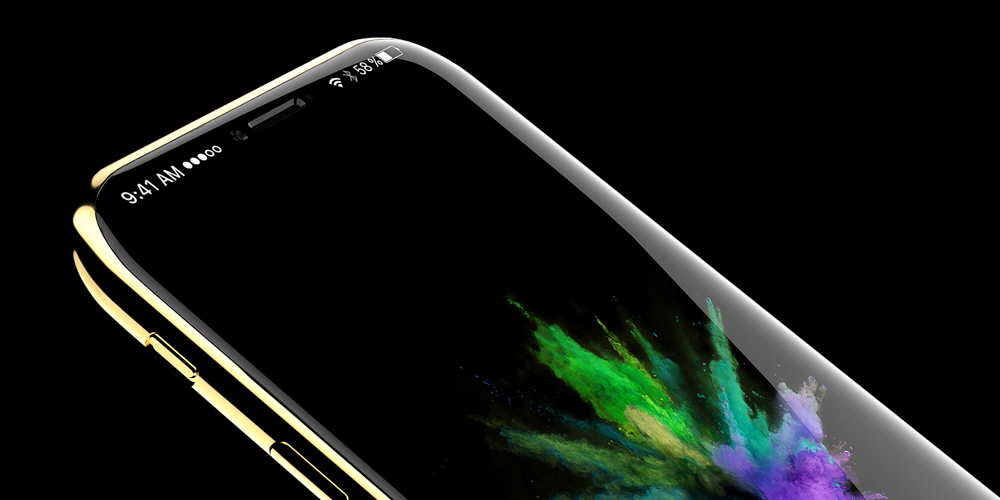
Sony is organizing a production ramp of 3D camera sensors for next year after seeing increased interest for the technology from major customers including Apple, a report from Bloomberg Quintexplains.
The Japanese tech firm is allegedly ramping production of both rear and front 3D camera modules, while also working on separate software toolkits for developers to toy with generating 3D imagery.
In a new report out by KGI’s Ming-Chi Kuo, the group believes that Apple has a significant lead on Qualcomm in the 3D sensing technology space. KGI reports that Qualcomm won’t be making significant shipments until at least 2019.
Barron’s notes that the company’s shares have climbed 56% this year based on expectations that it will be making ‘3D sensing components’ for the iPhone 8, with Morgan Stanley’s Charlie Chan explaining why Apple is believed to have chosen the company …
After grossing more than $2 billion worldwide at the box office, Disney has now announced some details on what expect for the Star Wars: The Force Awakens Blu-ray combo pack and DVD release. Disney announced this morning that we can expect it to release digitally (on iTunes/Amazon/others) and on Disney Movies Anywhere on April 1st, while the Blu-ray/DVD packs will come on April 5th with a host of bonus content and more. Disney also noted the 3D version of Star Wars: The Force Awakens will come available “later this year.”
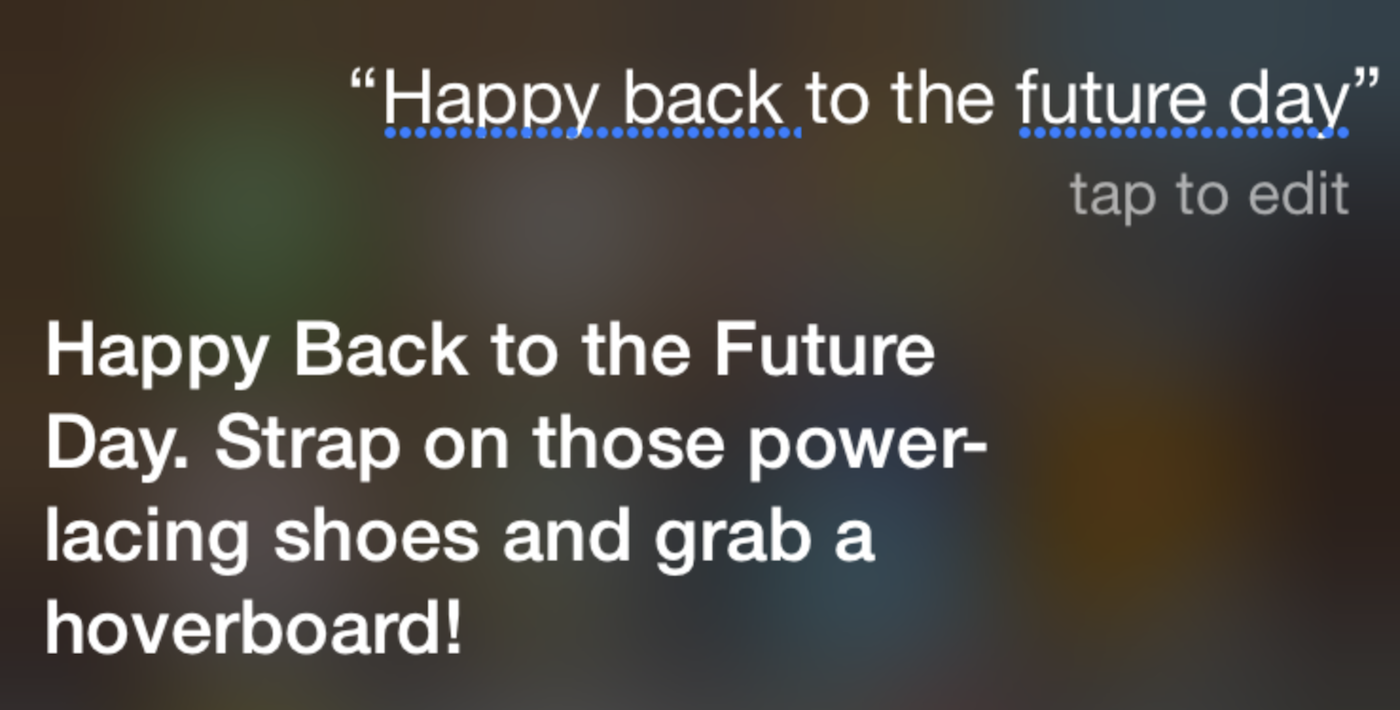
Not to be left out on ‘Back to the Future Day‘, Apple too is joining in on the Internet’s celebrations for reaching the day, October 21, 2015, in which fictional character Marty McFly time travelled to in 1989’s “Back to the Future Part II”. What better way to officially celebrate being in the future than to have our pocket-sized electronic assistant updated with a few witty remarks related to the occasion.
Here’s a sampling of the Back to the Future related responses from Siri:
While some of the predictions about what the world would look like in 2015 actually came true— video chat, 3D movies, hoverboards, for example— I’m not holding my breath for the Chicago Cubs winning the 2015 World Series as the film depicted, although it’s still a possibility.
Not to be outdone by iOS 9.1’s set of new emoji, watchOS 2 GM, released this past Wednesday following Apple’s press event, includes a little surprise of it’s own. Alongside a bunch of new watch face colors, dig into the animated emoji offered on the Apple Watch, and you’ll find 26 new options, ranging from faces sporting sunglasses, to sick faces, and even a few sets of clapping and fist bumping hands. Check out the gallery below to see them all in action: Expand Expanding Close
Apple today has added seven new cities to its Flyover feature in Maps. Flyover, for those unfamiliar offers high resolution 3D imagery of locations via the Apple Maps app. Apple added 20 new Flyover locations back in April, including the Arches National Park in Utah. In February, the company added nine new cities, including Venice. Today’s new additions can be seen below and bring the total number of Flyover locations to 148.
Almería, Spain
San Juan, Puerto Rico
Braga, Portugal
Jerez de la Frontera, Spain
Karlsruhe, Germany
Kiel, Germany
Kingston upon Hull, England
Apple offers a list of all Flyover cities on its feature availability page. You can view that list here. Also earlier this year, Apple began adding animated 3D imagery of places like the London Eye and Big Ben in the UK. Expand Expanding Close
Apple was today awarded a patent for touch-free, motion sensing gestures within 3D GUI concepts just as the company reassigns a patent related to 3D mapping technologies that it picked up through its acquisition of PrimeSense. Expand Expanding Close
According to a report from Chinese newspaper Economic Daily News citing supply chain sources (via UDN), Apple is working on a 3D iPhone display of sorts that doesn’t require the use of special glasses. The translated report also claims Apple is actively developing 3D “software ecosystems.” Expand Expanding Close
Not everyone’s excited about Apple’s 3D mapping technology, though. The Norwegian government has blocked Apple from collecting flyover data from Oslo, the nation’s capital.
Update: iGen.fr notes that Marseille, the second largest city in France, has also just received Flyover coverage.
Apple has been adding a lot of new imagery in its Maps app for the 3D flyover mode that initially launched in just a handful of countries. Over the last year it has added coverage for a ton of new locations in the US, UK, France, and Canada, and over the last week readers have reached out to note the addition of two major cities for the feature: Cape Town, South Africa and Helsinki, Finland.
Apple’s list of supported cities on its website hasn’t been updated in a while, but over the last year the company has added coverage in Paris, new areas in California, and other cities in the US, France, Spain, and the UK. Let us know in the comments below if 3D Flyover coverage has showed up for your city.
After Unity announced in March that it was beginning to work with Facebook to help bring web games using the engine to the social network, Facebook announced today that it’s releasing a new SDK to bring 3D Unity games from Android, iOS, and the web to Facebook. The cross-platform SDK will also allow developers to easier integrate Facebook sharing and game invite features directly into their unity games across mobile devices and the web.
Facebook has a relevant and engaged audience of gamers that mobile developers can reach by publishing their games on Facebook, and the SDK makes bringing a mobile game to web as simple as writing one line of code. By filling out a few fields in the developer app and giving us the URL of your game object, you can bring your mobile game to a whole new audience of avid gamers on Facebook.
The SDK will also let Unity developers implement native dialogs for inviting friends, requests, and sharing through Facebook, and the company will be “helping more people find and play Unity games on Facebook by driving discovery of the Unity player with a custom install flow for the Unity plug-in.”
According to today’s report, Norway’s National Security Authority is not allowing Apple from capturing the 3D data needed for the feature. Apple uses small aircraft equipped with advanced camera systems and actually flies them around buildings. The data is then processed at Apple and formatted for the Maps app…
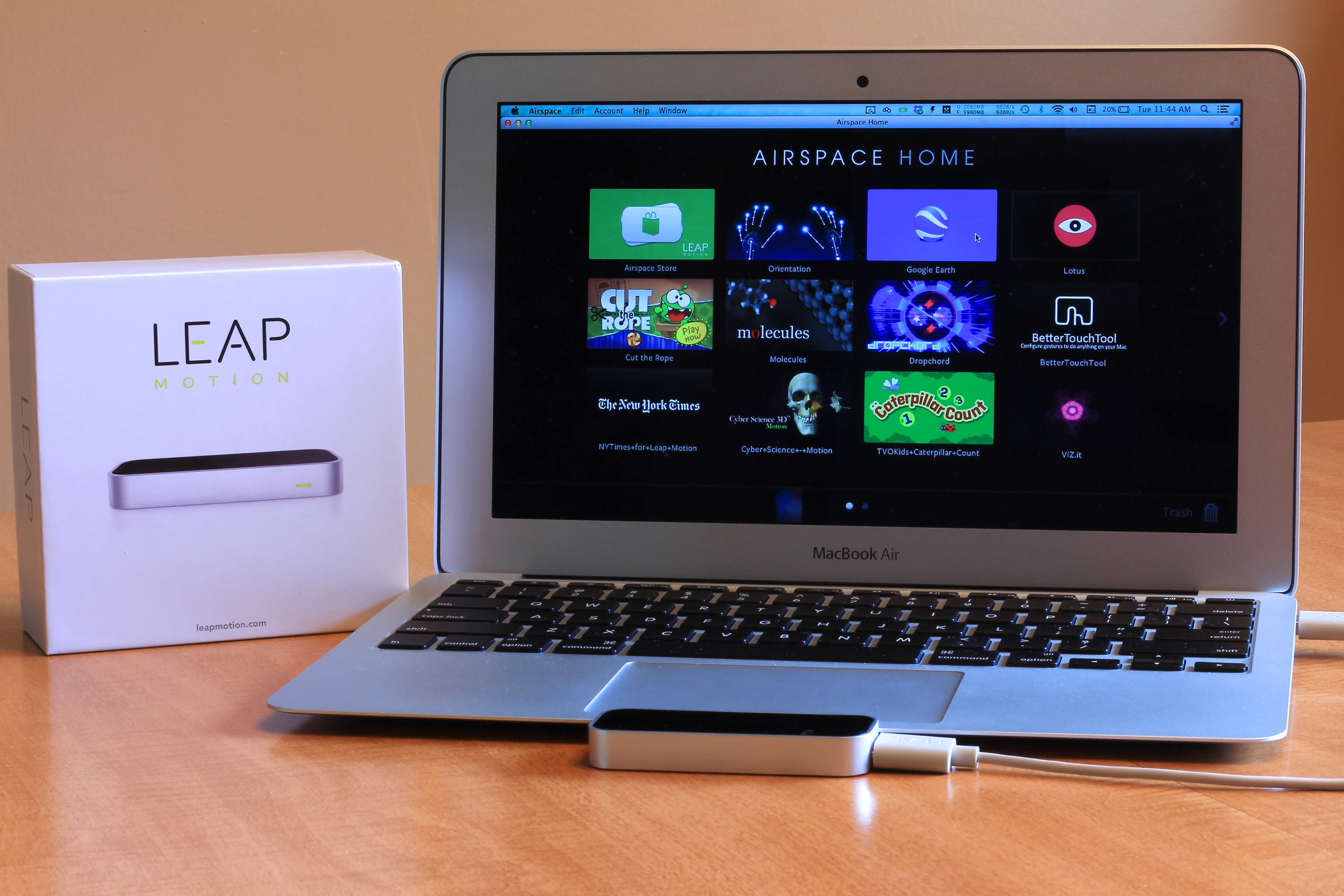
True new innovations in the technology space only come around every few years, and even rarer are the innovations that have the power to change our day-to-day interactions with our devices. That’s why I was excited when I first heard about the Leap Motion, a little motion control device that promised to alter how we think of using computers. One year since the initial preview, the device is in the hands of the public, and now it’s up to the people to decide if it can change the way we use our computers. Does it live up to its expectations? Read on to find out:
To accompany its latest feature film set to hit theatres today, Disney has just released “The Lone Ranger” game for both iPhone and iPad on the App Store. The iTunes page describes the game as a full 3D role-playing game with quests, duels, and the ability to “Level-up to unlock new weapons, tools, and horses.” The screenshots look promising, so we’re hoping its better than the typical Hollywood movie tie-in. The good news is you won’t have to pay to find out as the full game is available for free on both iPhone and iPad.
Saddle up and take the reins as one of the greatest Texas Rangers in the Wild West. Embark on a thrilling adventure as you protect the town of Colby, face-off in epic showdowns, and bring infamous outlaws to justice. Fight against greed and corruption in this 3d, role-playing adventure!
· Interact with known allies and outlaws throughout your journey: With allies like the Lone Ranger and Tonto on your side, prepare to take on the villainous Butch Cavendish and his unwieldy gang.
· Restore peace to the town of Colby: Protect the citizens of Colby, and embark on legendary quests to end greed and corruption.
· Duel outlaws and bandits: Face-off against wanted outlaws with your best weapons and equipment, and bring them to justice.
· Level-up to unlock new weapons, tools, and horses to aide you on your journey.
· More languages coming soon! Play The Lone Ranger in Italian, German, and Spanish starting late July.
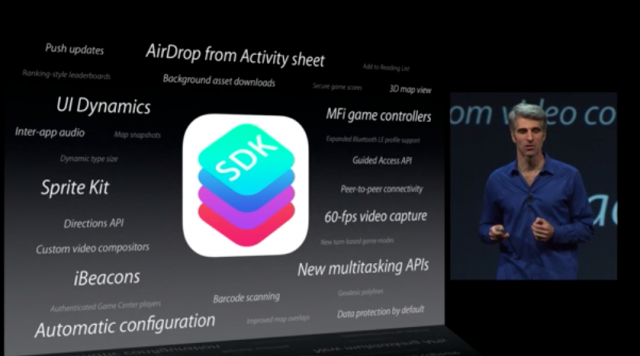
We previously walked you through some of the new APIs and features for gamers, but there is still a lot more coming to third-party app developers in iOS 7. A few big improvements: a text to speech API, background downloads for in-app content, motion effects, 3D maps, and much more.
Head below for details on some of the more notable new APIs available for developers to take advantage of in iOS 7: Expand Expanding Close
Google updated its Google Earth app for iOS and Android today with a few new features including a revamped interface that includes the left side panel it has been bringing to lots of its mobile apps.
Also new in version 7.1.1 of Earth is Google’s Street View feature, as well as improved directions and search with the ability to “visualize transit, walk, bike and drive directions in 3D while update search result list will let you browse search results quickly.” Google also announced that it is now making Google Earth available in over 100 countries worldwide:
Also with this release, we’re making Google Earth for mobile available in more than 100 countries worldwide, so you can start their virtual journey in Google Earth from almost anywhere on Earth. To unleash your inner explorer, check out your local Google Play store or iTunes to download the latest version of Earth for Android and iOS.
* Google Maps Street View: With Street View, you can explore the world at street level.
* Improved directions/search: Updated directions let you can visualize transit, walk, bike and drive directions in 3D while update search result list will let you browse search results quickly.
* Improved interface: Easily browse and enable different layers through use of new left hand panel
We can’t be sure that France is the only location to get new 3D Maps data today, so let us know in the comments if you notice any additions in your city.
In somewhat related Maps news, TechCrunch has confirmed earlier reports coming from Israeli publication Calcalist that Facebook is currently in discussions with mapping company Waze to acquire the company for close to $1 billion. You might recall that Apple is currently using Waze data in its Maps application and for a brief while was rumored to be in talks to acquire the company. Apple could presumably replace Waze’s free crowd-sourced map data with another Maps provider that offers similar data, but it’s unclear at this point how important Waze is as a Maps source or if an acquisition might affect Apple’s Maps app.
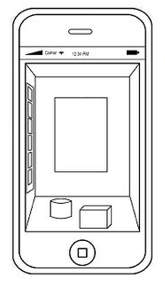
Apple was just granted a patent by the US Patent and Trademark Office (viaPatently Apple) detailing 3D display & imaging technologies that could potentially lead to advanced Kinect-like navigation through performing gestures or manipulating holographic images within a virtual 3D space.
Essentially, this would allow you to perform hand gestures within a virtual space while your hands are displayed on a screen, allowing for precise manipulation of on-screen elements.
The patent’s inventor also notes that these imaging technologies could be used for presence detection, head tracking, and auxiliary display capabilities as well. We can’t help think of Kinect-like gaming for a potential future Apple TV, although the extent of the gestures and tech described in the patent goes well beyond current implementations.
As Patently Apple notes, the “virtual elements have no real physical embodiment” but could potentially take advantage of holographic technology that the same inventor outlined in a previous Apple patent. The application could also include audio feedback. For example a clicking sound when pressing a button within the virtual space would provide confirmation of the action.
Taiwan Economic News is reporting that local Taiwan Semiconductor Manufacturing Co., Ltd (TSMC), the company slated to supply Apple with the A6 processor after a shift from Samsung, has begun trials of the new chip made with the company’s “newest 28-nanometer process and 3D stacking technologies”. However, dont expect to see the A6 in a new iteration of the iPad anytime soon, as the report suggests the processor wont be officially unveiled until Q2 of next year, at the earliest.
Included in the report:
TSMC has applied its newest 28-nanometer process and 3D stacking technologies to produce the next-generation processor A6, which is based on the ARM architecture and will undergo TSMC’s cutting-edge silicon interposer and bump on trace (BOT) methodologies. Industry insiders said that the manufacturing will help to pump considerable momentum into TSMC’s business growth starting next year, though the company has yet to comment on the deal for the moment.
This contradicts an earlier report thru Reuters which stated that test production had already begun in July. Both reports agreed that the final A6 processors would be complete and ready for iPad 3 in early 2012. EETimeshad reported the move back in March which was said to involve Apple’s current A5 chip but that never materialized.
An Apple switch to TSMC would obviously be a huge blow to ‘frenemy’ Samsung who currently makes the iPad CPU, DRAM and supplies Flash storage as well.
























 Apple has