AAPL Company

See All Stories

Breaking news from Cupertino. We’ll give you the latest from Apple headquarters and decipher fact from fiction from the rumor mill.
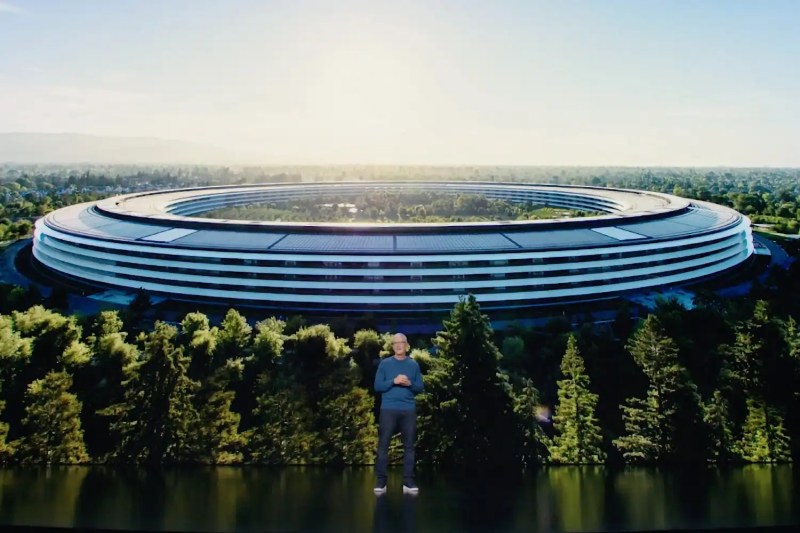
Apple Park Tim Cook AAPL

AAPL is a California-based computer company that became the most successful smartphone company in the world.

AAPL defined by Apple

Here’s how Apple defines itself:

Apple revolutionized personal technology with the introduction of the Macintosh in 1984. Today, Apple leads the world in innovation with iPhone, iPad, Mac, Apple Watch, and Apple TV. Apple’s five software platforms — iOS, iPadOS, macOS, watchOS, and tvOS — provide seamless experiences across all Apple devices and empower people with breakthrough services including the App Store, Apple Music, Apple Pay, and iCloud. Apple’s more than 100,000 employees are dedicated to making the best products on earth, and to leaving the world better than we found it.

Key AAPL history

From Apple I to iMac

Apple was founded in 1976 by Steve Jobs (Steve), Steve Wozniak (Woz), and (briefly) Ronald Wayne as a business partnership: Apple Computer Company. The following year it became Apple Computer, Inc. The company’s first product was the Apple I, a personal computer hand-built by Woz and sold in part-completed kit form. The Apple II and Apple III followed.

The modern Apple as we know it today began in 1983, with the launch of the first personal computer with a graphical user interface, the Lisa. Way too expensive to succeed, it was replaced by the Macintosh in 1984, launched with the single showing of a Ridley Scott commercial during the Super Bowl. The Macintosh transformed the world’s understanding of what a computer was, and would eventually lead to Microsoft adopting the GUI approach.

Steve Jobs and then Apple-CEO John Scully fell out in 1985, when Steve wanted to focus on the Macintosh while Scully wanted to put more attention on the Apple II, which was still selling well. That led to Steve being forced out of the company and going off to form NeXT.

Apple focused on selling Macintosh models at the highest possible margins, but would eventually fall foul of a mix of unsustainable pricing in the face of competition from Windows machines, and an overly complex product lineup. By 1996, the company was in trouble, and in 1997 Steve was brought back, along with the NeXT operating system, which would eventually form the basis of Mac OS X.

Steve simplified the Mac lineup and had industrial designer Jony Ive work on a whole new look for a consumer desktop Mac, the colorful iMac. The iMac, like the original Macintosh, again changed the world’s understanding of what a computer was, and who should want one.

From Apple Computer, Inc. to Apple, Inc.

In 2001, Apple launched the iPod. Although this wasn’t the first mp3 player, it was massively better than anything on the market at the time, and succeeded in turning a geeky piece of technology into a consumer electronics product with mass-market appeal.

The success of the iPod paved the way into other mobile devices. Apple was working on what would eventually become the iPad, when Steve realized that this was the basis of a smartphone. He diverted the team’s work into this, to launch the iPhone in 2007. The iPad launched later, in 2010.

The iPhone was yet another transformational product. While most other smartphones of the time were clunky devices with a keyboard and stylus, the iPhone was a sleek-looking device operated with a finger, and so simple that no user guide was needed. It was with the launch of the iPhone that Apple Computer, Inc. was renamed to Apple, Inc.

From Intel to Apple Silicon

While the iPhone, iPad, Apple Watch, and more are made with Apple-designed processors, the Mac lineup has historically relied on third-party companies for its CPUs. Over the years, Macs progressed from Motorola 680000 series chips through PowerPC to Intel.

In 2020, Apple began a two-year transition to the final stage in that journey, with Macs too finally getting Apple-designed chips. The first such is the M1 chip, used in the latest Mac mini, MacBook Air, and 13-inch MacBook Pro. Other Apple Silicon Macs followed.

AAPL today

Apple is one of the largest companies in the world. It was the first publicly traded company to hit a trillion-dollar valuation in 2018, $2 trillion in 2020, and $3T in 2022.

The company’s product lineup includes five different Mac families (MacBook Air, MacBook Pro, iMac, Mac Pro, and Mac mini); four iPad ranges (iPad mini, iPad, iPad Air, iPad Pro); four iPhone 12 models (12, 12 mini, 12 Pro, 12 Pro Max); three main Apple Watch models (SE, Series 3, Series 6); as well as other products, including Apple TV, AirPods, and HomePod mini.

In addition to hardware sales, Apple derives a growing proportion of its income from Services, including the App Store, iCloud, Apple Music, and Apple Pay.

Apple innovation grants support chip education at four historically Black colleges and universities

Apple innovation grants to four HBCUs

Apple innovation grants worth $5 million each have been given to four historically Black colleges and universities (HBCUs). The grants are geared to silicon engineering, including chip design, and students also get access to Apple engineers.

The funding, announced today, is part of Apple’s $100 million Racial Equity and Justice Initiative …

Expand Expanding Close

Apple easily remained 5G smartphone market leader despite seasonal dip

Apple easily retained 5G smartphone market lead

Apple comfortably retained its position as 5G smartphone market leader in the first quarter of this year, despite the seasonal dip after the combined launch and holiday quarter.

All iPhone 12 launch sales were in the final quarter of last year, with the iPhone 12 and iPhone 12 Pro going on sale in October, and the iPhone 12 mini and Pro Max the following month …

Expand Expanding Close

Apple execs talk Apple Watch, AirPods health and fitness monitoring, more in new interviews

Following WWDC 2021 wrapping up last week, Apple executives are continuing to appear in podcasts and YouTube videos to discuss the company’s latest announcements. In a new video posted today, YouTuber Rene Ritchie sits down with Apple’s Kevin Lynch and Deidre Caldbeck to talk Apple Watch, Health, and more.

Expand Expanding Close

Apple ecosystem at risk from US antitrust legislation, argues analyst

Site default logo image

Analyst Ben Thompson believes that US antitrust legislation could put the Apple ecosystem at risk unless the company is prepared to compromise on the App Store.

The danger is that legislators may view the various ecosystem components as anti-competitive, but would be less likely to do so without the App Store playing such a central role …

Expand Expanding Close

Bloomberg: U.S. Apple Stores will no longer require face masks starting this week

Apple will drop the mask requirements at a number of its retail stores and offices as soon as this week, according to a new report from Bloomberg. The report says that Apple has informed retail and corporate employees of this change. Retail employees will also not be required to ask maskless customers for their vaccination status.

Expand Expanding Close

App Store could be hit by proposed ‘Ending Platform Monopolies Act’ in US House [U]

Congress

Fresh details have surfaced on new legislation that could be proposed in the US House of Representatives as soon as today that’s set to take on the likes of Apple, Amazon, Google, and Facebook. Called the Ending Platform Monopolies Act, the proposal contains a few bills including one that could regulate Apple’s App Store and more. The development comes after Congress spent almost the last year and a half investigating antitrust concerns in big tech.

Update 11:50 am PT: The new antitrust act has been officially introduced.

Expand Expanding Close

‘Cold tech war’ between US and China could still leave Apple in firing line – analyst

Cold tech war could still hurt AAPL

A “cold tech war” between the US and China could still leave Apple in the firing line, argues Wedbush, even after the Biden administration rolled back some of the Trump-era policies.

President Biden this week revoked the scheduled US bans on TikTok and WeChat, and has generally been taking a less aggressive stance with China, but there is still plenty of potential for trouble ahead …

Expand Expanding Close

One of five planned US antitrust bills targets Apple’s App Store

Five planned US antitrust bills

House Democrats are reportedly set to announce no fewer than five US antitrust bills, one of which would in part target Apple’s App Store.

The planned legislation is based on recommendations made in the 450-page antitrust report, which found that Apple was among the tech companies to engage in “deeply disturbing” anticompetitive behavior …

Expand Expanding Close

Siri antitrust concerns raised by EU, along with Alexa and Google Assistant

Siri antitrust concerns

Siri antitrust concerns have been expressed by businesses, says the European Union’s competition chief, with the same issues being raised about Alexa and Google Assistant. The remarks were made after a consultation process that heard from more than 200 companies over the course of a year.

Competition head Margrethe Vestager said there are four concerns…

Expand Expanding Close

US chip production on track for $52B government investment after Apple lobbying

Site default logo image

The US Senate has approved $52B in funding to boost US chip production, as part of an effort to address the global chip shortage, and to reduce dependence on China. Apple was one of the companies lobbying for the move.

In total, the US Innovation and Competition Act provides almost $250B in funding for US manufacturing, with $52B of it specifically allocated to chip fabrication. However, it is as yet unclear whether it will also pass in the House …

Expand Expanding Close

Apple employees call for more flexible remote work policy in letter to Tim Cook

AAPL is a key investment

Earlier this week, Tim Cook communicated Apple’s plans for a hybrid working environment beginning in September. This plan, which would require that most Apple employees work in person three days a week, is now facing pushback internally from employees who feel the company is not being flexible enough for those who want to work remotely on a more regular basis.

Expand Expanding Close