AAPL Company

See All Stories

Breaking news from Cupertino. We’ll give you the latest from Apple headquarters and decipher fact from fiction from the rumor mill.
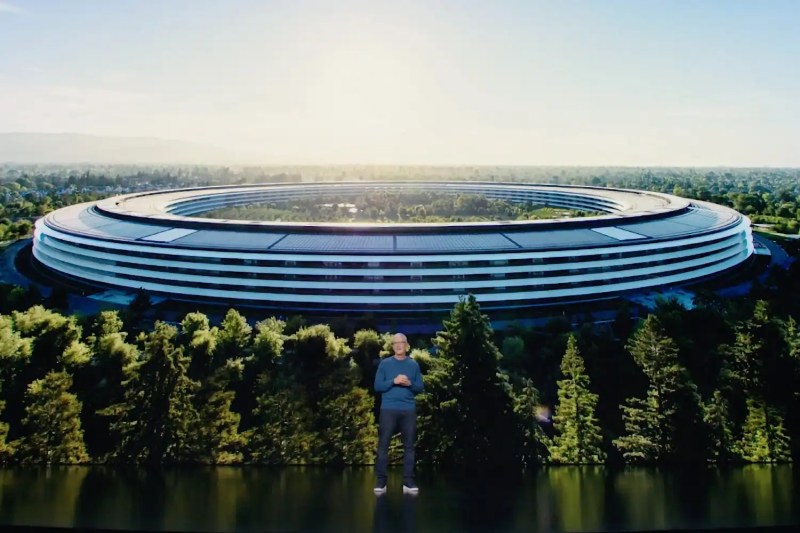
Apple Park Tim Cook AAPL

AAPL is a California-based computer company that became the most successful smartphone company in the world.

AAPL defined by Apple

Here’s how Apple defines itself:

Apple revolutionized personal technology with the introduction of the Macintosh in 1984. Today, Apple leads the world in innovation with iPhone, iPad, Mac, Apple Watch, and Apple TV. Apple’s five software platforms — iOS, iPadOS, macOS, watchOS, and tvOS — provide seamless experiences across all Apple devices and empower people with breakthrough services including the App Store, Apple Music, Apple Pay, and iCloud. Apple’s more than 100,000 employees are dedicated to making the best products on earth, and to leaving the world better than we found it.

Key AAPL history

From Apple I to iMac

Apple was founded in 1976 by Steve Jobs (Steve), Steve Wozniak (Woz), and (briefly) Ronald Wayne as a business partnership: Apple Computer Company. The following year it became Apple Computer, Inc. The company’s first product was the Apple I, a personal computer hand-built by Woz and sold in part-completed kit form. The Apple II and Apple III followed.

The modern Apple as we know it today began in 1983, with the launch of the first personal computer with a graphical user interface, the Lisa. Way too expensive to succeed, it was replaced by the Macintosh in 1984, launched with the single showing of a Ridley Scott commercial during the Super Bowl. The Macintosh transformed the world’s understanding of what a computer was, and would eventually lead to Microsoft adopting the GUI approach.

Steve Jobs and then Apple-CEO John Scully fell out in 1985, when Steve wanted to focus on the Macintosh while Scully wanted to put more attention on the Apple II, which was still selling well. That led to Steve being forced out of the company and going off to form NeXT.

Apple focused on selling Macintosh models at the highest possible margins, but would eventually fall foul of a mix of unsustainable pricing in the face of competition from Windows machines, and an overly complex product lineup. By 1996, the company was in trouble, and in 1997 Steve was brought back, along with the NeXT operating system, which would eventually form the basis of Mac OS X.

Steve simplified the Mac lineup and had industrial designer Jony Ive work on a whole new look for a consumer desktop Mac, the colorful iMac. The iMac, like the original Macintosh, again changed the world’s understanding of what a computer was, and who should want one.

From Apple Computer, Inc. to Apple, Inc.

In 2001, Apple launched the iPod. Although this wasn’t the first mp3 player, it was massively better than anything on the market at the time, and succeeded in turning a geeky piece of technology into a consumer electronics product with mass-market appeal.

The success of the iPod paved the way into other mobile devices. Apple was working on what would eventually become the iPad, when Steve realized that this was the basis of a smartphone. He diverted the team’s work into this, to launch the iPhone in 2007. The iPad launched later, in 2010.

The iPhone was yet another transformational product. While most other smartphones of the time were clunky devices with a keyboard and stylus, the iPhone was a sleek-looking device operated with a finger, and so simple that no user guide was needed. It was with the launch of the iPhone that Apple Computer, Inc. was renamed to Apple, Inc.

From Intel to Apple Silicon

While the iPhone, iPad, Apple Watch, and more are made with Apple-designed processors, the Mac lineup has historically relied on third-party companies for its CPUs. Over the years, Macs progressed from Motorola 680000 series chips through PowerPC to Intel.

In 2020, Apple began a two-year transition to the final stage in that journey, with Macs too finally getting Apple-designed chips. The first such is the M1 chip, used in the latest Mac mini, MacBook Air, and 13-inch MacBook Pro. Other Apple Silicon Macs followed.

AAPL today

Apple is one of the largest companies in the world. It was the first publicly traded company to hit a trillion-dollar valuation in 2018, $2 trillion in 2020, and $3T in 2022.

The company’s product lineup includes five different Mac families (MacBook Air, MacBook Pro, iMac, Mac Pro, and Mac mini); four iPad ranges (iPad mini, iPad, iPad Air, iPad Pro); four iPhone 12 models (12, 12 mini, 12 Pro, 12 Pro Max); three main Apple Watch models (SE, Series 3, Series 6); as well as other products, including Apple TV, AirPods, and HomePod mini.

In addition to hardware sales, Apple derives a growing proportion of its income from Services, including the App Store, iCloud, Apple Music, and Apple Pay.

Judge allows shareholders to sue Apple over Tim Cook’s comments on iPhone demand in China

Tim Cook

A federal judge has ruled that Apple has to face a lawsuit accusing the company of hiding the fact that iPhone demand in China was declining, leading to “tens of billions of dollars in shareholder losses.” The specific focus is on the comments made by Apple CEO Tim Cook during Apple’s fiscal Q4 2018 earnings call, Reuters reports.


Expand
Expanding
Close

[Photos of disabled phones] Comment: Apple needs to publicize its store device security measures to deter robberies

disabled phones

Update: Photos (above) are now surfacing of disabled phones stolen from Apple Stores by looters acting under the cover of protests at the killing of George Floyd. It is also reported that camera permission is enabled, suggesting that Apple would be able to remotely take photos from either front- or rear-facing cameras.

I’ve seen a couple of pieces recently on what appear to be increasingly frequent snatch-and-grab robberies of display devices from Apple Stores.

One thing stood out for me: neither author appeared aware of the security measures Apple takes to render stolen display devices useless. And if tech writers don’t know about them, it’s guaranteed that thieves don’t either …


Expand
Expanding
Close

Analyst predicts how Apple will hit a $2 trillion market cap within 4 years

In 2018, Apple became the first publicly-traded company to hit the $1 trillion market capitalization milestone. Some analysts are now turning their attention to the next $2 trillion milestone, including Evercore ISI analyst Amit Daryanani. In a new investor note today, Daryanani breaks down what Apple needs to do to cross the $2 trillion threshold.


Expand
Expanding
Close

Tim Cook tells staff in response to killing of George Floyd: ‘we must do more’

Tim Cook memo in response to killing of George Floyd

Apple CEO Tim Cook has responded to the ‘senseless killing’ of George Floyd by writing a memo to all staff. In it, he argues that while the coronavirus crisis has created a strong desire for a return to normalcy, we should instead ‘aim far higher.’

The memo begins by acknowledging the strength of feelings that have given rise to widespread protests across the US, and the inequalities which remain …


Expand
Expanding
Close

Limited iPad availability in Q1 saw Huawei overtake Apple in China

ipad comparison

Limited iPad availability in China during the first quarter of the year saw Apple overtaken by Huawei as the top-selling tablet brand.

Almost all tablet makers saw their sales hit during the coronavirus lockdown, thanks to a combination of supply constraints caused by factory closures and reduced opportunity to buy as stores were closed …


Expand
Expanding
Close

iPhone owners most satisfied, ahead of Samsung, but one Samsung phone on top

iPhone owners most satisfied

Apple has beaten Samsung in the latest American Customer Satisfaction Index, which shows iPhone owners most satisfied with their devices. Average satisfaction rates for iPhones was 82%, a higher rating than any other smartphone brand.

When it comes too individual models, however, there was one Samsung model that topped the rankings …


Expand
Expanding
Close

[Update: Apple responds] FBI links Pensacola shooter to Al-Qaeda with cracked iPhones with ‘no thanks to Apple’

FBI pressure on iCloud backups story questioned

It looks like the most recent contention between the FBI and Apple over device encryption has come to an end as the agency has unlocked the two iPhones belonging to the Pensacola shooter with “no thanks to Apple.” Going further, AG William Barr has again called for the government to force Apple and others to create backdoors into their devices.

Update: We’ve got an official response from Apple on the matter that highlights all the ways it helped the FBI and that it’s precisely because it takes security and privacy so seriously that it doesn’t believe in creating a backdoor:

The terrorist attack on members of the US armed services at the Naval Air Station in Pensacola, Florida was a devastating and heinous act. Apple responded to the FBI’s first requests for information just hours after the attack on December 6, 2019 and continued to support law enforcement during their investigation. We provided every piece of information available to us, including iCloud backups, account information and transactional data for multiple accounts, and we lent continuous and ongoing technical and investigative support to FBI offices in Jacksonville, Pensacola and New York over the months since.

On this and many thousands of other cases, we continue to work around-the-clock with the FBI and other investigators who keep Americans safe and bring criminals to justice. As a proud American company, we consider supporting law enforcement’s important work our responsibility. The false claims made about our company are an excuse to weaken encryption and other security measures that protect millions of users and our national security.

It is because we take our responsibility to national security so seriously that we do not believe in the creation of a backdoor — one which will make every device vulnerable to bad actors who threaten our national security and the data security of our customers. There is no such thing as a backdoor just for the good guys, and the American people do not have to choose between weakening encryption and effective investigations.

Customers count on Apple to keep their information secure and one of the ways in which we do so is by using strong encryption across our devices and servers. We sell the same iPhone everywhere, we don’t store customers’ passcodes and we don’t have the capacity to unlock passcode-protected devices. In data centers, we deploy strong hardware and software security protections to keep information safe and to ensure there are no backdoors into our systems. All of these practices apply equally to our operations in every country in the world.


Expand
Expanding
Close

France going ahead with ‘Apple tax’ whether or not other countries agree

France going ahead with Apple tax

France has announced that it will go ahead with a so-called ‘Apple tax’ this year, whether or not an agreement is reached on an international proposal to ensure tech giants receive the same tax treatment across 137 countries.

France was the first European country to decide to impose a tax on the local revenues of Google, Apple, Facebook, and Amazon – after President Macron accused tech giants of having ‘permanent tax haven status‘ …


Expand
Expanding
Close

China could label Apple an ‘unreliable entity’ as revenge for US Huawei ban

Huawei ban could see Apple labelled an unreliable entity

China is said to be ready to label Apple an ‘unreliable entity’ as revenge for a US ban on exporting US technology to the Chinese manufacturer of telecoms equipment, Huawei. This could see the Cupertino company face a range of obstacles to doing business in China.

The dispute between the two countries originally dates back to 2018, but was escalated by the White House earlier this week …


Expand
Expanding
Close