AAPL Company

See All Stories

Breaking news from Cupertino. We’ll give you the latest from Apple headquarters and decipher fact from fiction from the rumor mill.
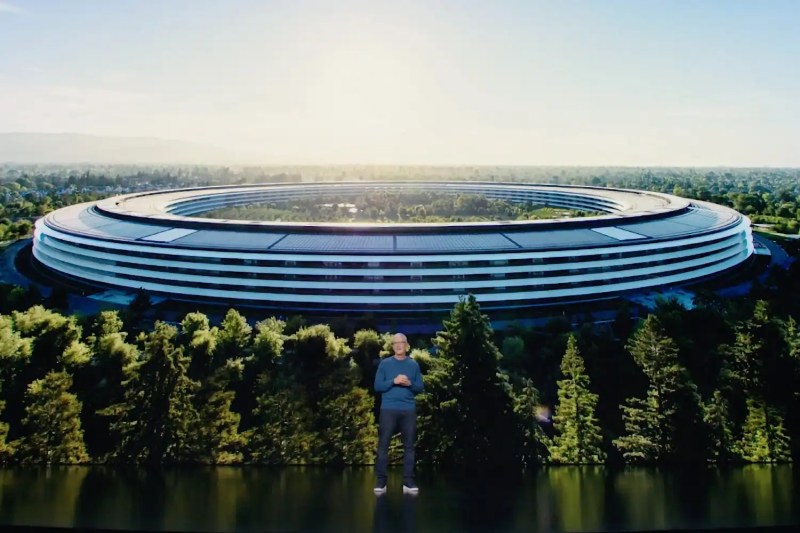
Apple Park Tim Cook AAPL

AAPL is a California-based computer company that became the most successful smartphone company in the world.

AAPL defined by Apple

Here’s how Apple defines itself:

Apple revolutionized personal technology with the introduction of the Macintosh in 1984. Today, Apple leads the world in innovation with iPhone, iPad, Mac, Apple Watch, and Apple TV. Apple’s five software platforms — iOS, iPadOS, macOS, watchOS, and tvOS — provide seamless experiences across all Apple devices and empower people with breakthrough services including the App Store, Apple Music, Apple Pay, and iCloud. Apple’s more than 100,000 employees are dedicated to making the best products on earth, and to leaving the world better than we found it.

Key AAPL history

From Apple I to iMac

Apple was founded in 1976 by Steve Jobs (Steve), Steve Wozniak (Woz), and (briefly) Ronald Wayne as a business partnership: Apple Computer Company. The following year it became Apple Computer, Inc. The company’s first product was the Apple I, a personal computer hand-built by Woz and sold in part-completed kit form. The Apple II and Apple III followed.

The modern Apple as we know it today began in 1983, with the launch of the first personal computer with a graphical user interface, the Lisa. Way too expensive to succeed, it was replaced by the Macintosh in 1984, launched with the single showing of a Ridley Scott commercial during the Super Bowl. The Macintosh transformed the world’s understanding of what a computer was, and would eventually lead to Microsoft adopting the GUI approach.

Steve Jobs and then Apple-CEO John Scully fell out in 1985, when Steve wanted to focus on the Macintosh while Scully wanted to put more attention on the Apple II, which was still selling well. That led to Steve being forced out of the company and going off to form NeXT.

Apple focused on selling Macintosh models at the highest possible margins, but would eventually fall foul of a mix of unsustainable pricing in the face of competition from Windows machines, and an overly complex product lineup. By 1996, the company was in trouble, and in 1997 Steve was brought back, along with the NeXT operating system, which would eventually form the basis of Mac OS X.

Steve simplified the Mac lineup and had industrial designer Jony Ive work on a whole new look for a consumer desktop Mac, the colorful iMac. The iMac, like the original Macintosh, again changed the world’s understanding of what a computer was, and who should want one.

From Apple Computer, Inc. to Apple, Inc.

In 2001, Apple launched the iPod. Although this wasn’t the first mp3 player, it was massively better than anything on the market at the time, and succeeded in turning a geeky piece of technology into a consumer electronics product with mass-market appeal.

The success of the iPod paved the way into other mobile devices. Apple was working on what would eventually become the iPad, when Steve realized that this was the basis of a smartphone. He diverted the team’s work into this, to launch the iPhone in 2007. The iPad launched later, in 2010.

The iPhone was yet another transformational product. While most other smartphones of the time were clunky devices with a keyboard and stylus, the iPhone was a sleek-looking device operated with a finger, and so simple that no user guide was needed. It was with the launch of the iPhone that Apple Computer, Inc. was renamed to Apple, Inc.

From Intel to Apple Silicon

While the iPhone, iPad, Apple Watch, and more are made with Apple-designed processors, the Mac lineup has historically relied on third-party companies for its CPUs. Over the years, Macs progressed from Motorola 680000 series chips through PowerPC to Intel.

In 2020, Apple began a two-year transition to the final stage in that journey, with Macs too finally getting Apple-designed chips. The first such is the M1 chip, used in the latest Mac mini, MacBook Air, and 13-inch MacBook Pro. Other Apple Silicon Macs followed.

AAPL today

Apple is one of the largest companies in the world. It was the first publicly traded company to hit a trillion-dollar valuation in 2018, $2 trillion in 2020, and $3T in 2022.

The company’s product lineup includes five different Mac families (MacBook Air, MacBook Pro, iMac, Mac Pro, and Mac mini); four iPad ranges (iPad mini, iPad, iPad Air, iPad Pro); four iPhone 12 models (12, 12 mini, 12 Pro, 12 Pro Max); three main Apple Watch models (SE, Series 3, Series 6); as well as other products, including Apple TV, AirPods, and HomePod mini.

In addition to hardware sales, Apple derives a growing proportion of its income from Services, including the App Store, iCloud, Apple Music, and Apple Pay.
Site default logo image

Reeder for iOS updated with background app refresh, improved navigation & multiple bug fixes

The popular newsreader app Reeder has been updated to version 2.2 with a fairly lengthy list of new features and bug fixes.

Notably, navigation has been improved, with the ability to pan left and right to toolbars and empty spaces in list views, as well as adding a drag handle to the toolbar to make it more obvious that you can slide left/right to go forward and back. A loading progress indicator has also been added to the in-app browser.

Smart streams now support grouping by either feed or date, and the app can also now handle feed links from other apps.

Bug fixes include handling of multiple Feedly accounts, the disappearing status bar with the white theme on the iPad and missing scrollbars in the browser and when using dark themes.

Reeder costs $4.99 from the App Store. The latest beta of the Mac version is still available for free from the Reeder site.

The full change list for Reeder 2.2 can be found below:
Expand
Expanding
Close

KGI: Every new iOS device this year will be equipped with Touch ID, sensors to be more durable

Site default logo image

KGI research has published a new report that claims Apple will incorporate its Touch ID fingerprint sensor into all new iOS devices launched in 2014. This includes both new iPhone models, and the next versions of the full-size iPad an its ‘mini’ counterpart.

The note also states that Touch ID sensor shipments will increase by 233% this year, which would certainly make sense if the technology was going to be added to so many new devices. According to the report, these new sensors will be made more durable than the current version through the use of tin:


Expand
Expanding
Close

OS X 10.9.3 causing more headaches for Mac Pro users: external monitors getting disabled

Site default logo image

Apple’s recent OS X Mavericks 10.9.3 update is causing even more headaches for users of the latest Mac Pro line. Last week, we reported that 10.9.3 incompatibilities are the source of GPU issues with professional video editing programs. Now, multiple threads on Apple’s support forums are indicating issues with 10.9.3 Mac Pros and multiple external monitors. The issue causes users with several monitors to only see a portion of their monitors functioning.

As one user explains:

I have three 30″ displays, but after the 10.9.3 update, only 2 of them work at a time. Is this a known issue? Can I downgrade to 10.9.2 to get the use of my other display back? It was working just fine on my Mac Pro with 10.9.2.

And several users corroborate:


Expand
Expanding
Close

Report: Apple planning iOS-controlled smart home automation platform for WWDC unveiling

Site default logo image

According to a report from The Financial Times, Apple is working on a new software platform that would “turn the iPhone into a remote control for lights, security systems and other household appliances.” Apple’s iOS ecosystem is of course already home to an increasing number of connected products for the home like the Philips Hue WiFi connected light bulbs, the Nest thermostat and a number of iPhone controlled appliances, but the report claims that Apple will soon unveil a new central platform that will make for a more seamless experience:
Expand
Expanding
Close

Site default logo image

Apple’s first reseller approved in Iran following lifting of U.S. sales ban

Update: Several readers have noted that Vaghaye Gostar Fars claims to be the first to receive approval from the government in Iran to import Apple products following the sales ban, but is not necessarily officially associated with Apple. We’ve reached out to Apple for comment.

Following the U.S. government lifting a United States embargo for exports of products into Iran on May 30th of last year, reports from Fars News Agency and other local publications note the first company has now been granted permission by authorities in the country to start selling Apple products (via zoomit.ir). Iran’s Industry, Mines, and Trade ministry has approved a third-party reseller in the country reportedly called Vaghaye Gostar Fars that will be the first importer of Apple products following the sales ban. 

Up until now, Iranians have been forced to purchase Apple products making their way to unofficial stores from the Middle East and surrounding regions via the black market. In 2012, Reuters ran a story detailing the approximately 100 stores in Iran’s capital of Tehran alone selling Apple products brought illegally into the country.

Last year Apple updated its website to reflect the U.S. government’s decision to lift the export ban, and at the time Apple commented that it is “no longer banned from selling Macs and iOS devices to customers who plan to bring or send those products to Iran.”  Apple’s full original comment from the lifting of the sales ban is below:

“We’ve been told by the U.S. government that most Apple products are covered by regulatory changes announced by the Treasury Department,” she said, referring to a decision to ease restrictions on selling a broad array of communications equipment such as smartphones, laptops and computer software to Iran. “As a result, Apple is no longer banned from selling Macs and iOS devices to customers who plan to bring or send those products to Iran,” she said.


Site default logo image

“Where’s the mouse?” Today’s kids try to figure out an Apple II [Video]

[youtube=https://www.youtube.com/watch?v=PF7EpEnglgk]

If you ever wanted an illustration of how far computer technology has come in a single generation, this video portrays it well. A bunch of kids who’ve grown up with Macs, iPads and iPhones, and for whom apps and the web are as natural as breathing, try their hand at an Apple II – starting with the challenge of how to switch it on.

Scarily, I’m old enough to have used an Apple II and now feel slightly nostalgic, but I don’t think I’ll be trading in my MacBook Pro anytime soon.

Apple wants to ban past and future Samsung devices from being sold in the US

Site default logo image

Based on the most recent verdict in Apple v. Samsung, Apple is attempting to seek a permanent injunction against any Samsung device that infringes upon its patents.

While this includes the devices that were at the center of the latest court case, it also includes “software or code capable of implementing any Infringing Feature, and/or any feature not more than colorably different therefrom,” which could be construed to mean current and even future devices.


Expand
Expanding
Close

Beats acquisition could be delayed for a variety for reasons, including Dre’s early ‘announcement’ video

Site default logo image

While it was previously reported that the Apple buyout of Beats Electronics was supposed to be announced this week, Billboard has compiled a list of five different reasons the deal isn’t yet finalized according to its own sources.

A few of these potential hold-ups include issues determining Beats’ valuation and issues with finding a place for Dr. Dre and Jimmy Iovine to fit into Apple’s corporate structure. According to one of Billboard’s sources, Apple’s executives were “freaked out” by the video that surfaced a few weeks ago of Dr. Dre and Tyrese Gibson (accidentally) confirmed that a deal was in the works.


Expand
Expanding
Close

Tim Cook among tech CEOs German committee may want to testify in NSA investigation

Site default logo image

Apple’s association with the United States National Security Agency may once again put the company in the spotlight as Germany begins to investigate the agency’s recent activity. According to a report by The Wall Street Journal, members of a German parliamentary commission want the heads of a number of US-based tech companies, including Apple, to participate in their investigation of the NSA’s involvement in monitoring German officials.

Apple, for its part, has denied direct involvement with PRISM program and repeatedly said it has not allowed the government to have direct access to its servers.
Expand
Expanding
Close

Site default logo image

Three hacks for adding permanent storage to your MacBook Air or Retina Pro through the SD card slot

transcend-jetdrive-lite

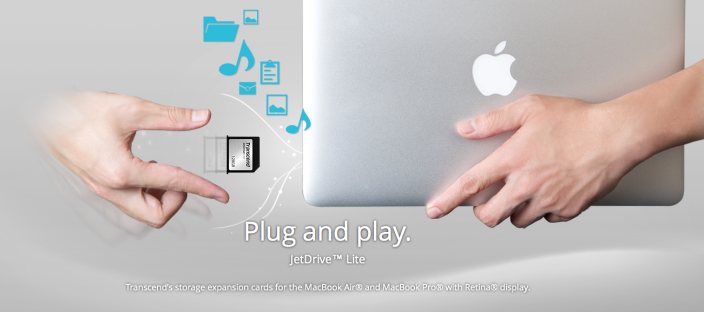
MacBook Airs and Retina MacBook Pros offer practically zero upgradability, but one area that there is some flexibility with is storage. Many third party memory manufactures are taking advantage of the SD card slot present in MacBook Airs and Retina Pros to add semi-permant storage to these Macs. We first saw these products begin popping up last year, but the release of Transcend’s JetDrive Lite line this morning made us think it was worth taking a look at three of the options currently available.

These expansion drives are nearly as convenient as on-board storage but can be used for Time Machine backups and transferring large files between devices.

The problem with shoving any SD card into your MacBook is that is protrudes out from the laptop casing, which leaves the card and your Mac vulnerable to damage or getting knocked out. It’s also an eyesore to constantly have a card peaking out from your Mac’s otherwise seamless and uniform design. The memory expansion modules we’re going to take a look at are customized to fit nearly flush.

The most well-known version is the PNY StorEDGE. It comes in two different capacities (64GB/128GB), is colored black, and protrudes just enough to make it easy to remove. The 64GB/128GB models retail for $100/$200, but these are available for $38.95 and $75.04.

The SanDisk minidrive is only available in 64GB, and it includes a pull tab to make it even easier to remove. Some people may dislike the fact that the pull tab has ‘SanDisk’ branded on it, but that doesn’t seem like a deal-breaker to me. It retails for $59.99, but is currently on sale for $49.99.

[youtube http://www.youtube.com/watch?v=nMWNFXNWAYw]

Just this morning Transcend announced its JetDrive Lite expansion cards in 64GB and 128GB capacities. Transcend says that users can expect read and write speeds of up to 95MB/s and 60MB/s respectively, which is the fastest of the bunch. Obviously, there isn’t any real world data to backup these claims yet and overall performance will also vary by Mac, it is still nice to see Transcend attempting to push the product category forward. The JetDrive Lites are priced aggressively with current rates starting at just $39.99 for 64GB and going up to $79.99 for 128GB.

nifty-minidrive-silver

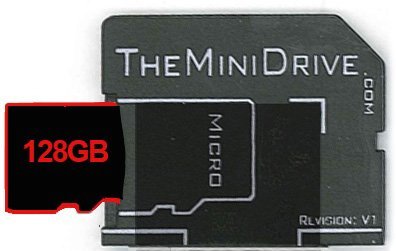
If you already own a micro SD card you could opt to increase your MacBook storage by popping it into a custom adapter which mimics the modules mentioned above. The Nifty Minidrive is capped with hand-polished mini-drivealuminum so it will match your Apple hardware. It’s available in silver and red at a retail price of $39.99 (on sale at Amazon for $34.99). There is also the less-elegent, but more budget-conscious solution called “The MiniDrive“, which looks to be a Nifty clone but at only $20.
Also, if you are really determined to expand your Mac’s memory, you can upgrade its internal SSD with one of Transcend’s new JetDrive kits.

Before making your final purchase, be sure that the model you choose is compatible with your specific Mac model as some manufactures have slightly different SKUs for different Macs. SD slot depth also varies between models so some of the aforementioned solutions may protrude more or less depending on your Mac.

Latest Weibo leak shows supposed 4.7-inch iPhone screen backlight part

Site default logo image

Weibo is continuing to be the source of unverified iPhone 6 leaks. This time, user “顾Gooey” has published some photos that he claims to represent display backlight components for the next-generation iPhone with a 4.7-inch screen. These parts appear similarly structured to the iPhone 5S and 5C version of the backlight component, meaning that the forum poster is either passing off the current-generation part as next-generation or that there is something legitimate about the components. The iPhone 6 is rumored to come in both 4.7-inch and 5.5-inch sizes, and it will run iOS 8, include a more efficient A8 processor, and likely feature a 1704 x 960 display with a sharper pixel density. Another unverified backlight component photo, below, from Weibo:


Expand
Expanding
Close

Shocker: Samsung & LG rumored to use sapphire-covered screens on premium smartphones

Site default logo image

There’s been much speculation about Apple’s plans for its sapphire glass plant, with many suggesting it will use it as a replacement for the Gorilla Glass coatings used on current iPhones when it launches the iPhone 6.

Samsung and LG now reportedly plan to follow suit, with Korean site ET News citing unspecified industry sources as saying that both companies have asked suppliers to provide samples of sapphire covers for its screens … 
Expand
Expanding
Close

Site default logo image

Time to buy AAPL before institutional investors pile back in, says Morgan Stanley

Morgan Stanley’s Katy Huberty thinks now is a good time to buy AAPL stock, noting that institutional ownership is at a historic low and the share price is likely to rise when they get back in the game following the launch of the iPhone 6, reports Business Insider.

The top 100 investors currently only hold two percent of AAPL stock, well below the S&P 500 weighting of 3.2 percent, and at the bottom end of the historical range of 1.6 to 4.5 percent. What this means in plain English is that those investors are likely to buy more AAPL stock in future, which would typically boost the share price.

Fortune‘s Philip Elmer-DeWitt notes wryly that the charts also show that institutional investors, often known as ‘the smart money,’ were not so smart on this occasion: they reduced their holdings in Apple shortly before the stock climbed ten percent.

As ever, make your own investment decisions …

Site default logo image

The secret behind Apple’s design excellence is a simple one, says former senior designer & UX specialist

The secret behind Apple’s design excellence is a simple one, says former senior designer and user experience specialist Mark Kawano in an interview with Fast Company: it’s not just something left to the designers.

It’s actually the engineering culture, and the way the organization is structured to appreciate and support design. Everybody there is thinking about UX and design, not just the designers. And that’s what makes everything about the product so much better . . . much more than any individual designer or design team.

Kawano says that everyone on the team caring about design was how Apple was able to create its core products in the early days of the iPhone with a team of around 100 designers.

For the most part, Apple didn’t employ specialist designers. Every designer could hold their own in both creating icons and new interfaces, for instance. And thanks to the fact that Apple hires design-centric engineers, the relatively skeleton design team could rely on engineers to begin the build process on a new app interface, rather than having to initiate their own mock-up first.

He also revealed that many of the small, thoughtful touches for which Apple is famous were things that individual designers and engineers came up purely as interesting experiments and then tucked away for years. He gave the example of the password box in OS X shaking if you didn’t enter it correctly.

Say we need a good way to give feedback for a password, and we don’t want to throw up this ugly dialog–then it’s about grabbing these interaction or animation concepts that have just been kind of built for fun experiments and seeing if there’s anything there, and then applying the right ones.

Site default logo image

Think Different ad man recalls the truth behind Steve Jobs narrating The Crazy Ones ad: “a horrible idea”

[youtube=”https://www.youtube.com/watch?v=-z4NS2zdrZc”]

If you watched the movie Jobs, you may recall Steve recording the words to the “Here’s to the crazy ones” ad, looking at the camera and asking “Is that ok?”. The reality, says Ken Segall, the creative director behind Apple’s famous Think Different campaign, was rather different. Speaking in an interview with MacWorld, he said:

Imagine you’re in this lonely, empty auditorium, he’s just finished that reading, and the words are just ringing in the air, and then their was a great pause, and he said: ‘That’s it, I’m out of here. This is a horrible idea,’ and he stormed off.

While Jobs loved the words, he thought it was a terrible idea to narrate them personally – he thought everyone would think him an egomaniac and they wouldn’t hear the message. Segall says that things didn’t begin well.

He was late and he said ‘I’m really busy today I don’t have time for this, I don’t like the idea, but I’ll give you one read and then I’m out of here’. So he did it.

In the end, Jobs got his way: the ad that was actually aired was narrated by Richard Dreyfuss – but it was the Jobs version that went viral after the death of Apple’s co-founder.

Via Fortune

Apple now offering free shipping on all online purchases through May 29th

Site default logo image

Apple has just launched a new special offer through its online store for Fathers Day offering free shipping on all purchases through Thursday, May 29th. While the company typically provides free shipping for orders $50 and up, this limited-time special covers everything that may not reach that price point, such as cases or other accessories.

Not only is this great offer just in time to help you get just the right gift for your dad, but it could also potentially help Apple clear out a little extra merchandise ahead of its WWDC conference early next month, where the company is expected to announce some new hardware alongside its redesigned OS X operating system and updated iOS mobile platform.


Expand
Expanding
Close

iPhone 6 mockup compared to all previous generation iPhone models (Video)

Just when we thought the iPhone 6 dummy ship had sailed, YouTuber DetroitBORG has put together a new video comparing the mockup to all previous generation iPhone models. The mockup appears to be similar to the ones we’ve obtained and shown in previous photos and videos. It’s very interesting to see the entire iPhone family compared to the dummy though…


Expand
Expanding
Close

‘No man’s land’: How a bigger iPhone 6 will require developers to rethink their app designs

Site default logo image

Model of 4.7-inch iPhone 6 (left). From Apple’s Developer Guidlines (Right)

When I first upgraded from my iPhone 4 to the iPhone 5s, I immediately noticed an incredible upgrade in the clarity and sharpness of the larger 4-inch Retina display, but also some usability issues that plagued my iPhone usage experience for the following months. That’s why I’m excited for the pixel tripling 3x mode at 1704 x 960 resolution Apple is currently testing for the iPhone 6, but simultaneously worried about the day to day use of iOS on a larger 4.7 or 5.5-inch device. Apple explained it best:

[youtube=https://www.youtube.com/watch?v=EY4c2mh15Yk]

Apple currently recommends developers focus specifically on the upper left portion of the iPhone display for important navigation functions and considers the lower right portion of the screen “less important” (pictured above from Apple’s developer documentation). That’s not going to fly with a larger 4.7-inch+ display, and it’s got me wondering if app developers will have to fundamentally rethink the layout of apps in addition to any changes to support the next iPhone’s increased resolution. 
Expand
Expanding
Close

Report: Apple-Beats deal still happening, 70% certainty it will go through

Site default logo image

Small but notable update in the reported acquisition talks over Beats Electronics by Apple, this time courtesy of sources of TechCrunch:

A well-placed source has confirmed rumors that Apple’s acquisition of Beats “is happening” but was close to falling apart multiple times. The source said with “70% certainty” that Apple’s planned multi-billion acquisition of headphone maker Beats will go through.

This of course comes after a report broke from the Financial Times two weeks ago from today with information that Apple was in final talks to acquire the headphone and music service company.
Expand
Expanding
Close

Pixelmator 3.2 revamps the Repair Tool, adds locked layers, 16-bit support for all Macs and more

Site default logo image

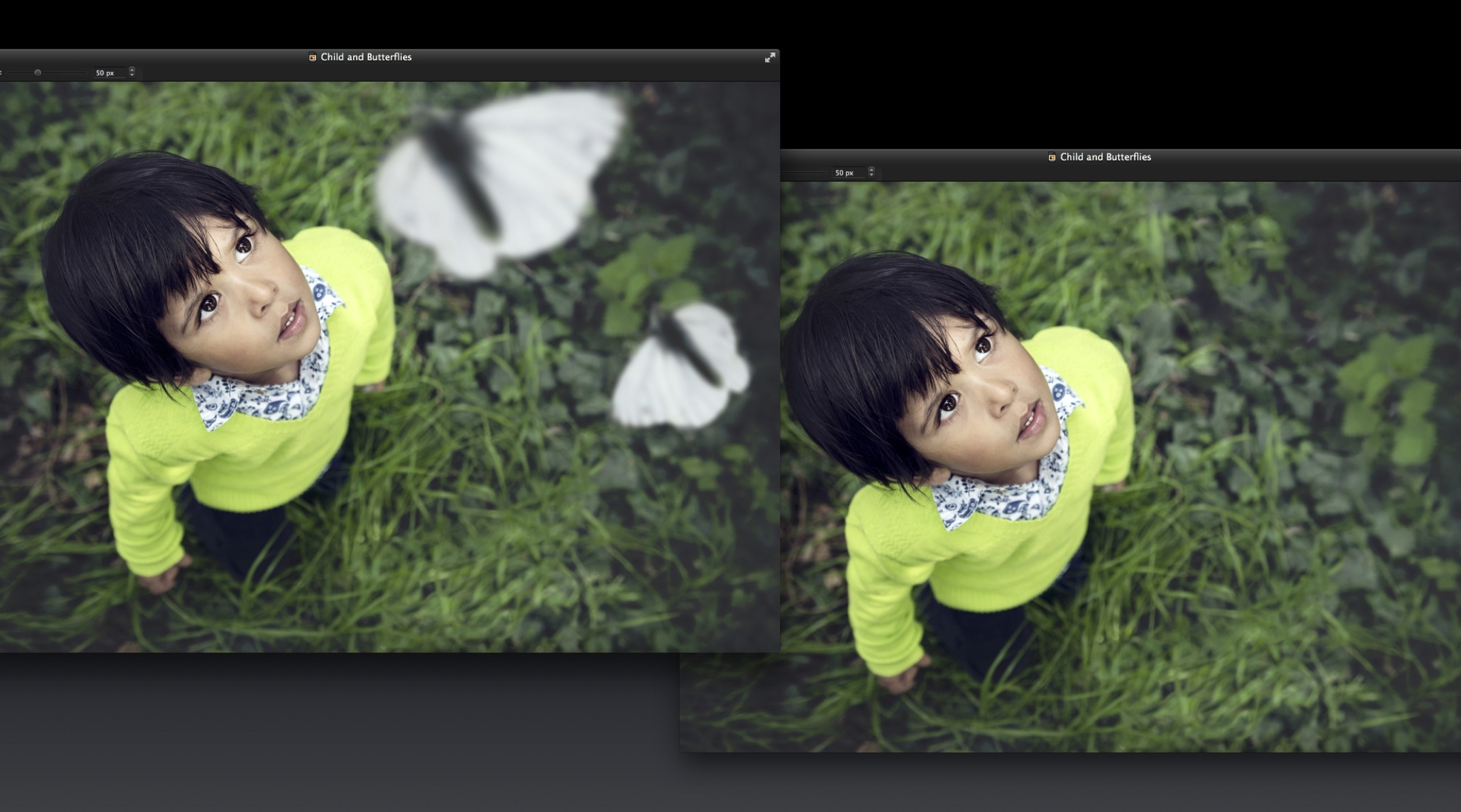
The Pixelmator team is relentless, releasing significant updates to the application every few months. Version 3.2 (codenamed ‘Sandstone’) is no exception and can be downloaded from the Mac App Store now. Codenamed Sandstone, this iteration adds a majorly-revamped Repair Tool, 16-bit channel editing for all Macs (not just the Mac Pro) alongside a whole bucket of other improvements.

The Repair Tool now uses color-correction to match repaired areas seamlessly. It also has clever smarts that mean you don’t have to precisely select an object anymore, the software will remove the whole object automatically. Pixelmator will also try its best to infer the structure of the background area, for a more natural final edit.

The Repair Tool now has three different options, Quick, Standard and Advanced. Quick is meant for small blemishes, whereas Standard and Advanced tackle the removal of larger objects from a scene. It’s not exactly clear under what circumstances you are supposed to change mode, so I chose ‘Advanced’ every time in my testing and the results were fantastic. It’s sort of like magic. You can see an example of what this is capable of after the break …


Expand
Expanding
Close

Apple formally acknowledges iMessage issue, says bug fix coming in a ‘future software update’

Site default logo image

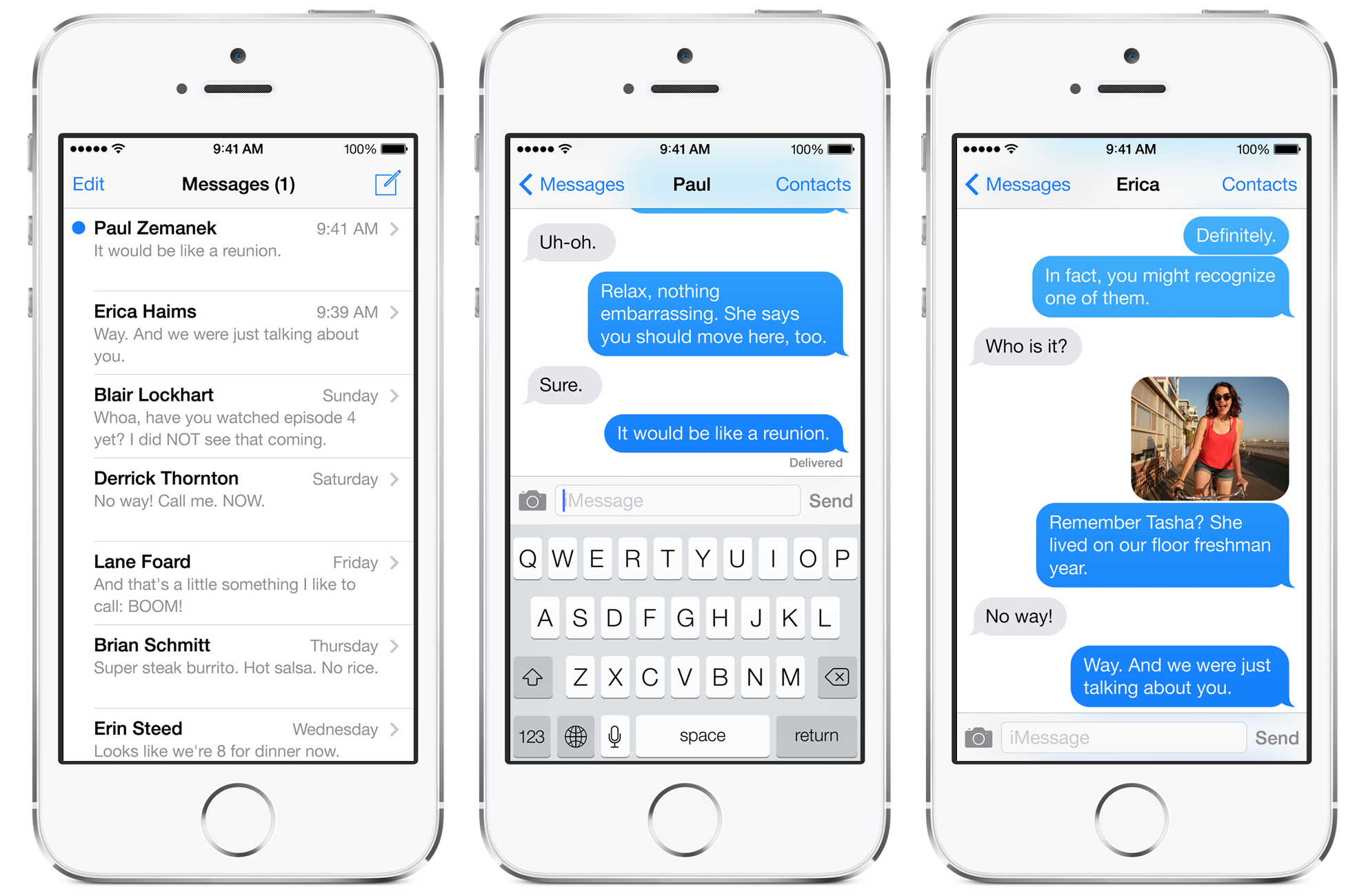
In a statement to Re/code, Apple has acknowledged the iMessage issue which affects customers who switch away from the iPhone, without disabling iMessage. This means that texts to these users are never delivered, as iPhone devices continue to use the iMessage protocol on the phone number that is no longer associated with an iPhone. Aside from a second-hand report by an AppleCare representative, this is Apple’s first official response to the recent criticism.


Expand
Expanding
Close

Spotify CEO: I’ve always assumed Apple would offer a streaming service

Site default logo image

If Apple does indeed reach a deal to acquire Beats Electronics and announce it this week as expected, the clock is once again counting down to offer up your take on the whole scenario before it’s actually official. Steve Jobs’ biographer Walter Isaacson got that opportunity earlier this week thanks in part to Dan Lyons of Fake Steve Jobs fame; Isaacson told Lyons he believes the expected $3.2 billion acquisition by Apple is all about creating a world class video service led by Beats’ co-founder Jimmy Iovine.

But when you think about Beats and what the company has to offer for Apple, the subscription music service launched by the company in January earlier this year comes to mind. Spotify, of course, dominates in this space as seen by the company’s announcement today that they now have 10 million paid subscribers and 40 million active users.
Expand
Expanding
Close

OS X 10.9.3 breaking Mac Pro graphics card compatibility with critical video editing apps

Site default logo image

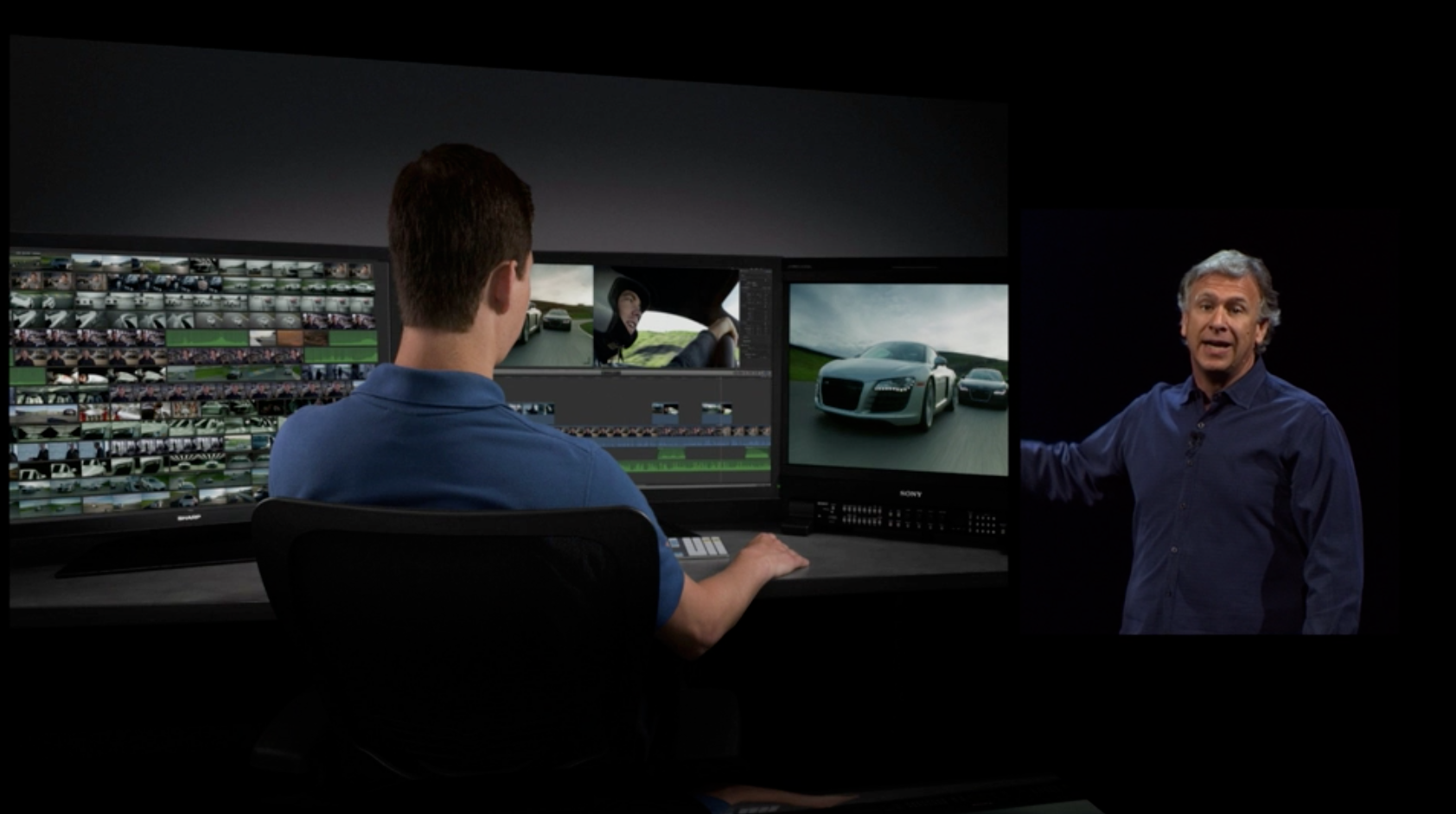
Apple’s new expensive line of Mac Pro computers seem to be causing a headache for a tiny fraction of the Mac userbase. According to several professional video editors who have contacted us or posted information to various online forums, the recent OS X 10.9.3 update is breaking compatibility between some Mac Pro graphics cards and video editing applications such as Adobe Premiere Pro and Blackmagic DaVinci Resolve…


Expand
Expanding
Close