Mac

See All Stories

Apple’s Mac lineup consists of MacBook, MacBook Air, MacBook Pro, iMac, Mac Pro, and Mac Mini. The Mac runs macOS for its operating system.
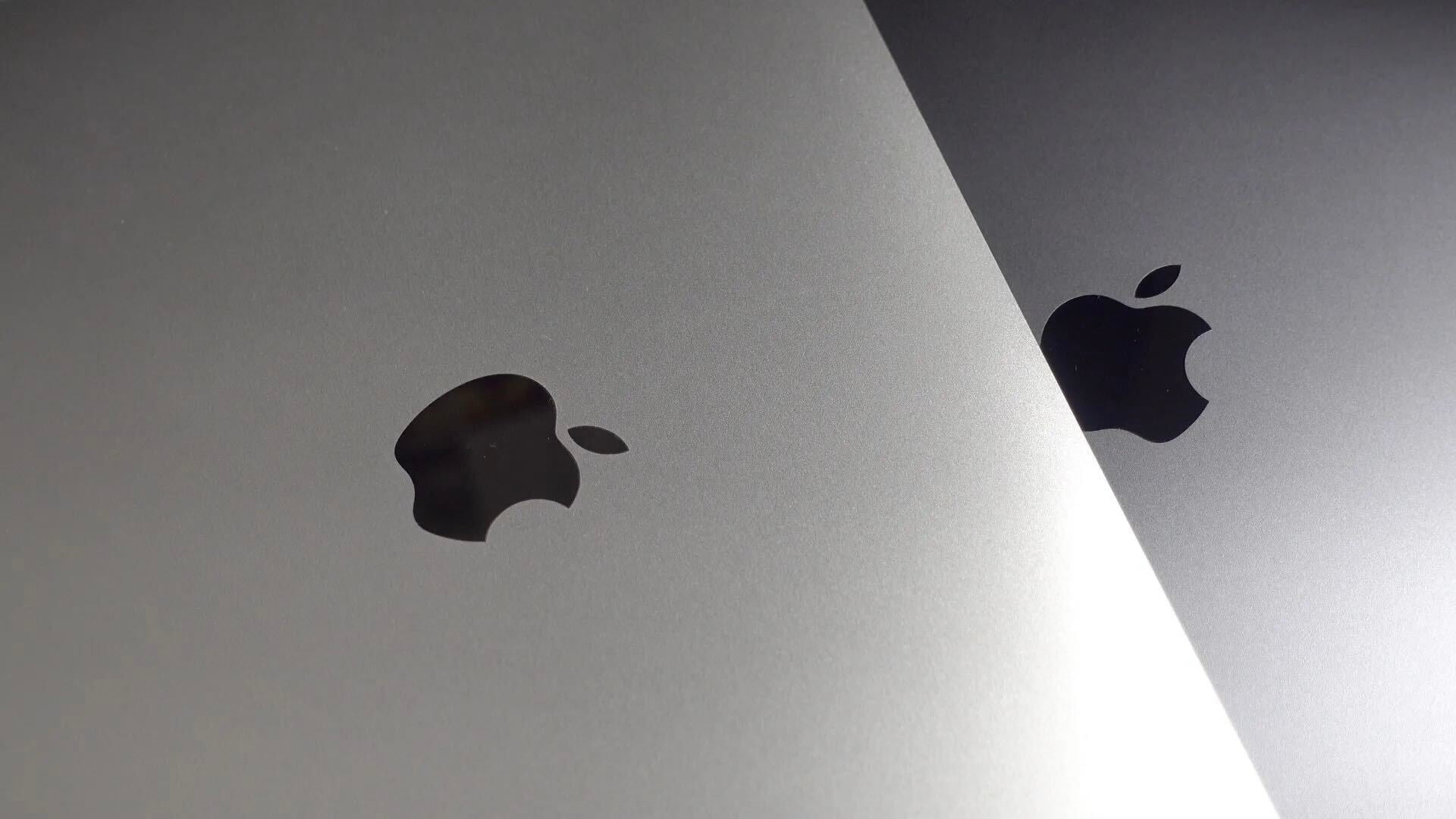
Mac lineup

History

The Mac is Apple’s lineup of computers, and it can be considered the company’s oldest product. The name “Mac” comes from the original Macintosh, which was introduced in 1984 and is also considered the first personal computer for the masses to have a graphical user interface. The first Macintosh hit the stores on January 24, 1984, costing $2,945.

Among all these years, Apple has introduced many different Mac models, ranging from desktops to laptops to professional tower machines. The current lineup consists of the MacBook Air, MacBook Pro, Mac mini, iMac, and Mac Pro. However, there have been other Mac models were discontinued, such as the eMac, MacBook, and iMac Pro.

The history of modern Macs began in 1998, a year after Steve Jobs returned to Apple. Apple had dozens of Macintosh computers at that time, but Steve decided to rethink the entire lineup. In 1998, Apple announced the iMac G3, which ditched the floppy disk and serial ports in favor of USB connectors.
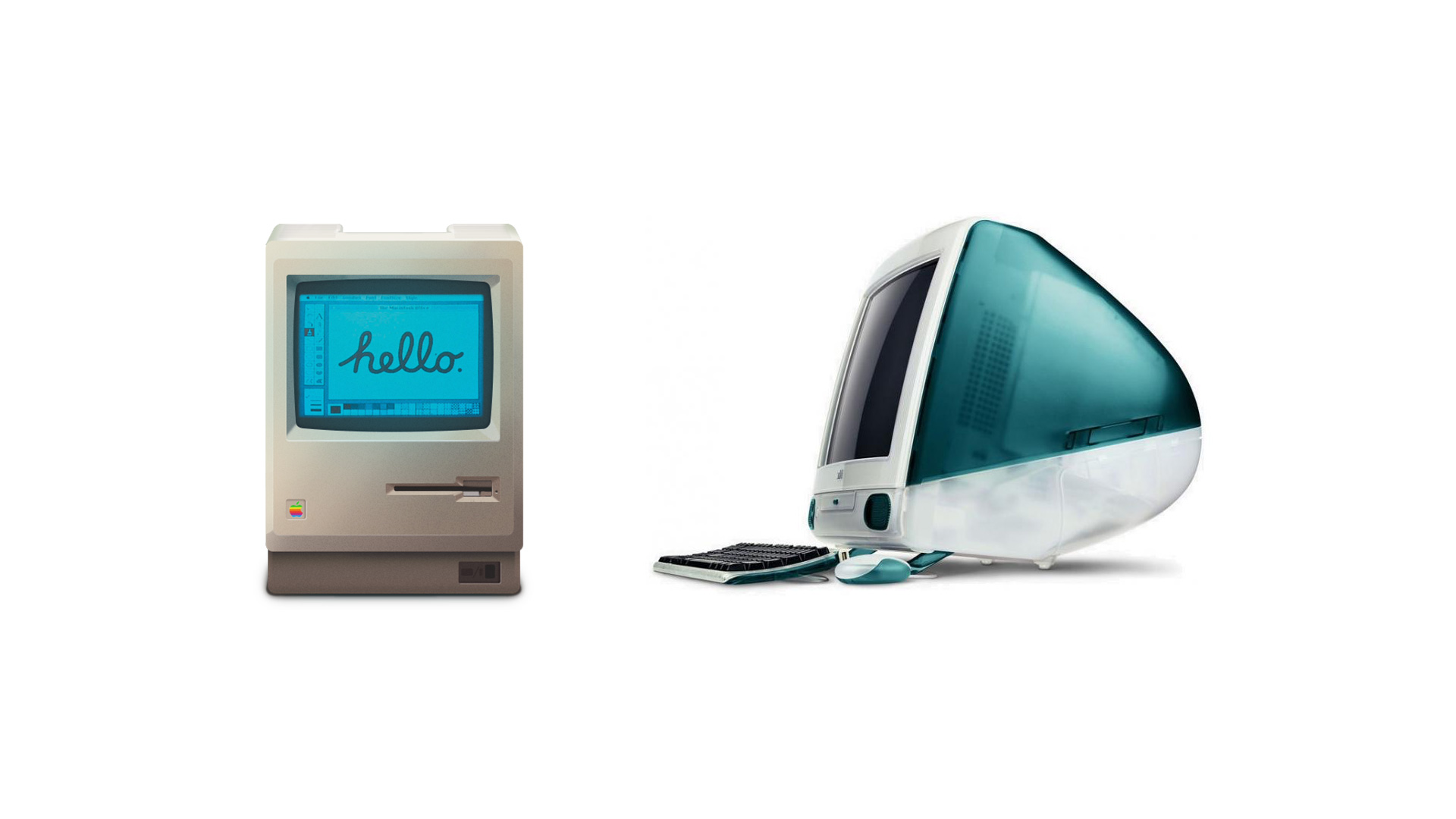
Macintosh and iMac G3.

Unlike the Macintosh, the first iMac was considered a huge success — not only for its technology, but also for its unique design with colorful translucent plastic. Apple quickly expanded the Mac lineup with other models, which included the iBook and PowerBook (which became the MacBook and MacBook Pro) and the PowerMac, which is now the Mac Pro.

macOS

What makes a Mac the Mac is the macOS operating system, which has also had a long history since the introduction of the first Macintosh. Initially called Mac OS, the operating system was rebuilt when Steve Jobs returned to Apple.

The first version of Mac OS X was released on March 24, 2001 with a new interface that is still present in some ways in current versions of macOS. Apple’s desktop operating system comes with many free applications such as Pages, Keynote, Numbers, iMovie, and GarageBand.

With macOS, users also have access to deep integrations with other Apple devices. For instance, you can answer calls and send SMS from your iPhone using your Mac. Handoff lets you switch from one device to the other and pick up where you left off. Apple Watch users can unlock their computer without entering a password, and you can even copy and paste between devices.
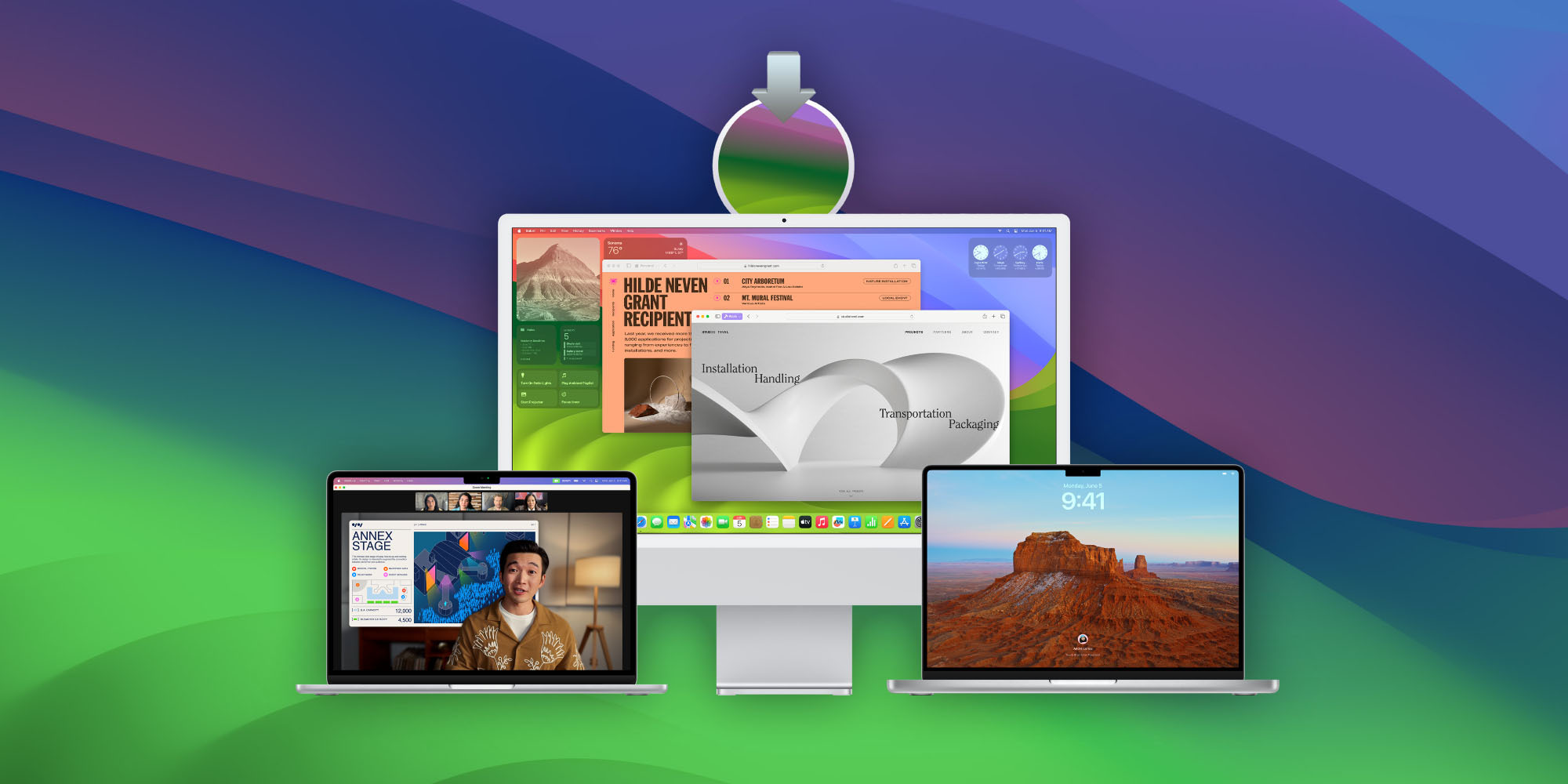
macOS Sonoma

Apple’s desktop operating system is also integrated with services offered by the company, such as iCloud, Apple Music, and Apple TV+.

The current version of macOS is Sonoma (version 14), which features new slow-motion screen savers, widgets on desktop, camera effects on FaceTime and other apps, web apps, passkey sharing, improved PDF support, and Game Mode. The update also comes with a new API that lets developers easily port Windows games to macOS.

Architecture Transitions

The Mac has had three major architecture transitions in its history. Apple’s first computers ran on Motorola processors, but the company decided to migrate to the new PowerPC platform in 1994. While this brought benefits at the time, the PowerPC processors were not delivering what Apple expected.

It was in 2005 that Apple confirmed the transition from PowerPC to Intel. Intel processors had become faster and more efficient than PowerPC, which enabled the development of new Mac computers that were more powerful and also more compact. Developers have been given access to a Developer Transition Kit running Mac OS X Tiger with Intel Pentium 4 to update their apps before the transition begins.
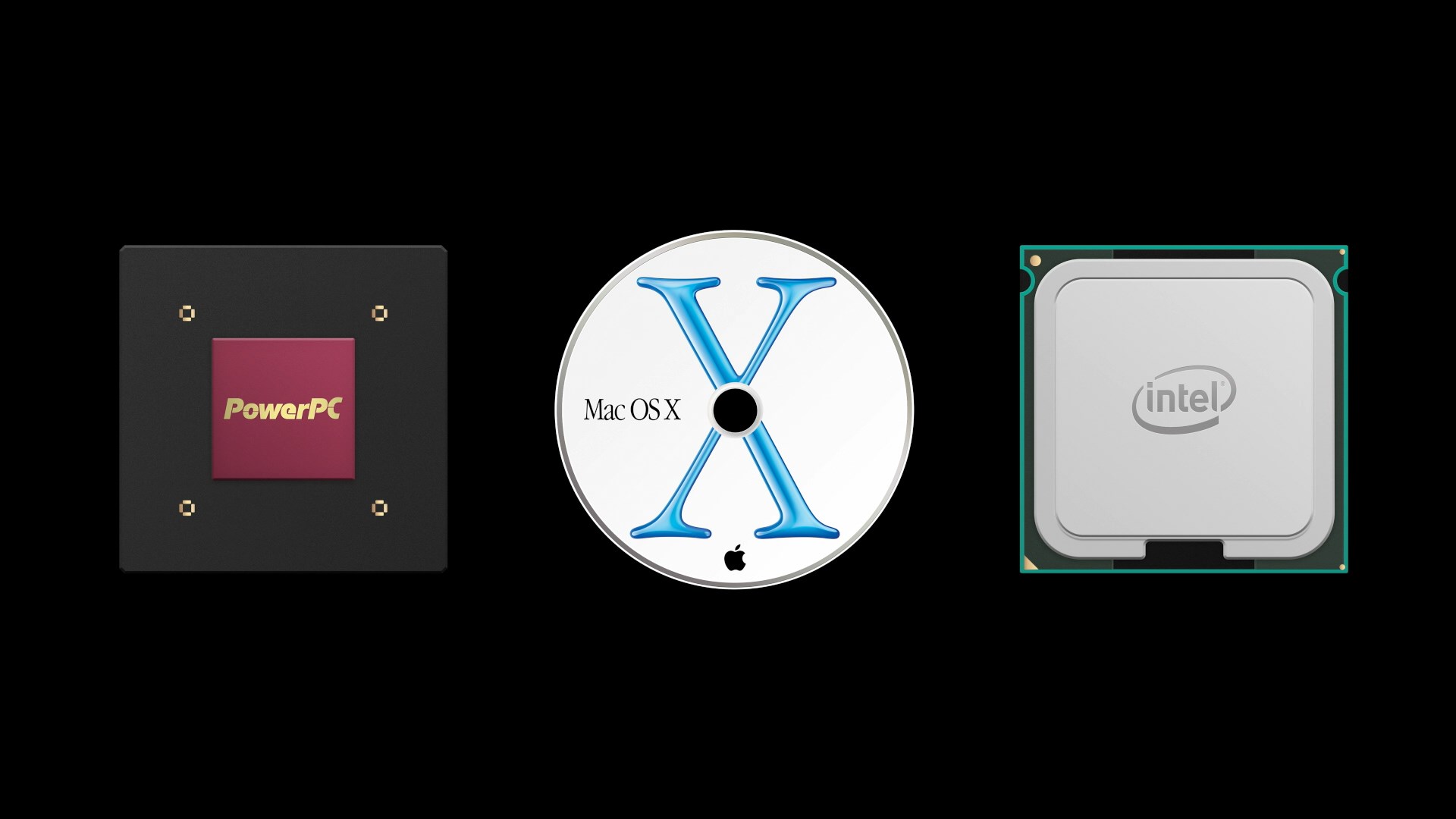
Power PC, Mac OS X, and Intel processor.

Apple said that the transition would begin in June 2006 and be finished by the end of 2007. However, the transition to Intel was fully completed in August 2006 when the company replaced the PowerMac with the new Intel Mac Pro.

As the years went by, Apple once again felt the need to have more powerful and efficient processors for its computers. This time, the company was already working on its own chips for the iPhone and iPad. In June 2020, Apple confirmed that it was changing the architecture of the Mac, now from Intel to ARM chips, which are called Apple Silicon.

Apple offered a Mac mini DTK running on the same A12Z Bionic chip as the 2020 iPad Pro. This way developers could once again update their apps ahead of the transition. In addition to being more powerful and energy efficient, the ARM architecture of Apple Silicon chips has enabled Macs to run iOS apps for the first time.
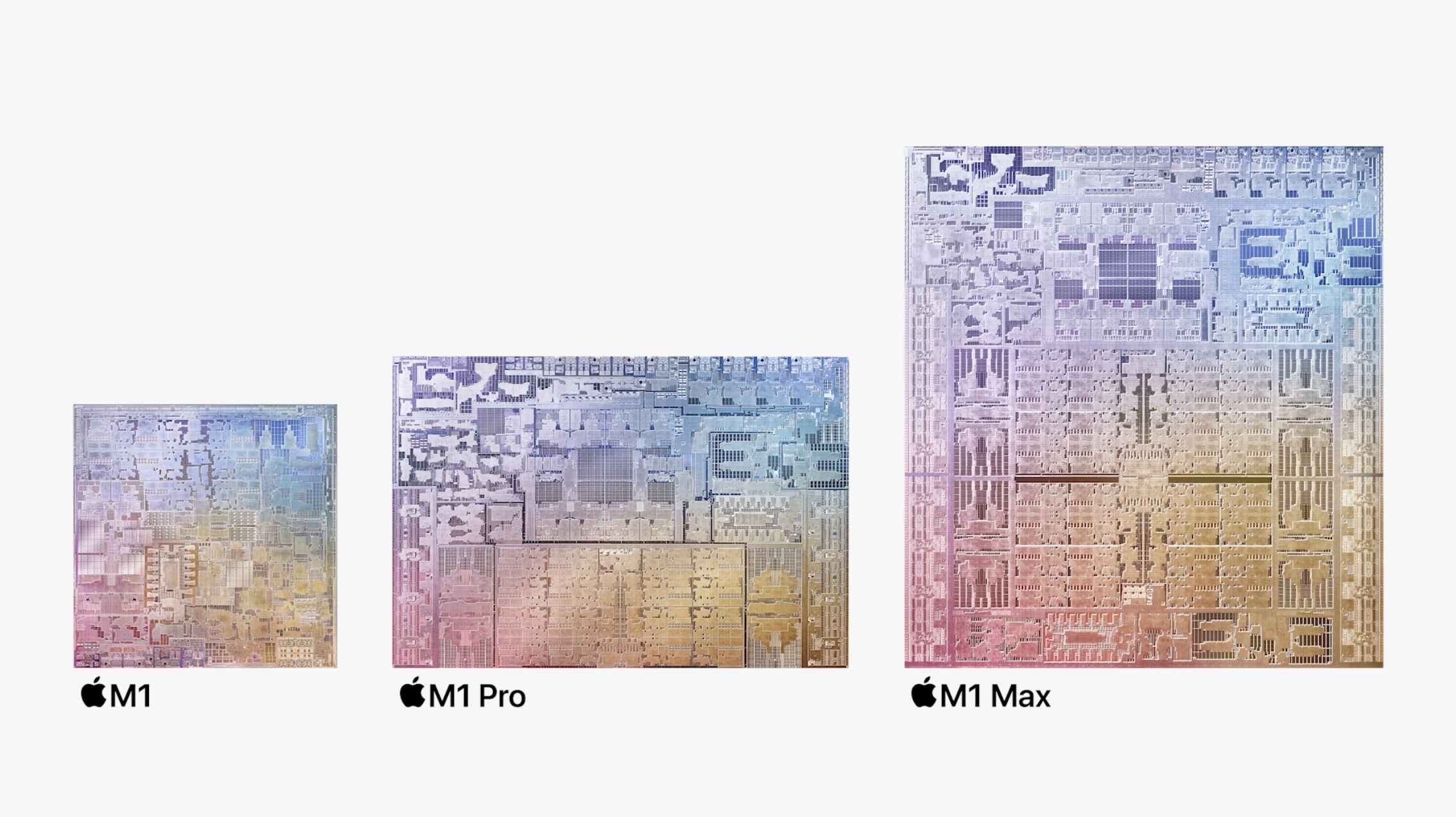
Apple M1 chip | Mac

The first Apple Silicon Macs were released in November 2020 with the M1 chip. The company later introduced more powerful variants of the M1 chip, called M1 Pro, M1 Max, and M1 Ultra. Macs with Apple Silicon have become known for being more powerful while consuming much less power, which has resulted in MacBooks with extended battery life.

In June 2022, Apple introduced the M2 chip, which is around 20% faster than the M1 and also supports more RAM. M2 also has more powerful variants: M2 Pro, M2 Max, and M2 Ultra.

Apple unveiled the M3, M3 Pro, and M3 Max chips in October 2023. The main highlight of this generation is the 3 nanometer technology, the same as the A17 Pro chip. The M3 family also features better GPUs with support for hardware-accelerated ray-tracing.

Current Mac lineup

Apple currently sells a variety of Mac computers, which includes MacBooks, Mac mini, iMac, and Mac Pro. While some of the Macs have already been updated with an Apple Silicon chip, others remain with Intel processors.

MacBook Air

The MacBook Air is Apple’s most affordable laptop and it has become popular for its light, compact design. The 2022 version is powered by the M2 chip and is offered with 8GB, 16GB, or 24GB of RAM. Plus, it has a new, edge-to edge 13.6-inch Retina display.

The laptop features Touch ID and has two Thunderbolt 3 compatible USB-C ports, a MagSafe connector for charging, and a headphone jack. Prices start at $1099 in the US. It’s offered in silver, space gray, starlight, and midnight.
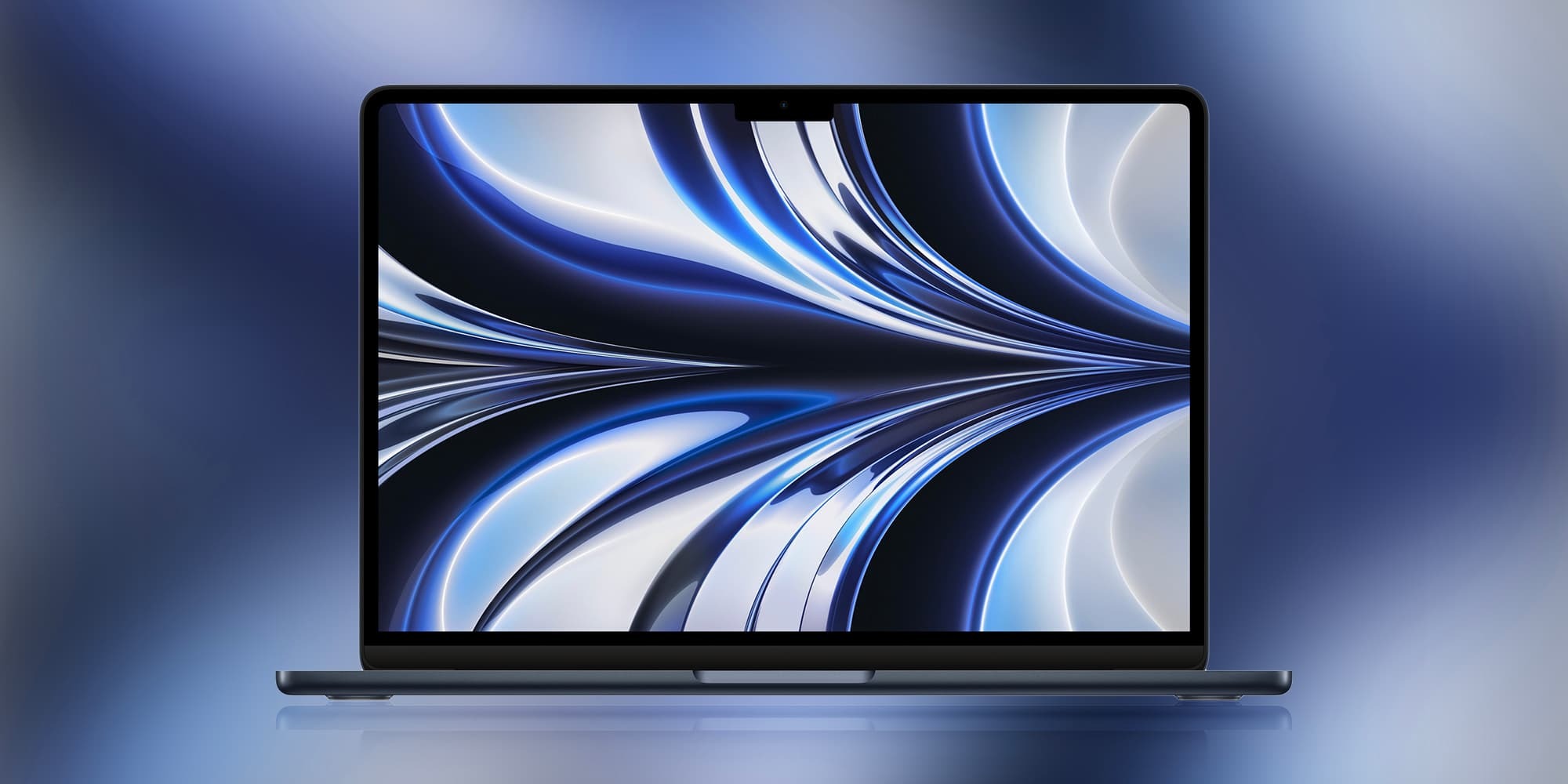
M2 MacBook Air.

A year later, Apple introduced the first 15-inch MacBook Air. It has essentially the same hardware as the smaller version with a similar design, but with a larger display. Prices start at $1299 in the US.Apple is still selling the M1 MacBook Air for prices starting at $999.

MacBook Pro

The 2023 MacBook Pro is available in multiple versions, and customers can choose between 14-inch and 16-inch screen sizes. For the first time, Apple has introduced a less expensive version of the 14-inch MacBook Pro with the base M3 chip. This version has the same design and display as the high-end versions, except that it only has two USB-C ports instead of three.
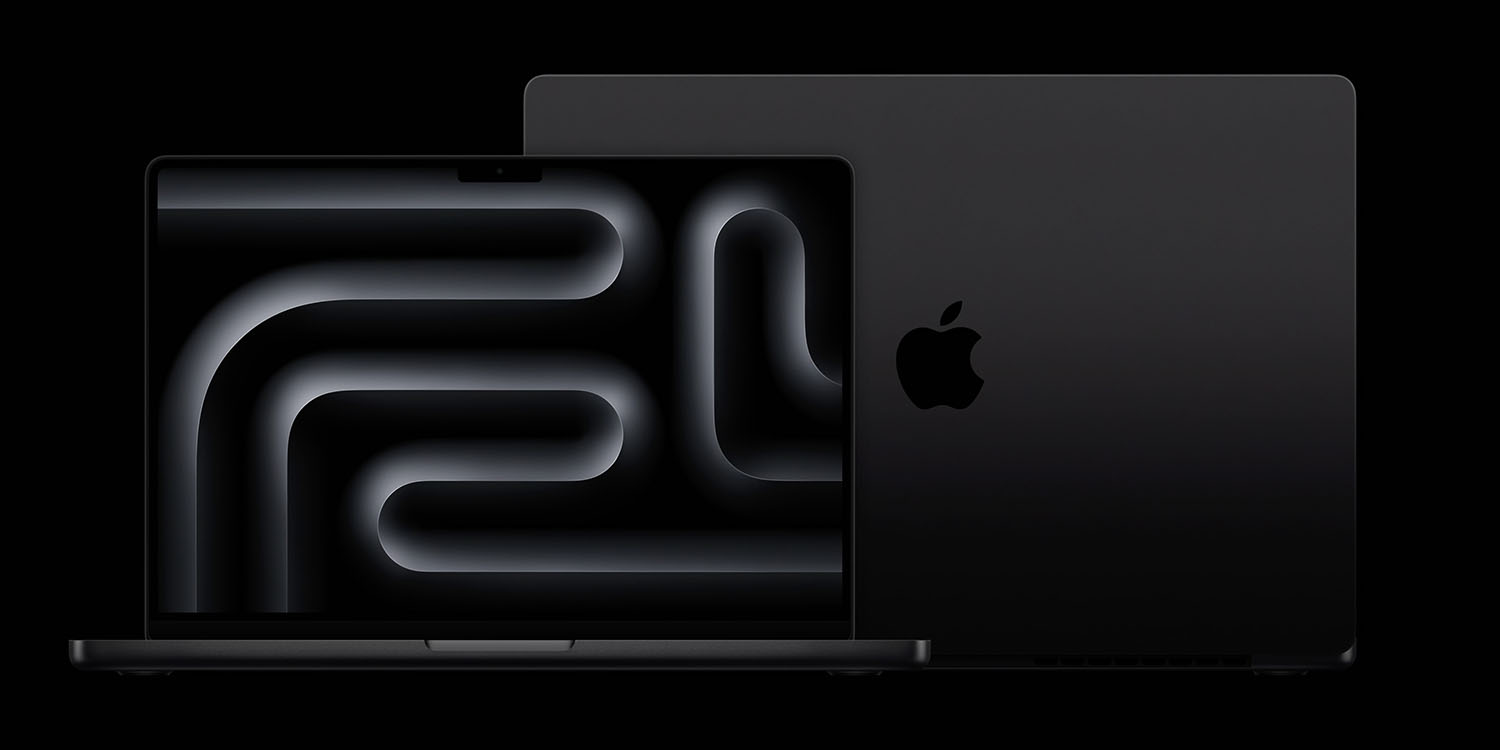
M3 MacBook Pro

The most expensive versions of the MacBook Pro are equipped with the more powerful M3 Pro and M3 Max chips. The laptop can be configured with up to 128GB of RAM and 8TB SSD. These versions also come in a new Space Black color.

Unlike the MacBook Air, the MacBook Pro comes with an HDMI port and an SD card reader. It also features MagSafe and Touch ID on the keyboard. Apple no longer sells MacBooks with the Touch Bar. Prices start at $1,599 in the US.

Mac mini

Mac mini is the cheapest Mac currently available since it’s basically a desktop without a built-in display or other peripherals. The base model with the M2 chip features one Ethernet port, two USB-C/Thunderbolt 4 ports, HDMI 2.0, two USB-A ports, and a headphone jack.

Apple sells a more powerful version of the Mac mini with the M2 Pro chip, which also comes with four USB-C ports instead of two. Mac mini can be configured with up to 32GB of RAM and up to 8TB of storage. Customers can also opt for a 10 Gigabit Ethernet port. The Apple Silicon Mac mini is only available in silver, while the now discontinued Intel model was available in space gray.
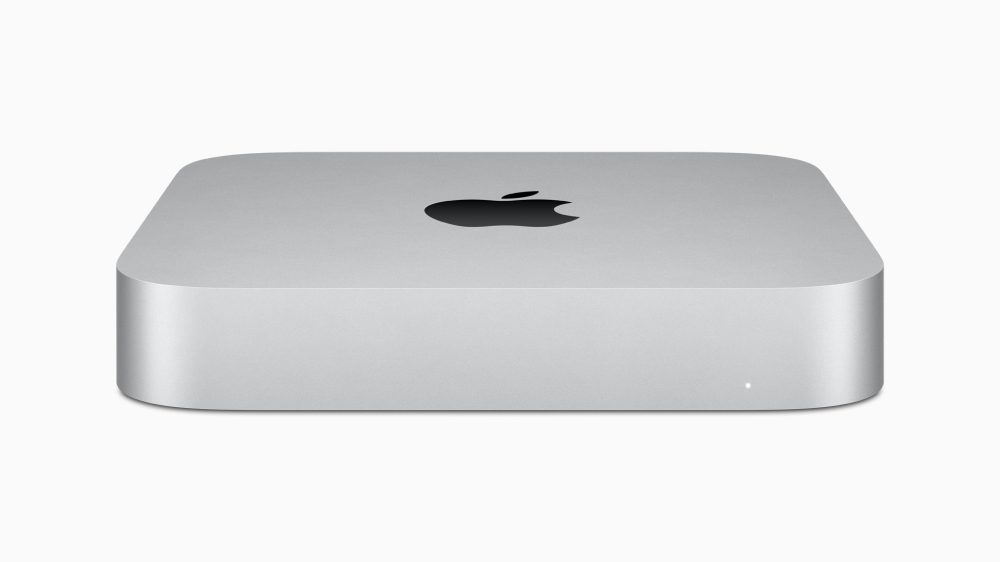
Apple Silicon Mac mini.

Prices for the Mac mini start at $599 in the US. Again, it’s worth noting that it doesn’t come with a keyboard or mouse in the box – you need to buy them separately or use your current ones.

Mac Studio

Mac Studio represents a new category between Mac mini and Mac Pro. It features a design based on the Mac mini, but with a taller body to support the more powerful hardware and also a better cooling system.

The new Mac Studio is targeted at professional users who work with demanding tasks such as video editing, 3D rendering, and machine learning. 

Embraced by creative pros everywhere, Mac Studio now delivers next-generation power in the form of the lightning-fast M2 Max and the boundary-breaking M2 Ultra. It packs outrageous performance and extensive connectivity in an unbelievably compact form, putting everything you need within easy reach and transforming any space into a studio.

By default, Mac Studio already comes with the M2 Max chip, 32GB of RAM, and 512GB SSD storage. A more expensive option lets users customize Mac Studio with M2 Ultra. While M2 Max has a 12-core CPU and a 30-core GPU, M2 Ultra doubles all of those specs. The new chip has a 24-core CPU and a 60-core GPU.

Mac Studio can also be configured with up to 192GB of RAM and 8TB of SSD storage. The machine offers up to six Thunderbolt ports, 10 Gigabit Ethernet, headphone jack, two USB-A ports, and one HDMI port.
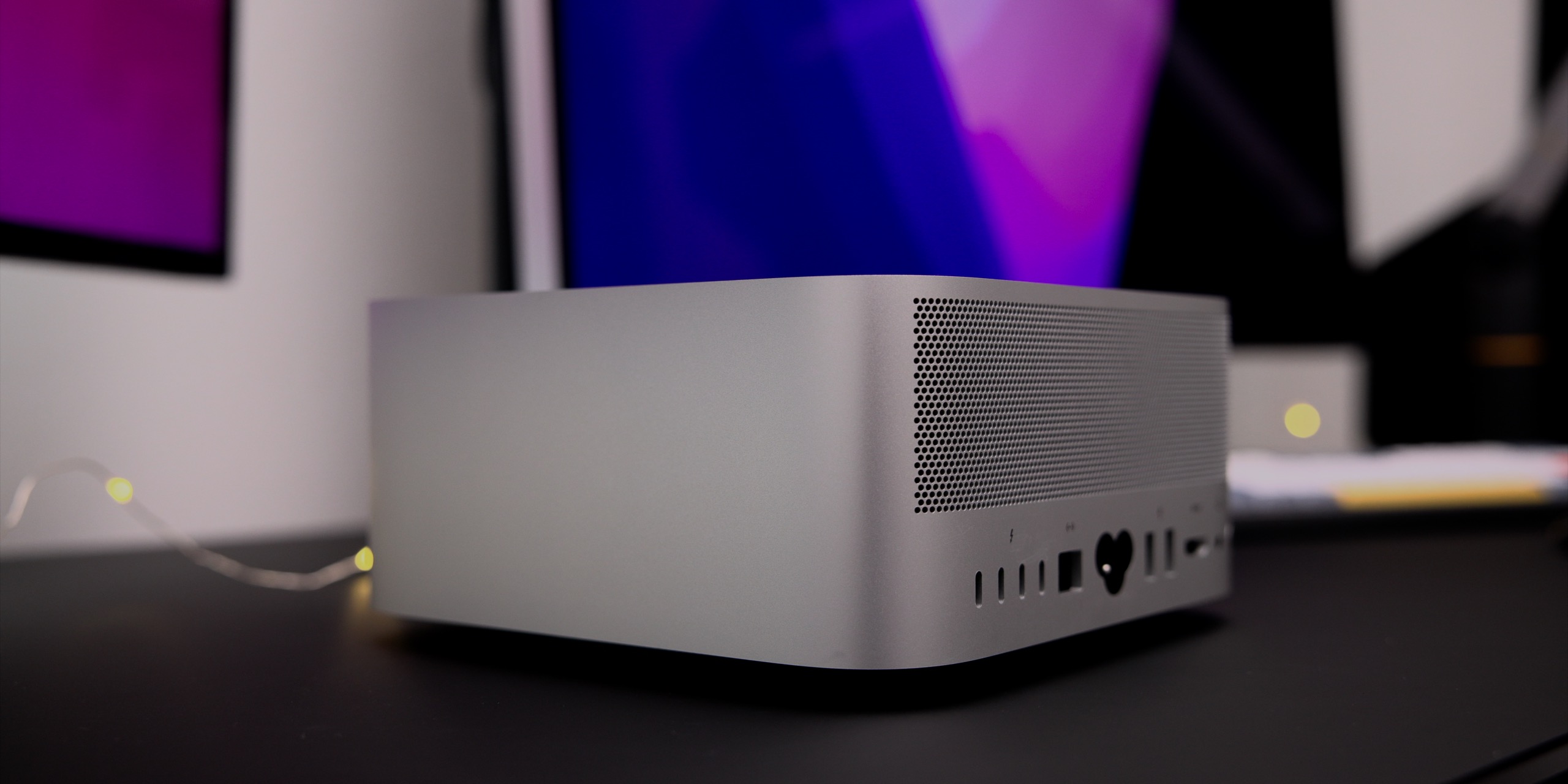
Mac Studio

Apple has been rumored to be working on new versions of this machine with the M3 Max and M3 Ultra chips. However, these versions may not be ready until 2025. Bloomberg’s Mark Gurman said in November last year that the M3 Ultra chip “hasn’t yet gone into broad testing” inside Apple.

In the US, prices for the Mac Studio with M2 Max chip start at $1999. The M2 Ultra chip version starts at $3999. Just like the Mac mini, Mac Studio doesn’t come with a keyboard and mouse in the box. You can find accessories for your Mac Studio here.

iMac

iMac is Apple’s most popular desktop computer with an all-in-one construction. It features a 4.5K display in its 24-inch version and a 5K display in the 27-inch version. At the same time, Apple still sells an entry-level iMac with a regular 1080p display.

The 24-inch iMac is the first to feature the M1 chip, the same as in the Mac mini, MacBook Air, and MacBook Pro. This allowed Apple to introduce a completely redesigned model with a slimmer design, which is also offered in seven new colors. Customers can customize the new 24-inch iMac with up to 16GB of RAM and 2TB of storage.
Site default logo image

The company ships the 24-inch iMac with Magic Mouse and Magic Keyboard, plus a Lightning cable for recharging accessories. Prices in the US start at $1299. Apple has discontinued its old 21.5-inch iMac and the 27-inch iMac 5K.

Mac Pro

Mac Pro is a computer built for professional users who depend on extremely powerful hardware. Available in tower and rack versions, it has a completely modular design. That means users can replace RAM, SSD, GPU, and other internal components.

By default, it features four USB-C/Thunderbolt 3 ports, two USB-A ports, and two 10Gb Ethernet ports. However, the ports can be expanded using the PCI Express slots. Apple also ships the computer with a Magic Mouse and Magic Keyboard, but it does not come with an external monitor included.

All models feature Intel Xeon W processors, which are the most powerful processors offered by Intel. Consumers can configure Mac Pro with up to 28-core processor, 1.5TB RAM, and 8TB of SSD storage. In addition to supporting multiple dedicated GPUs, Apple also offers the Afterburner card — which accelerates the decoding of ProRes videos.

The company recently updated the Mac Pro with new graphics card modules, which include Radeon Pro W6800X and Radeon Pro W6900X.

Site default logo image

Mac Pro prices start at $5999 in the US.

Rumors about upcoming Macs

Top stories about the Mac

Apple releases iOS 9.2 beta 2, second OS X 10.11.2 beta to developers

Apple today released the second iOS 9.2 beta for iPhone, iPad, and iPod touch to registered developers. iOS 9.2 beta 2 follows the initial iOS 9.2 beta release just one week ago. The update is available over-the-air through the Settings app for developers already testing the release. The prior release contained few changes including extension support on Safari View Controller. The release notes only highlight bug fixes and improvements.
Expand
Expanding
Close

Review: OWC’s new Mercury Pro lets your Mac burn archival M-DISCs and play Blu-rays or DVDs

Apple gave up on optical drives several years ago. Citing Blu-ray Disc licensing issues and the growing popularity of Internet streaming, the company was able to leave CD, DVD and Blu-ray drives out of new Macs without suffering any drop in sales. Today, except for a single MacBook Pro model that hasn’t been updated since 2012, Macs are physically too thin to accommodate optical drives, and that’s not going to change any time soon.

But optical disc technology has soldiered on, adding new features to hook serious video and photo fans. “BDXL” Blu-ray Discs can now store up to 128GB of data, and Ultra HD Blu-ray Discs can hold full-length movies for 4K Ultra HDTVs. Separately, Millenniata debuted M-DISC, an archival disc technology that lets anyone burn DVDs or Blu-ray Discs guaranteed to last “centuries.” While M-DISCs must be written using new burners, they can be read by traditional DVD and Blu-ray players, ensuring broad compatibility.

OWC’s new Mercury Pro ($78/$135) external drives are designed to help Mac owners burn M-DISCs. The basic $78 model burns less expensive, lower-capacity M-DISC DVDs, while the superior $135 version can also burn higher-capacity M-DISC Blu-rays, as well as burning and playing regular Blu-ray Discs. Each version of Mercury Pro comes bundled with a heavy-duty Mac-matching external enclosure, cables, and software, while the Blu-ray model also includes two blank BD-R discs to get you started…


Expand
Expanding
Close

These Mac, iPod, & Beats products are losing Apple repair support, moving to ‘obsolete’ status in December

As it does regularly with older products, Apple is about to move a bunch of Macs, iPods, and accessories to obsolete status, meaning the products will no longer be eligible for service or repair support through Apple retail stores or authorized third-party channels. So if you happen to have one of these products and need a hardware repair of some kind, you’ll have until early December to do so at an Apple Store or authorized service provider. 

The Macs getting the axe this time around include:
Expand
Expanding
Close

Mini-review: OWC’s Thunderbolt 2 Dock maxes out on ports, footprint to expand your Mac’s connectivity

Other World Computing doesn’t just dabble in Mac accessories — it’s one of the most popular third-party Apple RAM and SSD vendors, and sells some of the only Blu-Ray drives marketed at Mac users. So it wasn’t a surprise to learn that OWC had developed its own Thunderbolt 2 Dock ($228), entering an accessory category that was simultaneously worthwhile and fairly stagnant. Almost all of the best Thunderbolt 2 docks have the same core features and design elements, mixing silver aluminum, black plastic, an external power supply and a bunch of ports together to make one-point connectivity hubs for Macs. OWC’s design is similar, but it’s functionally unique.

Measuring 9″ wide by 3.5″ deep by 1.1″ tall, OWC’s Thunderbolt 2 Dock is the largest such accessory I’ve seen, looking like an elongated Mac mini with a glossy black top. The right side has two always-powered USB ports, while the back includes a collection of 10 additional audio, video, and data ports, plus wall power. That means OWC’s design is both the biggest and most capable Thunderbolt 2 dock out there, but does that also make it the best? From my perspective, that depends on your Mac’s needs…


Expand
Expanding
Close

App Store ‘temporarily unavailable’ error preventing downloads and updates for some [U: Resolved]

[Update 5:30 PM ET: Apple has acknowledged a 4+ hour issue on its system status dashboard with “slower than usual performance when using iCloud Drive, Photos, and Backup” but not App Store issues although the outage appears to be resolved.]

The App Store on both iOS and the Mac appears to currently be experiencing issues with downloading new and previously purchased apps as well as app updates for some but not all users. Apple’s system status board for Apple Services, Stores, and iCloud doesn’t mention the service interruption in the detailed timeline section at the time of writing, but several readers have pointed out the issue with the App Store on iPhone and iPad and within iTunes on the desktop.

The service interruption comes as Apple prepares to launch a new App Store on tvOS with the new Apple TV launching on Friday, which could explain the issues many are experiencing on the backend. Some users have reported seeing the issues only intermittently but the problems appear to be widespread and consistent for many. We’ll monitor the issue and update if Apple addresses the issue or it appears resolved.

[tweet https://twitter.com/cue/status/659244692479963136 align=’center’]

Satechi’s new compact USB-C hub adds 3 USB ports + SD card slots to single-port MacBooks

Update: Reviewed here.

We’ve already seen several crowdfunding campaigns for USB-C hubs to expand the capability of Apple’s 12-inch Retina MacBook, which features a single USB-C port for connecting accessories, and Satechi is joining the scene with its own USB-C hub available now.

Available in three color-matching aluminum finishes that fit Apple’s gold, silver, and space gray MacBooks, Satechi’s Type-C hub adds three USB 3.0 ports plus two SD card slots, both standard and Micro, to the USB-C-only Retina MacBook. This allows you to use standard USB cables and accessories like flash drives simultaneously with a single adapter. Satechi highlights its hub’s portable size, which appears to minimally extend the edge of the laptop with similar dimensions to an extra column of keys. 
Expand
Expanding
Close

Listen up CIOs! IBM saves $270/ employee who switches from a Windows PC to a MacBook

IBM noted recently that it had seen dramatically lower usage of IT support by those employees who switched from Windows PCs to Macs. Apple has now quantified the cost savings this has generated, noting that the combination of reduced support and increased residual values of Macs meant that IBM saved $270 for every employee who made the switch.

IBM employees are offered the opportunity to swap out their Windows machines for Macs whenever they are due an upgrade. The company has committed to buying 50,000 MacBooks by the end of the year, and Business Insider notes that it has so far deployed 30,000 of them.

IBM is not alone in its enthusiasm for Macs in the enterprise sector, observed Tim Cook during yesterday’s earnings call … 
Expand
Expanding
Close

‘Aerial’ brings beautiful Apple TV video screensavers to your Mac

Apple has created a new screensaver for the fourth-gen Apple TV that consists of a collection of videos taken all over the world. While it’s possible to locate these screensaver videos online and download them from Apple’s website, there hasn’t been a way to set them as your Mac’s screensaver.

Thanks to developer John Coates, that’s not the case anymore. Coates published a Mac screensaver this week that lets you choose to run any of these videos when your Mac has been idle.


Expand
Expanding
Close

The best Thunderbolt 2 dock for your Mac

Apple and Intel’s Thunderbolt 2 standard has given Mac users — particularly professional Mac users — a premium, high-speed connector option for situations where bandwidth and speed are necessary: hooking up big, fast hard drives, high-resolution monitors, or even external graphics cards. The latest iMacs, Mac Pros, MacBook Pros and MacBook Airs all feature at least one Thunderbolt 2 port, a boon for expandability.

This year, Thunderbolt 2 docks have really taken off. Long-time Mac accessory makers have come up with a few different riffs on the same basic idea, leveraging a single cable to connect a bunch of Thunderbolt, USB, and audio/video accessories all at once to a Mac. This enables MacBook users to return home and make one connection to everything from an external monitor and speakers to external hard drives and card readers; it can also allow iMac, Mac Pro, and Mac mini users to connect devices built with connectors not found on their machines.

Here are the best Thunderbolt 2 dock options out there — and my suggestions as to which of them are best-suited to various usage scenarios…


Expand
Expanding
Close

Thomson Reuters: Analysts forecast AAPL will announce Q4 revenue of $51B, up 21.3% year-on-year

The consensus forecast among analysts polled by Thomson Reuters for Apple’s Q4 earnings is $51.11B, up 21.3% year-on-year. This would be slightly above the top end of Apple’s guidance of $49-51B reportsRe/code. Analysts predict unadjusted net profit of $10.72 billion, or $1.88 per AAPL share – up from $1.42 per share last year … 
Expand
Expanding
Close

Microsoft’s claim that Surface Book is twice as fast as 13-inch MacBook Pro misleading, show benchmarks

When Microsoft launched its first full-on laptop, the Surface Book, it made a big point of claiming that the machine was twice as fast as a 13-inch MacBook Pro. Benchmark tests by PCWorld show that this claiming is misleading, though the dedicated graphics card available in certain models does pay off for some uses.

The site’s tests showed that in pure CPU benchmarks, the MacBook Pro was actually slightly faster than the Surface Book. This remained true for Geek Bench 3 tests, which simulate real-life usage … 
Expand
Expanding
Close

Mini Review: Xtron, the compact USB battery pack that can power a 12-inch MacBook & iDevices

There’s no shortage of external battery packs for iPhones, iPads and other USB-powered devices. With occasional exceptions, the majority have little to distinguish them. But thanks to the addition of a USB-C port, the Xtron can power the 12-inch MacBook as well as iPhones and iPads … 
Expand
Expanding
Close

KGI forecasts 23% year-on-year iPhone growth for Apple’s Q4, falling in following two quarters

An investment note by KGI predicts that Apple will next week report year-on-year iPhone sales up 23.6% to 48.5M, but says that that holiday quarter sales will be down on last year, and that the decline will continue into the first quarter of next year.

KGI says that China is the big factor, included as a launch country this year, and hence contributing to calendar Q3/fiscal Q4 sales, while last year’s China sales fell into the holiday quarter. It estimates that 22M of the iPhones sold last quarter were the new iPhone 6s/Plus. Apple sold 47M iPhones in the previous quarter.

Despite the launch of the iPad Pro next month, both iPad and Mac sales will fall across all three quarters, predicts the report … 
Expand
Expanding
Close

Twitter for Mac is officially getting a much-needed overhaul, but not just yet

Twitter doesn’t exactly have the best track record in supporting its loyal third-party developers, which is something that could be forgivable if it built half-decent first party applications. The company’s official apps for the iPhone and iPad have dramatically improved as of late, but the official Twitter for Mac client has felt almost abandoned for years.

Today, at the Twitter Flight developer’s conference, the company has confirmed that a much-needed overhaul to the Mac app is on the way…
Expand
Expanding
Close

Apple Maps gains Amtrak routes + Boston transit, partners with Yellow Pages in Canada for business data

Apple delivered a major upgrade to Maps in iOS 9, OS X El Capitan, and watchOS 2 with the addition of transit directions in select cities, and now its rolling out additional cities and transportation methods to bolster that feature. In addition to expanding transit, Apple has found a new partner in Canada to provide rich local business data for use in Maps.
Expand
Expanding
Close

Valve delays Steam Controller and Steam Link support on Mac, hands out free games to buyers

Valve has announced in an email to customers that its new hardware accessories, the Steam Controller and the Steam Link are not yet fully compatible with OS X. The hardware, which was marketed as cross-platform ready, started arriving in customers’ hands this week.

The company says software issues are at the heart of the delay, and it will be pushing out firmware updates to enable support very soon. In the case of the Steam Controller, users can already start using the gamepad on their Macs by switching to the beta version of the Steam client in the app’s preferences.

In order to make up for this problem, Valve has gifted every single affected pre-order customer with the Valve Complete Pack, which includes every game the company has ever made, or will make in the future. Buyers who still want to get a refund on their hardware are able to do so.

Review: Apple’s Magic Keyboard + Magic Trackpad 2 add precision and power, lose compatibility [Video]

I’ve been waiting for Apple to update the 2007-vintage Apple Wireless Keyboard and 2010 Magic Trackpad since the first time OS X displayed a “low battery” notification — since then, I’ve had years of near-daily pop-up reminders that either my keyboard or my trackpad (both fueled by Apple’s official Battery Charger, no less) were supposedly running low on power. Although I preferred the minimalism of a wire-free desk, I reluctantly switched back to Apple’s old but still excellent Wired Keyboard to cut “low battery” notices in half, hoping that Apple would leverage 5+ years of Bluetooth and battery improvements to produce better wireless input accessories.

Last week, Apple finally released sequels to its three major input devices: the new Magic Keyboard ($99) replaces the $69 Wireless Keyboard, the Magic Mouse 2 ($79) updates the $59 Magic Mouse, and the Magic Trackpad 2 ($129) vaults over the $69 Magic Trackpad. The signature improvement to each is the replacement of AA batteries with integrated Lithium-Ion rechargeable cells, refueled once per month with an included Lightning cable — previously only used for iPad, iPhone, and iPod accessories. Apple also tweaked each of the accessory designs, one more significantly than the others.

Having given up mice five years ago (and radically improved a carpal tunnel-damaged wrist in the process), I opted not to test the Magic Mouse 2, but my colleague Dom Esposito discusses it and the other Magic accessories in the video below. My review is focused on the Magic Keyboard and Magic Trackpad 2, neither of which I’d call “must-have” accessories, though each has a couple of worthwhile assets, and at least one surprising Apple device compatibility limitation. Should you buy Apple’s latest accessories, or go with excellent third-party alternatives such as Logitech’s K811 Keyboard and Rechargeable Trackpad for Mac instead?… (Updated November 2015 and December 2015 with new battery testing results.)


Expand
Expanding
Close

Opinion: Is Apple getting too greedy, and could that again backfire on the company?

In 1995, two years before his return to the company, Steve Jobs gave a characteristically blunt answer when asked why Apple found itself struggling in the early to mid 1990s. The issue, he said, was that Apple had gotten greedy.

What ruined Apple wasn’t growth … They got very greedy. Instead of following the original trajectory of the original vision, which was to make the thing an appliance and get this out there to as many people as possible, they went for profits. They made outlandish profits for about four years… What that cost them was their future. What they should have been doing is making rational profits and going for market share.

Much has changed since then, of course. Apple has a substantial market share in both the personal computer and mobile markets, demonstrating that the two goals – growth and profitability – are not mutually exclusive. This is not an ‘Apple is doomed’ piece, nor anything like it. But I do wonder whether the company is once more putting short-term profits ahead of long-term brand loyalty … ? 
Expand
Expanding
Close

What OS X El Capitan’s license really says, according to a programmer/lawyer

We all know the features of OS X El Capitan pretty well by now: Split View multitasking, new San Francisco system font, overhauled Notes app, and smaller changes throughout. Before anyone upgrades to El Cap, however, we’re all faced with the usual scrolling wall of text that we’re asked to read and agree to before ever using OS X: the licensing agreement.

I’m guessing virtually no one reads beyond the first paragraph if even that, but Robb Schecter, a self-described programmer/lawyer, took for one the team this year and translated El Cap’s license into plain English. These 7 points tell me more than I admittedly knew before:
Expand
Expanding
Close

Apple now performing free repairs for ‘Staingate’ Retina MacBook screens with anti-reflective coating issues

Earlier in the year, a small-but-not-insignificant number of Apple customers complained about screen issues with their new Retina MacBooks and Retina MacBook Pros, specifically cases where the anti-reflective display coating leaves marks and stains on the screen, ranging from small corner blobs to large patches.

Several months later, Apple seems to have acknowledged the issue and launched a Quality Program to replace affected users’  hardware. The Staingate Facebook page now includes many reports of people successfully sending their MacBooks in for repair at Apple Stores. The existence of the program was first reported by MacRumors.


Expand
Expanding
Close

How-To: Make your Mac run silent, cool and fast under OS X El Capitan

As expected, Apple’s release of OS X El Capitan for Macs was less about adding major new features than “refining the experience and improving performance” from Yosemite — in other words, under-the-hood optimizations to make any Mac run more reliably than before. Thanks to El Capitan, my older (mid-2011) 27″ iMac is running better than it has in years: fast, quiet, and cool enough that it might as well be fanless. Rarely does the volume level in my office climb above a whisper, an experience I’ve come to love so much that I’d never want to return to a loud computer.

“WAIT!,” you might be saying. “My Mac’s fan is on all the time. Apple didn’t start selling iMacs with silent solid state drives (SSDs) or hybrid Fusion Drives until late 2012. How could your older Mac be that quiet?”

Below, I’ll walk you through seven steps that will help you bring your older Mac to a hushed, zen-like state. The first four involve mostly free software, and the last three are small hardware upgrades…


Expand
Expanding
Close