AAPL Company

See All Stories

Breaking news from Cupertino. We’ll give you the latest from Apple headquarters and decipher fact from fiction from the rumor mill.
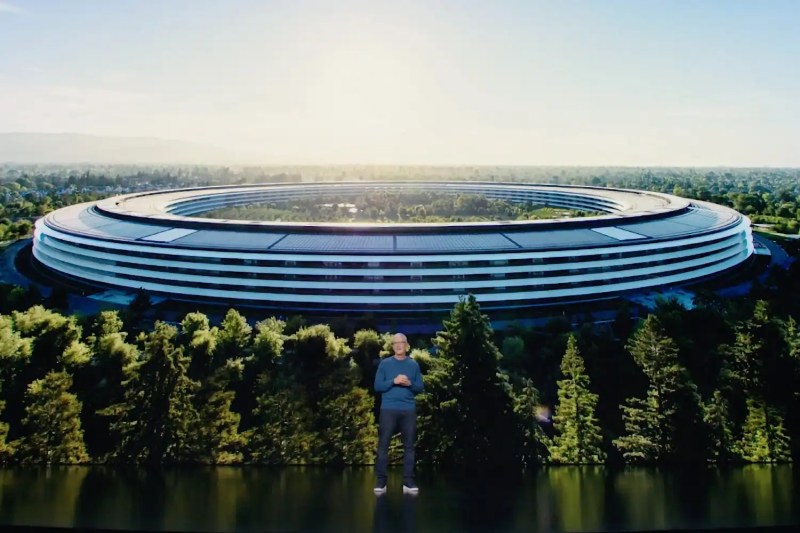
Apple Park Tim Cook AAPL

AAPL is a California-based computer company that became the most successful smartphone company in the world.

AAPL defined by Apple

Here’s how Apple defines itself:

Apple revolutionized personal technology with the introduction of the Macintosh in 1984. Today, Apple leads the world in innovation with iPhone, iPad, Mac, Apple Watch, and Apple TV. Apple’s five software platforms — iOS, iPadOS, macOS, watchOS, and tvOS — provide seamless experiences across all Apple devices and empower people with breakthrough services including the App Store, Apple Music, Apple Pay, and iCloud. Apple’s more than 100,000 employees are dedicated to making the best products on earth, and to leaving the world better than we found it.

Key AAPL history

From Apple I to iMac

Apple was founded in 1976 by Steve Jobs (Steve), Steve Wozniak (Woz), and (briefly) Ronald Wayne as a business partnership: Apple Computer Company. The following year it became Apple Computer, Inc. The company’s first product was the Apple I, a personal computer hand-built by Woz and sold in part-completed kit form. The Apple II and Apple III followed.

The modern Apple as we know it today began in 1983, with the launch of the first personal computer with a graphical user interface, the Lisa. Way too expensive to succeed, it was replaced by the Macintosh in 1984, launched with the single showing of a Ridley Scott commercial during the Super Bowl. The Macintosh transformed the world’s understanding of what a computer was, and would eventually lead to Microsoft adopting the GUI approach.

Steve Jobs and then Apple-CEO John Scully fell out in 1985, when Steve wanted to focus on the Macintosh while Scully wanted to put more attention on the Apple II, which was still selling well. That led to Steve being forced out of the company and going off to form NeXT.

Apple focused on selling Macintosh models at the highest possible margins, but would eventually fall foul of a mix of unsustainable pricing in the face of competition from Windows machines, and an overly complex product lineup. By 1996, the company was in trouble, and in 1997 Steve was brought back, along with the NeXT operating system, which would eventually form the basis of Mac OS X.

Steve simplified the Mac lineup and had industrial designer Jony Ive work on a whole new look for a consumer desktop Mac, the colorful iMac. The iMac, like the original Macintosh, again changed the world’s understanding of what a computer was, and who should want one.

From Apple Computer, Inc. to Apple, Inc.

In 2001, Apple launched the iPod. Although this wasn’t the first mp3 player, it was massively better than anything on the market at the time, and succeeded in turning a geeky piece of technology into a consumer electronics product with mass-market appeal.

The success of the iPod paved the way into other mobile devices. Apple was working on what would eventually become the iPad, when Steve realized that this was the basis of a smartphone. He diverted the team’s work into this, to launch the iPhone in 2007. The iPad launched later, in 2010.

The iPhone was yet another transformational product. While most other smartphones of the time were clunky devices with a keyboard and stylus, the iPhone was a sleek-looking device operated with a finger, and so simple that no user guide was needed. It was with the launch of the iPhone that Apple Computer, Inc. was renamed to Apple, Inc.

From Intel to Apple Silicon

While the iPhone, iPad, Apple Watch, and more are made with Apple-designed processors, the Mac lineup has historically relied on third-party companies for its CPUs. Over the years, Macs progressed from Motorola 680000 series chips through PowerPC to Intel.

In 2020, Apple began a two-year transition to the final stage in that journey, with Macs too finally getting Apple-designed chips. The first such is the M1 chip, used in the latest Mac mini, MacBook Air, and 13-inch MacBook Pro. Other Apple Silicon Macs followed.

AAPL today

Apple is one of the largest companies in the world. It was the first publicly traded company to hit a trillion-dollar valuation in 2018, $2 trillion in 2020, and $3T in 2022.

The company’s product lineup includes five different Mac families (MacBook Air, MacBook Pro, iMac, Mac Pro, and Mac mini); four iPad ranges (iPad mini, iPad, iPad Air, iPad Pro); four iPhone 12 models (12, 12 mini, 12 Pro, 12 Pro Max); three main Apple Watch models (SE, Series 3, Series 6); as well as other products, including Apple TV, AirPods, and HomePod mini.

In addition to hardware sales, Apple derives a growing proportion of its income from Services, including the App Store, iCloud, Apple Music, and Apple Pay.

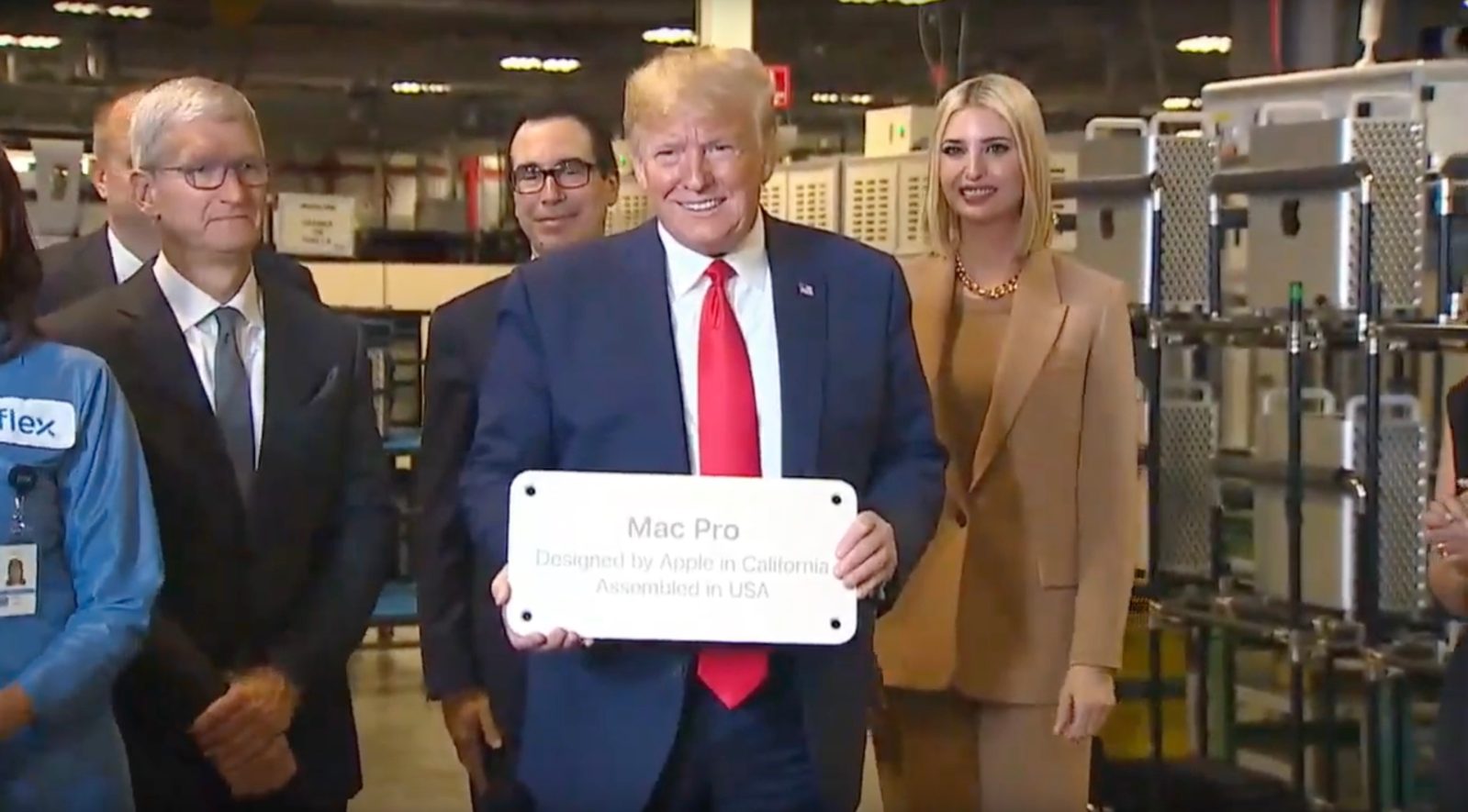
Apple details COVID-19 adjustments in latest Supplier Responsibility Report

Apple Supplier Responsibility Report

Apple has published its latest Supplier Responsibility Report today and along with the usual updates on how its partners are doing when it comes to keeping workplaces safe and respectful for employees. However, this edition includes specifics on how Apple has modified procedures at its suppliers in light of the COVID-19 pandemic.


Expand
Expanding
Close

Apple sources say no rush or pressure for corporate staff to return to offices

No pressure on Apple corporate employees say sources

Apple sources have denied that there is any schedule for corporate staff to return to work at Apple Park and other company offices. Most are working from home during the coronavirus crisis.

A recent Bloomberg report stated that the first phase of returning people to work in Apple offices has already begun, and a second phase is scheduled for July …


Expand
Expanding
Close

Apple considering massive shift of iPhone production from China to India

iPhone production set to massively ramp up in India

Apple has reportedly been in talks geared to shifting up to a fifth of iPhone production from China to India over the next five years. Most of the production would be for export.

This would represent a massive ramping up of the Cupertino company’s efforts to reduce its dependence on China, following a report that the company is to make AirPods outside the country for the first time …


Expand
Expanding
Close

Report: White House talking with Apple chip maker TSMC about building a US factory

TSMC says it may make chips in the US

The Wall Street Journal is reporting that the Trump administration is discussing with chip manufacturers including TSMC (Taiwan Semiconductor) and Intel about the possibility of building fabrication plants in the United States.

TSMC manufacturers the core system-on-a-chip silicon that Apple relies on for its iOS devices (and soon Macs too). The upcoming A14 chip that will debut in the iPhone 12 will be built on a 5 nanometer process. This manufacturing currently happens in China, but the US government is campaigning these companies to start domestic chip production.


Expand
Expanding
Close

Apple wins top spot in brand intimacy study for tech industry, behind Amazon, Disney overall

Apple brand intimacy ranking

MBLM is out with its 2020 brand intimacy study that looks at the emotional connection that consumers have with companies. While Apple has often ranked number one in the yearly survey, last year YouTube edged it out for the top slot overall. This year Apple has ranked number one for the tech industry but came in behind Amazon and Disney in the overall rankings.


Expand
Expanding
Close

Apple and DOJ fight over photos that have ‘national security concerns’

Apple-Corellium lawsuit may raise national security concerns

Apple’s lawsuit against virtualization company Corellium has taken a surprising turn, as the Department of Justice claims that photos Apple wants to introduce into evidence may have ‘national security concerns.’

The DOJ wants Apple to hand over the photos before introducing them into evidence so that it can examine them before deciding whether the government has an interest in the case …


Expand
Expanding
Close

Government emergency measures give AAPL cheap credit for stock buybacks

Government emergency measures give AAPL cheap credit

Emergency measures designed to ensure businesses continue to have access to financing during the coronavirus crisis have effectively provided Apple with cheap credit to fund stock buybacks and dividend payments, says a new report today.

The government backing enabled Apple to borrow money on the bond market at the lowest rates it has paid for seven years …


Expand
Expanding
Close

New CDC criteria points to Apple and Google contact tracing system as a ‘preferred’ choice

Apple Google COVID-19 contact-tracing

The CDC has shared a new document today that covers some of the minimum as well as preferred criteria for digital contact tracing apps. No surprise here but Apple and Google’s exposure notification system lines up with many of the “preferred” criteria elements and looks like it will offer a good choice for local health authorities as they develop apps and start to release them this month.


Expand
Expanding
Close

Opinion: The ‘Apple is doomed’ messages are booming, but are entirely wrong

Apple is doomed messages boom without good reason

The idea that ‘Apple is doomed’ has been a constant refrain from some quarters throughout the decades, and has been given something of a boost during the coronavirus crisis.

First, there was the opening quarter of the year – Apple’s fiscal Q2. There was a dramatic difference between Apple’s original guidance and the actual numbers …


Expand
Expanding
Close

Global smartphone shipments in Q1 fell 10% or 11.7% or 13% or 16.8%

Global smartphone shipments fell as stores closed

Three market intelligence companies have provided their estimates of global smartphone shipments in Q1, putting yesterday’s Apple earnings report into perspective.

Apple yesterday announced that iPhone revenue for calendar Q1 (fiscal Q2) was down from $31.05B in 2019 to $28.96B this year, a relatively modest fall of 6.7%. The comparative estimates from IDC, Counterpoint and Omdia follow an earlier one from TrendForce …


Expand
Expanding
Close