AAPL Company

See All Stories

Breaking news from Cupertino. We’ll give you the latest from Apple headquarters and decipher fact from fiction from the rumor mill.
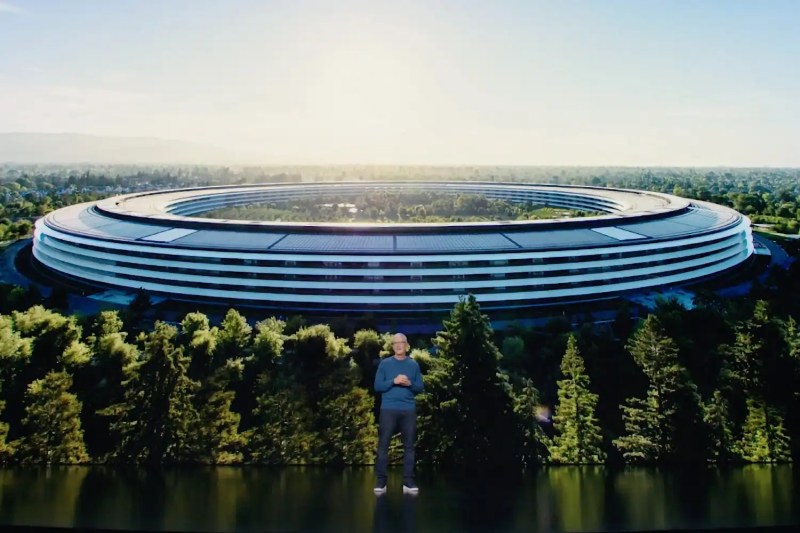
Apple Park Tim Cook AAPL

AAPL is a California-based computer company that became the most successful smartphone company in the world.

AAPL defined by Apple

Here’s how Apple defines itself:

Apple revolutionized personal technology with the introduction of the Macintosh in 1984. Today, Apple leads the world in innovation with iPhone, iPad, Mac, Apple Watch, and Apple TV. Apple’s five software platforms — iOS, iPadOS, macOS, watchOS, and tvOS — provide seamless experiences across all Apple devices and empower people with breakthrough services including the App Store, Apple Music, Apple Pay, and iCloud. Apple’s more than 100,000 employees are dedicated to making the best products on earth, and to leaving the world better than we found it.

Key AAPL history

From Apple I to iMac

Apple was founded in 1976 by Steve Jobs (Steve), Steve Wozniak (Woz), and (briefly) Ronald Wayne as a business partnership: Apple Computer Company. The following year it became Apple Computer, Inc. The company’s first product was the Apple I, a personal computer hand-built by Woz and sold in part-completed kit form. The Apple II and Apple III followed.

The modern Apple as we know it today began in 1983, with the launch of the first personal computer with a graphical user interface, the Lisa. Way too expensive to succeed, it was replaced by the Macintosh in 1984, launched with the single showing of a Ridley Scott commercial during the Super Bowl. The Macintosh transformed the world’s understanding of what a computer was, and would eventually lead to Microsoft adopting the GUI approach.

Steve Jobs and then Apple-CEO John Scully fell out in 1985, when Steve wanted to focus on the Macintosh while Scully wanted to put more attention on the Apple II, which was still selling well. That led to Steve being forced out of the company and going off to form NeXT.

Apple focused on selling Macintosh models at the highest possible margins, but would eventually fall foul of a mix of unsustainable pricing in the face of competition from Windows machines, and an overly complex product lineup. By 1996, the company was in trouble, and in 1997 Steve was brought back, along with the NeXT operating system, which would eventually form the basis of Mac OS X.

Steve simplified the Mac lineup and had industrial designer Jony Ive work on a whole new look for a consumer desktop Mac, the colorful iMac. The iMac, like the original Macintosh, again changed the world’s understanding of what a computer was, and who should want one.

From Apple Computer, Inc. to Apple, Inc.

In 2001, Apple launched the iPod. Although this wasn’t the first mp3 player, it was massively better than anything on the market at the time, and succeeded in turning a geeky piece of technology into a consumer electronics product with mass-market appeal.

The success of the iPod paved the way into other mobile devices. Apple was working on what would eventually become the iPad, when Steve realized that this was the basis of a smartphone. He diverted the team’s work into this, to launch the iPhone in 2007. The iPad launched later, in 2010.

The iPhone was yet another transformational product. While most other smartphones of the time were clunky devices with a keyboard and stylus, the iPhone was a sleek-looking device operated with a finger, and so simple that no user guide was needed. It was with the launch of the iPhone that Apple Computer, Inc. was renamed to Apple, Inc.

From Intel to Apple Silicon

While the iPhone, iPad, Apple Watch, and more are made with Apple-designed processors, the Mac lineup has historically relied on third-party companies for its CPUs. Over the years, Macs progressed from Motorola 680000 series chips through PowerPC to Intel.

In 2020, Apple began a two-year transition to the final stage in that journey, with Macs too finally getting Apple-designed chips. The first such is the M1 chip, used in the latest Mac mini, MacBook Air, and 13-inch MacBook Pro. Other Apple Silicon Macs followed.

AAPL today

Apple is one of the largest companies in the world. It was the first publicly traded company to hit a trillion-dollar valuation in 2018, $2 trillion in 2020, and $3T in 2022.

The company’s product lineup includes five different Mac families (MacBook Air, MacBook Pro, iMac, Mac Pro, and Mac mini); four iPad ranges (iPad mini, iPad, iPad Air, iPad Pro); four iPhone 12 models (12, 12 mini, 12 Pro, 12 Pro Max); three main Apple Watch models (SE, Series 3, Series 6); as well as other products, including Apple TV, AirPods, and HomePod mini.

In addition to hardware sales, Apple derives a growing proportion of its income from Services, including the App Store, iCloud, Apple Music, and Apple Pay.

AAPL drops 6% as Trump’s tariffs bite: Apple accessories at 25%, overall costs could rise 10%

Trump's tariffs mean Apple's chargers, cables & more taxed at 25%

AAPL fell almost 6% in yesterday’s trading in response to concerns about the impact of Trump’s tariffs on products imported from China.

While it had initially appeared that Apple had escaped the current round of tariffs, some accessories are now taxed at 25%, and Apple’s component costs have also risen …


Expand
Expanding
Close

Trump’s Chinese tariff increases begin today, with Apple still threatened

Chinese tariff increases start today; Apple still under threat

Chinese tariff increases threatened by President Trump on Monday have started to take effect.

Trump made two tweeted threats to increase tariffs on Chinese imports, one of which would have hit Apple products. He has now gone ahead with half of what he promised – and says that work is underway on the half that would affect Apple …


Expand
Expanding
Close

Trump’s latest tariff threat could hit Apple hard, force it to move iPhone production

Trump's latest tariff threat could hit Apple hard

President Trump has threatened to increase tariffs on goods imported from China from 10% to 25%. He claimed in a tweet that this increase would happen on Friday.

It’s previously been reported that 25% is the point at which Apple would seek to move US iPhone production out of China, and that the Cupertino company could face ‘devastating’ retaliatory actions from the Chinese government …


Expand
Expanding
Close

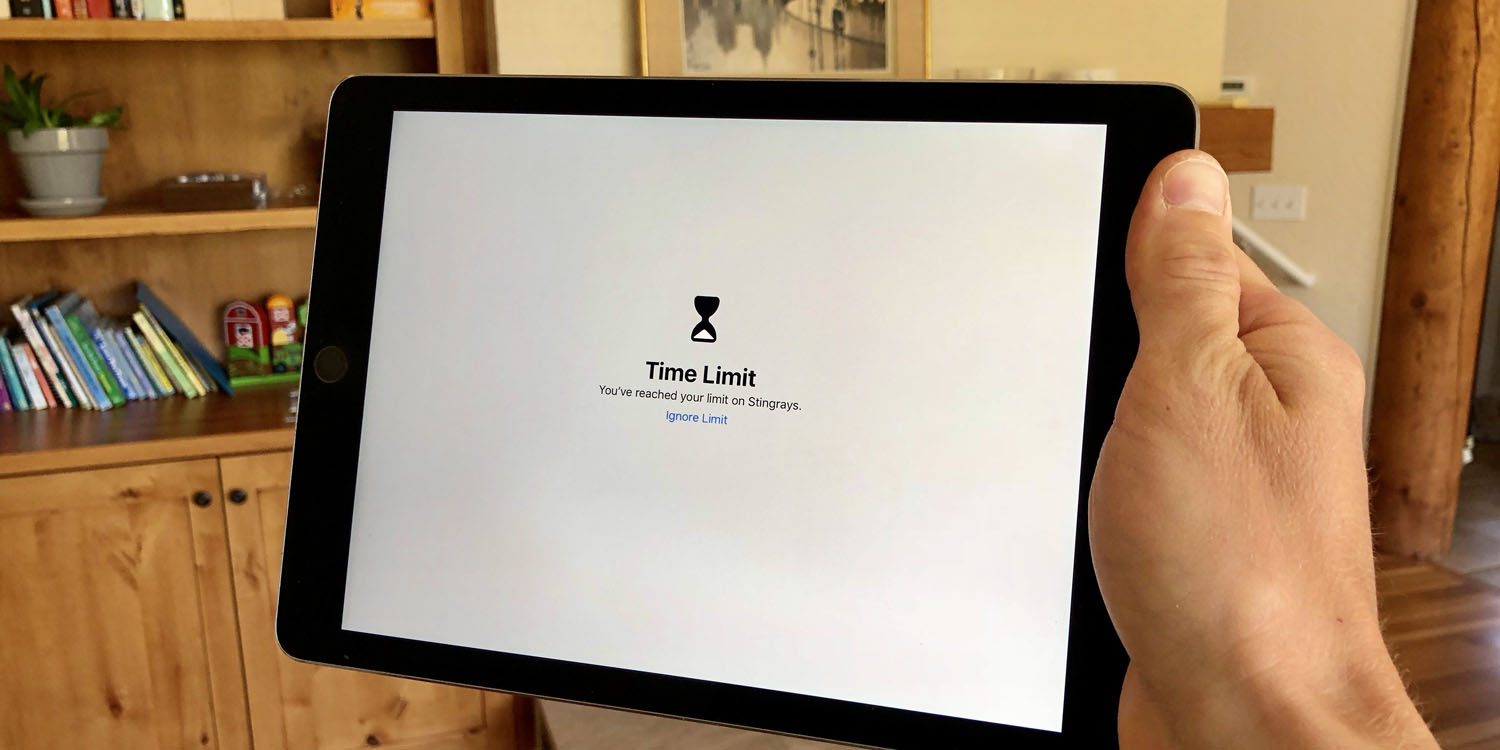
Parental control app developers call Apple’s statement on MDM systems ‘misleading’

Over the weekend, a report from The New York Times detailed Apple’s removal of certain parental control applications from the App Store. Shortly thereafter, Apple responded with a press release explaining that the removals weren’t “a matter of competition” but rather “a matter of security.”

Now, one of the applications affected by the crackdown is refuting Apple’s claims.


Expand
Expanding
Close

iPhone shipments declined 23% for the quarter compared to last year, says Canalys

iPhone XS

Another estimate on iPhone shipments for Q1 2019 (Apple’s Q2) is out today, this time from Canalys. The firm’s numbers show a little better news for Apple compared to the 30% drop in shipments estimated by IDC yesterday. However, the report still says that the iPhone performance marks the “largest single-quarter decline in the history of the iPhone.”


Expand
Expanding
Close

Apple hits $1 trillion market cap once again following better-than-expected earnings results, stock up 6%

Apple's record earnings

Apple stock ($AAPL) has once again crossed the $1 trillion market cap level as its shares rose 6% in early trading following its Q2 earnings call.

AAPL stock is currently priced at $212.68, with a market cap of approximately $1,003,000,000,000. The company stock closed at around $200 yesterday but rocketed upwards in the wake of Apple reporting its financial results for the financial quarter just gone.


Expand
Expanding
Close

Comment: Five reasons AAPL has climbed sharply in pre-market trading, pushing close to $1T again

Why AAPL is up in pre-market trading

Wall Street was happy with Apple’s earnings report yesterday, despite it revealing a steep fall in revenue from iPhone sales. Pre-market trading shows AAPL at $211 at the time of writing, more than 5% up on yesterday’s close. That sees the stock heading back toward a trillion dollar market cap again.

iPhone sales were down 17% year-on-year in revenue terms. But there are five reasons why the market was happy by what it saw and heard yesterday …


Expand
Expanding
Close

Apple releases Q2 2019 earnings, announces revenue of $58 billion

Apple earnings day is upon us, and with it we learn how the company performed since last quarter’s rare guidance revision. Apple forecasted revenue between $55 billion and $59 billion, down from $61.1 billion reported during the same quarter a year ago.

So how much money did Apple actually make during the first three months of the calendar year? $58 billion revenue and $11.56 billion profit. Apple no longer reports iPhone, iPad, and Mac unit sales numbers, a shift to reporting announced last year that started last quarter.

Apple forecasts revenue between $52.5 billion and $53.5 billion during Q3 2019. More details below:


Expand
Expanding
Close

Face ID supplier AMS says upbeat about 2H of 2019, but factors in Android orders

Face ID supplier AMS upbeat about 2H 2019

Face ID supplier AMS, which makes optical sensor tech used in the iPhone X family of phones, says that it expects ‘a strong second half of this year.’

AMS was one of the companies to give an early clue to lower-than-expected iPhone sales in the holiday quarter, when it lowered its estimates and strongly hinted that iPhone orders were the reason …


Expand
Expanding
Close