AAPL Company

See All Stories

Breaking news from Cupertino. We’ll give you the latest from Apple headquarters and decipher fact from fiction from the rumor mill.
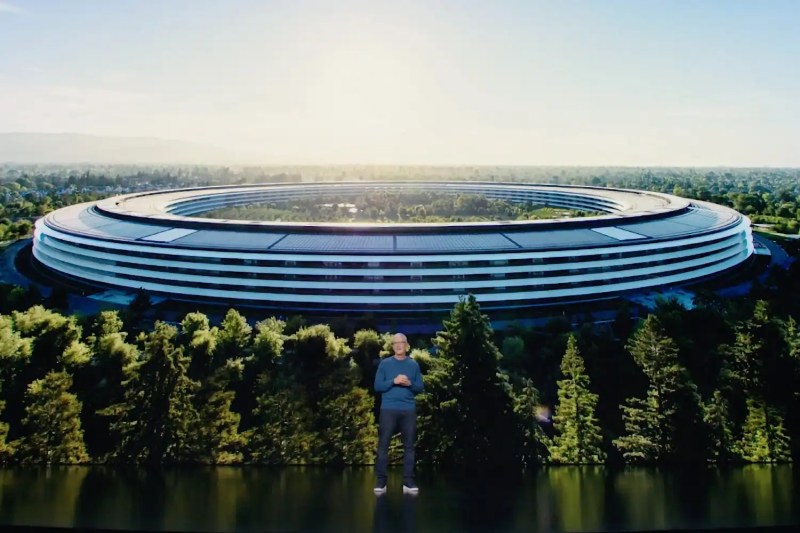
Apple Park Tim Cook AAPL

AAPL is a California-based computer company that became the most successful smartphone company in the world.

AAPL defined by Apple

Here’s how Apple defines itself:

Apple revolutionized personal technology with the introduction of the Macintosh in 1984. Today, Apple leads the world in innovation with iPhone, iPad, Mac, Apple Watch, and Apple TV. Apple’s five software platforms — iOS, iPadOS, macOS, watchOS, and tvOS — provide seamless experiences across all Apple devices and empower people with breakthrough services including the App Store, Apple Music, Apple Pay, and iCloud. Apple’s more than 100,000 employees are dedicated to making the best products on earth, and to leaving the world better than we found it.

Key AAPL history

From Apple I to iMac

Apple was founded in 1976 by Steve Jobs (Steve), Steve Wozniak (Woz), and (briefly) Ronald Wayne as a business partnership: Apple Computer Company. The following year it became Apple Computer, Inc. The company’s first product was the Apple I, a personal computer hand-built by Woz and sold in part-completed kit form. The Apple II and Apple III followed.

The modern Apple as we know it today began in 1983, with the launch of the first personal computer with a graphical user interface, the Lisa. Way too expensive to succeed, it was replaced by the Macintosh in 1984, launched with the single showing of a Ridley Scott commercial during the Super Bowl. The Macintosh transformed the world’s understanding of what a computer was, and would eventually lead to Microsoft adopting the GUI approach.

Steve Jobs and then Apple-CEO John Scully fell out in 1985, when Steve wanted to focus on the Macintosh while Scully wanted to put more attention on the Apple II, which was still selling well. That led to Steve being forced out of the company and going off to form NeXT.

Apple focused on selling Macintosh models at the highest possible margins, but would eventually fall foul of a mix of unsustainable pricing in the face of competition from Windows machines, and an overly complex product lineup. By 1996, the company was in trouble, and in 1997 Steve was brought back, along with the NeXT operating system, which would eventually form the basis of Mac OS X.

Steve simplified the Mac lineup and had industrial designer Jony Ive work on a whole new look for a consumer desktop Mac, the colorful iMac. The iMac, like the original Macintosh, again changed the world’s understanding of what a computer was, and who should want one.

From Apple Computer, Inc. to Apple, Inc.

In 2001, Apple launched the iPod. Although this wasn’t the first mp3 player, it was massively better than anything on the market at the time, and succeeded in turning a geeky piece of technology into a consumer electronics product with mass-market appeal.

The success of the iPod paved the way into other mobile devices. Apple was working on what would eventually become the iPad, when Steve realized that this was the basis of a smartphone. He diverted the team’s work into this, to launch the iPhone in 2007. The iPad launched later, in 2010.

The iPhone was yet another transformational product. While most other smartphones of the time were clunky devices with a keyboard and stylus, the iPhone was a sleek-looking device operated with a finger, and so simple that no user guide was needed. It was with the launch of the iPhone that Apple Computer, Inc. was renamed to Apple, Inc.

From Intel to Apple Silicon

While the iPhone, iPad, Apple Watch, and more are made with Apple-designed processors, the Mac lineup has historically relied on third-party companies for its CPUs. Over the years, Macs progressed from Motorola 680000 series chips through PowerPC to Intel.

In 2020, Apple began a two-year transition to the final stage in that journey, with Macs too finally getting Apple-designed chips. The first such is the M1 chip, used in the latest Mac mini, MacBook Air, and 13-inch MacBook Pro. Other Apple Silicon Macs followed.

AAPL today

Apple is one of the largest companies in the world. It was the first publicly traded company to hit a trillion-dollar valuation in 2018, $2 trillion in 2020, and $3T in 2022.

The company’s product lineup includes five different Mac families (MacBook Air, MacBook Pro, iMac, Mac Pro, and Mac mini); four iPad ranges (iPad mini, iPad, iPad Air, iPad Pro); four iPhone 12 models (12, 12 mini, 12 Pro, 12 Pro Max); three main Apple Watch models (SE, Series 3, Series 6); as well as other products, including Apple TV, AirPods, and HomePod mini.

In addition to hardware sales, Apple derives a growing proportion of its income from Services, including the App Store, iCloud, Apple Music, and Apple Pay.

Report: iPhone beats out Samsung in Q4, global smartphone shipments up 3% in 2017

IHS Markit is out with its 2017 data on smartphone shipments. The firms’ numbers are a bit more positive than what we saw yesterday from Strategy Analytics, pointing to a smaller quarterly decline along with a greater increase in year-over-year shipments. The data also puts iPhone in first place with the highest share of holiday quarter smartphone sales.


Expand
Expanding
Close

Comment: Apple’s Q1 results contained mixed news, but overall they were a big win

iphone x

Apple’s earnings call yesterday was an upbeat one, and with good reason. The company reported that the holiday quarter saw it earn $88.3B in revenue and make $20B in profits – both all-time records. Revenue grew 13% year-on-year, earnings per share were up 16%,

Questions about how well the iPhone X has been selling were also answered, albeit somewhat obliquely. While Apple never breaks down iPhone sales into models, as that’s information it doesn’t want competitors to have, CEO Tim Cook did say that the iPhone X has been the top-selling model every week since its launch …


Expand
Expanding
Close

Live blog: Apple’s fiscal year Q1 2018 earnings call

Just a few minutes ago, Apple officially announced its fiscal first quarter results for 2018, representing the massive holiday shopping season and the first quarter of iPhone X sales. The company reported profits of $20.1 billion on revenue of $88.3 billion, selling 77.3 million iPhones, 5.1 million Macs, and 13.2 million iPads.

Next up is Apple’s quarterly earnings call with Tim Cook and CFO Luca Maestri. It will kickoff at 2PM PT/5PM ET. Follow along below…


Expand
Expanding
Close

Apple announces Q1 2018 revenue of $88.3b: 77.3m iPhones, 13.2m iPads, 5.1m Macs

After forecasting a record quarter with revenue between $84 billion and $87 billion, Apple has just reported its quarterly results for the last three months of 2017. While Apple’s previous quarter included initial iPhone 8 sales, today’s results are the first to include initial iPhone X sales as it launched in early November.

Apple reports $88.3b in revenue and $20.1b profit from 77.3m iPhones, 13.2m iPads, and 5.1m Macs sold. That compares to $78.4b in revenue and $17.89b in profit from 78.3m iPhones, 13m iPads, and 5.3m Macs in the same quarter a year ago. Apple reported $52.6b in revenue and $10.7b profit from 46.7m iPhones, 10.3m iPads, and 5.4m Macs during the previous quarter.

Apple highlights that its active install base reached 1.3 billion devices in January, and the company forecasts revenue between $60 and $62 billion during FY2018 Q2.

Full press release after the break, and stick around for our earnings call live blog at the top of the hour:


Expand
Expanding
Close

Apple delivers record US iPhone Q4 sales and market share – Counterpoint

We’ve already seen that analysts are expecting big things from Apple’s earnings in the final quarter of last year, and the latest numbers from Counterpoint Research lend support for that optimism.

The company estimates that within the USA Apple sold a total of 22.39M iPhones across all models in Q4 2017 – pushing its US market share to a record 44% …


Expand
Expanding
Close

Wall Street is expecting big numbers in today’s AAPL Q1 earnings call

Site default logo image

Apple is due to announce its fiscal Q1 2018 (calendar Q4 2017) earnings today, and despite all the doom-and-gloom stories of late, Wall Street is expecting big numbers.

In its previous earnings call, Apple gave an unusually wide guidance range for its Q1 revenue. The company has generally narrowed it to a range of $2B, but uncertainty over iPhone X sales is the the likely explanation for the $3B span this time around …


Expand
Expanding
Close

More analysts pile in with AAPL doubts as share price falls 6% in two weeks

More analysts are joining the queue to pour cold water on AAPL’s Q2 prospects, following yesterday’s report that Apple is expected to offer modest guidance for the quarter. A Reuters report said then that analysts now expect guidance of around $60B, down from earlier estimates of $67B.

A fresh roundup today notes that AAPL stock has lost around 6% of its value in the last two weeks, and cites more analysts expressing concern about the current quarter …


Expand
Expanding
Close

iPhone X a top-three seller globally, says Kantar, vindicating Apple’s pricing

While there may be many tales of doom-and-gloom surrounding the iPhone X at present, Kantar says that the flagship iPhone made it into the top three rankings in all of the regions it monitors during the last month of the year.

The flagship iPhone X made it into the top three best-selling devices in the month of December across Europe, Urban China, Japan, Australia and the United States …


Expand
Expanding
Close

Analysts downgrade Apple’s expected Q2 guidance by $7B on reports of poor iPhone X sales

Two days before Apple announces its earnings for fiscal Q1 2018 (calendar Q4 2017), analysts are already turning their attention to the company’s guidance for the following quarter.

We’ll find out two things on Thursday. First, whether iPhone X sales were high enough to hit the company’s predicted revenue of between $84B and $87B in the final quarter of last year. Second, what Apple expects to earn in Q2 (calendar Q1) …


Expand
Expanding
Close

Censorship suggested as air quality data intermittently disappearing from Apple’s Weather app in China

A Reddit thread has suggested that Apple’s Weather app is censoring air quality data in China when it reaches unhealthy or hazardous levels.

Since iOS 11.1 or maybe 11.2, I’ve noticed that Apple’s weather and Maps default apps will intermittently censor air quality data for users in China. All other weather information remains available, but the AQI rating disappears. Alarmingly, this seems to occur more often when the AQI reaches levels that are defined as Very Unhealthy, and Hazardous …


Expand
Expanding
Close

iPhone

Wall Street Journal joins in on reports of weak iPhone X demand after holidays

The Wall Street Journal is also reporting that Apple suppliers are cutting back production of parts for iPhone X, with claims that Apple has significantly lowered orders for the January – March quarter. Echoing numbers from KGI and Nikkei, the report says Apple will make about 20 million iPhone X units this quarter down from an initial target of 40 million.


Expand
Expanding
Close

‘Disappointing’ sales see Apple cutting iPhone X production in half this quarter – Nikkei [U]

Update: AAPL shares fell 2% on the report.

A report today claims that Apple is cutting its iPhone X production targets in half in response to ‘disappointing holiday season sales.’

Apple is said to have notified suppliers that it has cut its production target for the first quarter of this year to 20M, after previously telling them to expect to produce 40M units …


Expand
Expanding
Close

‘Best case’ of Apple’s Shazam acquisition would add 7.5M Apple Music subscribers, says early investor

Apple Music

There have been conflicting theories about why Apple spent a rumored $400M on acquiring Shazam. Some suggested it was nothing more than protecting Siri’s Shazam-powered music recognition. Others wondered whether it was to expose Shazam’s customer base to Apple Music. Yet others theorized it was for the data.

Now one early investor in Shazam has suggested that the combination of the latter two elements could significantly boost Apple Music subscriptions …


Expand
Expanding
Close

EU fines Qualcomm $1.2 billion for paying Apple to not use rival manufacturers’ LTE chips

As rumored yesterday, the EU announced a 997 million euro fine to be imposed on Qualcomm, approximately $1.2 billion dollars, which makes cellular baseband chips inside most iPhones. The EU says Qualcomm bribed Apple with billions of dollars in rebate payments to make Apple not use chips from competing manufacturers, reducing competition from other manufacturers in the LTE baseband chip industry.

The fine is a hefty levy against Qualcomm’s bottom line, which recorded $20 billion in total revenue last year, although it is subject to appeal so the final number might be less.


Expand
Expanding
Close

Apple spent a record $7M last year lobbying the Trump administration

Apple spent $7M last year lobbying the Trump administration, the highest amount it has ever spent on its efforts to influence the White House. In all, tech giants spent a record $50M on lobbying in 2017.

The record spend isn’t too surprising when you consider the number of issues on which Apple found itself battling with the Trump presidency …


Expand
Expanding
Close

Of course, there’s now a U.S. class action lawsuit against Apple over Meltdown and Spectre flaws

Apple may have advised that it is seeing ‘little to no performance hit’ from security mitigations for the Meltdown and Spectre CPU flaws in Intel and ARM chips, but that of course isn’t deterring anyone from suing them.

We reported last week that lawyers in Israel were seeking court permission to include Apple in a class action lawsuit there, and now it turns out that a U.S. firm has beaten them to it …


Expand
Expanding
Close