AAPL Company

See All Stories

Breaking news from Cupertino. We’ll give you the latest from Apple headquarters and decipher fact from fiction from the rumor mill.
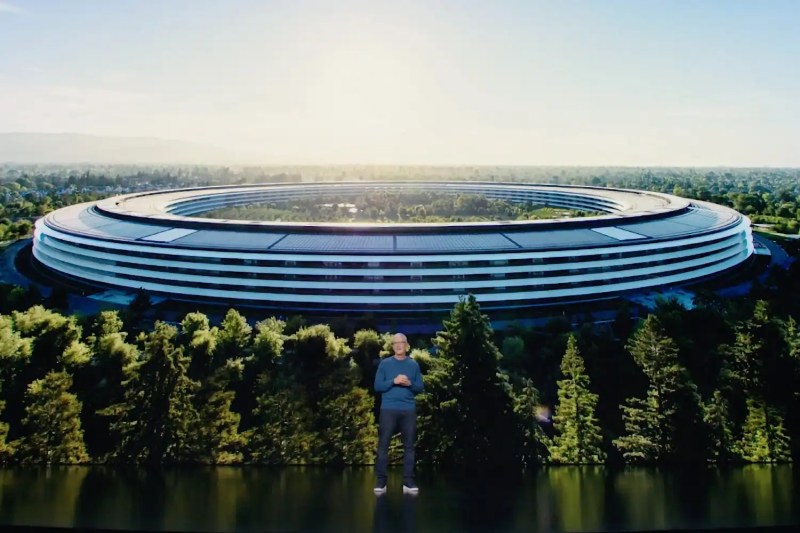
Apple Park Tim Cook AAPL

AAPL is a California-based computer company that became the most successful smartphone company in the world.

AAPL defined by Apple

Here’s how Apple defines itself:

Apple revolutionized personal technology with the introduction of the Macintosh in 1984. Today, Apple leads the world in innovation with iPhone, iPad, Mac, Apple Watch, and Apple TV. Apple’s five software platforms — iOS, iPadOS, macOS, watchOS, and tvOS — provide seamless experiences across all Apple devices and empower people with breakthrough services including the App Store, Apple Music, Apple Pay, and iCloud. Apple’s more than 100,000 employees are dedicated to making the best products on earth, and to leaving the world better than we found it.

Key AAPL history

From Apple I to iMac

Apple was founded in 1976 by Steve Jobs (Steve), Steve Wozniak (Woz), and (briefly) Ronald Wayne as a business partnership: Apple Computer Company. The following year it became Apple Computer, Inc. The company’s first product was the Apple I, a personal computer hand-built by Woz and sold in part-completed kit form. The Apple II and Apple III followed.

The modern Apple as we know it today began in 1983, with the launch of the first personal computer with a graphical user interface, the Lisa. Way too expensive to succeed, it was replaced by the Macintosh in 1984, launched with the single showing of a Ridley Scott commercial during the Super Bowl. The Macintosh transformed the world’s understanding of what a computer was, and would eventually lead to Microsoft adopting the GUI approach.

Steve Jobs and then Apple-CEO John Scully fell out in 1985, when Steve wanted to focus on the Macintosh while Scully wanted to put more attention on the Apple II, which was still selling well. That led to Steve being forced out of the company and going off to form NeXT.

Apple focused on selling Macintosh models at the highest possible margins, but would eventually fall foul of a mix of unsustainable pricing in the face of competition from Windows machines, and an overly complex product lineup. By 1996, the company was in trouble, and in 1997 Steve was brought back, along with the NeXT operating system, which would eventually form the basis of Mac OS X.

Steve simplified the Mac lineup and had industrial designer Jony Ive work on a whole new look for a consumer desktop Mac, the colorful iMac. The iMac, like the original Macintosh, again changed the world’s understanding of what a computer was, and who should want one.

From Apple Computer, Inc. to Apple, Inc.

In 2001, Apple launched the iPod. Although this wasn’t the first mp3 player, it was massively better than anything on the market at the time, and succeeded in turning a geeky piece of technology into a consumer electronics product with mass-market appeal.

The success of the iPod paved the way into other mobile devices. Apple was working on what would eventually become the iPad, when Steve realized that this was the basis of a smartphone. He diverted the team’s work into this, to launch the iPhone in 2007. The iPad launched later, in 2010.

The iPhone was yet another transformational product. While most other smartphones of the time were clunky devices with a keyboard and stylus, the iPhone was a sleek-looking device operated with a finger, and so simple that no user guide was needed. It was with the launch of the iPhone that Apple Computer, Inc. was renamed to Apple, Inc.

From Intel to Apple Silicon

While the iPhone, iPad, Apple Watch, and more are made with Apple-designed processors, the Mac lineup has historically relied on third-party companies for its CPUs. Over the years, Macs progressed from Motorola 680000 series chips through PowerPC to Intel.

In 2020, Apple began a two-year transition to the final stage in that journey, with Macs too finally getting Apple-designed chips. The first such is the M1 chip, used in the latest Mac mini, MacBook Air, and 13-inch MacBook Pro. Other Apple Silicon Macs followed.

AAPL today

Apple is one of the largest companies in the world. It was the first publicly traded company to hit a trillion-dollar valuation in 2018, $2 trillion in 2020, and $3T in 2022.

The company’s product lineup includes five different Mac families (MacBook Air, MacBook Pro, iMac, Mac Pro, and Mac mini); four iPad ranges (iPad mini, iPad, iPad Air, iPad Pro); four iPhone 12 models (12, 12 mini, 12 Pro, 12 Pro Max); three main Apple Watch models (SE, Series 3, Series 6); as well as other products, including Apple TV, AirPods, and HomePod mini.

In addition to hardware sales, Apple derives a growing proportion of its income from Services, including the App Store, iCloud, Apple Music, and Apple Pay.

CIRP data illustrates the ‘pause’ in iPhone sales described by Tim Cook

The latest data on U.S. iPhone sales from Consumer Intelligence Research Partners (CIRP) illustrates the ‘pause’ in iPhone sales described by Apple CEO Tim Cook in the most recent earnings call. The company’s data indicates that the iPhone 6s/Plus accounts for the largest proportion of models owned, at 34%, with the original iPhone 6/Plus just behind at 33%. The Phone 7/Plus, in contrast, sits at 26%.

“Growth in the US installed has slowed considerably in the past year,” added Mike Levin, Partner and Co-Founder of CIRP

While CIRP puts forward a number of possible explanations for this slowing growth, Cook blamed it primarily on one factor …


Expand
Expanding
Close

iPhone shipments in China fell 15% in Q1 2017 as local brands bite, but Samsung hit harder

iPhone shipments fell by 15% year-on-year in China during the first quarter of the year according to Counterpoint Research data. Apple saw its market share in the country fall from 12.3% in Q1 2016 to 10.1% Q1 2017.

The main reason for the fall at a time when smartphone sales in China are still growing was far stronger competition from local brands …


Expand
Expanding
Close

As Apple touts job creation, former software engineer says it’s at the expense of small developers

As Apple boasts of creating two million U.S. jobs, it has been accused of making life as a small developer unsustainable.

The claim was made by Matt Gemmell, a software engineer who used to work for Apple as a contractor and whose source code has been used in hundreds of iOS and macOS apps.

No company has done as much damage to the perceived value of software, and the sustainability of being an independent developer, as Apple …


Expand
Expanding
Close

Early analyst reactions suggest AAPL optimism despite missed expectations & weakish guidance

AAPL stock may have taken a hit in pre-trading following missed Q2 expectations and relatively weak guidance for Q3, but early reactions suggests that analysts remain largely optimistic.

Analysts did note that continued declining revenues in China was cause for concern, but this was offset by strong and growing services revenue, increased capital returns, and expectations of an iPhone 8 super-cycle…


Expand
Expanding
Close

AAPL stock down 1.7% in pre-trading as iPhone sales miss expectations; suppliers hit too

As of the time of writing, AAPL stock was down 1.7% in pre-trading following the company’s announcement that Q2 iPhone sales had missed expectations. Sales were down 1% year-on-year, though a higher average selling price meant that iPhone revenues were up by the same percentage.

The share price of Apple suppliers was also hit when markets opened in Europe …


Expand
Expanding
Close

AirPods demand significantly exceeding supply, Apple Watch + AirPods/Beats sales now size of Fortune 500 company

Site default logo image

During its Q2 fiscal earnings call today, Apple CEO Tim Cook confirmed that demand for the company’s cord-free AirPods headphones is significantly exceeding supply. Cook also said that revenue from sales of Apple Watch along with AirPods and Beats products is now the size of a Fortune 500 company, hinting that those products have driven growth of its “Other Products” category this quarter.


Expand
Expanding
Close

Apple announces Q2 2017 revenue of $52.9 billion: 50.7m iPhones, 8.92m iPads, 4.19m Macs

Apple Car Carpool Karaoke

Apple has announced its latest quarter results including $52.9b in revenue with $11.03b profit from 50.7m iPhones, 8.92m iPads, and 4.19m Macs sold. In terms of new products, the quarter includes launch day sales for the cheaper $329 iPad and Product RED iPhone 7 and iPhone 7 Plus.

FY17 Q2 results compare to the previous quarter’s $78.4 billion in revenue, $17.89 billion in profit, 78.3 million iPhones, 13 million iPads, and 5.3 million Macs. In the same quarter a year ago, Apple reported $50.6 billion in revenue, $10.5 billion in profit, 51.1 millions iPhones sold, 10.2 million iPads sold, and 4 million Macs sold.

Full press release after the break, and stick around for our earnings call live blog at the top of the hour:


Expand
Expanding
Close

Analyst: Apple could use ‘major acquisition’ in media or cloud space to help reach services growth goals

Site default logo image

Ahead of Apple’s fiscal Q2 earnings call later today, a note from Barclays analysts points to chatter among investors that Apple is eyeing a major acquisition of a media company.

The report from analysts Mark Moskowitz and Daniel Gaide claims that the move could allow Apple to achieve its services growth goals that could otherwise slow alongside iPhone sales, and that an acquisition of a company in the cloud services as opposed to media is also a possibility.


Expand
Expanding
Close

Analysts expect AAPL to deliver on Q2 guidance, tough quarter ahead, optimism beyond

One day ahead of Apple’s announcement of its Q2 earnings, the prevailing analyst view appears to be that there will be no surprises. The company is expected to deliver close to the top end of its revenue guidance, with most expecting revenue of around $53B.

Analysts also expect the company to show year-on-year growth in iPhone sales …


Expand
Expanding
Close

Apple’s cash reserves now exceed a quarter of a trillion dollars – WSJ [Confirmed]

Update: Apple confirmed that its cash reserves now sit at $256.8B.

Apple’s cash reserves now exceed more than $250B, reports the WSJ. The company will report the actual number in tomorrow’s earnings report.

Apple Inc. is expected to report Tuesday that its stockpile of cash has topped a quarter of a trillion dollars, an unrivaled corporate hoard that is greater than the market value of both Wal-Mart Stores Inc. and Procter & Gamble Co. and exceeds the combined foreign-currency reserves held by the U.K. and Canada combined.

While there’s as yet no official confirmation of the number, it seems a pretty safe bet …


Expand
Expanding
Close

IDC: Apple’s iPhone sales remained flat in Q1 following RED iPhone 7 and SE launch

IDC is out today with its data for the worldwide smartphone market in Q1 which show that Apple remained largely flat during the quarter following the introduction of its new Product (RED) iPhone 7 and refreshed iPhone SE. Apple remaining steady comes as the rest of the market grew 4.3% during the quarter.

IDC’s data shows Apple shipped around 51.6 million iPhones during the quarter, up very slightly from 51.2 million in the year ago quarter:


Expand
Expanding
Close

Comment: With the iPhone 8, Apple appears to be tearing up its own rulebook

Site default logo image

Growing evidence that the iPhone 8 may go on sale significantly later than the usual September timeframe speaks volumes about the very different approach Apple is taking to this year’s flagship model. It is breaking not just one, but two of the cardinal rules in the How To Be Apple manual.

Rule 1 is that the company avoids ‘bleeding edge’ technology. When new tech rolls around, the company watches and waits while other manufacturers do the trial-and-error bit. Apple launches only when it is satisfied that the tech is stable and that it has figured out the optimal way to employ it.

We saw this with the iPod. The first portable media player was invented in 1979, and the first actual mp3 player went on sale in 1998. Apple waited until 2001 to release the iPod. The first smartphones went on sale in the mid-1990s; the iPhone wasn’t released until more than a decade later. The first phone to have a fingerprint reader was the Motorola Atrix in 2011; Apple didn’t add one to the iPhone until two years later …


Expand
Expanding
Close

Apple promises to stop mining the earth, build all products from recycled materials

Site default logo image

Apple has a history of being one of the most environmentally conscious companies, and it’s about to take those efforts a step further. According to Apple’s 2017 Environment Responsibility Report released today, the company’s latest environmental initiative will see it “stop mining the earth altogether.”

“Climate change is undeniable. Earth’s resources won’t last forever. And technology must be safe for people to make and use. We don’t question these realities — we challenge ourselves to ask what we can do about them in every part of our business.”


Expand
Expanding
Close

China summons Apple to meeting to ‘tighten checks’ on live-streaming apps

Site default logo image

Three months after the Chinese government forced Apple to remove the New York Times apps from the Chinese version of the App Store, it seems the government is now unhappy with some of the live streaming apps available. Reuters reports that a government agency plans to ‘summon Apple’ to a meeting to demand restrictions.

Internet regulators in China’s capital plan to summon Apple to urge the American firm to tighten its checks on software applications available in its Apple Store, the official Xinhua News Agency reported on Wednesday.

It also appears that this won’t be the first time government agencies have raised the topic of live streaming apps with Apple …


Expand
Expanding
Close