China

See All Stories
China

China has been fundamental to Apple’s historical success, but is also arguably the greatest risk to the company’s future.

Why are most Apple products made in China?

Although everyone assumes Apple products are made in China because labor is cheap there, that’s only part of the story – and an increasingly small part, as the company’s assembly partners move toward more and more automated operations.

Steve Jobs originally transferred most Apple manufacturing to China because it was the only country in the world with a huge ready-made supply-chain network, and the ability to scale up production almost overnight. There are three main reasons China – and specifically the Shenzhen area – is such a powerful manufacturing center.

First, the city is strategically placed, serving as the gateway between mainland China and Hong Kong. It is one of the largest shipping centers in the world, with a massive container port.

Second, the Chinese government established Shenzhen as the first Special Economic Zone (SEZ) in the country. SEZs are designed to encourage enterprise through relaxed planning regulations and generous tax incentives – and crucially, to facilitate foreign investment in local companies. It is this, as much as its geographical advantages, which has enabled it to grow at such a pace.

Third, that SEZ was established way back in 1980, meaning that the city has had over 40 years to grow into the manufacturing center of the tech world. Apple relies on a huge network of suppliers and sub-contractors, some of which may make just a single tiny component. The majority of them are based in Shenzhen and its immediate surrounds, so the logistics of bringing everything together in one place for assembly are straightforward.

What are the risk factors with China?

Being over-dependent on China carries a number of risks.

First, there is the generic one: Being overly dependent on any one country is a strategic risk. For example, the COVID-19 pandemic originated there, and had a massive impact on manufacturing capacity. Anything from a natural disaster to political upheaval could disrupt operations within a single country, so it is always wise to have a diverse range of manufacturing centers around the world.

Second, the relationship between the US and China has often been fraught. The trade war started by the previous US administration was a particularly low point, but continued tensions mean that there is always a risk of disruptions to trade between the two countries.

Third, it is increasingly damaging to Apple’s reputation to be so closely associated with a country that has a worsening human rights record – especially when the iPhone maker has no choice but to comply with local laws, however much they may conflict with the company’s own values. Apple has been required to remove VPN and a variety of other apps from the Chinese App Store, allow the iCloud data of Chinese customers to be stored on government-controlled servers, and more. Additionally, there have been growing reports of forced labor in China, including within many different areas of Apple’s supply chain.

What is Apple doing about it?

Apple has been working for a long time on diversifying its manufacturing operations, and has in recent years accelerated the pace at which it is doing so.

As explained above, this is far from an easy undertaking, but Apple now has major manufacturing operations in India, Thailand, Malaysia, and the Philippines, among other countries.

In India in particular, we are seeing the very early stages of a complete supply-chain infrastructure as the government uses a mix of carrot and stick to encourage companies to manufacture more of their components within the country – namely, tariffs on imports of components and tax breaks for local production. COVID-19 lockdowns in China also saw Apple move some iPad production to Vietnam for the first time, but it’s clear that the risks of over-dependence on China have never been greater.


Hundreds of MacBook Pro workers break through COVID barriers, battle guards

Site default logo image

Video footage (below) has been shared, showing hundred of MacBook Pro workers breaking through COVID barriers intended to keep them inside a Chinese plant. Some can be seen fighting with guards dressed in white protective coveralls.

The plant, owned by Quanta Computer, is operating under strict lockdown conditions which go even further than the “closed-loop” production system used at many facilities making Apple products …

Expand Expanding Close

iPhone City goes into immediate lockdown after COVID-19 outbreak; recruitment suspended

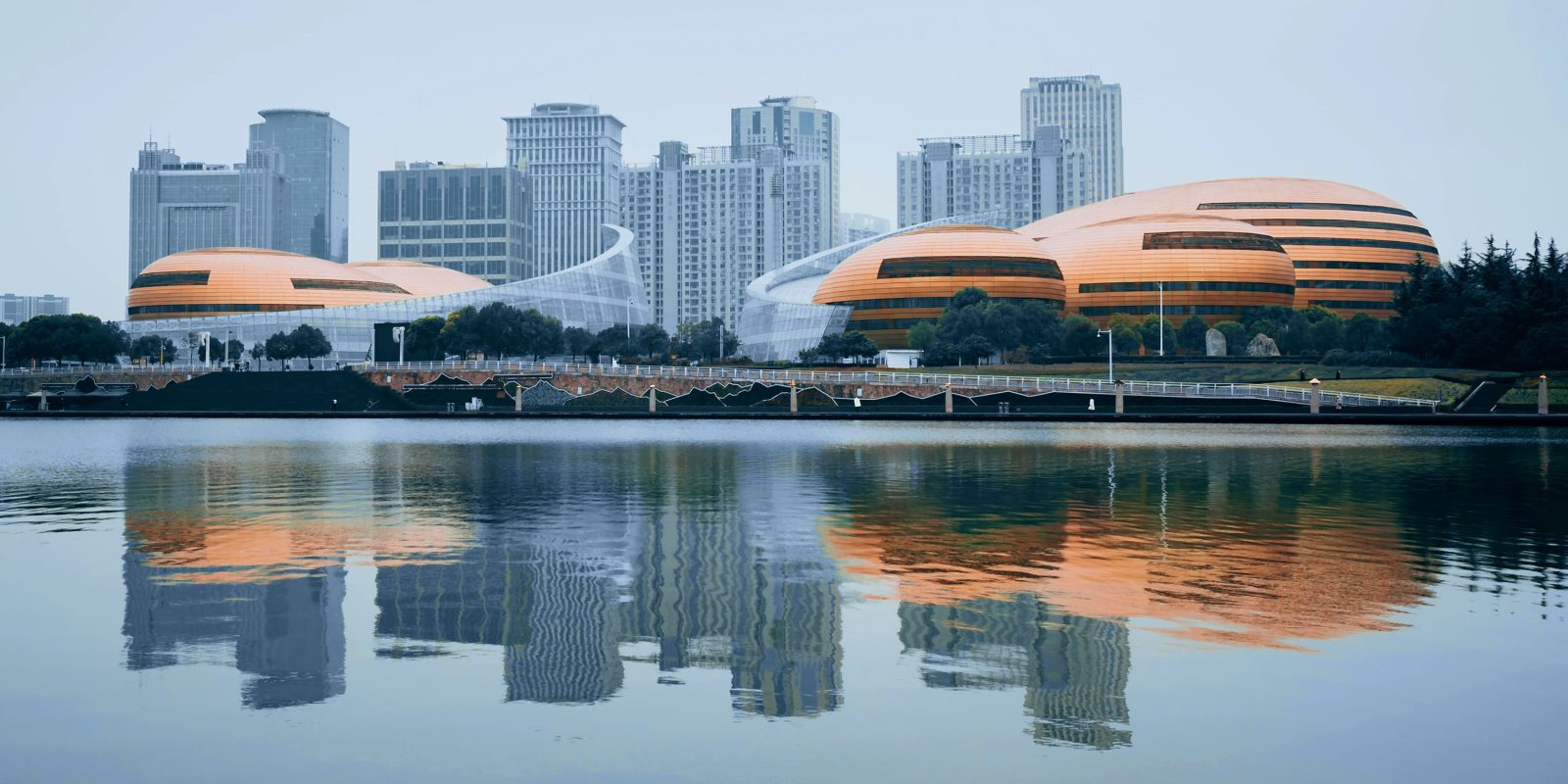
View across the river to modern buildings in Zhenhzhou | iPhone City goes into immediate lockdown after COVID-19 outbreak

The Chinese city of Zhengzhou – known locally as iPhone City as it’s home to the world’s largest iPhone factory – has been placed into immediate lockdown following the discovery of COVID-19 infections.

This will have an immediate effect on iPhone 13 production, and also impacts Apple’s preparations for later iPhone 14 assembly …

Expand Expanding Close

Apple asked Foxconn to recruit iPhone 14 assembly workers early – Taiwanese report

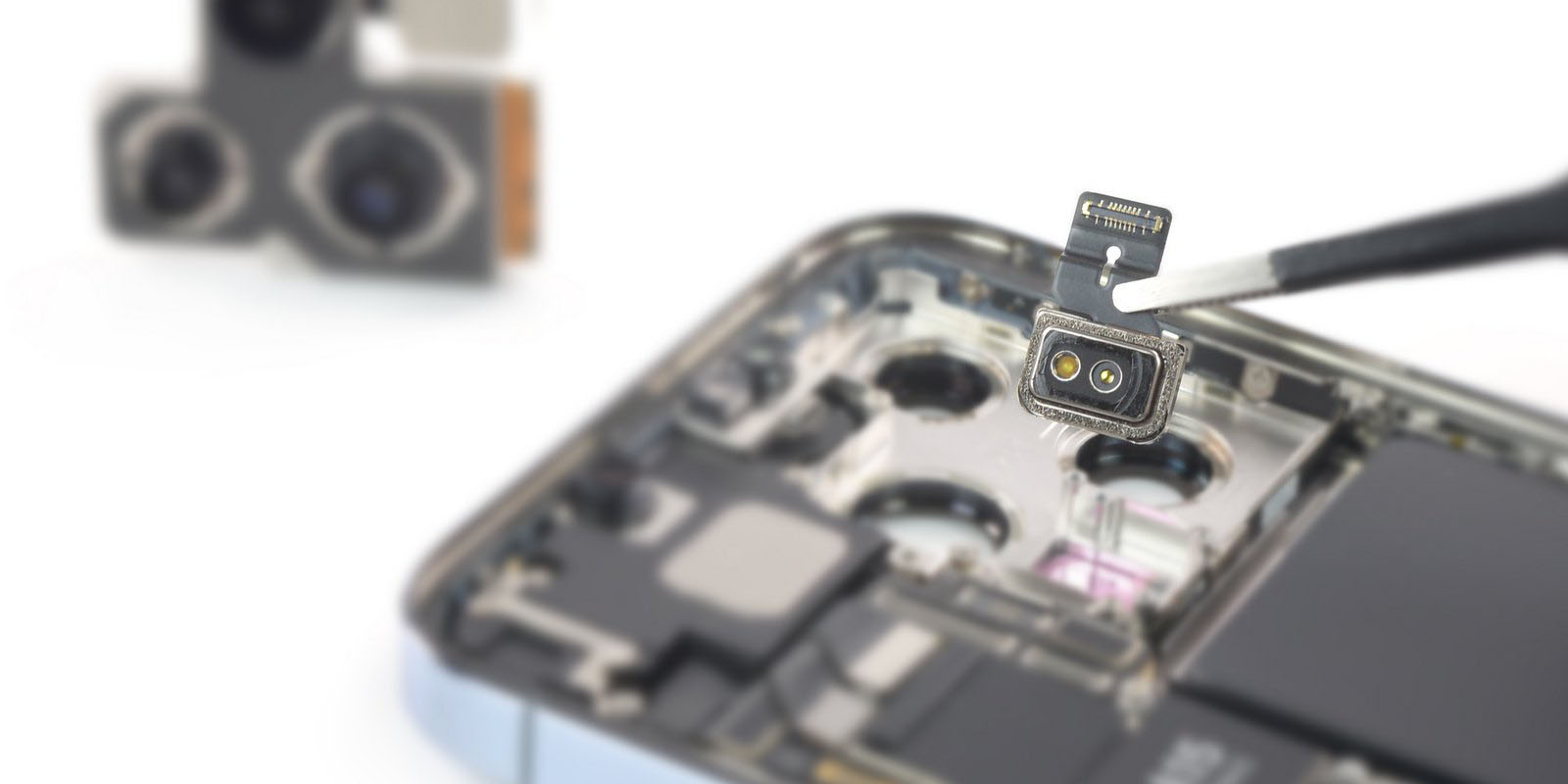
Photo: iPhone 13 Pro teardown with tweezers holding camera module | Apple asked Foxconn to recruit iPhone 14 assembly workers early

Taiwanese media reports that Apple asked Foxconn to begin recruiting iPhone 14 assembly workers earlier than usual in China, alongside boosting recruitment of those working on iPhone 13 production at its Zhenzhou plant.

Foxconn has responded by boosting its recruitment bonus by 30% in what is generally an off-season for iPhone production …

Expand Expanding Close

Apple’s dependence on China: ‘Bloomberg’ echoes concerns; Tim Cook’s strategy comes back to haunt him

Night shot of Hongya Cave, Chongqing, Chia | Bloomberg echoes concerns about Apple's dependence on China

Bloomberg has echoed concerns about Apple’s dependence on China for what the company terms FATP: final assembly, test, and pack.

Mark Gurman observes that it was Tim Cook who was responsible for the decision to use China as an assembly hub, back in the days when he was the company’s chief operations officer …

Expand Expanding Close

Apple supply chain problems continue as iPhone display production takes further hit

Site default logo image

It seems hardly a day passes without fresh news on Apple’s supply chain problems. Recent ones focus on the impact of COVID-19 lockdowns in China, but the global chip shortage continues to bite.

Apple had hoped that Chinese display manufacturer BOE would be able to make as many as 40M iPhone displays this year. A shortage of display driver chips saw the goal reduced to 30M, but even that is now in doubt …

Expand Expanding Close

Half of top 200 Apple suppliers are within lockdown-hit areas; warning of a ‘complete halt’ to tech production

Site default logo image

Analysis has shown that a full half of the top 200 Apple suppliers are located within areas of China at risk from COVID-19 lockdowns. These include not just high-profile companies responsible for final assembly of Apple products – Pegatron, Quanta, and Compal – but also critical component suppliers.

One top Chinese tech exec has warned that tech production in the area “will come to a complete halt” unless things change within the next 10 days …

Expand Expanding Close

COVID-19 lockdowns: Worst-case scenario is the loss of 6-10 million iPhone units

Site default logo image

Apple’s supply chain is being badly hit by COVID-19 lockdowns in China, with the situation getting worse, say analysts. It follows Apple production being halted at three key suppliers, affecting iPhoneiPad, and Mac assembly. This has already seen shipping dates slip for build-to-order MacBook Pro models.

The worst-case scenario could see iPhone production falling behind by as many as 10 million units …

Expand Expanding Close

Apple supply chain doubled its use of clean energy last year, en route to 2030 commitment

Backlit sunset photo of large solar farm | Apple supply chain doubled its use of clean energy last year

The Apple supply chain last year doubled its use of clean energy, as the Cupertino company works on its goal of its entire supply chain being 100% carbon neutral by 2030.

The iPhone maker said that a total of 213 of its major manufacturing partners have now committed to powering all Apple production from renewable energy …

Expand Expanding Close

Apple could use a Chinese chipmaker for the first time for iPhone storage chips

Site default logo image

A disruption to Apple’s supply chain for iPhone storage chips could see the Cupertino company buying flash memory from a Chinese supplier for the very first time.

It’s not an ideal situation at the best of times, given that Apple is aiming to reduce, rather than increase, its dependance on China. But it may prove particularly controversial in the current climate …

Expand Expanding Close

Shenzhen iPhone production partially restarts, using Wuhan-style ‘closed loop’ system

Shenzhen iPhone production partially restarts

Shenzhen iPhone production was forced to shutdown at two Foxconn facilities due to a new COVID-19 outbreak – but has now partially restarted.

Although the Chinese government ordered the city into complete lockdown for at least a week, it has now granted an exemption to Foxconn to use the same ‘closed loop’ system used by other companies in Wuhan at the start of the pandemic …

Expand Expanding Close

Ukraine crisis puts Apple’s unsustainable dependence on China in the spotlight [Comment]

Site default logo image

The Ukraine crisis has cast a new spotlight on an issue I’ve been raising for several years now: Apple’s unsustainable dependence on China.

With Russia, Apple can afford to take a stand against the country, and it is doing so. It has suspended sales in the country; stopped all exports to Russia; blocked access to state media apps from outside the country; disabled live info in Apple Maps; is donating to humanitarian work; and is effectively tripling employee donations

Expand Expanding Close

Global iPhone production hit record growth in holiday quarter, with China key

Global iPhone production hit record growth in holiday quarter

Global iPhone production reportedly set a new all-time record in the holiday quarter, Apple managing to balance huge demand for the iPhone 13 line-up with a well-managed supply chain operation to minimize the impact of component shortages.

Two additional factors were at play for Apple, according to market intelligence company TrendForce …

Expand Expanding Close

$1M iPhone repair scam leads to prison sentence, and almost $2M in penalties

$1M iPhone repair scam

A $1M iPhone repair scam running for more than three years has led to a Chinese man receiving a prison sentence, and being asked to pay almost $2M in restitution and penalties.

Using a method that has been used by other fraudsters, Haiteng Wu tricked Apple into accepting “returns” of counterfeit iPhones and replacing them with real ones …

Expand Expanding Close

Mandatory Chinese Olympics app collects personal data, has two security holes

Site default logo image

Use of the Chinese Olympics app, MY2022, is mandatory for everyone attending this year’s Olympic Games in Beijing, whether as an athlete or simply watching from the stadium.

The app collects sensitive personal data – like passport details, medical data, and travel history – and analysis by security researchers reveals that the code has two security holes that could expose this information …

Expand Expanding Close

Apple’s dependence on China is dangerous, say public advocacy groups

Apple's dependance on China is dangerous, say public advocacy groups

Apple’s dependence on China has been a recurring concern, with trade wars, COVID-19-related supply constraints, and human rights abuses all being highlighted at different times. Now a group of public advocacy groups has written to congressional house leaders to flag their own worries.

The letter was written in response to claims that US antitrust legislation would disadvantage American companies, and even pose national security risks …

Expand Expanding Close