Mac

See All Stories

Apple’s Mac lineup consists of MacBook, MacBook Air, MacBook Pro, iMac, Mac Pro, and Mac Mini. The Mac runs macOS for its operating system.
Mac lineup

History

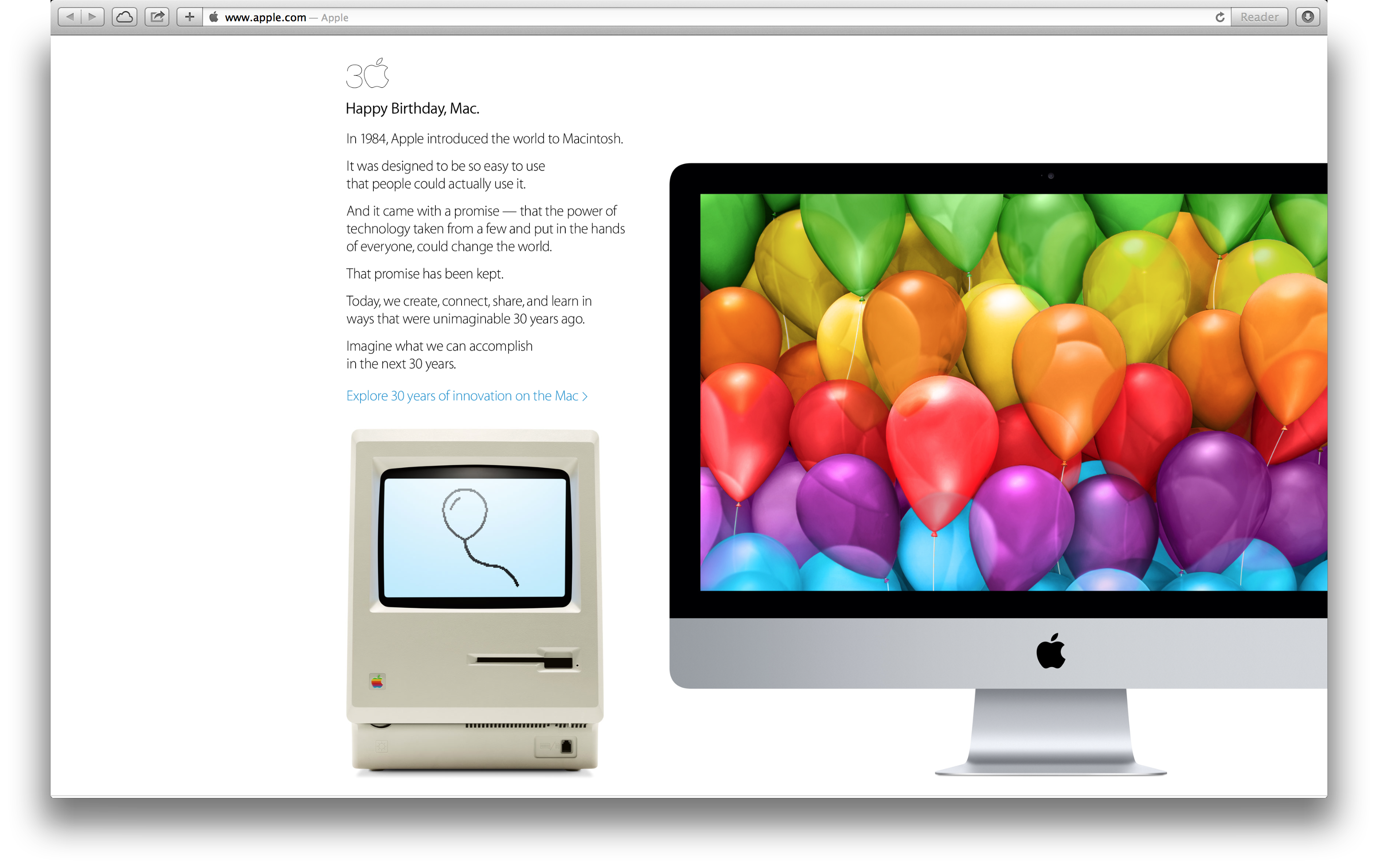
The Mac is Apple’s lineup of computers, and it can be considered the company’s oldest product. The name “Mac” comes from the original Macintosh, which was introduced in 1984 and is also considered the first personal computer for the masses to have a graphical user interface. The first Macintosh hit the stores on January 24, 1984, costing $2,945.

Among all these years, Apple has introduced many different Mac models, ranging from desktops to laptops to professional tower machines. The current lineup consists of the MacBook Air, MacBook Pro, Mac mini, iMac, and Mac Pro. However, there have been other Mac models were discontinued, such as the eMac, MacBook, and iMac Pro.

The history of modern Macs began in 1998, a year after Steve Jobs returned to Apple. Apple had dozens of Macintosh computers at that time, but Steve decided to rethink the entire lineup. In 1998, Apple announced the iMac G3, which ditched the floppy disk and serial ports in favor of USB connectors.
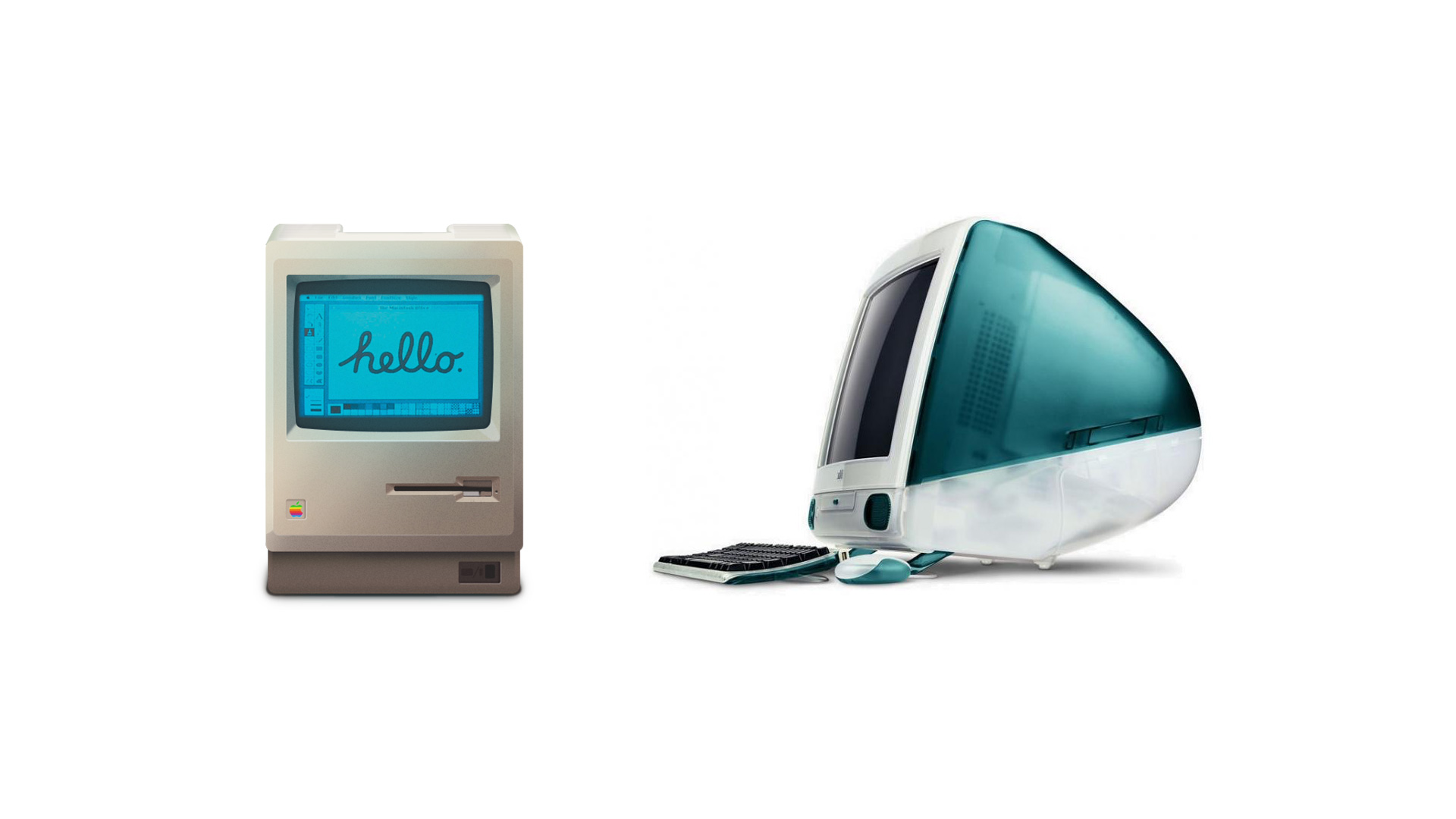
Macintosh and iMac G3.

Unlike the Macintosh, the first iMac was considered a huge success — not only for its technology, but also for its unique design with colorful translucent plastic. Apple quickly expanded the Mac lineup with other models, which included the iBook and PowerBook (which became the MacBook and MacBook Pro) and the PowerMac, which is now the Mac Pro.

macOS

What makes a Mac the Mac is the macOS operating system, which has also had a long history since the introduction of the first Macintosh. Initially called Mac OS, the operating system was rebuilt when Steve Jobs returned to Apple.

The first version of Mac OS X was released on March 24, 2001 with a new interface that is still present in some ways in current versions of macOS. Apple’s desktop operating system comes with many free applications such as Pages, Keynote, Numbers, iMovie, and GarageBand.

With macOS, users also have access to deep integrations with other Apple devices. For instance, you can answer calls and send SMS from your iPhone using your Mac. Handoff lets you switch from one device to the other and pick up where you left off. Apple Watch users can unlock their computer without entering a password, and you can even copy and paste between devices.
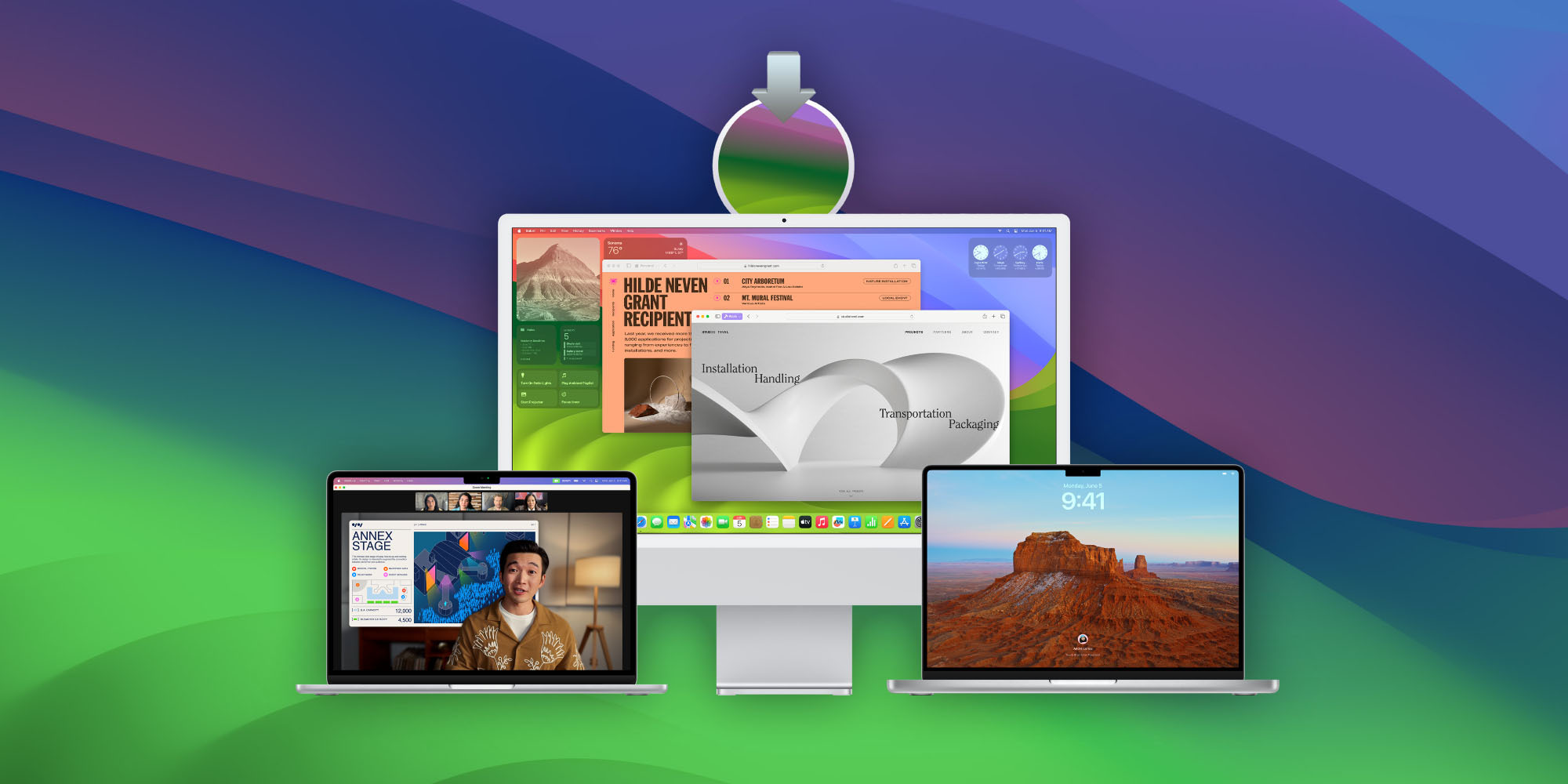
macOS Sonoma

Apple’s desktop operating system is also integrated with services offered by the company, such as iCloud, Apple Music, and Apple TV+.

The current version of macOS is Sonoma (version 14), which features new slow-motion screen savers, widgets on desktop, camera effects on FaceTime and other apps, web apps, passkey sharing, improved PDF support, and Game Mode. The update also comes with a new API that lets developers easily port Windows games to macOS.

Architecture Transitions

The Mac has had three major architecture transitions in its history. Apple’s first computers ran on Motorola processors, but the company decided to migrate to the new PowerPC platform in 1994. While this brought benefits at the time, the PowerPC processors were not delivering what Apple expected.

It was in 2005 that Apple confirmed the transition from PowerPC to Intel. Intel processors had become faster and more efficient than PowerPC, which enabled the development of new Mac computers that were more powerful and also more compact. Developers have been given access to a Developer Transition Kit running Mac OS X Tiger with Intel Pentium 4 to update their apps before the transition begins.
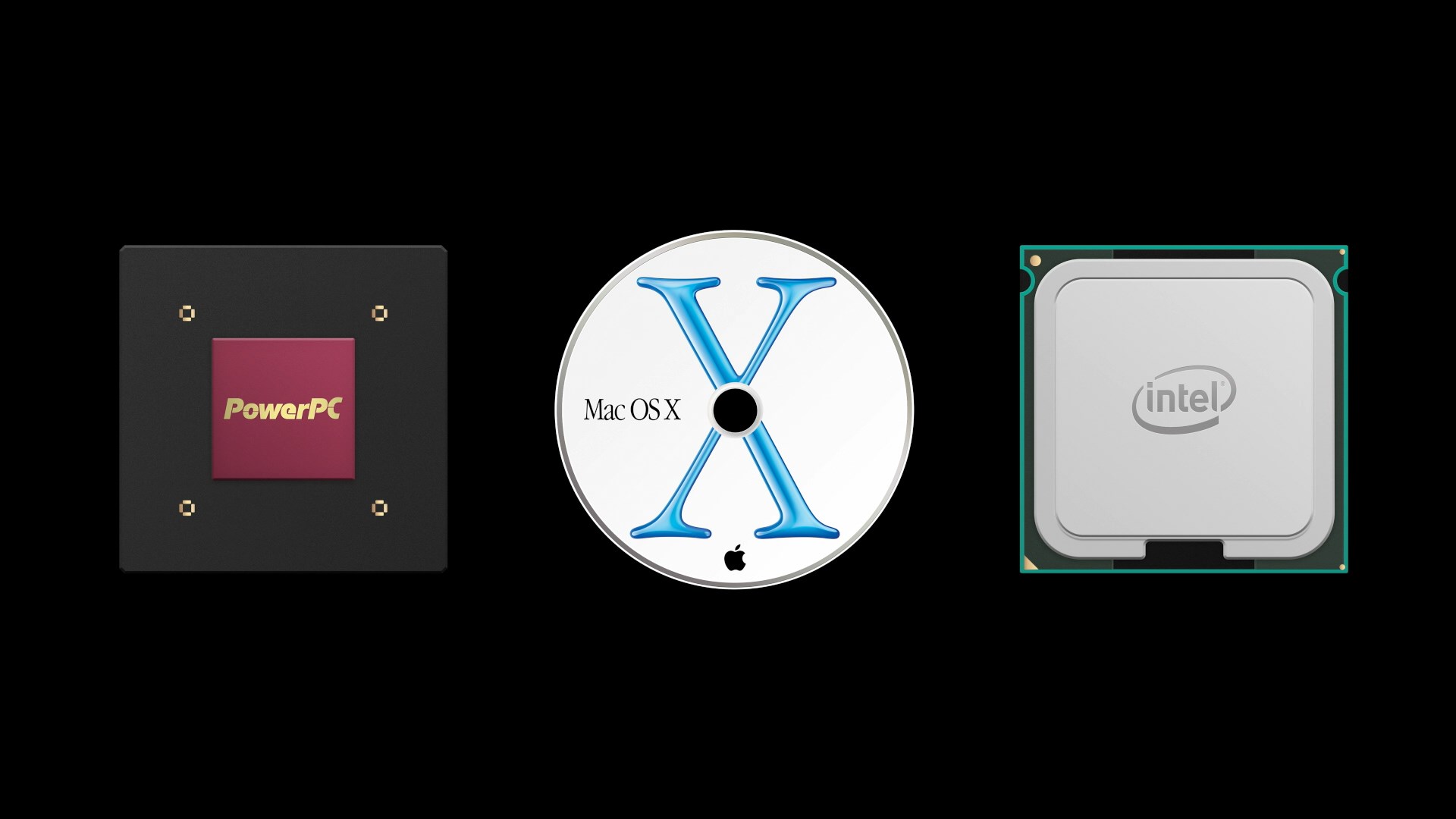
Power PC, Mac OS X, and Intel processor.

Apple said that the transition would begin in June 2006 and be finished by the end of 2007. However, the transition to Intel was fully completed in August 2006 when the company replaced the PowerMac with the new Intel Mac Pro.

As the years went by, Apple once again felt the need to have more powerful and efficient processors for its computers. This time, the company was already working on its own chips for the iPhone and iPad. In June 2020, Apple confirmed that it was changing the architecture of the Mac, now from Intel to ARM chips, which are called Apple Silicon.

Apple offered a Mac mini DTK running on the same A12Z Bionic chip as the 2020 iPad Pro. This way developers could once again update their apps ahead of the transition. In addition to being more powerful and energy efficient, the ARM architecture of Apple Silicon chips has enabled Macs to run iOS apps for the first time.
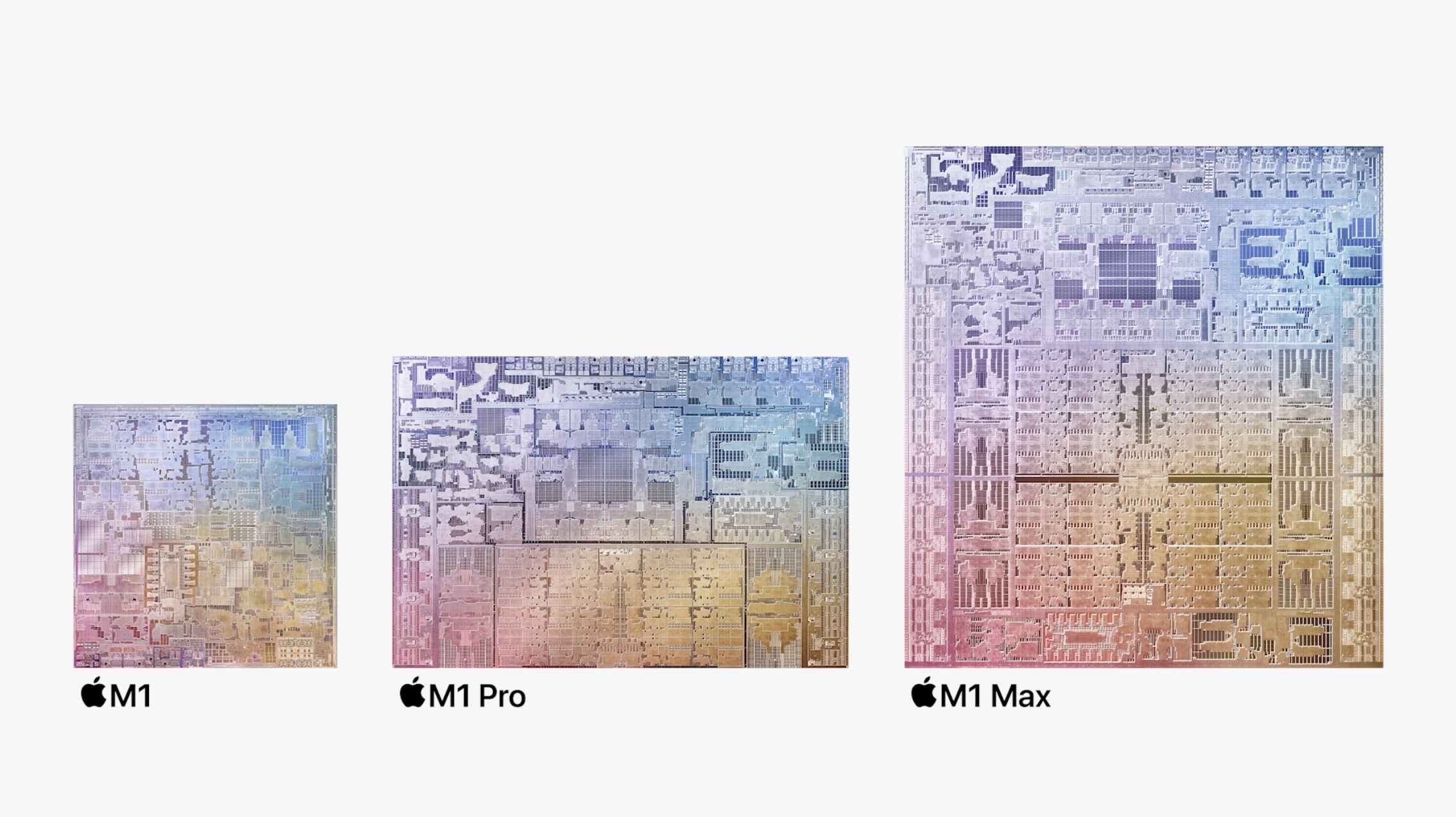
Apple M1 chip | Mac

The first Apple Silicon Macs were released in November 2020 with the M1 chip. The company later introduced more powerful variants of the M1 chip, called M1 Pro, M1 Max, and M1 Ultra. Macs with Apple Silicon have become known for being more powerful while consuming much less power, which has resulted in MacBooks with extended battery life.

In June 2022, Apple introduced the M2 chip, which is around 20% faster than the M1 and also supports more RAM. M2 also has more powerful variants: M2 Pro, M2 Max, and M2 Ultra.

Apple unveiled the M3, M3 Pro, and M3 Max chips in October 2023. The main highlight of this generation is the 3 nanometer technology, the same as the A17 Pro chip. The M3 family also features better GPUs with support for hardware-accelerated ray-tracing.

Current Mac lineup

Apple currently sells a variety of Mac computers, which includes MacBooks, Mac mini, iMac, and Mac Pro. While some of the Macs have already been updated with an Apple Silicon chip, others remain with Intel processors.

MacBook Air

The MacBook Air is Apple’s most affordable laptop and it has become popular for its light, compact design. The 2022 version is powered by the M2 chip and is offered with 8GB, 16GB, or 24GB of RAM. Plus, it has a new, edge-to edge 13.6-inch Retina display.

The laptop features Touch ID and has two Thunderbolt 3 compatible USB-C ports, a MagSafe connector for charging, and a headphone jack. Prices start at $1099 in the US. It’s offered in silver, space gray, starlight, and midnight.
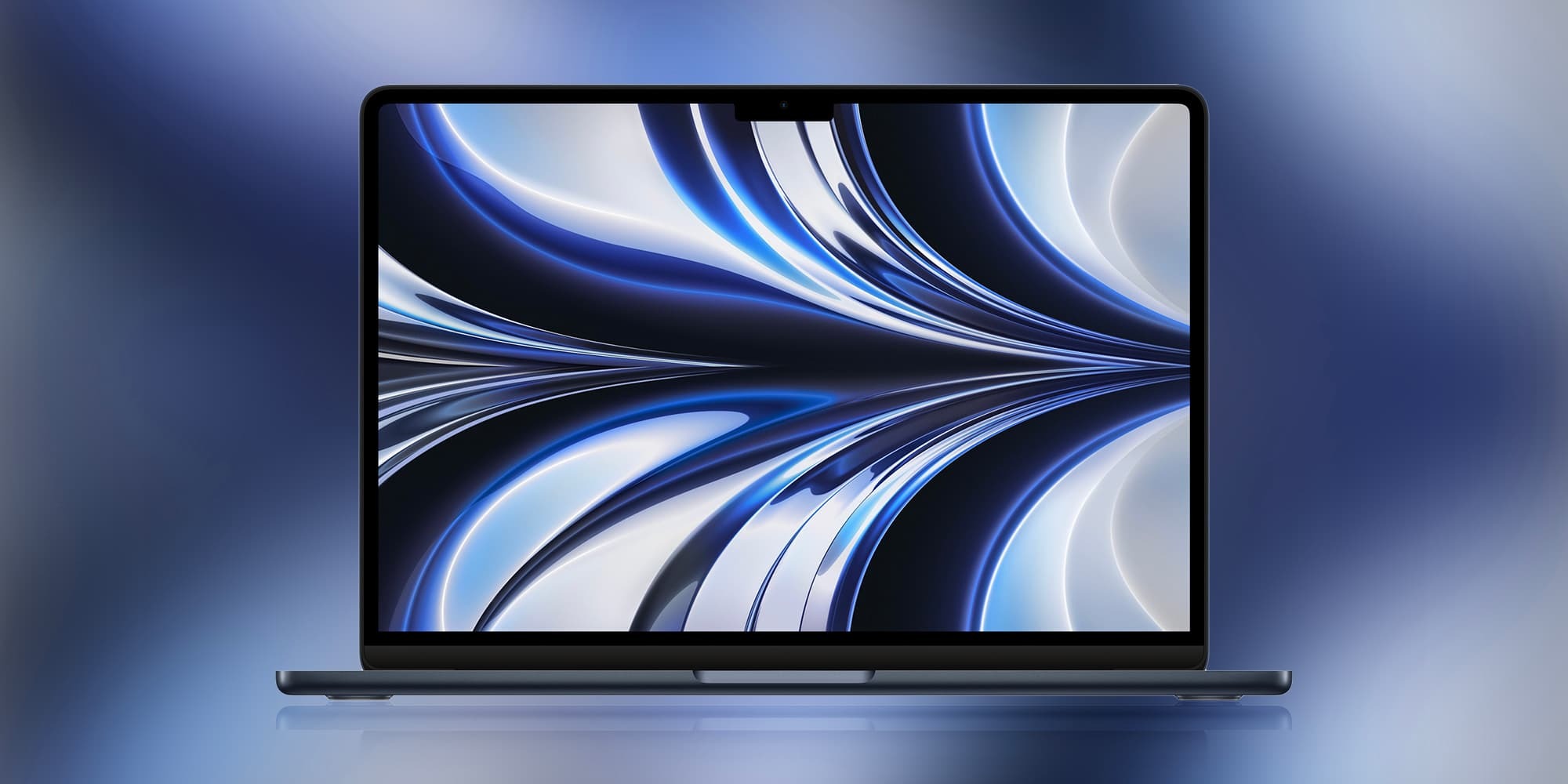
M2 MacBook Air.

A year later, Apple introduced the first 15-inch MacBook Air. It has essentially the same hardware as the smaller version with a similar design, but with a larger display. Prices start at $1299 in the US.Apple is still selling the M1 MacBook Air for prices starting at $999.

MacBook Pro

The 2023 MacBook Pro is available in multiple versions, and customers can choose between 14-inch and 16-inch screen sizes. For the first time, Apple has introduced a less expensive version of the 14-inch MacBook Pro with the base M3 chip. This version has the same design and display as the high-end versions, except that it only has two USB-C ports instead of three.
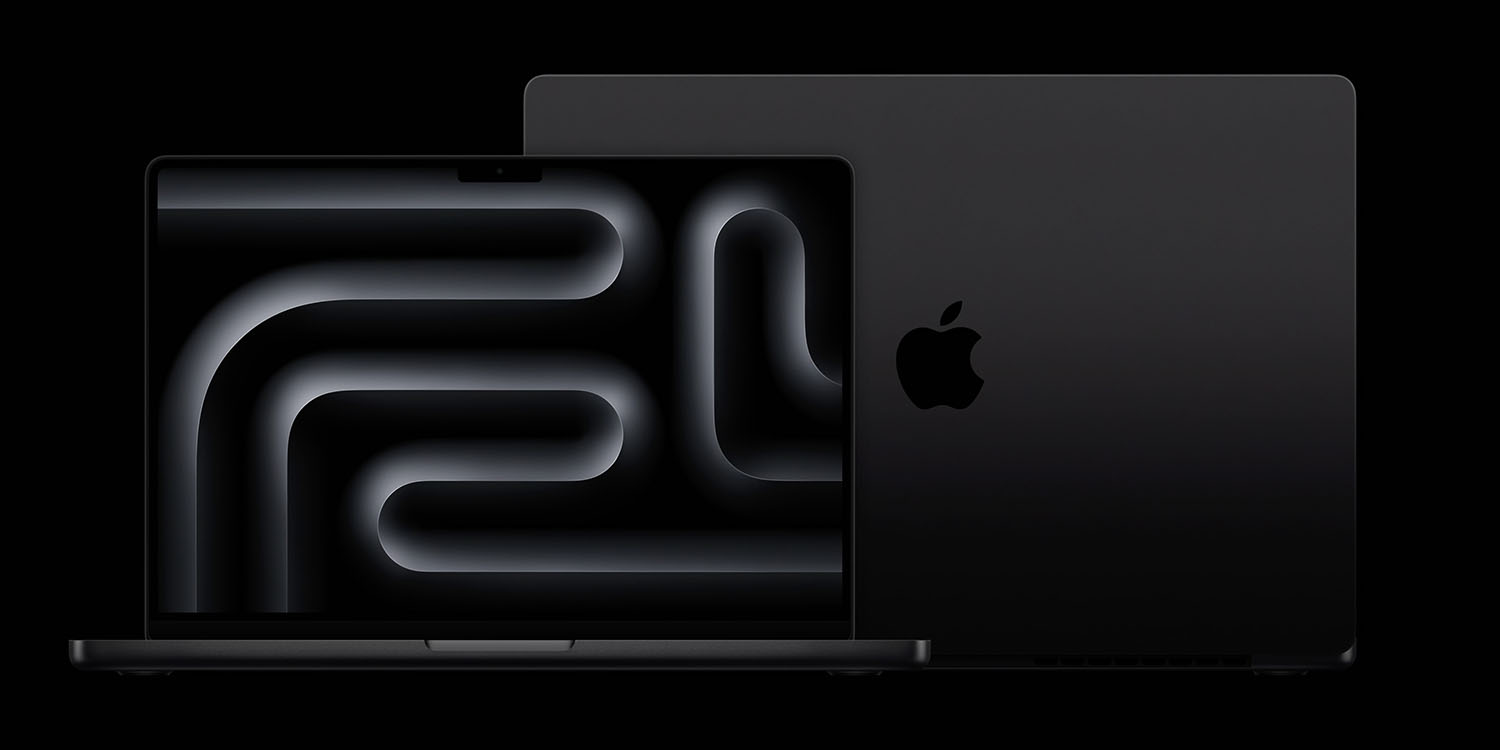
M3 MacBook Pro

The most expensive versions of the MacBook Pro are equipped with the more powerful M3 Pro and M3 Max chips. The laptop can be configured with up to 128GB of RAM and 8TB SSD. These versions also come in a new Space Black color.

Unlike the MacBook Air, the MacBook Pro comes with an HDMI port and an SD card reader. It also features MagSafe and Touch ID on the keyboard. Apple no longer sells MacBooks with the Touch Bar. Prices start at $1,599 in the US.

Mac mini

Mac mini is the cheapest Mac currently available since it’s basically a desktop without a built-in display or other peripherals. The base model with the M2 chip features one Ethernet port, two USB-C/Thunderbolt 4 ports, HDMI 2.0, two USB-A ports, and a headphone jack.

Apple sells a more powerful version of the Mac mini with the M2 Pro chip, which also comes with four USB-C ports instead of two. Mac mini can be configured with up to 32GB of RAM and up to 8TB of storage. Customers can also opt for a 10 Gigabit Ethernet port. The Apple Silicon Mac mini is only available in silver, while the now discontinued Intel model was available in space gray.
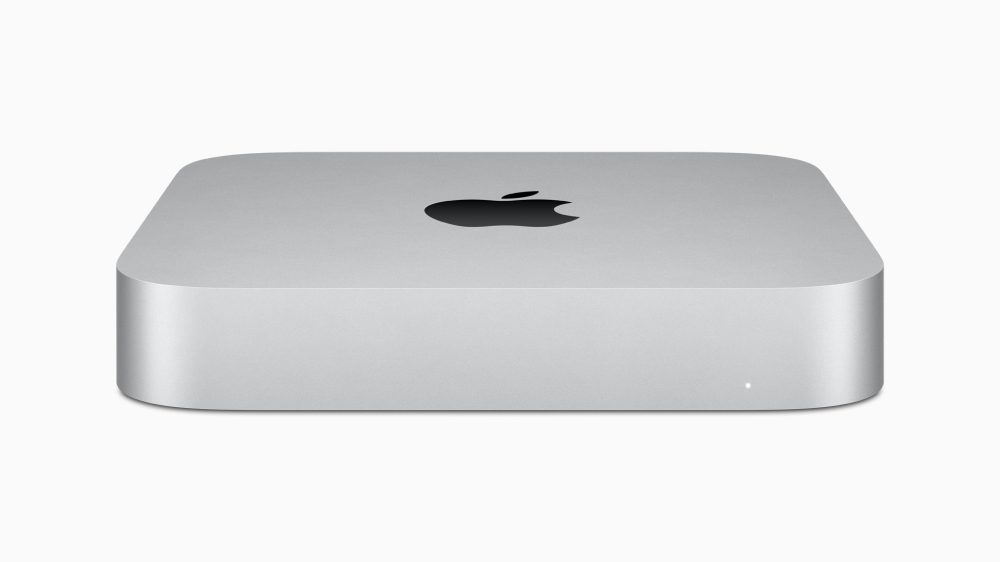
Apple Silicon Mac mini.

Prices for the Mac mini start at $599 in the US. Again, it’s worth noting that it doesn’t come with a keyboard or mouse in the box – you need to buy them separately or use your current ones.

Mac Studio

Mac Studio represents a new category between Mac mini and Mac Pro. It features a design based on the Mac mini, but with a taller body to support the more powerful hardware and also a better cooling system.

The new Mac Studio is targeted at professional users who work with demanding tasks such as video editing, 3D rendering, and machine learning. 

Embraced by creative pros everywhere, Mac Studio now delivers next-generation power in the form of the lightning-fast M2 Max and the boundary-breaking M2 Ultra. It packs outrageous performance and extensive connectivity in an unbelievably compact form, putting everything you need within easy reach and transforming any space into a studio.

By default, Mac Studio already comes with the M2 Max chip, 32GB of RAM, and 512GB SSD storage. A more expensive option lets users customize Mac Studio with M2 Ultra. While M2 Max has a 12-core CPU and a 30-core GPU, M2 Ultra doubles all of those specs. The new chip has a 24-core CPU and a 60-core GPU.

Mac Studio can also be configured with up to 192GB of RAM and 8TB of SSD storage. The machine offers up to six Thunderbolt ports, 10 Gigabit Ethernet, headphone jack, two USB-A ports, and one HDMI port.
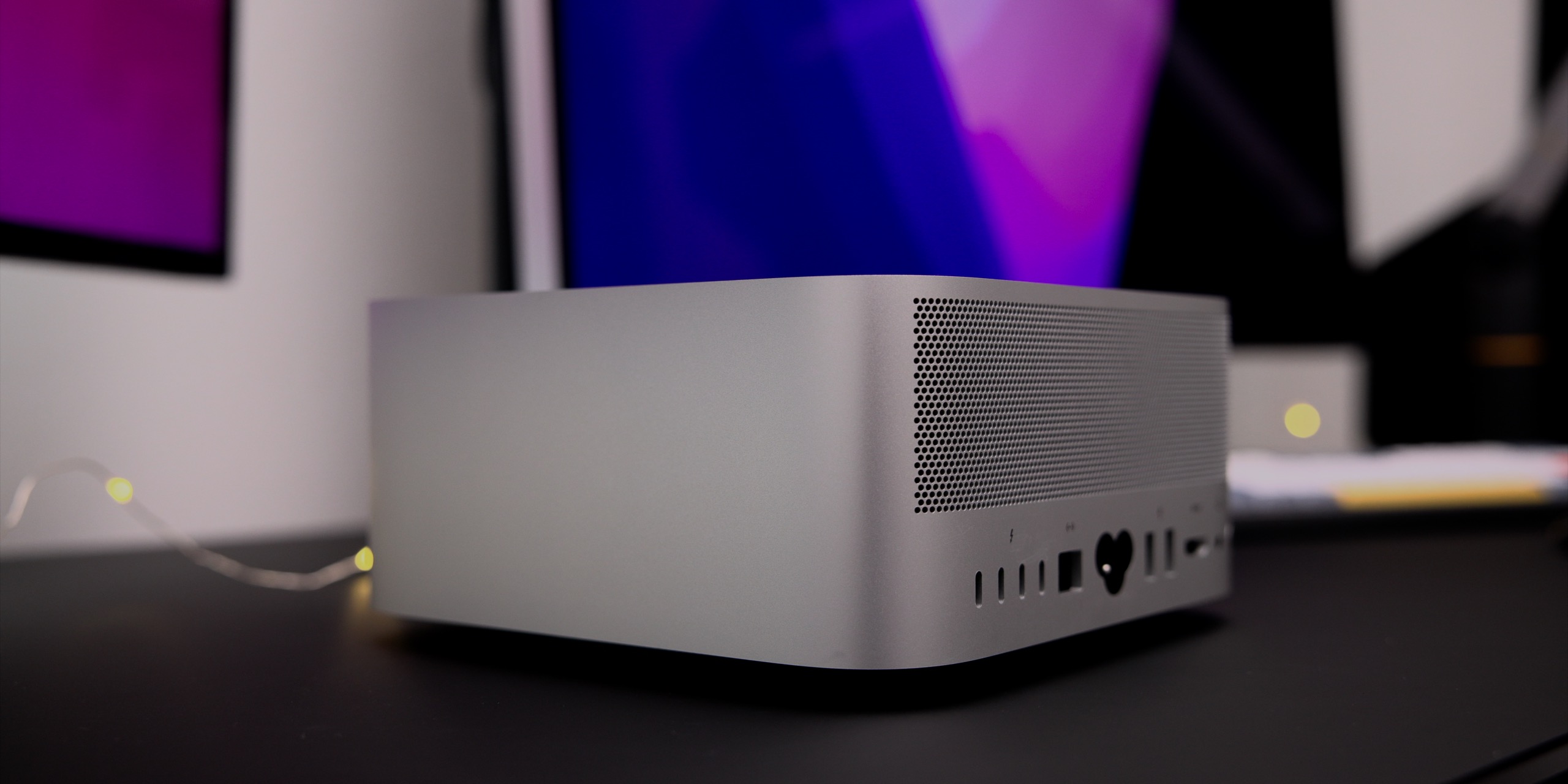
Mac Studio

Apple has been rumored to be working on new versions of this machine with the M3 Max and M3 Ultra chips. However, these versions may not be ready until 2025. Bloomberg’s Mark Gurman said in November last year that the M3 Ultra chip “hasn’t yet gone into broad testing” inside Apple.

In the US, prices for the Mac Studio with M2 Max chip start at $1999. The M2 Ultra chip version starts at $3999. Just like the Mac mini, Mac Studio doesn’t come with a keyboard and mouse in the box. You can find accessories for your Mac Studio here.

iMac

iMac is Apple’s most popular desktop computer with an all-in-one construction. It features a 4.5K display in its 24-inch version and a 5K display in the 27-inch version. At the same time, Apple still sells an entry-level iMac with a regular 1080p display.

The 24-inch iMac is the first to feature the M1 chip, the same as in the Mac mini, MacBook Air, and MacBook Pro. This allowed Apple to introduce a completely redesigned model with a slimmer design, which is also offered in seven new colors. Customers can customize the new 24-inch iMac with up to 16GB of RAM and 2TB of storage.
Site default logo image

The company ships the 24-inch iMac with Magic Mouse and Magic Keyboard, plus a Lightning cable for recharging accessories. Prices in the US start at $1299. Apple has discontinued its old 21.5-inch iMac and the 27-inch iMac 5K.

Mac Pro

Mac Pro is a computer built for professional users who depend on extremely powerful hardware. Available in tower and rack versions, it has a completely modular design. That means users can replace RAM, SSD, GPU, and other internal components.

By default, it features four USB-C/Thunderbolt 3 ports, two USB-A ports, and two 10Gb Ethernet ports. However, the ports can be expanded using the PCI Express slots. Apple also ships the computer with a Magic Mouse and Magic Keyboard, but it does not come with an external monitor included.

All models feature Intel Xeon W processors, which are the most powerful processors offered by Intel. Consumers can configure Mac Pro with up to 28-core processor, 1.5TB RAM, and 8TB of SSD storage. In addition to supporting multiple dedicated GPUs, Apple also offers the Afterburner card — which accelerates the decoding of ProRes videos.

The company recently updated the Mac Pro with new graphics card modules, which include Radeon Pro W6800X and Radeon Pro W6900X.

Site default logo image

Mac Pro prices start at $5999 in the US.

Rumors about upcoming Macs

Top stories about the Mac

Apple execs say iOS and OS X won’t merge, and 10.10 will prove that

Site default logo image

Among the hoopla surrounding the 30th anniversary of the Mac last week, Macworld‘s Jason Snell had an excellent interview with Apple’s Phil Schiller, Craig Federighi, and Bud Tribble about both the past and the future for the Mac. While the entire interview is well worth a read, the talk from Apple executives about iOS and OS X convergence being a “waste of energy” stood out to me the most.

“It’s obvious and easy enough to slap a touchscreen on a piece of hardware, but is that a good experience?” Federighi said. “We believe, no.”

“We don’t waste time thinking, ‘But it should be one [interface]!’ How do you make these [operating systems] merge together?’ What a waste of energy that would be,” Schiller said. But he added that the company definitely tries to smooth out bumps in the road that make it difficult for its customers to switch between a Mac and an iOS device—for example, making sure its messaging and calendaring apps have the same name on both OS X and iOS.

Of course, it appears that the Apple executives are taking shots at Microsoft, Windows 8, the Surface line of products, and Google’s new Touch-enabled Chromebooks. Microsoft is well known to believe that computer operating systems should be the same regardless of devices. On the other hand, Apple has two complete different operating systems: one for the iPad and iPhone, and the other for the Mac. Federighi explains why:


Expand
Expanding
Close

AAPL returns to growth, predict analysts, as we await quarterly earnings call

Site default logo image

When Apple reports its quarterly earnings later today, the news will be good, according to the consensus view of 47 Apple analysts compiled by Fortune.

Analysts are expecting the company to report earnings of $58.1B for the final quarter of last year (Apple’s fiscal quarter 1), representing 4 percent earnings growth over the same quarter last year. This would be right at the top end of Apple’s guidance of $55-58B, and the first time in a year that Apple would have reported year-on-year growth … 
Expand
Expanding
Close

Site default logo image

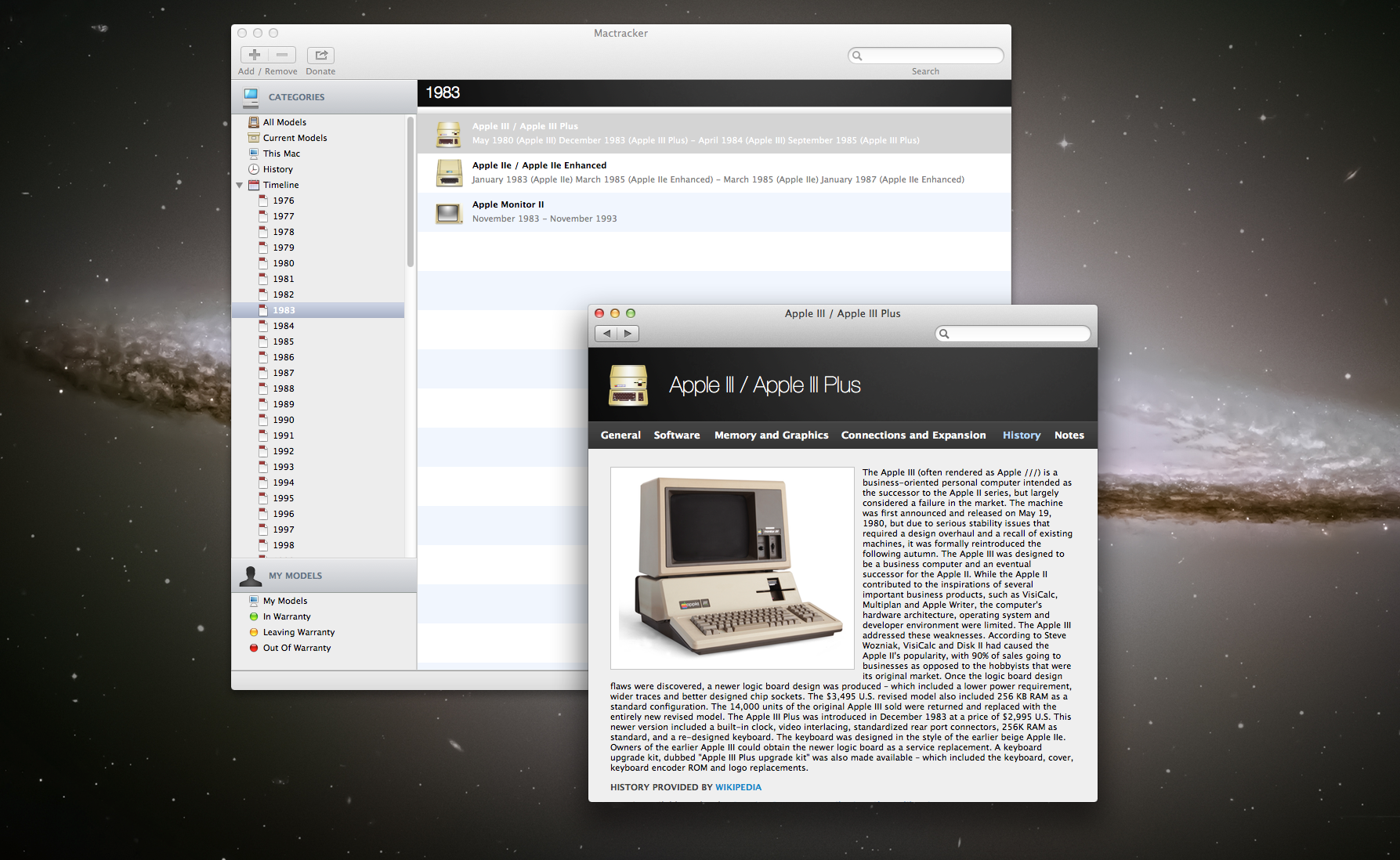
Apple product database app Mactracker updated adding dozens of vintage systems

Mactracker, the definitive app for tracking Apple product information, received a substantial update today, on the Mac’s 30th birthday. Both the OS X and iOS versions have, for the first time, added Apple’s non-Macintosh computers to the database, including the entire Apple II line, and many early Apple monitors and accessories.


Expand
Expanding
Close

Site default logo image

Celebrate 30 years of Mac with Apple’s hidden icon font

As part of Apple’s 30th anniversary celebration of the Mac, Apple built a dedicated page to illustrate the evolution of the Mac year after year.

Each panel features line-drawn icon representing the Mac portraying that year, and a friend of mine, Greg Barbosa, noticed these icons are actually characters that make up a special font.

You can download the font to your Mac and explore each icon yourself, and I’ve created a gallery below to see each Mac drawing at high-res scale. Enjoy.

Update: T-shirts featuring the icons available on Teespring (black and white).


Expand
Expanding
Close

While everyone is looking back, the analysts look forward to Monday’s Mac numbers

Site default logo image

While there’s plenty of looking back going on today, Fortune has gathered together analyst forecasts of the Mac numbers we can expect Apple to reveal at its earnings call on Monday. This follows earlier forecasts for iPhone and iPad.

The average prediction is for 13 percent year-on-year growth, predicting that Apple sold 4.6 million Macs in the final quarter of 2013 (Apple’s fiscal Q1). This is slap bang in the middle of the growth predictions for iPads (10 percent) and iPhones (16 percent) … 
Expand
Expanding
Close

Site default logo image

A nostalgic look back at the Mac launch, and early advertising [Videos]

[youtube=http://www.youtube.com/watch?v=g_d5R6Il0II]

Those of us old enough to have been around to witness the launch of the Mac can enjoy a good dose of nostalgia today, while those who weren’t can try to imagine just what the world was like before the Mac, thanks to two YouTube playlists.

EverySteveJobsVideo has put together a playlist of 18 Steve Jobs videos, from the launch of the Macintosh at the Apple shareholder event 30 years ago today, through internal videos, some early ads to a set of videos featuring not just the original “1984” ad, but alternative versions and the story of the making of the famous video.

EveryAppleAds (sic), meantime, has collected together the complete set of Get a Mac ads, with the hugely successful “Hello, I’m a Mac / And I’m a PC” format.

[youtube=http://www.youtube.com/watch?v=DZSBWbnmGrE]

Apple continues Mac’s 30th birthday celebrations with special window displays

Site default logo image

A tip we’ve received from an Apple Store employee indicates that Apple will be putting up celebratory LED window displays at Apple Stores, showing a stylised ‘3’ and a ‘Happy birthday, Mac’ message. iPhones and iPads in the window will reportedly be removed. The graphic came via special SD card.

Boxes of special t-shirts have arrived for the occasion (photo below the fold) … 
Expand
Expanding
Close

Falling in love with the Macintosh 128K back in 1984

Site default logo image

Ok, I admit it: I’m officially old. Old enough, in fact, to have bought the very first Macintosh in 1984: the Macintosh 128K.

Computers in those days had green screens and were controlled by typing arcane commands. Bold and italics did not appear on-screen, instead you saw ^Bthis is bold^B and ^Ythis is italics^Y (CTRL-Y for italics because CTRL-I was tab, for reasons no-one understood but didn’t question). You never had to worry about what typeface to use because computers could neither display nor print them.

And then came the Macintosh … 
Expand
Expanding
Close

Apple takes over its homepage to celebrate 30 years of Mac, with accompanying video, timeline and poll

In addition to interviews with the press, Apple is celebrating 30 years of Mac with a full-bleed graphic on its homepage, which links to a minisite that plots how the Mac evolved over the years. The message says that Apple made the Macintosh with a promise to get “the power of technology .. in the hand of everyone”. “This promise has been kept.”, it reads. The dedicated minisite depicts a (scrollable) timeline of the major models of Mac since 1984, spanning the PowerBook, the iMac and ending with the Retina MacBook Pro and the brand new Mac Pro.

See the accompanying video after the break.


Expand
Expanding
Close

Celebrating the 30th birthday of the Mac(intosh): a 30-year infographic

With the Macintosh celebrating its 30th birthday today, we thought it would be fun to take a look back at some of the notable Macs we’ve seen over the past thirty years.

For each year, we’ve picked one notable machine. For some years, it was very hard to choose just one! Where prices are shown, the ‘equivalent’ price in brackets is the approximate cost of the machine in today’s money. For example, although the Macintosh 128K cost $2,495, that was the equivalent then of spending $5,600 today.

If you have fond memories of any of these machines, or any other Macs along the way, please share them in the comments … 
Expand
Expanding
Close

Site default logo image

Apple seeds new OS X Mavericks 10.9.2, Safari 6.1.2 betas to developers

A week following the previous beta, Apple has seeded a new version of OS X Mavericks 10.9.2 to developers. The update is available via Software Update in the Mac App Store and Apple’s online developer portal. It is labeled as build 13C44, and that’s a small increase over last week’s 13C39 build. Last week’s build brought blocking for iMessage and FaceTime, while the original 10.9.2 beta introduced FaceTime Audio in the Mac’s FaceTime and Messages apps.


Expand
Expanding
Close

Apple execs discuss 30 years of the Mac, the Surface-style touchscreen approach, and the coexistence of OS X & iOS

Site default logo image

Marking the 30th anniversary since Apple gave us the Mac, Macworld spoke with Apple’s Phil Schiller, Craig Federighi, and Bud Tribble to discuss the Mac in an era dominated by the iPhone and iPad.

The execs looked back at the Mac’s impact on the PC market and its historical significance for the company, and while they acknowledged the success of iOS, insisted the Mac has a permanent place in the hardware lineup. Schiller, Apple’s Senior Vice President of Marketing, even dared to promise the Mac is forever:

“There’s a role for the Mac as far as our eye can see. A role in conjunction with smartphones and tablets, that allows you to make the choice of what you want to use. Our view is, the Mac keeps going forever, because the differences it brings are really valuable.”

Federighi, who leads Apple’s software platforms including both OS X and iOS, discussed the importance of keeping the platforms separate:


Expand
Expanding
Close

Pixelmator 3.1 brings 16-bit image support for Mac Pro, integrated photo printing and more

Pixelmator have released the latest version of their app today, version 3.1. As usual, it is available exclusively in the Mac App Store for $29.99. Codenamed Marble, this update brings several enhancements to the image editor including specific Mac Pro optimizations such as 16-bit image support.

Primarily, Pixelmator 3.1 optimises for the new Mac Pro’s hardware. Apple has used Pixelmator before to tout the Mac Pro’s performance benefits, and the developers are clearly keen to push this further still.

The “exclusive” support for the new Mac Pro enables the simultaneous use of both GPU’s  for even faster composition and rendering. In fact, the app can compute the autosave data whilst the image is being rendered. This translates to significant speed improvements across the app.


Expand
Expanding
Close

Jimmy Fallon scrambles to hide his MacBook during Bill Gates interview (Video)

Site default logo image

[youtube=http://www.youtube.com/watch?v=Qk7pPutimCM&start=70]

Bill Gates stopped by Late Night with Jimmy Fallon last night to talk about his various charitable endeavours and to promote the Bill & Melinda Gates Foundation’s annual letter published today. Despite the serious subject matter, Jimmy still managed to squeeze in a few laughs including apologizing for the MacBook and Apple keyboard and mouse that sit on his desk each night before removing them for the rest of the interview.

And then there was this:
Expand
Expanding
Close

Site default logo image

Mac mini could finally see refresh next month according to retailer

Last year came and went without as much as a mention from Apple about the fate of its Mac mini line of desktop computers. The Mac mini lineup currently on sale through Apple, Amazon, and other retailers last saw its hardware updated in late 2012 at the original iPad mini event.

So it’s not too unreasonable to believe that a placeholder entry found online at computerstore.be, a Belgium retailer, found in MacRumors forums could be a genuine preview of what to expect in the updated hardware. The specs reference everything we would expect for a hardware updated Mac mini: Intel Iris graphics, 802.11ac wireless networking, Gigabit LAN, and more. 
Expand
Expanding
Close

Mac Pro shipping estimates slip into March as supply fails to catch up with demand

Site default logo image

Shipping estimates for the Mac Pro have slipped from February to March in many countries, suggesting that Apple has made no progress in reducing lead times from around six weeks. U.S. shipping estimates so far remain in February.

Launched last month to rave reviews, the all-new design has been praised for its upgradability, in sharp contrast to the MacBook range. However, it appears that Apple’s desire to keep its promise of a late 2013 launch date, made at WWDC, led to a repetition of the previous year’s iMac shortages … 
Expand
Expanding
Close

Google Now comes to the Mac in the latest Chrome Canary release

Screen Shot 2014-01-16 at 13.25.19

There have been indications for a long time that Google Now was eventually coming to the Chrome browser. Via the Google Operating System Blog, the service has finally surfaced in the most recent release of Chrome Canary (Google’s name for the app’s ‘alpha’ channel builds).

As expected, Google Now in Chrome closely mirrors Google Now on Android. The contextually-relevant cards (which show information such as weather, news or upcoming flights) appear in Chrome’s Notification Center on the desktop. The notification area can be accessed in the menubar, represented by a bell icon.


Expand
Expanding
Close

2013 Mac Pro-style Hackintosh based on actual trashcan

Site default logo image

It’s no secret that Apple’s Late 2013 Mac Pro looks strikingly similar to a (really futuristic, shiny, insanely great) trash can; take a look for yourself. You can even replace the Trash icon on your OS X Dock with a… Mac Pro. Let’s just agree there’s a certain…resemblance.

That inspired one Apple fan to build a Hackintosh based on the new Mac Pro design using, yes, an actual trash can (specifically, an Authenics Lunar <–check scale) for the casing. The result isn’t exactly as powerful as the Mac Pro sold today by Apple; this specific build lacks Thunderbolt support and its processor is a Haswell i3 that you might find in a much cheaper PC.

Nevertheless, the final product is down right fascinating to see. Check it out below:
Expand
Expanding
Close

Total Apple device sales will equal Windows PCs this year, predicts analyst

Site default logo image

The total number of Apple devices sold will equal the number of Windows PCs by some point this year, predicts Asymco’s Horace Dediu in an interesting piece of analysis.

The dark shaded area compares all Apple hardware – Mac plus iPad plus iPhone – with Windows PCs, and shows that by last year there were only 1.18 more Windows PCs than Apple devices. It’s of course a somewhat artificial comparison, as Dediu is including iPhones while excluding Windows Phones and tablets, but given the very limited success of Windows mobile devices to date, correcting that wouldn’t change the patterns too much.

What’s particularly interesting here, as John Gruber notes, is that the dramatic reversal kicked in well before the launch of the iPhone. Dediu and Gruber between them put forward a number of theories for this, and of these I think three are likely key …


Expand
Expanding
Close

Apple now shipping the Mac Pro to Europe once again, after EU ban of old model

<a href="http://www.macg.co/mac/2014/01/premieres-expeditions-des-mac-pro-pour-leurope-79176">via MacGeneration</a>

Since March, the old Mac Pro has not been available to buy in Europe as changes in regulations meant that the old Mac Pro no longer complied with EU law. In particular, the large exposed fans of the Mac Pro were the main reason behind the ban — the amendment required fan guards and minor changes to electrical ports.

With the design of the new Mac Pro, Apple once again complies with regulatory requirements. Via MacGeneration, customers in Europe are now receiving shipment notifications with delivery as early as January 14. According to Apple’s online store, customers ordering today should receive their Mac Pro in February.

CES 2014: iPhone/iPad Bluetooth accessories for the home & body dominate the show

Site default logo image

While it’s been years since Apple made an appearance at CES in any official capacity, accessories that pair with its iOS devices have for several years dominated the show floor. This year was no different with most of the big trends–  fitness and health tracking wearables, Bluetooth controllers, and home automation products–  all designed and developed with the iPhone, iPad, and Mac in mind.  Below we’ve put together a roundup of the most interesting wearables, cases, controllers and more that we found for iOS devices. 
Expand
Expanding
Close

Review: SteelSeries ‘Stratus’ Made for iPhone/iPad/iPod Bluetooth game controller

Site default logo image

I previously reviewed the first two Apple authorized game controllers to hit the market under Apple’s new Made for iPhone/iPad/iPod touch program from Logitech and Moga. Both used Apple’s form-fitting design that docks an iPhone or iPod touch directly into the controller via a Lightning connector. However, Apple’s program also allows another breed of standalone controllers that connect over Bluetooth and therefore also work with iPad and Mac. Unveiled at CES, this week I’ve put one of the first Bluetooth, non-form-fitting designs to the test with the new Stratus wireless controller from SteelSeries.
Expand
Expanding
Close

Site default logo image

Apogee announces JAM 96k guitar interface and MiC 96k microphone for iOS devices and Mac

Apogee has announced the new MiC 96k microphone and the JAM 96k guitar interface for iPhone, iPad, and Mac. The full press releases can be found below.

Apogee Announces New MiC 96k – Professional Microphone for iPad, iPhone and Mac
Santa Monica, California, January 6, 2014 – Apogee Electronics is pleased to introduce MiC 96k, a professional digital microphone for iPad, iPhone and Mac. Use MiC 96k to record vocals, voice overs, acoustic guitar, piano, drums or anything in-between. Inspired by the most revered and classic microphones in history, MiC 96k is designed to sound amazing and be easy for anyone to use with their iPhone, iPad, iPod touch or Mac.
What’s new

Introduced in 2011, the original MiC has become the mobile microphone of choice for both aspiring and professional artists looking for that big-studio sound. The new MiC 96k, which features the same look and portable form factor as the original, now provides the ability to make higher fidelity recordings – up to 24-bit/96kHz – and includes an iOS Lighting cable as well as a microphone stand adapter in the box. Like its predecessor, MiC 96k also includes an iOS 30-pin cable, Mac USB cable, and table-top tripod stand.
About Apogee

Founded in 1985, Apogee Electronics designs and manufacturers award-winning audio recording solutions that are easy to use and sound amazing. Apogee products like Symphony I/O, Quartet, Duet, ONE, JAM and MiC have been instrumental in creating countless GRAMMY® and OSCAR® winning recordings by the world’s most successful music artists.  For more information, please visit http://www.apogeedigital.com
MiC 96k Highlights

  • PureDIGITAL connection for pristine sound quality
  • Designed for voice and acoustic instrument recording
  • Studio quality cardioid condenser microphone
  • Up to 96kHz, 24-bit analog-to-digital recording
  • Works with iPhone, iPad, iPod touch and Mac
  • Includes iOS Lightning cable, iOS 30-pin cable, Mac USB cable
  • Simple setup, you can start recording in minutes
  • Apogee engineered microphone preamp with up to 40dB of gain
  • Control knob allows easy input level adjustment
  • Multicolor LED for status indication and input level monitoring
  • All metal construction
  • Microphone stand adapter included
  • No batteries or external power required
  • Compatible with GarageBand, Logic Pro and Pro Tools
  • Made in the U.S.A.

Price: $229 USD
Availability: Now Shipping Worldwide

Apogee Announces New JAM 96k – Professional Guitar Interface for iPad, iPhone and Mac
Santa Monica, California, January 6, 2014 – Apogee Electronics is pleased to introduce JAM 96k, a new professional guitar interface for iPad, iPhone and Mac. JAM 96k lets you easily connect your guitar to your iPhone, iPad or Mac, whether you’re on-the-go or in the most advanced recording studio. Its circuitry is designed to reproduce the unique interaction between guitar and tube amp, resulting in an authentic tone and responsive feel from any guitar or music creation app you choose.  For beginners to the most seasoned guitar players, JAM 96k delivers an inspiring experience for practicing, recording, or just jamming.
The original pro guitar interface for iOS

JAM was first introduced in 2011 alongside iPad 2 and GarageBand for iPad as part of Apple’s keynote presentation, marking the start of the iOS music recording revolution. Since then, JAM has become the standard for both aspiring and professional musicians. Its design and studio-quality sound inspired many imitators to follow in the iOS recording market.
What’s new

The new JAM 96k features tube amp tone emulation and a beautiful nickel-plated finish. JAM 96k also provides the ability to make higher fidelity recordings – up to 24-bit/96kHz – and includes an iOS Lighting cable in the box. Like its predecessor, JAM 96k also includes an iOS 30-pin cable and Mac USB cable.
About Apogee

Founded in 1985, Apogee Electronics designs and manufacturers award-winning audio recording solutions that are easy to use and sound amazing. Apogee products like Symphony I/O, Quartet, Duet, ONE, JAM and MiC have been instrumental in creating countless GRAMMY® and OSCAR® winning recordings by the world’s most successful music artists.  For more information, please visit http://www.apogeedigital.com
JAM 96k Highlights

  • PureDIGITAL instrument connection delivers pristine sound quality
  • Designed for electric guitar, bass and acoustic instrument with a pickup
  • Discrete Class A Input stage emulates the tone and responsive feel of a classic guitar amp
  • Nickel plated finish
  • Up to 96kHz, 24-bit analog-to-digital recording
  • Works with iPhone, iPad, iPod touch and Mac
  • Includes iOS Lightning cable, iOS 30-pin cable, Mac USB cable
  • Simple setup, you can start recording in minutes
  • Control knob allows easy input level adjustment
  • Multicolor LED for status indication and input level monitoring
  • Studio quality instrument preamp with up to 40dB of gain
  • No batteries or external power required
  • Made in the U.S.A.

Price: $129 USD
Availability: Now Shipping Worldwide

Site default logo image

Audio specialist Blue promises true hi-fi quality wireless audio by the spring

[vimeo http://vimeo.com/83331745]

I take the view that wires are evil: anything that can be wireless should be wireless. My iOS devices sync via wifi, my keyboard and trackpad are Bluetooth, I have Wemo-controlled lighting, Tado-controlled heating and love cloud services.

But there’s one thing in my living-room that still relies on a wire: the connection between Mac and hifi system. I tried a Bluetooth link, and the quality just wasn’t there. I quickly reverted to the 3.5mm cable that runs around the skirting board.

Enter microphone specialist Blue. The company is teasing a true hifi-quality wireless connection between digital devices and headphones (and presumably hifi systems) under the name Mo-Fi.

Where digital music technology has advanced, headphones have lagged behind. We’ve seen dramatic advances in the quality and convenience of digital music, yet headphones –designed specifically to bring us closer to sound— have failed to bridge the gap from hi-fi to mobile. Headphones are the last barrier between us and the audio trapped in our digital devices. What if we liberated our music from overhyped lo-fi to true mobile hi-fi? We can. Blue is offering the first sneak peek at CES 2014.

We’ll bring you more details when we have them.