AAPL Company

See All Stories

Breaking news from Cupertino. We’ll give you the latest from Apple headquarters and decipher fact from fiction from the rumor mill.
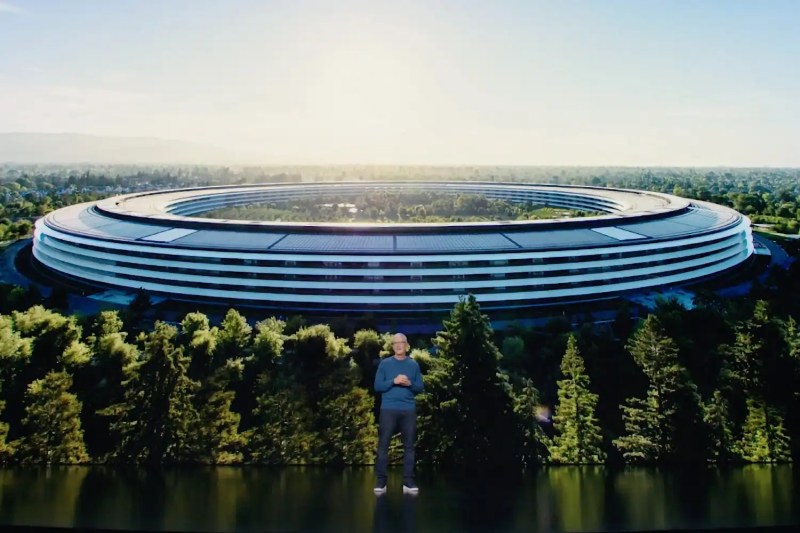
Apple Park Tim Cook AAPL

AAPL is a California-based computer company that became the most successful smartphone company in the world.

AAPL defined by Apple

Here’s how Apple defines itself:

Apple revolutionized personal technology with the introduction of the Macintosh in 1984. Today, Apple leads the world in innovation with iPhone, iPad, Mac, Apple Watch, and Apple TV. Apple’s five software platforms — iOS, iPadOS, macOS, watchOS, and tvOS — provide seamless experiences across all Apple devices and empower people with breakthrough services including the App Store, Apple Music, Apple Pay, and iCloud. Apple’s more than 100,000 employees are dedicated to making the best products on earth, and to leaving the world better than we found it.

Key AAPL history

From Apple I to iMac

Apple was founded in 1976 by Steve Jobs (Steve), Steve Wozniak (Woz), and (briefly) Ronald Wayne as a business partnership: Apple Computer Company. The following year it became Apple Computer, Inc. The company’s first product was the Apple I, a personal computer hand-built by Woz and sold in part-completed kit form. The Apple II and Apple III followed.

The modern Apple as we know it today began in 1983, with the launch of the first personal computer with a graphical user interface, the Lisa. Way too expensive to succeed, it was replaced by the Macintosh in 1984, launched with the single showing of a Ridley Scott commercial during the Super Bowl. The Macintosh transformed the world’s understanding of what a computer was, and would eventually lead to Microsoft adopting the GUI approach.

Steve Jobs and then Apple-CEO John Scully fell out in 1985, when Steve wanted to focus on the Macintosh while Scully wanted to put more attention on the Apple II, which was still selling well. That led to Steve being forced out of the company and going off to form NeXT.

Apple focused on selling Macintosh models at the highest possible margins, but would eventually fall foul of a mix of unsustainable pricing in the face of competition from Windows machines, and an overly complex product lineup. By 1996, the company was in trouble, and in 1997 Steve was brought back, along with the NeXT operating system, which would eventually form the basis of Mac OS X.

Steve simplified the Mac lineup and had industrial designer Jony Ive work on a whole new look for a consumer desktop Mac, the colorful iMac. The iMac, like the original Macintosh, again changed the world’s understanding of what a computer was, and who should want one.

From Apple Computer, Inc. to Apple, Inc.

In 2001, Apple launched the iPod. Although this wasn’t the first mp3 player, it was massively better than anything on the market at the time, and succeeded in turning a geeky piece of technology into a consumer electronics product with mass-market appeal.

The success of the iPod paved the way into other mobile devices. Apple was working on what would eventually become the iPad, when Steve realized that this was the basis of a smartphone. He diverted the team’s work into this, to launch the iPhone in 2007. The iPad launched later, in 2010.

The iPhone was yet another transformational product. While most other smartphones of the time were clunky devices with a keyboard and stylus, the iPhone was a sleek-looking device operated with a finger, and so simple that no user guide was needed. It was with the launch of the iPhone that Apple Computer, Inc. was renamed to Apple, Inc.

From Intel to Apple Silicon

While the iPhone, iPad, Apple Watch, and more are made with Apple-designed processors, the Mac lineup has historically relied on third-party companies for its CPUs. Over the years, Macs progressed from Motorola 680000 series chips through PowerPC to Intel.

In 2020, Apple began a two-year transition to the final stage in that journey, with Macs too finally getting Apple-designed chips. The first such is the M1 chip, used in the latest Mac mini, MacBook Air, and 13-inch MacBook Pro. Other Apple Silicon Macs followed.

AAPL today

Apple is one of the largest companies in the world. It was the first publicly traded company to hit a trillion-dollar valuation in 2018, $2 trillion in 2020, and $3T in 2022.

The company’s product lineup includes five different Mac families (MacBook Air, MacBook Pro, iMac, Mac Pro, and Mac mini); four iPad ranges (iPad mini, iPad, iPad Air, iPad Pro); four iPhone 12 models (12, 12 mini, 12 Pro, 12 Pro Max); three main Apple Watch models (SE, Series 3, Series 6); as well as other products, including Apple TV, AirPods, and HomePod mini.

In addition to hardware sales, Apple derives a growing proportion of its income from Services, including the App Store, iCloud, Apple Music, and Apple Pay.

AAPL drops as analysts predict reduced iPhone X demand next quarter

Apple’s stock price has seen a sharp drop this morning on the first day of trading since Christmas Day, and a new report on tepid iPhone X demand going into next year is to blame. Analysts are adjusting their forecasts on iPhone X shipments at the start of 2018 based on demand largely being fulfilled during the holiday quarter, and the $999-$1149 price may be the cause.


Expand
Expanding
Close

Apple faces first class action lawsuit after confirming it slows down older iPhones with battery wear

Update: As the Chicago Sun-Times reports, Apple now faces a second lawsuit over the “deceptive, immoral and unethical” tactic of slowing older iPhones. More here.

Following yesterday’s revelation that it slows down older iPhones to help manage batter wear, Apple today has been hit with its first class action lawsuit over the tactic. The lawsuit, filed in Los Angeles, California, accuses Apple’s battery saving “feature” of causing users to suffer and hurting the value of older devices…


Expand
Expanding
Close

Comment: Slowing down older iPhones may be the right thing to do, but it opens a can of worms

Apple caused a furore yesterday when it admitted that it deliberately slows down older iPhones.

The issue first came to the fore with a Reddit thread, which showed a significant difference in performance on the same device when fitted with old and new batteries. Geekbench founder, John Poole, confirmed the phenomenon, and developer Guilherme Rambo subsequently identified the code that controlled it.

Apple then confirmed the facts, and explained its reasons …


Expand
Expanding
Close

Apple’s planned flagship Melbourne store raises objections over loss of public space

When Apple announced plans for a new ‘global flagship’ store in Melbourne, Australia, it was welcomed by both government ministers and the square’s original architect.

Tourism minister John Eren said that the store would ‘breathe new life into Federation Square,’ while architect Donald Bates said that the development ‘respects and expands on the original vision for the site.’ It will also involve the demolition of an existing building many view as an eyesore.

But not everyone is happy about the plan …


Expand
Expanding
Close

US tax bill passes, allowing Apple to repatriate its $252B foreign cash, but there’s a catch …

Congress finally passed the Republican tax overhaul, which would make it affordable for Apple to repatriate the $252.3B cash it currently holds overseas. Apple would be able to take advantage of a one-time tax break, paying just 15.5% tax on the cash, rather than the 35% it would have had to pay previously.

If Apple chose to bring all of the cash back to the US, it would pay $39.1B in tax. And this would be practical because the company has already set aside $36.3B – almost the entire amount – for exactly that eventuality. But there’s one catch …


Expand
Expanding
Close

A look back at a decade of the iPhone making some companies rich, bankrupting others

The Nikkei Asian Review has an interesting piece looking back at the impact of a decade of iPhone production, examining how it made some companies rich, some considerably poorer – and even bankrupted one major supplier.

Foxconn is, it says, the obvious success story, but not the only one.

In 2006, Hon Hai Precision Industry was about to take on a major role in an epochal shift in consumer electronics, though few of the Taiwanese company’s employees could have imagined what was about to hit them […]

Over the next decade, the iPhone would help push Foxconn’s revenue from $38 billion to $145 billion and turn it into one of the world’s largest employers …


Expand
Expanding
Close

India hikes tax on mobile phone imports in a move which will hurt Apple most

India has increased its import tax on mobile phones from 10% to 15%, a move which will hit Apple harder than other smartphone manufacturers. The tax on video cameras has been increased by the same amount, while that on televisions has been doubled to 20%.

The government made the announcement late last night, as part of its Made In India initiative, a program designed to encourage companies to manufacture products within the country …


Expand
Expanding
Close

Pollution-monitoring app sees 196 Apple suppliers face action for violating environmental rules

An app which scrapes pollution data from government websites in China has resulted in 196 Apple suppliers facing action from the iPhone maker over breaches of its environmental rules. Some of those suppliers have been axed altogether.

The environmental activist behind the Blue Map app says that giving access to the data to companies like Apple and Wal-Mart has proved more effective than trying to get the government to take action …


Expand
Expanding
Close

Apple invests $390 million in US manufacturer Finisar, maker of VCSEL lasers used in iPhone X and AirPods

iPhone X TrueDepth Sensor

As part of its billion dollar Advanced Manufacturing Fund, which supports domestic US manufacturing, Apple has announced a $390 million investment into Finisar. This follows a $200 million Corning investment earlier this year.

Apple says that Finisar makes vertical-cavity surface-emitting lasers used in iPhone X (as part of the TrueDepth camera system) and the proximity-sensor inside AirPods. All of the VCSELs purchased by Apple from Finisar will be made in Texas.


Expand
Expanding
Close

Apple asks SEC for authority to skip shareholder proposals on climate change & human rights

Apple’s Annual General Meeting (AGM) will take place early next year, and as usual some proposals have been put forward by activist shareholders. They want the meeting to debate and vote on climate change and human rights issues.

But Apple has asked the U.S. Securities and Exchange Commission (SEC) for the authority to omit at least four such proposals, citing recent guidance as justification …


Expand
Expanding
Close

Indian government likely to reject Apple’s request to delay new import taxes

Apple and the Indian government are reportedly clashing over plans to expand iPhone production in the country.

Wistron assembles iPhone SE models in India for Apple, but the components are all imported. Under a current agreement, most of these components can be brought into the country tax-free, but the government wants to impose import tariffs on more of them as a way to encourage more local manufacturing …


Expand
Expanding
Close

Apple updates Leadership page to reflect Bruce Sewell’s retirement, departure of diversity chief Denise Young Smith

Update: Jony Ive is retaking managerial roles from his deputies which is reason for the change we reported below.

Apple has updated its Leadership webpage today to reflect the retirement of general counsel Bruce Sewell, as well as the departure of VP of inclusion and diversity Denise Young Smith. Both of these executive changes had been previously announced.


Expand
Expanding
Close