AAPL Company

See All Stories

Breaking news from Cupertino. We’ll give you the latest from Apple headquarters and decipher fact from fiction from the rumor mill.
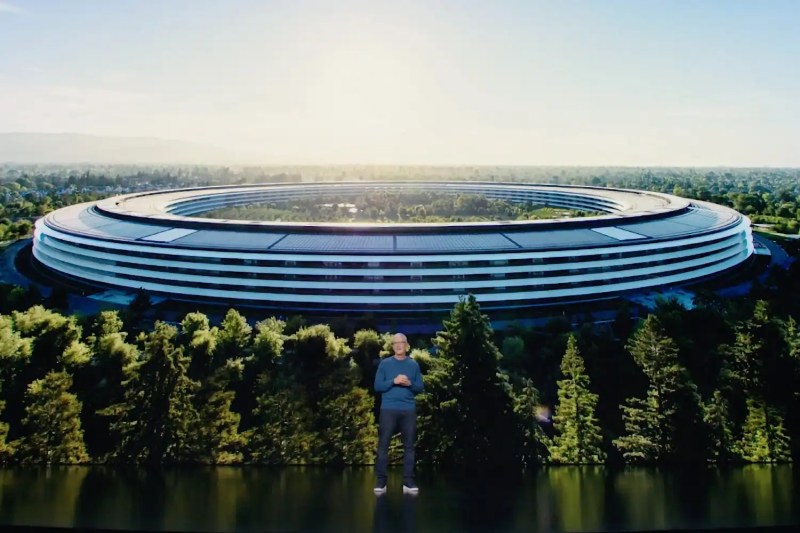
Apple Park Tim Cook AAPL

AAPL is a California-based computer company that became the most successful smartphone company in the world.

AAPL defined by Apple

Here’s how Apple defines itself:

Apple revolutionized personal technology with the introduction of the Macintosh in 1984. Today, Apple leads the world in innovation with iPhone, iPad, Mac, Apple Watch, and Apple TV. Apple’s five software platforms — iOS, iPadOS, macOS, watchOS, and tvOS — provide seamless experiences across all Apple devices and empower people with breakthrough services including the App Store, Apple Music, Apple Pay, and iCloud. Apple’s more than 100,000 employees are dedicated to making the best products on earth, and to leaving the world better than we found it.

Key AAPL history

From Apple I to iMac

Apple was founded in 1976 by Steve Jobs (Steve), Steve Wozniak (Woz), and (briefly) Ronald Wayne as a business partnership: Apple Computer Company. The following year it became Apple Computer, Inc. The company’s first product was the Apple I, a personal computer hand-built by Woz and sold in part-completed kit form. The Apple II and Apple III followed.

The modern Apple as we know it today began in 1983, with the launch of the first personal computer with a graphical user interface, the Lisa. Way too expensive to succeed, it was replaced by the Macintosh in 1984, launched with the single showing of a Ridley Scott commercial during the Super Bowl. The Macintosh transformed the world’s understanding of what a computer was, and would eventually lead to Microsoft adopting the GUI approach.

Steve Jobs and then Apple-CEO John Scully fell out in 1985, when Steve wanted to focus on the Macintosh while Scully wanted to put more attention on the Apple II, which was still selling well. That led to Steve being forced out of the company and going off to form NeXT.

Apple focused on selling Macintosh models at the highest possible margins, but would eventually fall foul of a mix of unsustainable pricing in the face of competition from Windows machines, and an overly complex product lineup. By 1996, the company was in trouble, and in 1997 Steve was brought back, along with the NeXT operating system, which would eventually form the basis of Mac OS X.

Steve simplified the Mac lineup and had industrial designer Jony Ive work on a whole new look for a consumer desktop Mac, the colorful iMac. The iMac, like the original Macintosh, again changed the world’s understanding of what a computer was, and who should want one.

From Apple Computer, Inc. to Apple, Inc.

In 2001, Apple launched the iPod. Although this wasn’t the first mp3 player, it was massively better than anything on the market at the time, and succeeded in turning a geeky piece of technology into a consumer electronics product with mass-market appeal.

The success of the iPod paved the way into other mobile devices. Apple was working on what would eventually become the iPad, when Steve realized that this was the basis of a smartphone. He diverted the team’s work into this, to launch the iPhone in 2007. The iPad launched later, in 2010.

The iPhone was yet another transformational product. While most other smartphones of the time were clunky devices with a keyboard and stylus, the iPhone was a sleek-looking device operated with a finger, and so simple that no user guide was needed. It was with the launch of the iPhone that Apple Computer, Inc. was renamed to Apple, Inc.

From Intel to Apple Silicon

While the iPhone, iPad, Apple Watch, and more are made with Apple-designed processors, the Mac lineup has historically relied on third-party companies for its CPUs. Over the years, Macs progressed from Motorola 680000 series chips through PowerPC to Intel.

In 2020, Apple began a two-year transition to the final stage in that journey, with Macs too finally getting Apple-designed chips. The first such is the M1 chip, used in the latest Mac mini, MacBook Air, and 13-inch MacBook Pro. Other Apple Silicon Macs followed.

AAPL today

Apple is one of the largest companies in the world. It was the first publicly traded company to hit a trillion-dollar valuation in 2018, $2 trillion in 2020, and $3T in 2022.

The company’s product lineup includes five different Mac families (MacBook Air, MacBook Pro, iMac, Mac Pro, and Mac mini); four iPad ranges (iPad mini, iPad, iPad Air, iPad Pro); four iPhone 12 models (12, 12 mini, 12 Pro, 12 Pro Max); three main Apple Watch models (SE, Series 3, Series 6); as well as other products, including Apple TV, AirPods, and HomePod mini.

In addition to hardware sales, Apple derives a growing proportion of its income from Services, including the App Store, iCloud, Apple Music, and Apple Pay.

Apple demanded hugely sensitive Steam data as part of its legal battle with Epic

Steam data demanded by Apple

Apple might position itself as the champion of privacy when it comes to personal data, but court records showed that the company demanded hugely sensitive data from game distribution service Steam to help in the battle with Epic Games.

The reason? Epic previously criticized Steam’s cut from game developers, accusing platform owner Valve of “sucking out a huge fraction of the profits from games.” Apple wanted to understand more about Valve’s business model with Steam in order to help it make its own case for the App Store. The data that Apple demanded from Valve – which is not even a party to the case – was pretty insane…

Expand Expanding Close

Apple launches 2021 Platform Security guide with iOS 14, macOS Big Sur, Apple Silicon deep dive

Apple has published its 2021 update to its Platform Security guide today along with refreshing the Apple Platform Security landing page. The latest guide goes in-depth on the new and updated security features that have arrived with iOS 14, macOS 11 Big Sur, Apple Silicon Macs, watchOS 7, and more. Apple has also launched an all-new Security Certifications and Compliance Center website and guide.

Expand Expanding Close

Apple 6G plans already under way, though rollout not expected until 2030

Apple 6G job ads

5G might still be at a rather early stage in terms of coverage, but that’s not stopping work on Apple’s 6G plans. The goal of 6G is to allow speeds up to 100 times faster than 5G, but that is simply a broad ambition at this stage, with much of the required technology still to be figured out.

Apple has placed job ads for research engineers to work on the next generation of high-speed mobile data…

Expand Expanding Close

Apple and Prepear reach an agreement on pear-shaped logo trademark

Apple decided to take legal action against a company called Prepear in August 2020 because the company has a pear-shaped logo, which Apple claims is very similar to its own logo — although Prepear has nothing to do with technology. Today, however, both companies have reached an agreement, and Apple will let Prepear use the fruit logo with a subtle change.

Expand Expanding Close

Tim Cook profile: From political diplomacy to negotiating parts prices to within $0.000001

Site default logo image

Bloomberg has a long and sprawling Tim Cook profile, covering everything from his operations expertise to his diplomacy in dealing with the Trump era, and how he will need to employ some of those same skills in working with President Biden.

The lengthy feature skirts rather close to feeling like a puff piece in places – singing Cook’s virtues at considerable length – but balances this with some interesting insider baseball on the company …

Expand Expanding Close

Chip shortage hitting iPhone 12 could get much worse, say experts

Chip shortage hitting iPhone 12

A pandemic-induced worldwide chip shortage is continuing to hit iPhone 12 production, despite Apple’s advantages in negotiating priority with many of its suppliers. So far, the company has been affected by shortages of both power management chips and LiDAR components – and there are fears that the situation could get a lot worse.

The automotive industry has been particularly badly hit, with lack of semiconductors resulting in an estimated $61B in lost sales. Experts now fear that the impact on the consumer electronics sector could be even greater …

Expand Expanding Close

EU antitrust chief gives Apple reminder to play fair as privacy ad tracking feature looms

How to allow and block iPhone app tracking

Apple’s ad tracking transparency (ATT) feature is set to officially launch in “early spring.” And over the previous months, Facebook has been the biggest critic of the impending changes. Ahead of the new iOS privacy requirement, EU antitrust chief Margrethe Vestager has said it does look to line up with some of the proposed legislation in Europe but also gave a warning for Apple to play fair.

Expand Expanding Close

The crazy journey of empty iPad boxes halfway across the world and back

Some empty iPad boxes making a crazy journey halfway across the world and back is a surreal illustration of the distribution challenges Apple is facing during the pandemic.

Apple has historically relied on buying cargo capacity on passenger flights to ensure products arrive in the right country at the right time, but the coronavirus crisis has of course decimated the air travel industry …

Expand Expanding Close

Apple antitrust case settled in South Korea; businesses and consumers benefit

Apple antitrust case settled in South Korea

An Apple antitrust case in South Korea has finally been settled, almost five years after the company was first accused of abusing its dominant position in the marketplace. Following an investigation, Apple was found guilty of anti-competitive practices in 2018.

Apple proposed to settle the matter by agreeing to cease the practices that led to the ruling, and by offering to take steps to benefit both businesses and consumers …

Expand Expanding Close

Apple borrowed $14B through bond issue to fund stock buybacks and dividends

Apple borrowed 14B dollars via bonds

Apple borrowed $14B though a new bond issue with terms of up to 40 years. The company said only that the money will be used for “general corporate purpose,” but it’s believed the bulk of it will be used to allow the company to buy back more of its own stock and to pay higher dividends.

Although a cash-rich company, Apple still borrows money for a couple of reasons …

Expand Expanding Close