AAPL Company

See All Stories

Breaking news from Cupertino. We’ll give you the latest from Apple headquarters and decipher fact from fiction from the rumor mill.
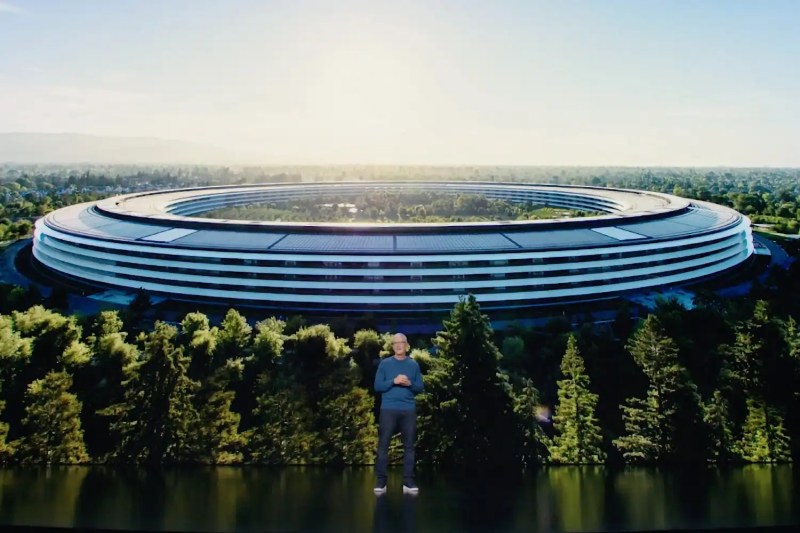
Apple Park Tim Cook AAPL

AAPL is a California-based computer company that became the most successful smartphone company in the world.

AAPL defined by Apple

Here’s how Apple defines itself:

Apple revolutionized personal technology with the introduction of the Macintosh in 1984. Today, Apple leads the world in innovation with iPhone, iPad, Mac, Apple Watch, and Apple TV. Apple’s five software platforms — iOS, iPadOS, macOS, watchOS, and tvOS — provide seamless experiences across all Apple devices and empower people with breakthrough services including the App Store, Apple Music, Apple Pay, and iCloud. Apple’s more than 100,000 employees are dedicated to making the best products on earth, and to leaving the world better than we found it.

Key AAPL history

From Apple I to iMac

Apple was founded in 1976 by Steve Jobs (Steve), Steve Wozniak (Woz), and (briefly) Ronald Wayne as a business partnership: Apple Computer Company. The following year it became Apple Computer, Inc. The company’s first product was the Apple I, a personal computer hand-built by Woz and sold in part-completed kit form. The Apple II and Apple III followed.

The modern Apple as we know it today began in 1983, with the launch of the first personal computer with a graphical user interface, the Lisa. Way too expensive to succeed, it was replaced by the Macintosh in 1984, launched with the single showing of a Ridley Scott commercial during the Super Bowl. The Macintosh transformed the world’s understanding of what a computer was, and would eventually lead to Microsoft adopting the GUI approach.

Steve Jobs and then Apple-CEO John Scully fell out in 1985, when Steve wanted to focus on the Macintosh while Scully wanted to put more attention on the Apple II, which was still selling well. That led to Steve being forced out of the company and going off to form NeXT.

Apple focused on selling Macintosh models at the highest possible margins, but would eventually fall foul of a mix of unsustainable pricing in the face of competition from Windows machines, and an overly complex product lineup. By 1996, the company was in trouble, and in 1997 Steve was brought back, along with the NeXT operating system, which would eventually form the basis of Mac OS X.

Steve simplified the Mac lineup and had industrial designer Jony Ive work on a whole new look for a consumer desktop Mac, the colorful iMac. The iMac, like the original Macintosh, again changed the world’s understanding of what a computer was, and who should want one.

From Apple Computer, Inc. to Apple, Inc.

In 2001, Apple launched the iPod. Although this wasn’t the first mp3 player, it was massively better than anything on the market at the time, and succeeded in turning a geeky piece of technology into a consumer electronics product with mass-market appeal.

The success of the iPod paved the way into other mobile devices. Apple was working on what would eventually become the iPad, when Steve realized that this was the basis of a smartphone. He diverted the team’s work into this, to launch the iPhone in 2007. The iPad launched later, in 2010.

The iPhone was yet another transformational product. While most other smartphones of the time were clunky devices with a keyboard and stylus, the iPhone was a sleek-looking device operated with a finger, and so simple that no user guide was needed. It was with the launch of the iPhone that Apple Computer, Inc. was renamed to Apple, Inc.

From Intel to Apple Silicon

While the iPhone, iPad, Apple Watch, and more are made with Apple-designed processors, the Mac lineup has historically relied on third-party companies for its CPUs. Over the years, Macs progressed from Motorola 680000 series chips through PowerPC to Intel.

In 2020, Apple began a two-year transition to the final stage in that journey, with Macs too finally getting Apple-designed chips. The first such is the M1 chip, used in the latest Mac mini, MacBook Air, and 13-inch MacBook Pro. Other Apple Silicon Macs followed.

AAPL today

Apple is one of the largest companies in the world. It was the first publicly traded company to hit a trillion-dollar valuation in 2018, $2 trillion in 2020, and $3T in 2022.

The company’s product lineup includes five different Mac families (MacBook Air, MacBook Pro, iMac, Mac Pro, and Mac mini); four iPad ranges (iPad mini, iPad, iPad Air, iPad Pro); four iPhone 12 models (12, 12 mini, 12 Pro, 12 Pro Max); three main Apple Watch models (SE, Series 3, Series 6); as well as other products, including Apple TV, AirPods, and HomePod mini.

In addition to hardware sales, Apple derives a growing proportion of its income from Services, including the App Store, iCloud, Apple Music, and Apple Pay.

Apple Store and office closures in China due to coronavirus to extend a few more days than first expected

Apple Store China

We learned earlier this morning via an email to Apple employees affected by the store and office closures due to coronavirus that the re-opening date of February 10 would likely be pushed back. Now Apple has shared more details that the new plan is to open most stores and offices late next week (via Bloomberg).


Expand
Expanding
Close

Foxconn’s HQ will not re-open on February 10 as coronavirus fight continues

Foxconn's HQ will not re-open on February 10

Foxconn has announced that its headquarters, and one of its iPhone plants, will not re-open on February 10. Monday was scheduled to be the date on which Chinese businesses would resume operations after an extended break to limit the spread of the coronavirus.

The news comes on the same day that we learn Apple Stores in China are also unlikely to re-open on this date…


Expand
Expanding
Close

Coronavirus latest: Apple Stores in China unlikely to re-open on February 10

Apple Stores in China unlikely to re-open on time

Apple Stores in China were closed on February 1st in response to the coronavirus, with the company stating that they would remain so through February 9. Store webpages say that they will re-open on Monday, but a memo to local staff from retail and people head Deidre O’Brien suggests this is now unlikely.

The Chinese government had suggested February 10 as the date on which businesses would resume operations, but it appears Apple may take a two-stage approach…


Expand
Expanding
Close

Apple comes under fire for Independent Repair Program contract that lawyers are calling ‘crazy’

Apple Independent Repair Program

Apple announced its Independent Repair Program last August that’s designed to let small businesses that aren’t Apple Authorized Service Providers a way to get Apple-genuine parts, training, and resources. The launch of the program was seen as a positive move for small shops that would give more customers access to legitimate repairs. However, the contract for the Independent Repair Program has recently leaked and Apple is seeing heavy criticism from lawyers and members of the repair community who are calling the terms of the contract “crazy” and “onerous.”


Expand
Expanding
Close

Apple and other tech giants achieve 20-year high in stock market dominance

Stock market dominance by Apple not worrying says bank

Apple and four other tech giants now account for a full 18% of the S&P 500 index, giving them the greatest level of stock market dominance seen in 20 years, according to Goldman Sachs.

But while they are trading at record price-earnings ratio, something that played a key role in the dotcom crash, the same risk isn’t present here, says the bank…


Expand
Expanding
Close

137 countries start work on tax rules for tech giants; Tim Cook backs approach

start work on tax rules for tech giants

Officials from 137 governments have begun work on new international tax rules for tech giants. The new rules will be designed to ensure that tech companies pay tax in each of the countries in which they operate, preventing them from funneling profits through to a low-tax country.

This will impact companies like Apple, which used Ireland as its European HQ and funneled profits from Apple Stores throughout Europe…


Expand
Expanding
Close

Apple beat Samsung in Q4 smartphones, but fell behind Huawei across whole year

Apple beat Samsung in Q4 smartphones

Apple beat Samsung in Q4 2019 smartphone shipments, but dropped from second to third place behind Huawei when looking at the year as a whole.

That’s the picture painted by Strategy Analytics, which estimated that Apple shipped 70.7M iPhones in Q4 2019 against 68.8M Samsung smartphones in the same quarter. It’s a reversal of the same quarter last year when the Korean company was comfortably ahead…


Expand
Expanding
Close

Opinion: Apple’s record earnings suggest it has now found the magic formula

Apple's record earnings from a new formula

There’s no single factor that explains Apple’s record earnings in the holiday quarter. The reality with a company of Apple’s size will always involve multiple elements, some of which will be rather mundane.

Services revenue, for example. Sure, the story Apple would like to point to is the glitz of its latest high-profile launch, Apple TV+, but there’s almost nobody paying for it at this point. The largest single contributor of Services cash will likely be the billions that Google pays to be the default search engine on iOS devices. A further significant chunk will come from the equally boring AppleCare policies, iCloud storage tiers, and the like.

But I think there is also a more exciting aspect to it…


Expand
Expanding
Close

Apple announces record holiday Q1 2020 earnings: revenue of $91.8 billion, more

Apple's record earnings

AAPL’s Q1 2020 earnings day is here, covering the lucrative holiday shopping season. For the first fiscal quarter of 2020, Apple had forecast revenue between $85.5 billion and $89.5 billion. That compares to the $84.3 billion it reported in the same quarter one year ago.

So how did Apple perform during Q1 2020? The company has announced revenue of $91.8 billion and profit of $22.2 billion. That’s an all-time record for both net income and revenue, Apple says.

Apple no longer reports iPhone, iPad, and Mac unit sales numbers, though it does report a revenue breakdown by product category. More details below.


Expand
Expanding
Close

The Unofficial Apple Archive loses most of its videos after DMCA takedowns

The Unofficial Apple Archive

The Unofficial Apple Archive, which collated more than 15,000 classic Apple ads and other materials, has lost most of its videos after DMCA takedown notices issued by the Cupertino, California, company. The videos have been removed less than two weeks after the site was launched.

Site creator Sam Henri Gold told us that he only wanted to save Apple’s history from being lost after the EveryAppleAds YouTube channel was taken down in April 2017…


Expand
Expanding
Close