AAPL Company

See All Stories

Breaking news from Cupertino. We’ll give you the latest from Apple headquarters and decipher fact from fiction from the rumor mill.
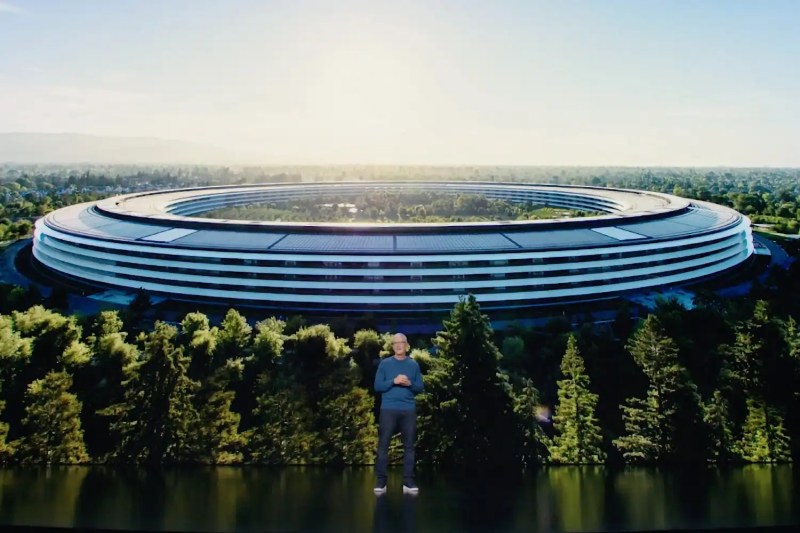
Apple Park Tim Cook AAPL

AAPL is a California-based computer company that became the most successful smartphone company in the world.

AAPL defined by Apple

Here’s how Apple defines itself:

Apple revolutionized personal technology with the introduction of the Macintosh in 1984. Today, Apple leads the world in innovation with iPhone, iPad, Mac, Apple Watch, and Apple TV. Apple’s five software platforms — iOS, iPadOS, macOS, watchOS, and tvOS — provide seamless experiences across all Apple devices and empower people with breakthrough services including the App Store, Apple Music, Apple Pay, and iCloud. Apple’s more than 100,000 employees are dedicated to making the best products on earth, and to leaving the world better than we found it.

Key AAPL history

From Apple I to iMac

Apple was founded in 1976 by Steve Jobs (Steve), Steve Wozniak (Woz), and (briefly) Ronald Wayne as a business partnership: Apple Computer Company. The following year it became Apple Computer, Inc. The company’s first product was the Apple I, a personal computer hand-built by Woz and sold in part-completed kit form. The Apple II and Apple III followed.

The modern Apple as we know it today began in 1983, with the launch of the first personal computer with a graphical user interface, the Lisa. Way too expensive to succeed, it was replaced by the Macintosh in 1984, launched with the single showing of a Ridley Scott commercial during the Super Bowl. The Macintosh transformed the world’s understanding of what a computer was, and would eventually lead to Microsoft adopting the GUI approach.

Steve Jobs and then Apple-CEO John Scully fell out in 1985, when Steve wanted to focus on the Macintosh while Scully wanted to put more attention on the Apple II, which was still selling well. That led to Steve being forced out of the company and going off to form NeXT.

Apple focused on selling Macintosh models at the highest possible margins, but would eventually fall foul of a mix of unsustainable pricing in the face of competition from Windows machines, and an overly complex product lineup. By 1996, the company was in trouble, and in 1997 Steve was brought back, along with the NeXT operating system, which would eventually form the basis of Mac OS X.

Steve simplified the Mac lineup and had industrial designer Jony Ive work on a whole new look for a consumer desktop Mac, the colorful iMac. The iMac, like the original Macintosh, again changed the world’s understanding of what a computer was, and who should want one.

From Apple Computer, Inc. to Apple, Inc.

In 2001, Apple launched the iPod. Although this wasn’t the first mp3 player, it was massively better than anything on the market at the time, and succeeded in turning a geeky piece of technology into a consumer electronics product with mass-market appeal.

The success of the iPod paved the way into other mobile devices. Apple was working on what would eventually become the iPad, when Steve realized that this was the basis of a smartphone. He diverted the team’s work into this, to launch the iPhone in 2007. The iPad launched later, in 2010.

The iPhone was yet another transformational product. While most other smartphones of the time were clunky devices with a keyboard and stylus, the iPhone was a sleek-looking device operated with a finger, and so simple that no user guide was needed. It was with the launch of the iPhone that Apple Computer, Inc. was renamed to Apple, Inc.

From Intel to Apple Silicon

While the iPhone, iPad, Apple Watch, and more are made with Apple-designed processors, the Mac lineup has historically relied on third-party companies for its CPUs. Over the years, Macs progressed from Motorola 680000 series chips through PowerPC to Intel.

In 2020, Apple began a two-year transition to the final stage in that journey, with Macs too finally getting Apple-designed chips. The first such is the M1 chip, used in the latest Mac mini, MacBook Air, and 13-inch MacBook Pro. Other Apple Silicon Macs followed.

AAPL today

Apple is one of the largest companies in the world. It was the first publicly traded company to hit a trillion-dollar valuation in 2018, $2 trillion in 2020, and $3T in 2022.

The company’s product lineup includes five different Mac families (MacBook Air, MacBook Pro, iMac, Mac Pro, and Mac mini); four iPad ranges (iPad mini, iPad, iPad Air, iPad Pro); four iPhone 12 models (12, 12 mini, 12 Pro, 12 Pro Max); three main Apple Watch models (SE, Series 3, Series 6); as well as other products, including Apple TV, AirPods, and HomePod mini.

In addition to hardware sales, Apple derives a growing proportion of its income from Services, including the App Store, iCloud, Apple Music, and Apple Pay.

Avoid tech stocks facing antitrust lawsuits, warns Apple Card partner bank

Avoid tech stocks facing antitrust lawsuits, investors told

Goldman Sachs, Apple’s partner for the Apple Card launching later this year, has warned investors to avoid tech stocks which become subject to antitrust lawsuits.

Apple currently faces two antitrust suits, one from customers, another from developers – with a separate antitrust investigation underway in Europe and the prospect of another in the US …


Expand
Expanding
Close

Report: Apple leveraged mobile deals with Comcast and Charter to require iPad and Apple TV sales

iPad Pro

A new report out this afternoon from CNBC describes how Apple gets third-parties to sell more of its products, sometimes at subsidized prices. In the case of Comcast and Charter, Apple has reportedly used leverage from deals with the companies’ mobile divisions to require specific sales of its iPad and Apple TV.


Expand
Expanding
Close

Opinion: Apple could, and should, do the right thing on tax

I'd like to see Apple do the right thing on tax

Apple has long aimed to do the right thing, not just the profitable one, on a great many fronts. On tax avoidance, not so much.

Apple could be the good guy here. It could be the one tech company to take a strong stand on paying its dues, rather than using any loophole it can find to minimize the amount of tax it pays.

That would, I suggest, be consistent with the company’s approach to other areas of corporate responsibility …


Expand
Expanding
Close

Apple cancels 700-acre data center project in Denmark, looks to sell off the land

Apple data center

In a surprise announcement, Apple has cancelled plans to open a large data center in Aabenraa, Denmark. The news was posted on the local town’s website. Apple is looking to sell off the land and leave the site completely.

The Aabenraa site was set to be Apple’s second data center in Denmark, first announced in July 2017. The company is also working on a facility in the city of Viborg …


Expand
Expanding
Close

Privacy: What Apple does and doesn’t know about you

What Apple does and doesn't know about you

Apple of course prioritizes the privacy of customer data, but a new analysis takes a look at what Apple does and doesn’t know about you.

Apple pitches itself as the most privacy-minded of the big tech companies, and indeed it goes to great lengths to collect less data than its rivals. Nonetheless, the iPhone maker will still know plenty about you if you use many of its services …


Expand
Expanding
Close

All US iPhones can be made outside China to escape trade war, says Foxconn

All US iPhones could be made outside China, says Foxconn

With US iPhones currently made in China, there has been much concern about the escalating trade war between the two countries. The worst-case scenario would be a 25% tariff on iPhones entering the US, which would either push up prices, hurt Apple’s bottom line, or both.

But Foxconn has said that the iPhone would be able to escape this fate, as the assembler has enough capacity in other countries to supply all US iPhones …


Expand
Expanding
Close

G20 agrees deadline for global tax crackdown on tech giants like Apple

G20 agrees tax crackdown on tech giants

The G20 has set a deadline for a two-prong tax crackdown on tech giants, which could hit companies like Apple, Amazon, Facebook, Google and Uber. The 20 members have agreed to put in place by 2020 measures to stop international companies using tax loopholes to pay less tax than locally-based companies.

One of the arrangements used by Apple has been cited as an example of this type of loophole …


Expand
Expanding
Close

Screen Time APIs would meet everyone's needs

Apple walks back MDM parental control apps ban, but with tighter guidelines

Over the last month, there’s been some controversy between Apple and iOS developers who make parental control apps that use mobile device management (MDM). Most recently, Apple said it was only going to allow parental control apps that didn’t use MDM, but now “in limited cases” it will let developers use the solution.


Expand
Expanding
Close

Apple executives offer details on iPadOS, rejecting 40% of apps over privacy concerns, more

Following Apple’s WWDC keynote yesterday, a pair of Apple executives sat down with CNET to talk more about the company’s announcements. Craig Federighi offered more color on Apple’s decision to break iPad out of the iOS branding, while software technology VP Guy “Bud” Tribble talked about Sign in with Apple, as well as the App Store review process.


Expand
Expanding
Close

Apple antitrust woes could worsen as US ponders major tech giant investigation

Apple antitrust investigation by Justice Department being considered

Apple antitrust concerns are growing as the US government is now considering a major investigation into possible anticompetitive behaviors by Apple, Amazon, Facebook and Google. It follows an earlier report which suggested only Google was at risk.

If the probe does go ahead, Apple and Google are likely to be investigated by the Justice Department rather than the FTC …


Expand
Expanding
Close