AAPL Company

See All Stories

Breaking news from Cupertino. We’ll give you the latest from Apple headquarters and decipher fact from fiction from the rumor mill.
Apple Park Tim Cook AAPL

AAPL is a California-based computer company that became the most successful smartphone company in the world.

AAPL defined by Apple

Here’s how Apple defines itself:

Apple revolutionized personal technology with the introduction of the Macintosh in 1984. Today, Apple leads the world in innovation with iPhone, iPad, Mac, Apple Watch, and Apple TV. Apple’s five software platforms — iOS, iPadOS, macOS, watchOS, and tvOS — provide seamless experiences across all Apple devices and empower people with breakthrough services including the App Store, Apple Music, Apple Pay, and iCloud. Apple’s more than 100,000 employees are dedicated to making the best products on earth, and to leaving the world better than we found it.

Key AAPL history

From Apple I to iMac

Apple was founded in 1976 by Steve Jobs (Steve), Steve Wozniak (Woz), and (briefly) Ronald Wayne as a business partnership: Apple Computer Company. The following year it became Apple Computer, Inc. The company’s first product was the Apple I, a personal computer hand-built by Woz and sold in part-completed kit form. The Apple II and Apple III followed.

The modern Apple as we know it today began in 1983, with the launch of the first personal computer with a graphical user interface, the Lisa. Way too expensive to succeed, it was replaced by the Macintosh in 1984, launched with the single showing of a Ridley Scott commercial during the Super Bowl. The Macintosh transformed the world’s understanding of what a computer was, and would eventually lead to Microsoft adopting the GUI approach.

Steve Jobs and then Apple-CEO John Scully fell out in 1985, when Steve wanted to focus on the Macintosh while Scully wanted to put more attention on the Apple II, which was still selling well. That led to Steve being forced out of the company and going off to form NeXT.

Apple focused on selling Macintosh models at the highest possible margins, but would eventually fall foul of a mix of unsustainable pricing in the face of competition from Windows machines, and an overly complex product lineup. By 1996, the company was in trouble, and in 1997 Steve was brought back, along with the NeXT operating system, which would eventually form the basis of Mac OS X.

Steve simplified the Mac lineup and had industrial designer Jony Ive work on a whole new look for a consumer desktop Mac, the colorful iMac. The iMac, like the original Macintosh, again changed the world’s understanding of what a computer was, and who should want one.

From Apple Computer, Inc. to Apple, Inc.

In 2001, Apple launched the iPod. Although this wasn’t the first mp3 player, it was massively better than anything on the market at the time, and succeeded in turning a geeky piece of technology into a consumer electronics product with mass-market appeal.

The success of the iPod paved the way into other mobile devices. Apple was working on what would eventually become the iPad, when Steve realized that this was the basis of a smartphone. He diverted the team’s work into this, to launch the iPhone in 2007. The iPad launched later, in 2010.

The iPhone was yet another transformational product. While most other smartphones of the time were clunky devices with a keyboard and stylus, the iPhone was a sleek-looking device operated with a finger, and so simple that no user guide was needed. It was with the launch of the iPhone that Apple Computer, Inc. was renamed to Apple, Inc.

From Intel to Apple Silicon

While the iPhone, iPad, Apple Watch, and more are made with Apple-designed processors, the Mac lineup has historically relied on third-party companies for its CPUs. Over the years, Macs progressed from Motorola 680000 series chips through PowerPC to Intel.

In 2020, Apple began a two-year transition to the final stage in that journey, with Macs too finally getting Apple-designed chips. The first such is the M1 chip, used in the latest Mac mini, MacBook Air, and 13-inch MacBook Pro. Other Apple Silicon Macs followed.

AAPL today

Apple is one of the largest companies in the world. It was the first publicly traded company to hit a trillion-dollar valuation in 2018, $2 trillion in 2020, and $3T in 2022.

The company’s product lineup includes five different Mac families (MacBook Air, MacBook Pro, iMac, Mac Pro, and Mac mini); four iPad ranges (iPad mini, iPad, iPad Air, iPad Pro); four iPhone 12 models (12, 12 mini, 12 Pro, 12 Pro Max); three main Apple Watch models (SE, Series 3, Series 6); as well as other products, including Apple TV, AirPods, and HomePod mini.

In addition to hardware sales, Apple derives a growing proportion of its income from Services, including the App Store, iCloud, Apple Music, and Apple Pay.

Five fascinating revelations from ‘Becoming Steve Jobs’

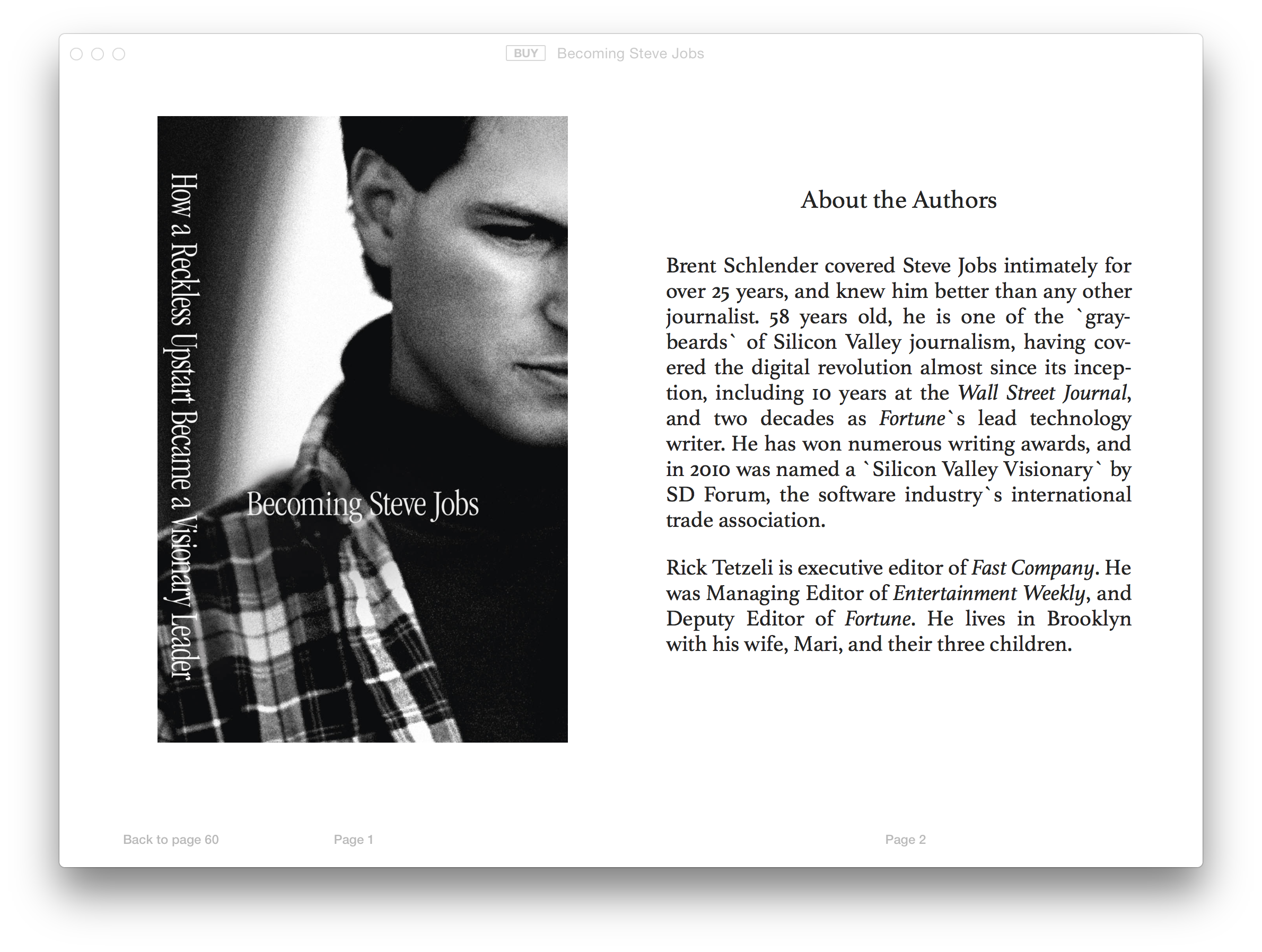
Becoming Steve Jobs, the new biography of Steve Jobs by Brent Schlender and Rick Tetzeli, will be officially released tomorrow by Crown Business/Penguin Random House, and is currently available as a pre-order from Amazon ($12+) and Apple’s iBookstore ($13). Here are just some of the interesting revelations found inside, including some details regarding Jobs’ evolving attitude towards the media.

Jobs’ return to Apple was almost certainly not a strategic takeover. Despite speculation that Steve Jobs may have strategically orchestrated a takeover of Apple during his sale of NeXT — a view shared by Bill Gates and former Apple CEO Gil Amelio — the book suggests that Jobs was truly uncertain about his continued involvement with the company. Avie Tevanian and Jon Rubinstein, “the two men whom Steve trusted the most at Apple… agree that Steve did not intend to become Apple’s CEO,” and that they didn’t think they were going to be working for him there. Despite Jobs’ love for Apple, the company was in a precarious financial situation, and he had competing demands for his time.

A year later, Jobs told the authors that just as Bob Dylan would “never stand still,” and was “always risking failure” — the mark of a true artist — “[t]his Apple thing is that way for me.” Confronting the risk of failure and the consequences for his reputation, family, and Pixar, Jobs “finally decided, I don’t really care, this is what I want to do. And if I try my best and fail, well, I tried my best.” Jobs adopted the term “iCEO” or “interim CEO,” reflecting his continued uncertainty about the position…


Expand
Expanding
Close

‘Becoming Steve Jobs’ on Apple, NeXT, and Pixar

Becoming Steve Jobs, the new biography of Steve Jobs by Brent Schlender and Rick Tetzeli, will be officially released tomorrow by Crown Business/Penguin Random House, and is currently available as a pre-order from Amazon ($12+) and Apple’s iBookstore ($13). While some of the book’s material will be familiar to avid followers of Jobs and Apple, there are some interesting details inside about how Jobs’ companies Apple, NeXt, and Pixar interrelated.

On NeXT: The book notes that the computer industry changed during Microsoft’s leadership, shifting to an environment where companies — the largest buyers of computers — were seeking reliability and stability rather than innovation. According to the authors, NeXT’s key failure was that it successfully identified a real market for $3,000 workstation computers targeted at the higher-education market, but went so far beyond that price point — in some cases in pursuit of industrial design goals — that few actual customers existed for its product.

NeXT, which was headquartered in the same business park where Steve Jobs first saw Xerox’s Palo Alto Research Center (PARC) and graphical user interface, came tantalizingly close to undermining Microsoft at a key point in its growth: IBM licensed the NeXTSTEP operating system for use in workstations, and might have used it to compete against Windows personal computers.

“But Steve… held up IBM for more money, leading to another round of protracted negotiations. He overplayed his hand. Cannavino stopped taking Steve’s calls and just abandoned the project, although there was never any real announcement that it was over. It was a minor disappointment for IBM, ending its ‘Plan B’ fantasy of creating a real alternative to Microsoft’s new Windows graphical operating system for PCs.”

And there’s more…


Expand
Expanding
Close

Site default logo image

Get ‘Becoming Steve Jobs’ audiobook for free from Audible

From 9to5Toys.com:

Becoming Steve Jobs is already an Amazon and iBooks best seller on the day of its release but if you were on the fence or want the book read to you while you drive or work, Audible makes a pretty good offer. For new email address users, Audible offers a Free Audiobook Download with a 30 Day Trial. You can also get the free Audible trial via Amazon here if you haven’t already signed up through your Amazon account. Audible’s offer is a great way to get introduced to audiobooks if you haven’t already and what better way to spend your free book than on than the critically and Apple Brass-acclaimed Steve Jobs bio narrated by George Newbern.

Audible members, new and old, can get ‘Becoming Steve Jobs’ here. 
Expand
Expanding
Close

‘Becoming Steve Jobs’ on how Steve evolved & the Buddhist notion of ‘Becoming’

Becoming Steve Jobs, the new biography of Steve Jobs by Brent Schlender and Rick Tetzeli, will be officially released tomorrow by Crown Business/Penguin Random House, and is currently available as a pre-order from Amazon ($20/print, $12/Kindle, $30/audiobook or free audiobook with Audible trial) and Apple’s iBookstore ($13). Bringing together years of personal interviews with Steve Jobs and his colleagues, the authors have assembled a substantial collection of insights about how Jobs evolved over time as a person and a leader.

One key focus of the book is reflected in the title: the Buddhist notion “that everything, and every individual, is ceaselessly in the process of” evolving — “becoming” — rather than static.

“[D]espite the fact that he could be almost unfathomably stubborn and opinionated at times, the man himself was constantly adapting, following his nose, learning, trying out new dimensions. He was constantly in the act of becoming.”

For this reason, the authors suggest that Jobs’s personality was misunderstood — at least during his second run at Apple — in part because he decided to cut most of his interaction with the press, except for structured discussions during new product launches. As such, the public picture of Jobs as an intemperate, immature young man wasn’t adequately updated to reflect his later maturity into the wiser and more effective leader who achieved Apple’s historic transformation…


Expand
Expanding
Close

‘Becoming Steve Jobs’ on Jobs’s Personal Life, Friends, and Enemies

Site default logo image

Becoming Steve Jobs, the new biography of Steve Jobs by Brent Schlender and Rick Tetzeli, will be officially released tomorrow by Crown Business/Penguin Random House, and is currently available as a pre-order from Amazon/iBooks. I’ve been reading an advance copy of the book, and it’s packed with interesting details — including some not previously known — about Jobs’ personal life, friends, and enemies.

For instance, Schlender and Tetzeli add color to some of the previously known defining moments in Jobs’ life, including the birth of his daughter Lisa and son Reed, and his marriage to Laurene Powell. The book notes that Jobs was not there for Lisa’s birth, which took place at the apple orchard that inspired his company’s name, and later appeared to regret that he’d made a mistake missing the major life event. He became a devoted family man after marrying Laurene — notably at Yosemite National Park — and made time most evenings to have dinner with his wife and kids, but continued to work late into the night from computers at his home. According to the book, Jobs laughed most deeply and often when interacting with his kids, and was there for Reed’s birth; the “hippie” couple even allowed the infant to sleep in bed with them at first…


Expand
Expanding
Close

Site default logo image

Apple launches new website to provide free Apple Pay decals to businesses, publishes payment mark guidelines

Apple has launched a new website today that allows business owners to order Apple Pay decal packs for their stores. Each of these packs includes two glass decals in different sizes, two register decals (also in different sizes), and a tool for affixing the ads to the appropriate surfaces.

Businesses can order up to five of these packs (for a total of twenty decals) absolutely free of charge, but those who need more than five will need to call Apple to place an order.

Earlier this month Apple made the Apple Pay logo available for download and provided a PDF explaining its guidelines for using the payment mark. In its guideline document, Apple specifies that the Apple Pay logo should be placed ahead of similar marks for other payment services like MasterCard and Visa.

There are also rules for sizing the icon for physical signs, mobile and desktop websites, and emails. The guidelines document and a vector version of the payment mark are available for download from the Apple Pay web page.

Earlier this month Apple also published an Apple Pay FAQ page, and AppleCare started handling support for businesses that accept the mobile payment service.

Site default logo image

Apple shares updated aerial shot of Campus 2 construction progress

Apple today shared an updated aerial shot of its under construction Campus 2 project since last checking in earlier this month. As always, the company posted the image above to the City of Cupertino’s webpage tracking updates on the project.

The new image shares a different perspective of the site compared to photos Apple shared earlier this month and views from the latest 4K drone flyover.

Earlier this month CEO Tim Cook spoke to Fast Company about the new campus:

It’s critical that Apple do everything it can to stay informal. And one of the ways that you stay informal is to be together. One of the ways that you ensure collaboration is to make sure people run into each other—not just at the meetings that are scheduled on your calendar, but all the serendipitous stuff that happens every day in the cafeteria and walking around.

Apple expects to begin moving in around 12,000 of its employees into the new Campus by 2017 if it completes the project on schedule.

We’ve been tracking all of the official and unofficial updates we’ve received on the project in our Apple Campus 2 project timeline.

Apple and IBM rolling out MobileFirst iOS enterprise apps localized for Japan

Site default logo image

Following the release of the MobileFirst suite of iOS enterprise apps last year, the result of a new partnership between Apple and IBM, today the companies are rolling out the apps to the Japanese market.

The companies haven’t made an official announcement yet, but sources close to the situation say seven apps are arriving for Japanese customers today.
Expand
Expanding
Close

“He could be a jerk, but never an a-hole” sums up Becoming Steve Jobs, says inner circle journalist

Site default logo image

The conflicting biographies of Steve Jobs, one authorized by its subject prior to his death, the other endorsed by Apple, paint quite different pictures of the man. Walter Isaacson’s Steve Jobs focuses more on his flaws, while Becoming Steve Jobs describes a softer, more rounded person.

A tech journalist who knew Steve well, Steven Levy, has weighed in with his own take in an interesting blog post, The War Over Who Steve Jobs Was. He said that one quote from Becoming Steve Jobs summed-up the view presented by Schlender and Tetzeli.

He could be a jerk, but never an asshole.

Levy says that many of those close to Steve shared the view expressed by Tim Cook on Isaacson’s biography, published soon after Steve’s death, that it did a “tremendous disservice” to him. Jony Ive said that his own regard for the book “couldn’t be any lower” … 
Expand
Expanding
Close

Site default logo image

Woz only wants Sport Apple Watch, thinks a car is the ‘perfect territory’ for Apple

Interviewed in Australia’s Financial Review, Apple co-founder Steve Wozniak said that he will only be buying the entry-level Apple Watch Sport, for now at least.

If you buy the really high-priced ones, the jewellery ones, then you’re not buying a smartwatch that has a bunch of apps … Like a Rolex watch, you’re buying if for prestige and a label and a symbol of who you are […] and for an engineer like me I don’t live in that world, that’s not my world.”

Woz said he’d previously tried and discarded other smartwatches like the Samsung Galaxy Gear once the novelty had worn off, but might splash out on an Apple Watch Edition later if he found himself using the cheaper model “every single day.”

Wozniak, a big Tesla fan, also said that he didn’t know whether Apple was making a car (although technically still an employee or “Fellow”, he has no active involvement with the company) but he did think the idea made sense.

There are an awful lot of companies right now who are playing with electric cars, and there’s a lot more playing with self-driving cars, this is the future and it might be huge … there are so many openings here and it is perfect territory for a company like Apple.

Woz echoed comments by Stephen Hawking and Elon Musk that computers would eventually supercede humans, saying he was unsure whether people would be viewed as gods, pets or ants, but that Moore’s Law may save us. Transistors cannot keep halving in size because by 2020 they’d be down to the size of a single atom, and quantum computing–theoretically operating at a sub-atomic level–has so far made no real progress.

I hope it does come, and we should pursue it because it is about scientific exploring, but in the end we just may have created the species that is above us.”

Apple says it participated in ‘Becoming Steve Jobs’ book from a sense of responsibility to Steve

Site default logo image

In the first official statement about Apple’s decision to allow Tim Cook and other senior executives to be interviewed for Becoming Steve Jobs, company spokesman Steve Dowling said it was from a sense of responsibility to Steve’s memory.

After a long period of reflection following Steve’s death, we felt a sense of responsibility to say more about the Steve we knew. We decided to participate in Brent and Rick’s book because of Brent’s long relationship with Steve, which gave him a unique perspective on Steve’s life. The book captures Steve better than anything else we’ve seen, and we are happy we decided to participate.

Apple had initially refused interview requests by authors Brent Schlender and Rick Tetzeli, the company taking 18 months to change its mind, reports the NY Times … 
Expand
Expanding
Close

Read an exclusive free sample of Becoming Steve Jobs in iBooks

Site default logo image

Becoming Steve Jobs, a new book by Brent Schlender and Rick Tetzeli about Jobs’ life, comes out on March 24th and is available to download both in digital and print. As part of a strong marketing push by Apple in the run up to the book’s release, iBooks is offering an exclusive free sample of the prologue and first chapter that you can download right now. (Update: It’s unclear what countries the sample is being offered in — readers are reporting it showing it for some but not universally.)

Apple has been heavily promoting the book in the last few days, on its iBooks Twitter account as well as through iTunes marketing emails. iBooks describes it as the ‘only book about Steve recommended by the people who knew him best’. For comparison, in one of the chapters, Tim Cook describes the Isaacson biography as a tremendous disservice.


Expand
Expanding
Close

iOS 8.3 includes settings to download free apps and iTunes content without requiring a password

Site default logo image

A reader has spotted that iOS 8.3 includes some new configuration options for password entry in the iTunes and App Store. Labelled as ‘Password Settings’, the new view allows users to configure how frequently Apple should ask for the user’s iTunes Store password for purchases. This includes allowing users to choose to allow free apps to be downloaded, no password necessary.

The first option allows users to require passwords immediately or expire after fifteen minutes. This option has existed in previous versions of iOS, under the Restrictions settings. However, the toggle below — ‘Require Password’ for free downloads is an altogether new option. It allows users to download free apps (and other iTunes content) with no need to type a password. Paid content still requires authentication based on the options above.

The setting is currently disabled on iOS 8.3 devices we tested, although presumably it will activate by the time iOS 8.3 is released to the public.


Expand
Expanding
Close

Review: Elgato’s Game Capture HD60 livestreams your iPad, iPhone, and console games at 1080p/60fps

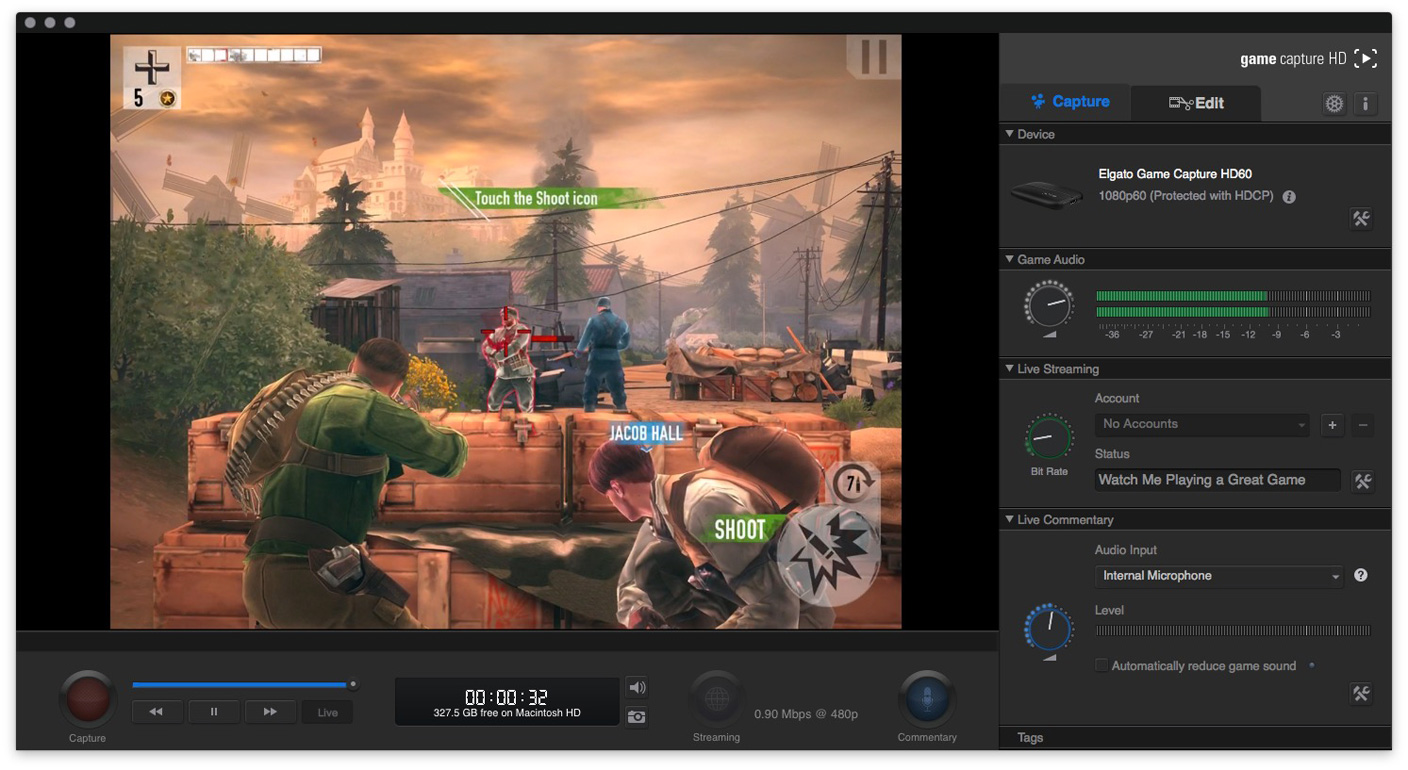
Over the past decade, video gaming became social, as voice chat, multi-player matchmaking, and live game streaming enabled gamers to share their experiences with friends and strangers online. Streaming game video was the hardest, requiring so much horsepower that consoles needed computer assistance. Elgato entered the market in 2012 with Game Capture HD, which was designed to record directly from the PlayStation 3 and Xbox 360. Now there’s a more powerful version called Game Capture HD60 ($180), which offers professional-quality full 1080p HD recording support at 60 frames per second, plus one-touch live streaming to uStream, Twitch, and YouTube. It works with iPads, iPhones and iPod touches using Apple’s Lightning to Digital AV Adapter, and Xbox One, Xbox 360, Wii U and PlayStation 4 game consoles with nothing more than an HDMI cable.

Elgato has years of experience making cutting-edge video recorders: back when Macs weren’t nearly as powerful as they are today, its EyeTV DVRs could record live TV while streaming video to iOS devices. Similarly, Game Capture HD60 lets you simultaneously enjoy lag-free gaming, stream live video to the Internet, and optionally include voice commentary with automatic audio level balancing. It also does all of these things with barely any need for user involvement. And although the price was just a little too high when it debuted last year, it’s now hovering around $150 — a great price given the quality of its video output. Read on for all the details…


Expand
Expanding
Close

Review: TaoTronics’ Bluetooth 4 Car Kit for iPhone adds low-cost speakerphone, music to older cars

Up until recently, no one complained about the way iPhones sounded through my cars’ Bluetooth speakerphones, but after switching to an iPhone 6 Plus and a Toyota Prius, friends and family told me that ambient noise has been increasing to distracting levels during our phone calls. If it wasn’t for those complaints, I would never have thought to test an alternative such as TaoTronics’ TT-BR03 Bluetooth 4.0 Hands-Free Car Kit ($30, currently $25 on Amazon). Most cars these days include Bluetooth speakerphone and music streaming support, but this inexpensive accessory is here for cars that don’t — and for cars exhibiting weird audio-related bugs with iPhones. Judging from its 4.8/5-Star Amazon reviews across over 130 customers, plenty of people still need solutions like this for one of these reasons.

TT-BR03 combines a wired noise-cancelling microphone and three-button remote control with a car charger, using Bluetooth 4.0 and a 3.5mm audio plug to route your iPhone’s audio into a car’s speakers. If your car doesn’t have a 3.5mm aux-in port, you’re out of luck, because TT-BR03 doesn’t have a built-in speaker. But if you do have an aux port, it provides a very competent speakerphone and music streaming experience at a very low price.


Expand
Expanding
Close

Site default logo image

This is the Apple Store’s in-ear headphone try-on Demo Kit

Earlier this month we shared that Apple would soon begin allowing customers to try in-ear headphones at its retail stores. As we mentioned then, Demo Kits include six models of in-ear headphones, half of which are Beats-branded:

The following headphones are available to try out with Demo Kits (Apple’s prices listed, but linked to better prices at Amazon): RHA MA450i ($49.95), urBeats ($99.95), Beats Tour ($149.95), JayBird BlueBuds X ($169.95), PowerBeats 2 Wireless ($199.95), and the Bose QC20i ($299.95).

Japanese blog Macotakara has now shared an image of the Demo Kits including each headphone model reported before. 
Expand
Expanding
Close

Video: See Apple Watch animated emoji and Companion app Home Screen rearranging in action

Site default logo image

Here’s a couple of fun Apple Watch tidbits: for those wondering what the animated emoji look like that you can create on the Watch and send to your phones, we have been sent two examples … one of a smiley emoji and one of a ‘love’ emoji.

This feature was first shown in September as part of the Watch’s unveiling, although interestingly Apple did not show it again at the March Spring Forward event. Users can use touch to adjust the expressions and make ‘custom’ emojis to send to friends.


Expand
Expanding
Close

Review: Aukey’s PB-N30 is the first iPhone external battery with a female Lightning port, but does it matter?

When the first iPhone 6 battery cases hit the market late last year, one 9to5Mac reader commented repeatedly that he was holding out for something with a female Lightning port on the bottom, rather than the currently ubiquitous alternative, micro-USB. Why would anyone care? Well, if an accessory can recharge using Lightning, the same charging cable you get with any iPhone can be used with its accessories, too. That means you’ll have one less cable to carry around, a convenience that inspired Apple late last year to offer accessory developers access to female Lightning connectors.

The rollout has been slow: there’s still no Apple-authorized accessory with a Lightning port, since Apple was still only previewing the feature early this year. But a developer called Aukey decided not to wait for Apple’s seal of approval. As of this week, it’s selling what it claims is “the first and the only portable charger in the world with Apple Lightning input port,” the PB-N30 3600mAh External Battery Charger ($36, sold on Amazon for $15). Given the low price, it’s no surprise that there are a bunch of caveats to consider, but if you’ve been jonesing for a battery with a Lightning port, now you have an option.


Expand
Expanding
Close

Force Touch features in iMovie illustrate the power of ‘bumpy pixels,’ says haptics pioneer

Site default logo image

Haptic feedback features found in a recent iMovie update illustrate the power of Apple’s new Force Touch trackpad to provide feedback, not just as an input device, says one of the pioneers of the technology.

Freelance film editor Alex Gollner first noticed Apple was using the trackpad to provide tactile feedback in a recent update to iMovie.

When dragging a video clip to its maximum length, you’ll get feedback letting you know you’ve hit the end of the clip. Add a title and you’ll get feedback as the title snaps into position at the beginning or end of a clip. Subtle feedback is also provided with the alignment guides that appear in the Viewer when cropping clips.

Apple showed-off the Force Touch feature when announcing the new 12-inch MacBook, also adding it to the 13-inch MacBook Pro with Retina display. The WSJ recently claimed that Apple also plans to introduce the feature to the touchscreen on the next generation of the iPhone … 
Expand
Expanding
Close

Site default logo image

Apple introduces automated buying and improved customer targeting for iTunes Radio ads

Advertisers looking to make automated ad purchases on Apple’s iTunes Radio platform will finally be able to do so thanks to changes the company is rolling out now. While in-app iAds have been available for automated targeting for some time now, audio ads that run on free iTunes Radio accounts have always only been available through Apple’s sales representatives.

Enhanced customer targeting is also being added to the iAd offering. User phone numbers and email addresses can be anonymously compared against advertisers’ in-house data. iAd Workbench will also allow advertisers to target specific segments of the iTunes Radio userbase, utilizing the Customer Match feature that has been available to in-app ads since it was released last year.

As with banners and other iAds, users who opt-out of targeted advertisments will be exempted from the service. While Apple is planning to revamp its Beats Music service later this year, iTunes Radio is expected to remain its own separate product

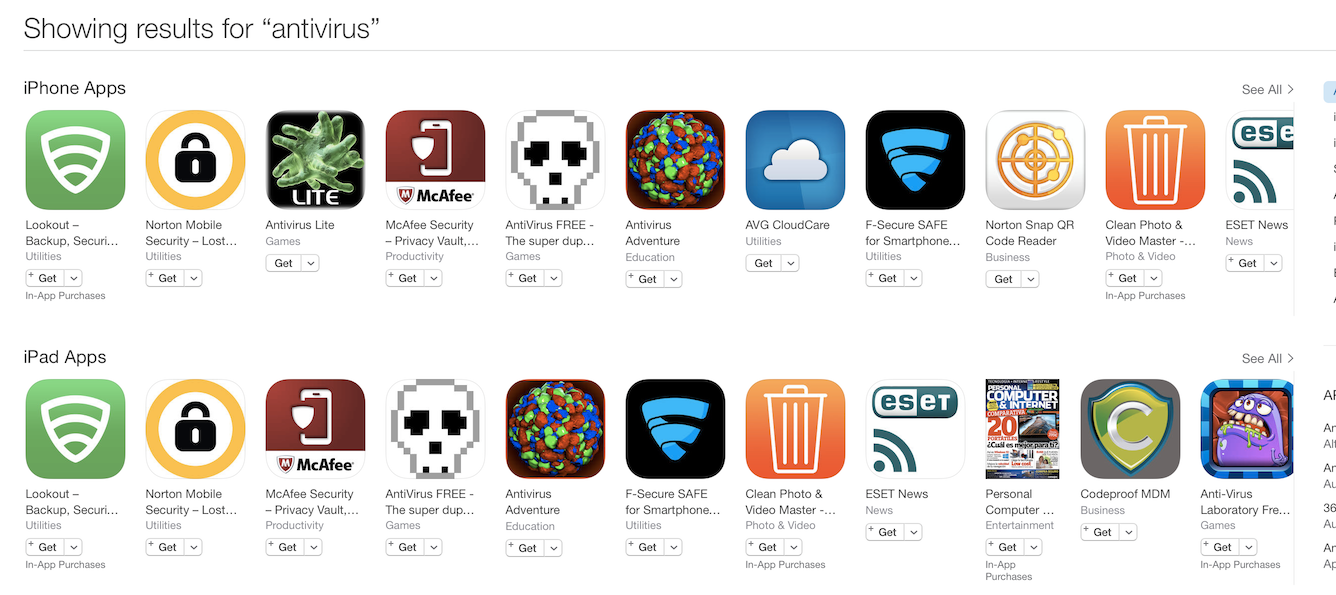
Apple reportedly cracks down on antivirus apps from iOS App Store, many apps pulled

Site default logo image

Searching for ‘antivirus’ now only shows games or Find My iPhone-esque apps.

Apple has seemingly decided to crack down on antivirus and antimalware apps, removing them from the App Store. Although there has been no official statement from Apple on a policy change, Apple’s loose guidelines allow them to pull pretty much anything at any time, particularly something like antivirus which has questionable utility within the sandboxed iOS environment of iPhones and iPads.

One casualty of the removal is Intego’s VirusBarrier, which claims that this takedown was not specific to its product with Apple deciding the entire category of antivirus products is now off-limits.


Expand
Expanding
Close

Apple execs talk developing ResearchKit: ‘there’s a strong personal connection’

Site default logo image

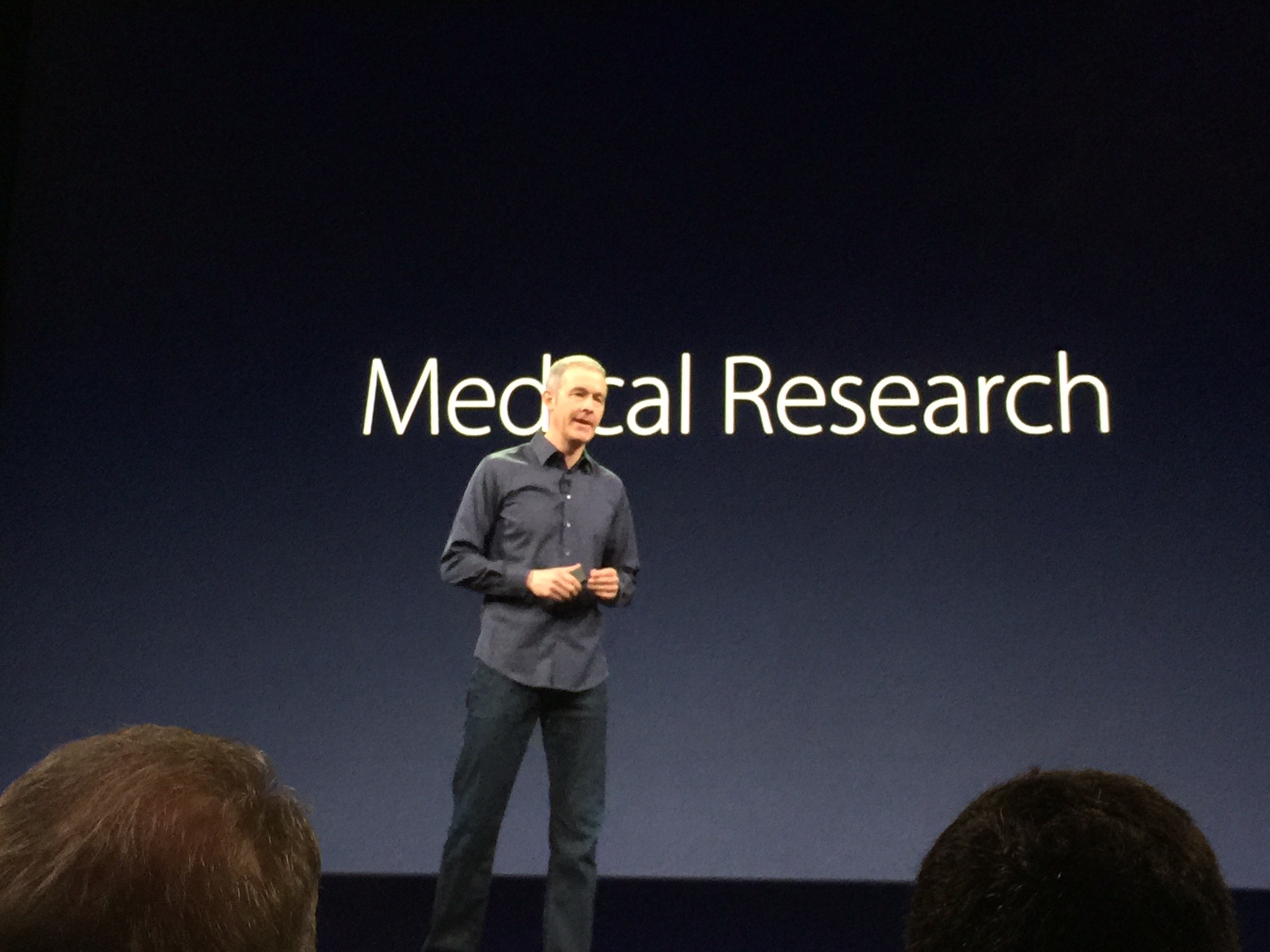
Apple SVP Jeff Williams announcing ResearchKit

Following the introduction of ResearchKit at this month’s Apple event, Apple executives Jeff Williams and Bud Tribble held a question and answer session with Apple employees regarding the new initiative, according to a source who provided a transcript of the conversation. Williams, Apple’s Senior Vice President of Operations, is the top executive in charge of Apple’s health engineering initiatives, including the Apple Watch, HealthKit, ResearchKit, and fitness software. Tribble is a Software Engineering Vice President with a medical background as a doctor, and he organized many of the partnerships for both HealthKit and ResearchKit…


Expand
Expanding
Close

ResearchKit may go beyond individual studies, open up era of ‘open-source’ medical research

Site default logo image

We’ve already seen the potential of Apple’s ResearchKit platform to sign up large numbers of participants to medical studies in an incredibly short time, but a reported conversation between the founder of an open science non-profit and an Apple VP suggests that the potential goes far beyond this.

Fusion, in an extensive profile, reports that Apple may be intending to collect anonymised health data in a central database accessible to medical researchers around the world, enabling each to benefit from that shared data to forward their own studies. The vision was initially put forward at a conference back in September, long before ResearchKit was announced, by Stephen Friend, the founder of Seattle-based Sage Bionetworks, a nonprofit that champions open science and data sharing.

“Imagine ten trials, several thousand patients. Here you have genetic information, and you have what drugs they took, how they did. Put that up in the cloud, and you have a place where people can go and query it, [where] they can make discoveries.” In this scenario, Friend said, patients would be able to control who could access their information, and for which purposes. But their health data would be effectively open-sourced.

Apple reportedly took an immediate interest in the idea … 
Expand
Expanding
Close

Feature: Becoming the Apple stereotype of writing a novel on a MacBook in Starbucks

Site default logo image

Update: Both 11/9 and my second technothriller, The Billion Dollar Heist, are now available on Amazon.

Of all the stereotypes we hear about Apple owners, there is perhaps none so enduring as the guy writing a novel on his MacBook in Starbucks. Well, one November, I became that guy. Fast-forward a few years, and I have a 110,000-word technothriller ready to unleash on an unsuspecting public.

I’d had an idea for a novel years earlier, but I’d initially done what almost everyone does when they have an idea for a novel: absolutely nothing. The gap between having an idea and having a completed novel seemed too enormous to contemplate, especially when it would have to be combined with, you know, working for a living.

But then someone told me about something called NaNoWriMo: National Novel Writing Month. Every November, around 400,000 people across the USA, UK, Canada and a number of other countries around the world attempt to write 50,000 words of a novel. I decided to become one of them–using Apple technology, naturally … 
Expand
Expanding
Close