Mac

See All Stories

Apple’s Mac lineup consists of MacBook, MacBook Air, MacBook Pro, iMac, Mac Pro, and Mac Mini. The Mac runs macOS for its operating system.
Mac lineup

History

The Mac is Apple’s lineup of computers, and it can be considered the company’s oldest product. The name “Mac” comes from the original Macintosh, which was introduced in 1984 and is also considered the first personal computer for the masses to have a graphical user interface. The first Macintosh hit the stores on January 24, 1984, costing $2,945.

Among all these years, Apple has introduced many different Mac models, ranging from desktops to laptops to professional tower machines. The current lineup consists of the MacBook Air, MacBook Pro, Mac mini, iMac, and Mac Pro. However, there have been other Mac models were discontinued, such as the eMac, MacBook, and iMac Pro.

The history of modern Macs began in 1998, a year after Steve Jobs returned to Apple. Apple had dozens of Macintosh computers at that time, but Steve decided to rethink the entire lineup. In 1998, Apple announced the iMac G3, which ditched the floppy disk and serial ports in favor of USB connectors.
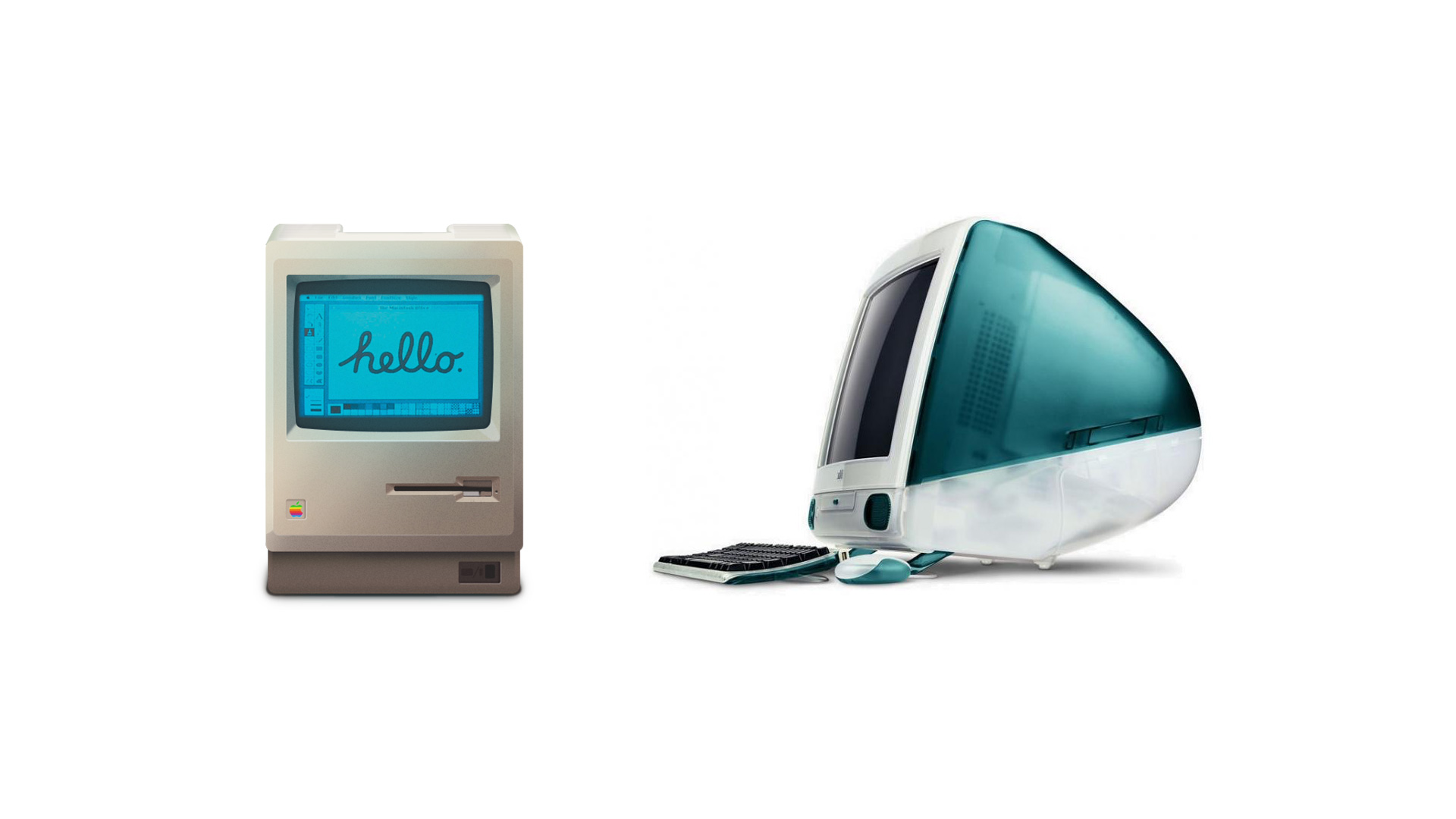
Macintosh and iMac G3.

Unlike the Macintosh, the first iMac was considered a huge success — not only for its technology, but also for its unique design with colorful translucent plastic. Apple quickly expanded the Mac lineup with other models, which included the iBook and PowerBook (which became the MacBook and MacBook Pro) and the PowerMac, which is now the Mac Pro.

macOS

What makes a Mac the Mac is the macOS operating system, which has also had a long history since the introduction of the first Macintosh. Initially called Mac OS, the operating system was rebuilt when Steve Jobs returned to Apple.

The first version of Mac OS X was released on March 24, 2001 with a new interface that is still present in some ways in current versions of macOS. Apple’s desktop operating system comes with many free applications such as Pages, Keynote, Numbers, iMovie, and GarageBand.

With macOS, users also have access to deep integrations with other Apple devices. For instance, you can answer calls and send SMS from your iPhone using your Mac. Handoff lets you switch from one device to the other and pick up where you left off. Apple Watch users can unlock their computer without entering a password, and you can even copy and paste between devices.
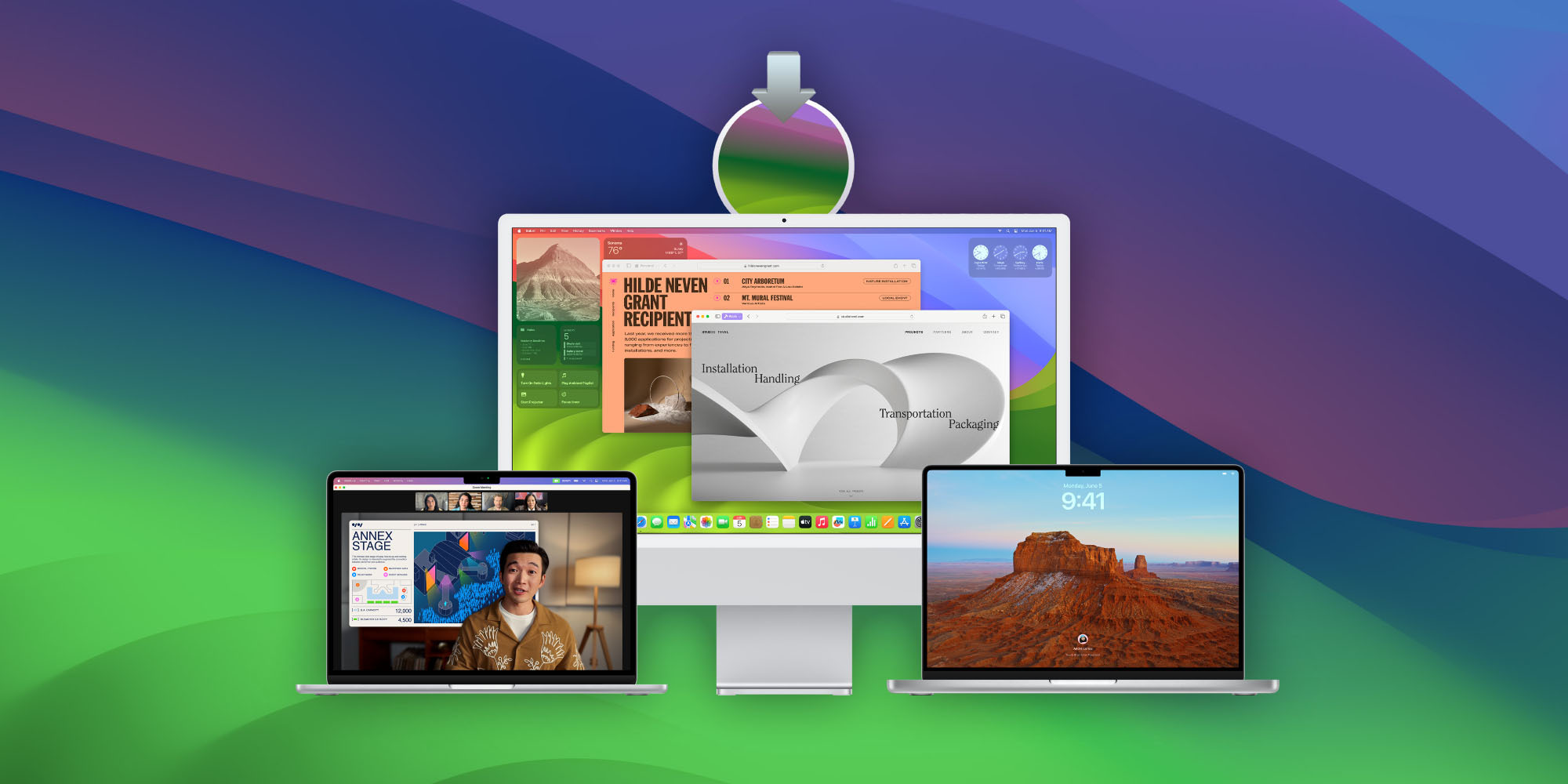
macOS Sonoma

Apple’s desktop operating system is also integrated with services offered by the company, such as iCloud, Apple Music, and Apple TV+.

The current version of macOS is Sonoma (version 14), which features new slow-motion screen savers, widgets on desktop, camera effects on FaceTime and other apps, web apps, passkey sharing, improved PDF support, and Game Mode. The update also comes with a new API that lets developers easily port Windows games to macOS.

Architecture Transitions

The Mac has had three major architecture transitions in its history. Apple’s first computers ran on Motorola processors, but the company decided to migrate to the new PowerPC platform in 1994. While this brought benefits at the time, the PowerPC processors were not delivering what Apple expected.

It was in 2005 that Apple confirmed the transition from PowerPC to Intel. Intel processors had become faster and more efficient than PowerPC, which enabled the development of new Mac computers that were more powerful and also more compact. Developers have been given access to a Developer Transition Kit running Mac OS X Tiger with Intel Pentium 4 to update their apps before the transition begins.
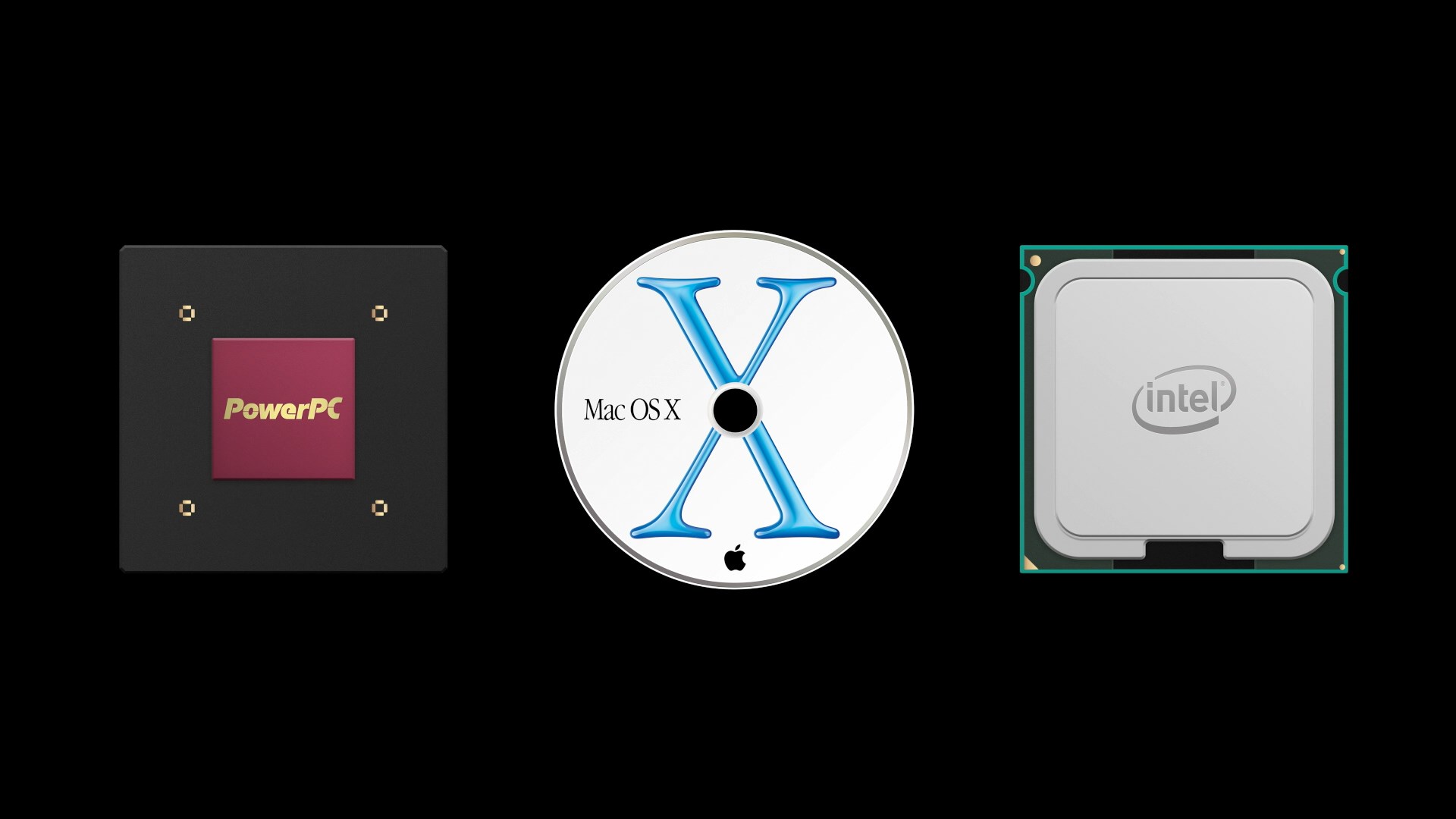
Power PC, Mac OS X, and Intel processor.

Apple said that the transition would begin in June 2006 and be finished by the end of 2007. However, the transition to Intel was fully completed in August 2006 when the company replaced the PowerMac with the new Intel Mac Pro.

As the years went by, Apple once again felt the need to have more powerful and efficient processors for its computers. This time, the company was already working on its own chips for the iPhone and iPad. In June 2020, Apple confirmed that it was changing the architecture of the Mac, now from Intel to ARM chips, which are called Apple Silicon.

Apple offered a Mac mini DTK running on the same A12Z Bionic chip as the 2020 iPad Pro. This way developers could once again update their apps ahead of the transition. In addition to being more powerful and energy efficient, the ARM architecture of Apple Silicon chips has enabled Macs to run iOS apps for the first time.
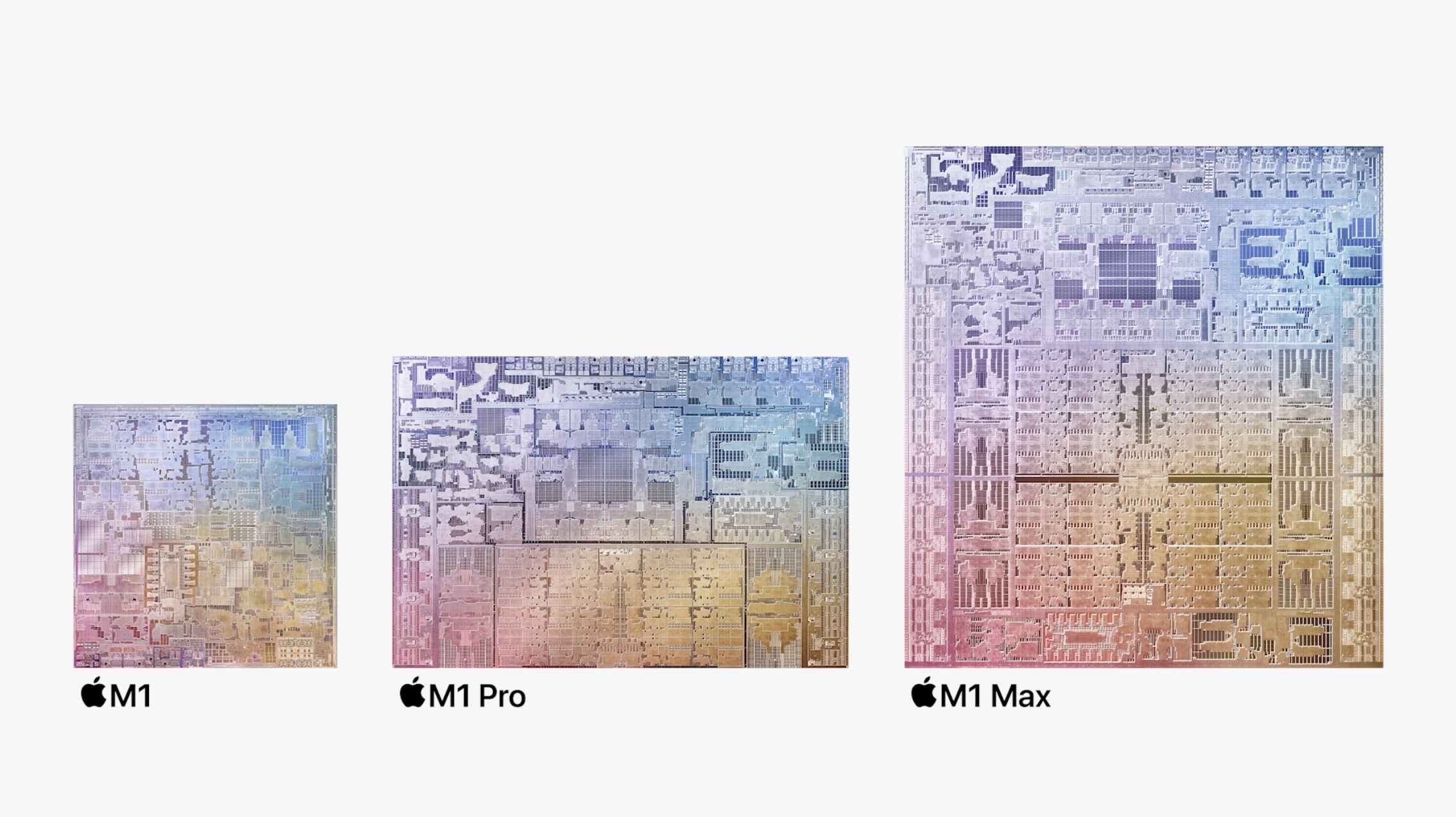
Apple M1 chip | Mac

The first Apple Silicon Macs were released in November 2020 with the M1 chip. The company later introduced more powerful variants of the M1 chip, called M1 Pro, M1 Max, and M1 Ultra. Macs with Apple Silicon have become known for being more powerful while consuming much less power, which has resulted in MacBooks with extended battery life.

In June 2022, Apple introduced the M2 chip, which is around 20% faster than the M1 and also supports more RAM. M2 also has more powerful variants: M2 Pro, M2 Max, and M2 Ultra.

Apple unveiled the M3, M3 Pro, and M3 Max chips in October 2023. The main highlight of this generation is the 3 nanometer technology, the same as the A17 Pro chip. The M3 family also features better GPUs with support for hardware-accelerated ray-tracing.

Current Mac lineup

Apple currently sells a variety of Mac computers, which includes MacBooks, Mac mini, iMac, and Mac Pro. While some of the Macs have already been updated with an Apple Silicon chip, others remain with Intel processors.

MacBook Air

The MacBook Air is Apple’s most affordable laptop and it has become popular for its light, compact design. The 2022 version is powered by the M2 chip and is offered with 8GB, 16GB, or 24GB of RAM. Plus, it has a new, edge-to edge 13.6-inch Retina display.

The laptop features Touch ID and has two Thunderbolt 3 compatible USB-C ports, a MagSafe connector for charging, and a headphone jack. Prices start at $1099 in the US. It’s offered in silver, space gray, starlight, and midnight.
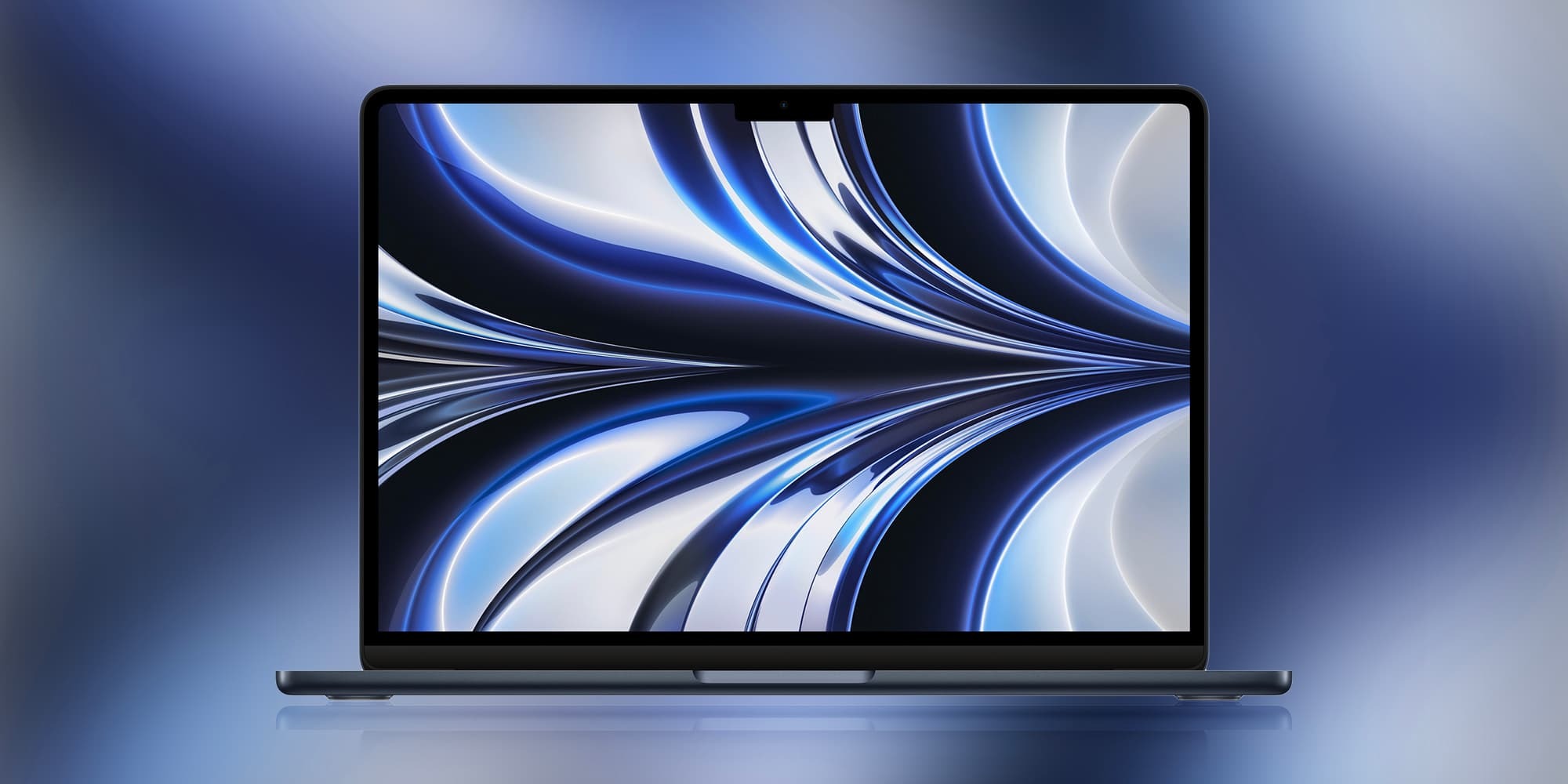
M2 MacBook Air.

A year later, Apple introduced the first 15-inch MacBook Air. It has essentially the same hardware as the smaller version with a similar design, but with a larger display. Prices start at $1299 in the US.Apple is still selling the M1 MacBook Air for prices starting at $999.

MacBook Pro

The 2023 MacBook Pro is available in multiple versions, and customers can choose between 14-inch and 16-inch screen sizes. For the first time, Apple has introduced a less expensive version of the 14-inch MacBook Pro with the base M3 chip. This version has the same design and display as the high-end versions, except that it only has two USB-C ports instead of three.
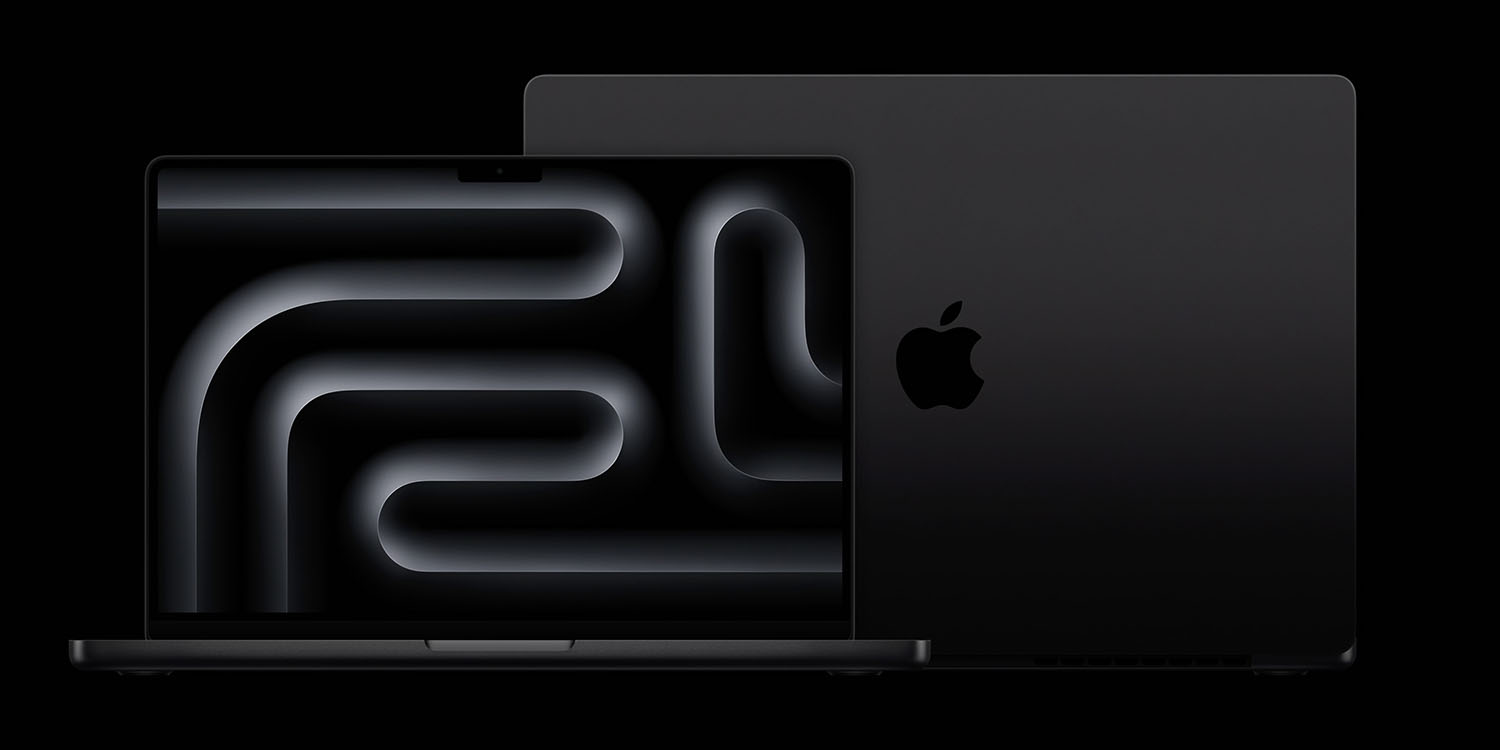
M3 MacBook Pro

The most expensive versions of the MacBook Pro are equipped with the more powerful M3 Pro and M3 Max chips. The laptop can be configured with up to 128GB of RAM and 8TB SSD. These versions also come in a new Space Black color.

Unlike the MacBook Air, the MacBook Pro comes with an HDMI port and an SD card reader. It also features MagSafe and Touch ID on the keyboard. Apple no longer sells MacBooks with the Touch Bar. Prices start at $1,599 in the US.

Mac mini

Mac mini is the cheapest Mac currently available since it’s basically a desktop without a built-in display or other peripherals. The base model with the M2 chip features one Ethernet port, two USB-C/Thunderbolt 4 ports, HDMI 2.0, two USB-A ports, and a headphone jack.

Apple sells a more powerful version of the Mac mini with the M2 Pro chip, which also comes with four USB-C ports instead of two. Mac mini can be configured with up to 32GB of RAM and up to 8TB of storage. Customers can also opt for a 10 Gigabit Ethernet port. The Apple Silicon Mac mini is only available in silver, while the now discontinued Intel model was available in space gray.
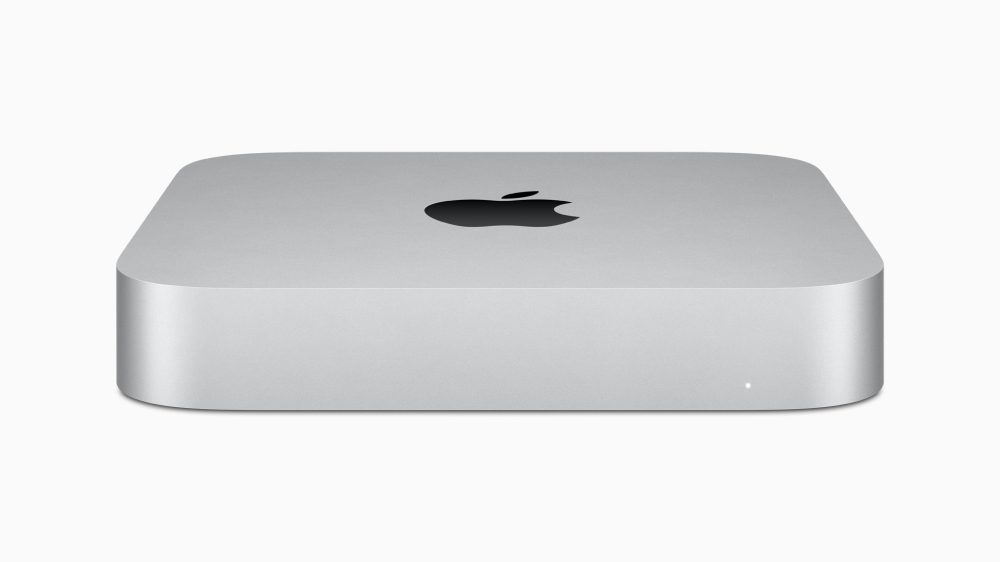
Apple Silicon Mac mini.

Prices for the Mac mini start at $599 in the US. Again, it’s worth noting that it doesn’t come with a keyboard or mouse in the box – you need to buy them separately or use your current ones.

Mac Studio

Mac Studio represents a new category between Mac mini and Mac Pro. It features a design based on the Mac mini, but with a taller body to support the more powerful hardware and also a better cooling system.

The new Mac Studio is targeted at professional users who work with demanding tasks such as video editing, 3D rendering, and machine learning. 

Embraced by creative pros everywhere, Mac Studio now delivers next-generation power in the form of the lightning-fast M2 Max and the boundary-breaking M2 Ultra. It packs outrageous performance and extensive connectivity in an unbelievably compact form, putting everything you need within easy reach and transforming any space into a studio.

By default, Mac Studio already comes with the M2 Max chip, 32GB of RAM, and 512GB SSD storage. A more expensive option lets users customize Mac Studio with M2 Ultra. While M2 Max has a 12-core CPU and a 30-core GPU, M2 Ultra doubles all of those specs. The new chip has a 24-core CPU and a 60-core GPU.

Mac Studio can also be configured with up to 192GB of RAM and 8TB of SSD storage. The machine offers up to six Thunderbolt ports, 10 Gigabit Ethernet, headphone jack, two USB-A ports, and one HDMI port.
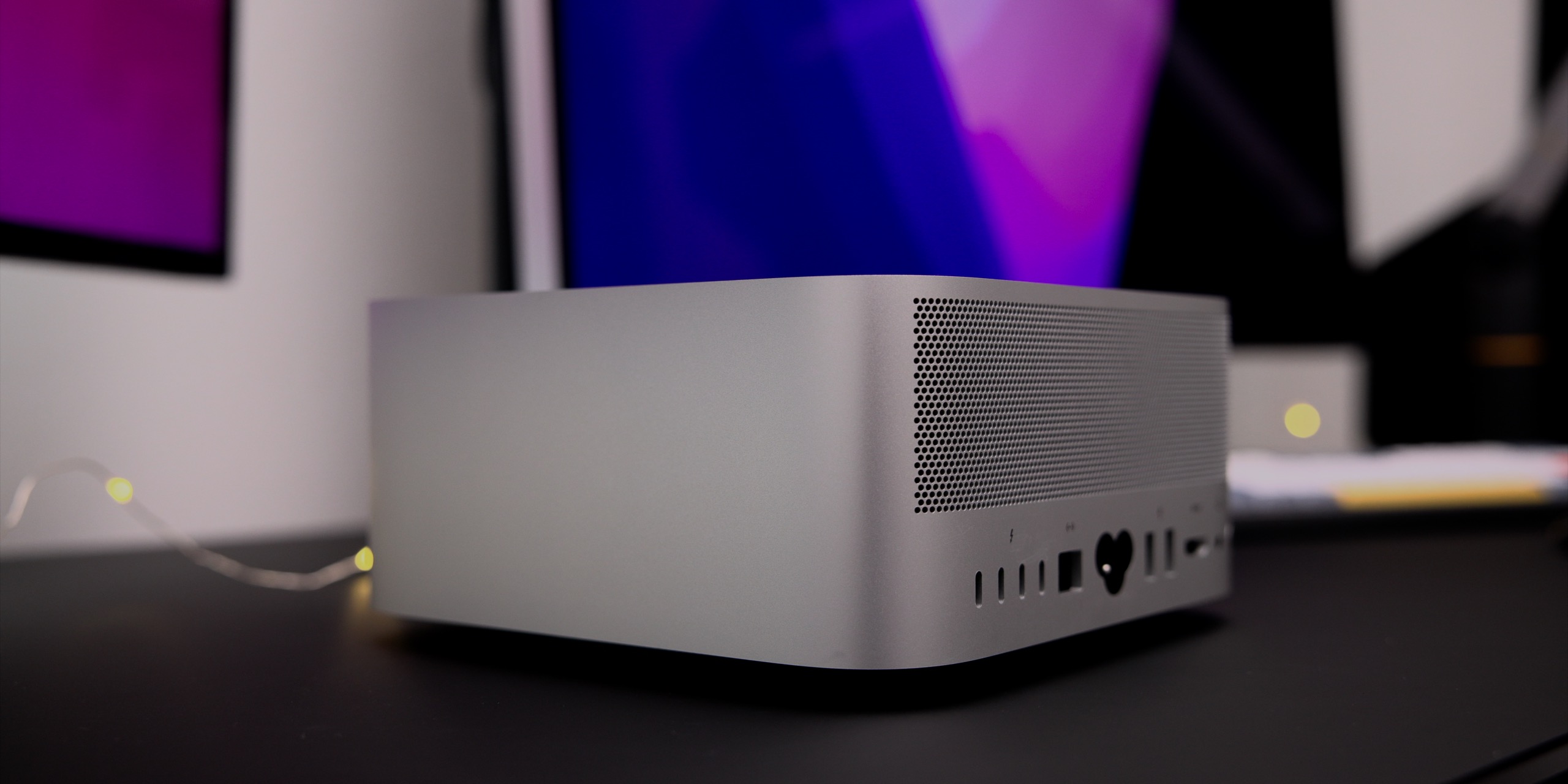
Mac Studio

Apple has been rumored to be working on new versions of this machine with the M3 Max and M3 Ultra chips. However, these versions may not be ready until 2025. Bloomberg’s Mark Gurman said in November last year that the M3 Ultra chip “hasn’t yet gone into broad testing” inside Apple.

In the US, prices for the Mac Studio with M2 Max chip start at $1999. The M2 Ultra chip version starts at $3999. Just like the Mac mini, Mac Studio doesn’t come with a keyboard and mouse in the box. You can find accessories for your Mac Studio here.

iMac

iMac is Apple’s most popular desktop computer with an all-in-one construction. It features a 4.5K display in its 24-inch version and a 5K display in the 27-inch version. At the same time, Apple still sells an entry-level iMac with a regular 1080p display.

The 24-inch iMac is the first to feature the M1 chip, the same as in the Mac mini, MacBook Air, and MacBook Pro. This allowed Apple to introduce a completely redesigned model with a slimmer design, which is also offered in seven new colors. Customers can customize the new 24-inch iMac with up to 16GB of RAM and 2TB of storage.
Site default logo image

The company ships the 24-inch iMac with Magic Mouse and Magic Keyboard, plus a Lightning cable for recharging accessories. Prices in the US start at $1299. Apple has discontinued its old 21.5-inch iMac and the 27-inch iMac 5K.

Mac Pro

Mac Pro is a computer built for professional users who depend on extremely powerful hardware. Available in tower and rack versions, it has a completely modular design. That means users can replace RAM, SSD, GPU, and other internal components.

By default, it features four USB-C/Thunderbolt 3 ports, two USB-A ports, and two 10Gb Ethernet ports. However, the ports can be expanded using the PCI Express slots. Apple also ships the computer with a Magic Mouse and Magic Keyboard, but it does not come with an external monitor included.

All models feature Intel Xeon W processors, which are the most powerful processors offered by Intel. Consumers can configure Mac Pro with up to 28-core processor, 1.5TB RAM, and 8TB of SSD storage. In addition to supporting multiple dedicated GPUs, Apple also offers the Afterburner card — which accelerates the decoding of ProRes videos.

The company recently updated the Mac Pro with new graphics card modules, which include Radeon Pro W6800X and Radeon Pro W6900X.

Site default logo image

Mac Pro prices start at $5999 in the US.

Rumors about upcoming Macs

Top stories about the Mac

Site default logo image

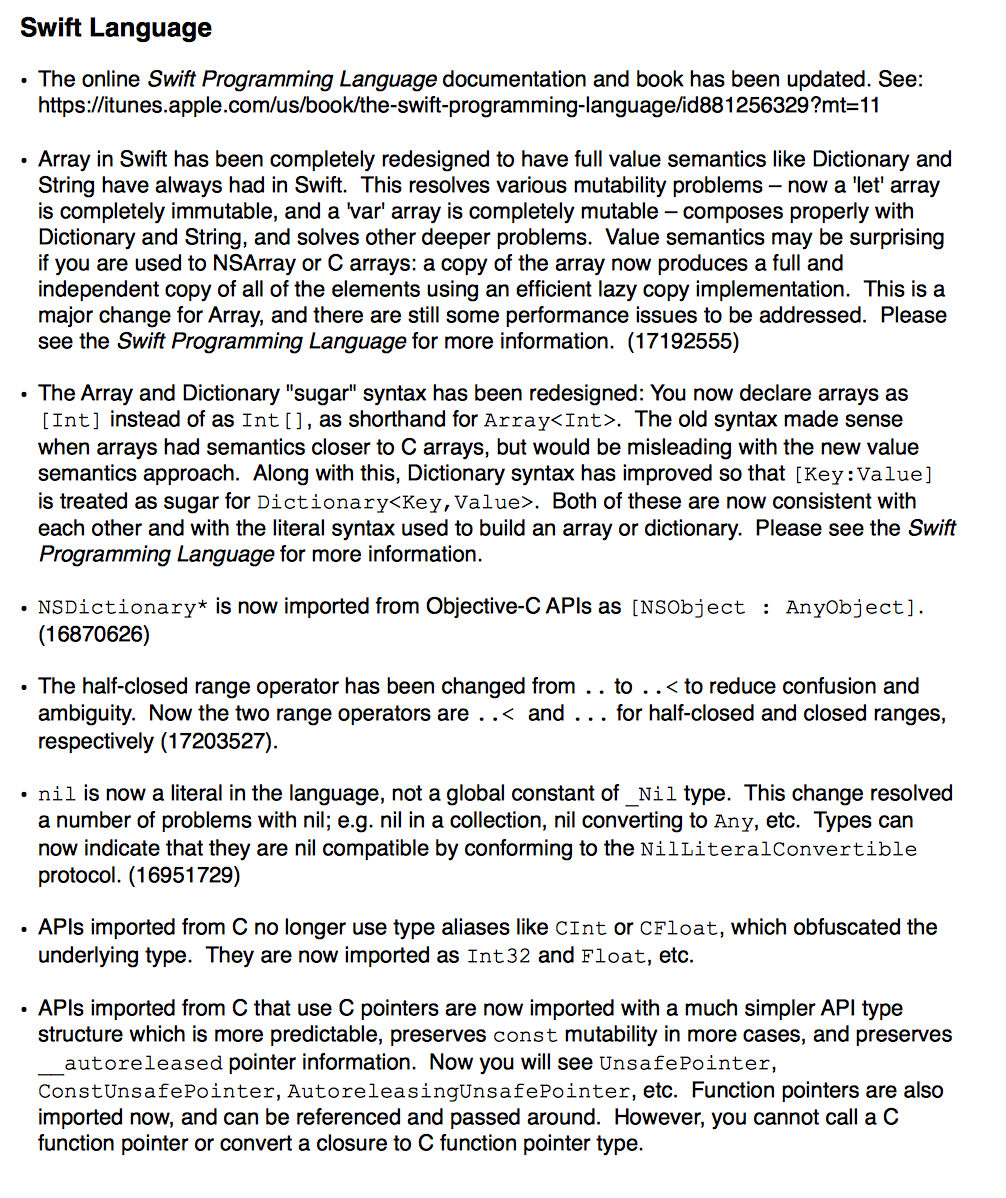
Apple’s new coding language Swift receives significant update for developers alongside new Yosemite and iOS seeds

As part of the updates to the Yosemite and iOS betas today, Apple’s new coding language Swift has received several major improvements and tweaks to make the language more consistent and help developers make better, safer apps. The intricacies of the changes are very gibberish to non-developers, but the fixes resolve many of the issues that developers had been requesting. In particular, the new value type model of arrays fixes several inconsistencies and prevents many potential code ‘gotchas’ that could arise in previous Swift builds.

Apple has also updated the ‘Introducing Swift’ iBook to reflect the improvements, if you want to learn in more detail about the changes.

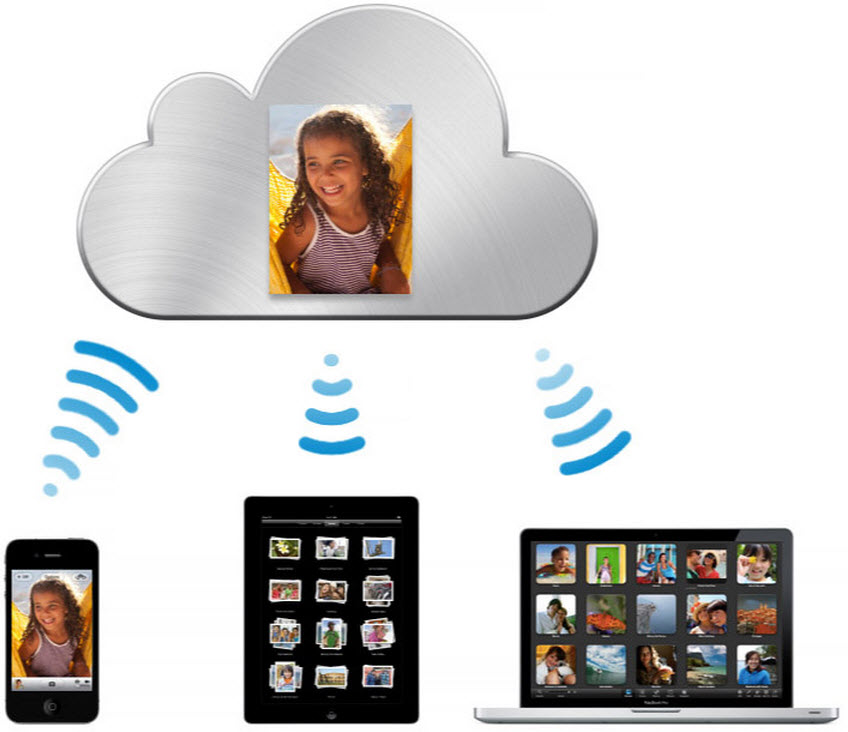
Apple to wipe all CloudKit data on July 7th, including iCloud Photos, Drive & Mail Drop for iOS 8 and Yosemite

Site default logo image

Apple has just informed developers that it will be wiping all CloudKit-based data stores on July 7th. This includes iCloud Photo Library, Mail Drop and iCloud Drive. Apple warned developers that this might happen with the release of the first iOS beta and it is not uncommon for wipes to happen several times during iOS and OS X beta cycles.

Dear Developer,

We will be performing a server-side data wipe on all CloudKit public and private databases for iOS 8 beta and OS X Yosemite Developer Preview users on July 7, 2014. The following iCloud features will be affected: iCloud Drive, iCloud Photo Library, and Mail Drop.

Photos and videos stored in iCloud Photo Library will remain on their original iOS 8 devices and will upload to iCloud Photo Library again automatically. iCloud Drive can be re-enabled from Set up Assistant after upgrade. If you choose to store your documents in iCloud Drive, your Documents & Data will automatically be copied to iCloud Drive. iCloud Drive will not update across earlier seeds or operating systems. Attachments sent through Mail Drop will expire and need to be resent after you upgrade.

If you have any questions, visit the Apple Developer Forums.

Best regards,
Apple Developer Technical Support

Affected files for Mail Drop and iCloud Drive will not transfer across automatically on the release of the next beta seed. Photos and videos will automatically restore, however, as they are not deleted from local storage. It is likely that new seeds of iOS 8 and OS X Yosemite will follow this data wipe, as new seeds of these operating systems are already due.


Expand
Expanding
Close

Support for .Mac and .Me AIM logins ends for OS X 10.7.1 or earlier, newer versions unaffected

Site default logo image

As Apple previously announced in April, today marks the end of support for AIM in iChat using a me.com or mac.com ID for Macs running OS X Lion 10.7.1 or earlier. While some reports are claiming the change also appears to be affecting users on newer versions of OS X, we’ve confirmed with sources with knowledge of the situation that users running 10.7.2 or higher, including Yosemite, will continue to have support for AIM.
Expand
Expanding
Close

OS X’s Aperture/iPhoto replacement ‘Photos’ appears to focus on iOS 8’s editing features, not pro tools

Site default logo image

During the 2014 WWDC keynote, Apple demoed a very early build of its upcoming Photos application for Mac. The app will be available next year for OS X Yosemite, but for now all we really know is that its arrival will bring about the end of both iPhoto and Aperture. That news drew the attention of everyone who uses either of those applications, with many saying Apple no longer cared about pro-level users.

In an attempt to quell the outrage, Apple released a statement to ArsTechnica saying that Photos for Mac would still support pro features, but what exactly constituties a “pro-level” feature in Apple’s eyes? According to the statement, Photos will feature support for third-party plugins, library search, and advanced editing. If that sounds a little vague to you, it’s probably because Apple doesn’t really want to answer the question.


Expand
Expanding
Close

Apple launches 2014 Back to School promotion: $100 Apple Store gift cards with Macs, $50 with iPad/iPhone

Site default logo image

As we reported two weeks ago and again yesterday, Apple has today launched its Back to School promotion for this school season. Like previous years, qualifying student customers will get a free gift card alongside any purchase of a Mac, iPad or iPhone. While last year Apple gave out Mac App Store/iTunes cards, this year’s cards are for Apple Retail Stores.

Buying any Mac makes the buyer eligible for a $100 Apple Store gift card and $50 cards will be distributed alongside iPads and iPhones.

Interested students can buy any Mac (except for the Mac Mini), or any iPad or iPhone currently on sale at the Apple Store, to be eligible for the promotion. Students can also receive education discount pricing where applicable, alongside the gift card giveaway.

Back to School runs from today until September 9th and available in many regions, including the United States, Canada, the UK and many other countries in Europe.
Expand
Expanding
Close

Review: OWC Mercury Elite Pro Mini dual-drive external enclosure with RAID

Site default logo image

One of the reasons I like Macs is that their useful life tends to be significantly longer than that of a typical Windows machine. This is especially true of the pre-Retina MacBook Pro models, where it’s trivial to upgrade both the RAM and the drive.

I’d previously swapped out the 750GB hard drive and optical drive that came with my late-2011 MacBook Pro 17 for two 1TB hard drives. Along with a RAM upgrade, that gave me a 16GB RAM, 2TB hard drive machine. The plan was to use the machine in that form for a year or two, then do a further upgrade to SSDs once 1TB models arrived and fell to a halfway sensible price.

When that finally happened, and I did the upgrade, that gave me two 1TB hard drives surplus to requirements. I could have placed each into its own external drive caddy, but one 2TB drive is more useful than two 1TB ones, so I decided instead to try out OWC’s Mercury Elite Pro mini. This is an external enclosure for two 2.5-inch drives, which supports both USB 3 and Firewire 800, drawing power from either source – making it a portable drive without the need for external power … 
Expand
Expanding
Close

Site default logo image

Supply-chain rumors support analyst prediction of Q3 launch for 12-inch MacBook Air

A prediction by KGI Securities analyst Ming-Chi Kuo that Apple would be launching an all-new 12-inch MacBook Air model in Q3 have been supported by supply-chain rumors cited by Digitimes.

Apple’s new 12-inch MacBook Air will enter mass production in the third quarter, filling the gap between the 11- and 13-inch MacBook Airs as well as enhancing Apple’s leadership in the small-to-medium-size ultra-thin notebook market, according to sources from the upstream supply chain.

Digitimes is not always the most reliable of sources, and its suggestion that Apple’s motivation is to establish a clearer differentiation from the 10-inch iPad Air makes little sense, but a fall launch would seem credible.

The typically-reliable Kuo suggests that the 12-inch model will have the same external size as the current 11-inch MacBook Air, and will have a Retina display. It has also been suggested that the machine might be made without a fan or mechanical trackpad button – perhaps by using a new Core M Broadwell processor announced by Intel.

(Image via notebookcheck.net)

Site default logo image

Microsoft offers $650 to trade in MacBook Air for Surface Pro 3

Remember when Microsoft took the wraps off its new 12-inch Surface Pro 3 while comparing it to a MacBook Air last month? Microsoft is hoping that argument was convincing enough to at least some MacBook users with a new trade-in offer allowing MacBook Air owners to get up to $650 off a new Surface Pro 3. All they have to do is hand over their MacBook Air and hop on the productivity train with their new Windows 8 hybrid tablet/ultrabook.

With the trade-in discount, the $799 base model Surface Pro 3 comes to just $150.

We’re assuming the full $650 trade-in value will be for the latest Air models in good condition, and the deal will require you to hunt down a Microsoft retail store by July 2014 to complete the trade-in. Any takers?

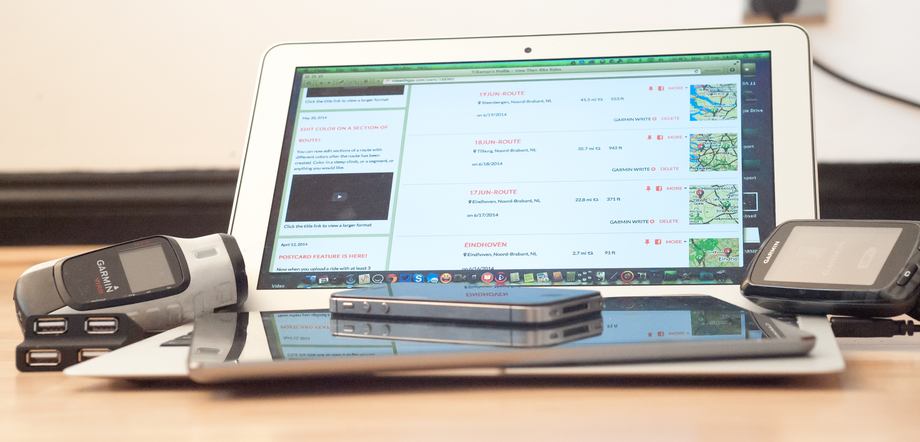
A day in the life of a cycle-touring holiday with Apple (and Garmin) tech

Site default logo image
tech

Having just returned from a 12-day cycle-touring holiday (you missed me, right?), it occurred to me how much the activity has changed over the years. The basics are still the same, of course: turning the pedals makes the scenery pass slowly by, and by the end of the day you’re 40 or 50 miles away from where you had breakfast. But what used to be a very low-tech activity, involving little more than a paper map and compass, has now turned into something of a technofest – at least for me and a fellow geek friend who joined me. And my MacBook Air, iPad and iPhone are all integral parts of the trip …

Expand Expanding Close

Why won’t Microsoft give iOS users access to their Skype voice messages? (Updated)

Site default logo image

Skype may have recently launched a major update to its Skype for iPhone app, but one rather basic feature went missing – the ability to listen to voice messages. A subsequent update to Skype for iPhone 5.1 still hasn’t fixed the problem.

In a support thread on the Skype site, community manager Claudius provided what must qualify as one of the most unhelpful response ever to complaints by users:

Voice message playback is not supported in Skype 5.0 for iPhone. Please use Skype on another platform to listen to your voice messages …


Expand
Expanding
Close

Skype announces plan to discontinue support for older versions of Mac client

Site default logo image

Skype has announced that it will discontinue support for older versions of its desktop clients, including Skype for Mac.” An exact date for the change hasn’t been given, but the company says it will happen “over the next few months.” Mobile clients like Skype for iPhone won’t be affected by the change.

The specific versions being phased out are 6.14 and older (the current version is 6.18). The change is being made to ensure feature compatibility across the versions of the software in use and enable the developers to continue building on that foundation. The current version of Skype offers several features not provided in older versions, such as the option to send messages to offline users.


Expand
Expanding
Close

Site default logo image

Apple also provides new OS X 10.9.4 seed to non-developer AppleSeed testers

We noted yesterday that Apple released OS X Mavericks 10.9.4 build 13E19 to developers, and now users of Apple’s customer AppleSeed software testing program are reporting that the seed has also gone out to those non-developers. 10.9.4 is a bug fix release without major feature enhancements, and it is unclear when it will ship publicly to all Mac users. This fall, Apple will ship OS X 10.10 Yosemite with a refreshed user interface, new Continuity features, and improved applications.


Expand
Expanding
Close

Apple still finalizing support for Continuity features on older Macs, Bluetooth LE adapters a possibility

Site default logo image

Some Mac users, specifically those with Macs that don’t support Bluetooth LE, weren’t too happy to find out that meant they would likely not get to use Apple’s new Handoff feature to seamlessly switch between apps across Macs and iOS devices.  To be clear, Apple has not yet confirmed details of device compatibility for most Yosemite features, but some users have reported that only Mid 2011 MacBook Airs, Mid 2012 MacBook Pros, late 2012 iMacs, and 2013 Mac Pro or newer models– the Macs that include Bluetooth LE– appear to support the feature. We’ve learned from people with knowledge of the matter that Apple is still testing the feature and yet to finalize which Macs will be capable of supporting it.
Expand
Expanding
Close

Site default logo image

Apple pushes OS X 10.9.4 beta build 13E19 to developers


Apple has released another beta of the upcoming 10.9.4 release of its OS X operating system to developers. The new beta has a build number of 13E19. For now the update is only available through Software Update on 10.9.4 systems, but it’s expected to hit the developer center soon.

The previous build, 13E16, was released on June 11th along with pre-release versions of OS X Server 3.2 and Safari 6.1.5. The seed notes for this version aren’t online yet, but we’ll update this post when they become available.


Expand
Expanding
Close

Significant enhancements coming to AppleCare+, Apple IDs, iOS support

Site default logo image

Apple’s vice president of AppleCare and technical support initiatives, Tara Bunch, held a Town Hall meeting for for AppleCare employees earlier this week, according to several employees in attendance who asked to remain anonymous. During the meeting, Bunch, along with a few other Apple executives, spoke about Apple’s progress in customer service and support over the past few years, improvements from 2013 to 2014, and future plans.

Throughout the meeting, Bunch noted that customer satisfaction numbers from AppleCare and Apple product users are at the top of the industry. Going into the 15th year of AppleCare, Bunch asked employees to celebrate and be proud of their accomplishments, but she also noted that Apple still has room to improve its support practices. Employees in attendance during the meeting have shared some details regarding Apple’s future plans for its support initiatives…


Expand
Expanding
Close

Apple releases new cheaper iMac with low-end processor, priced at $1099

Site default logo image

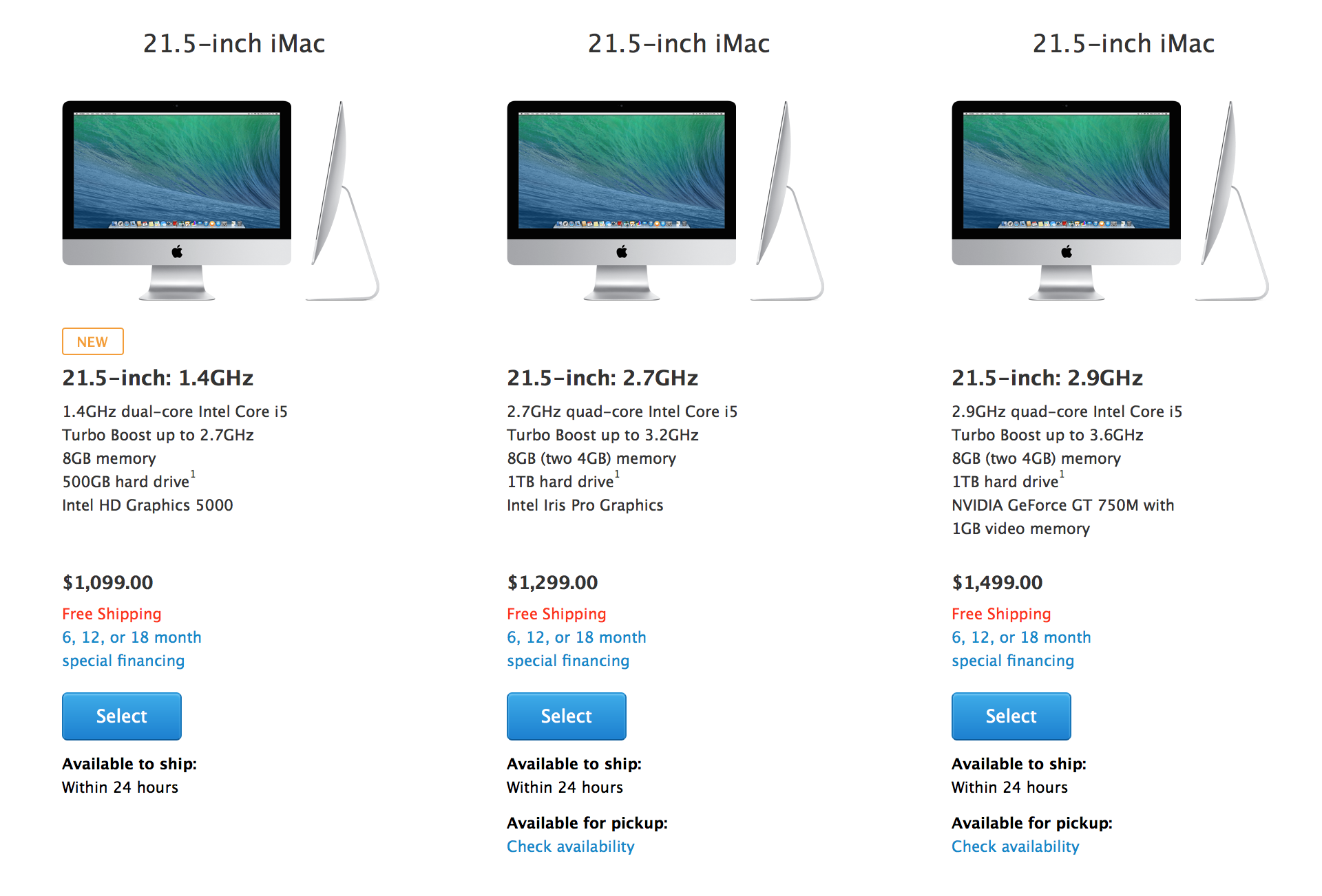
As rumored last week, Apple has today released a new model of iMac. These machines are considerably cheaper than their predecessors, priced at $1099. Previously, the cheapest iMac SKU was priced at $1299 (which is now the mid-range model).

The cheaper iMac features a 1.4 GHz dual-core i5 CPU, which represents a significant worsening in performance over the previous base model of iMac, which featured a processor clocked at 2.7 GHz.  The CPU does Turbo Boost up to 2.7 GHz however, which does make up some of the difference.

Aside from the CPU, the hard drive has also been cut to 500 GB. The new model also features a lower-end integrated graphics chip. All other iMac models continue to use either Iris Pro integrated graphics or dedicated Nvidia cards. Otherwise, the internals of the new machine are unchanged.

Apple’s Press release below…


Expand
Expanding
Close

Apple seeds update to OS X Yosemite Developer Preview

Site default logo image

Alongside the second beta of iOS 8, Apple has provided an update to the OS X Yosemite Developer Preview. Yosemite brings many new features to the Mac, including a new design, Continuity features, and enhanced applications. We’ll update this post with new discoveries in the new preview as they are found. You can let us know what you find at tips@9to5mac.com. 


Expand
Expanding
Close

Site default logo image

Apple Store Camp is back for summer 2014 with iBooks Author, iPad content creation

Apple has posted a new page on its retail website to announce that Apple Retail Store Camp is back for the summer of 2014. The annual event allows kids on summer vacation to work on projects within their local Apple retail stores. Interested campers can sign up on Apple’s website. This year, Apple says that kids will create movies in iMovie and books in iBooks Author.

Macs will be used for final production (editing in iMovie and making books in iBooks Author), but music for the movies will be made using GarageBand for iPad and and drawing apps on the iPad will be used for illustrations for the iBooks. It’s amazing that just ten years ago Apple Store campers edited movies in iMovie HD for Mac, and now the participants will be drawing and making music on iPads. (Via iFOStore).


Expand
Expanding
Close

Apple’s annual Back to School promotion likely kicking off at end of June

Site default logo image

Retro Apple Store <a href="http://www.aredesignawards.com/award_winner_detail.cfm?key=2009129">Back to School display</a>

Apple could be planning to launch its annual Back to School sales promotion within the next two weeks. Apple Stores, according to several employees, will be changing the front of store glass window displays overnight on June 30th. This is the usual timeframe in which Apple launches a promotion to boost Mac, iPad, and iPhone sales in anticipation of the new school year in the fall.

Last year, the Back to School promotion consisted of $100 App Store gift cards for Mac purchases and $50 cards for iPad and iPhone purchases by students with their Student IDs. Of course, this June 30th window change could be connected to another promotion or a new product, but based on the timing, the Back to School program being in the wings seems most likely.


Expand
Expanding
Close

Site default logo image

How some of your favorite Mac apps could look when OS X Yosemite launches

When OS X 10.10 Yosemite launches this fall, most of Apple’s first-party apps will look completely different. This means that many third-party apps will begin to look out of place. Zinx has compiled some mockups from Dribbble demonstrating how some popular apps could look when they are redesigned for Yosemite. Here’s a gallery of just a few:


Expand
Expanding
Close

A year after being announced, you can now get a Mac Pro within 24 hours

Site default logo image

While you still may not be able to walk in to an Apple Store and expect to walk out with a 2013 Mac Pro, the $3,000 and $4,000 base models of Apple’s professional desktop are shipping within 24 hours of ordering for the first time since its launch in late December last year. This includes shipping to Apple Retail Store locations for pickup. Apple, of course, previewed the latest Mac Pro model at WWDC 2013, exactly one year from yesterday, but it only promised then that it would begin shipping later that year. Availability has since proven to be a challenge for the ‘assembled-in-USA’ Mac line…
Expand
Expanding
Close

iMac reportedly getting a spec bump next week, but no Retina model yet

Site default logo image

According to a new MacG report, Apple is planning to debut a spec bump for the iMac lineup next week. Unfortunately, it doesn’t appear these will be the Retina iMacs that have appeared in recent OS X beta builds. Instead, it seems we’re only due for a slight processor speed increase, with each model gaining only 100 MHz.

The report speculates that the new models could include a new and improved Thunderbolt 2 connection, but there doesn’t seem to be any confirmation of that at this time. MacG accurately predicted the most recent MacBook Air refresh, so it’s a safe bet that these iMacs are coming next week. We’ve heard similar whispers at 9to5Mac as well.


Expand
Expanding
Close