AAPL Company

See All Stories

Breaking news from Cupertino. We’ll give you the latest from Apple headquarters and decipher fact from fiction from the rumor mill.
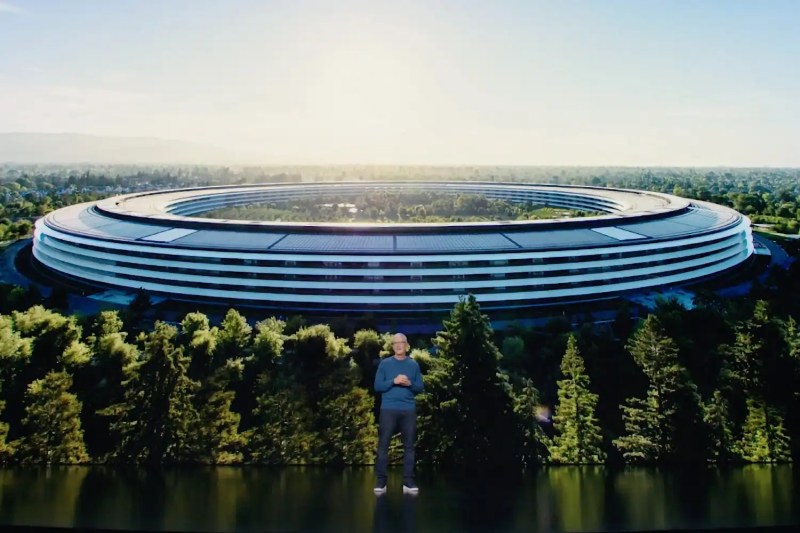
Apple Park Tim Cook AAPL

AAPL is a California-based computer company that became the most successful smartphone company in the world.

AAPL defined by Apple

Here’s how Apple defines itself:

Apple revolutionized personal technology with the introduction of the Macintosh in 1984. Today, Apple leads the world in innovation with iPhone, iPad, Mac, Apple Watch, and Apple TV. Apple’s five software platforms — iOS, iPadOS, macOS, watchOS, and tvOS — provide seamless experiences across all Apple devices and empower people with breakthrough services including the App Store, Apple Music, Apple Pay, and iCloud. Apple’s more than 100,000 employees are dedicated to making the best products on earth, and to leaving the world better than we found it.

Key AAPL history

From Apple I to iMac

Apple was founded in 1976 by Steve Jobs (Steve), Steve Wozniak (Woz), and (briefly) Ronald Wayne as a business partnership: Apple Computer Company. The following year it became Apple Computer, Inc. The company’s first product was the Apple I, a personal computer hand-built by Woz and sold in part-completed kit form. The Apple II and Apple III followed.

The modern Apple as we know it today began in 1983, with the launch of the first personal computer with a graphical user interface, the Lisa. Way too expensive to succeed, it was replaced by the Macintosh in 1984, launched with the single showing of a Ridley Scott commercial during the Super Bowl. The Macintosh transformed the world’s understanding of what a computer was, and would eventually lead to Microsoft adopting the GUI approach.

Steve Jobs and then Apple-CEO John Scully fell out in 1985, when Steve wanted to focus on the Macintosh while Scully wanted to put more attention on the Apple II, which was still selling well. That led to Steve being forced out of the company and going off to form NeXT.

Apple focused on selling Macintosh models at the highest possible margins, but would eventually fall foul of a mix of unsustainable pricing in the face of competition from Windows machines, and an overly complex product lineup. By 1996, the company was in trouble, and in 1997 Steve was brought back, along with the NeXT operating system, which would eventually form the basis of Mac OS X.

Steve simplified the Mac lineup and had industrial designer Jony Ive work on a whole new look for a consumer desktop Mac, the colorful iMac. The iMac, like the original Macintosh, again changed the world’s understanding of what a computer was, and who should want one.

From Apple Computer, Inc. to Apple, Inc.

In 2001, Apple launched the iPod. Although this wasn’t the first mp3 player, it was massively better than anything on the market at the time, and succeeded in turning a geeky piece of technology into a consumer electronics product with mass-market appeal.

The success of the iPod paved the way into other mobile devices. Apple was working on what would eventually become the iPad, when Steve realized that this was the basis of a smartphone. He diverted the team’s work into this, to launch the iPhone in 2007. The iPad launched later, in 2010.

The iPhone was yet another transformational product. While most other smartphones of the time were clunky devices with a keyboard and stylus, the iPhone was a sleek-looking device operated with a finger, and so simple that no user guide was needed. It was with the launch of the iPhone that Apple Computer, Inc. was renamed to Apple, Inc.

From Intel to Apple Silicon

While the iPhone, iPad, Apple Watch, and more are made with Apple-designed processors, the Mac lineup has historically relied on third-party companies for its CPUs. Over the years, Macs progressed from Motorola 680000 series chips through PowerPC to Intel.

In 2020, Apple began a two-year transition to the final stage in that journey, with Macs too finally getting Apple-designed chips. The first such is the M1 chip, used in the latest Mac mini, MacBook Air, and 13-inch MacBook Pro. Other Apple Silicon Macs followed.

AAPL today

Apple is one of the largest companies in the world. It was the first publicly traded company to hit a trillion-dollar valuation in 2018, $2 trillion in 2020, and $3T in 2022.

The company’s product lineup includes five different Mac families (MacBook Air, MacBook Pro, iMac, Mac Pro, and Mac mini); four iPad ranges (iPad mini, iPad, iPad Air, iPad Pro); four iPhone 12 models (12, 12 mini, 12 Pro, 12 Pro Max); three main Apple Watch models (SE, Series 3, Series 6); as well as other products, including Apple TV, AirPods, and HomePod mini.

In addition to hardware sales, Apple derives a growing proportion of its income from Services, including the App Store, iCloud, Apple Music, and Apple Pay.

Analysts hit back at AAPL pessimism as the stock slides further

AAPL pessimism

There’s been no shortage of AAPL pessimism this week. Things kicked off on Monday with news that Ming-Ch Kuo had cut his iPhone XR shipment estimate from 100M to 70M, followed by a series of pessimistic Apple supplier reports.

The market was already nervous after Apple advised that it would no longer report unit sales for iPhone, iPad and Mac – a move which led some to suspect the company believes iPhone sales have now peaked. But a few analysts are cautioning against getting too carried away with the ‘Apple is doomed’ narrative …


Expand
Expanding
Close

AAPL falls 5% on pessimistic supplier and analyst reports, Dow slides 600 points [U]

AAPL

Update: The stock dropped further this morning on Foxconn reporting weaker than expected profit growth, though had regained its opening losses at the time of writing.

AAPL’s stock price fell 5% in a single day yesterday in response to pessimistic supplier and analyst reports. That, coupled to unrelated concerns about Goldman Sachs and General Electric, saw the Dow Jones index slide more than 600 points …


Expand
Expanding
Close

Apple was the top-selling smartphone maker during China’s ‘Singles Day’ shopping holiday

As our friends at 9to5Toys highlighted, yesterday marked Alibaba’s “Singles Day” shopping event. For those unfamiliar, Singles Day is similar to “Black Friday” in the United States, spearheaded by Alibaba’s 11.11 shopping event.

Following yesterday’s celebration, Alibaba today has released figures on the popularity of specific brands during its 11.11 shopping event, and Apple comes in at the top.


Expand
Expanding
Close

Apple has no plans to settle with Qualcomm, is gearing up for trial – Reuters

settlement

It wasn’t long ago that the long-running dispute between Apple and wireless chipmaker Qualcomm looked like it might be settled out of court. Qualcomm had been using much softer language, and when the company asked a court for more time to reach a settlement, Apple backed the motion.

Things got a little testier when Qualcomm accused Apple of stealing its source code, and then complained about the company’s mounting unpaid bill. But Apple subsequently made a good faith payment of $500M while discussions took place. However, a new report today suggests that Apple has no plans to settle out of court …


Expand
Expanding
Close

Comment: Is Apple ceasing to report unit sales because the iPhone has peaked?

AAPL stock

AAPL stock hasn’t been faring too well of late. Aside from general nervousness around tech stocks at present – something which has expanded out into the stock market as a whole – there were two specific factors making investors less optimistic about Apple.

One was that Apple offered holiday quarter guidance toward the low-end of analyst expectations. But the other was that Apple revealed that it would no longer report unit sales for iPhone, iPad and Mac …


Expand
Expanding
Close

iPhone grew market share in US, Australia, China; lost share in Europe, Japan – Kantar Worldpanel

Kantar Worldpanel

Strong early sales of the iPhone XS/Max in the final part of quarter three helped Apple’s share of the smartphone market grow in the US, Australia and China. That’s according to data provided by Kantar Worldpanel.

Unsurprisingly, the highest growth was seen in the USA, where the iPhone 8/Plus also helped Apple boost its market share …


Expand
Expanding
Close

AAPL falls 2% on report of slashed iPhone XR production, but claim questioned

iPhone XR

Nikkei has run a report suggesting that Apple has instructed its suppliers to reduce iPhone XR production, reflecting lower-than-expected demand.

Foxconn […] would produce around 100,000 fewer units daily to reflect the new demand outlook – down 20% to 25% from the original optimistic outlook.

The report has seen the stock fall almost 2% in pre-market trading, adding to last week’s 6% fall on weaker-than-expected guidance and nervousness around the company no longer reporting iPhone sales numbers …


Expand
Expanding
Close

Five things Apple didn’t announce at its October special event

On Tuesday of this week, Apple officially held its October ‘There’s more in the making’ event. The big reveal brought the introduction of a new Retina MacBook Air, the first Mac mini update in four years, and a brand-new iPad Pro lineup.

However, there are a few things eager fans were hoping for that ultimately were not announced at Apple’s October event.


Expand
Expanding
Close

Apple bucks the trend as global smartphone shipments fall 6%, Samsung drops 13.4%

IDC data

Apple yesterday announced that it sold 46.89M iPhones in the previous quarter. The company’s staggered iPhone releases both this year and last make comparisons tricky, but the bottom line was slight growth of 0.5%. IDC data now puts that number into perspective.

The firm says that global smartphone shipments fell by a full 6% in Q3 (Apple’s fiscal Q4) …


Expand
Expanding
Close

Apple will stop reporting unit sales for iPhone, iPad and Mac from next quarter

iPhone XR sales

Apple just announced on its earnings call that it will stop reporting unit sales for iPhone, iPad and Mac from next quarter — the start of its next financial year. The company already withheld unit sales for Apple Watch, AirPods and similar products as part of its ‘Other Products’ business.

However, opting not to release numbers for its biggest revenue drivers, especially the iPhone, is a huge deal. It means investors can only guess at just how successful Apple’s flagship products are being received by the market.


Expand
Expanding
Close

AAPL down 4% after hours: Cook blames lower-than-expected guidance on forex, some emerging market weakness

Apple’s earnings have just dropped and the investor call is ongoing. Whilst Apple hit the top end of expectations for the current quarter, guidance for the holiday quarter was lower than most investors expected. In an interview with Reuters, Cook blamed three factors for the cautious outlook: differences in iPhone schedule compared to last year, negative impacts from foreign exchange rates, and macroeconomic weakness in ‘select emerging markets’.


Expand
Expanding
Close

Apple announces Q4 2018 revenue of $62.9b: 46.89m iPhones, 9.69m iPads, 5.3m Macs, next quarter guidance $89-93b

Group FaceTime

Apple has released its fiscal year 2018 fourth quarter earnings results which include initial iPhone XS and iPhone XS Max sales as well as Apple Watch Series 4. iPhone XR launched earlier this month and didn’t make the previous quarter.

Apple reports $62.9b in revenue and $14.12b profit from 46.89m iPhones, 9.69m iPads, and 5.3m Macs sold. Next quarter Apple forecasts revenue between $89 billion and $93 billion.

FY18 Q4 results compare to the previous quarter’s $53.3 billion in revenue, $11.5 billion in profit, 41.3 million iPhones, 11.55 million iPads, and 3.7 million Macs. In the same quarter a year ago, Apple reported $52.6 billion in revenue, $10.7 billion in profit, 46.7 millions iPhones sold, 10.3 million iPads sold, and 5.4 million Macs sold.

Full press release after the break, and stick around for our earnings call live blog at the top of the hour:


Expand
Expanding
Close