AAPL Company

See All Stories

Breaking news from Cupertino. We’ll give you the latest from Apple headquarters and decipher fact from fiction from the rumor mill.
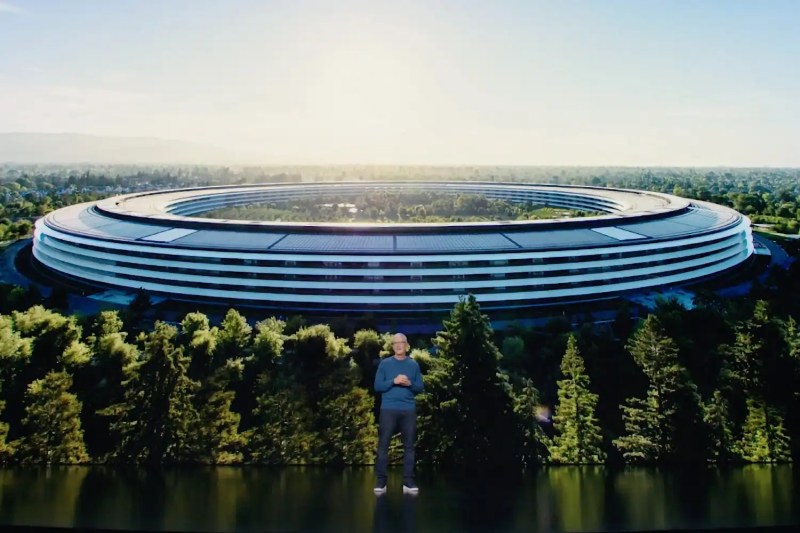
Apple Park Tim Cook AAPL

AAPL is a California-based computer company that became the most successful smartphone company in the world.

AAPL defined by Apple

Here’s how Apple defines itself:

Apple revolutionized personal technology with the introduction of the Macintosh in 1984. Today, Apple leads the world in innovation with iPhone, iPad, Mac, Apple Watch, and Apple TV. Apple’s five software platforms — iOS, iPadOS, macOS, watchOS, and tvOS — provide seamless experiences across all Apple devices and empower people with breakthrough services including the App Store, Apple Music, Apple Pay, and iCloud. Apple’s more than 100,000 employees are dedicated to making the best products on earth, and to leaving the world better than we found it.

Key AAPL history

From Apple I to iMac

Apple was founded in 1976 by Steve Jobs (Steve), Steve Wozniak (Woz), and (briefly) Ronald Wayne as a business partnership: Apple Computer Company. The following year it became Apple Computer, Inc. The company’s first product was the Apple I, a personal computer hand-built by Woz and sold in part-completed kit form. The Apple II and Apple III followed.

The modern Apple as we know it today began in 1983, with the launch of the first personal computer with a graphical user interface, the Lisa. Way too expensive to succeed, it was replaced by the Macintosh in 1984, launched with the single showing of a Ridley Scott commercial during the Super Bowl. The Macintosh transformed the world’s understanding of what a computer was, and would eventually lead to Microsoft adopting the GUI approach.

Steve Jobs and then Apple-CEO John Scully fell out in 1985, when Steve wanted to focus on the Macintosh while Scully wanted to put more attention on the Apple II, which was still selling well. That led to Steve being forced out of the company and going off to form NeXT.

Apple focused on selling Macintosh models at the highest possible margins, but would eventually fall foul of a mix of unsustainable pricing in the face of competition from Windows machines, and an overly complex product lineup. By 1996, the company was in trouble, and in 1997 Steve was brought back, along with the NeXT operating system, which would eventually form the basis of Mac OS X.

Steve simplified the Mac lineup and had industrial designer Jony Ive work on a whole new look for a consumer desktop Mac, the colorful iMac. The iMac, like the original Macintosh, again changed the world’s understanding of what a computer was, and who should want one.

From Apple Computer, Inc. to Apple, Inc.

In 2001, Apple launched the iPod. Although this wasn’t the first mp3 player, it was massively better than anything on the market at the time, and succeeded in turning a geeky piece of technology into a consumer electronics product with mass-market appeal.

The success of the iPod paved the way into other mobile devices. Apple was working on what would eventually become the iPad, when Steve realized that this was the basis of a smartphone. He diverted the team’s work into this, to launch the iPhone in 2007. The iPad launched later, in 2010.

The iPhone was yet another transformational product. While most other smartphones of the time were clunky devices with a keyboard and stylus, the iPhone was a sleek-looking device operated with a finger, and so simple that no user guide was needed. It was with the launch of the iPhone that Apple Computer, Inc. was renamed to Apple, Inc.

From Intel to Apple Silicon

While the iPhone, iPad, Apple Watch, and more are made with Apple-designed processors, the Mac lineup has historically relied on third-party companies for its CPUs. Over the years, Macs progressed from Motorola 680000 series chips through PowerPC to Intel.

In 2020, Apple began a two-year transition to the final stage in that journey, with Macs too finally getting Apple-designed chips. The first such is the M1 chip, used in the latest Mac mini, MacBook Air, and 13-inch MacBook Pro. Other Apple Silicon Macs followed.

AAPL today

Apple is one of the largest companies in the world. It was the first publicly traded company to hit a trillion-dollar valuation in 2018, $2 trillion in 2020, and $3T in 2022.

The company’s product lineup includes five different Mac families (MacBook Air, MacBook Pro, iMac, Mac Pro, and Mac mini); four iPad ranges (iPad mini, iPad, iPad Air, iPad Pro); four iPhone 12 models (12, 12 mini, 12 Pro, 12 Pro Max); three main Apple Watch models (SE, Series 3, Series 6); as well as other products, including Apple TV, AirPods, and HomePod mini.

In addition to hardware sales, Apple derives a growing proportion of its income from Services, including the App Store, iCloud, Apple Music, and Apple Pay.

Site default logo image

Grab $50 iTunes gift cards for $40 at Ebay using Paypal

From 9to5Toys:

Update: The Coupon code is no longer valid but iTunes gift cards are still 20% off using this link

Grab 2 $50 iTunes Gift cards for $40/each (already a good deal) delivered free via mail. Then apply CFATHERS10 at checkout to knock off another $10 – bringing the total to $70 for $100 worth of iTunes Gift Cards. These are great gifts for Dads or is good for 30% off Apple Music, Videos, Mac/iOS Apps, Games, Books or anything sold at the iTunes and App Stores.

More great gift cards deals including $10 off $50 at Ebay here.

Note this is for mail delivery, not email. Payments via Paypal good in US only.

Site default logo image

Remember that crazy WWDC opening video? Apple just shared it on Youtube

Apple did something out of the ordinary to open WWDC this year. Before CEO Tim Cook took the stage, the company played a bizarre opening video that showed a behind the scenes look at the opening number it had planned but that never came to fruition. Featuring Saturday Night Live alum Bill Hader, the video seemingly pays homage to the popular 2014 hit film Birdman.


Expand
Expanding
Close

Apple’s Upper East Side retail store is built over a 1920s reinforced bank vault

Site default logo image

When Apple opens its new Upper East Side Apple Store on Saturday, visitors will have the opportunity to view historical architecture in addition to shopping for iPhones and Apple Watches. That’s because the new retail store located on 940 Madison Avenue was once the home of the U.S. Mortgage & Trust bank — there’s even a bank vault below the store — and Apple has restored much of the original design for its new showroom…
Expand
Expanding
Close

Site default logo image

Unsigned singer used to demo Apple Music Connect during keynote releases first single

If you’re an unsigned musician looking for your break into the big time, being featured by Apple during a keynote watched by millions of people around the world isn’t a bad way to start.

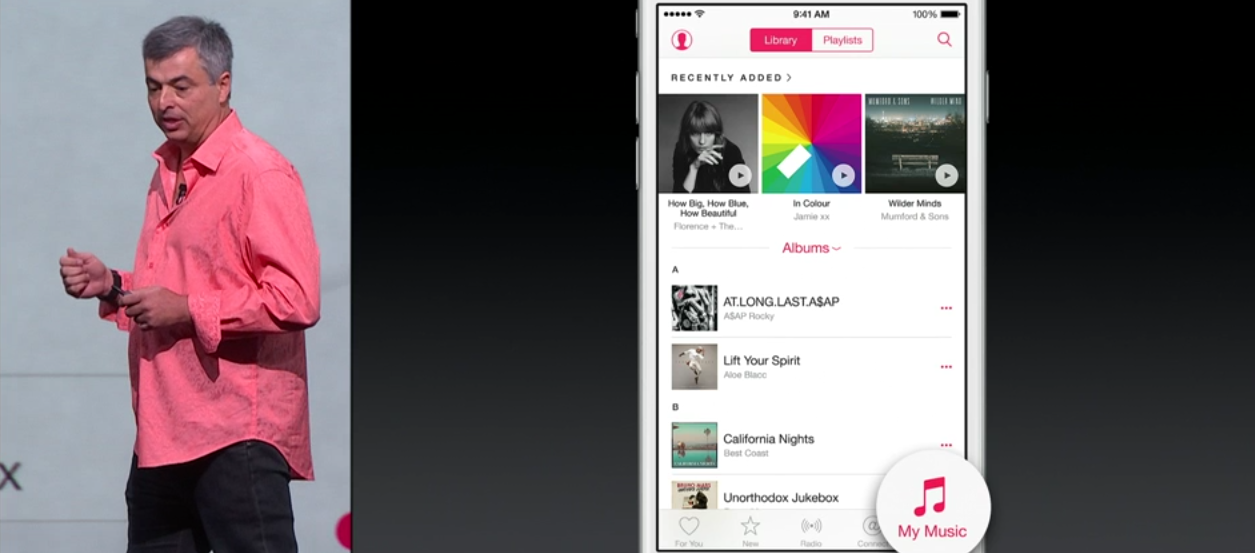
When Eddy Cue introduced Apple Music, he used the example of Loren Kramar to demonstrate Apple Music Artist Accounts, more colloquially known as Connect. Any artist, he said, would be able to share content with fans through the social features provided within Apple Music – and he named Kramar as an artist who was “going to be really, really huge.”

Kramar yesterday launched his debut single, My Life, on iTunes. TNW did note earlier that Kramar wasn’t entirely without music connections prior to his new-found fame, having apparently worked with Joe Weinberger, a former music scout at Interscope, which was headed by Jimmy Iovine.

If you’re a musician, we can’t get you featured in a keynote, but we have explained everything you need to know about creating and managing your Connect artist profile page.

Tim Cook responded to Apple Store staff complaints about bag check policy, asking execs “Is this true?”

Site default logo image

Papers from a failed class action suit by Apple Store staff reveal that at least two retail employees complained directly to CEO Tim Cook about the policy of subjecting them to anti-theft bag checks before they left the store. Tim Cook forwarded the complaints to senior retail and HR executives, asking “Is this true?” … 
Expand
Expanding
Close

iOS 9 lets app developers make ad blockers for Safari

Site default logo image

Ad blocking extensions have been possible on Safari for Mac for a long time, but plugin architecture for Safari on iOS is much more limited. With iOS 9, Apple has added a special case of extension for ad blockers. Apps can now include ‘content blocker’ extensions that define resources (like images and scripts) for Safari to not load. For the first time, this architecture makes ad blockers a real possibility for iOS developers to make and iOS customers to install and use.

The inclusion of such a feature at this time is interesting. Apple is also pushing its own news solution in iOS 9 with the News app, which will include ads but not be affected by the content blocking extensions as they only apply to Safari. There is also clearly the potential for Safari ad blockers to hurt Google, which seems to be a common trend with Apple’s announcements recently…


Expand
Expanding
Close

Opinion: Does watchOS 2 make it time for ‘first-generation refuseniks’ to jump on board?

Site default logo image

I described my own journey with the Apple Watch, from smartwatch skeptic to daily user, in a four-part diary (parts one, two, three and four). My uncertainty was less to do with the specifics of the Apple Watch and more to do with whether there was a role in my life for any kind of smartwatch.

But there are those who have been holding off for another reason: they steer clear of first-generation Apple products of all kinds. Their thinking is that the 1st-gen model tends to have a bunch of glitches, with the 2nd-gen product not just getting those worked out but also adding significantly to the functionality too.

This is a perfectly reasonable viewpoint, with significant historical evidence behind it – from the original Macintosh onward (one could even say from the Apple I). But with Apple having added a whole bunch of functionality to the existing Watch via watchOS 2, has the company managed to give the first-gen refuseniks enough reason to reconsider … ? 
Expand
Expanding
Close

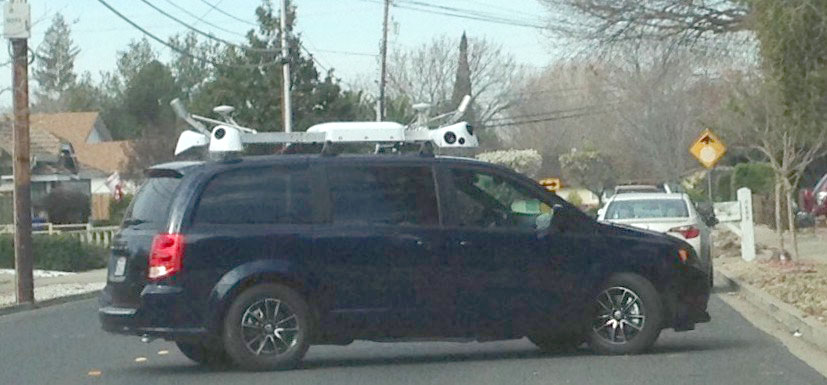
Apple officially confirms it is building its own mapping, with Street View style imagery

Site default logo image

We exclusively revealed last month that Apple is developing its own mapping database, complete with 3D Street View imagery – and the company has now officially confirmed this on a new webpage.

Apple is driving vehicles around the world to collect data which will be used to improve Apple Maps. Some of this data will be published in future Apple Maps updates.

We are committed to protecting your privacy while collecting this data. For example, we will blur faces and license plates on collected images prior to publication.

We first speculated back in February that this was the likely reason for the camera-equipped minivans leased by Apple, at a time when many were suggesting they were test beds for self-driving cars.

If you fancy trying to photobomb one of Apple’s camera vans, the company has posted a list of the locations they will be visiting later this month … 
Expand
Expanding
Close

Phil Schiller talks 16GB devices, ultra-thin design, Apple Music, and more during interview

Site default logo image

Apple’s SVP of marketing Phil Schiller this evening gave an interview on John Gruber’s podcast The Talk Show during which he addressed a variety of different topics. Gruber and Schiller together discussed Apple’s WWDC announcements, such as watchOS 2 and Apple Music. The two also talked about many of Apple’s decisions over the past couple of years, including the company’s obsession with making the thinnest devices possible and how on earth they still sell 16GB devices in 2015.


Expand
Expanding
Close

Universal denies involvement in anticompetitive deals for Apple Music

Site default logo image

We’ve already heard several times that Apple has been facing investigations from both the Department of Justice and Federal Trade Commission over how it negotiated with labels for Apple Music. Now, the New York State’s attorney general has posted a letter from Universal Music Group in which it claims that it is not doing anything illegal to prohibit the access of free music services by the consumer. From the letter:

UMG does not currently have any agreements with Apple Inc. (i) to impede the availability of third-party free or ad-supported music streaming services, or (ii) that limit, restrict, or prevent UMG from licensing its recorded music repertoire to any third- party music streaming service on any terms that UMG may choose. Nor does UMG intend to enter into any such agreements.

Apple has been accused of using its large pull with labels to put other streaming music services like Spotify at a disadvantage. One specific example of this that has been pointed out earlier is Apple forcing labels to reduce the music that it makes available to ad-supported services in an effort to bolster the selection available on Apple Music.


Expand
Expanding
Close

Opinion: These were the 10 game-changing WWDC 2015 announcements

There were so many announcements during the WWDC keynote yesterday that even people who follow Apple for a living (and expected most of the details) were overwhelmed. New versions of iOS, OS X, and watchOS were only three of the biggies, alongside the official debut of Apple Music and a lot of small but interesting new details.

Since the keynote ended, I’ve been sorting through all of the stories, as well as all three new operating systems. What follows are my picks for the ten most game-changing WWDC 2015 announcements, some of them requiring more explanation than others. They’re not in rank order, but there’s definitely one that I thought was the biggest of the bunch. Share your picks in the comments section below…


Expand
Expanding
Close

Site default logo image

Apple Music will stream at 256kbps like iTunes Match

Specific details about Apple Music are still rolling out after the iPhone maker announced its new subscription music service at WWDC yesterday. Music quality for streaming and offline playback is bound to be one concern for potential members and it appears Apple will be taking a conservative approach, according to Slashgear.

Apple Music will be at 256 kbps. In comparison, Beats Music uses a 320 kbps bitrate, as does Spotify, while Tidal offers a high-bitrate option.

By default, Beats Music only streamed at the higher 320kbps MP3 quality on the web and when the setting was changed within the mobile app. Download quality, however, did default to the higher quality version of tracks when available.
Expand
Expanding
Close

All major banks support Apple Pay in the UK apart from Barclays, says negotiations ongoing

Site default logo image

UK bank Barclays is the only major holdout from the launch of Apple Pay in the UK. From next month, users with iPhone 6, iPhone 6 Plus or Apple Watch in the United Kingdom will be able to use the NFC mobile payments chip inside their iPhone to use Apple Pay.

Apple announced yesterday a whole swathe of partners, including Santander, HSBC and Lloyds. The notable omission from the ‘big four’ British banks is Barclays. Barclays’ Twitter support has come under fire in the aftermath from customers and has issued the following statement, which shows that all hope is not lost for Apple Pay for iPhone users who bank with Barclays.


Expand
Expanding
Close

Apple officially introduces its Apple Music streaming service at WWDC, coming June 30 for $9.99 after 3 month trial

Site default logo image

Roughly one year after spending $3 billion to acquire Beats, a speaker and headphone company cofounded by music industry veterans Dr Dre and Jimmy Iovine, Apple has officially revealed its all-new streaming music service built on that massive acquisition. Apple Music, as we first reported the subscription music service would be called, is the company’s answer to on-demand music services like Spotify. As part of the 2014 acquisition, Apple gained its own subscription music competitor in Beats Music, although the new Apple Music service is the company’s first to be built by the Cupertino company. Details below:
Expand
Expanding
Close

30+ iOS 9/developer features that Apple didn’t show off on stage

Site default logo image

Like it did for the latest version of OS X today, Apple showed off the big new features coming to iOS 9 this fall but it also briefly gave us a look at 30+ other features that will arrive with the release. If you didn’t catch them all when Apple flashed the slide on stage, here’s the full list.

Some of the notables include wireless CarPlay support, new gaming APIs, app thinning features, third-party notifications, audio unit and VPN plug-in extensions, UI testing in Xcode, and much more.

The full list is below and a similar list of features for the new OS X El Capitan is here. 
Expand
Expanding
Close

iOS 9 will be available as public beta in July, all iOS 8 devices can update to iOS 9

Site default logo image

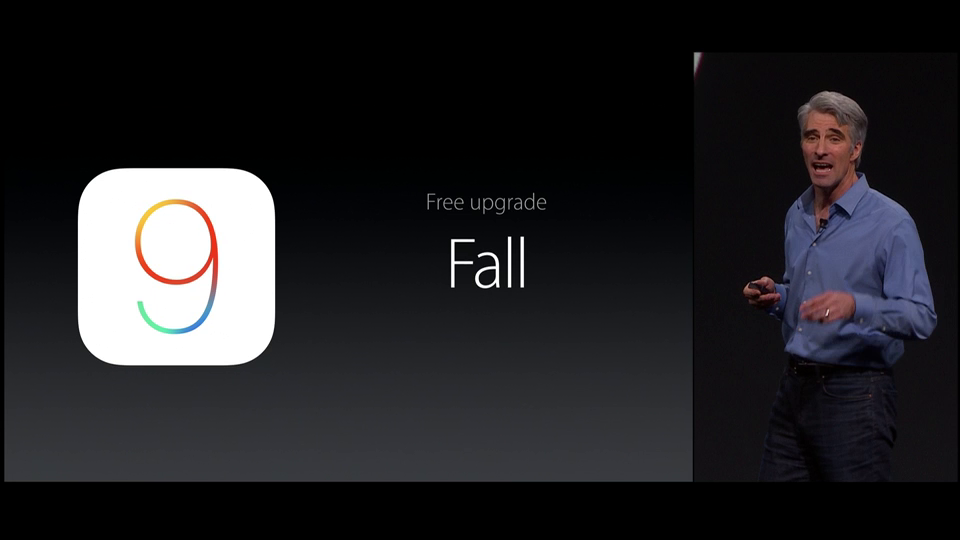
For iOS 9, Apple is launching a public beta in July. You can sign up at beta.apple.com to get listed. The iOS 9 update will be available for free in the fall for all users.

Most importantly, iOS 9 will support the same set of devices as iOS 8. Every user on iOS 8 can upgrade to Apple’s next version of the mobile operating system. Features vary per device. You can read everything that’s new with iOS 9, including new split-screen multitasking, smarter Siri and revamped Spotlight, here.


Expand
Expanding
Close

Apple unveils iCloud support for iOS HomeKit accessories, support for new sensors, security systems

Site default logo image

We previously detailed Apple’s plans to introduce a new app for its HomeKit platform, and today the company officially took the wraps off one aspect of that project. Develoeprs will soon be able to use iCloud instead of their own server to offer remote access control of iOS-connected home automation accessories using Apple’s previously introduced HomeKit framework. We learned previously that the remote access feature would require an Apple TV as a gateway device. 
Expand
Expanding
Close

Numbers from WWDC: Siri gets 40% faster, more accurate, 2500 Apple Pay banks, iOS/OS X growth, more

Site default logo image

Apple CEO Tim Cook kicked off the company’s WWDC keynote presentation today with its usual update on numbers and growth since last checking in. The big numbers so far from today’s event: Siri is now 40% faster and more accurate, the company now supports 2500 banks for Apple Pay, and iOS and OS X adoption continues to outpace the competition. 

Head below for a full roundup of notable numbers and company stats announced during today’s event (we’ll be updating as more come up):
Expand
Expanding
Close

30+ OS X ‘El Capitan’ features Apple didn’t show on stage

Site default logo image

Apple is showing off its latest version of OS X for Macs, dubbed ‘El Capitan’, at its WWDC kickoff keynote today, but there are many features coming in the update that it didn’t take time to show off on stage. Some of those include a new system font, as we’ve reported leading up to today’s event, as well as a redesigned disk utility app, a resizable Spotlight window, Photos edition extensions and Share Links extensions, new AirPlay video features, and much much more.

Head below for the full list of OS X El Capitan features that Apple didn’t show off on stage:
Expand
Expanding
Close